2 Jun 2020

Indian government abandons lockdown measures as coronavirus infections soar

Wasantha Rupasinghe

Prime Minister Narendra Modi and his Bharatiya Janata Party (BJP) government yesterday initiated phase one of their so-called “unlockdown,” under which all remaining closures and restrictions on gatherings to halt the spread of the highly contagious and potentially lethal virus are to be lifted. Even as COVID-19 infections soar across India, Modi’s Hindu-supremacist government is making clear that it is abandoning any concerted effort to fight the pandemic’s spread.
Yesterday, with confirmed COVID-19 cases reaching 190,535, India displaced France to become the country with the seventh highest number of novel coronavirus infections in the world. Just in the past week alone, India recorded more than 50,000 new cases. Monday saw yet another daily record for new cases, with 8,392 registered. India’s official COVID-19 death total now stands at 5,164, with more than 2,000 deaths reported in the past 12 days.
Under the “unlockdown,” the government is accelerating the process launched in late April of lifting the sweeping lockdown measures Modi imposed, with just a few hours’ notice, on March 25.
A Ministry of Home Affairs (MHA) statement issued on the weekend announced the removal, as of Monday, of all central government restrictions on intra- and interstate travel and the reopening of places of worships, hotels, restaurants and shopping malls beginning June 8, outside specially designated containment areas. Under phase two of the “unlockdown” set for July, decisions on reopening schools and other educational institutions will be taken “after consultations with States and Union territories’ administrations.”
Metro (subway) systems, cinemas, gymnasiums, bars and meeting halls are to remain closed until the third phases of the “unlockdown.” International air travel also remains suspended.
In line with the central government’s reckless push to reopen the economy, even India’s worst-hit states—like Maharashtra, Gujarat, Tamil Nadu and Rajasthan—have announced their own “conditional easing” of restrictions.
Although Maharashtra’s Shiv Sena-led, Congress Party-supported government said it was extending the state’s lockdown until June 30, it announced a “phase-wise resumption” of activities under its own “Mission Begin Again” plan. Under this plan, even in “red zones”—that is, the areas of the state with the highest infection rates—offices can now open with 10 to 15 percent of their regular staffing levels. Intra-district bus travel will resume with 50 percent passenger capacity, and religious sites can open from June 8. All markets and shops, except malls, have been given the green light to reopen from June 5 on an “odd-even basis,” which means half of the shops in an area will be opened every alternate day, with the claim this will avoid crowding.
Already on April 20, the Modi government gave the go-ahead for the reopening of industrial worksites, even within COVID-19 “hotspot areas.” Although the authorities claimed businesses would have to operate in “strict compliance” with existing lockdown guidelines, this proved to be a sham. The government’s order for employers to arrange the transportation of workers to workplaces “in dedicated transport” and “ensuring social distancing” has been widely flouted by industrial bosses without any consequences. As for the government’s claim that factory owners would be “booked” if a worker tests positive for COVID-19, this predictably proved to be simply bluster.
Showing its indifference to the fate of the impoverished workers and toilers, India’s ruling elite is determined to accelerate the reopening of the economy even as the pandemic rages, so it can resume the process of extracting massive profits through the sweatshop exploitation of the working class.
Like his counterparts around the world, including US President Donald Trump and Brazilian President Jair Bolsonaro, Modi has embraced the ruinous “herd immunity” policy under which the disease is allowed to run rampant so profit-extraction can proceed unhindered.
Jayaprakash Muliyil, an outspoken proponent of herd immunity who advises the government as the head of the Scientific Advisory Committee of its National Institute of Epidemiology, blithely acknowledges this reckless policy will led to a massive loss of life that will be counted in the millions. Last week, Muliyil told Outlook, “With a substantial opening up of the lockdown, India may see at least two millions deaths. … Mortality is low, let the young go out and work.”
The government’s herd immunity policy is the cutting edge of an intensified class war assault on the working class, which aims to “revive” India’s economy by pushing through socially incendiary policies long demanded by domestic and international capital, but which successive governments have been unable to implement due to massive opposition from working people. Modi has vowed a “quantum jump” in pro-investor “reforms,” including the massive sell-off of government-owned enterprises, the gutting of labour laws, and the abolition of restrictions on the amassing of large tracts of land for agribusiness and industrial and commercial projects.
With enthusiastic support from India’s ruling elite, the Modi government is also doubling down on New Delhi’s reactionary anti-China military-strategic alliance with US imperialism. It has unreservedly welcomed the Trump administration’s call for India to serve as a cheap-labour platform for US arms manufacturers and an alternate production-chain hub for US transnationals that are curtailing production in China due to increasing US-China trade and geostrategic tensions.
The premature push to “reopen” Indian’s economy has already led to a spate of new infections, including at Hyundai Motor Company’s plant in Chennai, Tamil Nadu; Muruti Suzuki’s Manesar, Haryana car assembly plant; and smartphone manufacturing facilities owned by Vivo and Oppo in Noida, on the outskirts of Delhi.
In their campaign to force working people to return to work under such dangerous conditions, the Modi government and Indian big business are exploiting the social misery they have created. As a result of the government’s calamitous, ill-prepared lockdown, at least 120 million people, the overwhelming majority of them day labourers, lost their jobs and income, and were provided at best famine-relief style rations. Millions of other workers have had their wages cuts or received no wages at all during the now 10-week lockdown.
The Modi government failed to use the lockdown to mount a systematic campaign of mass testing and contract tracing—which the World Health Organisation considers essential to any viable strategy to deal with COVID-19 in the absence of a vaccine—or to pour the requisite massive resources into strengthening India’s ramshackle health care system.
As a result, despite the massive sacrifices imposed on the population by the lockdown, it has manifestly failed to stop the spread of the virus as can be seen by its accelerating spread in both major urban centres and rural India.
Maharashtra has continuously been the worst-hit state with 67,655 cases and 2,286 deaths as of Monday. Almost half of all cases and one fourth of all deaths have been recorded in Mumbai, India’s second largest city.
Maharashtra is followed by Tamil Nadu with 22,333 cases and 173 deaths; Delhi, 19,844 cases and 473 deaths; Gujarat, 16,779 cases and 1,030 deaths; and Uttar Pradesh, 7,823 cases and 213 deaths.
According to the government, close to 10 million migrant workers whom it blocked from walking home to seek food and shelter in their home villages and instead herded into makeshift, prison-like internal refugee camps, have now made their way home.
However, the authorities’ failure to test and treat the migrant workers before they travelled to their home villages means that many have carried the virus into rural areas, where health care facilities are virtually non-existent. Bihar, Jharkhand, West Bengal, Odisha, Madhya Pradesh, Rajasthan and Uttar Pradesh, which have received most of the returning migrants, have witnessed the “maximum increase in number of districts affected by COVID-19,” reported the Hindustan Times on May 18. As a result, new infections have been recorded in 180 additional districts over the past two weeks, taking the total of districts with infections nationwide to 550.
The health and socio-economic crises triggered by the pandemic are erupting in a society that was already at the breaking point prior to the outbreak of COVID-19. Thirty years of economic “liberalisation” have produced poverty and misery for hundreds of millions of workers and toilers through privatisation, the gutting of public services and agricultural supports. and the imposition of poverty wages. Meanwhile, the wealth of India’s millionaires and billionaires has exploded.
Before being temporarily interrupted by the pandemic, mass protests rattled the Indian government between December 2019 and March. These included a one-day general strike in January, in which tens of millions participated, and mass demonstrations, uniting working people of all communal and caste backgrounds, against Modi’s anti-Muslim Citizenship Amendment Act (CAA). The cruelty and indifference shown by the ruling elite towards the impoverished masses during the pandemic are providing further fuel to this opposition, ensuring an even more powerful eruption of mass working class anger in the days and weeks to come.
Modi’s BJP government is preparing to meet this opposition with violent repression and fascistic communal reaction. Modi spelled this out in a “letter to my fellow Indians” he penned to mark one year of his second term in office.
As proof of his boast that BJP rule has ushered in “a golden chapter in the history of Indian Democracy,” Modi gloated over a series of authoritarian, Hindu-supremacist measures. He claimed his government’s anti-democratic abrogation of the semi-autonomous status of Jammu and Kashmir, India’s lone Muslim-majority state, had “furthered the spirit of national unity and integration.” He also enthused over the Supreme Court’s ruling that sanctioned the razing of the Babri Masjid mosque in Ayodhya, Uttar Pradesh, by Hindu communalist thugs incited by BJP leaders in 1992, and its “order” that the BJP government oversee the building of a temple to the mythical Hindu god Lord Ram on the site. The Court’s ruling, declared Modi, had brought an “amicable end to a debate persisting for centuries.” And he hailed the CAA, which denies millions of Muslims citizenship rights and makes religion a criterion for determining citizenship for the first time in post-colonial India, as an “expression of India’s spirit of inclusiveness.”
No genuine opposition to the ultra-right-wing course being charted by the Modi government—herd immunity, intensified exploitation of the working class, deeper integration into US imperialism’s war drive against China, authoritarianism, and communal reaction—exists within the political establishment. On May 22, 22 political parties, including the Congress Party (till recently the ruling elite’s preferred party of government), the Stalinist Communist Party of India (Marxist) or CPM, and the fascistic Shiv Sena met to “exchange views on [the] extraordinary situation in the country arising out of the COVID-19 pandemic.” Expressing their willingness to support the government’s reactionary agenda against the working class, the joint statement issued by the parties urged the BJP government to “reach out and engage in a dialogue with all political parties.”

Germany and EU expand military deployment in Africa

Gregor Link

The coronavirus pandemic is acting as a catalyst in the scramble by the great powers to redivide Africa. German imperialism sees the crisis as an opportunity to assert its global geopolitical interests by force of arms. In the last few days, the Bundestag (parliament) decided to extend or prolong two military operations. Besides Libya, Mali and Somalia, German forces may operate in Mauritania, Burkina Faso, Chad and Niger in the future.

Sahel region

On Friday, by a large majority, the Bundestag gave the starting signal for a massive escalation of the German military deployment in the Sahel region of west Africa. The stationing of 1,100 Bundeswehr (Armed Forces) soldiers in Mali under the umbrella of the United Nations (UN) MINUSMA mission was extended. At the same time, the training of African troops has been expanded.
The Bundestag resolution provides for the European Union Training Mission (EUTM) programme, which has been running for seven years, to be extended until May 2024 and extended to the entire Sahel region. This means that in the future, European soldiers will also train the armed forces of the pro-Western regimes in Burkina Faso, Mauritania, Niger and Chad. The European Council had already created a corresponding mandate a week ago.
In Mali, the EUTM “training mission” has so far built up an army of 20,000 troops. However, in a recent editorial, Lorenz Hemicker, political editor of the Frankfurter Allgemeine Zeitung, considers the results achieved so far to be insufficient. He complains that the Malian armed forces are not yet capable of “fighting insurgency on their own,” although the Bundeswehr informs the government troops “about the best tactics in local and house fighting.”
For this reason, the new mandate provides for the mission to be strengthened by Germany with 100 additional soldiers. The troops of the Bamako regime, which is hated by the population, will thus be able to go into action in the future accompanied by up to 450 German “trainers.” In this way, the Bundeswehr is provoking violent clashes between German soldiers and local oppositional militias, which in turn could provide the pretext for the deployment of armed combat drones in the region. A currently unarmed Heron combat drone has been in service with the Bundeswehr in Mali since 2016.
In addition, the EUTM mission is being transferred from Koulikoro in southern Mali directly to the war zone in the interior of the country. The new base will be in Sévaré near Mopti, where the heaviest battles between government troops and militias are raging. Only a few kilometres away, unknown persons murdered the inhabitants of the village of Ogossagou last March, including many women and children.
As eyewitnesses told broadcaster Deutschlandfunk radio at the time, the murderers included heavily armed men in uniforms of the Malian army. They were equipped “with bulletproof vests and modern weapons, as the Malian army has them,” a witness reported. The Malian government troops, according to their own statements, had “withdrawn” from the village a few hours earlier and did not return to the scene of the massacre until hours later—although the villagers had sent desperate distress calls to the authorities.
For years, the Malian regime has been demonstrably committing atrocities against the civilian population. A report to the UN Security Council spoke of at least three “attacks on civilians” in 2018, including a “suspected mass execution with 44 dead” and an attack on a cattle market in which “12 civilians were killed.” UN investigators also discovered several mass graves. In 2019, the Süddeutsche Zeitung, which also supports military action, wrote that the regime-supported “militias…terrorise the population in order to impose its influence in disputed regions.”
This policy is now being extended to Niger, Burkina Faso, Mauritania and Chad in the interest of German and European imperialism. A strategy paper of the German Institute for International and Security Affairs (Stiftung Wissenschaft und Politik) states that “the regional security forces” are indeed “part of the problem”—but “without them, it is not possible.”
Since “overcoming the corona crisis will temporarily push everything else into the background,” the German government should work towards “including countries like Burkina Faso and Niger and better linking all missions [in the Sahel]. The focus initially should be on civil and medical projects, rather than military capabilities [emphasis added].”
In other words, under the pretext of the fight against COVID-19, Bundeswehr troops and the murderous “regional security forces” trained by Europe should “link up” their combat strength with the UN mission MINUSMA and the French military mission code-named Barkhane.
MINUSMA comprises up to 15,200 foreign soldiers and police officers who were stationed in Mali “following Opération Serval” in order to “stabilise” conditions. Barkhane, the successor mission to Serval, in turn officially includes 3,000 French soldiers for “counterinsurgency” measures and the killing of “Islamists,” as well as special forces and mercenaries of the Foreign Legion.
In addition to access to gold, uranium, and labour, involvement in the region, from the German point of view, is particularly concerned with combating so-called “illegal migration”—i.e., using armed force to fight desperate refugees.
People fleeing from ethnic violence and colonial oppression and seeking a way through the Sahara meet watering points that are blocked by the Nigerian military. The result is a gigantic death strip right across the African continent. The International Organisation for Migration estimates that the number of people who die in the desert is at least twice as high as the number of dead migrants in the Mediterranean. The organisation estimates that more than 30,000 people “disappeared” in the Sahara between 2014 and 2018.
In Niger, which has been armed to the teeth by Germany in particular, the Bundeswehr also maintains a military base that, according to media reports, acts as a “hub” for all German military operations in the Sahel region. Chancellor Merkel had thanked Nigerian President Issoufou Mahamadou in 2018 for the “highly successful cooperation” in the “fight against illegal migration.”
Germany is directly involved in this bloody “fight.” For at least half a year now, elite German navy troops (KSM) have been on combat duty in the country and training special units of the Nigerian military. The secret mission had previously taken place without a Bundestag mandate, but with the extension of EUTM, a mandate has now been created for the so-called Operation Gazelle.
Those who do not die of thirst in the Sahara are threatened with enslavement. In Mauritania, whose troops will in future also be trained by European soldiers, slavery was legal until 2007, though the economic structures of it still exist. According to estimates by local anti-slavery organisation SOS Esclaves, there were still 600,000 slaves in Mauritania in 2010.

Horn of Africa

On Wednesday, the Bundestag extended the European “Atalanta” mission off the coast of Somalia by another year, by an overwhelming majority of 536 parliamentary deputies. This means that up to 400 German soldiers will continue to participate in the European Union’s so-called anti-piracy mission, which has been ongoing since 2008. The German and European naval forces are defending imperialist interests in a region that has suffered unprecedented social devastation due to Western overfishing, unilateral trade agreements and decades of civil war.
“Through its presence in the sea area off the Horn of Africa, the EU...protects European interests and contributes to the stabilisation of the region,” reads the German government’s mission statement. Among other things, the mission plans to use armed force to shield UN food supplies from unauthorised access and to fight local “pirates” with naval forces.
The military mission has not failed to have its effect over the past 12 years. According to a report by weekly Die Zeit, which welcomes the mission, the number of attacks on transnational trawlers has “decreased enormously” in recent years. Illegal fishing by foreign fleets, on the other hand, has continued to increase in the slipstream of European warships, according to UN sources.
Somalia and other countries in East Africa are currently suffering the worst floods in 40 years. The massive rains have caused dams to burst, which in turn have destroyed infrastructure and homes, forcing people to stay in home-made huts. Nearly 1 million people have been affected, and 400,000 have lost their homes.
The flood disaster is also hampering the humanitarian work of the UN, including the fight against COVID-19, and has created the conditions for the second plague of locusts since the beginning of this year. Twenty million Somalis are at risk of starvation, and almost 3 million are refugees. The country’s infrastructure has been largely destroyed after three decades of armed conflict.
As for COVID-19, the country is threatened by the epidemic. The US Johns Hopkins University lists the country in second last place in its Global Health Security Index (GHS Index), which represents the state of preparedness to deal with epidemics in 195 countries. The university currently measures the number of confirmed COVID-19 cases in Somalia at 1,731. The number of cases has been rising rapidly since the beginning of April, and the number of unreported cases is likely to be high; the 67 officially registered fatalities include the Minister of Justice of the state of Hirshabelle.
Although the imperialist powers have created the conditions for this maelstrom of displacement, natural disasters and pandemic in the last decades, they are now using the devastating situation as a pretext to prepare a geopolitical redivision of the region using military force. The Atalanta mission also fulfils a “deterrent function” in this respect, Die Zeit notes.
“Germany and Europe face several challenges in dealing with COVID-19 in the Horn of Africa, but there are also opportunities,” notes a current strategy paper published by the German Institute for International and Security Affairs. Germany has proven to be a “reliable partner” for the East African regimes and should now “lead the way” in taking on the role of “coordinator” within the EU.
In this context, the paper suggests “hosting a Sudan conference,” as the country on the Red Sea is of “enormous strategic importance” for the entire region. At the beginning of May, the Bundestag sent almost 300 Bundeswehr soldiers to Libya, where such a conference was held in January chaired by Germany.

UK: Allowing mass-attended sporting events to go ahead led to COVID-19 deaths

Margot Miller

Scientific research established that the decision of the Johnson government to permit mass-attended sporting events to go ahead in March directly contributed to the spread of the coronavirus and the number of fatalities.
Boris Johnson greets rugby players after England vs Wales match, March 7 2020 (Credit: Boris Johnson/Facebook)
On March 10, the Cheltenham horse racing festival opened, attracting crowds of 250,000 over the four-day event. The following day in the north of England, Liverpool hosted a football match against Atletico Madrid at its Anfield stadium. Some 52,000 fans watched, including 3,000 Spanish fans from Madrid.
Speaking to BBC Radio File on 4 programme, “Game Changer: How the UK played on during coronavirus,” Professor Tim Spector said, “I think sporting events should have been shut down at least a week earlier because they’ll have caused increased suffering and deaths that wouldn’t otherwise have occurred.” Spector is Professor of Genetic Epidemiology at King’s College London.
Ignoring the World Health Organization’s (WHO) announcement on January 30 that the emergence of the novel SARS-Cov-2 (coronavirus) represented a “public health emergency of international concern,” the Conservative government made no preparations to stop its spread in Britain. Valuable weeks were lost while the virus took hold in the UK in February and early March.
When countries on the continent were banning mass gatherings in early March, Tory Prime Minister Boris Johnson said it was “business as usual.” Culture Secretary Oliver Dowden agreed, “There’s no reason for people not to attend such events or to cancel them at this stage.”
In Ireland, the planned Six Nations rugby match in Dublin was called off by the authorities, as well as St. Patrick’s Day celebrations. Football matches in northern Italy, where the virus was running rife, were banned. In China, the Grand Prix had been postponed as part of virus containment.
The first weeks of March was a busy time in the UK for sporting events and provided an ideal vector for the spread of the virus. Professional league football went ahead as planned in England and Scotland. The government’s main scientific adviser, Sir Patrick Vallance, insisted it was fine to attend events in stadiums on the basis that transmission of the coronavirus occurred mainly within families and between friends.
On March 7, Johnson and his heavily pregnant partner Carrie Symonds, joined the 81,000 crowd at the Six Nations Rugby tournament between England and Wales in Twickenham. The same day, Leicester City football club played Aston Villa with 32,000 fans in attendance. Both Johnson and Symonds both later contracted the virus, and Johnson—who was rushed into hospital on April 5 after being ill for weeks—almost died.
Journalist Melanie Finn, visiting from Ireland, described the atmosphere at the races, “It was like the last days of the Roman Empire, and I think there was a little bit of a sense that if it was open, by God they were going to party.” Afraid there “could be an unmitigated disaster and the crowds were huge,” Finn left for home two days into the event. A week later, she developed COVID-19 symptoms and had to take two weeks off work.
At the time, the Department of Health and Social Care reported 373 cases of COVID-19. Imperial College London and the University of Oxford, however, estimated there were 640,000 cases in Spain, and already 100,000 in the UK, but this was no matter, as far as the government was concerned.
On March 11, the WHO declared coronavirus a global pandemic. WHO Director-General Doctor Tedros Adhanom said he was “deeply concerned both by the alarming levels of spread and severity and by the alarming levels of inaction [by governments].”
That evening, the gates opened at Anfield football ground—located in a densely populated area of Liverpool—and the fans crowded in. The 3,000 visiting fans from Madrid joined Liverpool supporters in bars and restaurants. At that point, Madrid was the epicentre of the coronavirus outbreak in Spain, and the Atletico football club and the Spanish government cautioned against travelling to the UK for the match.
The only concession to the pandemic was the absence of pre-match handshakes.
Liverpool supporter Joel Rookwood believes he contracted the virus that night and was ill for eight weeks. “The celebrations were some of the most physical that I’ve experienced,” he told the BBC. “People were jumping all over each other.”
From an analysis of NHS statistics, data modelling group Edge Health concluded 41 people died after attending the game, 25–35 days after the match.
One victim was Liverpool fan, Richard Mawson. Aged 70, Mawson went to the game and began experiencing symptoms two weeks later. He died in Anfield Hospital on April 17. His wife Mary and son Jamie are demanding a full inquiry into why the game was allowed to go ahead. Mary told BBC News that her husband was a fit and healthy man, who went to the gym two or three times a week.
She said, “Obviously, the coronavirus was going around, but when your government is standing up and saying, ‘Oh it’s fine, go ahead’ and you’re a lifelong supporter and you feel so passionate about them, you go with what your government tells you.
“Cheltenham was on, so everything was alright according to the government, which then, the following week, they decide they were going on lockdown. But the government acted too late; they knew this was coming up, but they didn’t do anything about it.”
Jamie commented, “My dad seldom went out, maybe to pick my daughter up from work. Given the time when he developed the symptoms and then he became really ill, then two weeks after that he passed away, I’m 99 percent certain he did pick it up from the game.
“He had to walk past the away fans, the Atlético fans, and I’m 99 percent certain he did pick it up from that game. But for us as a family it’s so difficult to take because ... he was 70, but he was fit and healthy, he had no underlying health issues, and for him to deteriorate in such a fashion, it’s very hard for us to take.”
The Liverpool supporters’ club, Spirit of Shankly, had voiced concerns at a safety meeting two days before the match, which was chaired by Labour-led Liverpool City Council. But the meeting declared that only football’s governing body UEFA could stop the match, which should go ahead anyway because of government advice.
The Jockey Club said it was following “clear and ongoing guidance” from the government, so horse racing at Cheltenham continued according to schedule, as well as other public events.
Former chief scientific adviser (2000–2007) Sir David King condemned the decision to proceed with Cheltenham as “reckless” and “foolhardy,” saying that the event contributed to the appalling number of COVID-19 deaths. He told File on 4, “If you think of the best way to spread a virus—bring 250,000 people from around the country, get them crowding together to watch a horse race ... and afterwards … go all round the country to spread it.”
Evidence for his assessment was provided by research results of a “COVID Symptom Study” by Professor Spector. In collaboration with an Austrian-based software company, Spector devised an app to track people with COVID-19 symptoms—downloaded by three million since March. Described by Spector as the largest citizen health project in the world, the data collected flagged up coronavirus hotspots around Cheltenham and Liverpool that coincided with the incubation period after the above events. Hospitals in the two areas also reported a surge in cases. In the last week of March, Liverpool and Cheltenham were among the areas with the highest number of suspected cases. The COVID-19 Symptom Study found an estimated 5–6 percent of the population, aged 20 to 69, having symptoms in those two regions.
Sporting events and other mass gatherings were allowed to continue over the next days. On March 14, European boxers met in London for an Olympic qualifier, while the following day the all-England badminton six-day event attended by 300 players ended in Birmingham. Some 25,000 fans from around the world watched the matches. Finally, despite protests from doctors, the popular band Stereophonics played before 15,000 music fans at Cardiff’s Motorpoint Arena March 14 and 15.
It was not until March 16 that large sporting events were banned in the UK, by which time community transmission was out of control. A full lockdown of the economy to contain and dampen the virus’s spread was not imposed until March 23—fully 12 days after the WHO declared a global pandemic.
These actions have led to Britain having the second highest COVID-19 fatality rate in the world. It also has the highest number of fatalities in Europe, at more than 63,000 according to a Financial Times estimate last week.
Other countries, such as South Korea and Norway, with low death rates, introduced lockdowns at a much earlier stage in the pandemic, resulting in tens of thousands of lives being saved.
What happened in Britain was not down to a mistake or incompetence on the part of the Johnson government, but the deliberate application of its pseudo-scientific “herd immunity” policy to tackle the virus. At a March 12 press conference Chief Scientific Advisor Sir Patrick Vallance declared, “Our aim is not to stop everyone getting it, you can’t do that. And it’s not desirable, because you want to get some immunity in the population.”

COVID-19 pandemic exposes a rapidly developing global health crisis

Benjamin Mateus

The World Health Organization (WHO) press briefing on Monday focused their report, not on the break in their relationship with the United States or the protests that are seeing the tattered social threads unravel quickly. Instead, they emphasized their concerns over the state of global health that has been exacerbated by the pandemic.
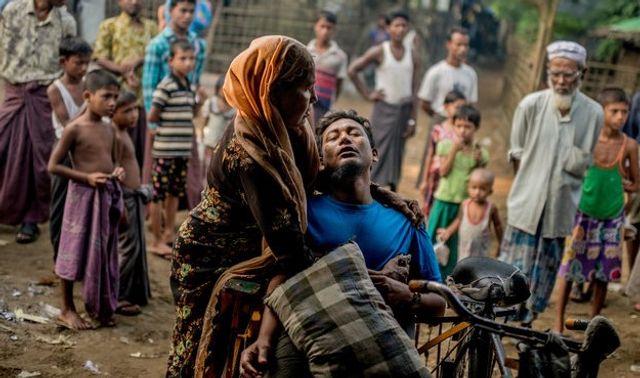
Muzammil, 37, is comforted by his stepmother while waiting outside a pharmacy for the pharmacist to arrive. (Photo: Tomas Munita)
The globe continues to see daily cases of COVID-19 exceed 100,000 per day, with close to 6.4 million cumulative cases. Total deaths are approaching 380,000 as the pandemic is settling in the Americas for the present moment. In response to a question as to whether the virulence of the virus seems to be waning, both Drs. Michael Ryan and Maria Van Kerkhove rejected such claims. The genetic studies do not support such a mutational shift. Instead, they attribute the change in the numbers to public health measures that have thus far been employed.
However, with lockdowns and travel restrictions making the delivery of critical medical supplies to the much-needed developing world difficult, the WHO warned that if these disruptions are not soon overcome, communities across the globe could be facing health consequences on a massive scale. Last month they noted that the world could expect 500,000 more deaths from AIDS in the coming year. They also estimated that 1.4 million people could succumb to tuberculosis if access to vital medications is not available.

Non-communicable diseases (NCDs)

Based on these concerns, WHO conducted a survey in May—a rapid assessment of service delivery for non-communicable diseases (NCDs) like diabetes, cancer, cardiovascular and chronic respiratory diseases—with 155 countries submitting. These NCD illnesses, which kill more than 41 million people each year (equivalent to 71 percent of all deaths globally), make these populations more vulnerable to becoming severely ill and at risk for succumbing to infection with SARS-CoV-2 (the coronavirus).
According to WHO Director-General Tedros Adhanom Ghebreyesus, “Many people who need treatment for diseases like cancer, cardiovascular disease and diabetes have not been receiving the health services and medicines they need since the COVID-19 pandemic began.”
Low-income countries have been most severely impacted in services for NCDs. More than half the reporting countries have reported that such services have been partially or entirely disrupted, while at least two-thirds said rehabilitation services had been affected. Almost unanimously, every country stated that health workers had been reassigned, wholly or partially, to support COVID-19 response. Screening for breast and cervical cancer has been postponed in more than half of the countries. Of note, in 2018, 627,000 women died from breast cancer and 300,000 from cervical cancer.
Service disruptions (from the WHO):
  • 53 percent have partially or completely disrupted services for hypertension treatment;
  • 49 percent for treatment for diabetes or diabetes-related complications;
  • 42 percent for cancer treatments;
  • 31 percent for cardiovascular emergencies;
  • 15 million people between the ages of 30 and 69 die from NCDs—85 percent of these “premature” deaths occur in low- and middle-income countries.
Director of the Pan-American Health Organization (PAHO), Dr. Carissa Etienne, said, “One of the most concerning aspects of the COVID-19 pandemic is the disproportionate impact of the virus on people suffering from NCDs. We have never seen such a destructive relationship between infectious disease and NCDs. Some of the data is truly alarming, especially for our region where NCDs are pervasive.”

Antimicrobial resistance

Worldwide, more than 700,000 people die each year due to drug-resistant infections, according to the WHO. Although the viral pandemic has taken priority, according to Muhammad Hamid Zaman, Howard Hughes Medical Institute Professor at Boston University, “We have to think of antimicrobial resistance not as detached but as something that’s going on simultaneously with this pandemic.”
According to a senior science adviser to the US Centers for Disease Control and Prevention (CDC), “Since the emergence of COVID-19, collected data have shown an increase in antibiotic use, even though most of the initial illnesses being treated have been from COVID-19 viral infection. The resulting increased exposure to health care settings and invasive procedures, along with expanded antibiotic use, amplifies the opportunity for resistant pathogens to emerge and spread.” The use of antibiotics does little to treat the viral infection, but the over-prescription of antibiotics can lead to multi-drug resistant bacteria.
The use of antimicrobial treatment for COVID-19 patients has been commonplace, with many taking hydroxychloroquine and macrolides in the population as preventative measures against the infection. The dangerous hype by President Trump or celebrity politicians by promoting untested therapies not only led to drug shortages but potentially promoting the development of multi-drug resistant “superbugs.”
In a recent meta-analysis published in the Journal of Clinical Infectious Diseases looking at coinfection in patients with coronavirus infections found that 8 percent of patients with COVID-19 also experienced a bacterial or fungal infection. However, the use of broad-spectrum antibiotics, despite a lack of evidence for bacterial infection, was reported in 1,450 out of 2010 patients (72 percent).
The WHO has discouraged the use of antibiotics in mild cases of COVID-19, although recommending its use for severe cases where the risk of a bacterial infection and death is high.
Before the pandemic, approximately 65 percent of adults in the US received antibiotic prescriptions for bronchitis even though the overwhelming cause of the condition is due to viral infections. Given the lack of COVID-19 testing, and clinical confusion caused by overlapping symptoms, the inappropriate use of antibiotics will only worsen. Dr. Priya Nori, the medical director of the antimicrobial stewardship program and outpatient parental antibiotic therapy program at Montefiore Health System in the Bronx, said in the British Medical Journal, “hospital’s data also show a slow and steady increase in multi-drug resistance among gram-negative bacteria that can be potentially deadly coinfections with COVID-19.”
The WHO director-general said at Monday’s press briefing, “I’m glad to say a record number of countries are now monitoring and reporting on antibiotic resistance … but the data they provide reveals that a worrying number of bacterial infections are increasingly resistant to the medicines we have traditionally treated them with, as we gather more evidence, it’s clear that the world is losing its ability to use critically important antimicrobial medicines all over the world.”
While decrying developed nations’ overuse of antibiotics in humans and animals, undeveloped nations continue to be out of reach for those that need them, which adds further to the already heavy burden of unnecessary morbidity and mortality. Presently, no studies are investigating the association between COVID-19 and the development of superinfections or multi-drug resistance.
Pre-pandemic data from the CDC last reviewed in 2017 notes a remarkable health crisis in development: In the European Union, antibiotic resistance causes 25,000 deaths per year and 2.5 million extra hospital days. In the US, there are over 23,000 antibiotic-resistant deaths and over 2 million illnesses. In India, over 58,000 infants died in one year as a result of infection with resistant bacteria passed from mothers. In Thailand, over 38,000 deaths were attributed to antibiotic resistance. In the chaos created by the pandemic, vulnerable nations may lack the ability to track these emerging opportunistic infections as a byproduct of the disruption in health delivery and monitoring.
According to World Health Statistics, although low-income countries had reported the most significant gains in life expectancy, rising by 11 percent from 2000 to 2016, globally, 55 percent of the world’s population lacks access to safely managed sanitation, 29 percent lack safely managed drinking water, and close to 40 percent of all households do not have necessary hand washing facilities.

Maternal and child mortality

UNICEF reported two weeks ago that an additional 6,000 children might perish from preventable causes over the next six months as the pandemic interrupts and degrades fragile health systems in low- and middle-income countries. Estimating their projections based on the Johns Hopkins Bloomberg School of Public Health study, in a worst-case scenario of 118 countries, “an additional 1.2 million under-five deaths could occur.” Tragically, 15,000 children die every day. In 2017, 5.4 million children died from causes such as pneumonia, preterm births, and diarrhea.
They also noted that 56,700 more maternal deaths could occur in this six-month projection. This is on top of the 144,000 deaths that already take place.
Additional concerns UNICEF raised include:
  • Nearly 1.3 billion students—over 72 percent—are out of school as a result of nationwide school closures in 177 countries.
  • Nearly 370 million children across 143 countries who regularly rely on school meals for a reliable source of daily nutrition must now look to other sources as schools are shuttered.
  • As of 14 April, over 117 million children in 37 countries may miss out on their measles vaccination as the pandemic causes immunization campaigns to stop to reduce the risk of spreading the virus.
Universal health is a global concern, and it requires an international perspective to address the enormous inequity that exists. That so many languish and face life-long health insecurities can no longer be tolerable.

Protests across New Zealand over US police murder of George Floyd

Tom Peters

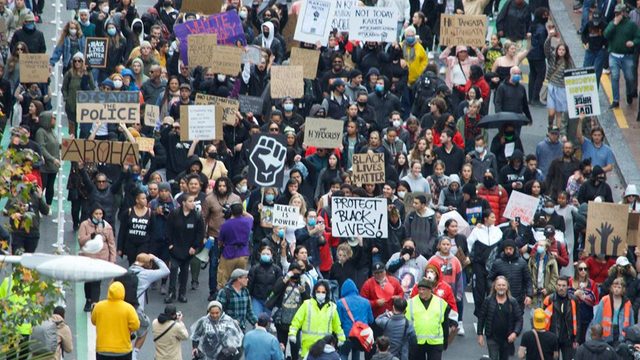
Tens of thousands of people joined protests and vigils in New Zealand yesterday in solidarity with the mass movement that has erupted in the United States following the brutal murder of George Floyd by Minneapolis police officers.
Media reported that at least 4,000 people gathered in Auckland's Aotea Square and marched to the US consulate. Photographs and videos shared on social media appear to show far larger crowds, with some estimating the number to be in the tens of thousands.
In Wellington, at least 2,000 people held a vigil outside parliament and hundreds marched to the US embassy. About 500 joined a protest in Christchurch and hundreds more in Dunedin.
Protesters at the Auckland rally (Photo: Facebook)
The rallies were part of a powerful wave of international protests. About 2,000 people gathered in Perth, and rallies are scheduled for other Australian cities over the coming days. Protests have been held across Europe, Canada and in Japan, among other places.
The international movement reflects the intense opposition that has built up in the working class, over decades, not only against police brutality but also never-ending war and unprecedented levels of social inequality. The failure of governments to stop hundreds of thousands of deaths from COVID-19, and the destruction of tens of millions of jobs, has further fuelled the outrage.
The New Zealand crowds were largely made up of young workers and students, of all ethnicities including white people, Maori, Pacific Islanders and immigrants from many nationalities. Marchers chanted “Black lives matter” and “I can’t breathe”—the last words of George Floyd as he was choked to death by police officer Derek Chauvin.
One of the organisers in Wellington, Nicole Inskeep, who moved to New Zealand from Charlottesville, Virginia—the scene of a white supremacist rampage that killed one person in 2017—read from a list of names of black men and women killed by police in the US.
In Auckland, Nigerian-born mixed martial artist Israel Adesanya was among those who addressed the crowd. He thanked people “of all different races for being here, ‘cause we need you to speak up” against racism.
Also attending the Auckland protest was Randy Pollard, who migrated from Minneapolis where he was friends with George Floyd. He told the New Zealand Herald: “He was genuine, kind-hearted… just a wonderful guy. He was very approachable and easy-going. I had a lot of respect for him.”
Pollard said there would be no peace until all the officers involved in the killing were brought to justice. He added: “At the same time, the president is saying, if people resist, shoot. That’s ridiculous. How can you have peace if that is coming from the president?”
Many protesters also denounced the further militarisation of the New Zealand Police by the Labour Party-NZ First-Greens coalition government.
There is widespread public opposition to Police Armed Response Teams (ARTs), with thousands of people tweeting the hashtag #ArmsDownNZ in recent days. Many tweets said they did not want New Zealand to become like the US.
In recent years there has been an increase in the number of killings by NZ Police, with the victims disproportionately working class, Maori, and mentally ill people.
The police, backed by the Ardern government, used the Christchurch massacre of 51 Muslims by a fascist gunman last year as a pretext to test the ARTs in three working class areas: Christchurch, Waikato and South Auckland. The armed units could soon be made permanent and expanded.
While Prime Minister Jacinda Ardern claims that she does not want police to be routinely armed, the ARTs have been deployed hundreds of times for routine policing throughout the six-month trial period.
Responding to yesterday’s protests, Ardern told TVNZ this morning, “I understand the strength of feeling,” stating she was “horrified” by the killing of Floyd. At the same time, however, she said the protests were “a clear breach” of COVID-19 restrictions on public gatherings. Asked whether police should have intervened to stop the rallies, Ardern said “those decisions are for the police.”
Deputy Prime Minister Winston Peters, who leads the right-wing nationalist New Zealand First Party, went even further, asking on Newstalk ZB: “Why aren’t we prosecuting those people who organised those protests?”
Seconds later, Peters called for the immediate lifting of the country’s social distancing restrictions—something demanded by big business but opposed by leading health experts, who warned that this would risk a resurgence of the coronavirus. Ardern has indicated that remaining restrictions could be lifted as early as next week.
Far-right ACT Party leader David Seymour—who fraudulently poses as a defender of free speech, similarly denounced the protests as a “slap in the face for every business that has restricted its operations.”
Yesterday, Green Party co-leader Marama Davidson declared that her party stood “in solidarity” with Floyd’s family and other victims of US police killings, and against the “culture of systemic racism and violence… built on centuries of injustices and social inequities.”
The party’s justice spokesperson Golriz Ghahraman also stated that they oppose the Police ARTs in New Zealand and would push “to demilitarise our police force from within government.”
These statements are thoroughly hypocritical. The Greens are a crucial part of the government, which was formed with a platform of further militarising the police. The 2017 coalition agreement between Labour and NZ First promised to recruit an extra 1,800 front-line police officers, an increase of about 20 percent. The number of police training programs in schools has also been expanded.
The government has used the COVID-19 pandemic to give the police much greater powers to make arrests and carry out warrantless searches. Emergency laws also allow the military to be deployed to assist police.
As New Zealand enters into the worst economic and social crisis since the 1930s, the police will inevitably be deployed more and more openly against the working class, to suppress opposition to inequality and militarism.
Ardern, who is hailed in the media internationally for her supposed “kindness” and leadership, has not denounced Trump’s threat to deploy the military against protesters. Labour, NZ First and the Greens, along with the opposition parties, are all committed to the alliance with US imperialism, along with a vast increase in military spending, to integrate New Zealand into US war plans.

1 Jun 2020

Democracies can’t breathe without responding to Race and Caste discrimination

Vidya Bhushan Rawat

Two of the biggest democracies in the world now face the biggest challenges in their political history. Yes, I am speaking about United States and India. One has failed to accommodate the huge Black population victim of the racism in that country while the other has failed to include the Dalits in the decision making as caste hatred and caste related violence and discrimination is on the rise in India. In fact, Indians take their caste identities along with them when they travel to US as well as other countries such as UK, and Canada.
First let us speak about, United States, which claimed to be the ‘greatest’ democracies of the world actually getting exposed with the growing anxiety among its African American or Black people who remained excluded in the large part of the American life. The brutal murder of a black man George Floyd in Minneapolis, Minnesota on May 25th, 2020 sparked an unprecedented outrage in the entire United States and it look as if the level of tolerance and patience shown by the huge black population was now over. Over the years, we have seen American police killing youth of the African American origins at will and the discrimination and exclusion was growing. With President Donald Trump openly siding with white supremacists, it was clear that unless the huge black population does not rise in revolt things wont change.
The way George Floyd was murdered shows the deep rooted prejudices against the African American. Today, a situation has arisen when black youth does not know whether he will return home safe or not. Just a few days ago, there was a video of a white woman calling police in a park where a black youth has just asked her to put her dog on a leash as was required when you bring a pet in the park. Just on this, the woman named Amy Cooper, who worked with Franklin Templeton, called the police that this man whose name is Christian Cooper and hailing from African American origin, is threatening her. Now, can you imagine what happens in the united states when a black man or woman face the police?
George Floyd begged the police officer that he has health issues, he cant breath.. if you watch the video, he is in pain, begging to the police officer Derek Chauvin kept his knee over his neck for nearly 8 minutes resulting in painful death. Other police officers too were holding him in such a way that there was no way. George Floyd was arrested for giving fake USD 20 currency in a Deli i.e. Grocery Store combined with a restaurant. Police accused him of not cooperating though the video which was shot by some one shows Floyd begging that he has problem in breathing, dont push your knee on his neck but then the American police has does it that way.
Anyone who saw the video was actually pained. Good thing is that people across community lines including media, the Hollywood as well as big corporations have now started speaking against racism which is a good sign but this is not going to get resolved without the fair representation and participation of the African American in the American power structure. A huge country like America can not have two white dominated corporate funded political parties. The American system has this problem and now the issue of race relations has put the biggest challenge before them. An incompetent leadership which is encouraging white supremacists in the name of ‘America First’ has created such a deep divide that it will need a lot of perseverance and nation building exercise again. You need statesman. Often, the political leadership quote Martin Luther King Jr whenever such crisis comes but African American at the moment seem to tilt more towards the assertive Malcolm X.
India and Indians are not in a good position to preach the United States about ‘democracy’ and ‘equality’. If the police stations, FIRs and killing in the custody is concern, the caste pattern of our forces come out in open. Prejudices are high and in the last one decade situation has worsened. Corona has created more fears among the marginalised while anti CAA protests and subsequent cases being framed against activists belonging to minorities as well as marginalised sections clearly reflect the pattern that powers here too are working on an agenda to strengthen the Savarna monopoly over our administration, judiciary, media and polity. Democracy is not merely voting in five years but in real sense democracy is accepting diversity and divergent views but in today’s India it is difficult to have a dissenting view because you fear the repercussion. You write anything and somebody feel ‘hurt’ in jhumaritalllaiyaa and file a case against you. You dont know the place and dont have the resources but the police can come knocking your door any time and behave the same way as the American do, perhaps worst than them as policing is a colonial system in this country.
But in terms of participation in political structure is concern, thank to Baba Saheb Ambedkar the spaces for the Dalits and other sections is far better than America as Congress there does not have enough Black representative. More over, it is difficult to have political parties in the US without corporate support and there are lobbies. The African American population is not fairly represented. There are no welfare programmes unlike India where we have not only political reservation but also job reservation. But what makes United States better and greater is that it provided opportunities to all. It learnt its lessons from every mistake. The African American people fought and got their dues though not enough but society is individuals and you dont find khap panchayats or a religious rights group threatening to kill you. You can eat what you like, whether Jhatka or Halal, pork or beef and go anywhere, meet any one and enjoy your life. We have so many moral guardians here that life has become more difficult.
So, in the US they have better system and a better social order and that is why even corporate houses like NIke condemn it and Frenklin Templton actually dismissed the woman who called police to falsely implicate the black man in the park. In India such things are rare. In fact, the companies are completely brahmanical dominated by Banias and Jains. All these companies lack diversity at their managerial level. They would not even like to have diversity in their offices. Our news offices are dominated by a few savarna communities and so is the social life where prejudices run deep.
Things were turning better but then we have the onslaught of the right wing supremacists who felt that it is time to deepen their hegemony. The two great democracies are now facing the biggest challenge but it will continue unless they become inclusive embrace dialogue and respect divergent views. If political protest are considered anti nationals and sought to be handled through ‘administrative’ methods where minorities, Dalits, Adivasis, Blacks, African American are considered as criminal or terrorists then situation will turn explosive. Political leadership has to speak up and put a healing touch as the scars are deep. Mature democracies believe in dialogues and resolution through discussions, debate and inclusion. It is time our political leadership show maturity and initiate a dialogue and protect our democracies.

Thousands of Canadian medical workers infected with COVID-19 due to lack of PPE

Omar Ali

The neglect of health care in Canada by a ruling elite that is indifferent to the lives of working people can be seen most acutely during the present pandemic in the failure to provide even frontline medical staff with adequate personal protective equipment (PPE). This has resulted in mass infections among health care professionals, with more than 4,000 just in Ontario testing positive for COVID-19. Total numbers of deaths among medical workers are hard to come by, but at least five personal care workers have died in Ontario alone.
In British Columbia, a coronavirus outbreak has erupted among nurses in a hospital intensive care unit. According to BC Nurses’ Union President Christine Sorensen, four nurses working at a hospital in the Fraser Valley city of Abbotsford that has been dedicated to treating coronavirus patients have tested positive for COVID-19. The union has said it previously complained about unsafe working conditions at the Abbotsford facility, including overcrowding. Nurses posted there have complained about a scarcity of PPE that has forced them to ration supplies. Nurses report having to go an entire shift without switching equipment.
Conditions are similar in other parts of the province and indeed across the country. The BC union says it has received more than 2,000 complaints from its members. Nurses have reported shortages in all the basic equipment they need to safely attend to their duties, including gloves, gowns, respiratory masks and face shields. Sorensen complained bitterly that hospitals lack the plexiglass barriers that are now widely available at the larger supermarket chains. Nurses are being instructed to leave masks somewhere safe when they leave for break so that they can reuse the same one upon their return.
The response of the New Democratic Party provincial government’s ministry of health to the outbreak and dearth of PPE was to simply reiterate its claim of being committed to the safety of frontline health care workers.
In Ontario, the latest update from the Ontario Health Coalition reported that infections among medical staff and patients of health care institutions doubled from 3,783 to 7,894 between April 21 and May 5. As of May 5, 16.1 percent of all COVID-19 infections in Ontario were among health care workers.
Long-term care facilities have been hit especially hard by the virus, with more than 250 out of Ontario’s 626 elder care homes suffering a COVID-19 outbreak. As documented in graphic detail by a report from the Canadian military, which has had to deploy staff at five for-profit Ontario care homes ravaged by the coronavirus, many outbreaks were the result of inadequate supplies of PPE and the inappropriate use of medical equipment.
Similarly dangerous conditions exist for doctors. While polls of physicians indicate an improvement in their situation, there remains a concern particularly among community-based physicians about the supply of PPE. Health care workers have been forced to organize donation drives and rely on private stockpiles donated by companies. Canadian Medical Association President Dr. Sandy Buchman criticized the situation doctors and health care workers have been put in. “If we had planned properly and monitored these provincial and federal supplies of the equipment,” said Dr. Buchman, “we wouldn’t be scrambling.”
The reason why authorities are “scrambling” is because the federal government failed miserably to prepare for the pandemic. Although it was known by mid-January that the virus was highly contagious and could spread rapidly around the world, the Trudeau Liberal government waited until March 10 to write to the provinces to determine their supplies of PPE and other critical medical equipment. The government, with the support of all opposition parties and the trade unions, spent much more time crafting a multi-billion dollar bailout for the big banks and corporations, which was designed above all to prop up the stock market and guarantee the wealth of the super-rich. Workers and the health system have been left with rations.
The lack of adequate PPE supplies has led the federal and provincial governments to improvise by allowing the usage of expired and substandard materials. Ottawa revised their standards for masks in March allowing for more porous masks to be used during the pandemic, going against recommendations by the World Health Organization..
The blame for the lack of this critical equipment lies squarely with the Canadian ruling class, which has callously pruned and slashed health care spending for decades, leaving the country highly vulnerable to a pandemic that was both foreseeable and long predicted. After failing to replenish its stockpile, the federal government sent 2 million expired masks to a landfill last year. Sally Thornton, a vice president of the Public Health Agency of Canada (PHAC), the agency responsible for the National Emergency Strategic Stockpile (NESS), claimed that the stockpile is “doing well” even as she argued that provinces and territories are responsible for their own supplies and Ottawa serves only to assist in providing surge capacity.
Tacitly acknowledging the government’s failure to prepare adequately, Patty Hajdu, the federal health minister, admitted that the government does not have enough PPE for the duration of the crisis. Health Canada has ordered 1.8 billion units of PPE mostly from China, which supplies much of the world PPE stock. However, Chinese suppliers are taking orders from around the world as demand has skyrocketed. The consequence has been a mad dash to secure dwindling supplies and Canadian government-chartered aircraft returning from China empty after being outbid. Some companies have taken advantage of the situation to sell counterfeit, substandard N95 masks at exorbitant prices.
The response of the corporate media and the government has been to stoke anti-Chinese sentiment to deflect criticism away from those responsible. Global News ran an article accusing China of suppressing information on the virus in January in order to secure for itself the global supply of PPE without triggering a bidding war. It went further to claim that China used its connections in the diaspora to secure this equipment. The reliably reactionary head of the opposition federal Conservative Party, Andrew Scheer, has been criticizing the government for not being sufficiently hostile to Beijing.
One Toronto nurse speaking with the WSWS explained that PPE was crucial for health care workers especially as there is a shortage of nursing staff and keeping them virus free is essential to keeping them on the job. Personal protective equipment inside the hospital is used at all times even during meetings between coworkers. She pointed out that some nurses are already tempted to work while infected, eager not to leave potential overtime earnings on the table when their incomes have been depressed in recent years.
The anger among health care workers over the lack of PPE has led to the eruption of protests. In Quebec, the main nurses’ union, FIQ, felt compelled to call demonstrations in Montreal to protest the failure of the right-wing Coalition Avenir Quebec (CAQ) government to supply PPE. The protests were also motivated by a brutal regime of forced overtime, routine staff shortages, and the government’s cancellation of all vacations.
Quebec Premier François Legault responded arrogantly, declaring that “this is not the time” for protest. FIQ, like its union counterparts across the country, is itself deeply complicit in the catastrophic conditions that have been imposed on health care workers in recent decades through austerity budgets and round after round of contract concessions.
Nurses and other health care professionals can only secure access to adequate PPE and other basic necessities to ensure a safe working environment by forming rank-and-file safety committees in opposition to the political establishment and its trade union backers. Their fate is only one of the most extreme expressions of the contempt shown towards workers’ lives by the capitalist class. Sections of workers from every part of the economy, from meat packers to grocery store workers and autoworkers, are being forced to labour under unsafe conditions with inadequate protective gear. Medical professionals must unify their struggles with these workers and the entire working class in opposition to the subordination of working people’s health and lives to capitalist profit—that is, in the struggle for workers’ control of production and the socialist reorganization of society.

Major League Baseball plans to open season in midst of pandemic

Alan Gilman

On March 12, Major League Baseball (MLB), in response to the COVID-19 pandemic, suspended spring training and postponed the start of the 2020 regular season.
Initially, the opening of the season was to be delayed for just two weeks, but this was pushed back in response to updated recommendations issued by the Centers for Disease Control and Prevention (CDC), which urged restrictions on events of more than 50 people for eight weeks.
On March 27, MLB and the Major League Baseball Players Association (MLBPA) finalized an agreement that established a potential framework for the 2020 season. Players would receive pro-rated salaries for the number of games played. Players and owners were willing to stretch the postseason well into November in order to maximize the number of games played.
In the ensuing weeks, various scenarios were proposed as to when and where to start the season. In early May, based on the expectation that the COVID-19 spread would be contained, MLB announced an 82-game season that would begin by the first week of July, with spring training resuming by June 10. Teams believe most pitchers need about four weeks to get ready, and position players need about three.
MLB's plan, which calls for “frequent” but not daily testing, quarantines only individuals who test positive and contravenes federal guidelines that advise individuals who come in contact with a confirmed infection to quarantine for at least two weeks.
The Harvard Global Health Institute recommends states conduct at least 152 tests per day for every 100,000 people. But only four out of the 17 states with MLB teams currently meet that standard. How MLB avoids competing for desperately needed resources has gone unanswered.
With MLB losing roughly $75 million a day, according to estimates by Patrick Rishe, director of the sports business program at Washington University in St. Louis, officials are contemplating a half-season plus expanded playoffs—well over 1,200 games across the nation. Baseball contends it can counteract the virus by disinfecting baseballs, deep-cleaning clubhouses, and, at least initially, banning paying customers from the ballpark.
MLB will need help from state and local health officials to address ongoing concerns in most major league cities. In recent weeks, MLB Commissioner Rob Manfred has lobbied governors and other officials in many of the places baseball is played.
Manfred’s attempts to win over governors underscores the power they have over MLB’s plans. In Florida, Governor Ron DeSantis, a Republican who played college baseball at Yale, has been at the forefront of Wall Street’s reopening campaign. On May 13, DeSantis announced at a news conference, “All professional sports are welcome here for practicing and for playing. What I would tell commissioners of leagues is, if you have a team in an area where they just won’t let them operate, we’ll find a place for you here in the state of Florida.”
Manfred also has a close relationship with President Trump. He golfed with the president in October during the World Series, and visited him at Trump Tower before the 2017 inauguration.
The president of the New York Yankees, Randy Levine, is a former deputy mayor of New York City under Rudy Giuliani, Trump’s personal lawyer. Levine was considered a candidate to be Trump’s chief of staff. Giuliani’s son, Andrew, is now the official White House sports liaison and a frequent Trump golf partner.
Currently, many Major League cities still restrict gatherings to a limited number of people. In Los Angeles, a hotspot of COVID-19 and the home of the Dodgers, Mayor Eric Garcetti said restrictions will remain in place for three more months. But Democratic governors Gavin Newsom of California and Andrew Cuomo of New York, and Texas Republican Governor Greg Abbott, signaled their support in May for pro sports to return soon in those states.
Most recognize that MLB’s attempt to play baseball this summer is a high-risk venture threatening the health of many people, even if it is played before no fans.
“If we get the plan going and everyone does what it takes to get this to work, and then it just infects the system, it might induce a panic throughout the country,” said pitcher Brent Suter, the Milwaukee Brewers’ player representative. “Like, ‘Oh my gosh, they couldn’t even do it with all of these precautions.’ That’s a fear of mine, for sure.”
Baseball played through the 1918 outbreak of the Spanish flu, which killed roughly 675,000 Americans and 50 million people worldwide.
Babe Ruth fell ill in the spring of 1918 with what likely was the same strain of the flu, and another Hall of Famer, White Sox pitcher Red Faber, missed the 1919 World Series because of lasting effects of the illness. One player, outfielder Larry Chappell, died, along with several prominent sportswriters, umpires and others surrounding the sport.
“What’s at stake here is a human life,” said Andy Dolich, a Bay Area consultant who has worked as a senior executive for teams in every major sport, including the Oakland A’s. “That might sound overdramatic, but it doesn't sound overdramatic to me. All the people involved, that’s a person, with a name, who has a family.”
Many players, despite their economic concerns over not playing, have expressed fears that playing will put their health and that of their families at risk.
Los Angeles Angels second baseman Tommy La Stella said he wants to make sure baseball “is smart about it and not pushing to get back on the field to make money at the expense of our safety… It’s not the corporate heads who are in compromised positions, it’s going to be the producers.”
The Angels’ Mike Trout, the highest-paid player in baseball, is expecting his first child with his wife, Jessica, in early August. “My wife is my biggest concern,” he told ESPN. “With the season and stuff, we’ll just play it by ear. Obviously, you don’t know what it entails yet, but we’ll go down that road when that happens. But it’s a scary, scary time for my wife. I don’t see us playing without testing every day.”
Professional athletes, because of their youth and conditioning, are generally at low risk of dying from the virus, but “are the demographic most likely to be asymptomatic” carriers, said Will Humble, the former health director for the state of Arizona.
Many others, however, who will be in close contact with players are in the high risk category, including eight umpires and seven managers who are over 60. Moreover, there are players with serious pre-existing medical conditions. Carl Carrasco of the Cleveland Indians was diagnosed with leukemia last year. At least three players, Dodger Scott Alexander, the Atlanta Braves’ Adam Duvalland, and St Louis Cardinal Jordon Hicks have Type 1 diabetes, and others, such as Dodger Kenley Jansen, have heart issues.
Beyond their families, teammates, managers and other baseball personnel, players also will be exposed to a broad range of people from hotel staff to security personnel, and from bus drivers to flight attendants. MLB’s plan does not say anything about testing for these workers.
Financial issues between the owners and the players have again arisen to further complicate any proposed opening. Last week, MLB dropped the 50-50 revenue sharing split concept and proposed a sliding salary scale, in which the highest paid players would take the largest pay cuts and the lowest paid players would be made close to whole. The players’ union had rejected this demand. It has accused the owners of attempting to divide the players and claims that the pay proposal is a union-busting attempt.
Scott Boras, baseball’s best known agent, who represents 71 players, said, “Remember, games cannot be played without you. Players should not agree to further pay cuts to bail out the owners. Let owners take some of their record revenues and profits from the past several years and pay you the prorated salaries you agreed to accept, or let them borrow against the asset values they created from the use of those profits players generated.”
As baseball attempts to finalize its reopening plan, the monetary interests of the owners continue to supersede the health and welfare of the players, their families and their communities.