19 Jun 2020

Frontier Communications executives receive bonuses with firm in bankruptcy

Mark Witkowski

A US bankruptcy judge in late May approved $37.7 million in bonuses for executives at Frontier Communications corporation as the telecommunications firm navigates its way through Chapter 11 bankruptcy.
The executives of the corporation are being rewarded for policies dictated by Wall Street that led the company to bankruptcy, putting the livelihood of thousands of workers in jeopardy and leaving customers with outmoded and unreliable service. The massive bonuses handed to top management stand in stark contrast to the massive under-funding of worker pensions.
Prior to the bonuses, Frontier announced plans to postpone pension contributions totaling $153 million using provisions of the CARES Act signed by President Donald Trump in March. The pension is already underfunded by nearly a billion dollars, with $2.73 billion in assets and $3.72 billion in obligations. Further compounding retirement problems for Frontier workers is the collapse of company share prices, which has hit 401k defined contribution retirement plans hard. The “company match” in the 401k plan is in the form of Frontier shares. It typically accounts for a large portion of these savings plans. Share prices were over $200 a decade ago and now stand at around 12 cents per share, effectively wiping out a significant portion of plan participants’ retirement savings.
Frontier Communications is among the largest telecom providers in the US. It provides landline phone, Internet and television services to 3.75 million consumers as well as enterprise services to business and government customers.
The company employs approximately 17,000 workers. It currently has operations in 25 states and has traditionally serviced rural areas, although after the purchase of wireline assets from Verizon, it expanded into metropolitan areas in several states including California, Texas and Florida. Frontier Communications emerged out of a series of mergers, acquisitions and sales from other telecom providers, including Verizon’s holdings in what had formerly been General Telephone or GTE and other smaller companies, the details of which would require a separate article. Today, the company continues to be the sole telecom provider in a number of rural communities. Not only does the bankruptcy affect jobs, it leaves rural customers relying on an outmoded and unreliable Internet and communication services with no alternative in a number of rural areas.
In recent years, there have been numerous substantiated complaints against Frontier for unreliable service from both customers and state regulators. The Minnesota Commerce Department, for example, found that Frontier’s network has “frequent and lengthy” phone and Internet outages. The West Virginia Public Service Commission has had more than 4,000 complaints regarding Frontier service and repair problems according to one ABC TV News affiliate in that state. In upstate New York, the State Public Service Commission reported that “several Frontier Communications subsidiaries have significant service-quality problems, including escalating complaint rates, lengthy repair durations, and localized network reliability issues.”
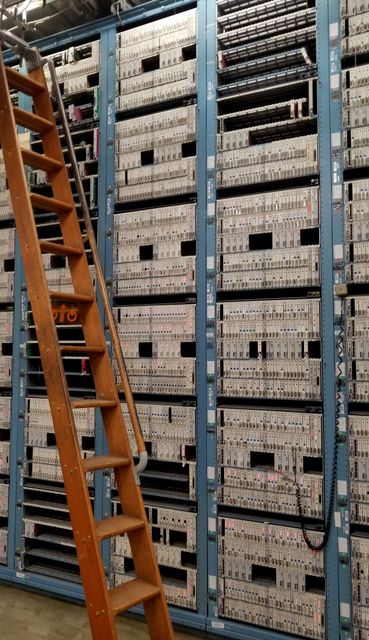
What’s behind the abysmal service offered by Frontier is the fact that the company has failed to both upgrade and maintain its aging copper-wire network. Copper networks offer limited bandwidth.
According to the website ARS Technica, “Frontier’s average Internet download speeds in New York are just 7.4Mbps, by far the lowest of any major provider in the state.”
Many Frontier customers are still reliant on 20-year-old DSL technology. Further, copper networks break down quickly as they age, suffering from moisture, corrosion and noise on the line from electrical interference, to name a few problems. Repair of a copper network is labor-intensive. While Frontier has cut its number of employees over the years, the company milks the failing network for every penny of profit while inadequately investing in maintenance and upgrades. Customers are left without service for long periods before a repair is scheduled.
This brings us to the next point. Fiber-to-the-premise offers tremendous bandwidth with current download speeds of around 940 Mbps available. Fiber networks are far more reliable than aging copper networks, and there is strong consumer demand for the service where it is available.
So why hasn’t Frontier upgraded its network to fiber, except in a few markets?
Frontier admitted that a major cause of the bankruptcy was a failure to roll out fiber across its service territory to retain and attract customers and grow new revenues. An article on the website Electronic Frontier Foundation (EFF) on April 30 said, “It just falls under the old adage ‘you have to spend money to make money,’ an anathema to American ISPs’ entrenched position of prioritizing short-term profit over making lasting investments,” pointing to short-term profit concerns outweighing all other considerations.
The article then noted, “Instead of being incentivized to grow a satisfied consumer base by investing in better service and expanding to underserved customers, publicly traded companies’ incentives are dominated by quarterly reporting. They are driven to show larger profits every three months, and that short-term profitability woos big-dollar sources of investment and pleases the analysts whose judgments move the financial markets. This short-termism precludes investments that bear fruit in the future. That is why for years, the telecom sector has invested almost exclusively in programs that pay out in three to five years and neglected anything that pays out over 10 years or more.” Essentially, Frontier was content to milk every bit of profit from its decaying, outmoded copper network while not making the investments to build out a robust modern network.
The Communications Workers of America (CWA), the union that bargains for a number of Frontier workers, has collaborated with management in imposing the destruction of jobs. The CWA’s only efforts have been directed at pressuring the Democrats to force the telecoms to invest in their networks by imposing new regulations. This has proved an utterly bankrupt strategy. In fact, much of the deregulation of the industry that has led to the present state of decline was initiated by Bill Clinton in the late 1990s with his Telecom Act.
What the EFF article fails to point out is that the deliberate decision not to invest in necessary upgrading of the network, which led to the bankruptcy of Frontier, was driven by the dictates of Wall Street, which punishes companies for making big, long-term capital investments.
This subordination of the telecom industry to the financial oligarchs is why decisions that make sense from an operations or customer service viewpoint are ignored.
The goal is to maximize and increase the flow of profits to Wall Street every quarter over the last, no matter how illogical. CEOs who comply at no matter what cost to workers and consumers are rewarded with obscene bonuses and compensations, while those who falter are removed quickly.
This reporter has worked 30 years in the industry, and during that time I’ve heard workers point out, correctly, many times how corporate decisions coming down from above make no sense toward the goal of providing service. However there is a “logic”—that of Wall Street and its unending thirst for profit. The same could be said of practically any industry.
These irrational profit-driven considerations are in conflict with the progressive development of man’s productive forces. The solution is for the telecommunications industry to be taken out of private hands and operated on the basis of social need rather than the accumulation of private profit. This requires the development of independent organization by workers, of new forms of workplace representation and struggle, including the development of factory and workplace committees. This must go hand in hand with the development of an independent political movement of the working class aimed at the socialist reorganization of society.

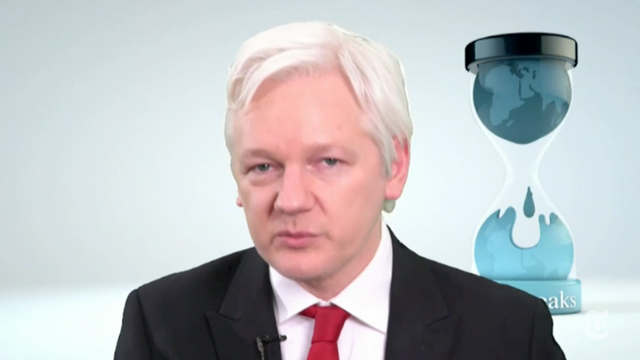
CIA acknowledges its trove of cyber warfare tools was exposed by WikiLeaks in 2017

Kevin Reed

A newly-released 2017 internal review of security practices at the Central Intelligence Agency (CIA) confirms that the top secret agency had developed an arsenal of cyber espionage tools and would not have known about the massive “Vault 7” data hack of them had WikiLeaks not made it public.
Vault 7 is the name given to a trove of hacked documents from the CIA’s Center for Cyber Intelligence (CCI) that were anonymously shared with WikiLeaks, which the online site began publishing information about on March 7, 2017. The hack obtained nearly the entire arsenal of espionage tools and the methods by which the CIA was conducting illegal electronic surveillance and cyber warfare around the world.
The internal report says that the CIA could not determine the precise scope of the data breach, “We assess that in spring 2016 a CIA employee stole at least 180 gigabytes to as much as 34 terabytes of information. This is roughly equivalent to 11.6 million to 2.2 billion pages in Microsoft Word.” It was the largest unauthorized disclosure of classified information in the history of the CIA.
Julian Assange speaking on the CIA Vault 7 data breach in March 2017 [Photo credit: WikiLeaks]
Significantly, the heavily redacted and partially released, “WikiLeaks Task Force Final Report” from October 17, 2017 says, “Because the stolen data resided on a mission system that lacked user activity monitoring and a robust server audit capability, we did not realize the loss had occurred until a year later, when WikiLeaks publicly announced it in March 2017. Had the data been stolen for the benefit of a state adversary and not published, we might still be unaware of the loss—as would be true for the vast majority of data on Agency mission systems.”
The CIA report also says that WikiLeaks published primarily “user and training guides” from a collaboration and communication platform called Confluence along with “limited source code” from a repository called DevLan: Stash and that “All of the documents reveal, to varying degrees, CIA’s tradecraft in cyber operations.”
The task force report was initially provided to the Washington Post on Tuesday by the office of Democratic Party Senator from Oregon Ron Wyden, a member of the Senate Intelligence Committee, who obtained the incomplete document—pages 15 through 44 have been removed—from the Justice Department.
The same limited version of the report had been introduced as evidence in the trail of Joshua Schulte, a former CIA employee who worked at CCI and has been accused of stealing the Vault 7 documents and handing them over to WikiLeaks. Schulte pled not guilty to eleven charges covered by the US Espionage Act and went to trial in early February.
The federal case ended in a hung jury in early March on the most serious eight charges against Schulte and convicted him only on the lesser charges of contempt of court and making false statements to the Federal Bureau of Investigation. As the World Socialist Web Site explained at the time, the failure to convict Schulte of leaking the Vault 7 trove created a stumbling block for the US government in its attempt to extradite WikiLeaks founder and editor Julian Assange, who is currently being held in London’s Belmarsh Prison in violation of his rights.
The mistrial in the case of Schulte has so far prevented the US from adding anything about the Vault 7 breach into the already trumped up US charges against Assange. However, Assistant US Attorney David Denton told a judge in the Southern District of New York on May 18 that the Department of Justice “does intend to retry Mr. Schulte on the espionage charges.”
The Vault 7 release by WikiLeaks exposed the CIA’s use of special software to take control of cars, smart TVs, web browsers, smartphones and personal computers for the purpose of spying on individuals and organizations. The exposure of the CIA’s cyber espionage and warfare repository yielded extensive information about these programs by their code names and what function they perform.
An example is a malware tool called Athena which was developed in conjunction with the release of Microsoft Windows operating system 10 in 2015. The Athena malware, which was jointly developed by the CIA and a New Hampshire software company called Siege Technologies, hijacks the Windows Remote Access services utility on Windows 10 computers, enabling an unauthorized user to gain access to the PC and steal and delete private data or install additional malicious software.
Another tool developed by the CIA called Scribbles is designed to track whistleblowers and journalists by embedding “web beacon” tags into classified documents in order to trace who leaked them. This tool was designed to interact with Microsoft Office documents whereby when any CIA watermarked document is opened, an invisible document hosted on the agency’s server is loaded into it, generating an HTTP request that gathers information about who is opening the file and where it is being opened.
It has been estimated that training and user information as well as the source code for as many as 91 such CIA tools were released in the Vault 7 breach.
The majority of corporate media coverage of the newly released document has focused on the vulnerability of the CIA servers and what the agency intends to do about it, the purpose of the Senate Intelligence Committee attempt to make the report public in the first place, to the exclusion of any mention of the tools that were being developed and the blatantly criminal activity of the CIA associated with them.
They have also not drawn attention to the fact that the CIA had, until the Schulte trial and release of the redacted review document, refused to officially acknowledge the existence of the cyber espionage and warfare tools. At the time of the WikiLeaks Vault 7 revelations, when asked about the authenticity of the trove, former Director of the Central Intelligence Agency, Michael Hayden, replied that the organization does “not comment on the authenticity or content of purported intelligence documents.”
The only other government official to mention the enormous hack of the CIA was President Donald Trump, who, on March 15, 2017, stated during an interview with Fox News host Tucker Carlson that “the CIA was hacked, and a lot of things taken.” In typical fashion, Democratic Congressman from Massachusetts Adam Schiff, the Ranking Member of the House Intelligence Committee, issued a news release the next day that said, “In his effort to once again blame Obama, the President appeared to have discussed something that, if true and accurate, would otherwise be considered classified information.”

New wave of protests in Lebanon amid escalating economic crisis

Jean Shaoul

Thousands have taken to the streets in many Lebanese towns and cities, in the largest protests since the COVID-19 lockdown began.
A collapse of the lira amid an ongoing economic and financial crisis has fueled widespread poverty and led to soaring food prices. With multiple currency rates now prevailing, the exchange traders and agencies closed in Beirut, Baalbek city and northern Lebanon, leaving petrol stations and other informal traders as the main exchange venues.
The lockdown, imposed in March, led to hundreds of thousands of people losing their livelihoods with little if any economic support from the government. While the government has now lifted the restrictions, the virus has infected some 1,500 people and claimed the lives of over 30, likely an underestimate, and the numbers are still rising.
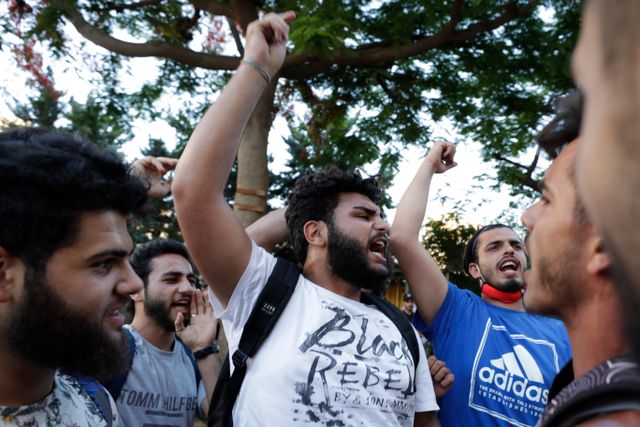
Protestors shout slogans in Beirut, Lebanon, Saturday, June 13, 2020. (AP Photo/Hassan Ammar)
The hardship has been exacerbated by the fall-off in remittances from the Lebanese diaspora, whose jobs and wages have been affected by international lockdowns and economic slumps, as well as the collapse of tourism and oil prices that have affected financial flows from the Gulf countries.
Some 75 percent of the population need aid, as people scrounge garbage dumps for food and beg passers-by for something to eat. The most vulnerable communities, including nearly two million Syrian and Palestinian refugees and 250,000 migrant domestic workers from Africa and Asia, lack food, with many fearing evictions.
Last week, protesters threw firebombs at government buildings and banks in Beirut and Tripoli. Young men burned tyres and dumpsters and blocked the main roads south of Beirut’s Hamra district. Police used tear gas to disperse the crowds, as the government deployed the army.
Hundreds of protesters on motorbikes in the northern city of Tripoli demanded jobs—at least one third of the population was jobless last month. Soldiers used force to disperse dozens of protesters preventing trucks from moving, alleging the trucks were smuggling goods to Syria, which the authorities later said were transporting UN aid.
In the southern city of Sidon, some vented their anger on the long-time director of Lebanon’s central bank, Riad Salameh, who works closely with Washington and has implemented US financial sanctions against Hezbollah. Both the US and France, the former colonial power, have told Prime Minister Hassan Diab, who has blamed Salameh for the currency’s collapse, not to fire him.
These protests, in contrast to last October’s that were characterised by opposition to Lebanon’s sectarian political system, directly involve political parties and factions and their external patrons.
Lebanon’s ruling elite was always dependent upon external supporters that have included France, Syria, and more recently the US and Saudi Arabia. Carved out of the former Syrian province of the Ottoman Empire by France in the post-World War I imperialist division of the Middle East, the tiny country, whose population 100 years later has swelled to six million after the influx of Palestinian and Syrian refugees, was never a viable entity, and deliberately so.
The Sunni Future Movement of former prime minister Saad Hariri and his allies, which are aligned with the US, France and Saudi Arabia, called for the disarming of Hezbollah, the bourgeois clerical group allied with Iran and Syria, which along with the Shi’ite Amal Party and the Christian Free Patriotic Movement forms the largest parliamentary bloc. The small but violent clashes that erupted between the two rival blocs have led to fears of another civil war in a country that was the arena of a bitter conflict between shifting alliances backed by external forces from 1975 to 1989.
As the protests grew, people began to call for the Diab government to resign after the Lebanese lira lost more than 60 percent of its value against the dollar. On Friday, the exchange rate on the black market fell to 6,000 per dollar, compared with the official peg of 1,507 per dollar. This has led to high inflation, expected to reach 53 percent this year, and has eroded workers’ incomes. The economy is predicted to contract by 10 to 15 percent in 2020.
Diab took office earlier this year, after weeks of nationwide anti-government protests over deteriorating economic and social conditions, government corruption and sectarianism brought down the Hariri government.
In March, Diab, who is supported by Hezbollah, defaulted on a $1.2 billion Eurobond to protect Lebanon’s dwindling foreign currency reserves—estimated at $35.8 billion. He later extended the default to all overseas debt due in the immediate future. Lebanon’s debt, at around $90 billion, is 170 percent of GDP.
Days later, he declared a state of emergency, introduced lockdown measures to stem the spread of the coronavirus, and despatched security forces to clear protest camps in downtown Beirut.
Last Friday, Diab announced that the central bank would pump dollars into the market to prop up the currency. He has hired the financial consultants Lazard Freres to help prepare an appeal to the US-dominated International Monetary Fund (IMF) for a loan—dependent upon the usual free market “reforms” that would plunge millions into destitution and cut across key and conflicting interests of the ruling elite.
Compliance with the IMF’s terms would be the prerequisite for further loans from the European and regional powers. But above all, an IMF loan would be contingent upon political alignment with the Sunni oil states, with whom relations have cooled over the last six years, against Iran and by extension Syria, conditions that are an anathema to Hezbollah.
Last month, the party’s secretary general, Hassan Nasrallah, vehemently rejected a deployment of United Nations forces on the border with Syria that would oversee movements between the two countries and limit its trade in food, petrol and drugs with Syria. These revenues have become ever more crucial, as financial support from Tehran dries up, under conditions where its domestic political support is dependent on its welfare programs.
A recent report by the Congressional Republican Study Committee (RSC) focused on containing Iranian power and influence in the Middle East gives some indication of the thinking in Washington, the pressure being put on Lebanon and the forces behind the Sunni Future Movement.
The RSC recommended legislation banning any IMF money from bailing out Lebanon, as it would “only reward Hezbollah,” and the extension of US sanctions to Hezbollah’s allies in Lebanon. Targets included President Michel Aoun’s son in law and former foreign minister Gebran Bassil, as well as the leader of the Free Patriotic Movement, Speaker of Parliament and long-time Amal leader Nabih Berri.
A US veto on an IMF loan—as per Iran—comes on top of the Caesar Act, legislation to sanction the Syrian regime of President Bashar al-Assad and all those dealing with it, due to start this week. This includes Lebanon, whose economy has been historically linked to Syria’s, and would lead to Lebanon’s economic and social collapse.
The RSC’s view is expressed in its citation of a Lebanese-American analyst who wrote in 2017, “Lebanon’s stability, insofar as it means the stability of the Iranian order and forward missile base there, is not, in fact, a US interest.”
This implies that a civil war in Lebanon, which saw a civil war between 1975 and 1990, would be welcomed as a useful way of containing Hezbollah’s activities in the wider arena.
Jeffrey Feltman, a former US ambassador to Lebanon and Assistant Secretary of State for Near Eastern Affairs, poured scorn on Diab’s ability to implement his proposals, given his dependence on Hezbollah, and said the government’s anti-corruption measures were aimed at eliminating its rivals.
Even if Diab secured broader support from other parties for his measures, Feltman warned in May, “It will take strong leadership from the Americans and/or French to assemble a supporting coalition willing to augment IMF and International Bank for Reconstruction and Development programs.”

Pandemic’s negative impact on Australian scientific research future could last decades

John Mackay

A report on the effect of the COVID-19 pandemic on Australian research has forecast a severe impact that could be felt for years and possibly decades. The report was prepared by Australia’s Chief Scientist Dr Alan Finkel with number of leading scientific organisations and experts from Australia and New Zealand, known as the Rapid Research Forum.
The report was a product of an Australian government request that posed the question: “What impact is the pandemic having and likely to have on Australia’s research workforce and its capability to support our recovery efforts?”
The report concludes that the biggest economic hit will be to universities due to the loss of income from foreign students and reduced funding by the business sector. However, medical research institutes, publicly-funded research agencies and the industrial sector also will be impacted, with expected sharp declines in business research spending and philanthropy.
The effect is expected to be greater than that of the 2008 global financial crisis. Research in the university sector will decrease by at least $3 billion in 2020 due to the pandemic but the loss could be as much as $4.6 billion.
The report says universities, the largest sector for research output, will reduce casual teaching positions and increase teaching loads on permanent staff, further limiting research capacity.
Universities have accounted for a growing amount of Australia’s research, rising from 24 percent of total research and development ten years ago, to 34 percent in 2017–18.
According to the Australian Bureau of Statistics, the research workforce currently stands at over 164,000 full-time jobs, an increase from 91,000 since 2009. Of the 80,000 who work at universities, 57 percent is made up of domestic and international postgraduate students, with 30 percent being full-time academic staff.
More than 9,000 international research students are not expected to resume their research work in 2020. In addition, up to 21,000 full-time university positions are projected to be axed over the next six months, with possibly 7,000 being research-related academic staff.
The report outlines a significant setback for the development of new technologies in all areas of scientific research, and a new era of job insecurity for those who work in research. The downturn is predicted to primarily impact early and mid-career researchers and recent graduates, who are a highly casualised workforce, with many employed on fixed-term funding from research grants.
Currently much research has been put on hold and, where resources and skills are available, research into COVID-19 has commenced. However physical distancing and travel restrictions have hindered access to laboratories and research facilities, including for clinical trials and population health studies. One area impacted is investigating the health effects of the summer bushfire crisis.
A seven-member Innovative Research Universities consortium, which includes Adelaide’s Flinders University and Western Sydney University, published a statement on the risks of the pandemic for university research, calling for government assistance.
Conor King, the consortium’s executive director, said: “Research is … the driver of our economy and the solution to every medical and scientific question ever asked. If we allow research funding to fall, not only will jobs be put at risk but also the knowledge those jobs generate. As the coronavirus crisis has shown, you never know when that knowledge may come in handy.”
Most research funding in Australia comes through government grants, which totalled $9.6 billion in 2019–2020. The universities receive almost 38 percent. Approximately 22 percent goes to industry with another 22 percent to government research activity, which includes the Commonwealth Scientific Research Organisation (CSIRO), the Australian Nuclear Science and Technology Organisation (ANSTO) and defence. The smallest portion, of nearly 19 percent, is paid to medical research institutes, agriculture and energy.
Spending on research from all sources, including government and industry, has declined in recent years. Research investment increased from $6.667 billion in 2007–08 to $10.072 billion in 2011–12 and was then cut to $9.396 billion by 2018–19.
As the economic crisis deepens, as the result of the COVID-19 pandemic, governments will view this funding as an area for potential funding cuts.
In 2011, following the global financial crisis, the then Labor government proposed cuts to the National Health and Medical Research council funding scheme of up to $400 million over three years. This was during the peak of the “mining boom” when China’s strategy to offset the crash through infrastructure spending required Australian resources.
In 2016, the current Liberal-National government planned to sack up to 350 climate scientists from the CSIRO. This decision, condemned by scientists internationally, was a major blow to environmental research at a time when a deeper understanding of the effects of climate change is essential.
New Zealand’s Labor-Greens-New Zealand First government has already begun cutting funding, even for health research, during the pandemic. The recent 2020 budget reduced health research funding from $131.2 million in 2019 to $117.5 million. Such a decision, in the face of a global health disaster, to cut the resources to address a pressing human need is a testament to the destructive character of the capitalist system.
The drive for corporate profit conflicts with the need to advance human knowledge. Instead of mobilising all of society’s resources to address significant threats to human existence, scientific inquiry is blocked by the cost-cutting priorities of big business.
The only alternative is a scientifically and globally planned socialist economy, where investment in scientific discovery is regarded as critical for the advancement of humanity.

Risking COVID-19 spread, the state makes Turkish students take mass exams

Çetin Akın

Despite Turkey’s ongoing coronavirus pandemic, President Recep Tayyip Erdoğan’s government has put millions of students in danger, demanding they take High Schools Entrance Examinations (LGS) and Higher Education Institutions Examinations (YKS) this and next weekend.
While the government initially postponed these exams to the end of July, it moved them back to the normal date as part of “re-opening of economy” in early May. This reckless decision provoked enormous opposition among millions of students and their families. Nearly 1.6 million students will take the high school exam this weekend, followed by nearly 2.4 million students taking university examination on June 27-28.
The government insisted exams would proceed as part of its “new normal” policy, launched on June 1, ending all confinement measures. As a predictable result of this reactionary policy in the interests of the ruling class, which risks the health of millions of working people and youth amid a deadly pandemic, the number of daily new cases has begun to rise again in recent weeks from 700 to 1,500.
The government’s drive to organize exams as soon as possible is also related to its concerns over the deepening crisis in Turkey’s tourism sector after the pandemic. To “re-open the economy”, the Erdoğan government wants to boost domestic tourism, as virtually no foreign tourists have come to Turkey this year.
In its June 12 press conference, the Turkish Medical Association (TTB) officials stated: “Turkey is the 17th most populous country in the world. When the third month of pandemic is over, it is ranked 12th in terms of the total number of confirmed cases and 17th in terms of death toll.” The TTB officials pointed to “similarities with Iran”, which has witnessed a new outbreak with more than 2,500 new cases and over 120 deaths daily.
The TTB has also issued a statement on June 5 titled “LGS and YKS must be postponed,” declaring: “As the Turkish Medical Association, we demand that these exams be delayed until the pandemic is fully controlled.”
Since the government moved the exams forward again to June, hundreds of thousands of students and their supporters have organized protests on social media, demanding the postponement of all mass examinations until the pandemic is under control, as scientists and medical experts advise. On June 15, they posted hundreds of thousands of posts on Twitter with a #TurkishStudentsLivesMatter hashtag, in solidarity with mass protests in the United States and all over the world.
In a June 15 Star TV interview, Turkish Education Minister Ziya Selçuk, who owns a private school, laid out the government’s token measures for national student exams, like distributing face masks and disinfectant, or enforcing “social distancing” between students during exams. However, his promises that there is nothing to fear were starkly refuted by a media report that same day.
According to a local media outlet from Kocaeli, an important event took place during another national exam for the war academy that must be seen as a serious warning. While more than 400,000 students have taken this examination, one student in Kocaeli felt faint during the exam. His COVID-19 test was positive, and 16 other people in the same room were quarantined for two weeks.
Moreover, these students had reportedly not had their temperature taken before the exam. Many students and their families reported on social media that there was no check of body temperature in many exam sites places. This by itself clearly shows that it is not safe to organize national exams under these conditions, and that these exams risk spreading the virus among large sections of population.
Dr. Serdar Savaş, a community health care and genomics specialist and an ex-official from the World Health Organization’s European branch in the 1990s, accused the government of implementing a “herd immunity” policy, saying: “We have YKS and LGS exams ahead of us. They [the authorities] endanger the lives of our millions of children. These attempts aim to spread the disease more. Nearly 10 million people will be mobilized.”
Millions of youth are being forced to endanger not only their own lives but also those if their families and loved ones. Moreover, many students have chronic diseases or a weak immune system, making them more vulnerable to COVID-19. They are being forced to choose between risking their health or even their lives by taking the exam or risking their future by refusing to take it under unsafe conditions.
Education Minister Selçuk made clear the government’s conscious neglect and indifference against the lives of youth and their working families. “If we have children with COVID-19, we created separate schools for these children to take the exam,” said Selçuk, adding ghoulishly that “if they want, exams can be provided in the hospitals” to infected students.
The bourgeois opposition parties’ reaction on this homicidal policy shows they have no serious differences with Erdoğan. Indeed, they share his indifference to the fate of millions and his party’s base in the capitalist class. Republican People’s Party (CHP) leader Kemal Kılıçdaroğlu urged youth to “work better, work more decided,” and ordered his officials to distribute face masks to students before the exams.
However, the current situation and future facing youth in Turkey is not bright in terms of either education or job prospects. While the government has largely privatized and gutted higher education over the past two decades, millions of young people have been forced to prepare national exams. But even if they are able to enter a university, this does not mean that the risk of unemployment has been overcome.
According to a recent report prepared by the Young Unemployed Platform based on official figures, officially the number of unemployed aged 15-34 is about 2.3 million, including 707,000 university graduates. But in fact, there are another 1.3 million university graduates not officially considered unemployed.
The devastating situation created by the pandemic for working class youth is not special to Turkey but is also faced by youth and students internationally. A recent report by the International Labour Organization stated: “More than one in six young people have stopped working since the onset of the COVID-19 pandemic while those who remain employed have seen their working hours cut by 23 per cent.”
This policy based on the interests of the capitalist ruling class is pursued at the cost of thousands of deaths and potentially thousands more. The pandemic has revealed once again that the only way forward for youth all over the world is to turn to the international working class and take up the fight for socialism.

COVID-19 infections skyrocket in American prisons

Sam Dalton

New data shows that there has been a rapid increase in the number of confirmed COVID-19 cases in US prisons since the middle of May. According to the New York Times, in the last month the number of confirmed cases among inmates has doubled to over 64,000. The number of confirmed deaths from COVID-19 in this population is currently 607. Additional data from The Marshall Project also shows that at least 9,180 prison staff have had COVID-19, with 38 deaths.
The actual toll of the outbreak is undoubtedly much higher. According to the latest numbers from the John Hopkins Coronavirus Resource Center, five and a half percent of confirmed coronavirus cases in the US have ended in death. If this mortality rate is extended to the prison population, the estimated number of deaths would be at least 3,500.
There have also been severe outbreaks across other parts of the US’s huge web of incarceration facilities. According to The Sentencing Project, there have been 634 cases confirmed among juvenile detainees, while 716 youth prison staff have also tested positive. The COVID-19 Behind Bars tracking project shows that at least 2,067 detainees at immigrant detention camps have tested positive, with at least four deaths. However, many detention camps run by Immigration and Customs Enforcement (ICE) have not released any data since May 1, and some have not released any information on infections or deaths at all.
State and federal prisons have become the epicenters of the outbreak of the disease in the US. In fact, despite huge outbreaks at meatpacking plants, factories and care homes, the five largest known clusters of the coronavirus in the US are at incarceration facilities. Marion Correctional Facility has had the most acute outbreak with at least 2,429 cases. In April, Ohio’s National Guard was called to the facility under the pretense of assisting with the facility’s COVID-19 response, nonetheless the outbreak has continued to intensify. Ten facilities across the country have over 1,000 inmate infections. As of June 18,federal prisons have an average infection rate of 116.17 per 1,000 compared to just 6.01 for the US population as a whole.
Since the first concerns about an outbreak of the virus in prisons were raised in late March, efforts to combat the pandemic, such as testing, inmate releases and lockdowns, have been implemented reluctantly and haphazardly. This has led to unnecessary deaths, increased rates of community transmission, and torturous conditions within prisons.
Testing has been almost non-existent in many states. Illinois, Mississippi and Alabama have tested less than two and a half percent of inmates. New York state, despite being the epicenter of the international pandemic in March and April, has only tested three percent of its prison population of 40,000. Forty percent of those tested in the state were positive. California, with an annual prison budget of $12 billion, has only tested seven percent of its prison population.
On May 21, the WSWS reported that only a handful of US prisoners had been released in response to the COVID-19 pandemic, despite highly publicized executive orders by governors and US Attorney General William Barr nominally authorizing mass releases.
Even with the low number of releases, police forces and the bourgeois media are conspiring to end the early release of non-violent criminals. In an interview given to NBC News, New York Police Department commissioner Dermot Shea claimed that of the 2,500 prisoners released from Rikers Island Jail, 250 have been re-arrested. These social crimes are primarily the product of the abject poverty experienced by released prisoners, who are reentering society at a time of historic unemployment. The NBC report featured the case of one man who had been re-arrested for stealing a pair of socks.
Before the pandemic hit, on any given day 29,000 people were admitted to jail in the US. While this decreased slightly during the pandemic, this daily “churn” of thousands of inmates means jails have acted as vectors for the spread of COVID-19 throughout the country. The arrest of at least 11,000 people across the US since May 25 for protesting police violence has undoubtedly sharpened this effect. Many of those arrested were held overnight in unsanitary and overcrowded conditions.
Despite the rapid rise in infections both in and outside of prisons, many states are relaxing the restrictions put in place in response to the pandemic. With nearly 8,000 positive cases total, and at least 2,350 active cases as of June 18, Texas jails will restart the transfer of inmates to the state’s prison system on July 1. In late May, despite having the highest number of inmate deaths from the virus, Ohio prisons opened their doors for new transfers. Annette Chambers-Smith, head of the Ohio Department of Rehabilitation and Correction, justified the move in an interview stating, “when you reopen the community, you’re going to have more laws broken also.”
It is not the premature reopening of states across the US that will lead to more crime, but the malign neglect of the capitalist class that will lead to increasing crime rates. With no relief, high unemployment and record numbers of evictions, individuals across the US will face desperate circumstances. Figures such as Chambers-Smith and police chiefs like Shea will happily carry out the diktats of the state by brutalizing and exploiting society’s most vulnerable.
Another consequence of measures adopted in prisons across the US has been the increase of individuals in conditions of solitary confinement. Before the onset of the pandemic around 60,000 prisoners on any given day were in solitary confinement. Following a series of partial and full lockdowns in federal and state facilities, 300,000 prisoners in the US are currently in isolation, according to the Marshall Project.
Prison experts fear that these conditions might become the new normal following the pandemic. Judith Resnik, a specialist on solitary confinement at Yale University Law School explained to NPR, “There is really a long legacy of many prisons — not all — but many prisons turning to solitary confinement, turning to lockdown in the face of other public health problems. So, there’s always a concern that once the system is sort of used to one mode of controlling people, that that will continue.”
Tens of thousands of lives are at risk without immediate measures to halt the rapid spread of the virus in prisons and to protect inmates. A campaign of rapid testing, tracing and quarantining must be put in place. Prison cells, cafeterias and shared spaces must be properly sanitized, and inmates must have access to adequate personal protective equipment. If prisoners do contract the virus their right to high-quality medical treatment must also be ensured. Where measures are taken to enforce social distancing, they must accommodate the needs of prisoners, including safe human interaction. Most significantly, those prisoners who are non-violent and test negative for the virus must be instantly released and provided with adequate financial support and housing.
In the last four decades of imperialist war, the use of methods of violence and repression by US forces abroad have become common place. The violent repression of peaceful protests triggered by the murder of George Floyd by militarized police are one sign these methods will increasingly be utilized at home against. The murderous neglect of the poorest sections of society during the COVID-19 pandemic, including over two million prisoners, is a continuation of the capitalist class’s policies of death, war and repression.

Chile’s health minister resigns as disastrous policies lead to explosion in coronavirus infections and deaths

Mauricio Saavedra

Chilean Health Minister Jaime Mañalich resigned last weekend. Only hours earlier, the deeply unpopular minister was exposed for hiding the true number of deaths caused by the highly contagious COVID-19 virus. A media investigation revealed that the government was providing the World Health Organization a coronavirus body count that was almost double that given to the general public.
The discredited minister’s removal is aimed at damage control under conditions where the government and Parliament confront seething anger at the state’s incompetence and opposition to dealing with a rapidly deepening health, economic and social catastrophe for the working class.
Since March 3, the rate of infection from COVID-19 has increased exponentially in the country of 19 million due to the criminally negligent policies pursued by the administration of ultra-right President Sebastian Piñera. Only 105 days after the first victim, there are today 184,449 confirmed cases, but even this number is likely just the tip of the iceberg.
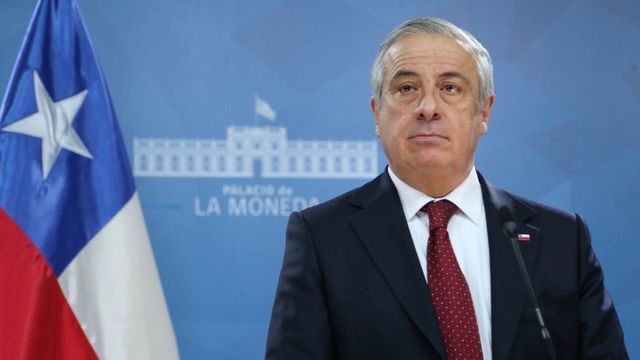
Jaime Mañalich (La Moneda Palace)
This was made evident when Mañalich, responsible as health minister for implementing strategies to deal with the coronavirus, was exposed for a second time in less than two weeks as underreporting the number of fatalities. Last Friday the investigative journal CIPER got hold of the ministry’s weekly report to the WHO from the Department of Statistics and Health Information (DEIS) that showed that over 5,000 people had died of coronavirus by June 12, a figure greatly exceeding the 2,870 deaths reported to the public.
The DEIS, which reports directly to the Health Ministry, supplies the official causes of death in Chile by processing data from the Civil Registry, which is then reviewed by the National Statistics Institute (INE). DEIS, which works off criteria established by the WHO, counts not only deaths with positive PCR tests, but also those classified as probably caused by the coronavirus but not test-confirmed.
This follows another exposé which revealed that the health ministry, in defiance of the WHO recommendations, was reporting as COVID-19 deaths only those who had received a positive PCR result, until it was forced to acknowledge that it had underreported coronavirus deaths by 653 cases on June 1.
Exiled investigative reporter Alejandra Matus—who exposed the judiciary’s systematic whitewashing of the crimes committed by Augusto Pinochet’s 17-year military junta—presented in May findings of her study of Civil Registry deaths for the last ten years. Matus’ study suggested that Chile was massively underreporting coronavirus deaths, pointing to an excess death rate for March 2020 of more than 11 percent above the average of the previous five years and the sharpest rise in a decade. Matus explained that the government was only reporting PCR-positive fatalities at hospitals, whereas 46 percent of people die in their own homes and another 10 percent die in other places such as shelters for the elderly.
In other words, a significant number of people have died without ever knowing whether they contracted COVID-19 because they were not tested.
Matus immediately received a hostile reaction from the Chilean state. “The ministers of different authorities, not just the health minister, immediately came out to reject [my report], raise suspicions of spurious political intentions [and to accuse me] of ‘fake news’,” Matus said.
That the health ministry lied to the population is not a revelation. The entire administration has responded to the pandemic with criminal negligence and brazen lies. Valuable time afforded the government to prepare for the novel coronavirus was frittered away. When the pandemic did arrive, the government played down the threat, rejecting calls from the health community to implement strict quarantines, close non-essential services and industries and conduct mass testing and contact tracing. It repeatedly lied outright to the population so it could forestall forking out any financial aid and resources to working people.
Mañalich in particular has played a reprehensible role, first arguing that the virus would mutate into something like the regular flu, then falsely claiming that the virus had reached a plateau and Chile had survived its first peak. In May, he began playing the “herd immunity” card, insisting that everyone would unavoidably become infected and at the same time reach immunity. Just before the collapse of the Santiago hospital system at the end of May, Mañalich claimed the country had achieved a “new normal,” meaning that it was safe to ease quarantines and resuscitate economic activity, especially in the mining sector.
He adopted a reckless “dynamic” quarantining policy, which meant letting the disease spread before reacting to the outbreak and only then placing a community in or out of quarantine on the basis of unclear criteria. He refused to place the Valparaiso region under total quarantine until the hospital system almost collapsed, and proposed to take the Antofagasta region out of quarantine until a recent massive outbreak in the Calama mining district threatened collapse of the health system there.
The public hospital system continues to be starved of critical equipment, PPE and personnel. Workers are falling ill in the thousands and, with the approval of the former minister, the concierge private hospitals have avoided spending on ICU infrastructure, which has in effect placed the entire financial burden of the health crisis on the public purse.
It would be dangerous to believe that there will be a change of course with Mañalich’s ouster. One of the first statements made by the incoming health minister, Enrique Paris, was that “this is a ministry, in a sense, of continuity.”
Paris, former president of the Medical Association, is a pediatrician who rose in the medical profession under the Pinochet dictatorship. He was an advisor to the previous centre-left coalition government, but is aligned with Piñera, having served on his health team during the 2017 presidential election and being brought onto the government’s “COVID-19 Roundtable” as the unofficial spokesman for the government line.
From the very beginning of the pandemic, he excused the government’s criminal inaction and rejected total quarantine measures, calling them a “populist solution.” Paris is equally committed to a punitive law-and-order response, arguing in March that “people who don’t comply, should go to jail.” Upon assuming office, he has sought to concretise this conviction by supporting congressional moves to impose three-year prison terms and hefty fines for infractions of health emergency guidelines.
But through Paris, the government has been able to secure a national agreement (albeit temporary and unstable) and that was the whole purpose of removing the health minister, because the entire Chilean political establishment was deeply compromised by Mañalich, rightly considered in the working class a criminally reckless, sociopathic liar and thug.
A day before his resignation, in a media stunt by the official parliamentary center and left, Maya Fernández (Socialist Party), Carmen Hertz (Stalinist Communist Party), Carmen Frei (Christian Democrat) and Beatriz Sánchez (Frente Amplio) issued a joint statement that claimed that for national unity to occur “we need a health authority that gives confidence, that listens and that brings humanity back into office.” The open letter called for a new health strategy and Mañalich’s resignation.
Paris delivered, saying that with his administration “a stage is opening in which we must receive divergent opinions” and called for dialogue “for the entire health sector to come together and work together.” It is likely, however, that his administration will be short-lived because, like Mañalich, Paris is committed to securing the needs of finance and corporate capital and that will mean only more hardship, pain and death for the working class.
It is under these conditions that the Stalinist Communist Party will be brought forward to save Chilean capitalism in its most profound crisis of rule since the revolutionary period of 1968–1973. For historical reasons associated with the belated and semi-colonial development of capitalism in Chile, Stalinism has played a preponderant role in official political life from almost its inception in the 1920s.
Originally founded as a workers’ party adhering to the revolutionary traditions of the Third International founded by Russian Bolsheviks Vladimir Lenin and Leon Trotsky, leaders of the October Revolution, the CPC was quickly co-opted into the Chilean state apparatus. By 1925 it participated in the drafting of the country’s bourgeois constitution and held ministerial posts in various coalitions during the most politically convulsive periods of the 20th century: the great depression, World War II, two decades of Cold War and the Popular Unity government of Salvador Allende.
Its raison d’être is to defuse a revolutionary period and channel working class struggles into harmless parliamentary politics. That is the significance of the promotion of current president of the Medical Association, Izkia Siches, 34, a member of the Young Communist League while studying medicine at the University of Chile and around Frente Amplio when she became leader of the doctors’ union three years ago. Siches received a glowing bio in Americas’ Quarterly April 2, praising her as the “youngest-ever and first female leader” of the Medical Association committed to “a message of unity, inclusion and clear thinking.”
The Stalinists are laying a trap against the working class for the umpteenth time. There is no possibility of a parliamentary solution to the historic crisis of capitalism and the dangers of economic depression, dictatorship and war. Workers can go forward only if they break from all the parties of the nationalist and opportunist Chilean “left” and begin to construct a genuine, revolutionary internationalist socialist party that represents their independent political interests. That is the perspective of the International Committee of the Fourth International, which publishes the World Socialist Web Site.

Sharp spike of coronavirus deaths in India

Saman Gunadasa

India recorded its deadliest single day Tuesday since the outbreak of the COVID-19 pandemic, with 2,006 new deaths. This staggering increase, which represented a 20 percent increase in total deaths within just 24 hours, took India’s total fatalities to more than 12,000.
The following day, new infections rose by a record 13,103. Underscoring that the pandemic is spreading exponentially, Thursday brought yet another record of new infections, with 13,827 cases.
India is now the country with the fourth highest number of COVID-19 cases in the world. With over 381,000 officially recorded infections, cases have doubled since June 1, when approximately 190,000 were reported. Given that India has one of the lowest test rates in the world, with 4,400 tests performed for every million inhabitants, infection rates are certainly much higher. Many impoverished residents of the country’s large slums and rural areas, where health care is virtually nonexistent, find it almost impossible to get tested.
India’s two largest cities, Delhi and Mumbai, have been hit hardest by the pandemic. On Tuesday alone, they accounted for 437 and 862 new deaths respectively.
Despite these horrific death tolls, Narendra Modi, India’s ultra-right prime minister, has categorically ruled out imposing another lockdown to curb the spread of the disease. In a video conference with 14 chief ministers Wednesday, Modi declared, “We need to fight against rumours of lockdown since the country is now in the phase of unlocking. We need to think about Phase II of Unlock and how to minimise harm to our people.” Phase I of Unlock began June 7, but even before then most production facilities and many businesses had already been allowed to reopen.
Modi’s callous remarks confirm that his government is committed to a policy of “herd immunity” that will claim hundreds of thousands, if not millions, of deaths. One of the government’s top epidemiological advisers has openly admitted that the “herd immunity” strategy could lead to 2 million deaths.
In Delhi alone, cases are expected to explode to 550,000 by the end of July, which would represent a more than ten-fold increase from current levels.
The situation in Delhi’s hospitals is already catastrophic. A case brought by the United Nurses Association before the Supreme Court Wednesday reported that there are no adequate isolation facilities for COVID-19 patients, no personal protective equipment for staff, and a lack of appropriate accommodations for nurses, which is causing the virus to run rampant among medical workers. The family of a 68-year-old man reported earlier this month that he died after being refused treatment by five hospitals.
The congestion of hospitals in Mumbai is so bad that the Municipal Corporation of Greater Mumbai has requested laboratories not to release COVID-19 positive reports to patients to prevent them from immediately looking for a hospital bed. Instead, laboratories have been ordered to provide the positive reports to the Corporation, violating the patients’ privacy, so patients can be notified to quarantine at home.
Gurugram (Gurgaon), which is about 30 kilometres southwest of Delhi and home to hundreds of factories and local offices of more than 250 Fortune 500 companies, has seen a surge of coronavirus cases over recent days. The industrial area, which is one of the most polluted in the world, reopened many factories in mid-May and has seen cases jump to 3,682 as a result. Forty-two people have lost their lives thus far.
Gurugram Metropolitan Development Authority head V.S. Kundu said that teams are surveying convention centers and banquet halls in the city to determine how many patients they can hold. The authorities expect to have 150,000 cases in the city by the end of July. It is clear that most of these infections will be impoverished workers forced to labour in large factories and industrial facilities with virtually no protection. Under these conditions, the convention centres and banquet halls will not become health care facilities, but rather death camps.
Modi’s speech to the chief ministers sought to cover up the disastrous conditions produced by the uncontrolled spread of the virus while reassuring them that nothing would be done to hamper the operations of big business.
Brushing aside India’s rapid rise to fourth place in coronavirus cases worldwide, Modi began by claiming that the coronavirus had not been able to cause as much damage in India as it had in other parts of the world.
Even as India’s death toll reached three times that of China’s, Modi asserted that India is among the “nations with least deaths due to COVID,” that deaths were contained to a “minimum” and that, with adequate precautions, India could emerge from the battle against the disease with “minimal damage.”
Covering up his belated, haphazard and brutal lockdown of the country on March 25 with less than four hours’ warning, and without providing any means of support to hundreds of millions of workers who lost their incomes, he said, “India started preparing when COVID wasn’t even being discussed in many nations.”
Modi then moved on to paint a bright picture of the economy. Ignoring the unprecedented numbers of deaths and new infections being recorded as he spoke, Modi declared, “The more we limit COVID, the more the economy can function.” He enthused, “almost all offices are open now. Private sector staff also are going to the office now.”
The strategy of allowing the virus to rip through the population unchecked was reinforced by the contribution of Punjab Chief Minister Amarinder Singh, a member of the opposition Congress Party, who stated, “the authorities were not sealing the entire street or an area if cases were found in a house; they were sealing only a few houses.” These were named as micro-containment zones and Modi said other states also could replicate this model, whose aim is to minimize the disruption to the operations of businesses.
The chief ministers who were allowed to speak all supported the line of the government.
The autocratic nature of the meeting held by Modi with the chief ministers was revealed when it was reported that Mamata Banerjee, Trinamool Congress leader and the chief minister of West Bengal, was barred from speaking at the meeting. She has recently mildly criticized the central government for “playing politics” with the issue of COVID-19 by trying to shift the blame onto the states. Her attempt to place all of the blame on the central government is no less disingenuous, since the West Bengal state government has also allowed the pandemic to run rampant.
Modi began his meeting on June 17 with two minutes’ silence for the soldiers who perished in the Galwan Valley in a border clash with Chinese troops Monday night. By contrast, there was no tribute to the hundreds of thousands of medical workers risking their lives amid the pandemic. According to official statistics released in early May, when only a fraction of the current infections had been reported, coronavirus has infected around 548 doctors, nurses and paramedics in India.
In his remarks, Modi was forced to acknowledge that medical workers faced a shortage of personal protective equipment (PPE) earlier in the pandemic. “Just 3 months back, there was a shortage of PPE kits and diagnostic kits across the world. In India too, we had a very limited stock because we were completely dependent on imports,” he said.
But he went on to boast, “India has fought back from facing a supply shortage of medical kits to become self-sufficient.”
This is a flat-out lie, as underscored by the continued rationing of COVID-19 tests. On the same day Modi spoke, the Supreme Court condemned the Delhi state government for “shooting messengers” after it suspended an employee for making a video of the horrific conditions at a government-run hospital and filed police reports against medical staff who have protested working conditions, including the lack of PPE. In an earlier hearing, the Court described the way patients are treated in Delhi as “worse than animals.”

Top French general announces preparations for “state against state” wars

Will Morrow

The head of the French Armed Forces, General Thierry Burkhard, rolled out a new military strategy document on Wednesday that signals the turn by French imperialism to preparations for large-scale “state against state” wars.
Introducing the document before the National Assembly’s defense committee, Burkhard made clear that the blueprint, entitled “Operational security 2030,” would prepare the military for wars against not only the targets of French neo-colonial interventions in the Middle East and North Africa of the past 15 years, but major powers.
Drawing an analogy to the coronavirus pandemic, Burkhard stated that the eruption of a major war “is missing only the patient zero of a war epidemic.” In other words, the conditions for a war between major powers already exist and are awaiting only the necessary spark to set it off.
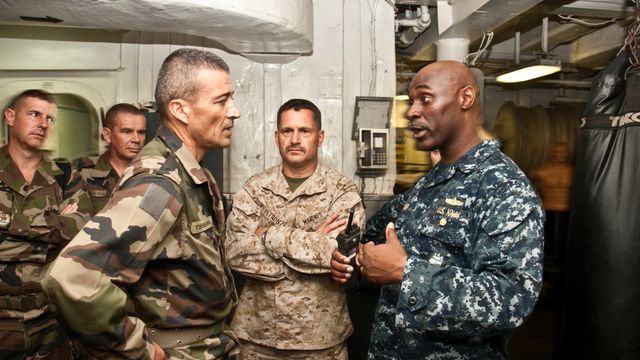
Capt. Samuel Norton, right, executive officer of the amphibious assault ship USS Nassau and General Thierry Burkhard, left. (Wikipedia Commons)
“The world is evolving quickly enough and badly enough,” he said, pointing to a growth in the pace of conflicts and an “uninhibited re-militarisation.” The army had “imagined a situation of 2035… But in 2020, a certain number of check-boxes are already ticked.” France now confronted “the end of a stage of conflicts” that had been marked by interventions in the Sahel and Afghanistan, in which French forces enjoyed overwhelming military superiority against the targeted populations. The army expects new, “symmetric” conflicts, Burkhard said, “state against state.”
In an internal video to the army cited by Le Monde, Burkhard added that “the most minor incident can degenerate into an uncontrolled military escalation.”
Le Monde, reporting on Burkhard’s statements, quoted an unnamed NATO official in Paris pointing to a war with nuclear-armed Russia. “The future conflict with Russia will not be preceded by an invasion, but perhaps by tactical miscalculations that will draw us in.” The official’s conclusion was that “the French army must concentrate on its deterrence capacities”—that is, on nuclear weapons—while “always testing itself and innovating under pressure, developing its arms, its interoperability, its anti-missile defenses…”
The conclusion drawn by Burkhard from his presentation of the state of world geopolitics was that France must carry out a massive build up in every area of its military forces. Between now and 2030 it must “harden the military so that it is ready for more difficult engagements” and “shocks,” he said. This “did not mean that we must prepare to re-do May 1940,” when French military forces were defeated in World War II, because “we must better combine the effects of cyber and information technology.”
The General and the assembled members of the defense committee did not spell out the implications of this invocation of a new world war, which today would rapidly develop into a nuclear conflagration that would dwarf in its death toll the more than 85 million people killed in the course of the Second World War.
Le Monde, citing the statement of unnamed generals, noted that the term of “the masses” had returned to the vocabulary of the military. “They have noted that the 155mm Caesar cannon fired more than 20,000 rounds in three years in Iraq, or that an international force of 90,000 soldiers were needed to expel 15,000 jihadists from Mosul. The French army will not increase in size … but it will extract more significant forces from the reserves.”
The reference to Mosul—a city destroyed by the US-led coalition in 2017 in an offensive that US General James “Mad Dog” Mattis termed a “war of annihilation,” killing anywhere up to 40,000 people—is indicative of the scale of crimes being prepared by the French military.
The blueprint contains numerous references to the need to increase the number of soldiers via the recruitment of youth, referring to the Universal National Service (SNU) reintroduced by President Macron, which includes the option to spend one’s compulsory service in the military. Under the title, “A ground forces ambition for the youth,” it states that “without the support of the reserves,” the army will “invest in the universal national service in order to extract all the possible opportunities from it.” Its reintroduction was supported by the entire political establishment, including Jean-Luc Mélenchon’s Unsubmissive France.
Before the latest announcement, the French military was already carrying out a military build-up alongside its neo-colonial intervention in the Sahel, where 5,000 French troops are deployed. In September 2019, the armed forces budget were increased by €1.7 billion to €37.5 billion per year, an increase of 4.5 percent. Nonetheless, Burkhard stated that even this was insufficient, complaining that the army was ruled by a “corporate mentality” and declaring that “efficiency means a lack of resilience.”
In July last year, the Macron administration announced the creation of a new space command, including the deployment of a new generation of satellites equipped with visual cameras to identify and ultimately destroy rival powers’ satellites. The announcement was part of French preparations to wage war against major powers, which rely heavily on satellite technology for their operations.
The cost of this program of military build-up is to be paid for by the working class in France and internationally, both in the form of destruction and death and in the slashing of social programs to fund the transfer of resources to the military. Within the working class, however, there is no support for the ruling class’ megalomaniacal plans for French imperialist domination and wars for spheres of influence.