20 Jun 2020

Unemployment: A Social Challenge

Waseem Ahmad Bhat

Being un-employed is nothing less than a social stigma in contemporary times. This you can realise only if you are someone who is un-employed or has experienced the same. The modern society has been constructed in such a manner that there exists no existence for the un-employed youth. The community recognizes you only if you possess employment especially the public.
The materialistic outlook has been on rampage and such has been its horrendous impact that we cannot see or accept anyone having no employment or job at their disposal. The individual is not being looked through the prism of virtue, morality, goodness etc. But whether they possess the luxurious cars, a good household, nicely dressed up, bank balance etc. It makes us to introspect that are we rational enough to determine what is good, bad, fair, unfair, just, unjust.
No doubt, Human beings have been described as “Ashraful-Mukhluqaat” i.e., the noblest of all creatures but to my understanding, they have not been suggested to give such huge incentives to materialistic world that being un-employed should be taken as a social stigma or a curse. It is a struggle which almost every one has to go through. Each and Every individual can not be given employment, they have to engage themselves in domestic work or task but when there are no takers, how one could do so.
It remembers me of the wonderful statement by the great Karl Marx that “ It is not the consciousness of men that determines their existence rather it is the social existence that determines their consciousness”. Analysing this statement in the contemporary times, it becomes even more relevant that you are being recognised only on the economic status in your own community and society. If one possess the materialistic credentials he or she actually exists, whether there exists some sort of intellect or not, whether they are virtuous or vicious, it does not matter as long as one posses those materialistic credentials. And at the same time, if you do not possess those materialistic credentials your existence is invisible, there is no space for you, that has been the harsh reality of the current state of affairs. When introspected a little more it makes us to believe that your social existence actually determines your existence or non-existence in this brutal Capitalist world.
Here I am not denying the fact that one should not strive hard to make both ends meet but being “Ashraful- Mukhluqaat” one must be able to struck the balance and try to find out the true essence of humanity.
The fallout of these challenges are so many like depression, fear, anxiety, insomnia, late marriages, suicides, loss of self esteem etc. and when your self-esteem is being challenged there exists nothing for you in reality. This brutal Capitalist world is full of disgrace where you have to find your existence even in your own family or community.
Talking about Jammu and Kashmir, it is no exception to this deadly menace as there are almost thousands of un-married girls who are in their late 30’s or above. When everybody would prefer the employed youth these sort of evils would continue to hurt us. Although the urban areas are more acute to these crises but rural areas are also not lagging behind. Then, there are other variables of late marriages, like dowry, caste, socio-economic status, which have played their role from times immemorial and challenged the social existence to a large extent.
Everybody does not  possess  the entitlement of employment especially the public entitlement, but there are other professions where one can earn enough for their livelihood but the question is, are we rational enough to give them space, are we ready to provide them the opportunity to marry our daughters, sisters etc. Unless and until we do not change our psychological set-up according to the changing circumstances these ungodly pursuits can not be eliminated completely.
Who shoulders the responsibility of changing the norms that have made substantial imprint in our day-to-day lives. The Ulemas, teachers, The NGO’S, social workers, the government, the individual, the intellectuals etc. In my opinion all the stake holders in society will have to play a positive and active part in eliminating this menace. They all must share the burden of making people aware about the negative impacts it leaves on society. And they must strive hard to make sure that employment is not what Thomas Hobbes called “Summum Bunum” (The Greatest Good). Infact humanity has much more to explore. Unless, we prefer to marry only the well off we are surely not going to get rid of it any soon.
Being un-employed is actually challenging the very existence of what Gramsci calls the “Common sense” where the bourgeoisie develops the hegemonic culture and propagates its own values and norms so that they became the “Common sense” where critical enquiry is almost impossible as it becomes a common or normal within a particular community.
Consequently, The individual tends to develop psychotic disorder which plays a pivotal role in his behaviour. And if we continue to follow these idiotic norms and customs, it will surely have its ill effects on the next generation. The so-called social cohesion is being exposed with each passing day and if these menaces are not eliminated at the earliest, it would open up such a disparity which will be everlasting.
Even the Ph.D. scholars cannot be spared off, though it is regarded as one of the noblest degree, where you tend to develop yourself vis-a-vis your community, it makes you to think critically but that critical thinking is of no use unless you occupy a berth in the public department. Therefore, They too have to face such challenges in society where every thing is weighed in terms capital and it seems there are no takes for intellect, emotions, virtue etc.

Joblessness reaches Great Depression levels in Australia

Mike Head

Official statistics released this week reveal that the real level of unemployment rose to 24.5 percent in May—as high as the 1930s Great Depression—and soared even higher among young workers.
Nearly 230,000 jobs were eliminated during the month, taking the total to almost one million in two months—the fastest job destruction in the history of capitalism in Australia.
Although some jobs returned in late May in retail and hospitality, many of these one million jobs will be lost forever, with the world economy plunging into its deepest and most protracted crash since the 1930s.
Moreover, the jobs that do survive will be subjected to severe cuts to wages and conditions as the ruling class exploits the COVID-19 pandemic to restructure employment relations with the help of the trade unions.
Overall, the Australian Bureau of Statistics (ABS) headline jobless rate jumped to 7.1 percent, or 927,600 workers. That rise from 6.4 percent still hides the true situation. Nearly 623,000 people dropped out of the workforce altogether in April and May. They stopped looking for work because of the sheer scale of the contraction.
The ABS noted that its official unemployment rate would be around 11.3 percent, or about 1.55 million workers, if everyone who lost their job in the past two months was still seeking work.
Even that figure is massively distorted by the government’s JobKeeper wage subsidy scheme, currently estimated to cover 3.3 million workers. They are not counted as unemployed even if they are working zero hours, while being paid a meagre $750 a week. If they were included, the jobless rate would be 24.5 percent, or nearly five million workers.
Once JobKeeper ends in September, the immense social crisis produced by this collapse will intensify because many employers will axe the jobs that have been artificially kept on their books. Prime Minister Scott Morrison’s government has made plain its intention to scrap JobKeeper then, regardless of the human impact.
Even according to the ABS, the combined unemployment and underemployment rates rose to a record high of 20.2 percent in May. In other words, around one in five workers, or 2.3 million people, had either lost their job or had reduced hours by May.
The situation for young workers, aged 15 to 24, was much worse. If every young person who had lost their job since March was counted as unemployed, rather than as dropping out of the workforce, the youth unemployment rate would be 26.5 percent.
The rate of youth “underutilisation” (the number of unemployed and underemployed) is now over 37 percent, but that number would be a staggering 48 percent if everyone who had lost their job was counted.
Even this statistic fails to measure the depth of the impact on an entire generation. For now, JobKeeper camouflages this as well. Per Capita, a corporate think tank, estimated that for the first time since the Great Depression almost two-in-three young workers do not have enough work to meet their needs.
To help big business exploit this crisis, the Liberal-National Coalition government has started to re-impose “mutual obligation” work tests on the 1.6 million workers currently trying to survive on $550-a-week JobSeeker dole payments.
Since June 9, those on the dole have been required to undertake at least one appointment with an employment service. Soon, they will be forced to start looking for non-existent work, and drastic penalties, including suspensions of JobSeeker payments, will be re-introduced. These measures are designed to compel jobless workers to accept any kind of employment, whether casual or part-time, on lower wages and conditions.
Desperate to avert a social explosion in March, when 1930s-style queues formed outside Centrelink welfare offices to apply for the dole, the government temporarily doubled the payments to $550 a week. But that rate is due to end in September too, as well as a moratorium on landlords evicting tenants who cannot pay their rent.
By late May, the government’s forced march to reopen the entire economy, despite the worsening global pandemic and signs of fresh outbreaks in Australia, had produced a slight uptick in employment. Payroll jobs increased by 0.4 percent for the week ending May 30 compared to the previous week.
However, many jobs will not return. ABS head of labour statistics Bjorn Jarvis said that while accommodation and food services jobs increased by 5 percent in May, they remained 29.1 percent lower than in mid-March.
Morrison’s government claims that by lifting COVID-19 safety restrictions and pushing people back into workplaces it will create “jobs, jobs, jobs.” This flies in the face of the Organisation for Economic Cooperation and Development predicting the most severe and long-lasting worldwide contraction since the Great Depression.
As part of its “return to work” propaganda, the government is citing Treasury forecasts that up to 850,000 jobs will be refilled in July as social and travel restrictions are lifted. Yet, thousands of jobs are still being destroyed.
Denied any government relief, badly underfunded universities are announcing hundreds of job losses and Australia Post is eliminating some 2,500 jobs. This week, women’s fashion retailer City Chic Collective said it would close 14 of its 92 stores across Australia and New Zealand, having been “unable to reach agreement on appropriate post-COVID rents.”
Worse is to come. The restructuring of the bankrupt Virgin Australia airline, for example, potentially affects 10,000 employees and 6,000 contractors, many of whom are currently on JobKeeper.
In parliament this week, Morrison foreshadowed many more job cuts. “The challenge of JobKeeper is that businesses will form views about those employees who they will be able to keep on longer term and those who they will not,” he said.
Morrison demanded workplace “reform” and “flexibility”—that is, cuts to working conditions. “If we have rigid systems, that could see people needlessly losing their jobs,” he declared.
The trade unions needed to “wrestle” with this problem, Morrison insisted. In other words, they must step up their role in suppressing workers’ discontent. Despite planning to end JobKeeper, the government wants to extend measures agreed by the unions, such as reduced wage penalty rates and “JobKeeper-enabling Stand Downs” that allow employers to cut workers’ hours and wages to $750 a week.
The unions have displayed their readiness to collaborate by joining the government and employers in five working groups covering “award simplification,” enterprise agreements, casual work, “compliance” and the use of “greenfield agreements” to enforce poor conditions on new projects.
To add to the assault on workers, the Fair Work Commission this week handed down a real pay cut for 2.2 million low-paid workers. The industrial tribunal lifted the minimum wage by 1.7 percent, taking it to just $19.84 per hour, or $753.80 a week.
The rise is less than consumer price inflation rate, which is above 2 percent, according to the latest Reserve Bank of Australia data. In addition, only “essential” workers will receive the increase on July 1. Construction and manufacturing workers must wait until November, and retail, hospitality, aviation and arts workers until February.
This is part of a broader offensive against the working class in Australia and internationally, and it is being enforced in partnership with the opposition Labor Party and the trade unions.

Australian COVID-19 cases increase as governments ease restrictions

Martin Scott

As Australian state and federal governments continue to push for a return to work and the further relaxation of social distancing restrictions, new confirmed cases in New South Wales (NSW) and Victoria provide a stark reminder that the coronavirus threat is far from over.
The country recorded 119 positive tests between June 13 and June 19, more than three times the previous week, and the most in a seven-day period since May 11.
The majority were in Victoria, where 89 new cases of COVID-19 were reported in the week to Friday. On Wednesday alone, 21 new cases were found in the state, more than on any day since May 4, during an outbreak at the Cedar Meats abattoir.
Fifteen of the week’s cases appear to be the result of community transmission (i.e., not linked to other known cases), suggesting that the rate of infection throughout the state may be significantly higher than authorities acknowledge.
This would align with research published earlier this month by Macquarie University Professor Alvin Ing into the coronavirus-stricken Greg Mortimer cruise ship. The report revealed that 81 percent of the 128 passengers and crew who tested positive for COVID-19 were asymptomatic—that is, were infected by showed no symptoms.
“The findings may partially apply to the general population in that the number of asymptomatic positive cases are likely to be underestimated, the reason being that we don’t test asymptomatic patients,” Ing said.
“If you look at the current testing advice, it’s if you have even the slightest symptoms, go get tested… but that doesn’t include people who don’t have symptoms, so we don’t know.”
Many of the newly-discovered cases were returned travelers in quarantine hotels, including 15 on Thursday. Workers at two of these hotels—Rydges on Swanston, and Stamford Plaza—have recently tested positive, suggesting that the containment practices in place are not sufficient to prevent a major outbreak stemming from returned travelers.
At Stamford Plaza, six security contractors have been diagnosed with COVID-19, and contact tracers are now investigating the possibility that the hotel is the source of at least seven other cases in southeast Melbourne.
While federal Tourism Minister Simon Birmingham has indicated that Australia’s national borders are likely to remain closed until next year, the government has flagged likely exemptions for business travelers. In addition, moves are underway to create a “travel bubble” with New Zealand, which could be expanded to include other countries.
With Prime Minister Scott Morrison adamant that the JobKeeper wage subsidy will not be extended beyond September, lobbyists for the ailing tourism industry are placing increased pressure on state and federal governments to allow expanded travel.
Fourteen of the week’s cases were linked to medical and aged care facilities, including a doctor who worked at three Melbourne clinics before developing symptoms and testing positive.
The previous week, the BUPA Aged Care Clayton went into lockdown and Scope Disability Services in Chelsea was closed after workers tested positive. Both facilities are in Melbourne’s east.
Twenty-five residents at the Hawthorn Village aged care facility in north-eastern Victoria remain in isolation after one tested positive while in hospital undergoing treatment for an unrelated condition.
Contrary to the continued insistence by governments and health authorities that children are not susceptible to the coronavirus, seven tested positive this week.
Two Melbourne childcare centres were closed on Thursday after a one-year-old child and a worker were diagnosed with COVID-19. This follows the positive test of a toddler at an early learning centre in Parkville the previous week.
Three Melbourne primary schools were forced to close in just two days this week after five students tested positive. The three schools, Strathmore, Pakenham Springs and St Dominic’s, are all in working-class suburbs, as was the case with a previous outbreak in Keilor Downs, which caused the closure of four schools.
In NSW, four Sydney schools have also been closed over the past three weeks, after students and staff were diagnosed with COVID-19. As a result, hundreds of students, teachers, and family members remain in self-isolation.
Despite the closures, authorities have continued to insist that the return to face-to-face teaching is safe. Victorian Chief Health Officer Brett Sutton told 3AW Radio: “When we look at the classroom context of those kids, they don’t pick up illness.”
By contrast, the positive tests of those who recently demonstrated against police violence and Aboriginal deaths in custody have been prominently featured by health authorities and the corporate media.
Only three of the more than 100,000 protesters at the June 6 rallies around Australia have been diagnosed with COVID-19, and none appear to have contracted it at the demonstrations.
The positive tests have dominated media headlines and official health reports because they lend credence to moves by the ruling class to suppress mounting social unrest among Australian workers and young people.
The stern government warnings about the health risks posed by the protests, as well as the handful of tenuously-linked cases, also provide a convenient excuse if a sudden increase in the number of new cases results from the continued drive to ease social-distancing restrictions and force people back to work.
In NSW, 27 new cases were recorded between June 13 and June 19, more than three times the previous week, and the highest number for a seven-day period since May 7.
Most of the new cases are returned travelers in quarantine, but one is a man in his early twenties in the Illawarra region, south of Sydney. The source of his infection is unknown.
Despite the resurgence in cases in NSW and Victoria, both states are proceeding with the relaxation of restrictions on public gatherings and business operations.
Victorian Labor Premier Daniel Andrews stated on Thursday that, while the uptick in cases this week was “a timely reminder… that this is far from over,” the government believed it could “continue to slowly, cautiously, safely, reopen.”
In Victoria, restaurants, bars, and licensed clubs will be allowed to seat up to 50 patrons per space from midnight Sunday, up from the current limit of 20. Indoor cinemas and concert venues will also be allowed to open for up to 50 people.
Indoor sports centres will also be allowed to reopen to 20 people per space, and pools will no longer be limited to three swimmers per lane.
In NSW, restrictions will be eased on July 1, allowing cinemas, theatres, music venues, strip clubs and brothels to reopen with capacity determined by floor space. While patrons will be obliged to drink only while seated and refrain from dancing, such restrictions will likely prove impossible to enforce.
Crowds of up to 10,000 will be allowed to attend National Rugby League games from July 1.
NSW Premier Gladys Berejiklian announced on Tuesday that public transport capacity would be nearly doubled from July 1, supposedly to avoid overcrowding as the return to work is accelerated.
However, this will not be achieved through the provision of extra bus, train, and light rail services, but by the application of additional stickers to indicate that passengers can sit more closely than allowed under current social-distancing rules.
The easing of restrictions around the country is not based on an objective scientific analysis. No state has introduced the widespread random testing necessary to determine the true prevalence of the coronavirus and allow authorities to honestly assert the safety of reduced social distancing.
Instead, the changes are driven by the economic demands of industry and fueled by the desperation of workers confronted with the choice of returning to work under possibly unsafe conditions or continuing to struggle with poverty-level government assistance or none at all.

ANC imposes back to work drive amid sharp rise in South Africa’s coronavirus cases

Stephan McCoy

The COVID-19 pandemic is exposing the brutal reality of South African capitalism as thousands of workers become unemployed and the virus spreads rapidly in the townships.
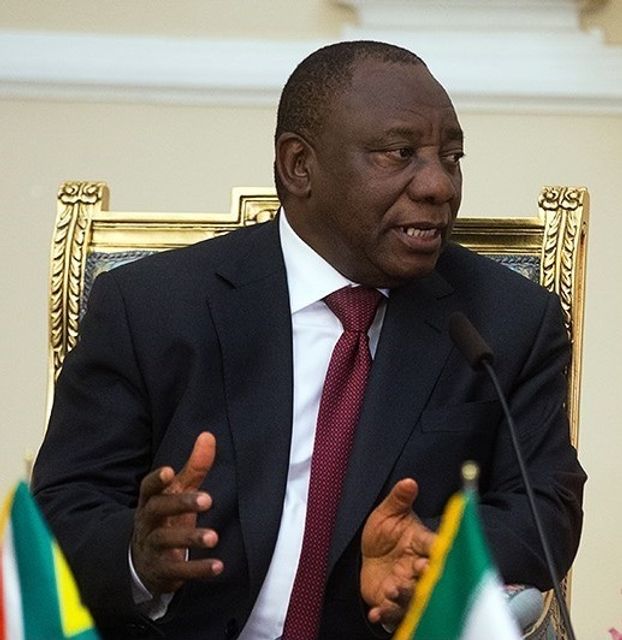
Cyril Ramaphosa [Credit: Tasnim News Agency]
Coronavirus cases are beginning to soar two weeks after the African National Congress (ANC) government of President Cyril Ramaphosa eased its draconian lockdown and ordered a return to work for June 1. More than 84,000 people—25 percent of Africa’s confirmed cases—have now been infected with the virus, which has claimed the lives of almost 1,800 people.
Around 60 percent of those infected are in Western Cape province, with 12 percent of those infected in Khayelitsha, the largest township in Cape Town, despite having just 6 percent of the province’s population. More prosperous neighbourhoods have largely escaped the virus, exposing the rampant inequality that pervades post-Apartheid South Africa.
According to the South African Centre for Epidemiological Modelling and Analysis, cases are expected to rise, peaking between early July and August. Some 35,000 to 50,000 South Africans could die from the virus.
Health Minister Zweli Mkhize warned health care workers that the pandemic had not reached its peak, acknowledging an increase since the lockdown was lifted and the need to take precautions to reduce the rate of spread and enable the hospitals to cope. Despite this, hospitals remain terribly ill-equipped as more and more health care workers are lost to quarantine and the virus itself. There have been numerous walkouts at hospitals and health care facilities over the lack of personal protective equipment.
While the two-month-long lockdown slowed the spread of the disease, it exacerbated the already desperate plight of millions of South African workers. South Africa’s GDP, the largest in Africa, is expected to contract by 7 percent, while government debt was reduced to junk status in April and the rand fell by at least 18 percent against the US dollar. As a result, unemployment could rise to a staggering 50 percent by the end of this year. Unemployment, according to official figures, already stands at 30 percent, under conditions where youth unemployment was already 55 percent before the pandemic.
The 3 million informal workers, including cleaners, street vendors and garbage recyclers, the majority of workers in the townships, villages and countryside, have been unable to stay at home because it would mean they would have no money. They are now facing destitution. Most were already paid no more than $63 a month. For this reason, the security forces were deployed to enforce lockdowns in the poor areas with high-density townships, where higher population numbers and overcrowding made it impossible to isolate.
The Ramaphosa government, like its counterparts around the world, provided little support for small businesses and the self-employed and did nothing to secure wages and the livelihoods of workers. The Unemployment Insurance Fund (UIF) that was supposed to have provided R40 billion ($2.2 billion) in support to laid-off workers made hardly any payments. The government’s refusal to deem the UIF an essential service during the lockdown made it impossible for most workers to walk into a UIF office to collect the loan, as it was closed. With many workers without access to the internet, symptomatic of the low-skilled nature of the economy, many were unable to access their loans online.
Agricultural workers are increasingly being threatened with unemployment due to the lockdown. The Land and Agricultural Development Bank of South Africa, which lends to both large commercial farmers and smallholders, is struggling to keep afloat after it failed to repay a key creditor. Increased borrowing from farmers as they switched to capital intensive horticulture destined for export markets, and a reduction in its access to funding after its credit score was downgraded to junk status, eroded the bank’s financial position, even as South Africa’s credit rating was cut to junk. To avoid a default, the South African Treasury provided $300 million worth of funding.
This comes after farm workers were forced to accept an abysmal 3.8 percent wage increase, raising the minimum wage from R17.97 to R18.68 per hour, instead of the 12.5 percent increase filed by the farm workers’ union, much lower than workers themselves were demanding. Transvaal Agricultural Union President Louis Meintjes was forced to admit that it was “far below” the amount requested.
The South African ruling elite is also choosing to sacrifice thousands of airline jobs to keep the profits and the bank accounts of corporations healthy. Funding of the national airline, South African Airways (SAA), has been cut amid increased discussions of privatisation that would mean slashing hundreds of jobs. The unions even made an offer for workers’ pay to be cut by 49 percent for two months to save the company.
An estimated 4,708 SAA workers did not receive their wages in May. Most staff were put on “unpaid absence,” as the Ramaphosa government, the unions and management worked together to “restructure” while seeking to stifle any significant pushback from workers. Pilots are still being forced to fly repatriation flights for South Africans stuck in other countries after restrictions on international travel to stem the spread of the coronavirus.
All this comes as the ANC government mounts a criminal back-to-work drive, a move that has been opposed by municipal workers, bus drivers, metal workers and miners in wildcat actions against unsafe working conditions. At the same time, there have been demonstrations outside US missions in South African cities, condemning the killing of George Floyd by the police.
Plans to reopen schools have met with fierce resistance from parents and teachers over health concerns for children and a lack of adequate protection, forcing the government to postpone several times the reopening from June 1. Despite the government’s claim that it was providing 7,000 touchless thermometers, 2.4 million masks and thousands of litres of sanitizer, many schools have been left without protection. According to Times Live, parents and residents in Mpumalanga shut down Mbazima Primary School because it was unsafe, with the school lacking sanitizers, face masks or even soap and water for hand washing. Even after the school’s closure, despite promising to clean the school and screen pupils, teachers and other staff members, the school’s management failed to do so.
Several other schools have been forcibly shut down by parents because of dilapidated, unsafe, and unhygienic conditions. Many parents were forced to clean schools themselves as the government absolved itself of any responsibility to provide sanitary conditions.
In the Western Cape, 98 teachers have tested positive for the virus and 1,800 children have been infected, forcing 16 schools to close. In the Eastern Cape, 23 schools were forced to close amid reports of 48 suspected cases. Western Cape Minster of Education Debbie Schäfer tried to downplay this, saying, “1,537 cases were reported before the schools were reopened,” although all the teachers had contracted the disease on returning to the classrooms.
Despite the anger of their members, the education unions responded meekly to the government’s request not to disrupt its plans for the reopening of schools. Instead of calling an all-out strike to prevent the schools’ reopening, they simply “urged” their members to defy the government’s return-to-school order, saying schools did not yet have the PPE needed to keep educators and pupils safe.
Demonstrators gathered outside United States missions in South African cities on June 8 to condemn the killing of George Floyd, whose death in police custody has set off a wave of protests worldwide and ignited a debate about race and injustice.

Brazilian police arrest key ally of Bolsonaro

Miguel Andrade

Brazil’s protracted political crisis entered uncharted territory Thursday with the early morning arrest of Fabrício Queiroz, a key political ally of fascist President Jair Bolsonaro. Queiroz may hold key evidence in relation to Bolsonaro’s involvement with organized crime in Rio de Janeiro and even the death squad execution of the city councilor for the Socialism and Liberty Party (PSOL), Marielle Franco, in 2018. The arrest came just days after the arrest of organizers of the so-called “300 of Brazil” fascist group of Bolsonaro supporters and dozens of raids and financial investigations against Bolsonaro allies, including Congress members.
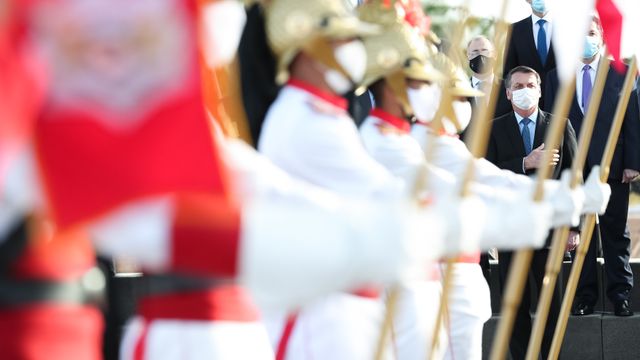
Bolsonaro during flag ceremony [Credit: Marcos Corrêa/PR]
Queiroz was arrested in a country house belonging to Bolsonaro’s lawyer, Frederick Wassef, after a year and a half of refusal to testify in a corruption inquiry involving Bolsonaro’s eldest son, Flávio, a Senator for the state of Rio de Janeiro. His arrest was ordered by Rio state prosecutors. Along with his wife, Márcia Aguiar, who was not found and is considered a fugitive, he was believed to be actively working to conceal evidence in the investigation.
Queiroz is considered a central piece in multiple investigations involving Bolsonaro and his sons Flávio, Eduardo—a House member for the state of São Paulo—and Carlos—a Rio city councilor. A retired member of the military police, he is known to be a friend of Bolsonaro since 1984, and worked as a fixer for the Bolsonaro clan during the entire period of the president’s 28 years as a House backbencher.
His testimony was initially sought in late 2018 as federal and Rio state law enforcement uncovered unusual banking operations in the accounts of Flávio, then a Rio state parliament member. Unusual cash payments by Flávio were the target of routine operations by the federal Financial Activities Council (Coaf), a banking oversight body. The immediate understanding by law enforcement authorities was that Flávio had been involved in a common scheme found in the 27 state parliaments and the more than 5,000 city councils throughout the country, in which elected officials keep part of the official salaries paid to their aides. Queiroz was from early on considered the manager of the scheme within Flávio’s office.
The investigations into Flávio and Queiroz just before Bolsonaro’s inauguration on January 1, 2019, cast a shadow of corruption over the fascist demagogue, who had sought to make his electoral campaign a referendum on the corrupt political establishment led by the Workers Party (PT) for the better part of the previous 16 years, until the 2016 impeachment of President Dilma Rousseff.
Just after the initial deposition requests by Rio prosecutors, Queiroz was admitted to the Albert Einstein hospital in São Paulo. Discharged from hospital in early 2019, he was never seen again until Thursday’s arrest.
The investigation into the salary kickbacks found that among Flávio’s aides suspected of taking part in the schemes managed by Queiroz were relatives of Adriano da Nóbrega, the alleged crime boss of Ronnie Lessa, who is charged with murdering Franco. Nóbrega was then brutally murdered by police in early 2020 at a hideout in the state of Bahia, in what is widely believed to be a rubout operation carried out with the participation or at least knowledge of Bolsonaro. Initial evidence found in material seized with Queiroz Thursday points to his communications with Nóbrega.
Nóbrega was understood to be the head of the so-called “Crime Office” criminal organization, one of Rio de Janeiro’s militias. The militias are comprised of retired and active duty police officers and soldiers, and have a direct connection to the political death squads of the 1964-1985 military dictatorship.
Since the fall of the dictatorship, the militias established themselves as vigilante groups in impoverished, working class areas of Rio de Janeiro’s metro region, in particular to the west and north of the city. Initially under the pretext of fighting petty crime and drug dealing, they established control of public utilities over vast swaths of the region, monopolizing access to gas, electricity, gambling and even construction through intimidation and executions. Later, they came to expel drug dealers in order not to ban, but to monopolize, the sale of cocaine, marijuana and other substances. It is now estimated that no less than 2 million of the 18 million inhabitants of the state of Rio live in areas partially or fully controlled by militias.
Bolsonaro, a former Army captain discharged for planning a barracks bombing and justifying a new military coup in the late 1980s, has regularly praised the militias as substituting for “weak” justice by the state. In 2005, the Rio state parliament bestowed on Nóbrega its highest honor, the Tiradentes Medal honoring what is considered Brazil’s first independence martyr, at the request of Flávio Bolsonaro. Defense of the militias has been a far-right trope for decades. However, direct involvement of the Bolsonaro family with their fascist and criminal operations had not been found until the investigation into Flávio Bolsonaro’s banking irregularities.
The arrest of Queiroz now threatens Bolsonaro amid multiple offensives by his bourgeois political opponents, who are fearful that his criminal neglect of the COVID-19 pandemic and his mobilization of the far right against Congress, the Supreme Court and social opposition will provoke an explosive mass working class reaction. These forces are also frustrated by the dead-end of his full alignment with US imperialism and the Trump administration, which has caused geopolitical setbacks with the European Union and Brazil’s main commercial partner, China.
While Brazilian presidents cannot be prosecuted while in office for any crimes committed before their inauguration, there is wide expectation that the arrest of Queiroz may uncover evidence of Bolsonaro’s continued involvement with the militias. This would possibly include Nóbrega’s police execution, or substantiate the charges made by former Justice Minister Sérgio Moro, upon his resignation, that Bolsonaro sought to interfere in the Rio offices of the Federal Police (PF) in order to stall investigations that would implicate himself or his sons. The investigations may also shift a decisive layer of the ruling class toward support for Bolsonaro’s impeachment.
As grave as the accusations against Bolsonaro are, what emerges from the latest developments in Brazil is a desperate attempt by growing layers of the bourgeois establishment—first and foremost the PT, which leads the Congressional opposition—to divert mass working class anger against Bolsonaro into safe channels, avoiding a mass uprising against rotting Brazilian capitalism. Or, in the infamous words of the open letter for Bolsonaro’s resignation penned by opposition leaders of the PT and PSOL, their goal is to remove Bolsonaro in “the least costly way” for Brazil’s capitalist ruling class.
The arrest of Queiroz crowned yet another frenzied week in the capital of Brasília, which began with dozens of raids against Bolsonaro’s far-right “300 of Brazil” supporters, and the arrest of its leaders.
The “300 of Brazil” group had set up a camp in front of the Supreme Court (SFT) with the stated goal of “Ukrainizing” Brazil, that is, gathering middle class support for a violent fascist putsch in Brazil such as the one sponsored by imperialist powers in 2014 in Ukraine. Their aim was to back Bolsonaro in shutting down Congress and the Supreme Court and wiping out social opposition. The same group had been gathering for months in front of Army headquarters in multiple cities to “call out” troops in support of Bolsonaro. Having attracted virtually no support outside of its organizers, such demonstrations did provoke immense opposition from youth in mass rallies initially in protest against the murder of George Floyd, but which quickly brought out a larger opposition against the government and the far-right.
They also led to both the STF and the Attorney General’s office opening investigations into the financing of the fascist rallies, now implicating 10 House members, one Senator, multiple businessmen and also threatening to reach Bolsonaro himself, who has until today claimed he had only attended the demonstrations and had no role in their organization.
The evidence collected by both inquiries is being shared with two other inquiries initiated by the Electoral court, at the request of the pseudo-left PSOL, on the spread of “fake news” by Bolsonaro supporters during the 2018 presidential campaign, which PSOL claims should lead to the annulment of the election results.
What all of these investigations have in common is the portrayal of the massive crisis gripping Brazilian capitalism, leading to the election of a known figure of the far-right underworld, as lightning from a blue sky. The government’s criminal policies are presented as unrelated to the political establishment, being the product of either the actions of a few wealthy figures who bought the election or of the Rio police gangs.
Major newspapers are calling for the Army to dissociate itself from Bolsonaro and accept his impeachment, while the Supreme Court is using the dictatorship-era National Security Law to prosecute the fascists for “subversion.” Most importantly, however, the PT-led opposition has presented articles of impeachment against Bolsonaro charging him with threatening the “internal security” of the Brazilian capitalist state—that is, of fomenting mass opposition.
What has been demonstrated by the experience of the last two years of similar charges presented by the US Democrats against Trump—using alleged “collusion” with Russia as the “threat”—is that the removal of Bolsonaro on such grounds is far from assured. Moreover, its byproduct has been the emergence of the Armed Forces in the US as the arbiters of the political situation, with Democratic presidential candidate Joe Biden indicating that they will decide the fate of the 2020 election by removing—or not—Trump if he doesn’t recognize the election results.
If anything, the same process is even further advanced in Brazil, leading Bolsonaro’s Government Secretary—akin to a chief-of-staff—the active duty Army Gen. Luiz Eduardo Ramos to warn that, while the Army “isn’t thinking” of a coup, the opposition should not “push it” (“esticar a corda”). Bolsonaro himself added three days later, on June 15, that the “fake news” investigations were “starting to push it” (“começar a esticar a corda”).
Most decisively, it has led to the emergence of a pseudo-legal interpretation of a specific article of the Brazilian Constitution—article 142—which states that “any power” may call out the Armed Forces to maintain order. Leading scholars such as Ives Gandra da Silva Martins and the Attorney General Augusto Aras have claimed this article means that the Armed Forces should “moderate,” that is, choose a side, in clashes between the branches of government, possibly disobeying the Supreme Court on the orders of the Executive. The debate led incoming STF president Luiz Fux to declare the court to be “the only interpreter” of the Constitution. This was followed by Defense Minister Fernando Azevedo e Silva, also an active-duty general, signing a press release together with Bolsonaro and the vice president, Gen. Hamilton Mourão, stating that the Armed Forces “don’t follow absurd orders,” a clear reference to the investigations against the president and his followers that Bolsonaro claims are “absurd.”
Whatever the political outcome of Queiroz’s arrest, it is clear that only the independent intervention of the working class, free from the political straitjacket imposed by the PT and PSOL, can stop the buildup of fascist forces and a police state in Brazil.

Financier of 1994 Rwandan genocide Félicien Kabuga arrested in Paris

Jacques Valentin

Félicien Kabuga, aged 84, accused of being one of the main financiers of the 1994 Rwandan genocide, was arrested last month in Asnières-sur-Seine in the Paris suburbs. One of Rwanda’s wealthiest businessmen at the time of the genocide of the Tutsis, he was often called the “genocide financier” for having financed and equipped the Interahamwe militias that carried out most of the massacres during the genocide. He also created Radio Mille Collines (Thousand Hills Radio), which broadcast Hutu-extremist ideology, including calls for murder during the genocide.
Victims’ associations have provided information to French courts on around 30 individuals accused of complicity in genocide but have been stonewalled by the authorities. And so it is not surprising that Kabuga, though supposedly wanted since 1997, was able to peacefully live for decades in France.
He received assistance from his children, whom police monitored in order to find him. He was hiding under an assumed identity with a “passport from an African country” that investigators refused to identify. They did not say either since when Kabuga had lived in France.
The last time Kabuga had been found with certainty, though he escaped police, was in 2007 in Frankfurt, where he was traveling on a Tanzanian passport. He was with Augustin Ngirabatware, the Rwandan minister of economic planning during the genocide, who is also wanted by the International Criminal Court for Rwanda, and who was arrested by German police. According to French investigators, Kabuga used 28 false identities while in hiding. This gives some idea of the networks of assistance that organizers of the Rwandan genocide have across Africa and Europe.
Kabuga will be extradited to be judged by the Mechanism for International Criminal Courts whose prosecutor coordinated the arrest, and who took over pending Rwandan cases previously assigned to the International Criminal Court. Kabuga is to be judged at Arusha, in Tanzania.
It remains to be seen why France suddenly cooperated with the campaign to arrest Kabuga. Its relations with Rwanda have been strained especially since the breaking of diplomatic relations from 2006 to 2009. Since Michel Flesch left the post in 2015, France has had no ambassador to Rwanda, and the embassy in Kigali is led by a lower-ranking chargé d’affaires, as Rwanda has refused to recognize ambassadors proposed by France. Rwanda for its part sent an experienced ambassador to Paris, François-Xavier Ngarambe.
The stakes for French imperialism, which is seeking to consolidate its positions in the region, are vast. Rwanda, Burundi and Uganda regularly wage proxy warfare though militias that are still active in eastern Democratic Republic of Congo (DRC). France and other imperialist powers are concerned by China’s rising commercial influence in Africa, which has upset French and NATO transnational corporations in what they consider to be their “backyard.” They use all diplomatic and military means to counter this influence.
A quarter century since this genocide, the French regime is still trying to hide French imperialism’s responsibility and the support it granted to the ethnic-Hutu Rwandan regime between April and July 1994 as it carried out the murder of 800,000 members of the Tutsi minority and Hutus favorable to political accords with the Tutsis. France allowed the genocidal forces to flee towards the Congo in Operation Turquoise, as the Tutsi Rwandan Patriotic Front (RPF) of future President Paul Kagame took control of the country with tacit US backing.
Besides its responsibility for the genocide, France, by permitting Hutu extremists to leave Rwanda and take control of camps with Hutu refugees who fled Rwanda and Burundi towards the Congo, bears devastating responsibility for the 1996–1997 and 1998–2003 Congo wars, which claimed millions of lives. It has justifiably been referred to as an “African world war.” It involved nine African countries and around 30 armed groups, making it the largest inter-state conflict in Africa’s contemporary history.
After the Stalinist regime dissolved the Soviet Union in 1991, French, British and US imperialism waged brutal wars for influence in Africa that led to bloody wars and genocide. The social and democratic aspirations of the African population found no progressive representative under conditions where no political parties there defended an internationalist socialist perspective in the working class.
The last stages of events before the Rwandan genocide took place under the presidency of the Socialist Party’s (PS) François Mitterrand, after the conservatives had won the 1993 legislative elections. The conservative Édouard Balladur was Mitterrand’s prime minister, while Alain Juppé was foreign minister. Thus France’s entire political establishment is implicated in the decisions that were taken.
Mitterrand, who was backed by the Stalinist French Communist Party and various petty-bourgeois renegades from the Trotskyist movement, was able to impose in Africa, essentially without any opposition on his left, an extraordinarily bloody neo-colonial policy.
Still today, the French political establishment tries to deny its responsibility in the genocide. During the 2019 European elections, Raphaël Glucksmann, who was leading a joint list with the PS, said that Mitterrand was responsible for the genocide. About 20 former PS ministers called upon Olivier Faure, the PS national secretary, to object to these comments and defend France’s foreign policy at the time.
This year, shortly before the yearly commemoration of the genocide in Rwanda, the conservatives in the French Senate organized on March 9 a colloquium on the Great Lakes region of Africa—a transparent provocation, as they invited speakers known for denying or minimizing the genocide of the Tutsis and dismissing historians who worked to establish France’s responsibility.
Historians face enormous difficulties in accessing French archives on the genocide, as indeed with archives regarding the crimes of French colonialism after the Second World War.
Macron granted in 2019 limited access to archives on Rwanda to a carefully selected team of researchers, the Duclert Commission, leaving out specialists of the Rwandan genocide. Predictably, the preliminary results whitewash French responsibility in these events.
On June 12, after five years of administrative battles, the State Council finally granted definitive early access to the Elysée presidential palace’s archives on Rwanda to historian François Graner, co-author of the book The French State and the genocide of the Tutsis in Rwanda. However, many archives, including notably the military archives, are still closed to researchers.

Doctors head legal challenge to UK government on health care deaths and PPE

Rory Woods

Doctors, lawyers, and campaigners for older people’s welfare have launched a High Court legal action against the Johnson government. It challenges the refusal to hold an “urgent inquiry into its failures to get adequate PPE [personal protective equipment] to NHS staff and care workers,” to protect the lives of health and social care workers from COVID-19.
At least 181 health workers and 131 social care workers have died while working on the frontline.
The action was launched by the Doctors Association UK (DAUK)—a campaign group of doctors and medical students—the Good Law Project, a pressure group on legal matters, and the charity Hourglass, which campaigns against neglect and abuse of older people.
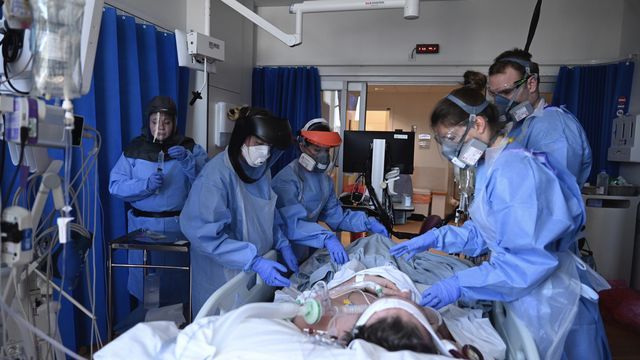
Clinical staff care for a patient with coronavirus in the intensive care unit at the Royal Papworth Hospital in Cambridge, England, May 5, 2020 [Credit: Neil Hall Pool via AP]
Crowdfunding for the legal challenge has already raised more than £62,000 out of a £75,000 target and a petition calling for a public inquiry has attracted more than 120,000 signatures.
In May, the group’s legal team wrote to Health Secretary Matt Hancock, demanding an investigation into failings in procurement, stockpiling, distribution, and provision of PPE.
A pre-action Protocol Letter, dated May 9, stated, “Those failures have contributed to the death and serious illnesses of healthcare and other care workers, as well as patients and others for whom they care.”
The letter insisted that an inquiry was necessary, “as a matter of law,” under the Human Rights Act 1998 and Article 2 of the European Convention on Human Rights (ECHR).
An independent inquiry, according to the campaigners, “is necessary to learn lessons as speedily as reasonably practicable from the current crisis in order to enable adequate provision of PPE to be made during the current crisis and, in any event, in time for any second or third wave of COVID-19 or similar pathogen.”
Hourglass Chief Executive Richard Robinson said, “As lockdown restrictions ease, it is vital that lessons are learned from our response to the pandemic before we encounter a second wave.” He warned, “There can be no excuse for a repeat of the carnage we’ve seen in our care homes over the last few months.”
In response to the pre-action letter, Conservative government lawyers claimed there was “no arguable case” that the health secretary had breached Article 2 of the ECHR. They argued that deaths from COVID-19 were already being investigated through existing mechanisms, such as medical examinations and inquests.
The government’s claim regarding examinations and inquests is preposterous. Guidance from the chief coroner issued in April excludes investigation of the PPE issue from the scope of coroner’s inquests into the deaths of health care workers.
On this question, the crowdfunding appeal states, “This is also about getting answers for the families of the individual NHS and social care workers who have lost their lives. Each death will be investigated by a coroner, but without an independent inquiry, it is likely different coroners’ courts will reach inconsistent or conflicting views on the role PPE played in their deaths. The families deserve better.”
The government lawyers’ letter stated, “In the context of a national emergency and pandemic of this kind, there are many ways in which the government is properly held to account, including in Parliament.”
The government can state this safe in the knowledge they can rely on Her Majesty’s Most Loyal Opposition to prop them up and collaborate in a state cover-up. Sir Keir Starmer, as soon as he became Labour Party leader in April and as the pandemic death toll was rising exponentially, offered to “work constructively with the government.” He has been true to his word.
The government is seeking to conceal its failures regardless of all the evidence, proof and facts arrayed against them. Any objective examination of events and how they unfolded during the pandemic exposes its criminal actions. The pre-action letter draws attention to these issues, although it does not call for any prosecutions.
The World Health Organisation (WHO) was first informed by the Chinese government in December that people were suffering from pneumonia caused by a possible unknown virus in central China. On January 9, WHO identified and announced the virus affecting people in Wuhan, China, as Novel Coronavirus SARS-CoV-2, 2019 (COVID-19). On January 30, the WHO emergency committee alerted the world of a possible global pandemic of COVID-19.
The government had enough time to prepare but ignored all the warnings from scientists and experts. Instead, it based all calculations on a “herd immunity” strategy—centred on allowing tens of millions among the population to contract the disease, with the real possibility that up to 500,000 could die as a result. Those who would face the full brutal impact of such a policy would be the elderly and infirm and those caring for and treating the sick.
By early March, there were more than 100 confirmed COVID-19 patients, but the government went on with “business as usual,” in the words of Prime Minister Boris Johnson, knowing the tragedy already unfolding in Italy was soon to follow in Britain.
According to experts, consistent use of full-body PPE—along with other infection-control measures—can diminish the risk of infection for health care workers. But the Tories ignored this advice and WHO guidelines.
When the pandemic began to tear through the population, there was a severe shortage of the required PPE. This was a result of years of underfunding the National Health Service (NHS) and social care. Between 2013 and 2016, the national stockpile of PPE was slashed by 40 percent as a part of £20 billion in NHS “efficiency savings.”
Regardless of the lack of general availability of PPE, the government refused to join a joint procurement scheme with the European Union in March, although it attended the European Health Security Committee.
Instead of fulfilling demands for PPE, the Tories and Public Health England—along with the Health and Safety Executive—changed the guidelines amid the outbreak. The government downgraded COVID-19 to a non-High Consequence Infectious Disease (HCID) from March 19, 2020—reducing the level of what constitutes safe PPE required for staff in treating it. A month later, on April 17, the government amended guidelines for Cardiopulmonary Resuscitation (CPR) to cut down on the use of filtering face masks (FFP3, FFP2)—again in breach of WHO recommendations.
None of the health unions, including the Royal College of Nursing (RCN) and British Medical Association (BMA), whose members have been the victims of the lack of PPE and the government’s criminal negligence, raised a finger against the Johnson administration. They made a few token criticisms to appease the growing anger of their members but have organised next to nothing to protect them from the dangerous conditions they face. The RCN and BMA have 450,000 and 88,000 (including 19,000 medical students) members, respectively. Unison, Unite and GMB also have tens of thousands of members working in the health and social care sectors. Their recent surveys reveal a significant section of their membership are working without adequate protection from COVID-19.
The RCN found that more than a third of nursing staff (34 percent) “say they’re still under pressure to care for patients with possible or confirmed COVID-19 without adequate personal protective equipment (PPE).”
A recent BMA article, “PPE: a problem yet to be fixed,” reported findings from a survey to which 8,455 doctors responded. It stated that “a significant proportion of doctors still report struggling to access basics: masks, gowns, and protective glasses. The supply problem now seems chronic and months of struggle are now hitting staff mental health.”
No faith whatsoever can be placed in the unions, which function as an extended arm of the government and the employers.
The refusal by the government to sanction even a toothless inquiry—in which the British ruling elite are past masters—is the clearest indication of their aims. The representatives of the ruling elite intend to get away with social murder on a scale far greater than that of the Grenfell Tower inferno in 2017, which killed 72 people. It has been three years since the fire, but none of those responsible—including Johnson, who slashed the fire service as London mayor—has been arrested, let alone prosecuted, even as a whitewash inquiry has dragged on over months.
Any genuine exposure of the crimes committed by the government, and the bringing of those responsible to justice, requires a unified struggle of the working class based on a socialist strategy. Last month, the Socialist Equality Party issued a call for health workers to take matters in their own hands through the building of “Rank-and-file safety committees, to demand and implement measures to protect workers’ lives.”

OECD warns of deep recession in Britain and Europe due to pandemic

Steve James

The Organisation for Economic Cooperation and Development’s (OECD) latest Economic Outlook outlined the catastrophic scenarios facing the world economy due to the COVID-19 pandemic. No “return to normal,” in the words of OECD chief economist Laurence Boone, could be envisaged. Rather, the world should prepare for “dire and long-lasting consequences for people, firms and governments.”
The pandemic has accelerated a “great fragmentation” of the world economy, with trade restrictions, closed borders, and diverging economies. Boone continued, “Everywhere, the lockdown has also exacerbated inequality across workers, with those able to telework generally highly qualified, while the least qualified and youth are often on the front line, unable to work or laid off, with the effects further compounded by unequal access to social protection.”
In response, Boone, a former adviser to the one-time Socialist Party president of France, François Hollande, insisted that governments cannot prop up private sector wages indefinitely and called for drastic relocation of capital and labour “from impaired sectors and businesses...to expanding ones.”
“Fast restructuring processes” should be encouraged, with “no stigma for entrepreneurs.” In other words, capital should be allowed to drastically reorganise economic life in its own interests, imposing vastly increased exploitation, with only the most minimal social protection for workers—with “no stigma” attached to their brutal offensive.
The OECD report applied its general analysis to the challenges facing its 33 member states. Among the world’s wealthiest countries, its assessment of the situation in Britain, France, Italy and Spain, the European countries hit worst by the pandemic, was particularly bleak.
British GDP is anticipated to fall between 11.5 and 14 percent over 2020, depending on whether a second wave of COVID-19 infection emerges (in reality, of course the first wave is still ongoing). Unemployment, already rapidly escalating, is likely to rise above 10 percent by the end of the year and remain there over 2021.
The report explains that the service-based UK economy was particularly badly impacted, with “trade, tourism, real estate and hospitality” sectors devastated by lockdown measures belatedly imposed on March 23. Business and consumer confidence was at an all-time low in April when 856,000 new claims for unemployment benefit were registered (2.5 percent of the workforce).
By the end of May, 8.4 million workers (25 percent of workers) were on furlough. Unemployment support was temporarily increased from, on average, 56 to 63 percent of net previous income. The OECD noted that British payments were nevertheless “below levels in other advanced European economies.”
By contrast, the government made £330 billion available to employers via the Covid Corporate Financing Facility, cut interest rates to 0.1 percent, and increased its bond purchasing programme by £200 billion. A “Ways and Means” facility allowed spending without turning to the capital markets and reduced capital requirements on the banks.
The OECD’s predictions already appear out of date, and over-optimistic. Figures speculating a 11.5 percent collapse in UK GDP assumed the lockdown was eased from May 13, leading to some revival in the third quarter of the year. In fact, despite the reckless drive of the Johnson government to end lockdown, public hostility and ongoing high rates of infection have continued to delay lockdown exit. Moreover, the sociopathic, profit-driven incompetence of the British government’s response, combined with the premature ending of lockdown, guarantees a second wave of infection and thousands more deaths.
The OECD also points to “considerable uncertainty about how prolonged restrictions on activity or lower than expected demand would affect financial stability.” Banks might not lend to capital-starved small businesses, leading to yet higher unemployment. A “larger-than-expected fall in house prices” might erode banks’ capacity and willingness to lend.
A further factor is Brexit. The OECD warned that “failure to conclude a trade deal with the European Union...would have a strongly negative impact effect on trade and jobs.”
The EU and the British government remain mired in protracted negotiations and posturing over whether an agreement can be reached by the end of 2020. Both sides are effectively threatening a “no deal” Brexit, which would further wreck commerce on both sides of the Channel. This is something that elements around the Johnson government, and its transatlantic ally Donald Trump, see as a money-making and geo-political opportunity.
The OECD appraisal of prospects across Europe is little brighter. In France, GDP is expected to fall by 11.4 percent this year, 14.1 percent in the event of a second wave. Unemployment is expected to rapidly reach between 12.4 and 13.7 percent by the end of this year. Economic activity fell by 33 percent this April, in comparison with a “normal” April with “construction, tourism, retail and accommodation” particularly badly impacted.
Italy is expected to lose around 14 percent of GDP this year under the second-wave scenario with tourism and industry shut down to the end of April. Fifty-two thousand small and medium-sized businesses dominate tourism and many of these are imperiled. The government has temporarily prevented redundancies, but these measures expire in August. “Widespread dismissals are projected in the double-hit case,” with unemployment expected to reach 11.9 percent.
In Spain, GDP is anticipated to fall by 14.4 percent this year, with tourism and accommodation again badly hit. International tourism fell 64 percent in March and disappeared entirely in April. Spain’s already high unemployment figures are anticipated to reach 21.9 percent by the end of this year, should the second wave emerge.
Across the eurozone, despite widespread variations in infection rates and COVD-19 deaths, the situation is no better. The OECD warns of a GDP contraction of 11.5 percent in 2020 and unemployment reaching 12 percent by the end of the year, despite numerous short-time working and employment support schemes. Many countries report output losses of 25 to 30 percent, with tourism, travel, car making and construction particularly affected.
The OECD warns of “deeper-than-expected scarring effects of the pandemic [which] would weaken employment and investment for longer, threatening productive potential and social cohesion.”
Non-performing loans will impact banks’ capacity to offer credit, while there are “acute market concerns about public debt sustainability.”
The OECD was set up as the Organisation for European Economic Cooperation in 1948 to administer the US-led Marshall Plan to rebuild capitalism in post-World War Two Europe. Referencing social cohesion is its warning that mass unemployment, a collapse in investment—with banks and entire national governments facing collapse and bankruptcy—will provoke an eruption of the class struggle.
The OECD’s solution, under all circumstances, is to propose measures to force workers, en masse, from collapsing and collapsed areas of the economy, to be exploited in more viable and emerging sectors.
The OECD also calls repeatedly, and forlornly, for global cooperation between the rival capitalist governments. But this is 2021, not 1948. The days when the US government and its allies could orchestrate a revival of capitalism in Europe and worldwide are long gone.
Rather, the pandemic and capitalism’s disastrous, divided, and murderous response to it mark a new stage in the disintegration of the EU amid escalating inter-imperialist antagonisms and a collapse of the global economy. To confront the pandemic and the social misery being imposed by the ruling elite, a new global power, the politically unified working class, must impose its own socialist solution through the establishment of workers’ governments in Europe and worldwide.