22 Jun 2020

Tens of thousands rally in French-occupied Mali for resignation of president

Will Morrow

Tens of thousands demonstrated at Independence Square in central Bamako, the Malian capital, on Friday to demand the immediate resignation of French-backed president Ibrahim Boubacar Keïta (known as IBK). It was the second mass protest for the removal of Keïta this month, after tens of thousands demonstrated on June 5.
The protests have been called by the official bourgeois opposition coalition, which has named itself the June 5 Movement: Rally of Patriotic Forces, many of whose leading figures are either former government figures or supporters. The widespread and growing demand for the removal of the government in the population, however, is driven by anger over rising inequality exacerbated by the coronavirus pandemic, the decline of social services, corruption and the government’s role in sectarian killings and extrajudicial executions by security forces backed by the French-led occupation. IBK became president in 2013 and is closely associated with the French intervention in the country.
The protesters carried signs including “IBK resign,” “The dictator will not stay,” as well as banners calling for the release of political prisoners, “more money for education” and “an end to the coronavirus.” A protester, Diawara Issaka, told Le Monde: “We should not be here, because there is the coronavirus. The president has promised a mask for every Malian, but no one here has received one; he is a liar. So we have come here to challenge this lie like all the others.” A group of protesters with him added: “We have had enough of it. We, heads of family, have not received wages for three months.”

The protest in Bamako on Friday
So far 109 deaths have been confirmed in Mali and 1,933 cases of coronavirus.
Police fired tear gas to disperse the protesters, who responded by erecting barricades to prevent the security forces from advancing.
The government had ordered the reopening of schools on June 2 despite the pandemic, but thousands of teachers boycotted school and refused to turn up. They demanded not only measures to protect teachers from the pandemic but also wage increases that had been formally announced by the government four years ago but never provided. According to the teachers’ unions, only 35 percent of public schools opened on June 2.
President Keïta offered this week to form a government of national unity incorporating leading members of the opposition, and also pledged to provide the promised wage increases to teachers, in an attempt to defuse the growing movement. The official opposition has refused Keita’s offer and on Friday reiterated its appeal for him to resign.
The leading figure in the official opposition is Islamist cleric Mahmoud Dicko. Dicko has been a leading figure in the regime for many years. Between 2008 and 2019 he led the Islamic High Council, and he supported Keïta’s election in 2013. In September 2019 he created an opposition movement amid rising opposition to the French occupation and to the Keïta government in the population. An adherent of conservative Wahabi Islam, he had also served as an interlocutor between the government and Islamic insurgent forces.
On June 9, French media reported that Dicko had met with a group of unnamed international officials, including representatives of the United Nations in Mali (MINUSMA), from the Economic Community of the States of West Africa, and the African Union.
The French government has not made any public statements either supporting or opposing the protests against Keïta. But there is no doubt that it is actively intervening to ensure the continued defence of French imperialist interests in the geo-strategically important Sahel region.
France intervened in Mali in January 2013, against separatist and Islamist forces who came from Libya in the aftermath of NATO’s regime-change war in that country in 2011. It has maintained more than 4,000 troops in Mali, increased to more than 5,100 since the beginning of the year, as part of an international coalition that includes Germany, Canada, the US and the so-called G5 force of troops from Niger, Chad, Mauritania, Burkina Faso and Mali.
Mali is Africa’s third-largest gold producer after Ghana (which is located to Mali’s south) and South Africa. It also borders Niger, where France has stationed military forces including drone bases and from where it sources the majority of its uranium supplies required for nuclear power production in France.
In February, the Macron administration announced a significant escalation in the intervention, increasing the number of French troops in Operation Barkhane from 4,500 to 5,100, some of them being deployed to fight directly alongside the G5 troops.
The stepping up of the French intervention went hand-in-hand with a surge in the number of ethnic massacres and extrajudicial killings and war crimes reported by human rights groups. The French-backed government and G5 security forces are widely reported to be supporting ethnic Dogon militia in massacres of Muslim Fulaini communities, on the grounds that they are suspected of supporting Islamist forces. On March 23, 2019, a Dogon militia massacred 160 Fulani villagers, which triggered a reprisal attack killing at least 95.
A recent Amnesty International report provides evidence that the G5 security forces operating side-by-side with French soldiers are guilty of extra-judicial executions and war crimes.
Entitled “Human rights violations by security forces in the Sahel,” it reports at least 199 such incidents in just three months between February and April 2020, immediately after the expansion of the French-led intervention.
It cites the example of a reprisal attack carried out by security forces against an entire town following the killing of 20 soldiers on January 26 by Islamist groups. Malian soldiers intervened one week later in the town Kogoni-Peuhl on February 3, killing one herder and arresting two others. A witness stated, “When the soldiers arrived, they started shooting. Many villagers fled, those close to the mosque sounded the alarm and many others fled to the bush….”
In another incident, on February 7, in the village of Massabougou, security forces combed houses, arrested 22 people, and executed eight on site. A witness stated: “They arrive around 5pm shooting in the air, and arresting villagers. Many people fled or stayed in their houses after the soldiers arrived. They combed the houses, extra-judicially executed eight villagers and took the rest with them when they left.

Corporations continue to slash workforces in Britain

Barry Mason

Redundancies in the UK are set to explode as the Tory government’s COVID-19 job furlough scheme begins to taper out.
Under the furlough scheme, 9.1 million workers—more than a quarter of the UK workforce—are having 80 percent of their wages paid by the state, up to a monthly maximum of £2,500 a month. These same companies, after having received tens of billions of pounds in free money from the public purse, are making workers pay for the economic crisis exacerbated by the pandemic.
The numbers of those on company payrolls fell by 600,000 between March and May. The number of job vacancies recorded this quarter was 476,000, down from the previous quarter by 342,000. The quarter also saw a drop in the number of the self-employed of 131,000.
Government financial support will be withdrawn on a tapering system beginning in August, with furlough support stopping completely at the end of October. Companies planning to make redundancies rather than retaining furloughed workers need to give notice to workers slated for redundancy. For redundancies of 100 or more, the length of notice is 45 days, and for redundancies between 20 and 99 the length of notice is 30 days.
To ensure they do not have to make furlough payments from their own funds, companies planning to make 100 or more redundancies had to start redundancy consultations June 15. For redundancies of less than 100 the notice period would need to be given by the end of June.
Institute of Directors chief economist, Tej Parikh, said, “The furlough scheme continues to hold off the bulk of the job losses, but unemployment is likely to surge in the months ahead.”
Workers are facing a return to 1930s levels of unemployment, along with mounting austerity, as they are made to pay for the economic crisis exacerbated by the pandemic. While the furlough scheme has been in operation, unemployment claimant count has still doubled, with 2.8 million workers out of a job. Guardian economist Larry Elliot commented last week that the “challenge for the government is to prevent it from hitting 4 million by the time the wage subsidies come to an end in October.”
Recent job losses announced in manufacturing include:
· Jet engine manufacturer Rolls-Royce. It has confirmed 3,000 out of its planned 9,000 worldwide job cuts will be in the UK, with half of those at its Derby headquarters.
· Luxury car producer Aston Martin Lagonda will cut 500 jobs while Bentley plans to cut its workforce by nearly a quarter with a planned 1,000 jobs to go mainly at its Crewe facility.
· Jaguar Land Rover, which produces high-end market models, will cut 1,100 of its contract worker posts at plants on Merseyside and in the Midlands.
· Other manufacturing companies planning to make redundancies include Canadian plane maker Bombardier, which announced 600 jobs will go at its plant in Northern Ireland. Mechanical digger manufacturer JCB is experiencing a 50 percent drop in demand and plans to shed 950 jobs.
· Airlines and aviation firms have announced swingeing job cuts or plans for the same. British Airways plans to cut 25 percent of its posts, meaning 12,000 jobs lost. EasyJet will cut its workforce by nearly a third, with 4,500 jobs to go. Richard Branson’s Virgin Atlantic will cut its workforce by a third, or 3,000 jobs. More than 300 airport workers employed by Menzies Aviation in Edinburgh and Glasgow have been put on notice of imminent redundancy. The company furloughed more than 17,500 jobs worldwide in March in response to the pandemic.
· Energy companies planning job cuts include Centrica, the parent company of British Gas, which wants to axe 5,000 jobs by simplifying its management structure. Ovo, the UK’s second largest energy supplier, will cut 2,600 jobs and close offices.
· Builders’ merchant Travis Perkins plans to cut its workforce by 10 percent, with 2,500 jobs slated to go. It owns DIY chain Wickes and hire service Toolstation.
· Fashion and clothes chains have also announced cuts, with Mulberry announcing 470 job losses. Fashion brands Oasis and Warehouse, brought out of administration in April by Hilco, will close its outlets with the loss of 1,800 jobs.
· The Restaurant Group outlet chain, which owns Wagamama and Frankie and Benny’s, will cut 1,500 jobs.
· Last November, the Enterprise section of the BT telecommunications group announced that 367 jobs were under threat and in February said that compulsory redundancies would be enforced.
A June 11 Financial Times article warned of large-scale job losses on the horizon: “Close to 100,000 jobs in business with large UK operations hit by the coronavirus crisis are now on the line, according to a Financial Times tally of company announcements and administrations since March. This is likely to be the tip of the iceberg, with millions of jobs potentially at risk by the year end—and many of them small companies.”
The article points out that of the then 8.9 million workers furloughed, 3 million work in retail and the hospitality industries, which are unlikely to be able to operate normally given social distancing measures, for some time to come. Many redundancies are likely in the retail and hospitality sector.
The FT spoke to a Tory minister, who said many of his Tory MP colleagues were reporting “redundancy notices … being prepared” by local companies in their constituencies.
It quoted Stephen Phipson, head of manufacturing body Make UK, saying, “We have sight of a lot of redundancy programmes across manufacturers … Over the next few weeks we’ll sadly see a lot more job losses coming. The job retention scheme may have simply deferred the job losses, not prevented them.”
In an FT article of June 16, Samuel Tombs, an economist at economic intelligence consultancy, Pantheon Economics, warned, “Unemployment will leap if even a small fraction of employers never bring back furloughed workers.” He noted that the collapse in job vacancies in May—the highest drop since records began—was the harbinger of much greater job losses in the coming months.
Among areas particularly hit are the so-called “red-wall” conurbations. These are constituencies mainly in the Midlands, northwest and northeast of England that have suffered economic and social decline. They had been previously held by Labour MPs but switched to Conservative in the December 2019 general election because of disillusionment with Labour and support for Prime Minister Boris Johnson’s pledge to enact Brexit.
Times June 1 article reported on a study by the Institute for Employment Studies (IES), using Office for National Statistics data. The report said, “Those areas where people were already struggling to find work were those that were more affected by the crisis. For example, areas with more than 15 claims per vacancy in March had an average increase of their ratios by 21 claims per vacancy, while areas with less than 0.5 claims per vacancy in March had an average increase of 1.5 extra claims per vacancy.”
The Times commented, “The data suggests that the lockdown has made existing inequalities worse. Low skilled, low paid workers living in deprived areas have taken the biggest hit.”
The article points out that prior to the COVID-19 crisis, in many of the deprived “legacy towns,” where there were around five job seekers for each vacancy, that number is now around 12.
IES head director, Tony Wilson, told the BBC, “It’s clear … that this crisis is hitting many poorer areas hardest—with coastal towns and ex-industrial areas seeing particularly big increases in unemployment.” According to the IES, among the hardest hit areas are Blackpool, with one in eight workers claiming work-related benefits, and Thanet in Kent and Birmingham, where the figure is one in 11.
Employers are using every opportunity to exploit the pandemic crisis and further slash costs as they cut their workforce. As workers are only being paid 80 percent of their wages, with most companies not paying the other 20 percent, some firms are already attempting to make redundancy payments based on the lower rate of furlough pay—not the full wage that workers earned before.
For a worker earning £30,420 this would mean losing £507 if they had a one-month redundancy notice period, or £1,521 over a three-month period. The Sun newspaper reported, “Employment lawyers say they have received plenty of calls from people whose bosses have tried to pay them less based on their furloughed rate of pay. It cited Kate Palmer, an employment lawyer at Peninsula UK, who said, “We have not had clear government guidance on whether redundancy pay can be based on one’s furlough pay.”

Suspected assailant in Reading terrorist attack was known to UK intelligence agencies

Robert Stevens

Within 24 hours of the stabbing to death of three people in a park in Reading on Saturday evening, it emerged that the alleged assailant was known to the intelligence agencies.
The assailant stabbed six people in Forbury Gardens, located in the centre of the Berkshire town, and three injured had to be airlifted to hospital. Two of the injured have been discharged and the other is in a stable condition under observation. The first victim to be named was teacher James Furlong. He was the head of History, Government and Politics at the Holt school in nearby Wokingham.
Witnesses and police officers immediately tried to help those stabbed, performing CPR as they lay dying and covered in blood.
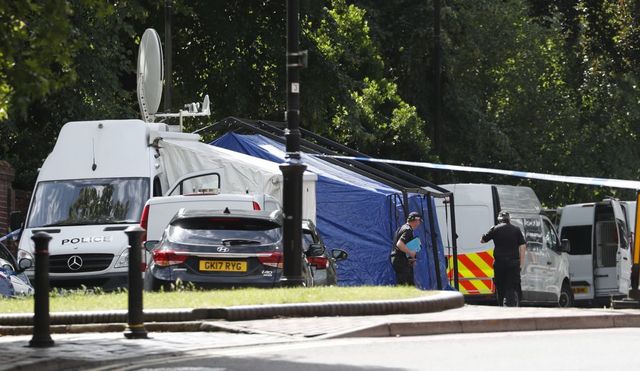
Police forensic officers outside Forbury Gardens_ a day after a multiple stabbing attack in the gardens in Reading (AP photo/ Alistair Grant)
Following the attack, police arrested a 25-year-old man in nearby Friar Street, a short distance from Forbury Gardens, after receiving a call at 18.56 BST from a member of the public.
Although the authorities have not yet confirmed the name of the person arrested, multiple news sources identified him as Khairi Saadallah, a 25-year-old man understood to be a Libyan national. According to reports, Saadallah had been granted asylum to live in the UK and had previously been in prison in the UK for a minor conviction, not related to a terrorist offence.
Citing a source, the Guardian reported Sunday evening, “The Libyan refugee held over the multiple killings in Reading was on the radar of the security services in the middle of last year…
“Khairi Saadallah, 25, was under investigation as a person who might travel abroad ‘for extremist reasons’, but sources indicated that the inquiry was closed relatively quickly without any action taken as no genuine threat or immediate risk was identified.
“The intelligence agencies believe Saadallah had mental health and violence problems, the sources said.”
The BBC reported that the attacker was made known to MI5 in 2019. Saadallah was brought to the attention of the security services, a source told the broadcaster, as they understood he had aspirations to travel abroad, “potentially for terrorism.”
The BBC added, “When the information was further investigated, as the first stage of looking into a potential lead, no genuine threat or immediate risk was identified. No case file was opened which would have made him a target for further investigation.”
After stating Saturday that they are not treating it as a terrorism incident, the local police force, Thames Valley police, declared the attack a terror incident Sunday morning. The investigation is now under the control of Counter Terrorism Policing South-East. The head of counter-terrorism policing, Metropolitan police assistant commissioner Neil Basu, said, “From our inquiries so far, officers have found nothing to suggest that there was anyone else involved in this attack and presently we are not looking for anyone else in relation to this incident.”
It is known that the attack began shortly after 7 p.m., after the assailant entered Forbury Gardens in central Reading and started stabbing people.
It is reported that the attack was witnessed by over 40 people.
Lawrence Wort, a 20-year-old eyewitness, said, “The park was pretty full, a lot of people sat around drinking with friends, when one lone person walked through, suddenly shouted some unintelligible words and went around a large group of around 10, trying to stab them.
“He stabbed three of them, severely in the neck, and under the arms, and then turned and started running towards me, and we turned and started running.
“When he realised that he couldn’t catch us, he tried to stab another group sat down, he got one person in the back of the neck and then when he realised everyone was starting to run, he ran out the park.”
Police officers chased the man, tackled him to the ground and arrested him.
Later Saturday evening, armed police officers and counter-terrorism forces entered a block of flats on Basingstoke Road in Reading. A loud controlled explosion at the flats was heard by bystanders just before 1 a.m.
If the assailant is Saadallah, it would be the second terrorist attack carried out in Britain by a Libyan national—who was known to UK intelligence agencies—in the space of three years.
On May 22, 2017, Salman Abedi detonated a shrapnel-laden improvised explosive device in the foyer of Manchester Arena after a concert by Ariana Grande, killing 22, many of whom were children, and wounding 116. Salman Abedi and his brother, Hashem—who helped to plan the operation—were both well known to the intelligence agencies prior to the attack. Salman Abedi was first investigated by UK intelligence services as far back as 2014. In January 2017, four months before the Manchester bombing, the FBI—after it had placed Abedi on its terrorist watch list—informed MI5 that that Abedi was part of a North African cell plotting to strike a political target in the UK.
The Abedis were protected assets of the British state, allowed to travel to and from Libya without hindrance because they were part of a network of Libyans who were working as proxy forces for British imperialism. The father of the Abedi brothers, Ramadan Abedi, was a member of the Libyan Islamic Fighting Group (LIFG), an Al Qaeda-linked group opposed to Libyan leader Colonel Gaddafi. Ramadan Abedi was one of a number of LIFG members based in the south Manchester area. He participated in the 2011 military operations to overthrow Gaddafi in a regime-change operation carried out at the behest of the US and Britain.
The most damning evidence on the protection afforded by the British state to the Abedis was revealed by a Daily Mail article published in 2018. It reported that as the civil war intensified, Abedi and his brother, Hashem, received British government assistance and fled Libya onboard a Royal Navy vessel, the HMS Enterprise . This rescue operation happened in August 2014, less than three years before Abedi bombed the Arena. The newspaper reported, “The information [on the soldiers’ lists of who boarded HMS Enterprise] was subsequently passed on to Number Ten [Downing Street], the Foreign Office and the Home Office.”
In comments reported by the Daily Mail Saturday, “a cousin” of Saadallah, who lives in Libya and did not wanted to be named, said, “Khairi had been to the UK a number of times but at the end of 2012 he traveled there as a tourist and decided to stay and claim asylum.
“He was at risk of extremists in Libya because he liked to drink and socialise and didn’t really lead a strict religious life at all.
“He did get in trouble in England and could be aggressive but I can’t ever imagine him getting drawn into something as serious as this.”
He claimed that Saadallah had converted from Islam to Christianity two or three years ago. “He started going to church and had tattoos all over his body including one of a cross on his arm. I haven’t had contact with him since that time.
“He lived in Manchester first and now lives in Reading. I think the authorities in Britain have tried to send him back to Libya but he doesn’t want to go back. He’s been in the UK for about seven years so is practically British now.”
Saturday’s attack is the third terrorism incident in the UK in just over six months to have involved mass public stabbing attempts.
As with all such instances, the government is already moving to clamp down further on democratic rights. Prime Minister Boris Johnson responded to the attack saying, “If there are changes that need to be made to our legal system to stop such events happening again, we will not hesitate to take that action.”

NATO grants Ukraine enhanced status as US steps up military aid

Jason Melanovski

On June 12, NATO officially recognized Ukraine as an Enhanced Opportunities Partner. According to the imperialist alliance, Ukraine will now benefit from “enhanced access to interoperability programs and exercises, and more sharing of information.”
Ukraine is the sixth country to be offered special partner status, along with Georgia, Jordan, Australia, Finland, and Sweden. Kiev has already sent its military forces to a number of NATO’s operations, including Afghanistan, Iraq, and Kosovo.
Ukrainian President Volodomyr Zelensky stated that he was “grateful to the members of the Alliance for recognizing Ukraine’s significant contribution to joint peacekeeping operations in the world.” The deputy prime minister for European integration, Olga Stefanyshyna, announced that, on the basis of its new status, Ukraine will “be able to exchange operational information [with NATO] previously closed to us.” According to Stefanyshyna, Ukrainian delegates could now also participate in special NATO bodies as liaison officers for interaction and information exchange.
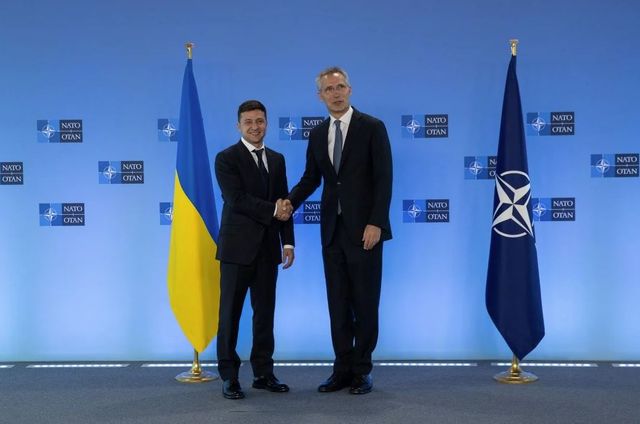
Zelensky and NATO general secretary Stoltenberg in Brussels, June 2019 (Photo: Ukraine's Presidential Administration)
Unsurprisingly, Russia has reacted negatively toward the announcement. Russian Press Secretary Dmitry Peskov stated that Ukraine’s new status does not “contribute to the strengthening of security and stability in Europe.”
The Ukrainian government has been engaged in a now six-year-long civil war against Russian-backed separatists in Eastern Ukraine that has claimed the lives of over 14,000 people, including over 3,000 civilians. The war has also displaced over 2 million from their homes. A 2019 UNICEF report found that over half a million children in the country “continue to face grave risks to their physical health and psychological well-being.”
The US and NATO heavily funded the Ukrainian military in this conflict, providing some $18 billion in military and other aid to the country since the 2014 US- and German-backed coup in Kiev, which triggered the outbreak of the civil war.
The move to more closely integrate the Ukrainian military into NATO structures further heightens the risk of a full-scale war between Russia and NATO on Ukrainian soil. It is taking place amid the most profound economic and social crisis since the Great Depression, making clear that the imperialist powers are responding to the growing class tensions by escalating their drive to war.
Coinciding with the NATO status change, the United States approved a $250 million military aid package that was supported by both the Trump administration and Congressional Democrats and Republicans. A US military official told the Military Times that the military aid “keeps a fair amount of Russian forces tied down that would otherwise be doing things directly against U.S. interests.”
Just days later, the United States announced that it had sent another $60 million in military aid to Ukraine including Javelin anti-tank missiles. Shortly thereafter, the US State Department announced it had cleared the sale of 16 naval patrol boats and other military equipment weapons, sensors, and communications gear worth $600 million to Ukraine.
While US President Donald Trump has, in some respects, displayed an ambivalent attitude toward Ukraine, mostly because of tactical considerations bound up with the raging infighting within the American state, he has in reality not diverted from the long-term goal of the American ruling class to turn Ukraine into a proxy in a potential war against Russia.
Despite being criticized from the right for being a Russian “secret agent” and impeached for holding up military aid to Ukraine, Trump was the first US president to openly send Ukraine lethal military aid in April 2018 with the initial delivery of Javelin anti-tank missiles to the country.
According to some estimates, the United States has given approximately $7 billion to Ukraine since 1992. Ukraine is regularly the top recipient of foreign aid from the United States Agency for International Development (USAID) in the region. Based on the figures by the US State Department, Ukraine has received $2 billion just from USAID since the 2014 coup.
Within Ukraine itself, the prospect of NATO membership has long generated controversy, with little support for the move among the Ukrainian working class, especially in eastern Ukraine, which shares close economic and social ties to Russia.
Prior to 2014, several public opinion polls demonstrated that while Ukrainians supported EU membership in hopes of improving their impoverished living standards, support for NATO membership was significantly lower.
Former President Viktor Yanukovych, who was ousted by the 2014 coup, opposed seeking NATO membership. However, since the 2014 coup, the entire Ukrainian ruling class has moved fully toward increasing the country’s ties to NATO.
Despite garnering much of his support for criticizing the brazenly nationalistic and militaristic regime of former President Petro Poroshenko and declaring that he sought an end to the war in eastern Ukraine, since taking office Zelensky has continued to modernize Ukraine’s military forces in order to meet NATO standards.
Zelensky has also called for the country to receive full NATO membership, which he well knows would drastically increase the possibility of an all-out NATO-Russia military conflict. It would eliminate any possibility for a negotiated settlement to the ongoing civil war in eastern Ukraine. His government has reportedly worked since the fall of 2019 on the enhanced opportunities partner status.
Following months in which Zelensky faced intense pressure from sections of the oligarchy and the country’s far right over his engagement in the Normandy talks about the conflict in East Ukraine with Germany, France, and Russia—but not the US—in a surprise government reshuffle in early March, Zelensky brought in a series of officials with close ties to Washington.
While Ukraine remains Europe’s poorest country, according to the IMF, its defense spending now amounts to approximately 5.5 percent of the country’s GDP. Prior to the Western-backed coup in 2014, Ukraine’s military spending accounted for just 1 percent of GDP.

COVID-19 flares again in China

Peter Symonds

China is experiencing a second wave of COVID-19 infections, centred on Beijing. Despite aggressive testing and quarantine measures, the number of cases continues to climb, with 22 of the 26 confirmed infections countrywide on Saturday occurring in the Chinese capital of more than 20 million people. Three of the six asymptomatic cases detected on the day were in Beijing.
While the numbers are relatively small compared to the US, Brazil, India and Europe, the outbreak is a warning that the highly infectious and deadly coronavirus can rapidly re-emerge if restrictions on movement and gatherings are removed. Governments around the world are pushing for a return to work in unsafe conditions so as to boost corporate profits.
Beijing had gone for some days without a new COVID-19 case being detected. Local authorities reported on June 9 that the last active case had been discharged from hospital. Restrictions in the city were being lifted and widespread temperature checks were being wound back. The opening up proved to be premature, however.
On June 11, a 52-year-old man with symptoms tested positive for COVID-19. The source of the infection was traced to the huge Xinfadi wholesale market that supplies more than three quarters of the city’s fruit and vegetables. Over the past 10 days, 227 cases have been detected.
Large areas of Beijing have been placed in lockdown, with people in high-risk areas being barred from leaving the city for other areas of the country. Outward-bound taxi and car-hailing services have been suspended. Quarantine measures have been imposed on around 90,000 people in 22 medium-risk residential neighbourhoods in Beijing
The city’s health authorities have rapidly ramped up testing and contact tracing for workers and visitors to the Xinfadi market, including tens of thousands of food delivery workers who provide food to restaurants and food outlets. Reportedly, some 360,000 tests have been done.
Just days after the first case was detected, PepsiCo shut one of its food processing plants in the Daxing district of Beijing after at least one employee tested positive. According to a senior disease control official, Pang Xinghuo, eight people at the plant had been infected.
Last week Xu Hejiang, a Beijing city government official, warned that “the risk of the epidemic spreading is very high” and promised “resolute and decisive measures.” Health officials spoke of putting Beijing in “wartime mode.” The heaviest impact was in working-class areas, however.
Krish Raghav, a correspondent for the Guardian, observed that those impacted by “war” was determined by social class and geographic proximity. “Many of the initial cluster of cases were working-class migrants: restaurant workers who lived in the same dormitory, seafood sellers, drivers,” he explained. “Thousands of frontline retail workers were tested over the next few days.”
“But walk around the hutongs around Beijing’s Art Museum—an area of upscale shops and restaurants—and you could see that nothing was different: barbecue stalls spilled out into the street and raucous picnics continued with face masks around the chin.”
The distinction is not accidental. As in other countries, the Chinese government is determined to re-open the economy as quickly as possible, making workplaces and factories among the most likely places for new outbreaks.
Two months ago, Chaoyang District of Beijing was evaluated as a high-risk area. Concerns have been raised about a second wave of infections, but the government has been more intent on restarting the economy and getting workers back into the workplaces than in preventing a fresh COVID-19 outbreak.
Even before the pandemic the Chinese economy had been slowing, with a huge contraction in the first quarter of 6.8 percent. With the potential for a second quarter of negative growth, Premier Li Keqiang declared at the National People’s Congress in May that he would not set a growth target for the year.
Commenting on the COVID-19 outbreak in Beijing, Hao Zhou, an economist at Commerzbank in Singapore told the Financial Times: “The economic recovery will be much more uneven compared to what we thought a few weeks ago. Things will be much more complicated.”
There have been some signs of rising industrial production, car sales and spending on services in May amid optimism that the spread of COVID-19 had been brought under control, but its re-emergence could rapidly change the economic outlook. A sharp recent drop in rail passenger numbers in Beijing is one indication of how rapidly economic activity can change.
“Even without a Wuhan-style shutdown, the local economy [in Beijing] will suffer and fears of contagion will propagate,” Aidan Yao, an economist at Axa Investment Managers, told the Financial Times .
An economic slowdown in China would also affect the global economy, dampening expectations that a rapid Chinese revival—with its demand for parts and raw materials and supply of key manufactured goods—would assist struggling economies elsewhere.
There are deep concerns in Beijing about the impact of the economic slowdown. The Chinese government has regarded 8 percent annual economic growth as necessary to maintain high levels of employment and prevent social unrest. The official jobless figures have been rising, particularly for young people. The employment rate for people aged 16–24 is at nearly 14 percent or more than twice the figure for the workforce as a whole.

India and China rush troops, weaponry to disputed border region

Keith Jones

India and China are continuing to rush troops and weaponry to their common border region, where a bloody clash on the night of Monday, June 15 left dozens of Indian Army and Chinese People’s Liberation Army (PLA) personnel dead.
In a development fraught with global geopolitical consequences, Washington has very publicly intervened in the dispute, accusing China of “aggression” and tying it to the US-fomented South China Sea conflict.
US Secretary of State Mike Pompeo denounced China as a “rogue actor” in an online speech Friday to the so-called Copenhagen Democracy Summit. “The PLA,” said Pompeo, “has escalated border tensions with India, the world’s most populous democracy. It’s militarizing the South China Sea and illegally claiming more territory there, threatening vital sea lanes.”
In the six days since their first lethal border clash in 45 years, both New Delhi and Beijing have repeatedly avowed their commitment to a peaceful resolution of the current dispute, which involves tense eye-ball to eye-ball stand-offs at four or more places along the Line of Actual Control (LAC). By mutual agreement, the un-demarcated LAC is supposed to serve as the de facto India-China border, pending final resolution of their competing territorial claims.
However, New Delhi and Beijing’s avowals of peaceful intentions have invariably been tied to accusations that the other was responsible for the bloody border clash. Moreover, each has warned their nuclear-armed neighbor and rival not to underestimate their determination to defend their “sovereignty” and “territorial integrity.”
To underscore this latter point, both governments and their militaries have taken steps to demonstrate that they are preparing in earnest for futures clashes and the possibility of an all-out war.
On Sunday, following a meeting of Indian Defence Minister Rajnath Singh, Chief of Defence Staff General Bipin Rawat, and the heads of the army, air force and navy, government sources revealed those commanding troops along the LAC have been given a “free hand” in responding to Chinese “aggression.”
A “defence source,” told the Hindu, “Forces have a free hand to assess the situation and to take action required. While we don’t want escalation but if it happens by the other side, appropriate action will be taken. Clear cut instructions to this effect were given.”
Even prior to yesterday’s meeting, India let it be known that it is changing its rules of engagement and repudiating a decades-long agreement with China that their forces not resort to gun-fire in the event of a border encounter. Last Monday night’s six-hour clash, described in some news reports as a “medieval battle,” was fought with stones, knifes, and iron rods studded with barbed-wire
India has placed on the “highest alert” the 300,000 troops it has arrayed along the 3,500-kilometer (2,175-mile) LAC, which traverses sparsely populated, desolate Himalayan terrain. It has also moved fighter jets, Boeing CH-47 Chinook heavy lift helicopters, and newly acquired, US-made AH-64E Apache attack helicopters to forward bases near its northern border
India’s navy has been placed on alert for encounters with Chinese ships and submarines in the Indian Ocean. Underscoring the extent to which the Indian military has been integrated into US imperialism’s military-strategic offensive against China, a second government source told the Hindu, “We are already present near (the) Malacca (Straits) and we can operate with the US and other Association of South East Asian Nations (ASEAN) Navies if required.”
Also on Sunday, the Indian government announced that all three branches of the India’s military have been authorized to make emergency purchases of weaponry and ammunition.
These official steps to ready India for war have been accompanied by a torrent of denunciations of Chinese “aggression” and “treachery” from political leaders and the corporate media. The Indian press is full of bellicose commentary much of it from former Indian military personnel. “We can easily fight the war at two fronts,” asserted former Indian Army Chief V.P. Malik, referring to the possibility that Pakistan could be drawn into a Sino-Indian war on Beijing’s side. “We should not worry too much, our forces have the capability.”
Beijing has been more circumspect about its military response to the border crisis. But it has left no doubt that it is strengthening its military capabilities near the border.
“The adventurous acts of the Indian army,” declared China in a statement issued by its Indian embassy Saturday, “have seriously undermined the stability of the border areas, threatened the lives of Chinese personnel, violated the agreements reached between the two countries on the border issue and breached the basic norms governing international relations.”
While focusing its fire on the spate of recent Trump administration provocations against China, the government-aligned, Chinese Communist Party-owned Global Times has also published a series of bellicose, nationalist tirades against India, highlighting China’s much larger economy and military prowess.
“The gap between China’s and India’s strength is clear,” declared the first of several Global Times editorials on the last Monday’s clash. China, it continued, “does not and will not create conflicts, but it fears no conflicts either. … We will not trade our bottom line with anyone.”
In a further indication of how intractable the conflict is, the Global Times has counselled Chinese companies active in India not only to place their investment and production plans “on hold,” but “to start thinking about diversifying their investments” and seeking “alternate markets.”
India and China compete for markets, resources and strategic advantage across Asia, the Middle East and Africa. But if their strategic rivalry has become so explosive, it is because over the past two decades is has become ever more deeply entwined with the conflict between the US and China. Successive US administrations, Democratic and Republican alike, have sought to build up India as a counterweight to China; and the craven Indian bourgeoisie has been more than ready to aid and abet Washington in its anti-China offensive in exchange for “strategic favours.”
Powerful sections of India’s ruling elite have been pressing for India to abandon any pretense of “strategic autonomy” and formally join a US-led anti-China alliance along with Washington’s principal Asia-Pacific allies, Japan and Australia. They are now seeking to exploit the border crisis to overcome popular opposition, above all from the working class, to harnessing India to US imperialism.
“This is an opportunity for India,” wrote former Foreign Secretary Nirupama Rao last week, “to align its interests much more strongly and unequivocally with the US as a principal strategic partner and infuse more energy into relations with Japan, Australia, and ASEAN.”
India’s far-right Narendra Modi-led Bharatiya Janata Party (BJP) government sees in the border crisis a means to deflect massive social tensions outward and whip up bellicose nationalism, so as to push forward with its reactionary plans to “revive” India’s economy. The principal elements of this plan are what Modi has called a “quantum jump” in pro-investor “reforms,” and, working with the Trump administration, to lure US companies under pressure from Washington to decamp from China to make India their alternate production-chain hub.
As around the world, the COVID-19 pandemic has revealed the incompetence and criminal negligence of the ruling elite. The BJP government’s ill-prepared 10-week lockdown resulted in tens of millions of impoverished workers losing their jobs and all income, while failing to halt the spread of the virus. Indeed, this month, as India “reopens” its economy, the number of COVID-19 cases has risen by more than 235,000 to 425,000, while deaths have increased by more than two-and-a-half times to 13,700.
In pursuing its reactionary border conflict with China and using the war crisis as an instrument of class war, the BJP government can count on the cowardice and complicity of the so-called opposition parties. On Friday, Modi convened a virtual all-party leaders’ conference where all the parties—including the Congress Party and the two Stalinist parliamentary parties, the Communist Party of India (Marxist) and the Communist Party of India—pledged their support for the Modi government in the confrontation with China.

Coronavirus spreading among agriculture and seafood workers in the US

Emma Arceneaux

The ongoing COVID-19 pandemic poses a serious threat to the agricultural workers throughout the United States. Reports across the country show the virus is spreading rapidly among this critical section of the working class.
About half of the 2.5 million farm workers in the US are undocumented immigrants, and a large percentage of the remainder hold temporary work visas. While farm workers are considered essential by the federal government, there have been no national mandates placed on the agricultural businesses to protect them from coronavrius, leaving it to states and individual farm owners’ discretion what, if any, safety measures to take.
About a quarter of the migrant workers who travel into the US from Central America will continue traveling throughout the summer and fall, following the different crop harvests up both the east and west coasts of the country. As the virus spreads among these workers, there is a serious risk that it will be introduced into more and more communities.
Migrant workers harvest corn on Uesugi Farms in Gilroy, CA (Photo: U.S. Department of Agriculture)
Farm operations across the US have already reported widespread infections. Every single employee at one Tennessee farm, about two hundred people, have tested positive for the virus.
In Yakima County, Washington, home to the nation’s largest tree fruit crop, 500 workers have fallen ill from the virus. There are nearly 1,000 cases in the Immokalee region of southern Florida, a major tomato growing region.
The workforce of the Louisiana seafood industry is made up primarily of immigrant workers, and, in May, three separate crawfish farms were found to have cluster outbreaks, with a total of over one hundred people infected.
Immigrant workers are particularly vulnerable to the spread of the virus, above all because of their crowded living conditions.
The World Socialist Web Site recently spoke with Julie Taylor, Executive Director of the National Farm Worker Ministry about the threat of the pandemic to this particularly vulnerable section of the working class. According to Taylor, physical distancing is nearly impossible for migrant farm workers who live in dormitory, bunk-bed style housing.
Taylor explained that labor camps often consist of a series of barracks with two to three bedrooms on the bottom floor and two on the top floor. Each bedroom houses workers in two to three bunk beds. Each day workers are transported from these sparse and cramped living quarters to the farms on buses with sometimes 50 to 60 people per vehicle.
Some farms have made the effort to provide masks to workers, however, as Taylor explained, masks present their own set of problems under the difficult working conditions faced by farm workers. For example, in North Carolina, where the tobacco harvest is just beginning, temperatures have already risen above 90 degrees Fahrenheit. Within 20 minutes of working in the field, workers’ masks are soaked with sweat and covered in dirt and debris. This makes them very uncomfortable.
Another major risk factor for these workers is their limited access to health care, and those who are undocumented have no health insurance at all. Those who have been provided with some form of insurance through the temporary visa program still face challenges accessing care, as they typically live in isolated, rural communities.
Taylor explained that in some cases, health care for farm workers might consist of “a migrant clinic operated by donations or volunteer hours,” but it is often challenging for the farm workers to get to the clinic for a test or treatment.
“They’re isolated at the labor camp and don’t have a car,” Tyler noted. She explained that on Sundays, a bus might take workers to the local Walmart or Dollar Tree to buy supplies. However, she added, “they’re at the mercy of the camp, so individual appointments are challenging.”
“Some clinics are trying to send small delegations to labor camps,” in response to the pandemic, “but the farm owners might discourage these. If a farm worker doesn’t have symptoms, then the grower wants them to work, doesn’t want to have to put them up in housing, pay them, and pay for their food.”
Finally, there is widespread fear of employer retaliation among farm laborers should they report an illness, try to speak out against dangerous conditions, wage theft, or even violence. This is not a new problem in the industry.
“There’s a lot of fear, among undocumented workers, of ICE raids, being detained or deported. Among visa workers or those with residency there is also fear of retaliation,” Taylor said. These workers usually reapply to the same farm year after year, so if they file grievances, they risk not being invited back.
Such is the case for two Mexican H2-B visa workers who were fired from a seafood processing plant in Louisiana, Acadia Processors LLC, after seeking medical treatment for the virus. The employer ordered them to stay quarantined in company housing while ill, without pay. The workers have filed complaints with the National Labor Relations Board and the Occupational Safety and Health Administration.
On top of the concern for these workers’ lives is the threat posed by a labor shortage in the industry as a whole. Many crops must be harvested within a short window of time. Without enough workers, these crops rot in the fields, creating a supply shortage, which in turn raises the retail price of produce. Increases in the price of produce will compound the threat of hunger and food insecurity faced by millions of Americans.
As the WSWS noted on June 5, due to the unprecedented economic disaster facing the working class, some 54 million Americans face hunger without the assistance of food aid, up from 37 million last year.
While the conditions faced by migrant farm workers are particularly egregious, they are of a piece with the homicidal back-to-work campaign that is being carried out by the US ruling class and the ruling classes throughout the world against the entire working class.
State and local governments have lifted lock-down restrictions, and, in the naked pursuit of capitalist private profit, any pretense of slowing or stopping the spread of the coronavirus has been abandoned. The fight against the pandemic must therefore be linked with the fight against the capitalist system itself.

World coronavirus cases rocket past 9 million as pandemic accelerates

Bryan Dyne

The number of confirmed coronavirus cases yesterday rocketed past 9 million as the pandemic accelerates in every corner of the world, an increase of one million cases in seven days. The number of known deaths now stands at more than 469,000. Both these figures are on track to surpass the ghastly milestones of 10 million cases and 500,000 deaths later this week.
The sharpest uptick in new cases continues to be in Eastern Europe, South Asia, North America and South America. The United States has the most new cases of any country, closely followed by and sometimes exceeded by Brazil. And while India has a lower count of new cases, that number is increasing sharply, and the official figures are undoubtedly a gross underestimate in a country of 1.3 billion people with only rudimentary health care infrastructure.
These countries similarly lead the world in number of new deaths, along with Chile, Peru, Russia, Pakistan, the United Kingdom and Iran. Globally, the seven-day moving average of daily deaths has never gone below 4,000 since the beginning of April and is again trending upwards. The seven-day moving average of daily cases has not gone below 100,000 since March 27 and will soon surpass 150,000.
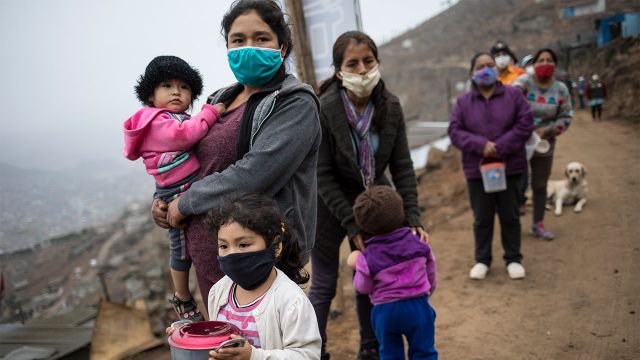
Families wait in a line for a free meal in Lima, Peru, June 17, 2020. (AP Photo/Rodrigo Abd)
The dangers of the pandemic were sharply expressed on yesterday’s edition of NBC’s “Meet the Press” program by Dr. Michael Osterholm, the director of the Center of Infectious Disease Research and Policy at the University of Minnesota. “I don’t think this is going to slow down. I’m not sure the influenza analogy applies anymore,” he said, developing his position from his earlier work which attempted to model the spread of the coronavirus based on how the flu spreads. “I don’t think we’re going to see one, two and three waves—I think we’re just going to see one very, very difficult forest fire of cases.”
Dr. Scott Gottlieb, a former commissioner of the Food and Drug Administration, noted on CBS’s Face the Nation: “We’re seeing the positivity rates go up. That’s a clear indication there is now community spread underway, and this isn’t just a function of testing more.”
The increased counts of new cases and deaths is not just a function of the virulence of the contagion, but also a result of the reopenings forced by governments everywhere, spearheaded by state governors and especially by President Trump. This was exemplified by Trump’s reelection campaign rally held in Tulsa, Oklahoma, on Saturday, which went ahead in defiance of warnings from public health officials. There, Trump took the opportunity to again blame China for the cases and deaths in the United States, referring to the disease as the “Chinese virus” and the “kung flu.”
Little mention was made of the rising number of either total cases and deaths, which stands at 2.3 million and 120,000 in the United States, respectively, or the expanding hot spots of the disease in Arizona, California, Florida and Texas. Trump instead demanded the number of new cases be artificially deflated by reducing the amount of testing done in the country. After boasting that the US had performed 25 million tests, he said, “When you do testing to that extent, you will find more cases. So I said to my people, ‘Slow the testing down, please.’”
While such actions might temporarily produce figures “proving” Trump’s assertions that the virus will just “go away” at some point, the virus itself is unhindered by such cynical political calculations. In fact, during the past week at least 12 states have hit new record highs at least once, and 21 hit record seven-day averages. This includes states that have already been hard hit such as California, which saw 4,515 new cases yesterday, as well as states that have not had as many infections, such as Oklahoma and Missouri, which also reported on Sunday 478 new cases and 397 new cases, respectively.
Florida and Texas continue to have among the highest rates of new cases. While this figure had decreased and plateaued in Florida during May, there has been a sharp rise in this number since the start of June. Every week, a new high is reached for the number of daily cases, and the total number of cases has begun to increase exponentially.
It is also worth noting that Trump is set to deliver his national convention speech on August 27 in Jacksonville, Florida, in an arena that holds 15,000 people. Little weight has been given to warnings from the PolicyLab at Children’s Hospital of Philadelphia that the state “has all the makings of the next large epicenter.”
Texas is facing a similar crisis and now regularly has at least 3,000 new cases per day. Houston itself, the fourth-largest city in the country, has now recorded more than 1,000 new cases per day for the past three days. Lina Hidalgo, the top elected official of Harris County, which includes Houston, warned that there is “significant, uncontrolled spread” of the coronavirus in the county and spoke of “very disturbing trends” in the number of hospitalizations. There are more than 3,200 COVID-19 hospitalizations statewide.
Officials from multiple states have noted that the surge in new cases is being driven in part by the increasing number of young people being tested and found to be asymptomatic. Florida Governor Ron DeSantis noted this during a press conference Friday, admitting that in the early stages of the outbreak in the state, “there wasn’t a lot of testing done.” At the time, only those above 65 and showing symptoms were tested, thus missing the cases and transmission by anyone younger who had contracted the disease.
The large amount of asymptomatic transmission among those in their 20s and 30s is especially concerning considering that colleges and universities across the United States are already planning to bring their students back to their campuses in the fall. There are about 20 million college students in the United States, and while current epidemiological evidence suggests that smaller numbers of them will get sick compared to older people, the fact that universities bring together so many people from across the country and around the world means there is a massive risk they could become epicenters of the disease very quickly.

COVID-19 and its ‘Low’ Impact on the LWE Movement

Bibhu Prasad Routray

As the COVID-19 pandemic wreaks widespread socio-economic disruption across India, what could be its impact on the Left-Wing Extremism (LWE-affected) theatres? Would the pandemic affect the fighting potential of the extremists? Would it aid the security forces’ operations? Is a resolution to the conflict situation on the cards? In the absence of any conclusive evidence and to avoid being speculative in nature, this analysis employs a four-parameter assessment to deduce the possible impact of the pandemic on LWE:
  1. statement of police officials
  2. data on violence
  3. pattern of extremist attacks
  4. statements issued by the extremists
Several predictions, mostly speculative, have been made in media reports elaborating how the pandemic could be weakening the LWE cadres. Some police officials in Chhattisgarh have cited incidents of extremists looting ration distributed under the Public Distribution System scheme to indicate a possible disruption in the supply chain of essentials to the Communist Party of India-Maoist (CPI-Maoist). On the other hand, some officials have provided a contrarian view indicating that the outfit—which carries out its annual ‘Tactical Counter Offensive Campaign’ between March and May—typically stocks up essentials by January, which lasts them for several months, including monsoon. Going by this theory, the group would have been in a comfortable position as far as food stocks are concerned, well before the pandemic arrived in India.

The second parameter to assess the possible disruptive impact of the pandemic is the violence perpetrated by the extremists and assess if there is any decrease in numbers of attacks, which may indicate an impact on their fighting abilities. According to the South Asia Terrorism Portal, in 2020 (till 09 June), 53 incidents of killings took place in LWE affected states. 27 of those took place between January and March, and the remaining 26, in the subsequent months. Thus, the monthly average of nine incidents in the first three months have in fact increased marginally between April to 18 June. State specific data reveals that violence has certainly come down in Chhattisgarh in the months after March and has increased in other states. So, a marginal impact of the pandemic on the CPI-Maoist, whose core strength is in Chhattisgarh, cannot be ruled out.

The third parameter of assessment is an audit of the pattern of Maoist attacks since the onset of the pandemic and three months prior to it. Any perceptible difference in the overall pattern of attacks may indicate a constrain on extremist activities. In the lone major attack carried out by the CPI-Maoist, which this author examined in a previous column, 17 security forces were killed in Chhattisgarh’s Sukma district on 22 March, two days before the lockdown was announced for the first time. Since then, a large number of smaller scale attacks have taken place. On 17 May, two police personnel were killed and three others were injured in Maharashtra’s Gadchiroli district. On 31 May, Maoists ambushed a joint patrol of the police and the Central Reserve Police Force in Jharkhand’s West Singhbhum district, killing a policeman and a village chowkidar (watchman). Several other small scale attacks, attempts to carry out ambushes, destruction of roads, burning of vehicles, killings of police informers have been reported from various states. There is no noticeable difference in the pattern of attacks between the quarter preceding the lockdown and the quarter following it. This suggests that the pandemic is yet to translate into any operational weakness for the CPI-Maoist.

The last parameter considers statements and diktats issued by the CPI-Maoist with regard to apprehension to the spread of the virus. Three statements relevant to the subject of discussion have come to the fore. In the first week of April, the group offered a ceasefire and elicited the government’s response to it. Prior to this, an Inspector General level officer in Chhattisgarh had spoken of the possibility of a humanitarian’ suspension of operations till the pandemic subsides. New Delhi, however, chose to ignore it. On 13 April, the CPI-Maoist’s Central Committee issued an open letter, accusing the ‘imperialist’ United States for the virus and said ‘destruction of imperialism is the lone way to destroy the virus’. The letter dealt with a variety of issues ranging from the plight of the migrants to the BJP’s ‘mismanagement’ in dealing with the pandemic through a lockdown. While this provides little indication on the pandemic’s impact on the group, a diktat issued by a local Maoist committee in Maharashtra could be an eye opener. On 2 May, the outfit instructed the villagers of Gadchiroli district not to allow any strangers or migrant labourers sneaking into the district to take shelter from neighbouring Telangana. If true, the CPI-Maoist is apprehensive of the infections reaching the villages, especially during the monsoon months when they have to abandon the forest areas and take refuge in the remote villages.

LWE-affected states like Chhattisgarh, Jharkhand, and Odisha have witnessed a major spike in COVID-19 infections. Among the victims are some police and Central Armed Police Force personnel. The onset of monsoons—when the Maoists scale down their operations due to logistical challenges—is likely to result in a dip in violence. However, till date, there is negligible evidence to support the claim that COVID-19 has indeed placed much stress on the LWE movement. Consequently, there is little pressure on them to consider starting negotiations with the government at this juncture.

20 Jun 2020

AREF Research Development Fellowship 2020 for Sub-Sahara African Researchers

Application Deadline: 23rd September 2020 12:00 GMT

Eligible Countries: sub-Sahara African countries

To be taken at (country): Europe or Africa

Eligible Field of Study: Not specified

About the Award: AREF Research Fellowship is designed to enable talented, early-career African researchers to develop their own research ideas and specialist skills, to grow their research relationships through collaboration and mentorship, and to work towards a major funding proposal. This year, funding will be made available for a “planned follow-through” in the awardee’s home institution.
The AREF RDF Programme aims to enhance the research competitiveness of emerging African researchers who are working on important challenges for human health in Africa. In 2020, these challenges will include infectious disease and non-communicable diseases. AREF’s goal is to transform the opportunities for up to 15 talented postdoctoral scientists in Africa in 2020 to contribute to reducing the burden of disease through leading research that is responsive to African settings.
The RDF Programme enables talented early-career researchers to:
  • acquire advanced research skills
  • develop and test their own compelling research questions
  • develop highly effective mentoring relationships
  • grow their potential collaborations
  • raise their profile through international networking
Offered Since: 2015

Type: Research Fellowship

Eligibility: Research active post-doctoral scientists and clinicians who are nationals of and employed in Sub-Saharan Africa who were awarded their doctorate after May 2014; and clinicians without a doctorate but who have a research-relevant Master’s degree and at least two and up to seven years active research experience.

Selection Criteria:
  • Applicants will need to demonstrate a credible, ambitious vision for their research career in an area of human-health challenge for Africa; and a transformational, well-supported development plan that would be significantly enhanced by the RDF Programme. Potential applicants are strongly encouraged to discuss their plans at an early stage with their employing and potential host organisations.
  • Equality and diversity are core values of AREF and we encourage applications by scientists irrespective of gender, colour, race, or creed.  We strongly welcome eligible applicants from francophone and lusophone countries as well as from anglophone countries.
Number of Awardees: Not specified

Value of Fellowship: A three to nine-month placement at a leading research institution in Europe or Africa, with additional support at your home institution before and after the placement, up to a maximum of £38,000. 


Duration of Fellowship: Three(3) to nine (9) months

How to Apply: Read the information below, and download the Application Form, Information for Applicants and Cost & Finance Spreadsheet, and email to Fellowships.AREF@aref-africa.org.uk before 12:00 GMT 23 September 2020

Application Form

Visit Fellowship Webpage for details