24 Jun 2020

All schools in England to open in September

Tom Pearce

UK Education Minister Gavin Williamson announced on Friday that all pupils in all year groups in England will go back to school in September. He said the government was “signed up to bring every child back, in every year group, in every school.”
The announcement follows the government’s climbdown only 10 days earlier over the reopening of primary and nursery schools to all children. This was met with huge resistance by parents, who rightly feared risks to their children being exposed to COVID-19.

Children have breakfast at the Little Darling home-based Childcare after nurseries and primary schools partially reopen in England after the COVID-19 lockdown in London, Monday, June 1, 2020. (Photo: AP Photo/Frank Augstein)
The government claims guidance will follow in a few weeks’ time as to how the full reopening could be achieved safely. The reality is that it is not possible to safely have all children in school with a deadly virus circulating. On average, primary schools have 28 children per class, whilst secondary schools have 22. There will be no social distancing in cramped and often dilapidated buildings. Children will be forced to share resources and play together.
There is speculation that the model to be used for the reopening in September is based on the Northern Ireland (NI) blueprint, which is yet to be put to the test. Secondary pupil “bubbles” are to be extended from 15 to the whole class. In some schools, 34 children can be found in a class.
The document from the NI Education restart programme calls for classes to stay in one classroom and the teachers to move between, with food being delivered to the classroom. Classrooms could be located in large halls and canteens to ensure social distancing. Students will also have staggered breaks. It also states that students will only need to be one metre apart in classrooms. Prime Minister Boris Johnson announced Tuesday that the two-metre social-distancing rule was to be ended and for people to stand one metre apart instead. But any social distancing is impossible in a classroom environment.
To push its plans through, the government has repeated its fraudulent claims that it is acting in the interests of “disadvantaged children,” who will fall behind in their education. This claim is refuted by the fact that there were already 3.2 million children living in poverty—9 in every classroom of 30—before the pandemic.
It was only last week that Johnson was forced to do a U-turn on providing free schools meals for 1.3 million children during the summer holidays. This campaign was not led by a Labour politician or trade union leader but by footballer Marcus Rashford, who forced the government to place the interests of hungry children on the parliamentary agenda.
The government has jumped on a letter published last week by 1,500 of the UK’s paediatricians calling on the Johnson government to “publish a clear plan for getting children back to school as the first step in a national recovery programme for children and young people.”
Royal College of Paediatrics and Child Health president Professor Russell Viner, a member of the government’s scientific advisory group Sage and a signatory to the letter, has warned lockdown is doing kids “more harm than the virus itself.” This reactionary perspective has been utilised throughout the pandemic to put the interests of the economy before health—based on evidence that children are less likely to become seriously ill from the virus than adults. However, evidence has also shown that children are just as likely to get the virus as older people. They are often asymptomatic but can be vectors for the spread of the disease.
The government’s decision to return to the full opening of schools has been taken without any systematic review of the impact of the wider reopening of the economy, which began on June 15, and its impact on the infection rate—the statistics are not yet available. There is some evidence, however, that the reopening of schools to wider numbers has produced spikes in infections.
A school in Barnsley, South Yorkshire, was forced to close last week for two days. The drastic move was taken by Joseph Locke Primary School after two members of staff from the same household began feeling symptoms while in the building, and then tested positive for COVID-19. The school was forced to pick up the bill for a total of 75 children and 67 members of staff to take coronavirus tests amid fears of an outbreak among its community.
The September opening of schools announcement followed widely circulated reports that some 2.3 million children are not accessing online learning. Whilst claiming to speak in the interests of these children, the government did not explain why it is yet to provide 700,000 laptops needed for children to access this learning.
Last week, Williamson said in the House of Commons that more than 100,000 laptops had already been delivered, although many expecting a delivery have said they have not received them. A further 230,000 will supposedly be delivered by the end of June. The government has reduced its pledge from 700,000 needed to only 360,000—if even these materialise at all!
Williamson’s plan to reopen schools came with a “pledge” of a £1 billion fund to catch up on what children have missed while schools have been closed. The fund in theory will mean that the most disadvantaged pupils will have access to tutors through a £350 million programme over the year from September.
How and where the tutors will materialise was not explained, and school leaders have yet again not been consulted. But the cross-party unity continued with Labour Shadow Education Secretary Rebecca Long-Bailey stating that Williamson had his “first volunteer” in providing targeted tuition to pupils.
The additional funds of £650 million will be given to primary and secondary schools to spend on one-to-one or group tuition for any pupils they think need it. However, this still leaves the education sector criminally underfunded. The amount equates to a measly rise of 1 percent, leaving total spending still 3 percent below 2010 levels in real terms. The £650 million pot only means about £80 extra for each student. Early years and further education settings are not included.
The teaching unions have continued to offer their services and are grovelling before the government to be included in their plans in response to the latest announcement. Kevin Courtney, joint general secretary of the National Education Union (NEU), said, “One week ago, we wrote to the Prime Minister about our 10-point National Education Recovery Plan, a set of practical measures to make the safe return of schools possible. It is not too late for his Government to start engaging properly with unions before making further pledges which turn out to be unachievable.”
Mary Bousted, also joint secretary of the NEU, offered advice on how to get around social-distancing rules: “If the government retains its social distancing rules then they can’t [open schools in September], so that’s why we then need to look at an education recovery plan, which is focused on more than school buildings.”


Johnson used pandemic to step up privatisation of UK public sector

Margot Miller

The Johnson government has handed out about 400 contracts totaling £1.7 billion to the private sector during the pandemic. Seven contracts were each worth more than £100 million. The Department for Education awarded the largest, for £234 million, to Edenred to deliver supermarket vouchers.
The corporate raid underscores the cynicism of government ministers clapping frontline workers and hailing National Health Service (NHS) workers as “heroes.” The Department of Health gave over huge contracts to private firms to supply materials, train medical laboratories, and test key workers. These included £151 million to Hologic, £133 million to Randox Laboratories, and £64 million to Life Technologies.
National Health Service (Source: Wikipedia Commons)
Due to the pandemic, the government utilised emergency procurement rules to ensure that most of the deals were exempt from the usual “competitive tendering” process.
A campaign has been launched for a judicial review into why a small company was awarded a hefty contract to supply personal protective equipment (PPE) in the UK. PestFix, the trading name for Crisp Websites Ltd—net assets just £19,000—works out of Littlehampton in Sussex with just 16 staff. It was awarded a contract worth £108 million in early April to supply gowns and face masks to the NHS. This is nearly a third of the value of the £350 million in PPE-related contracts signed earlier in the year. PestFix deals in pest control supplies and has no experience providing PPE.
The Good Law Project, is suing the government over the PestFix deal, describing it as “unlawful” and “disproportionate.” It is demanding to know where the contract was advertised, on what basis was the company chosen, whether the £108 million was paid upfront, why the contract lasts 12 months, to March 2021, and why was notice not made public within the required 30 days. It demands the publication of the full contract.
Founder of the Good Law Project, barrister Jolyon Maugham, commented, “This is the most bizarre thing I’ve seen in my 25 years at the bar. We just cannot understand why the government paid £108 million to two guys who run a pest control firm using public money.”
Privatisation policies have encroached on the public provision of health care for decades, with disastrous consequences. As the pandemic took hold in Britain, NHS and social care staff were left to battle the deadly virus without the necessary PPE. As part of the austerity drive since the 2008 bank bailout, the refusal to stockpile basic items required by health workers was part of the multibillion-pounds “efficiency savings” NHS cuts programme of the 2010–2015 Conservative/Liberal Democrat coalition. Between 2013 and 2016, the value of the national PPE stockpile was slashed by 40 percent.
Procurement, including sourcing, delivery and supply of health care products, services and food for NHS trusts and health care organisations in England and Wales, has been managed by NHS Supply Chain Coordinated Ltd since 2016. Its stated aim is to “leverage the buying power of the NHS to negotiate the best deals from suppliers and deliver savings of £2.4 billion back into NHS frontline services by the end of the financial year 2022/23.”
Greenwich University and campaign group We Own It published a report last month, “Privatised and Unprepared: The NHS Supply Chain.” Its introduction states, “NHS Supply Chain—the organisation at the centre of this problem—was created in 2018, after years of outsourcing of NHS Logistics. NHS Supply Chain is technically a part of the NHS, headed by the Secretary of State. But this status is merely a fig-leaf for a needlessly complex web of contracts with private companies that answer to shareholders first.
“Immediately upon its formation NHS Supply Chain outsourced two major contracts for IT and logistics, and then broke up and outsourced the whole procurement system, by delegating eleven supply areas to various contractors. The parcel-delivery company DHL was put in charge of finding wholesalers to supply ward based consumables, including PPE kits. Unipart [a logistics firm] was given control over supply chain logistics, including the delivery of PPE. The stated rationale for this approach—an almost obsessive drive towards greater outsourcing and greater fragmentation—was ‘efficiency savings’”
The system is horribly complicated and bureaucratic, with “11 key outsourced procurement contracts and four levels of profit taking before equipment arrives at the hospital or care home”:
* The producers, who deal with
* The wholesale suppliers, who receive their contracts from
* Supply Chain’s Category Tower Service Providers (CTSPs), paid to contract suppliers like DHL, who transport the equipment to
* Companies with a logistics contract that deliver to its destination.
The report finds that NHS Supply Chain “helped turn the pandemic into an utter disaster. … It is a system in which a ‘just in time ethos’—devised by logistics companies in order to win contracts and enrich shareholders—takes priority over public health.”
The report emphasises that all countries were forewarned about the need to stockpile PPE to prepare for a pandemic, but “the privatisation of NHS procurement generated perverse incentives that encouraged a rationing of the demand for PPE, rather than a boosting of supply.”
On March 7, government guidelines on the wearing of PPE were made less stringent, contradicting advice from the World Health Organisation. Workers on COVID-19 wards were told they only needed plastic, not fluid-repellent aprons and a surgical mask and eye protection based on a “risk assessment” if within one metre of a patient.
In late March, consultancy firm Deloitte was given responsibility for procuring emergency supplies of PPE. Tory Cabinet Minister Chloe Smith was a consultant at Deloitte before going into politics. Deloitte ignored e-mails from 8,000 potential UK suppliers of PPE who then exported millions of items.
One British factory owner cited in the report told the Telegraph , “They [Deloitte] don’t seem to understand how supply chains work…why have they barely spoken to factories across this country who know how to make this kit?”
By early May, doctors still reported having to buy their own PPE kit. On May 3, the government instructed hospital trusts to stop ordering their own PPE supplies. This was taken over by Supply Chain Coordination Ltd, enabling the NHS Supply Chain to protect “their own contracts with other private companies,” states the report, and to manage “demand to fit the supply, rather than responding to demands from the NHS for resources.”
The system proved disastrous. Manchester-based wholesaler IMS Euro Ltd, not a manufacturer, was given the monopoly to supply surgical gowns, which require a high degree of specificity for dealing with COVID-19 patients. Outsourcing to Turkey, what arrived were not the 400,000 fluid-repellent gowns required, but “a delivery of 67,000—thousands of which were useless.”
Successive Conservative and Labour governments share responsibility for the tragic deaths of at least 312 NHS workers and social care workers from COVID-19. According to Alex Bailin QC, an expert in corporate manslaughter law, in many cases these fatalities were “avoidable with proper PPE.”
For four decades, private companies have bled the NHS dry. DHL managed the supply chain on a 10-year contract from 2006 on behalf of the NHS Business Services Authority. In less than a year to April 2020, DHL put out 64 tenders to supply NHS equipment worth at least £4.1 billion.
It is estimated by news source TruePublica that more than a quarter (29 percent) of all NHS England spending in 2018/2019—totalling £29 billion went to the private sector.

Boris Johnson reinforces imperialist agenda of Britain’s overseas aid

Jean Shaoul

Prime Minister Boris Johnson has announced the closure of the Department for International Development (DfID), which disperses Britain’s £15.2 billion aid budget in the name of poverty reduction.
It is to be subsumed under the Foreign and Commonwealth Office (FCO) to form the new Foreign Commonwealth and Development Office (FCDO). The move makes transparent that which was once instated. “Aid” will only be dispensed if it furthers Britain’s geo-strategic, defence and commercial interests.
The new department is expected to be established in the autumn, even before the completion of the government’s integrated foreign and defence security review being carried out by Downing Street adviser John Bew.
Sir Simon McDonald, the FCO’s most senior civil servant, is to retire earlier than planned after five years in the post to make way for a replacement more in tune with Johnson’s agenda. Unpopular with Downing Street because of his perceived opposition to Brexit, he recently recanted on his statement to Members of Parliament that the UK had made a “political decision” not to join a European Union scheme to source ventilators for treating COVID-19 patients on Number 10’s orders.
Johnson announced the move in the House of Commons in a statement redolent of his imperialist, arrogant and racist views. After saying that Foreign Secretary Dominic Raab would in future make the final decision about which countries would receive Britain’s “help,” he added, “For too long, frankly, UK overseas aid has been treated like a giant cashpoint in the sky, that arrives without any reference to UK interests.”
While Johnson said that the government would maintain its statutory commitment to spending 0.7 percent of GDP on overseas aid, he noted that “DfID outspends the Foreign Office more than four times over and yet no single decision-maker in either department is able to unite our efforts or take a comprehensive overview” in favour of Britain’s broader interests.
He complained, “We give as much aid to Zambia as we do to Ukraine, though the latter is vital for European security. We give 10 times as much aid to Tanzania as we do to the six countries of the western Balkans, who are acutely vulnerable to Russian meddling.”
Nearly 60 percent of Zambians live below the international poverty line of $1.90 a day, while nearly 50 percent of Tanzanians live on less than $1.90 a day.
Whatever Johnson’s critics in parliament and in the charities and other NGOs might say, aid has always been about Britain’s geo-strategic interests whether dressed up as “development economics” or not. But now all niceties and evasions are to be junked. Henceforth, the aid budget will be used explicitly to boost Britain’s business and military interests.
DfID was set up in 1997 as a separate department under Tony Blair’s New Labour government with cross-party support. This was done in response to various scandals surrounding the FCO’s aid disbursement to further its foreign policy and commercial objectives, via the notorious policy of “tied” aid schemes whereby aid to third world countries is used to pay for contracts with British companies. The most infamous was the tying of funding for Malaysia’s Pergau dam to a weapons deal under Margaret Thatcher’s government in the late 1980s.
DfID’s statutory-defined function of poverty reduction was more honoured in the breach than the observance. It did not stop Blair from greenlighting a highly dubious and wasteful air traffic control system for Tanzania that was clearly designed for military purposes—probably for use in the “war on terror” in East Africa. A flagrant breach of the World Bank/ International Monetary Fund’s loan conditions to the country, it led to a US court case alleging corruption and a £30 million refund to Tanzania.
DfID’s demise had long been trailed within the Tory government and actively championed by Johnson’s key advisor, Dominic Cummings. Former DfID Secretary and current Home Secretary Priti Patel had argued that Britain’s aid budget should be cut unless it works in the national interest and was tied to trade deals. In 2017, the BBC revealed that Patel, after meeting Israeli officials, had lobbied to divert part of the UK’s international aid budget to the Israel Defense Forces (IDF) operations in the Golan. Israel has been widely reported as aiding the Al Nusra Front and other Al Qaeda linked fighters in Syria.
Like her mentor in the White House, Patel is a vehement opponent of aid to the Palestinians. With DfID providing most of Britain’s $85 million a year aid to the Palestinian Authority and Gaza, as well as grants to human rights organisations that criticise Israel, including Amnesty International, it can be expected that this will soon cease.
Patel’s successor at DfID, Penny Mordaunt, sought to change the international definition of government aid spending to include profits from DfID’s private sector investment arm, the CDC Group, formerly the Commonwealth Development Corporation. This would enable the government to reduce new funding from the Treasury, while still meeting its commitment on paper to spend 0.7 percent of GDP on “aid.” She called for the government to work with managers to make it easier for British citizens to invest in poor countries.
The CDC, which accounts for around 40 percent of DfID’s aid budget, has been heavily criticised for its investments in commercial development projects such as hotels and shopping centres in Kenya, for channeling its investments through tax havens, and for losing most of its $140 million investment in a Kenyan cement maker.
Johnson’s predecessor, Theresa May, sliced up the aid budget and handed over bits to other government departments, including the FCO, so that by 2019, the FCO spent £680 million on aid, more than double the amount spent in 2013 and around 40 percent of its £1.7 billion allocation.
The House of Commons Select Committee on international development recently reported that UK aid outside DfID’s remit “has a very different geographical profile, with around three quarters going to middle-income countries, including China, India and South Africa, pursuing priorities such as reducing carbon emissions, tackling insecurity, building research partnerships and promoting trade and investment ties with the UK.”
A senior Tory said that Johnson took the decision to scrap the DfID without any discussion in cabinet. Only two months ago, the current DfID Secretary Anne-Marie Trevelyan told the House of Commons international development committee that DfID was safe.
The announcement has sparked outpourings of hypocritical outrage and condemnation from politicians concerned over Britain’s declining international position, and the political impact of such a naked exposure of the use of aid as a form of imperialist power.
Three former prime ministers—Labour’s Blair and Gordon Brown and Tory David Cameron—have opposed Johnson’s move, saying it would undermine Britain’s credibility overseas. Their concerns lie with Britain’s diminishing influence and reputation—particularly in the wake of Britain’s decision to leave the EU—faced with the challenge from its major rivals, including France, Germany, Turkey, the US, and China, in both Africa and Asia.
Blair tweeted, “I am utterly dismayed by the decision to abolish DfID. We created DfID in 1997 to play a strong, important role in projecting British soft power. It has done so to general global acclaim.”
Most of DfID’s budget goes on projects, whether branded as poverty alleviation or conflict resolution, that promote British interests, including bringing many students to British universities via a plethora of aid programmes. Much aid has already been “securitised” and used to prevent migration from Africa and the Middle East, and to provide security, meaning military, and police operations and training channelled through a handful of corporations.
DfID provides most of the £1 billion plus funding for the Conflict, Stability and Security Fund (CSSF) set up in 2015 to replace the previous Conflict (Prevention) Pool. Overseen by the National Security Council, it includes programmes such as developing human rights training, strengthening local police and judiciaries, and facilitating political reconciliation in war-torn countries such as Afghanistan, Syria and Somalia, with 40 countries receiving money.

Trump signs reactionary proclamation expanding immigration restrictions

Kevin Reed

President Donald Trump issued a proclamation on Monday that both extends and expands restrictions imposed on foreign workers by the administration last April and were set to expire after 60 days.
Falsely claiming that the measures will protect American workers from job losses stemming from the coronavirus pandemic, the xenophobic order bans many categories of foreign workers and curtails immigration visas through the end of 2020. Trump excluded some categories of workers entering the US for jobs such as agricultural laborers, health care workers involved in pandemic response, food service workers and some other temporary workers.
Among the new sectors that have been added to the visa ban already in place are the technology, landscaping and forestry industries. The new rules would stop the issuing of H-1B visas to foreign faculty members hired at universities, for example. The order also extends the restrictions on issuing new green cards.
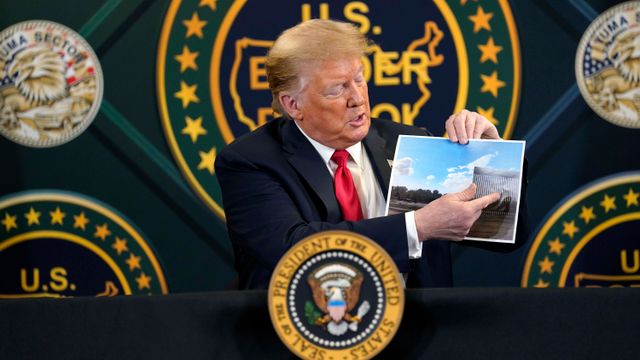
President Trump holds an image of the U.S. border wall during a security briefing at United States Border Patrol Yuma Station, Tuesday, June 23, 2020, in Yuma, Ariz. [Photo credit: AP Photo/Evan Vucci]
The changes will go into effect on June 24 and only impact those filling out new applications, not anyone who is already in the country or others with papers validating their entry into the US. Some exemptions will be permitted, such as foreign workers on J-1 academic visas who are most often postdoctoral researchers. Consular officials abroad will have the means to make their own exceptions.
Others impacted by the executive proclamation are global corporations that will be prevented from moving executives and other staff between other locations and the US and spouses of foreign workers who are currently employed in the US.
Exposing the fraud of claims that the measures are aimed at providing jobs for workers made unemployed by the pandemic, the rules contain a loophole, according the Washington Post, which allows “roughly 20,000 people who come to the United States annually as ‘au pairs’ to provide child care for U.S. families” who are wealthy enough to afford such services.
Additionally, with tens of millions of workers currently without jobs in the US, the number of positions that will not be filled due to Trump’s order is expected to be approximately 525,000.
With characteristic cynicism, Trump said of the measures, “We have a moral duty to create an immigration system that protects the lives and jobs of our citizens.” Of course, the reality is that for the capitalist ruling establishment, the lives and jobs of workers are expendable both by sending them back to work under deadly conditions in the midst of the pandemic and by using the economic downturn brought on by the coronavirus to permanently eliminate jobs.
The proclamation restricting immigration was slammed by economic and technology experts who argue that foreign talent is necessary to keep the US scientific community on the leading edge globally.
It is significant that Trump’s anti-immigration policies have taken priority in the White House over the concerns of major corporate and industry representatives. Thomas J. Donohue, the chief executive of the US Chamber of Commerce, responded, “Putting up a ‘not welcome’ sign for engineers, executives, IT experts, doctors, nurses and other workers won’t help our country, it will hold us back.”
Lizbet Boroughs, associate vice-president for federal relations at the Association of American Universities in Washington, DC, whose members include leading US research institutions, told Nature, “We find it extremely concerning, particularly as medical residents are brought in on H-1B visas, and faculty who are necessary to educate the US workforce.
“The bottom line is that suspending processing for H-1B visas is going to have an impact on American research and American innovation and America’s ability to train and teach its scientific workforce pipeline,” Boroughs said.
Others have pointed to the fact that Trump is exploiting the coronavirus pandemic and economic crisis as a means to implement border and immigration policies that have been on the desk of the fascistic White House advisor Stephen Miller for some time. Long before the COVID-19 crisis, Miller had for years urged the elimination of foreign worker visas.
On April 22, Trump issued what was called at the time an immigration “freeze,” an executive order that restricted limited categories of immigrants from entering the US for 60 days. The administration paused permanent-residency permits, or green cards, to people outside the United States, although it exempted medical workers, on the grounds that it would protect the nation from COVID-19.
In the intervening 60 days, the US has emerged as the global epicenter of the pandemic and stopping the spread of the virus by closing the borders is no longer a legitimate justification for the attack on foreign workers, so the Trump administration has shifted to the equally bogus claim of “protecting jobs.”
On Tuesday, Trump took his anti-immigrant program on the road to a presidential campaign rally of immigration officials and Republican Party allies in Yuma, Arizona, where he boasted about the border wall currently under construction, stating, “My administration has done more than any administration in history to secure our southern border. It’s the most powerful and comprehensive border wall structure anywhere in the world.”
Trump is stepping up his war on immigrants in an effort to rally his right-wing base and boost falling poll numbers due to broad public disgust over the administration’s back-to-work response to the ongoing pandemic, even as more than 120,000 have now officially died from the disease, as well as the steady attacks on the protesters across the country who have taken to the streets for nearly a month demanding an end to police violence.
The Democratic Party maintained their silence on Trump’s proclamation on Monday—including the presumptive party nominee for president, former Vice President Joe Biden—expressing their essential agreement with the White House immigration policy. As Henry Olsen of the Washington Post analyzed, “If Biden chooses to placate his voter and donor bases, he runs the risk of giving Trump an appealing issue that plays right into the typical Trump playbook. Trump has faltered a lot in recent months, but he knows how to attack someone for being weak on immigration.”
The working class must oppose the nationalism of the Trump administration and its reactionary immigration restrictions which are designed to pit American workers against their brothers and sisters around the world in the struggle for employment. All workers, regardless of where they were born, have the right to live and work where they please free from threat of deportation and with full citizenship rights.
The development of the global economy, including its advanced technical infrastructure, and the movement of workers from one corner of the world to the other must take place without the impediment of national boundaries and immigration restrictions. This requires a unified revolutionary struggle by the international working class for open borders and the building of a socialist society on a world scale.

Fascist US Army soldier faces terrorism-related charges

Jacob Crosse

On Monday the US Department of Justice announced multiple charges, including conspiracy to murder US soldiers and attempted murder of US nationals, against 22-year-old US army private Ethan Melzer of Louisville, Kentucky. Melzer is alleged to have passed along sensitive troop information to a fascist organization in order to help orchestrate an insider attack against his Army unit while deployed in Turkey.
Melzer is alleged to have sent electronic messages to members of the occult neo-Nazi organization known as Order of the Nine Angels (O9A). The information included “location, movement and security” of an unnamed US army unit currently deployed to Turkey.
The indictment, which was unsealed on Monday, alleges that Melzer, who had joined the US army in 2018, had been in contact with the British-based extremist hate group since 2019. O9A, founded by neo-Nazi David Hyatt in the 1970s, believes that Adolf Hitler was “sent by the gods to guide us to greatness,” and that the “story of Jewish ‘holocaust’ is a lie to keep our race in chains.”
O9A literature was widely shared on the Iron March forum before it was shut down. This, however, has not stopped O9A books from being promoted and sold online by the Atomwaffen Division. As with Atomwaffen initiates, O9A recruits are encouraged to infiltrate military and law enforcement organizations in order to gain valuable training to facilitate their fascist goals.
The indictment alleges that upon deploying with his unit to Italy in approximately October 2019, “Melzer consumed propaganda from multiple extremist groups, including O9A and the Islamic State of Iraq and al-Sham, which is also known as ISIS.” As part of the investigation, FBI agents seized Melzer’s iCloud account which allegedly contained an “ISIS-issued document” titled “HARVEST OF THE SOLDIERS,” which detailed potential attacks against US personnel in approximately April 2020.
In April 2020, the Army informed Melzer that his deployment would be extended and that he would be deploying to Turkey to “guard an army installation.” It was at this point the indictment alleges that Melzer decided to “facilitate a deadly attack on his fellow service members.”
Beginning in May, Melzer began using the messaging service Telegram to communicate with members and associates of O9A and an auxiliary organization known as the “RapeWaffen Division.” Melzer passed along information to the groups detailing a planned “jihadi attack” with the objective of causing a “mass casualty” event. Melzer was indifferent to his own fate during the planned attack, allegedly telling the group, “who give a [expletive]... it would be another war ... I would’ve died successfully ... because another 10 year war in the Middle East would definitely leave a mark.”
On roughly May 17, 2020, federal prosecutors charge that Melzer also passed deployment information to “a purported member of al Qaeda” and a week later he sent additional messages with specific information regarding expected deployment location, where they would travel, along with technical and defensive capabilities.
Melzer is alleged to have sent more messages the following week where he acknowledged he was “risking [his] literal free life” to send the information for the attack which he hoped would trigger a “new war.” On May 30 Melzer is said to have admitted during a voluntary interview with military investigators and the FBI that he was plotting the attack and according to prosecutors he, “declared himself to be a traitor against the United States whose conduct was tantamount to treason.”
The indictment of Melzer exemplifies the growing spread of fascism within the US military and other militaries around the world. It was just last week that a fascist network was discovered within the elite German Army’s Special Forces commando unit Kommando Spezialkräfte—KSK.
The level of detail in the indictment also demonstrates that the US government is well aware of the growing fascistic elements within its ranks and is more than capable of tracking, surveiling and exposing such elements, if it so desired.
This was proven by the release of encrypted chat logs last weekend that had been recorded by the FBI and shared with the Southern Poverty Law Center and the BBC. The calls capture secret recordings of members of The Base, a small neo-Nazi organization primarily operating out of the US and Canada. The organization was founded by Rinaldo Nazzaro, a former FBI analyst and Pentagon contractor.
Nazzaro currently lives in St. Petersburg, Russia, where he helps coordinate The Base’s international activities, which include recruiting prospective members into the group for a future “race war” which will save “European values” from a “broken system run by Jews.”
In the recordings Nazzaro, along with senior leadership of The Base, are heard encouraging prospective recruits, mostly teenagers, to “mature ideologically” by reading Hitler’s Mein Kampf and to familiarize themselves with the group’s white supremacist ideology. The group also encouraged military training and has sought to recruit members of western militaries.
Another US fascist and member of The Base exposed in the chats is 25-year-old Matthew Baccari, from Southern California. Baccari used to run a website called Fascist Forge which he took down earlier this year. One of the forum members included a 16-year-old British teenager who became the youngest person in UK history to be convicted of planning a terrorist attack.
Three US members of The Base, Jacob Kaderli, Michael Helterbrand and Luke Austin Lane, were arrested in Georgia during a sting operation in January of this year for allegedly planning to “overthrow the government and murder a Bartow County couple” who they believed to be “Antifa members.”

Siberian Arctic records temperature above 100 degrees Fahrenheit

Bryan Dyne

The temperature in Verkoyansk, Russia, which lies in the eastern part of Siberia just north of the Arctic Circle, was recorded Saturday at 100.4 degrees Fahrenheit (37.3 degrees Celsius), more than 32 degrees above the city’s average temperature in June. This is the hottest temperature ever recorded in Siberia as well as the hottest temperature to date recorded in the Arctic itself.
Such records are becoming increasingly common as global warming continues unabated. Data from the US National Oceanic and Atmospheric Administration noted earlier in the year that 2020 began with the hottest January so far recorded, 2.05 degrees Fahrenheit above the 20th century average. The year as a whole is expected to be among the five hottest since measurements began.
Scientists have issued repeated warnings for decades that the current trends in Earth’s changing climate are already having devastating consequences for the world’s population while at the same time becoming more catastrophic. In Siberia, for example, the increasingly high average temperatures across the region have caused the permafrost to thaw in some areas. People living in the town of Zyryanka have been forced to move away in recent years to escape once solid ground turning into a series of bogs and swamps. The flooding farmland has destroyed livelihoods in the region and threatens to sink buildings and other infrastructure into the deepening layer of mud.
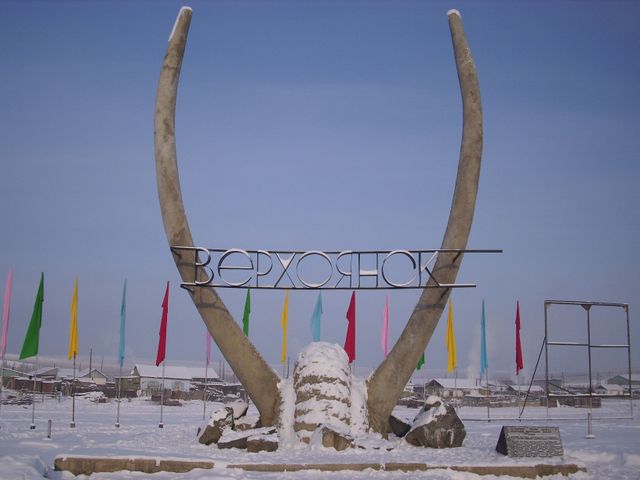
Polyus Kholoda, Pole of Cold of the northern hemisphere, monument at the entrance of Verkhoyansk, which recorded a temperature of 100.4 degrees Fahrenheit (37.3 degrees Celsius) on Saturday (Wikimedia Commons).
The melting permafrost has another consequence: the release of masses of greenhouse gases into the atmosphere. As the ground thaws, frozen animals from the previous ice age, including woolly mammoths, begin to decay and release carbon dioxide into the atmosphere. At the same time, methane trapped by the slow rot of plant and animal matter over millennia is released. Methane is a greenhouse gas that traps heat 80 times more effectively than carbon dioxide.
Thawing permafrost in the Arctic is one of several “tipping points” described by British climatologist Timothy Lenton in an article from April published in the journal Nature. Lenton and his colleagues make clear that the most catastrophic climate scenarios—oceans suddenly rising tens of meters, the loss of the Amazon rainforest—are likely to occur if current greenhouse gas emission trends from human activity continue.
The concept of tipping points was introduced by the United Nations Intergovernmental Panel on Climate Change two decades ago to describe “large-scale discontinuities” in Earth’s climate. At the time, they were only considered likely if Earth’s climate warms by more than 5 degrees Celsius above pre-industrial levels, but more recent data indicates that such tipping points could occur at only 1 or 2 degrees of warming. Earth’s surface has already warmed by 1.1 degrees Celsius compared to pre-industrial levels.
The reason the temperature limits were reduced is that more sophisticated modeling and data collected since the initial report show that certain natural processes, once triggered by human activity, trigger other natural processes over which humans have little to no control. One such datum is the temperature record at Verkoyansk, which was not predicted to happen for another 80 years.
Thawing permafrost, happening now, can lead to a sudden and massive release of greenhouse gases into the atmosphere, which can trigger a sharp spike in warming despite human intervention, leading to more thawing in a continuing loop. At the same time, Antarctic land ice melts into the oceans, causing sea levels to rise more rapidly.
This danger of a “Hothouse Earth” was made explicit by one of Lenton’s colleagues, Will Steffen, in a 2018 journal paper published in the Proceedings of the National Academy of Sciences. The work found that even if the nominal target of keeping global warming below 1.5 or 2 degrees Celsius is met, “we cannot exclude the risk that a cascade of feedbacks could push the Earth System irreversibly onto a ‘Hothouse Earth’ pathway.”
The dangers cannot be overstated. Such a world would face sea-level rises of tens of meters, wiping out coastal regions the world over and forcing billions of people to flee or be drowned. Forest fires would rage unchecked around the world and the tropical rain forests in South America, Africa and Southeast Asia would collapse. Hurricanes and typhoons would become more destructive. Coral reefs and oceanic plankton would die off en masse, collapsing the world’s food chain. At least one million of Earth’s species would die, and continent-scale portions of the world’s surface would become uninhabitable, as the planet’s surface starts to mirror the hellish landscape of Venus.
Current efforts to prevent such an apocalyptic scenario fall far short. Even if the national pledges to reduce greenhouse gas emissions from the much-lauded Paris Accord are achieved, Earth’s average surface temperature will likely warm 3 degrees Celsius by the end of the century. This in itself reveals the bankruptcy of supposedly “left” politicians around the world, including former French President Francois Hollande and former US President Barack Obama.
In a contradictory way, the ongoing coronavirus pandemic also revealed the emptiness of calls by the psuedo-lefts and Greens for the world’s population to change its “lifestyle” and by the Malthusians to reduce the world’s “surplus population.” During the peak of the shutdowns caused by the pandemic in March and April, global emissions fell by 17 percent, far less than needed to avert a climate catastrophe. This is a crude but effective demonstration that simply stopping human activity is not enough to halt or reverse the climate crisis.
In fact, what is necessary is internationally coordinated and scientifically guided human activity, implementing a program on a world scale to reorganize energy, transportation and agriculture so that Earth’s climate is stabilized and the worst scenarios avoided. Such actions in turn involve a fight by the working class against the shackles of the nation-state system and the private ownership of production—against the entirety of the world capitalist system.

Pandemic intensifies unemployment and poverty among Turkish workers

Ozan Özgür

Amid a deepening social and economic crisis after the pandemic, Turkish Statistical Institute (TurkStat) has announced its March 2020 Household Labor Force Survey. According to the report, the unemployment rate has dropped to 13.2 percent with a 0.9 point decrease in March. The total number of unemployed among over 15-year-olds has reached 3,971,000, a 573,000 decrease compared to the same period of last year.
However, examining the TurkStat data in detail, it becomes clear that the real figures are exactly the opposite. The government manipulated the report in an effort to hide the pandemic’s impact on the economy as social opposition grows in the working class to the government’s response.
In March 2019, the number of employees was officially calculated as 27,795,000. But one year later, TurkStat claims that the number of employees fell to 26,133,000 in March 2020. Although 1,039,000 more people were added to the working age population in this one-year period, unemployment has decreased by 573,000, according to the report. In other words, officials declare that nearly 2.1 million people have withdrawn from the workforce this year.
Indeed, the staggering fall in the labor force and employment participation rate exposes the report’s claim that unemployment is decreasing. According to TurkStat data, the employment participation rate (the ratio of employees and job seekers to the active population of working age) has fallen to 48.4 percent—a 4.5 point decrease.
The institution’s definition of unemployment also helps hide the rapid growth of joblessness. To count a person as an unemployed, TurkStat requires that he or she has to have looked for a job without finding one in the previous month. If an unemployed worker did not apply for work in the last month, he or she is not considered unemployed. Those who have lost hope of finding a job are not considered unemployed.
On June 10, after the research of TurkStat, the Confederation of Progressive Trade Unions of Turkey Research Center (DİSK-AR) released a report based on International Labor Organization (ILO) methods, refuting TurkStat’s figures.
The “June 2020 Unemployment and Employment Report: The COVID-19 Earthquake in Employment” stressed that TurkStat’s unemployment data does not reflect the truth. It also states that the COVID-19 pandemic has led to at least 6 million job losses in Turkey and that the number of unemployed using a broader definition exceeds 13 million. The revised broadly defined Turkish unemployment rate has become 39 percent.
Unemployment is surging after President Recep Tayyip Erdoğan’s decision to “ban layoffs” during the pandemic. During the coronavirus pandemic, the government has provided several opportunities for companies such as short-time working allowances or unpaid leave allowances instead of layoffs, to limit growing social anger among workers. With these payments made from the unemployment fund collected from the workers’ premiums, companies’ layoff costs were slashed. At this time, up to 3.5 million workers have applied for short-time working allowance and almost 1 million workers have been sent on unpaid leave.
Hundreds of thousands of workers who have been forced to take unpaid leave receive only 1,170 Turkish liras (about US$172) per month from the state unemployment fund. This corresponds to less than half of Turkey’s minimum wage of 2,325 TL (about US$343). According to the research conducted each month by the pro-government Türk-İş union, the starvation line for a family of four was 2,438.24 TL in May, while the poverty line is 7,942 liras. These figures show the unpaid leave allowance is even below starvation line.
Thus, millions of workers and their families are struggling to live with a pittance while the 100 richest people in Turkey have more than US$100 billion.
The Turkish ruling class continues to force workers to work at the expense of their health and lives during the pandemic. With a relative fall in the number of cases, the Erdoğan government has rapidly begun to remove its limited measures since May, accelerated its “normalization” process and reopened almost the entire economy to boost the profits of the banks and major companies.
The impact of this criminal policy has soon emerged as a sharp increase in the number of new daily infections. The number of new cases, which had fallen to around 700, rose to around 1,500 again last week. While state officials accuse people of not taking personal precautions in order to hide the criminality of their policies, public anger is mounting over the government’s response to the pandemic in the interests of ruling class. The class character of the government response has been clearly demonstrated in the rate of confirmed COVID-19 cases among workers, which is more than three times the average in Turkey.
A poll by the Metropoll Research Company in early June found that while 53.5 percent of people said that their living conditions have worsened in the last year, those who said “Turkey’s biggest problem is the economy and unemployment” reached almost 50 percent. The increase was 12 percent. The research found that 39 percent of AKP voters stated that their living conditions have deteriorated.
On the economic effects of the pandemic, 31.8 percent said they became unemployed after the pandemic, 8 percent said they had gone on non-paid leave, and 20.3 percent said they couldn’t meet their basic needs. Fifty-eight percent were only able to meet their shelter and food needs; 20.4 percent could not pay their credit card debt; 17.8 percent said they could not afford their debts to other people. While 17.7 percent could not pay their monthly bills, the proportion of those who could not afford their rents or bank debts was 17.2 percent.
While all recent studies reveal that masses of workers have been condemned to growing unemployment, hunger and poverty during the pandemic, the Erdoğan government continues to transfer billions to the Turkish bourgeoisie. The Treasury borrowed 67.2 billion lira on financial markets in April, after announcing that it would borrow 28.2 billion lira. This amount rose to 76.5 billion lira in May. As around the world, as billions are pumped into the coffers of the ruling class with low-interest rate loans and stimulus packages, this debt will be paid by the working class with increased exploitation.
The ruling class is using the pandemic as an opportunity to transfer massive amounts to their coffers and intensify its social attacks on the working class, leading to an inevitable intensification in the class struggle in the next period in Turkey and around the world.

More than 1,500 COVID-19 infections at pork processing plant in Germany

Marianne Arens & Peter Schwarz

As of Monday, 1,553 workers at the Tönnies pork processing factory in Germany have tested positive for COVID-19. This is the largest mass infection in Germany since the first case was detected five months ago.
At least twenty infected workers at the plant in Rheda-Wiedenbrück, located in the western state of North Rhine-Westphalia (NRW), are currently being treated in local hospitals, with five in intensive care. Almost 7,000 Tönnies workers are now in quarantine. As a result of the outbreak, schools and day-care centres in the district of East Westphalia were forced to close again.
Production at the plant was suspended but only after all the meat supplies were processed. Another Tönnies slaughterhouse in Weissenfels (Saxony-Anhalt) is now ramping up production to take over slaughtering and processing operations from the closed plant.
Tönnies meat factory in Rheda-Wiedenbrück
Workers and health officials have charged that Tönnies, one of Europe’s largest meat processing firms, withheld information about the spread of infections and obstructed efforts to contact trace and quarantine infected workers.
The outbreak is the result of a deliberate policy that places profits above the health and lives of workers—a policy that is supported by all parties in the Bundestag (parliament).
The scandalous conditions in the slaughterhouses have been known for years. Through service contracts and a convoluted system of subcontracting, the workers, who include large numbers of Eastern European immigrants, are brutally exploited. They stand on assembly lines for ten, twelve or more hours a day and often earn only a fraction of the statutory minimum wage after deducting agency fees, transport, and accommodation costs.
The state authorities found overcrowding, danger of building collapse, leaking roofs, mold, unsanitary facilities, rat infestation and fire protection deficiencies in the collective housing and company apartments. During the inspection of 650 accommodation facilities, where more than 5,300 people live, there were 1,900 medium and serious complaints. Necessary hygiene measures to counter the spread of the deadly disease are not possible.
The poor housing conditions are not the only breeding ground for COVID-19. The slaughterhouses and meat processing facilities have also turned into life-threatening hotspots. Of the 6,650 workers who were tested at Tönnies, just over a fifth were infected. In the cutting department, where pig halves are cut up, two-thirds of the workers were infected. Workers in the department stand elbow-to-elbow on assembly lines. The air is constantly being cooled down and is damp. The work is physically strenuous, and workers are constantly breathing heavily and shouting, propelling droplets and even smaller aerosols far and wide.
The fact that meat processing plants are major vectors for the spread of the infection is well known around the world. In the US, 25,000 workers in the meat industry have been infected and at least 91 have died. There have also been major outbreaks in the UK and Brazil. Nevertheless, production at Tönnies continued at full speed, even after hundreds of cases were detected in several German slaughterhouses in early May. At Tönnies itself, there was also a case of COVID-19 as early as March, and six weeks ago several workers tested positive.
The politicians who are now hypocritically complaining that “the health of the workers is being played to maximize profit” (NRW state Health Minister Karl-Josef Laumann, a Christian Democrat), and shedding crocodile tears about the “exploitation of people” (Federal Labour Minister Hubertus Heil, a Social Democrat) are directly responsible for the Tönnies disaster.
With the introduction of the Hartz labour and welfare “reforms” 15 years ago, the Social Democratic Party (SPD) created the conditions for the brutal exploitation of workers in the meat industry. Now the SPD is part of a federal government that advocates and orders ruthless relaxation of safety guidelines. The capitalist parties of every stripe in the federal government, from the far-right Alternative for Germany (AfD), the Christian Democrats (CDU/CSU) and Free Democrats (FDP) to the SPD, the Greens and the Left Party, are all working to lift pandemic regulations and lockdowns as quickly as possible.
By re-opening schools and day-care centres, the government has made it clear to corporations like Tönnies that the interests of big business will come first, despite the continuing danger from the coronavirus. Lockdown measures have not been reintroduced in East Westphalia even though the number of new infections per 100,000 inhabitants in the Gütersloh district is 243, well above the 50 mark that the government itself had set as the threshold for a return to lockdown.
Corporate patriarch Clemens Tönnies, who made it from butcher’s son to Germany’s billionaire “Meat Baron” thanks to ruthless methods of exploitation, is politically well connected. He has been chairman of the supervisory board of the first league soccer club FC Schalke 04 for 19 years, and thus enjoys a tight network of political and business relationships. His company has donated a total of €147,000 to the CDU, which heads the NRW state executive under state premier Armin Laschet.
The most prominent member of the advisory board of Tönnies Holding is Siegfried Russwurm, acting chairman of the supervisory boards of Thyssenkrupp and Voith, and a former board member of Siemens. Last week, Russwurm was nominated to be the new president of the Confederation of German Industries (BDI). Concerning the coronavirus pandemic, Manager Magazin quoted him saying that he wanted to work to ensure that “companies in Germany and Europe overcome the severe recession as quickly as possible” to reach the top of the world rankings.
Tönnies himself and his company have been the subject of numerous investigations—for fraud, tax evasion, price-fixing, bribery, false labelling, and video surveillance of employees, among other things—resulting in several fines. The scandalous conditions in his companies have repeatedly made headlines. But none of this has harmed the company’s rise: the Tönnies Group is Germany’s largest meatpacking firm, employing around 16,500 workers worldwide. In 2019, the group had a record revenue of €7.3 billion and a 30 percent share of Germany’s pork processing market.
The coronavirus outbreak at Tönnies provides a glimpse of conditions that are commonplace in ever-larger parts of industry and contribute to enriching a thin upper class of billionaires. Today, thousands work under similar conditions in the car and metal industries, in construction, care, catering, airports, private and public transport. They are all forced to work despite the continuing danger from coronavirus.
Although the number of COVID-19 infections is reaching new records worldwide and is also increasing again in Germany, the capitalist political parties are determined to lift all restrictions and not issue any new ones—even if this leads to an increase in infections and tens of thousands of deaths.
North Rhine-Westphalia’s state premier, Armin Laschet, who aims to succeed Angela Merkel as CDU chair and also become her successor in the Chancellor’s Office, has long been a pioneer of reopening the country. Thuringia’s state premier Bodo Ramelow, from the Left Party, was the first to repeal all binding regulations.
At the same time, the government has deployed 65 Bundeswehr soldiers, supposedly to get the situation at Tönnies under control. Although the soldiers are mainly paramedics, who carried out coronavirus tests, the deployment of military forces sets a dangerous precedent. The ruling class is preparing to violently suppress any resistance to abandoning remaining safety measures and to the social consequences of the coronavirus crisis.
Quarantine measures imposed on Tönnies employees, who often do not speak German, are being enforced with military ruthlessness. Entire rows of houses are being sealed off with construction fences. Meanwhile, State Premier Laschet has repeatedly tried to stir up anti-immigrant sentiments against the Eastern European workers. At first he claimed, without any proof, that the virus had been introduced by returning Romanians and Bulgarians.
The implications of this policy were on display last Saturday evening in Göttingen, Lower Saxony, when police violently attacked the 700 residents of a high-rise building where almost 120 people were infected and quarantined for days. About 200 residents protested when they were told they would be tested a second time and did not understand why, due to language difficulties. Three hundred police officers took action against them and used pepper spray on a massive scale, including against women and children.
Living conditions in these flats are unbearable. The apartments, some of which are occupied by families with multiple children, are only between 19 and 37 square-metres in size, according to local Mayor Rolf-Georg Köhler (SPD). Nevertheless over 200 children in the building have not been allowed to leave the house due to the quarantine.
In his novel “The Jungle,” Upton Sinclair wrote 115 years ago about the stockyards and slaughterhouses of Chicago, where many immigrants settled in the hopes of making a living in America. The Beef Trust was “the incarnation of blind and insensate Greed. It was a monster devouring with a thousand mouths, trampling with a thousand hoofs; it was the Great Butcher—it was the spirit of Capitalism made flesh.”
This is an apt description of what workers face today.
The Sozialistische Gleichheitspartei (Socialist Equality Party) and the World Socialist Web Site call on native born and immigrant workers in meatpacking and all other industries to join together in action committees independent of the trade unions to enforce the necessary protection of workers and the population.
Sick workers, no matter what their national origin, must receive the best possible care and the full payment of their wages. The same provision of income and medical treatment must be provided to quarantined workers.
To finance this, the wealth of billionaires such as Clemens Tönnies and his family, along with the Mafia-like subcontractors who profit from the exploitation of impoverished workers, must be expropriated. This can only be achieved based on an international and socialist programme.

France backs Egypt’s threat to intervene against Turkey in Libyan war

Alex Lantier

French President Emmanuel Macron’s support for Egypt’s threat to intervene militarily against the Italian-backed Turkish intervention in Libya marks a major escalation of the nine-year imperialist carve-up of Libya launched by the 2011 NATO war.
Africa is facing a surge of the COVID-19 pandemic: it took 98 days from the first reported case to the first 100,000 cases, but it took only 18 days to double to 200,000. Libya is located, moreover, between two of Africa’s worst-hit countries: Egypt (with 57,000 cases) and Algeria (12,000). Yet instead of working to send food and medical supplies to Africa, where millions also face famine due to the pandemic’s disruption of agriculture and trade, the major powers are threatening to intensify the nine-year intervention into an all-out regional and even global war.
On June 21, Egypt’s bloodstained dictator, General Abdel Fattah al-Sisi, threatened to intervene in Libya to defend warlord Khalifa Haftar’s forces against the Turkish-backed Government of National Accord (GNA). Speaking while inspecting troops at a military base near the Libyan border, he warned that a GNA capture of Sirte, a strategic town and gateway to Libya’s oil industry, would be a “red line.”
“Any direct intervention from the Egyptian state has now acquired international legitimacy,” Sisi said. He told Egyptian air force pilots and special forces units: “Be prepared to carry out any mission, here inside our borders—or if necessary, outside our borders.”
Echoing the rhetoric he used to justify a 2013 coup against Islamist President Mohamed Mursi and the savage repression of a two-year revolutionary upsurge of the working class in Egypt, Sisi said Egypt would intervene in Libya in self-defense against “direct threats” from “terrorist militias and mercenaries.” He added: “If the Libyan people … asked us to intervene, this would be a signal to the world that Egypt and Libya are one country, one interest.”
The target, Egyptian officials made clear, is the Turkish intervention in Libya, launched in January, to support the UN-recognized GNA against Haftar’s forces. “The aim is deterrence: Egypt does not want a single Turk to cross the line into eastern Libya,” Ziad Akl of Egypt’s Al-Ahram Centre for Political and Strategic Studies told London’s Financial Times.
The French government, which together with Russia, the UAE and Egypt has backed Haftar in Libya, promptly intervened to declare its support for Cairo in the war. Speaking alongside Tunisian President Kaïs Saïed at the Elysée presidential palace in Paris, Macron accused Turkish President Recep Tayyip Erdoğan’s government of “playing a dangerous game in Libya.” This comes shortly after a dangerous confrontation between French and Turkish warships in the Mediterranean.
With brazen hypocrisy, Macron, who has helped oversee Egyptian, UAE and Russian arming of Haftar, denounced Turkey for intervening in the country. Calling for “the belligerents to cease fire,” he demanded “the reunification of Libyan institutions and the launching of reconstruction in the interests of all Libyans.” He continued, “This is a hard road requiring all of us to show responsibility, end foreign intervention and end unilateral actions by those who hope to win new positions through war.”
Macron then promptly endorsed Sisi’s threat to intervene militarily in Libya, saying he understood “the legitimate concern of President Sisi as he sees troops arriving on his border.” This was yet another lie. GNA troops are not at the Egyptian border, but in central Libya, threatening to overrun Sirte and key oil fields and refineries taken over by French oil firm Total after the 2011 war.
Finally, Macron repeated his remarks last autumn, blaming the NATO alliance for being “brain dead” and unable to coordinate common action between its members. The ostensible target of his anger was Turkey, which has armed the GNA with drones and helped it turn back Haftar’s attack on Libya’s capital, Tripoli. However, Macron’s comment was also a barely veiled attack on Italy and on the rest of the NATO alliance, which has largely declined so far to publicly take sides in the mounting inter-imperialist conflict between France and Italy in the Mediterranean.
Italy, the former colonial power in Libya, whose oil firm ENI has taken over GNA-held oil fields in western Libya, is working closely with Turkey. On June 19, Italian Foreign Minister Luigi di Maio went to Ankara to meet his Turkish counterpart, Mevlüt Çavuşoğlu, and discuss the Libyan war. Di Maio and Çavuşoğlu then held a press conference where di Maio called for “cooperation, not conflict” between NATO member states in the region.
“We are thankful to Italy for not siding with putschist Gen. Khalifa Haftar in Libya, unlike many other countries,” Çavuşoğlu said. He added that Italy and Turkey would cooperate not only on meeting Libya’s energy needs, but also on mounting Turkish-Greek conflicts over natural gas deposits in the Eastern Mediterranean. Ankara has increased its efforts to get support from Washington for its policy in Libya. On June 8, Erdoğan called US President Donald Trump over Libya, after which Çavuşoğlu declared, “We received instructions [from Erdoğan] to work together” with their US counterparts.
What is unfolding in Libya is the direct result of the bloody imperialist war waged by the NATO powers in 2011 against oil-rich Libya. Terrified by revolutionary uprisings of the working class in neighboring Egypt and Tunisia, the NATO powers led by France, Britain and the United States launched a war on Libya under the cynical pretext of intervening to protect Libyan protesters from Colonel Muammar Gaddafi’s regime. Arming Islamist and tribal militias as proxies, they bombed Libyan cities and in six months toppled and destroyed the Libyan government.
This operation was marketed to the European and American public as a war for democracy by petty-bourgeois pseudo-left operatives like the French New Anti-capitalist Party’s (NPA) Olivier Besancenot, who demanded that French intelligence arm Libyans against Gaddafi. Besancenot has been thoroughly exposed by what followed as a stooge of imperialism and a propagandist for French oil interests.
The NATO war quickly led to the disintegration of Libya into civil war between rival Islamist and tribal militias, loosely overseen by a succession of UN-backed governments or warlords like Haftar. NATO powers divided up what they could salvage of Libya’s oil industry and set up concentration camps for migrants where they face murder, sexual assault and being sold into slavery. Over the last years, moreover, the conflicts among the imperialist powers over who would profit from the rape of Libya has only grown bloodier and more dangerous.
The European media repeatedly criticized the Russian intervention to back the ostensibly secular warlord Haftar, in the context of the post-Soviet Russian regime’s hostility to all manifestations of Islamism and its military intervention against the NATO proxy war in Syria. There is clearly deep frustration in the imperialist capitals of Europe at the mounting role Russia and Turkey play across the region. However, a pall of silence generally covers the underlying rivalry between the NATO imperialist powers and transnational corporations over the division of the spoils.
This rivalry briefly emerged into view last year, when France withdrew its ambassador to Rome in protest and warned that Franco-Italian relations were at their lowest point since fascist Italy’s invasion of France in 1940, during World War II. While these differences were patched over, the conflicts inside NATO have only continued to mount. They underlay both this winter’s Libyan conference in Berlin, and the recent declaration of a top French general that France must prepare for major, “state on state” conflicts.
The way forward is the independent political mobilization of the working class in an international anti-war movement. The neo-colonial appetites of the European powers and the various Middle East bourgeois proxies through which they work—in Egypt, Turkey, or inside Libya—are all unflaggingly reactionary.
The COVID-19 pandemic and the horrific failure of the ruling classes around the world to adopt policies halting its spread are further, unanswerable proof of the need for workers internationally to return to the revolutionary road opened by Tunisian and Egyptian workers a decade ago.