25 Jun 2020

Escalating economic and political crisis hits Fiji

John Braddock

The escalating impact of the global COVID-19 pandemic in the southwest Pacific is highlighted in Fiji, the region’s second largest country with a population of just under 900,000. Along with other Pacific nations, Fiji has so far avoided the worst health effects, but its economic impact has been devastating.
With tourism in total collapse, unemployment is soaring and the gross domestic product (GDP) plummeting. The tourist industry contributes nearly 40 percent to Fiji’s GDP—about $FJ2 billion ($US900 million)—and directly or indirectly employs over 150,000 people. Fiji Airways last month sacked 775 workers—more than half its workforce—while Air Terminal Services has axed 300 jobs and souvenir company Jack’s of Fiji another 500.
The Fiji Ministry of Economy reported in March that the economy is expected to contract by 4.3 percent in 2020, likely a significant underestimate. The debt-to-GDP ratio has already jumped from 48.9 percent before the pandemic to 60.9 percent, and will increase further. This is in a country where the minimum wage is just $FJ2.32 an hour and 28 percent of people live below the poverty line.
Prime Minister Frank Bainimarama, who seized power in a military coup in 2006, has used the pandemic to tighten his government’s rule. A senior military officer, Brigadier-General Jone Kalouniwai, told the Fiji Sun that the COVID-19 emergency gave the country’s leaders “good reasons to stifle criticism of their policies by curtailing freedom of speech and freedom of the press.” The fight against COVID-19, he warned, was “likely to end up violating the individual rights and rule of law that are at the heart of any liberal society.”
The government rests directly on the military, despite elections in 2014 and 2018 fraudulently hailed as “democratic” by Australia and New Zealand. Successive regimes have been authoritarian and anti-working class. Harsh austerity measures have been accompanied by the intimidation of opposition parties, repressive laws and rampant violence by the police and military.
On June 9, Suva police raided the headquarters of the opposition National Federation Party (NFP) in an apparent crackdown on social media use. A video showed plain clothes officers rifling through files, papers and storage. NFP leader Biman Prasad told Radio NZ that officers spent an hour purportedly searching for documents relating to the party’s social media posts, and possible payments regarding them.
The government is moving to suppress wider stirrings of social unrest. In an unfolding crisis at the University of the South Pacific (USP), police questioned two USP staff following protests over the suspension of Vice-Chancellor Pal Ahluwalia, who exposed alleged corruption and mismanagement under the USP leadership group. Through early June, hundreds of students, faculty and staff protested the professor’s suspension and demanded the removal of the USP Executive Committee.
Claiming breaches of COVID-19 restrictions by protesters, police searched the offices of the Fiji Times for photos of the students involved, some of whom would have been from other Pacific countries. The USP Students’ Association objected to the intimidating presence of police at the campus protests when there was no criminal activity to justify it.
The controversy at the region’s major tertiary institution, owned by 12 Pacific nations, prompted warnings that the university’s autonomy and academic freedom is under threat. While Ahluwalia was this week reinstated, Fiji’s representatives want to assert total control of the institution, according to journalist Michel Field.
In a sign of growing political disarray, Fiji’s parliament is operating with only the government benches and three seats of the opposition NFP filled after the Social Democratic Liberal Party (SODELPA) was suspended late last month for 60 days.
SODELPA is Fiji’s main opposition party, occupying 21 seats in the 51-seat parliament. It represents the interests of a nationalist layer of the privileged chiefly Fijian elite. The party has been led since 2016 by Sitiveni Rabuka, the instigator of two military coups in 1987, then prime minister following the 1992 election and also a former chairman of the unelected Great Council of Chiefs.
The suspension came after rival party factions submitted competing lists of executives and office holders. The Registrar of Political Parties, Mohammed Saneem, declared that SODELPA had breached Fiji’s 2013 constitution and could not legally function as a party. Saneem warned that SODELPA would be deregistered if its internal dispute was not resolved within the 60-day period. The Commission against Corruption is to examine claims of “missing provisions” in the party’s constitution.
The High Court ruled in April that the election of the party’s president and deputy at the 2019 AGM was unlawful. The action was brought by the party’s Suva branch and youth wing, who argued the AGM procedures were botched and politically manipulated. The judge ruled that the plaintiffs’ rights to freedom of political choice and to participate in a political party were violated when they could not participate in the AGM.
The elections were voided, along with all decisions dating back to last June. Rabuka said the suspension was “inevitable” following the factional feuding, and would not be contested. Rabuka, who now postures as a “moderate” to appeal across traditional ethnic lines, is struggling to contain right-wing conservatives behind the indigenous, anti-Indian iTaukei movement, who will not accept the appointment of Vijay Singh as the party’s first ever Indo-Fijian vice-president.
The government is exploiting SODELPA’s crisis. Without the presence of SODELPA parliamentarians, the parliamentary speaker Ratu Epeli Nailatikau last month blocked official questions from the NFP over the Fiji Sugar Corporation’s reduced payments to farmers for the 2019 harvest. Cane growers had allegedly been short-changed $US550,000 after a 30 cents per tonne deduction from the year’s final payout meant they received $US5 per tonne, insufficient to make ends meet.
The speaker also decreed that parliamentary proceedings could no longer be shown on Facebook, giving the flimsy pretext that Facebook’s auto-generated subtitles were “incorrect and out of context.”
Fiji’s police, corrections and military officers are engaged in widespread repressive practices. Five officers have been charged, and four suspended, over their alleged assault of a villager in April. NFP parliamentarian Pio Tikoduadua was arrested when he posted a video on Facebook claiming police brutality over the incident.
International human rights groups last month also called for an investigation into allegations published in the UK Guardian that commissioner of corrections Francis Kean, who is Bainimarama’s brother-in-law, has routinely ordered the beating and mistreatment of prisoners and staff.
Neither of the two regional powers—Australia and New Zealand—has condemned the blatantly anti-democratic actions of the Bainimarama government. Canberra and Wellington are seeking to strengthen relations with Fiji, including military ties. The aim is to incorporate Fiji into the escalating US-led militarisation of the Asia-Pacific region in preparation for war against China.

New COVID-19 outbreaks in Germany and Berlin’s inhumane quarantine conditions

Lisa Lachlan

When the interests of big business are at stake, all safety precautions are thrown overboard as millions of workers are forced back to work under precarious conditions. If these workers then become infected, they are kept in their cramped apartments, sometimes using brutal methods. Even the most elementary assistance is denied them.
This is particularly evident in the Berlin district of Neukölln, where the largest proportion of poor households in the capital is concentrated. On June 5, two pupils from different schools in the borough tested positive for the coronavirus. Since June 13, 369 households, each containing one to 10 people, have been quarantined. A total of seven locations in the district are affected.
On Friday, it was learned that 94 persons had a positive result out of some 586 tests carried out. The number is expected to rise even further in the next few days, as the testing of all households has not yet been completed.
Of the persons who tested positive, 41, i.e., about half, are children under 18 years of age, some of whom are subject to compulsory schooling. In this context, eight schools are known to have individuals who tested positive.
Currently, 25 members of the pandemic staff are busy tracing the chains of infection, and five military personnel are involved in maintaining the lists and telephone service, according to Neukölln city councillor Falko Liecke (Christian Democratic Union, CDU). Nevertheless, the origin of the transmission into the blocks of flats has not yet been clearly determined. There are, however, indications that the outbreak was connected with the Christian community, to which several of the positively tested persons belonged. They had participated in a Pentecostal service.
The rapid and concentrated outbreak of COVID-19 in precisely these blocks of flats, however, can only rationally be explained by the cramped and poor housing conditions in which the residents have to live. A large proportion of the inhabitants are newly arrived immigrants and families from poor European Union (EU) member states. With an average size of 70 square metres, they are forced to live crowded together in households of up to 10 people.
Just as in the meat industry, in refugee accommodation and in shelters for the homeless, such circumstances provide the virus with the best chance of spreading quickly and effectively among residents and forming a hotspot.
The quarantine ordered by the district authorities for the 369 households in 13 housing blocks forces residents to remain packed together for two weeks in apartments where many children live. Under such circumstances, it is highly likely that entire households will become infected, as distancing rules cannot be observed in overcrowded rooms.
But neither the district, the state of Berlin nor the German federal government has done anything to at least make the quarantine humane and safe—for example, by renting hotel rooms. Not even the supply of food is guaranteed.
The district mayor had initially announced that the supply of basic foodstuffs would be safeguarded. However, this was not distributed among the households until the fourth day after the imposed curfew, in the form of 75 boxes.
Some residents told the Nordkurier on June 18 that the authorities had not taken care of their needs. In the first few days, they had been supplied with “food and drink” mainly by friends and the neighbouring school. Only a few residents could afford the additional costs of a delivery from the supermarket. Furthermore, one resident told the newspaper that the food supplies in his household, in which nine people lived, had already been used up after two days.
The concentrated COVID-19 outbreak in Berlin Neukölln shows very clearly that people who have to live in impoverished conditions are particularly at risk of contracting the virus.
While the residents affected are locked up in cramped conditions, the eight schools where pupils have tested positive for the virus remain open until the holidays. According to councillor Liecke, it is sufficient to quarantine the affected learning groups from the schools where the infections first appeared.
While the district authorities are not doing anything to improve living conditions for those in quarantine, the affected students are being threatened with severe repression, as in other places. Thus, the district is legally authorized to use the police against repeated quarantine breakers. In several refugee accommodations in Baden-Württemberg this is already being practised by the police and military.
In Göttingen, too, police are being deployed to monitor the quarantine of about 700 people in a high-rise complex. The building was quarantined last week and largely cordoned off by the police. On Friday, 120 positive cases were reported, but testing has not yet been completed.
People in this building also live in extremely precarious housing conditions. In the entire block, the apartments are between 19 and 37 square metres in size. Many of the apartments are occupied by families with several children. According to the city, a total of around 200 minors live there in insecure conditions.
On Saturday, when 200 residents tried to oppose the curfew, as such quarantine conditions are unacceptable for those affected, the police acted against them using 300 officers. According to the police, this led to an arrest and arguments between cops and residents.
It is becoming increasingly clear who has to pay the price for the policy of reopening business, which is being pushed forward by all the establishment parties: the poorest all over the world. They are hit hardest by the virus and the quarantine conditions. As the WSWS recently reported, there is a direct link between low income, an increased risk of illness and a severe course of the disease, which is 87 percent higher for welfare recipients than for those receiving regular unemployment benefits.
It is therefore not surprising that the district of Neukölln, in particular, has the second-highest number of COVID-19 sufferers in Berlin, with around 957 cases. According to the 2019 Social Report of Berlin-Brandenburg, which refers to figures from 2018, Neukölln has the highest proportion of inhabitants at risk of poverty, at 27.4 percent. With the outbreak of the coronavirus pandemic, the figures will be even higher in 2020.

Johnson announces end of UK’s lockdown

Robert Skelton

On Tuesday, UK Prime Minister Boris Johnson announced the de facto end of what little remains of the lockdown he reluctantly and belatedly imposed in response to public demands to prevent the spread of COVID-19
The bulk of the UK economy, barring “close proximity” venues such as nightclubs, soft-play areas, indoor gyms, swimming pools and spas, will reopen July 4. All schools will reopen in September.
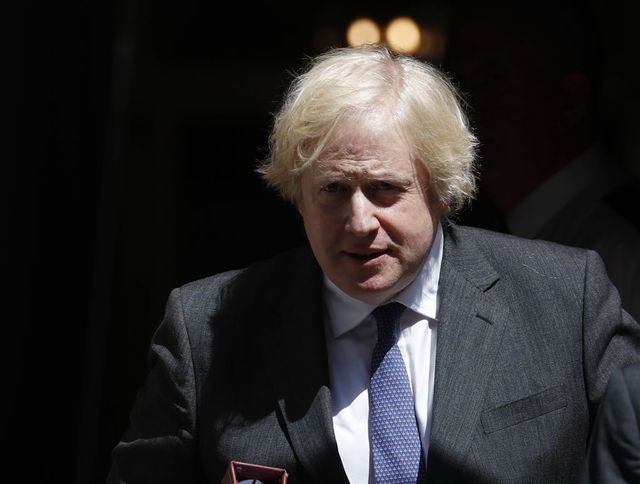
Britain's Prime Minister Boris Johnson leaves 10 Downing Street to attend his weekly Prime Minister Questions at the House of Commons, in London, Wednesday, June 24, 2020. (AP Photo/Alastair Grant)
Johnson told MPs, “Today we can say that our long national hibernation is beginning to come to an end and life is returning to our streets and shops.”
Social distancing was effectively ditched by Johnson. If people were unable be two metres apart, “we will advise people to keep a social distance of ‘one metre plus’.” The “advice” is meaningless. Everyone knows that social distancing is now over, as far as the government is concerned.
The economy is being flung open, with millions being exposed to a still active and widespread virus. Wearing face masks is not being made mandatory, except on public transport.
There is no scientific basis to any of this, with the pandemic still raging in Britain and claiming hundreds of lives every week. Johnson announced the end of lockdown on the day the UK recorded another 280 COVID-19 deaths and 921 fresh cases. On Wednesday, a further 154 deaths were announced.
The real infection rate is many multiples higher than the 1,000 or so officially cited. Yesterday, Professor Anthony Costello, a critic of the government’s homicidal herd immunity policy, tweeted, “Leaked [Public Health England] document suggests 7000 new infections per day and R value possibly above 1.”
HuffPost UK exposed “classified daily document released by Public Health England to health professionals across the UK.” It wrote, “The government is not certain that the coronavirus R [Reproduction] rate is below 1 in England, meaning the disease may not be under control even as lockdown restrictions are being lifted.”
For weeks, the government has claimed that the UK’s R rate is between 0.7 and 0.9. Last Friday, the UK’s COVID-19 alert level was downgraded from 4 to 3, meaning that the virus is no longer judged to be “high or exponentially rising.” HuffPost noted “that there is ‘uncertainty’ around the figure published by the government, which has been used to justify the lowering of the UK’s ‘alert level’…a copy of last Thursday’s document, titled ‘COVID-19 Situation Report’ and marked ‘OFFICIAL SENSITIVE’, states that because of uncertainty in how accurate the figure is ‘we cannot preclude R being above 1’ in England.”
The leaked PHE document states “that the rate is believed to have risen recently, and explains: ‘We believe that this is likely to be due to increasing mobility and mixing between households and in public and workplace settings’”
Exposing government lies that the virus is on a “downward curve,” HuffPost reveals, “The report also includes other data that have not been made public—most notably that the daily estimate of the number of daily new infections last Thursday stood at 7,000. This is in contrast to the figure of actual positive tests reported for the same day, which was 1,346.”
Johnson announced the latest reopening measures even as he declared that further outbreaks of the deadly disease are a certainty, telling parliament that “as we have seen in other countries, there will be flare-ups for which local measures will be needed and we will not hesitate to apply the brakes and re-introduce restrictions even at national level—if required.”
No such local lockdowns have been imposed as vast sections of the economy were reopened in recent weeks. This was despite the R value officially going above 1 in two regions of the country—with a population of over 12 million. Outbreaks affecting hundreds of people have been recorded in recent days at food processing and meatpacking plants and in schools.
Johnson proceeded despite warnings from scientists that the full reopening of the economy risks a “second wave” of the pandemic. Moreover, the entire world, the UK included, is still being menaced by the first coronavirus wave, with fresh outbreaks everywhere and record daily increases worldwide. On Tuesday, more than 36,000 new cases were recorded in the US, the third highest number since May 1. In Brazil, there were nearly 30,000 new cases reported June 21, up 30 percent from two weeks ago.
Speaking to Sky News Wednesday, Professor David King, who leads Independent Sage—made up of scientists concerned at the government’s political misuse of scientific research—said, “If we move too quickly, which is what I think is being proposed here, the risk of running into a second wave becomes very significant. … I don’t think there’s anyone who can believe from the scientific point of view that this a wise move.”
On Wednesday, the presidents of the Royal Colleges of Surgeons, Nursing, Physicians and GPs signed an open letter in the British Medical Journal stating that “the available evidence indicates that local flare-ups are increasingly likely and a second wave a real risk.”
The ruling elite across the UK’s constituent nations are united in their determination to end the lockdown. Johnson’s statement was followed Wednesday by Scottish National Party First Minister Nicola Sturgeon who said Scotland’s lockdown will end with moves to reopen the rest of the economy between July 3 and July 15. From July 15, all holiday accommodation will open, along with indoor areas of pubs and restaurants and hairdressers and barbers. All museums, galleries, cinemas and libraries can open.
Johnson’s move was hailed in the media, with the Mail headlining, “July 4 will be OUR Independence Day.” The Daily Telegraph noted that some MPs had already dubbed the date “Super Saturday,” as “restaurants, hotels, pubs and hairdressers will also be allowed to reopen, and ‘air bridges’ established to save the summer holidays.” The Sun, Daily Express and Metro all had front pages hailing the opening of pubs and photos of people carrying heavy trays of drinks. The ostensibly liberal Guardian editorialised that “the direction of travel is welcome…” and “Mr Johnson is justified in saying that the pandemic now appears to be under control.”
The Johnson government declared at the outset of the pandemic it was in favour of the infection of tens of millions of people to reach “herd immunity.” It was only prevented from carrying this out to due to public revulsion, with scientists insisting that it would lead to hundreds of thousands of deaths.
The government imposed a lockdown, but this was months too late. As a result, the Financial Times estimates that there have been more than 66,000 “excess deaths” due to COVID-19. This almost matches the 67,100 UK civilian deaths in World War II. Even the government’s own highly manipulated figures record over 43,000 dead—the third highest death rate in the world behind the United States and Brazil.
Johnson has only been able to survive in power and continue to recklessly endanger lives due to the unqualified support he receives from the Labour Party, which operates as a de facto national coalition.
Responding to Johnson in parliament, Labour leader Sir Keir Starmer did not even mention the horrific death toll and herd immunity policy, while reassuring Johnson, “When I was elected leader of the Labour Party, I said that I would offer ‘constructive opposition, with the courage to support the Government’ where they are doing the right thing.” Therefore, “overall I welcome the Prime Minister’s statement. I believe that the Government are trying to do the right thing, and in that we will support them.”
Johnson could do nothing but reply that he was “grateful” for the “spirit, the manner and the constructive way in which he [Starmer] has responded.”

Beset by crisis, Kremlin holds “victory parade”

Clara Weiss

On Wednesday, the Kremlin held a major “victory day” parade in the center of Moscow with some 14,000 troops. The parade was originally scheduled for May 9, the 75th anniversary of the end of World War II, but had been delayed because of the spread of the coronavirus.
All social distancing measures in the Moscow region had been lifted only on Monday, a week earlier than originally planned so that the parade could take place. However, the Moscow region still records about 80 percent of new infections in Russia. Every day, between 7,000 and 8,000 new infections are recorded in the country, with the total number of confirmed cases surpassing 600,000 on Wednesday.
The parade and the reopening of the economy have been timed to precede by one week the national referendum on constitutional changes proposed by Putin earlier this year. These changes will allow Putin to run for president again in 2024 and will strengthen the president’s role.
The parade was meant, above all, to foster nationalism and promote a false sense of “national unity.” The Nazi invasion of the Soviet Union in 1941 claimed the lives of at least 27 million Soviet citizens, and the Red Army, despite the devastating role of Stalinism, played the central role in defeating Nazi Germany. While substantial political confusion prevails, above all, about the role of Stalinism, the vast majority of the Russian population still feels a profound association with the fight against fascism.
Besieged by world imperialism and under conditions of growing class tensions, the Russian oligarchy, which emerged out of the Stalinist counterrevolution against the October Revolution, seeks to appeal to these sentiments and exploit them for the promotion of nationalism.
Parades were scheduled in 28 cities, and 64,000 people were expected to attend, a recipe for an unmitigated public health disaster in the midst of a pandemic. Most of these cities are located in regions which are still in the early stages of reopening, with mass gatherings still banned.
However, the parade was a debacle and highlighted, if anything, the growing international isolation of and social tensions within Russia. Because of the ongoing pandemic, virtually no foreign leader of significance attended the parade. Only presidents of former Soviet republics attended, as well as the Indian Defense Minister Rajnath Singh. The president of Kyrgyzstan travelled to Moscow to attend but after two members of his delegation tested positive upon arrival, he canceled his participation in the parade.
US President Donald Trump, German Chancellor Angela Merkel, Chinese President Xi Jinping and French President Emmanuel Macron had all been invited but declined to attend.
In Moscow itself, the mayor urged all residents to remain at home and only watch the parade from home. Those invited were required to test for the virus. However, even though social distancing rules were in place for invited war veterans, many were pictured without masks and in close distance to each other. Reporters on the scene likewise were seen without masks and without practicing social distancing. Twenty-five cities refused to hold parades, pointing to the risk of mass infections.
The holding of the victory parade and the national referendum, in which millions are set to participate under conditions of a raging pandemic, highlight both the criminality and crisis of the Russian oligarchy.
As in other countries, the reopening of the economy in Russia comes much too early and leaves tens of millions of impoverished workers to face the risk of infection and death. The premature reopening of factories in April had already led to a massive spread of the virus among miners and factory workers, including over 1,200 miners in just one mine in Siberia. It directly contributed to Russia rapidly rising to having the third largest number of total infections in the world in May.
Putin tried to mitigate fears of the virus spreading in another address to the nation on Tuesday, assuring the population that the country would be able to cope. In an effort to present himself as someone seeking to ameliorate social tensions, he announced a slight increase of the income tax from 13 percent to 15 percent for rich individuals who earn over five million rubles ($73,000) a year.
He also announced an extension of some of the paltry social reforms that had been promised in early April, including payments to healthcare and social workers. Many of these payments have never been made. Putin also said that the Kremlin would make another one-off 10,000-ruble payment (about $135) for each child under 16. Families with unemployed parents will receive 12,130 rubles ($175) per month through August.
Under conditions where at least 4.5 million people now count as unemployed, these payments will do little to alleviate even the most extreme social distress. Over one million Russians have lost their jobs since the beginning of the pandemic, but these figures are likely vast underestimates, given that a substantial portion of Russia’s workforce is employed in the shadow economy.
Mass infections among industrial and medical workers, in particular, have caused significant social and political anger. In May, thousands of Gazprom workers at the Chayanda field were infected with the virus. Most of them had only received testing and medical treatment after protesting the horrifying conditions.
Because of its crumbling healthcare infrastructure and completely inadequate supply of personal protective equipment (PPE) for healthcare workers, Russia has had one of the highest rates of infections and deaths among them in the world. According to the latest official figures, at least 489 medical workers have died from the virus out of a total of 8,503 people (5.75 percent). Nurses and doctors, who receive starvation wages in Russia of just a few hundred dollars a month, staged protests and wrote letters of protest throughout the pandemic.
The popularity rating of Putin, whose public appearances have been extremely muted throughout the pandemic, plunged from 69 percent to 59 percent from February to May. Russian GDP is expected to contract by five percent this year, and the rating agency Fitch estimates that the ruble will devalue to 72 rubles per dollar by the end of the year. The ruble is already standing at 70 to one dollar, more than at any time since its plunge in early 2016.
Over the past two decades, Putin has overseen a vast enrichment of the criminal oligarchy that has emerged out of the Stalinist liquidation of the Soviet Union. The new Global Health report by the Boston Consulting Group found that between 1999 and 2019, the personal fortunes of the richest Russians multiplied by 16 times from $0.1 trillion to $1.6 trillion. By contrast, the median income in Russia is just 47,000 rubles ($675) per month, but millions are earning far less. The mass impoverishment of broad layers of the Russian population by the pandemic and its economic fallout have further exacerbated these extreme levels of social inequality.

India rapidly emerging as epicenter of COVID-19 pandemic in Asia

Wasantha Rupasinghe

The total number of coronavirus cases in India is fast approaching half a million as infection rates continue to accelerate. New infections set yet another daily record yesterday, with 16,857 cases recorded, bringing the total to over 472,000.
The rapid, largely uncontrolled spread of the pandemic is the result of the criminal negligence of India’s Hindu supremacist Bharatiya Janata Party (BJP) government, led by Prime Minister Narendra Modi. As coronavirus cases exploded in recent weeks, Modi has overseen the phasing out of virtually all lockdown measures and assured big business that no second such shutdown will occur. Like its counterparts around the world, India’s ruling elite has embraced a policy of “herd immunity” that threatens to cost hundreds of thousands, if not millions, of lives.
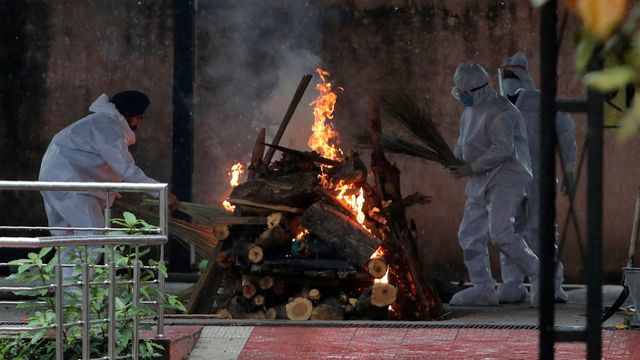
Indians wearing protective gear, perform the last rituals as they cremate the body of a patient who died of COVID-19 in Jammu, India. (AP Photo/Channi Anand)
Total cases in India have more than doubled within less than three weeks as a result. Close to 250,000 new infections have been recorded since June 5, when the total case count stood at 226,000. The latest 100,000 cases have been recorded in just the past eight days.
Even according to the government’s highly under-reported death count, 14,907 people have now lost their lives, nearly triple the number (5,608) on June 1. However, this is an insignificant number for Modi and his advisors. One of the government’s top scientific experts has blithely declared that the policy of reopening the economy could well cost 2 million lives. In spite of this horrific prospect, no serious criticism of the Modi government’s reckless course has been forthcoming from the opposition parties, which are implementing the homicidal back-to-work policy wherever they form the state government, or any faction within the ruling elite.
Forty-five percent of India's official COVID-19 cases have been reported by two states—Maharashtra, which lies on the west coast and where Mumbai is located, with 139,010, and the national capital territory Delhi with over 70,000.
Health Ministry data shows that three other states, Tamil Nadu in the south, Gujarat, on India’s west coast, and the northern state of Uttar Pradesh, account for a further 25 percent of total COVID-19 cases.
The overall picture that emerges is that the coronavirus is now deeply entrenched in much of the country, including such large urban centers as Mumbai, Delhi and Chennai, and is rapidly spreading into rural areas where health care is even less accessible.
As terrible as the official government figures are, there is a widespread consensus that the true extent of the pandemic is much worse. Even before COVID-19, just 70 percent of deaths in India were registered and only a fifth of these are medically certified, as highlighted by the IndiaSpend web portal. As an example of the extreme unreliability of government figures, the web portal pointed to the official data on malaria in 2017. While government hospitals claimed just 194 malaria deaths occurred in India, the Global Burden of Disease, which uses multiple sources, including verbal autopsies, estimated 50,000 deaths for the same year.
Delhi has recorded at least 2,000 COVID-19 cases every day since June 17. On Tuesday, it reported its biggest ever one-day increase with nearly 4,000 cases. Total infections in Delhi are doubling within just 12 days.
The dramatic spread of the virus in India’s capital city is directly linked to Modi’s reckless policy of reopening the economy. On June 8, when a stepped-up campaign of re-openings began, dubbed by Modi “Unlock1,” a total of 29,500 cases had been reported in Delhi since the pandemic began. Over the past 16 days, over 40,000 new infections have been detected.
The disastrous impact of the rapid rise in cases can be seen from the numerous reports of patients and their harried relatives unable to secure treatment, hospital wards where dead bodies remain unremoved due to staff shortages and overflowing morgues. Due to the lack of personal protective equipment (PPE), overworked doctors and medical staff are catching the virus in growing numbers.
The Hindustan Times reported Tuesday on the appalling situation at Lok Nayak Hospital, Delhi's biggest COVID-19 hospital with 2,000 beds. Relatives are forced to wait for up to three days to receive information about their loved ones in intensive care. A doctor at the hospital said, “Demands for updates from the relatives of patients are overwhelmed.”
On Sunday, the New Indian Express reported that the Maharashtra state government has asked hospitals to use oxygen cylinders to provide immediate relief to COVID-19 patients because of a ventilator shortage. Home to 114 million people, Maharashtra has just 3,028 ventilators.
Although a BJP government release said it is supplying 50,000 “Made in India” ventilators to various state governments and union territories, only 2,923 ventilators have been manufactured so far and just 1,340 delivered.
For decades, whether the central government has been led by the BJP or the Congress Party, the Indian state has starved the public health system of resources, spending somewhere in the order of 1 to 1.5 percent of GDP on health care annually. Despite warnings from health experts that India is especially vulnerable to the pandemic because of its high-population density, endemic poverty, and ramshackle health care system, the Modi government has failed to pour resources into fighting COVID-19. As of June 23, India had performed 5.17 tests per thousand people, among the lowest testing ratios of any country with a large COVID-19 outbreak.
Government projections show that the disastrous health care situation is set to get even worse over the coming weeks. Authorities in Delhi expect the case count to reach a staggering 550,000 by the end of July. In Gurgaon, an industrial city about 30 kilometres southwest of the capital, where large numbers of workers labour in brutal conditions in manufacturing plants, infections are projected to reach 150,000 by the end of next month.
Coronavirus is also finding new breeding grounds in India's rural areas, where nearly 70 percent of the country’s 1.37 billion people live. If the health care system in the major cities is dilapidated and collapsing, in rural India it is all but non-existent. Further compounding the crisis in rural area is the decision of various municipal authorities to prioritize local residents for care, thus closing down the typical practice of rural patients travelling to urban areas for hospital treatment.
The rapid spike in COVID-19 cases in rural areas was triggered by the chaotic return of nearly 10 million migrant workers to their home villages—a social and health disaster for which the BJP government and Indian elite are wholly responsible.
For more than two months the Modi government did next to nothing to halt the spread of COVID-19. Then without any serious preparation and less than four hour’s public notice, it imposed a draconian nationwide lockdown on March 25 that resulted in tens of millions of migrant workers and other day labourers losing their jobs overnight. With the BJP government refusing to provide them with any means of sustenance, millions of migrant workers began to return to their villages on foot. It took several days for the authorities to recognise that this mass migration—the largest since the 1947 communal partition of the subcontinent—threatened to spread the virus from the cities to rural India. The government then responded in typical brutal fashion, deploying security forces to herd those making their way home into makeshift, cramped internal refugee camps, where they were often ill-fed and otherwise abused.
After repeated extensions of the lockdown, which had originally been meant to last 21 days, the BJP government, in consultation with the states, finally allowed the migrant workers to go home. But, in a further act of negligence, they failed to systematically test them for COVID-19 and treat the sick before their departure.
Due to this criminal policy, Bihar, Assam, Jharkhand, Odisha and Uttar Pradesh, the states that received most of the returning migrant workers, also have some of the country’s fastest-growing COVID-19 infection rates. Infections have now spread to 98 of the country's 112 poorest rural districts, up from 34 on April 15, according to data from NITI Aayog, the government's planning body.
On Monday, the government said it had released 10 billion rupees ($ US132 million) to states and union territories for “the welfare of migrant laborers” including accommodation, food, medical treatment and transportation. Given the fact that tens of millions of workers lost their jobs and income since the lockdown was implemented, this is the equivalent of famine rations.
As the health and social catastrophe for India’s impoverished workers and toilers deepens, the main concern of the Modi government and the ostensible parliamentary opposition is to reassure big business that nothing will get in the way of their profit-making. At a meeting with state chief ministers last week, Modi dismissed “rumours” about a second lockdown. Despite the rapidly accelerating rate of infection, he insisted that it was time to move to the next phase of “reopening” the economy.

Brazilian government hides scale of COVID-19 pandemic to promote criminal reopening

Tomas Castanheira

Leading the devastating growth of COVID-19 in Latin America, Brazil has surpassed 1,000,000 cases and 50,000 deaths according to its official figures. There has been a continuous increase in weekly averages of new cases and daily deaths since the first contamination was reported in March. Last Friday registered a record of 55,209 cases in a single day, as well as four days in a row with more than 1,200 deaths.
Despite this, the entire country has already adopted drastic policies to reopen economic activities, justified with baseless claims of a ”stabilization" of the disease and of health care systems.
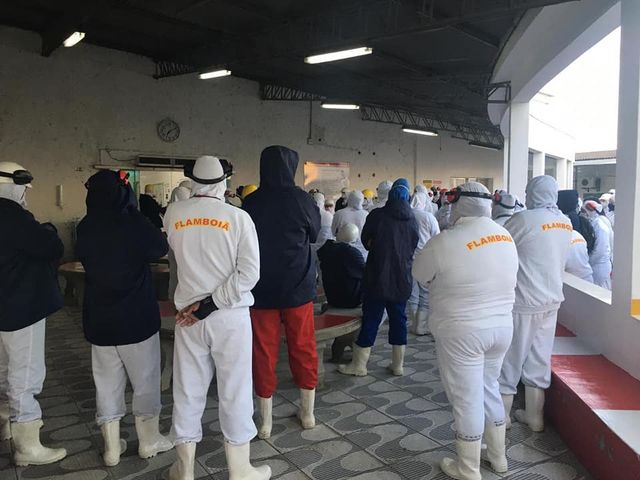
Workers protest after more than 50 tested positive in meat processing plant in Cabreúva, São Paulo Monday,. [Credit: Facebook]
The virus’s staggering toll is being minimized by political authorities as “below the highest projections,” as stated by Patricia Ellen, the secretary of Economic Development of São Paulo, the most affected state in the country, which recorded a record 434 deaths in a single day this Tuesday.
But as frightening as they may be, official figures are a gross underestimate of reality, as Brazilian and international researchers have been warning for months.
On Monday, the World Health Organization (WHO) voiced concern about under-reporting of cases in Brazil, revealed by the high percentage of positive results in COVID-19 tests, around 31 percent in Brazil, while in other countries it is usually 17 percent.
The official death toll has also been widely questioned. Researchers point, on the one hand, to an explosion in the number of deaths due to nonspecific severe acute respiratory syndrome (SARS), and, on the other hand, to the profound differences between the total number of deaths due to natural causes in 2019 and 2020, that do not correspond to the numbers attributed to COVID-19. A report published by Globo last weekend reported that more than 21,000 deaths that have been registered as SARS are suspected cases of COVID-19.
Since February, the state of Minas Gerais has accumulated thousands of deaths registered as SARS and not tested for COVID-19. Based on these false figures, authorities decreed in late May the reopening of commerce in the capital Belo Horizonte. On that occasion, Mayor Alexandre Kalil of the Social Democratic Party (PSD) said it was not he who was reopening the city, but rather “doctors and science.”
The result of this irresponsible reopening was the increase in the ICU bed occupancy rate in the city from 40 to 74 percent, which the “guardian of science” Kalil attributed to the sloppy use of masks and increasing numbers of barbecues.
Like Belo Horizonte, several other Brazilian cities have registered a high occupancy of hospital beds in recent weeks. In large cities of São Paulo’s state interior, hospitals dedicated to COVID-19 have already reached full capacity and are refusing new admissions; the capital of Rio Grande do Norte, Natal, has 100 percent of its COVID-19 beds occupied; treatment centers for COVID-19 in Curitiba, capital of Paraná, and Porto Alegre, capital of Rio Grande do Sul, have also reached full capacity.
On the other hand, in other cities and states, a decrease in the occupation of ICU beds has been presented by political leaders as a sign that the virus is under control. Researchers and medical authorities have also confronted this bald claim.
According to Domingos Alves, professor of the Medical School of the University of São Paulo, the decrease in occupation occurs “by the simple fact that the total number of available beds has been increased.” “There are governors and mayors who are resorting to this trick to say that the situation has improved and to reopen commercial activities, but when you look, the number of cases is increasing,” the doctor told BBC .
A survey conducted by the Brazilian Intensive Care Medicine Association’s “ICU Project” concluded the mortality rate of patients with the COVID-19 in public system units is of 38.5 percent, twice that of private health system units, with 19.5 percent.
This brutal difference is not linked, according to the researchers, so much to the difference in infrastructure between the two systems, as to the severity of the disease among patients who receive intensive care. In the public system, 66.5 percent of patients enter the ICU already requiring mechanical ventilation, while in the private system this number is 36.8 percent.
The policy of reopening the economy completely disregards science and follows a single criterion: the interests of capitalist profit. The main advocate of such measures is Brazil’s fascist President Jair Bolsonaro, who has been promoting a fierce campaign against any form of containment of the virus, which involves the spread of false cures such as hydroxychloroquine, while encouraging the breaking of quarantines and even the invasion of hospitals by his far-right supporters.
However, this criminal reopening policy has been embraced by all sectors of the Brazilian political establishment, including the so-called opposition of the Workers’ Party and its allies governing Northeastern states.
A study by Oxford University published this Monday analyzed the measures adopted in eight of the main Brazilian capitals—São Paulo, Rio de Janeiro, Salvador, Recife, Fortaleza, Goiânia, Manaus and Porto Alegre—and concluded that they all reopened without meeting the basic requirements set by the WHO.
Besides the general lack of testing, Brazil is not carrying out any contact tracing measures, which would allow isolation of the virus. Speaking about the Brazilian situation, the WHO’s technical director, Maria Van Kerkhove, asked, “Where is the transmission happening? In health facilities, in nursing homes, related to specific events? It is necessary to have these details to control the virus.”
The answer to these questions is being blocked not only by the incompetence and neglect of the governments, but by their complacency in relation to the continuation of activities tied to the transmission of the disease. As the World Socialist Web Site reported last week, the operation of meat processing plants and mining companies under unsafe conditions has caused contamination of entire cities.
New outbreaks of COVID-19 in dozens of workplaces throughout Brazil have been reported in just the last few days. These cases have received, at best, marginal attention from the media and are not presented as the generalized phenomenon they clearly have become.
The meatpacking industry continues to be the main scenario of new explosions. Last Friday, a JBS plant in Caxias do Sul, in Rio Grande do Sul, had 412 workers testing positive for the new coronavirus. The site had already been closed at the beginning of the month by the courts, after the confirmation of more than 20 infected workers, but it was reopened four days later and continues to operate now.
Another meat processing plant, in Cabreúva, in the countryside of São Paulo, was ordered closed by the Public Ministry of Labor (MPT) last week after the more than 50 workers tested positive and investigations revealed extremely risky working conditions, such as a lack of ventilation and crowded spaces. But the plant continued to operate with infected employees until workers held a protest on Monday, forcing its closure.
New outbreaks were also reported in Bradesco bank branches throughout the country. In Feira de Santana, Bahia, the MPT ordered the closure of the bank’s branches, claiming that the management kept employees with symptoms of COVID-19 at work for days and, even after five of them tested positive, refused to adopt the minimum recommendations and prevented inspection of its facilities.
Last Friday, an explosion of coronavirus cases was reported at a Petrobras unit in Bahia. According to Correio 24 Horas, there are more than 200 infected workers at the Landulpho Alves refinery, most of them outsourced employees. One of them, 36 years old drill operator Johnny Mafort, died in mid-April.
Outbreaks at several Petrobras refineries and platforms are being deliberately covered up. Under the pretext of medical confidentiality, the number of workers killed by COVID-19 is not being revealed. Since May, the company's bulletins no longer disclose the infection rate among outsourced employees, excluding two thirds of the workers from its reports. Nevertheless, the number of cases confirmed up to June 15 exceeds 1,300.
Last week, Estadão reported that the Brazilian Intelligence Agency (Abin) has alerted the Bolsonaro administration of the accelerated spread of COVID-19 among Petrobras workers since May. A major concern presented by Abin was that workers will react with a strike.
The strikes and protests at working places are the most powerful opposition to the antiscientific policies allowing the coronavirus to spread freely. This response has gained increasing appeal in different sectors of the Brazilian working class. Strikes against unsafe conditions are being carried out this week by health professionals in Piauí and Espírito Santo and by subway employees in Minas Gerais.
The movement in Brazil is directly connected to and strengthened by the growing opposition of workers around the world to the deadly policies advanced by capitalism. In recent days, the WSWS has reported strikes by autoworkers in Mexico and post office workers in England, responding to the contamination of their workplaces.
The pandemic is a global problem and can only be overcome by the collaboration among all countries. While capitalists defend their national “strategic interests” that prevent the effective fight against the virus, the global working class is defending common interests that transcend borders. The global unification of workers’ struggles around the program of overthrowing the capitalist system and implementing socialist policies emerges as the only way to defeat the pandemic and ensure the future of humanity.

IMF downgrades forecast for global economy

Nick Beams

The International Monetary Fund (IMF) has significantly increased its forecast for the contraction in global economy, warning that it will take a cumulative $12 trillion hit over 2020–2021. Updating its forecast yesterday, the IMF said the global contraction for 2020 would be -4.9 percent, some 1.9 percentage points below the forecast it issued in April.
It said the COVID-19 pandemic “has had a more negative impact on activity on the first half of 2020 than anticipated, and the recovery is expected to be more gradual than previously forecast.” Overall, this would leave 2021 gross domestic product (GDP) some 6.5 percentage points lower than the pre-pandemic projections of 2020.
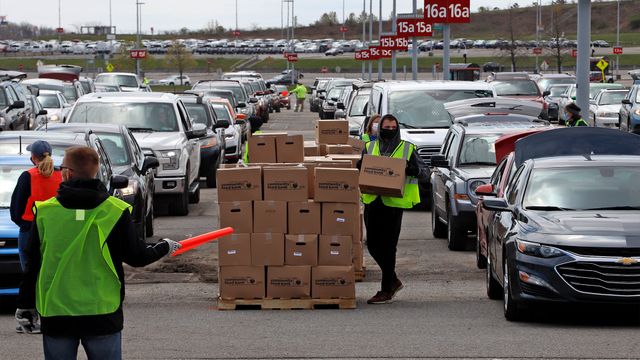
Hundreds line up at the Pittsburgh International Airport parking lot, while volunteers from the Greater Pittsburgh Community Food Bank, load boxes of food into cars during a drive-up food distribution. (AP Photo/Gene J. Puskar)
These forecasts assume that financial conditions will remain “broadly at current levels” following the major interventions by the US Fed and other central banks when markets froze in mid-March. However, given the divorce between financial markets and the underlying real economy—exemplified by the surge in stock markets, above all in the US—it is highly likely that turmoil will return.
The IMF said the “disconnect” between the rebound in financial markets and the underlying economic prospects raised “the possibility that financial conditions may tighten more than assumed.”
It said the synchronised and deep downturn in the first quarter was more severe than expected, except for a few countries, and indicators pointed to a “more severe contraction” in the second.
The plunge into conditions not seen since the Great Depression began with a supply shock as firms halted economic activity as a result of measures taken against the pandemic. But this had now been compounded by a “broad-based aggregate demand shock” as firms, faced with “precipitous” falls in their markets, supply interruptions and uncertain future earnings prospects, cut back on investment.
This steep decline in economic activity had resulted in a “catastrophic” hit to the global labour market. The IMF cited estimates by the International Labour Organisation that the decline in hours worked in the first quarter was equivalent to the loss of 130 million jobs. The loss in the second quarter is expected to be equivalent to 300 million jobs.
The impact on the labour market had been “particularly acute” for low-skilled workers who do not have the option of working from home. It cited estimates from the International Labor Organization that of the approximately 2 billion informally employed workers worldwide “close to 80 percent have been affected.”
The IMF said its projections implied “a particularly negative impact of the pandemic on low-income households worldwide that could significantly raise inequality.”
Just as COVID-19 has become a disease afflicting the poorer sections of the working class in every country, so they are the most affected by its economic consequences.
The IMF said that for the first time ever all regions of the world are expected to experience negative growth in the 2020.
Growth in the advanced economy group is projected at -8 percent this year. The US economy is predicted to contract by 8 percent, Japan 5.8 percent, the UK 10.2 percent, Germany 7.8 percent, France 12.5 percent and Italy and Spain 12.8 percent.
In 2021, as long as there is no second wave of infections, the IMF said there would be growth of 4.8 percent, leaving global GDP down by about 4 percent from its level in 2019.
In the group of emerging market and developing economies growth is forecast to be -3 percent this year, 2 percentage points below the April forecast. The economic impact in Latin America, now a major centre of infections, is particularly severe, with the two largest economies, Brazil and Mexico, projected to contract by 9.1 percent and 10.5 percent respectively.
The IMF update pointed to the contraction in world trade, close to 3.5 percent in the first quarter as a result of weak demand, the collapse of cross-border tourism and disrupted supply chains that were exacerbated in some cases by trade restrictions.
It said that beyond the pandemic policymakers had to address the economic issues underlying trade and technology tensions as well as what it called “gaps in the rules-based international trading system.” It warned that “without a durable solution to the frictions” the eventual recovery from the COVID-19 crisis would be endangered.
There is, however, no prospect of such a solution emerging. In the course of the pandemic the Trump administration has stepped up verbal attacks on China and moved to increase pressure on hi-tech Chinese companies such as Huawei.
Moreover, the trade war measures are widening. The US has withdrawn from talks with France and other European powers to resolve the conflict over their moves to impose a so-called digital tax on the revenues raised in their countries by US hi-tech firms such as Google and Facebook.
An investigation has been carried out by the Office of the US Trade Representative on the proposed taxes under Section 301 of the 1974 Trade Act—the same section used to impose tariffs on $360 billion worth of Chinese goods that remain in place despite the “phase one” trade deal agreed to in January.
The Trump administration has made it clear it is opposed to the present organisation and rules of the World Trade Organization which it says have worked to the detriment of the US. The conflicts will not be resolved if a Democratic administration comes to power because the Democrats are even more bellicose on the issue of China than Trump.
The IMF update recorded the massive impact of the rise in government debt both as a result of limited social security measures and the money provided to corporations. It is expected that total government debt as a proportion of GDP in advanced economies will exceed the levels reached as a result of World War II. Debt will rise to 130 percent of GDP compared to the peak of 120 percent in the war.
This statistic has decisive economic and political implications. Following World War II, major countries were able to run down their debt because of the growth in the world economy during the post-war economic boom. Today, there is no such boom waiting in the wings. Even before the pandemic struck, world economic growth was slowing with significant falls in investment and trade.
The present situation does not resemble World War II but rather the aftermath of World War I when, in a stagnant world economy, the accumulation of debt used to finance the war, led to a series of economic crises and was one of the driving forces for the ongoing and deepening attacks on the working class through the two decades that followed.

The United States nears a new one-day high of COVID-19 infections

Benjamin Mateus

As the first wave of the pandemic in the United States continues unabated, yesterday the US posted 38,386 new COVID-19 infections, according to Worldometer coronavirus tracker, just short of the high set on April 24 when the same index reported 39,072 cases. Even this horrific figure was exceeded by Brazil, which had a staggering 40,995 new cases reported on June 24.
Nearly two-thirds of the new US cases, more than 23,000, came in seven states across the south and southwest: North Carolina, South Carolina, Georgia, Florida, Texas, Arizona and California. The US epicenter of the disease, previously in the New York City area, as well as urban areas across the north, from Boston to Philadelphia, Detroit and Chicago, has now shifted to the Sunbelt.
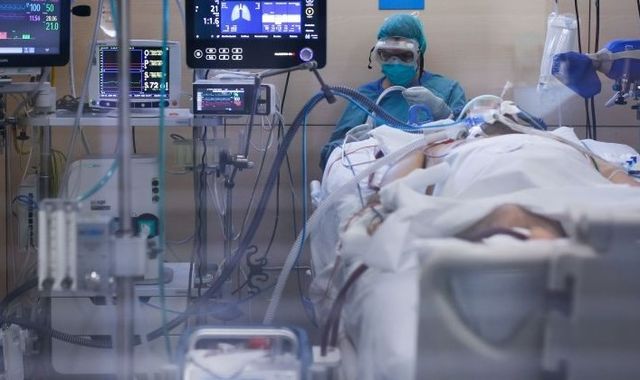
Patient in an Intensive Care Unit (ICU).
Texas had 4,092 patients whose COVID-19 cases were so serious they required hospitalization, the largest figure for any state, and Houston, the largest city in Texas, is in danger of a New York-style overflow of its hospital system.
In approximately three weeks, 500,000 more Americans have fallen victim to the coronavirus, and by all accounts, the curve of cumulative cases has begun to accelerate. There are now more than 2.45 million cases and close to 125,000 deaths in the US, according to Worldometer. During these three weeks, the pandemic has been expanding in both scale and scope. Thirty-three states are now reporting rising seven-day averages, up from nine states seeing such increases on June 9.
With 4.4 percent of the world’s population, the United States has 26 percent of the world’s coronavirus cases and 26 percent of its coronavirus deaths. These figures by themselves are an indictment of American capitalism and the American ruling class, as well as of the American government at all levels, Democratic and Republican, and the profit-driven health care system.
According to the Trump White House, the current increase in COVID-19 cases is not a real public health emergency, but an artifact of increased testing. The disease is not really spreading, it is just that greatly increased testing is finding disease that was already there. This argument has culminated in Trump’s monumentally stupid claim that if testing were reduced, there would be fewer cases of the disease.
This argument not only fails the test of logic, it falsifies the actual course of testing, with the daily rate for the US remaining at a totally inadequate 400,000 to 500,000. Yet, since mid-June, the rate of positive tests has been climbing, currently reaching a figure of 5.5 percent for the country as a whole. This suggests that community transmission is increasing, particularly in those states that have been the most aggressive in reopening businesses and encouraging the resumption of social gatherings where the virus can easily spread.
Using data obtained through the COVID-19 tracking project website, the Wall Street Journal found alarming figures for the worst-affected states for the week ending June 23. For Arizona, 22.1 percent of tests for COVID-19 returned a positive result—nearly one in every four tests. South Carolina is at 15.9 percent, Florida at 13 percent, Utah at 12.7 percent, Mississippi at 11.9 percent and Texas at 10.9 percent.
By contrast, countries that have effectively suppressed or contained the infection have tested so widely that the figure for positive tests is below one percent—100 tests performed for every case detected.
According to the University of Minnesota’s COVID-19 hospitalization tracker, as of June 24 over 25,000 people are in hospitals throughout the country undergoing treatment for coronavirus infection. Texas and California have the highest number of hospitalizations with 4,092 and 3,868 patients, respectively. The tracker indicates that there are 1,225 patients in ICUs. Arizona has 2,136 patients hospitalized, of whom 614 are in ICUs and 386 on mechanical ventilators. The state public health department reported that the ICU utilization in the state is at 88 percent, with only 200 ICU beds available throughout the state.
Obtaining testing in Arizona has quickly become more difficult with longer wait times in the punishing heat. There are growing delays in test results and growing shortages in the supply of testing materials such as reagents and nasal swabs. The number of cases is growing faster than testing capacity. Health officials are also lamenting the need for more trained personnel at hospitals to treat patients. All of the very same issues that had erupted in April in New York and New Jersey have returned to plague Arizona.
Will Humble, executive director of the Arizona Public Health Association, said that in the reopening of the state, no guidance was given beyond issuing a perfunctory statement to maintain voluntary vigilance in public spaces, which only led to normalizing pre-pandemic behavior. An infectious disease epidemiologist at the University of Arizona, Kacey Ernst, said, “Many people equate reopening with being safe. While there certainly is some uptake of masks and physical distancing, it is not ubiquitous … we are not yet in the place where we have a well-developed capacity to test and do contact tracing for all our cases.”
California smashed its daily record with more than 6,000 infections reported on June 22. Dr. Barbara Ferrer, Los Angeles County’s Public Health Director, said that the spike in cases correlates with the mass protests that broke out in the wake of the murder of George Floyd by a Minneapolis police officer. However, other clusters are a direct contribution from recent social gatherings and parties. Los Angeles County’s positivity rate has climbed from 5.8 percent of those tested just two weeks ago to 8.4 percent.
Florida continued to see cases rise with 3,286 COVID-19 infections on June 23. The state has surpassed 100,000 total cases of COVID-19. Along with the rise in cases, metrics followed by Miami-Dade County public health demonstrate that since the beginning of June, the number of ICU patients and those on mechanical ventilation has started to climb.
Since the United States lifted its restrictions and lockdowns in the latter part of May, officials across several states have noted that many of the new cases of COVID-19 are among young people who are more resilient to the infection.
Health officials fear that this may lead to the transmission back into the more vulnerable communities. Dr. Tom Frieden, a former director of the Centers for Disease Control and Prevention, tweeted, “with younger age of recent infections in at least some places such as Florida, expect a lower death rate in this wave … until 20 to 40-year-olds who are infected today go on to infect others.”
Dr. Mike Ryan, speaking at a press briefing by the World Health Organization, was asked about predicting peaks of outbreaks. He replied, “It’s very difficult to predict peaks. The peak has an awful lot to do with what you do. What you do affects the peak. It affects the height of the peak, the length of the peak, and the trajectory downwards. That has everything to do with the government's intervention to respond, the community’s cooperation with that intervention and the health care and the public health care systems' capacity to act. The virus does not act alone. The virus exploits weak surveillance; the virus exploits weak health systems; the virus exploits poor governance; the virus exploits a lack of education and a lack of empowerment of communities … the numbers respond to the response. There are no spells here. You can’t divine this away.” Though he didn’t mention any country by name, undeniably, Dr. Ryan clearly had the United States in mind.
Dr. Anthony Fauci, in his House Energy and Commerce Committee testimony on Tuesday, explained that the “virus was not going to disappear” and that the next two weeks would be critical because death lags cases. In plain English, that means the sharp rise in new cases will be followed, about two to three weeks later, by a sharp rise in deaths.
“I’ve been dealing with viral outbreaks for the last 40 years. I’ve never seen a single virus—that is, one pathogen—have a range where 20 to 40 percent of the people have no symptoms,” explained Dr. Fauci at the hearing. He went on to add that asymptomatic patients have viral loads not significantly different than in symptomatic patients, making them equally contagious. He urged the continued measures of social distancing and universal usage of facemasks to protect community transmission. Moreover, asymptomatic patients can still suffer significant damage to their health. When medically evaluated by imaging techniques like CT scans or x-rays, more than half showed signs of inflammation in the lungs.

24 Jun 2020

Access Bank Womenpreneur Pitch-a-ton Africa 2020 (Win ₦5m & a Mini MBA)

Application Deadline: 14th August 2020

About the Award: Launched in 2019, the Womenpreneur Pitch-a-ton Africa was the first women-in-business support initiative of its kind in the industry offered by the Access Bank W Initiative. The program in its maiden edition provided financial grants worth N9Million to the top 5 applicants with a free mini MBA certification for 50 women entrepreneurs in Nigeria. This it did in conjunction with the International Finance Corporation (IFC, a member of the World Bank Group). This year, the program is being extended to 6 other African countries where Access Bank’s W initiative has its presence. These countries are Nigeria, Ghana, Rwanda, Zambia, Sierra-Leone, Gambia and Congo hence the tag name “Womenpreneur Pitch-A-Ton Africa.
As a leading commercial bank in Nigeria, Access Bank has made significant investments aimed at enhancing growth in the Small and Medium-size Enterprise sector. The Bank is also a major advocate for women in business through innovative offerings like the W Power Loan, a discounted financing at 15% interest per annum, for women to grow their business as well as other Business Support Services.

Type: Entrepreneurship

Eligibility:
  • Are you a woman who owns and runs her business?
  • Is your business innovative?
  • Do you need a grant to expand your business?
  • What about some expert training to help grow your business?
Eligible Countries: Nigeria, Ghana, Rwanda, Zambia, Sierra-Leone, Gambia and Congo

Number of Awards: Not specified

Value of Award: As part of the graduation requirements, the fifty finalists will pitch their businesses, infusing learnings from the mini-MBA and will stand an opportunity to win financial grants up to N5 million.

How to Apply:
  • It is important to go through all application requirements in the Award Webpage (see Link below) before applying.
Visit Award Webpage for Details

Cradled by Conflict: The Plight of Children in Kashmir

Javeed Ahmad Raina

Kashmir has always been in grip of one or another kind of crisis. The dark clouds of uncertainty loom over the echoing mountains from last several decades. The prolonged conflict has transformed the beautiful valley into a devastating dystopia, forcing the whole community to fight a life and death battle against the threat of extinction from the tyrant tides of war. Similarly, continuous violence has turned conventional morality upside down, engulfing pure and white, young and old, women and children alike. Here, children are cradled by conflict as such fear and trauma occupy their early emotional state. Their subsequent formative years are ruined by the recurrent nightmares of devastation. They are the remains of the dreadful days, a liability upon the history, the voiceless, voices of despair and degeneration.
Childhood is that period in life which everyone wants to re-visit or live eternally, because it is characterized by uncorrupted nature, purity and serenity. But children living in conflict riddled Kashmir do not enjoy instinctively idyllic and pleasant childhood days of vigor, energy and a free spirit, to roam and bloom in an unadulterated world of dreams and fairy tales. They are even forbidden to give ear to imaginary tales of fancy and fantasy, deemed to incite libido of resistance. The lures of love and sleep inducing lullabies doesn’t satiate them any more in the mists of gloom and glum that surround their small spaces like the shades of an eternal doom. They are suffocated by enduring suppression. An organized violence enforces them to surrender their whims and wishes, their charms and heavenly grace to solace unrecognized voices of bereavement, mourning and misfortune.
In Kashmir, life of children has been a mark of woe! A mark worry! Their fate is akin to and resembles caged birds unable to set themselves free or stretch their wings in order to touch the sky, for accomplishment of sky of dreams. They are literary limped creatures who can neither walk through the lane nor wade into lake; even they cannot waft along the waves as the western breeze smells, the smell of death, it carries the communal rot of conflict from the debris of dying dreams. The mighty towers of hegemony, the tsunami of religious hatred and the alarms of army tear their childhood apart to feel an adult pain; the agony Kashmir children felt from ages, through colonial rages and internal ravages.
Kashmir crisis has swallowed up their agile spaces like the sand absorbs the sea.  The phony fun of the city life, the battered beats of time, and the world dark and wide curse them for being their companions and mock them for not harboring the hope to nurture the eerie of childhood dream, of sunshine and flowers, of everlasting enjoyment, happiness and serenity. The long curfewed nights stagnates their future dreams; the lines of division drawn in the middle of the mid night, the accession signed amidst the howling cries created iron walls of anger and mind forged manacles of memory. The vernal breeze asks their sport but the fear of winter chill keep them aloof, the smiling tulips urge them bloom, but the buds and blossoms plead them to drink an autumn death as the approaching winter will wither them grey.
Childhood comes once, lives for once and is enjoyed by once. There is nothing like twice, thrice or next, there are no backward-forward movements that could transport us into childhood transparency, no elixir to revert us back in order to re-vitalize our days of youthful hilarity. There is nothing! No alchemy to transform human beings into primitive chora or oral stage. The deadlock is locked between semiotic and symbolic, between real and imaginary. There are only mirrors that reflect us along thousand others, only signifiers that trace us within thousand traces. So, the only thing left is to provide disadvantageous children a chance to seize the merry moments and enjoy the most.
But the question arises do we provide Kashmir children a chance to live a happy childhood? The answer would be an affirmative no! Infact, in Kashmir, children are cradled by conflict. The fierce waves of war have violated their years of innocence.  The forces of calm and combat have always encroached their childhood premises. They grow up in the glowing bars of gun battles. The stones and swords muster their courage against the imminent shadows of disease and death. They are unjustly fixed together in the patches of conflict like the pieces of an unsolved puzzle. They have only been left with the choices of dullness and burden, survival and suffering, loss and longing.
The bright August day brought darker nights of neglect. It was a long summer day when our past became a frozen fact, a dawn of disjuncture from the mythic place of desire. It was a queer, sultry summer, when scenes were scripted before the secret siege. The imaginary home reconstructed through childhood memories have been irretrievably lost. It was a time when we had everything before us, we had nothing before us. It was an era of war on peace when Kashmir was landed into a foreign land. Since then Kashmir children are locked in the recurrent lockdowns and packed in the patches of conflict. They are caught between Covid and conflict, calm and combat, death and despair. The conflict cradles them by the tunes of torment and cursed normalcy has captured their calm despair. They are the unspoken voices of crisis, the silent sufferers of our simmering summer, and the causality of our courageous combats. From now, do they deserve much kinder times? The god’s of war amiably don’t-think-so, until it gets pretty late!