26 Jun 2020

Coronavirus accelerating in Africa as cases top 300,000

Stephan McCoy

The spread of the coronavirus is accelerating across Africa with extreme rapidity. Every one of the continent’s 54 countries, with a total of 1.2 billion people, has reported cases of the disease.
While the virus was initially slow to take hold, the World Health Organisation (WHO) warned, “Even though these cases in Africa account for less than 3 percent” of the global total it is clear “that the pandemic is accelerating.”
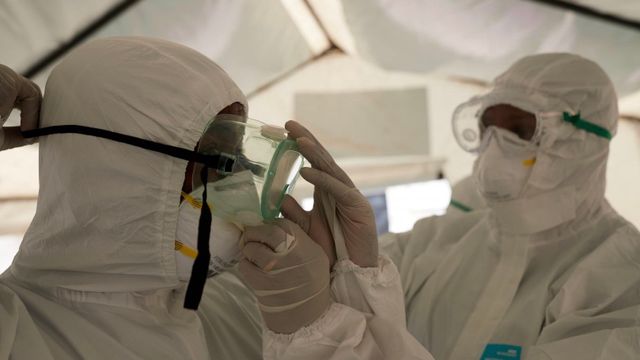
Health care workers in Africa. (Credit: World Health Organization)
The WHO has warned that up to 10 million will be infected over the coming three to six months and that 300,000 people will die on the African continent. That is assuming mitigation measures are put in place by the authorities. Without measures to mitigate the disease, millions could die.
The first case was reported February 14 in Egypt, at least 45 days after China first alerted the WHO about a novel coronavirus. At this point, of the 95,333 confirmed cases across the world, most were in mainland China. A few weeks later, Algeria, Nigeria, Morocco, Senegal, Tunisia and South Africa confirmed cases of the virus.
By March 20, the continent had officially recorded 1,000 cases. It took 98 days to reach 100,000 cases but only another 18 days to reach 200,000 cases. By May 13, every country had recorded a case, with Lesotho being the last to do so. Since then, the number of cases has risen by more than 60 percent. More than half of all the countries are experiencing community spread, with the number of cases now topping 336,000.
As of June 25, 8,856 deaths had been recorded, a likely underestimate given the continent’s limited health care facilities, poor recording systems and the experience of widespread under-reporting in the advanced countries relative to the number of “excess deaths.”
At first, the international media speculated that Africa’s apparent low incidence and spread were due to its younger age demographic, race and the warmer weather. This has been firmly contradicted by the rapid spread of the disease.
Lancet study pointed out that the countries with more connections to the world economy were more likely to import the virus, such as Egypt, Algeria, South Africa, Nigeria and Ethiopia. Africa’s more advanced economies were the first to become infected and also had the highest capacity to respond to it.
Because of economic backwardness, Africa remains deeply disconnected from the rest of the world—only 5 percent of global tourism flows reach Africa, for example. While there is migration within Africa, there is relatively little into the continent. The number of Chinese nationals working on Chinese investment projects in Africa was 201,057 by the end of 2018, according to official Chinese sources, around 16 percent of China’s total overseas workforce. Of these, 23 percent went to Algeria.
Algeria, Angola, Nigeria, Kenya and Ethiopia accounted for 58 percent of all Chinese workers in Africa at the end of 2018.
WHO Director-General Tedros Adhanom Ghebreyesus said that despite the initially low number of cases “the best advice for Africa is to prepare for the worst and prepare today,” concluding, “I think Africa should wake up, I think my continent should wake up.”
The Africa Center for Disease Control (CDC) chief John Nkengasong issued an equally dire warning, stating, “We’ve gone from looming threat to looming disaster.”
There are on average just five hospital beds per 1 million inhabitants in Africa, compared to 4,000 in Europe. With most countries lacking the most basic health care infrastructure to cope with the pandemic, most governments moved swiftly to impose lockdowns.
The economic impact has plunged millions of Africans into extreme poverty and starvation. Prices for basic commodities, one of the continent’s main exports, have fallen. Remittances from the diaspora—often 10 percent or more of a country’s GDP—have collapsed as have key sectors such as horticulture due to the lack of flights to Europe.
Dominique Strauss-Kahn, the former head of the International Monetary Fund, warned about the economic fallout from the pandemic. Noting the scale of the continent’s indebtedness even before the outbreak, he said, “African governments have issued more than $130 billion in Eurobonds, including $70 billion between 2017 and 2019 … As a result, debt servicing costs have jumped from 17.4 percent of exports in 2013 to 32.4 percent in 2019.”
Debt levels will make it impossible for governments to pay public sector wages, severely disrupting what little remains of social services, including education and health, while per capita income falls. All this as Zambia and Zimbabwe face the worst drought in their history and East Africa faces devastation from locust swarms and floods.
A recent UN report on coronavirus in Africa warned that “social unrest” would result without a $100 billion investment in health care and a “social” response, plus another $100 billion to manage the economic fallout. Little in the way of either international aid, grants or debt relief has been forthcoming.
Most African countries have now eased the lockdowns in a back-to-work drive to create profits for the multinational corporations and banks.
In Nigeria, where the most violent lockdown in the world happened with at least 18 people killed by security forces, President Muhammadu Buhari declared, “No country can afford the full impact of a sustained lockdown, while awaiting the development of vaccines.”
In South Africa, President Cyril Ramaphosa cynically used the economic hardship suffered by workers as a reason to reduce the lockdown level from five to three and reopen the economy.
African health systems, ill-equipped and understaffed, are now breaking under the burden of the pandemic. Many quarantine areas are dilapidated with reports of bad or inadequate food.
Epidemiologists from Africa CDC have warned of a “catastrophic shortage” of medical supplies and health care workers as border closures and price increases further drain the healthcare system. According to Xinhua News, at least 3,500 South African health care workers are infected with COVID-19. In the Western Cape, which has a disproportionate number of cases, intensive care beds are filling up.
Despite the WHO’s recommendation to test, trace and isolate, many African governments—to the extent that they ever embraced them—have abandoned these basic measures to contain the spread of the virus, even as it starts to rip through the population.
Many African governments are struggling to keep track of the coronavirus and are unable to perform enough tests. Laboratories are often unable to process test results quickly, with the “turnaround” time in South Africa, the most advanced African economy, being around 12 days. According to the Economist , in June, “African countries had tested, on average, fewer than 1,700 people per 1 million, a fraction of the number in rich countries (America had done 26 times more per million people).”
While South Africa has carried out more than 1 million tests—far more than most African countries—this is well below what is required. The Economist noted that Nigeria with a capacity for at least 10,000 tests per day, has carried out fewer than 900 a day since its first case at the end of February.
The claim that there is not enough money for health care is a lie. In the wake of the George Floyd murder by the police in the US, which has sparked protests in many African countries, African governments continue to spend on the military and the police in preparation for mounting opposition in the working class.
Zimbabwean doctor Norman Matara told Human Rights Watch, “When you look at the defence budget, they buy state-of-the-art military equipment, so this is not about poverty; it is about genuine political commitment.”
President Emmerson Mnangagwa’s administration, which came to power in Zimbabwe through a military coup in 2017, bought 50,000 mortar bombs and 58,500 grenades last year. Nigeria recently bought $152 million worth of military equipment from China, including VT-4 main battle tanks, SH-5 self-propelled howitzers and other equipment to strengthen its land forces in the fight against Boko Haram militants in the north east of the country. Lieutenant General Lamidi Adeosun, the Nigerian Army Chief of Policy and Plans, stated that this was “just a tip of the iceberg.”

COVID-19 ravages southeastern United States

Cordell Gascoigne

The southeastern US states have become the focal point of the upsurge in the coronavirus throughout the month of June, in the wake of the decisions by state governments throughout the region to reopen businesses and encourage the population to engage in the type of social interaction that public health authorities have warned is highly dangerous.
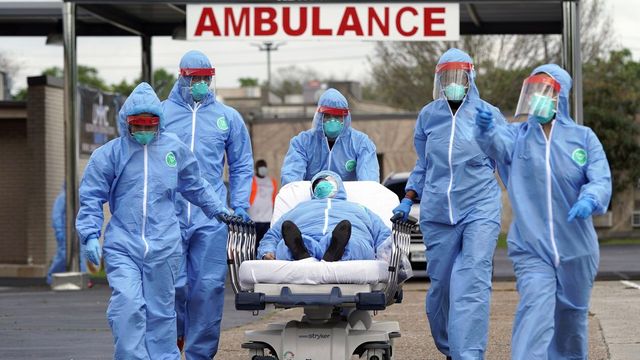
A person is taken on a stretcher into the United Memorial Medical Center in Houston, Texas after going through testing for COVID-19 earlier this year. (AP Photo/David J. Phillip)
This article reviews the course of the pandemic and the criminal negligence of state governments across the nine states from the Texas state line on the west to the Atlantic Ocean. There are seven Republican governors and two Democrats, but both parties serve the business elite and push for “reopening” the economy no matter the cost in lives.
Arkansas is confirmed to have 16,083 cases. March 24 saw the first death in the state, and it required just shy of two months, to May 18, to reach 100 deaths, before doubling in the next month, to over 200 on June 18, reaching 240 deaths now. Nearly 70 percent of the deaths are of people aged 65 and older, mainly from the working class.
Republican Governor Asa Hutchinson denied that his lifting of restrictions and lock-down measures had opened the way to an upsurge, claiming, “We have not seen a correlation between lifting restrictions and the new cases that we have.” Contradicting himself in the next breath, Hutchinson said, “The new cases actually are coming out of some of the essential industries that are open regardless.” Lies!
Lee County, a small Arkansas county with a population of 8,668, has encountered a disaster at the East Arkansas Regional Unit, a Department of Correction prison in Brickeys, Arkansas, with a capacity of 1,492. Some 550 inmates had tested positive for the coronavirus by early June, along with 44 correctional officers and staffers.
In Louisiana, 50,239 people have been infected, 3,117 having succumbed to the disease. The Louisiana Department of Health had reported 882 more coronavirus cases and 18 more deaths on Wednesday, following 1,356 additional cases on Tuesday.
Louisiana Democratic Gov. John Bel Edwards on Monday had announced that Louisiana would stay in Phase Two of reopening due to the rising number of COVID-19 cases and related hospitalizations. Edwards stated that his Phase Two order would be extended another 28 days, maintaining occupancy limits and various other mild restrictions.
In Mississippi, 22,287 people have been confirmed to have been infected, and 978 have perished. Increased hospitalizations are leaving fewer and fewer beds available, exhausting medical supplies, and making it impossible for medical personnel to perform their job duties. Hinds County, which includes the state capital Jackson, has 1,186 confirmed cases and 26 deaths.
Republican Governor Tate Reeves issued executive orders to extend the Safe Return order that will end June 29 at 08:00 CDT. Amendments to the order will include the lifting of a 10 p.m. closing of bars and restaurants that serve alcoholic beverages, allowing gyms and fitness centers to increase occupancy to 50 percent of maximum, and permitting indoor and outdoor arenas to open with social-distancing restrictions, limiting seated capacity at 25 percent.
These incremental steps to open the state, restart the capitalist economy, and expose workers to the coronavirus, completely contradict Reeves’ statement in a tweet, proclaiming, “COVID-19 is real, contagious, and deadly. We cannot avoid taking it seriously.”
Alabama has set a new record for the most coronavirus cases in a single day at 1,129. On top of being rocked by three consecutive days of reporting its highest number of cases, the state has experienced 30,444 confirmed cases, with 841 deaths.
Republican Governor Kay Ivey, having issued a state of emergency 100 days ago due to the COVID-19 pandemic, has largely been silent on the acceleration in numbers of cases and infection rate. On Monday, Madison County, population 372,909, had 711 COVID-19 cases, with health officials in Huntsville, the main city, saying 20 percent of cases require hospitalization.
Statewide, the hospitalization figures trend ever-upward. The Alabama government reported Thursday that 695 patients were hospitalized across the state, and that over the past 14 days, the state has seen nearly 700 new cases a day. Despite this alarming increase, Governor Ivey is moving toward the gradual re-opening of the economy, subjecting workers to the coronavirus by imposing only the mildest of “restrictions.”
In Tennessee, with 932 new confirmed cases, the current tally is 35,553 infected and 531 deaths, including 14 new deaths recorded Thursday. Republican Gov. Bill Lee claimed that the increase of coronavirus cases as the result of lifting restrictions is “manageable.” The five most populous counties, Davidson, Hamilton, Knox, Madison, Shelby, and Sullivan, may only continue adhering to individual, county-specific reopening plans in consultation with the state.
The state’s health secretary, Lisa Piercy, declared, “I don’t know that anyone has the appetite for massive shutdowns again,” ignoring the reality of mass opposition to the homicidal back-to-work policy. In a statement May 15, Governor Lee declared, “Our state continues to see downward trends in case growth and meets the White House criteria for a phased reopening. This progress has been hard-won, and we can build upon it by reopening while also maintaining common-sense safety measures like mask-wearing and good hygiene.” In practice, such measures have been largely abandoned.
In Georgia, where the Centers for Disease Control and Prevention (CDC) is headquartered, there have been 2,745 deaths, with a ghastly 71,095 confirmed cases. The rate at which these cases are rising is nearly 1,100 a day. A total of 10,457 patients have been hospitalized.
Georgia Republican Gov. Brian Kemp signed an executive order June 11 relaxing many restrictions put in place since April, including no limits on capacity of volume at restaurants along with the green light for conventions and venues to resume hosting live performances.
Florida has had the highest percentage rise in infections, up a prodigious 350 percent since the start of the month, highest of all the 50 states, forcing Apple to re-close all of their retail stores in the state. Florida has 109,000 confirmed cases, reaching a daily increase of more than 5,000 per day. Infections amongst those between the ages of 18 and 44 are too rising at alarming rates.
Republican Governor Ron DeSantis cynically stated in a June 17 press conference, “I think that we’ve started to see you know some erosion in the social distancing from probably some of the younger population.” Notwithstanding the inordinate amount of evidence to the contrary, he said nothing of the deplorable working conditions of factory, meat-packing, and autoworkers.
South Carolina has contracted an additional 1,284 cases, bringing the total to 25,701, resulting in 659 total deaths. The auto industry, which reopened on May 18, has been witness to new outbreaks, evidenced by BMW in Spartanburg having acknowledged 14 confirmed cases.
Republican Gov. Henry McMaster issued Executive Order 2020-40 promoting capitalist economic development at the expense of workers’ lives: “the State must remain flexible to account for the evolving nature of the ongoing emergency, while simultaneously continuing to focus on facilitating and encouraging economic recovery.”
In North Carolina, which is reporting its highest-ever levels of new COVID-19 infections and hospitalizations. Confirmed cases number 57,183, with 1,332 deaths
Democratic Governor Roy Cooper said re-imposing restrictions would be a last resort. “We want to avoid going backwards if we possibly can.” Cooper announced on Wednesday the state will remain in Phase Two for another three weeks, extending Phase Two from June 26 to July 17, while making face coverings mandatory in public, effective June 26.
Meanwhile, eight workers at Daimler truck manufacturing, located in Cleveland, North Carolina, have been reported to have the virus.

Another 1.5 million US workers file for jobless benefits

Jerry White

Nearly 1.5 million workers filed for unemployment benefits last week, according to the US Labor Department, the fourteenth week in a row in which the number topped one million. In addition, 728,000 independent contractors, self-employed and gig workers who are out of work but do not qualify for regular unemployment benefits, filed last week for aid from the federally funded Pandemic Unemployment Assistance program.
Although millions of workers have been forced back to work due to the premature and catastrophic reopening of the economy, joblessness remains at levels not seen since the Great Depression. The total number of people claiming benefits in all programs for the week ending June 6 was 30.5 million, the Labor Department reported. By contrast, there were only 1.5 million people collecting such benefits in a comparable week in 2019.
The official jobless figures are a gross underestimation of the real situation because they do not count undocumented workers, those who have still not been able to collect benefits and those who have fallen out of the labor force. Nevertheless, even the official rates paint a devastating picture. The states and territories with the highest rates in the week ending in June 6 were Nevada (22.6), Puerto Rico (20.6), Hawaii (18.3), New York (17.8), California (17.3), Michigan (16.9), Louisiana (16.2), Massachusetts (16.2), the Virgin Islands (16.2), and Connecticut (15.8).
Despite the latest data indicating a growing economic catastrophe for tens of millions of workers, the stock market rebounded Thursday after an initial fall over concerns about the rapid spread of the pandemic in Texas, Arizona and other states.
By the end of trading, the New York Stock Exchange was up 300 points on news of a further lifting of government regulations on Wall Street banks, which will allow them to make large investments in venture capital funds and other speculative activities. The Trump administration, with the full backing of the Congressional Democrats, has made trillions available to financiers who are guaranteed a government backstop no matter how dire the situation in the real economy and for the working class.
“When we think about a recession of the magnitude that we have, there’s going to be some credit write-offs by banks,” said Art Hogan, chief market strategist at National Securities told CNBC. “The fact that they’re going to have more working capital makes markets breathe a sigh of relief.”
After a contraction of the US economy by five percent in the first quarter, economists project that the second quarter, which ends next week, will see the biggest quarterly economic contraction in records dating back to 1947, the Wall Street Journal reported.
“I don’t think a V-shaped recovery is realistic at all,” John Johnson, chief executive of Edgeworth Analytics, a data consulting firm, told the Journal, referring to optimistic projections from the White House that the economy will quickly bounce back to pre-pandemic conditions.
It is increasingly clear that the crisis sparked by the pandemic is being used by corporations to push through a major restructuring of class relations. This week several companies announced major layoffs.
* General Motors has announced that it is eliminating the third shift at its assembly plant in Spring Hill, Tennessee, wiping out 680 jobs.
* Macy’s department store is laying off nearly 4,000 workers. Nutritional supplement retailer GNC declared bankruptcy Tuesday, outlining plans to close at least 800 of its 1,200 stores. This is the latest bloodletting in the retail industry, which has seen the bankruptcy of Pier 1, JC Penney, J. Crew and Neiman Marcus, and the elimination of 114,327 jobs through April, the highest job loss in the retail sector on record.
* New York City Mayor Bill de Blasio warned on Wednesday that the due to the economic impact of the pandemic the city might have to lay off 22,000 municipal employees, the largest cuts in decades. This is part of a wave of attacks on public sector workers, including the imposition of furloughs and an 11 percent pay cut on 96,000 custodians, nurses and other California state employees, and warning that 300,000 or more teachers could lose their jobs across the US.
* Tyson Foods will close its Columbia, South Carolina plant, eliminating 150 jobs. The company’s last South Carolina plant, which makes taco meat and pizza toppings, will close in mid-August.
The job cuts in the US are part of a global wave of layoffs, including German automaker Daimler (10,000) and Lufthansa (22,000); Britain’s Royal Mail (2,000); Canada’s West Jet airlines (3,300) and Australian carrier Qantas (6,000).
While US billionaires have seen their collective wealth increase by half a trillion dollars, largely due to the government bailout of the stock market, the Trump administration has made it clear it has no intention of continuing the $600 per week supplement to state unemployment benefits, which is due to expire the week ending on July 25.
In a measure of the precarious state workers were in before the pandemic, the $600 a week benefit, plus the one-time $1,200 Economic Impact Payment, along with the payments to self-employed workers, prevented a rise in poverty for 159 million people, and, in many cases, led to a rise in incomes over and beyond what they were making while they were employed.
The elimination of the $600 benefit will mean a 60 percent or more cut in income for unemployed workers, given the fact that state benefits only average $370 a week. The Democrats are proposing an extension of the benefit, knowing full well it will not pass the Republican-controlled Senate. Both parties are using the specter of destitution and hunger to force workers back into unsanitary factories and workplaces where they will catch and spread COVID-19 in order to pump out the profits needed to pay for the bailout of Wall Street and the giant corporations.
With food prices rising at the fast rate in over 50 years, the percentage of families concerned about getting enough to eat has more than doubled during the pandemic, according to a study released Thursday by the Brookings Institution. Overall, households worried about their food supply jumped from 8.5 percent in February to 23.0 percent on average from late April through mid-May, and food insecurity more than tripled among households with children, from 9.3 percent to 29.5 percent, the report said.
“Unemployment increased by more among workers with low levels of education. Families with children lost school meals. We’ve also had the biggest increase in food prices in 50 years. That’s a perfect storm,” Diane Whitmore Schanzenbach, the director of the Institute for Policy Research at Northwestern University, told Brookings.

25 Jun 2020

LGBTQ Inequality and Vulnerability in the Pandemic

Graeme Reid

The pop singer Madonna once dubbed Covid-19 “the great equalizer” — from a rose-petaled bathtub. Under criticism, she retracted her statement.
What she meant, of course, was that the virus can infect anyone. But what she came under fire for was ignoring that people who are poor have higher rates of infection, are more likely to have serious complications from COVID-19, and will suffer a disproportionate economic burden as a result of the pandemic.
Similarly, to address the specific vulnerabilities of lesbian, gay, bisexual, and transgender (LGBTQ) people to the impact of the COVID-19 pandemic, a more nuanced perspective is needed.
June, Pride Month, is an appropriate time to look at the differences in susceptibility to infection, chances of recovery, and the pandemic’s economic impacts. The June 15 U.S. Supreme Court ruling — that federal employment laws do protect against discrimination based on sexual orientation and gender identity — offers necessary protection, especially in a precarious economic climate.
It is a truism that crisis amplifies existing inequalities — the social and economic hierarchies that pre-date the pandemic are reproduced within it. When the Titanic goes down, those in steerage have the least chance of saving themselves. In the U.S., widespread protests against police violence are also fueled by the disproportionate burden of infection, mortality, and the economic impact of COVID-19 on black people.
Around the world, inequality as a determining factor in susceptibility to human rights abuses is something that hides in plain sight, even in ordinary times.
Violence and discrimination against poorer LGBTQ Jamaicans are widespread and commonplace, whereas middle class activists say they do not often share those experiences.
Similarly, the experience of township-dwelling black lesbians in South Africa is a world apart from South African lesbians who are affluent. They may face discrimination and abuse across the class divide but the systemic nature of violence against poorer lesbians is linked to economic inequality, as well as identity.
And in Kenya,  the gay and transgender youths who found themselves homeless after being chased from their homes by angry groups acting on rumors of a gay marriage, were targeted for abuse because they were poor.
Lesbians in Ghana have nowhere to turn when families turn abusive — the law does not protect them, and it is hard for them as women to establish economic independence. When middle class men were arrested in 2001 in a raid on the Queen Boat in Egypt, it created an international furor precisely because they were middle class. They were able to garner international activist support that generated extensive media attention, unlike poorer LGBTQ people who are routinely arrested in Egypt without the option of activating solidarity networks or media interest.
COVID-19 has highlighted these class divisions in multiple ways. The homeless youth arrested at a shelter in Uganda for gay youth rejected by their families, under the pretense of enforcing presidential directives to slow the spread of COVID-19, were victims of poverty and discrimination. Transgender Panamanians found themselves between a rock and a hard place during gender-based quarantines when neither their identity documents nor their expressed identities protected them from abuse. They were forced to rely on courier services for supplies — a luxury they could ill-afford.
When LGBTQ people are scapegoated by religious leaders for bringing the virus in the form of divine punishment, those who are unable to seek refuge in the privacy of their homes bear the brunt of harassment that results from these inflammatory statements. In South Korea, scapegoating on the heels of media reports about an infected person who went to gay clubs amplified fears of familial rejection as well as the threat of employment discrimination and other economic repercussions in the public sphere.
Young Filipinos targeted by curfew-enforcing local officials with mocking abuse were on the social and economic margins. And in South Africa, LGBTQ migrants from the continent live extremely precarious lives, compounded by COVID-19. They lack community support networks due to homophobia, and have no access to the government-issued emergency supplies available to needy South Africans during the lockdown.
Poverty and inequality constitute a vicious cycle. Persistent bullying in school and family rejection can lead to poor performance and limited opportunities in later life. Employment discrimination means that some LGBTQ people find themselves restricted to certain kinds of work, often in the informal sector, with little security and no benefits. For example, waria are disproportionately employed in the beauty industry in Indonesia, ladyboys in Thailand have a niche in performance, while in India hijramake a living from alms, ritual occasions, or sex work.
These are precarious livelihoods at the best of times. In a pandemic they all but evaporate.
Outright Action International, an LGBTQ rights group, recently undertook a global survey on the impact of COVID-19 and created an emergency relief fund. Within weeks they had received 1,500 applications, including a disturbing number for food relief. And for LGBTQ organizations that live hand to mouth on small grants, the pandemic is a potential endpoint for their activities.
A more nuanced approach to the abbreviation LGBTQ, not as a monolith but as an inadequate shorthand, is in order.
On the one hand, identification based on sexual orientation or gender identity is the basis for solidarity across lines of difference. On the other, an uncritical look at nominally shared experience risks obscuring stark inequalities along socio-economic lines that renders the phrase “LGBTQ discrimination” as potentially meaningless as Madonna’s “great equalizer” musings. It is not wrong, but neither is it accurate.
More attention should be paid to structural inequalities that keep us apart, and that have been so starkly highlighted by the current pandemic. Human rights advocates working on poverty and economic relief, and those working on LGBTQ issues, would do well to foreground the needs of those who are doubly marginalized.

Interactive Map Shows Police Using Violence Against Peaceful Protesters in 125 Cities and 40 States

Dave Lindorff

It hasn’t been a great couple of weeks for the supposed “Land of the Free” these days, though a lot of brave protesters across the country have continued to stand up to a lot of cowardly militarized police and American soldiers who have been using weaponized military helicopters, M-16 automatic assault rifles and other military gear to threaten and intimidate them, as well as grotesque crowd-control weapons from flash-bang grenades and rubber bullets to gear gas, pepper bombs and spray, tear gas and truncheons and clubs to violate First Amendment protections from speech to assembly and the right to seek redress of grievances.
And that’s not all. Trump’s and Attorney General Bill Barr’s FBI has been reportedly accompanying local cops on visits to the homes of protest movement activists trying to entrap them for “lying to an FBI agent” (a crime in the US even if you aren’t advised of your right to an attorney) or simply to intimidate them.
The above map of the US, produced by researchers at Amnesty International, reachable by clicking on the photo of thug cops in military garb confronting a small, unarmed and peaceful protester, is worth a visit. It will take you to pictures and video of police assaults in 125 cities in 40 states across the US that occurred in the period from May 25 through June 6. If it doesn’t get you riled up about what is happening to this country, nothing will.
Next time you hear someone saying, as Trump does regularly, that the Second Amendment is under threat, just reply that the First Amendment is in much greater danger.
As Brian Giffey, research director for the North American region for Amnesty International aptly puts it, “The police are attacking protesters against police brutality and racism to keep them from occupying city parks and streets, but the police are occupying the whole country!”

Capitalism and the Throttling of Democracy in India

Colin Todhunter

The deregulation of international capital flows (financial liberalisation) has effectively turned the planet into a free-for-all bonanza for the world’s richest capitalists. Under the post-World-War Two Bretton Woods monetary regime, nations put restrictions on the flow of capital. Domestic firms and banks could not freely borrow from banks elsewhere or from international capital markets, without seeking permission, and they could not simply take their money in and out of other countries.
Domestic financial markets were segmented from international ones elsewhere. Governments could to a large extent run their own macroeconomic policy without being restrained by monetary or fiscal policies devised by others. They could also have their own tax and industrial policies without having to seek market confidence or worry about capital flight.
However, the dismantling of Bretton Woods and the deregulation of global capital movement has led to the greater incidence of financial crises (including sovereign debt) and has deepened the level of dependency of nation states on capital markets.
If we turn to India, we can see the implications very clearly. The increasing deregulation of financial capital flows means that global finance is in a position to dictate domestic policy. Successive administrations have made the country dependent on volatile flows of foreign capital and India’s foreign exchange reserves have been built up by borrowing and foreign investments. For policy makers, the fear of capital flight is ever present. Policies are often governed by the drive to attract and retain foreign capital inflows.
The author(s) of a recent article by the Research Unit for Political Economy (RUPE) notes that instead of imposing controls on flows of foreign capital and pursuing a path of democratic development, the Indian government has chosen to submit to the regime of foreign finance, awaiting signals on how much it can spend, giving up any pretence of economic sovereignty.
Anxious to shore up foreign exchange holdings, the Modi-led government is trying to attract even more risky foreign investments. Moreover, in a time of economic and social crisis, resulting from the draconian coronavirus-related lockdown, public spending to ameliorate the desperate situations of those affected has been abysmally low. This falls into line with the imperatives of global capital, which requires nation states to curb spending so that private investors can occupy the arena left open.
RUPE notes that the Indian government is also appealing to the US for help in addressing India’s foreign exchange conundrum (its foreign exchange reserves are largely based on borrowing which could exit). This will require some kind of ‘payback’.
Such payback could come in the form of a future trade deal. India is currently involved in ongoing trade talks with the US. If this deal goes through and India capitulates to US demands, it could devastate the dairy, poultry, soybean, maize and other sectors and severely deepen the crisis in the countryside.
Ranil Salgado, mission chief for India at the IMF, says that when the economic shock (resulting from the coronavirus lockdown) passes, it’s important that India returns to its path of undertaking long-term reforms. This would mean global conglomerates being able to further hollow out the remnants of nation state sovereignty.
Foreign capital is in the process of displacing the prevailing agrifood model before bringing India’s food and agriculture sector under its control. Millions of small-scale and marginal farmers are already suffering economic distress and leaving farming as the sector is deliberately made financially non-viable for them. The Modi administration is fully on board with the World Bank’s pro-corporate ‘enabling the business of agriculture’ and other such policies aimed at further incorporating nation states into the neoliberal fold and which equate neoliberal fundamentalism with ‘development’.
Recent developments will merely serve to accelerate this process as we see with regard to the Karnataka Land Reform Act, which will make it easier for business to purchase agricultural land (resulting in increased landlessness and urban migration) and the undermining of the Agricultural Produce Market Committees (mandis), part of an ongoing process to dismantle India’s public distribution system and price support mechanisms for farmers. These ‘reforms’ are ultimately about ‘liberalising’ agriculture to further ease the entrance of foreign agribusiness interests like Cargill – even as ordinary Indians suffer.
And have no doubt, they are suffering. A recent news analysis report claims India let 65 million tonnes of grain go to waste in four months, even as the poor went hungry as a result of the coronavirus lockdown. The authors claim that this resulted from the government being wedded to neoliberal ideology and the dogma of ‘fiscal prudence’. They also ask why the Food Corporation of India has been holding such a large surplus of grain and conclude that it is because the government has been unwilling to expand the public distribution scheme.
In effect, US agribusiness wants India to tighten ‘fiscal prudence’, reduce subsidies and public sector spending on agriculture. The aim is to further displace peasant farmers thereby driving even more people to cities and ensure corporate consolidation and commercialisation of the sector based on industrial-scale monocrop farms incorporated into global supply chains dominated by transnational agribusiness and retail giants.
This runs counter to what is actually required. The various lockdowns around the globe have already exposed the fragility of the global food system, dominated by long-line supply chains and global conglomerates – which effectively suck food and wealth from the Global South to the richer nations.
What we have seen underscores the need for a radical transformation of the prevailing globalised food regime founded on one which reduces dependency on global conglomerates, external proprietary inputs, distant volatile commodity markets and patented technologies.
Practical solutions to the (global) agrarian crisis must be based on sustainable agriculture which places the small farmer at the centre of policies: far-sighted and sustained policy initiatives centred on self-sufficiency, localisation, food sovereignty, regenerative agriculture and agroecology.
On a macro level, economist Prabhat Patnaik argues that India must delink from neoliberal globalisation via capital controls; manage foreign trade and expand the domestic market through the protection and encouragement of petty production, including peasant agriculture; increase welfare expenditure by the state; and commit to a more egalitarian distribution of wealth and income.
Rather than have transnational agribusiness corporations determining global and regional policies and private capital throttling democracy, we require a system of healthy food and sustainable agriculture that is run for human need.
In fact, what may actually be required is an alternative to ‘development’ because, as post-development theorist Arturo Escobar explains, global inequality remains severe, both between and within nations, and environmental devastation and human dislocation, driven by political as well as ecological factors, continue to worsen. These are the symptoms of the failure of ‘development’, a concept based on capitalism’s overproduction-overconsumption ‘growth’ logic with all that follows in terms of environmental degradation and the economic plunder of nations and peoples.
Looking at the situation in Latin America, Escobar says development strategies have centred on large-scale interventions, such as the expansion of oil palm plantations, mining and large port development. And it is similar in India: commodity monocropping; immiseration in the countryside; the appropriation of biodiversity (the means of subsistence for millions of rural dwellers); unnecessary and inappropriate environment-destroying, people-displacing infrastructure projects; and state-backed violence against the poorest and most marginalised sections of society.
Perhaps we should be taking our cue from the world’s indigenous peoples whose societies display a deep connection with and respect for nature. Their economics and cultures often represent the antithesis of capitalism and industrialisation: the promotion of long-term sustainability through restraint in what is taken from nature, rather than hierarchy and competition.
This was echoed by Noam Chomsky during a 2014 interview:
“There are sectors of the global population trying to impede the global catastrophe. There are other sectors trying to accelerate it. Take a look at whom they are. Those who are trying to impede it are the ones we call backward, indigenous populations – the First Nations in Canada, the aboriginals in Australia, the tribal people in India. Who is accelerating it? The most privileged, so-called advanced, educated populations of the world.”
With this in mind, soil, water, seeds, land, forests and other natural resources must be democratically controlled and recognised as common wealth and the scaling up of agroecological approaches should be a lynchpin of genuine rural development, which in turn must be modelled on the notion of food sovereignty.
Renowned agronomist MS Swaminathan says:
“Independent foreign policy is only possible with food security. Therefore, food has more than just eating implications. It protects national sovereignty, national rights and national prestige.”
Genuine food security in principle derives from food sovereignty, which, in a very broad sense, is based on the right of peoples and sovereign states to democratically determine their own agricultural and food policies.
The struggle to assert genuine self-determination and democratic development in India involves challenging the dominance of private (international) capital. It also entails disputing the authority of a central state and its machinery that, at independence, was designed to consolidate power at the centre, quell dissent, divide the masses and, with the undemocratic and unaccountable influence of foreign interests like the Ford Foundation and more recently the Bill and Melinda Gates Foundation, ultimately serve the interests of both old and new colonial masters.

The coronavirus crisis, the government’s aid package and the attempt to strangle German art

Verena Nees

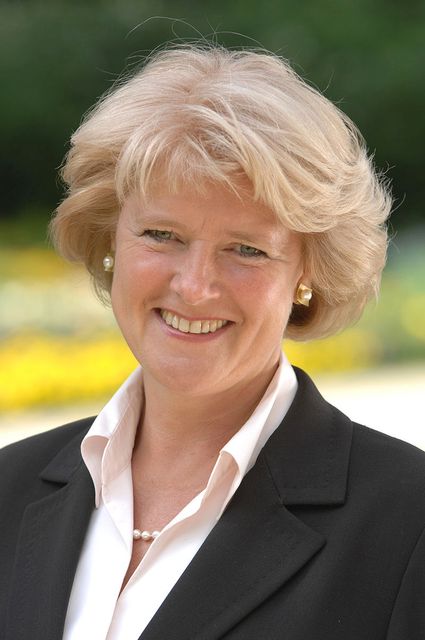
At the beginning of June, the German government announced it was making one billion euros ($US1.125 billion) available to support cultural activity as part of its coronavirus economic stimulus program. This was to enable a “cultural restart,” Minister of Culture Monika Grütters (Christian Democratic Union, CDU) declared sweepingly. The aim was nothing less than to “save our unique cultural landscape.”
On closer inspection, however, this financial package is revealed to be a sham and a step toward neutering and strangling a diverse, complex cultural landscape.
Minister of Culture Monika Grütters (Photo credit–Christof Rieken)
A comparison is revealing: other recipients of the government’s economic stimulus package include the major auto companies, who will get 50 billion euros, the German military, massively re-equipped in the past few years, which will be handed 10 billion euros, and Germany’s largest airline, Lufthansa, due to receive 9 billion euros! Culture and day-care centres bring up the rear with just one billion each.
Approximately 1.7 million people are employed in the country’s cultural sector, a figure almost as large as the workforce in the auto and engineering industries combined. Nearly one in four of these workers lives precariously, that is, in temporary work for low pay and with a lack of social benefits.
The criteria, according to which the one billion euros in cultural aid is to be distributed, still have to be worked out in detail. A previously announced list indicated that around 250 million euros are to go to larger, partially privatised and private cultural institutions for modernisation purposes, and 450 million to small and medium-sized privately financed cultural institutions and projects. From this latter total, 150 million have been directed toward live music venues, 150 million for theatre and dance and 120 million for cinemas and film production and distribution. Thirty million euros have been allocated for galleries, cultural centres and the book and publishing industries.
A further 150 million euros are earmarked for the digitisation of museums, 100 million for federally funded cultural institutions and 20 million for private radio stations.
In view of the massive financial losses following the wholesale closure of theatres, opera houses, concert halls and cinemas, along with the cancellation of book fairs, readings, music and theatre festivals and other cultural events, including activities planned for the 250th anniversary of the birth of composer Ludwig van Beethoven, these amounts are minimal. It is already clear that hardly any of the money will go to artists themselves.
As it has in other areas, the coronavirus pandemic has brought to light catastrophic conditions in Germany’s much-touted cultural system—conditions produced by decades of austerity measures, privatisation and outsourcing.
According to figures from the Federal Statistical Office in 2018, around 34 percent of employees in the cultural sector belong to the category of the individual self-employed. This category applies to more than half of those working in five groups, arts and crafts, photography, music and singing, acting and dance and choreography, as well as theatre, film and television production.
Exploitation is rife in Germany’s opera houses. Even popular opera singers are primarily employed on a freelance basis and have to reapply for work after each production. A slight cold can lead to the loss of roles and fees. According to the magazine Tip Berlin, such performers earn an average of 11,200 euros a year, even less than permanent chorus members.
The situation for actors is no better. They are employed from one engagement to the next. During a production, they are considered employees and pay social security contributions, but without the right to unemployment benefits. At the end of their engagements, they are once again left without an income or social insurance. It is no different for musicians. Very few manage to get a permanent position in larger orchestras. Likewise, most editors, translators and authors are freelancers with low incomes. Even curators of museum exhibitions are mostly employed on a temporary and freelance basis.
Working in the background are small armies of makeup artists, cinematographers and other crew members, production photographers, text designers, translators, caterers and cinema attendants (including many students) employed mainly on a precarious basis—in other words, short-term and low-paid.
A pan-European survey by the European Writers Council in April, involving 33 organisations, also painted a terrible picture of the situation for freelance authors and translators. Some 97 percent of them expect a sharp loss of income due to the cancellation of readings, lectures and workshops and the postponement or cancellation of publications. The number of new book titles in Europe, which averages 500,000 to 600,000 annually, is expected to decline by 150,000 in 2020 and 2021.
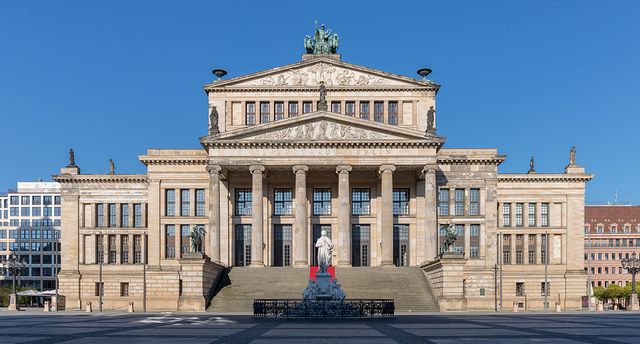
Konzerthaus Berlin (Photo credit–Ansgar Koreng)
“Exiting the crisis with a bang,” boasted Germany’s finance minister and vice chancellor Olaf Scholz (Social Democratic Party), referring to the government’s coronavirus relief package. “This has the potential for a bestseller title,” responded the Network Rights for Authors in a mocking tone. The one billion allocated to culture would ultimately amount to a single-digit million sum for the book division, and function “at most like a mini-bang.” The work involved in producing books was “not a luxury,” but rather stood for “knowledge and pluralism, for emotional, intellectual and cultural exchange, innovative thinking and the intellectual creation of new—sometimes better—worlds.”
Scholz, Grütters and Economics Affairs Minister Peter Altmaier (CDU) have repeatedly rejected the call for more support for artists, referring to the government’s emergency aid program for single self-employed artists of 5,000 euros introduced back in March.

The “emergency aid program”—a trap

Many affected artists regard the German government aid as a trap. The aid is only granted for business costs and not for living expenses. According to the government, artists should apply for aid from the existing (and miserly) social welfare payments system for their day-to-day living.
A freelance musician who gives violin lessons in his apartment, in addition to performing with several groups, explained to the WSWS:
“Public performances have collapsed, along with private lessons. I teach mainly adults and older students who are not so familiar with Skype and lack the technology. My income has dropped to virtually zero since mid-March. Of course, I took the money [government emergency aid—editor] for the lost work opportunities, if only because it is impossible to predict how long the current situation will last.
“In the meantime, uncertainty and fear have spread among my colleagues. A few days ago, I received an email from the bank saying that the government aid was not intended as compensation for lost earnings, but rather for business expenses, i.e., commercial rent, insurance for instruments, etc. This means I am a so-called unauthorised recipient. The letter also points out that the next time I file a tax return, the tax office will investigate how the money was used. Suddenly one becomes a fraudster!”
A fellow musician reported on his experience at a city job centre. The official behind the desk explained in an icy-cold manner that if the musician wanted to receive basic welfare payments according to the Hartz IV system, he would have to make himself available to take any job, in other words, give up his artistic activity.
Hundreds of thousands of cultural workers have signed petitions and protests on the internet calling for a change to the government aid scheme. In April, prominent figures in the world of music wrote an open letter to the Federal Culture Ministry, speaking up on behalf of “countless independent and freelance artists … who are not known and are without an international standing—but who nevertheless significantly shape the cultural landscape here in Germany.”
The letter was initiated by baritone Matthias Goerne, signed by the world-famous violinists Anne-Sophie Mutter and Lisa Batiashvili, conductors Thomas Hengelbrock and Christian Thielemann and renowned operatic bass René Pape.
Lisa Batiashvili (Photo credit–Mat Hennek)
They wrote, “Are we only popular when times are rosy? Doesn’t anyone feel commitment to our cultural accomplishments?” They refer to the government’s aid for dentists who received 90 percent of their previous year’s income, and the sporting goods manufacturer Adidas, which sought to claim public funding to pay rent for its European stores. The latter campaign outraged sports fans, and Adidas was forced to back down.
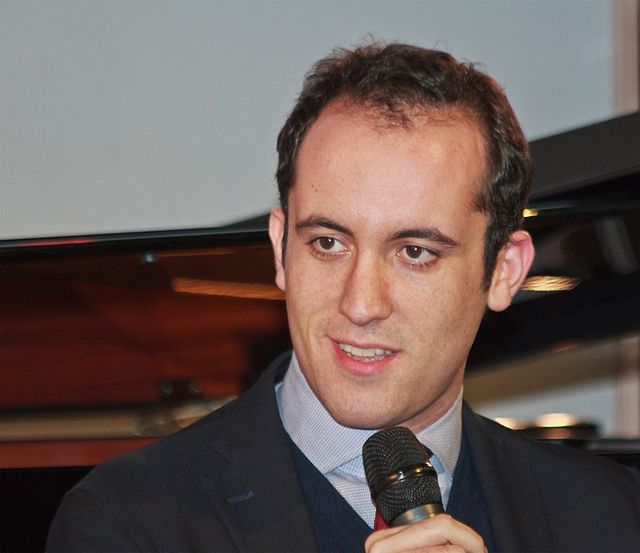
Many of the artists affected are not prepared to accept this situation and have commenced initiatives on the Internet. The Berlin Schaubühne is making its productions and discussions with international theatre available online free of charge. The celebrated pianist Igor Levit has given home concerts on Twitter. Some youth orchestras, invited to this year’s Young Euro Classic Festival in Berlin, have posted program excerpts on Facebook (“Tunes for Sanity”), including the Tbilisi Youth Orchestra from Georgia who present Beethoven’s “Ode to Joy.” Other small orchestras are also trying to reach audiences via the Internet. The orchestra Klangkraft from Duisburg, for example, has transformed its cancelled family concert “Beethoven’s 9th Symphony of Animals” into an international online project. Beethoven’s belief in freedom, equality and fraternity are “more relevant today than ever,” declared conductor Henry Cheng.
Igor Levit (Photo credit–A. Savin)
Such progressive activities are under severe threat, however, under conditions where the German federal government will seek to recoup from the broad masses of the population the billions of euros it has handed out to the finance and business world.

The danger to artistic freedom

The experiences made by cultural workers must be seen in the context of the experiences undergone by millions of other workers. In the case of Lufthansa and the German auto industry, which have both recently announced massive layoffs, state funds are being used to implement long-held plans to transform their respective industries. This threat also hangs over the sphere of cultural activity.
This prospect is already being discussed in the media. A significant comment by Thomas Steinfeld appeared in the feature section of the Süddeutsche Zeitung on June 6. The article “The Plague, Art and Money” oozes snobbish disdain for artists who only create “collages of casual work,” for “puppeteers,” and “buffoons,” “game designers” along with the “International Literature Festival” in Berlin, which lacks any concept.
Steinfeld claims that the massive expansion of culture, a “culturalisation” in Germany since World War II and especially since the reunification of Germany in 1989-1990, has blurred the differences between various types of art. The coronavirus pandemic, according to Steinfeld, now creates the opportunity for a change.
One had to be clear: “What sort of art or culture do you want to promote—and why?” When the priority after coronavirus is to “save rigorously” and there are struggles over distribution involving “thousands and thousands of institutions, projects and freelancers ... for dwindling financial resources,” one will have to introduce “criteria for the granting of subsidies” as was the case with the aid package introduced by the European Union. In any event, Steinfeld concludes, one should arm oneself “with good arguments for the right time.”
The phrase “restart culture” sounds like a threat here. Should art be promoted only if it is pleasing to the aspirations and interests of rich elites? Or, as the Hamburg cabaret artist Lutz von Rosenberg Lipinsky put it, only so-called high culture?
Hand in hand with an economic, foreign and defence policy increasingly pursuing the goal of creating a well-armed German superpower and a domestic policy assuming increasingly authoritarian forms, artistic freedom is also under threat.
Many creative initiatives that benefit broad sections of the population and youth could soon be deprived of public funding; the danger is a return to the two-tier culture of the 19th century, which reserved education and the enjoyment of art almost exclusively to the upper class. Young, critical and nonconformist artists and their works could be banned from cultural life, as took place under the Nazi dictatorship.
As the WSWS stressed at an online forum on March 29, the coronavirus pandemic has revealed not only the economic, social, and political bankruptcy of capitalist-based society, but also its cultural and moral bankruptcy.