26 Jun 2020

Facebook Ethics in AI Research Initiative for Africa 2020

Application Deadline: 22nd July 2020 8:00 a.m. PST (5:00 p.m. CAT)

About the Award: This research initiative complements Facebook’s existing efforts to bolster independent research being undertaken in these areas, such as those we are supporting in the Asia PacificIndia, and Latin America, and at the TUM Institute for Ethics in AI.
This research initiative, through a request for proposals (RFP) coordinated by the Human Sciences Research Council (HSRC) of South Africa, will result in the production of papers from academic institutions, think tanks, and research organizations registered and operational across Africa. Proposals will be reviewed by a selection committee, and the entities whose proposals are selected will receive a research grant.

Eligible Field(s): We are particularly interested in proposals that pertain to the following research topics and questions. However, these are just examples of possible research questions. Applicants are encouraged to come up with their own proposals and to leverage, as much as possible, regional context and local examples in their submissions.

Ethics by design

  • Policymakers are emphasizing the need for ethics by design. What does ethics and AI mean and look like in an African context? How can academia, government, and industry collaborate to promote and advance ethics by design practices and frameworks?
  • How can developers and companies ensure that their AI systems are explainable, what their purpose is, and what they entail?
  • How can academia help companies and governments better understand and operationalize ethics within their own sectors and activities? How can academia both inspire and build on industry best practices for responsible and ethical development of AI?
  • How can developers and companies ensure that their AI systems and applications are built in a fair and unbiased way? How should social science and humanities questions around fairness and discrimination be embedded into the technical design of AI? What best practices can we advance in this space?
  • How can developers and companies ensure that their AI systems are transparent to the affected individuals in a meaningful way? (For example, how will a person know whether they are being unfairly discriminated against because of an automated decision?)
  • What level of autonomy should be provided to the affected individuals concerning the use of AI without compromising the legitimate purposes of AI, and how should individuals exercise control over automated decisions?

Governance, ethics, and human rights

  • How do hard and binding legal instruments, namely existing and proposed legislation, and ethical AI governance frameworks (soft law, non-binding) interact and mutually influence each other? Does the former stem from or pre-empt the latter? Are they complementary or competing?
  • How should international, regional, and national human rights frameworks coexist and interact with each other? What can AI and ethics learn from human rights law and from the obligations it places on public and private actors?
  • What is the role of ethical codes in the broader regulatory landscape? How should they relate to laws and regulations (either existing or being developed)?
  • What is the role of academia in 1) promoting research on AI governance frameworks; 2) analyzing, anticipating, and identifying gaps in legislation and other governance models related to AI development and use; and 3) articulating best practices to guide ethical and innovative uses of data?

AI ethics and diversity

  • What factors should inform human and technical diversity in the design and development of AI systems (e.g. linguistic diversity, diversity of race, gender, religion, and so on) in the African context?
  • How should AI developers and companies foster and apply a multicultural approach to the ethical design of AI?
  • What are the most prominent narratives on the role and impact of AI in Africa? How does local knowledge on the relationship between humans and machines shape the understanding, the perception, and adoption of AI in Africa?
  • How should companies navigate the tension between the benefits of a global approach versus the need to acknowledge important particularities and differences stemming from companies’ regional user base?
  • What would be a sound and scalable methodology for researchers and product developers to recognize and solve ethical challenges, while leveraging different regional perspectives that promote diversity?
Type: Grants

Eligibility:
  • Applying organizations must be nonprofit or nongovernmental organizations with recognized legal status in their respective country (equal to 501(c)(3) status under the United States Internal Revenue Code) and should comply with the applicable laws to receive foreign funds in their respective country.
  • Applicants must be the principal investigator (PI) on any resulting award.
  • Researchers are also responsible for obtaining approval from the PI’s university’s ethics/institutional review board, if applicable.
  • Each applicant may submit only one proposal per solicitation.

Proposals should include

Proposals should be 2–3 pages and include the following:
  • A research question and a clear statement of work that can be completed within six months of the award
  • A summary of the project (1–2 pages) explaining the area of focus, a description of techniques, relevant prior work, and a timeline with milestones and expected outcomes (note that the timeline should not be more than six months)
  • A draft budget description (<1 page) including an approximate cost of the award and explanation of how funds would be spent. Proposals are encouraged to focus funding on project personnel, especially PhD students. Proposals from small collaborative teams are also encouraged. The proposed budget should be within $25,000 (overhead is typically limited to 5–8%). Please note that in the submission form, you will be asked to provide the requested amount in U.S. dollars.
  • Name(s) of the researcher(s) involved in the proposed work with their CV/resume
  • Indication of any previous or current connections/collaborations with Facebook (in which case, please provide context and name the Facebook contacts)
To be Taken at (Country): USA (tentative)

Number of Awards: Not specified

Value of Award:
  • The proposed budget should be within $25,000 (overhead is typically limited to 5–8%). Please note that in the submission form, you will be asked to provide the requested amount in U.S. dollars.
  • If Facebook is offering event attendance and related travel to grant recipients, the specific travel benefits, travel dates and additional details (collectively, “Travel Benefits”) will be provided by Facebook to the grant recipient. 
How to Apply: Apply
  • It is important to go through all application requirements in the Award Webpage (see Link below) before applying.
Visit Award Webpage for Details

Colombia’s Other Pandemic: Unchecked State Violence in the Time of COVID-19

Danny Shaw

The human rights group Indepaz reports that 800 activists have been killed in the past three and a half years in Colombia, since November 24, 2016, the date the government signed “the Peace Accord” with the FARC. Taking advantage of society’s fear and distraction, and the demobilization caused by the novel coronavirus, state and paramilitary actors have intensified their violence against organizers and their communities. Human rights activists refer to themselves as “sitting ducks,” explaining that they are pinned down by the pandemic and cannot as easily flee and hide from the forces of repression.
While state and non-state military actors are notorious for violence in Colombia, the police are also guilty of human rights crimes. On May 19, Anderson Arboleda, a 21-year-old Afro-Colombian was beaten to death by the police for supposedly “violating the quarantine” in the Pacific department of Cauca. The police killing of Arboleda — which many compare to the Minneapolis Police Department murder of George Floyd — was not an isolated act. Journalists have found that black and indigenous Colombians have suffered the highest rates of institutional discrimination and police violence.
Human Rights Watch conducted an investigation into Colombian police violations of the rights of peaceful protesters the past year as hundreds of thousands of Colombians took to the streets against budget cuts and political assassinations. They found 72 cases of extreme police brutality. No officer was ever held responsible. One of these cases was that of 17-year old Dilan Cruz. On November 23, Cruz was at a protest when he was killed by the Escuadrón Móvil Antidisturbios (the ESMAD or Mobile Riot Squad) which fired live ammunition at him from a close distance.
COVID-19: double down crisis on poor Colombians
Colombia now has more than 71,000 cases of COVID-19 and has experienced 2,300 deaths. In Latin America, Colombia trails only Brazil, Chile, Ecuador, Peru and Mexico in terms of the total number of cases and deaths from COVID-19. At El Cumbe Internacional Antiimperialista, Afrodescendiente y Africano (The International Gathering Ground of Antiimperialists, Afro-descendents and Africans) on June 14th, former Colombian senator and lawyer Piedad Córdoba stated: “COVID-19 lays bare the moral, medical and political infrastructure of our country, especially in the poorer Afro-Colombian regions of the Pacific and the Caribbean. Our people have been the most beaten down by the pandemic.” Senator Córdoba went on to speak about the “hurtful image of a young Black man from Quibdó in the Pacific department of Choco who died on a stretcher in front of a hospital without receiving care for the coronavirus.”
Despite this unprecedented public health crisis, president Iván Duque and his government seem to be more concerned with suppressing the freedom of speech of activists, criminalizing  resistance and encircling its neighbor Venezuela than seriously confronting the pandemic.
War as state strategy
The negotiations in Havana, Cuba from 2012 to 2016 resulted in a historic peace deal meant to end a 50-year war that cost over 220,000 lives and left 7 million displaced. The centrist presidency of Juan Manuel Santos received a Nobel Peace Prize in 2016 for his role in the negotiations, though none of the peasant organizations on the other side of the war who endured decades of displacement, torture and death were ever mentioned as a candidate for the  prize or in the ceremony. The government promised a Truth and Reconciliation Committee, land reform, reintegration of former guerrilla fighters, demilitarization of the conflict zones and political openings for the left. The June 2018 electoral victory of Iván Duque, a protégé of far right wing Alvaro Uribe, spelt immediate doom for the Havana peace accords. The government reneged on all of its promises and the areas where the FARC once commanded saw the highest rise in politically-motivated assassinations. According to the United Nations, more than 170 former fighters have been murdered since the peace deal was signed.
In response to these charges, Duque and the Colombian media dismissed the FARC dissidents as “narco terrorists,” despite their legitimate status as demobilized non-belligerents.
Analyst, surgeon and the founder of Pueblos en Camino (The People in Motion), Manuel Rozental explains that the rich in Colombia do not want the military conflict to end because war has always been their cover for appropriating land and resources. Colombian elites and transnationals, such as British Petroleum, Occidental Petroleum Corporation, Exxon Mobil, Coca Cola, Drummond and hundreds of others, use the war as a pretext to clamp down on social movements across Colombia. War is their strategy to displace and dispossess. Any peasant or social organizations who stand in their way can easily be dismissed as coercive or criminal elements. Joel Villamizar is one example. Villamizar was a leader of La Asociación de Autoridades Tradicionales y Cabildos U’wa – ASOU’WA. When he was ambushed and murdered earlier this year the media and authorities simply dismissed him as a guerilla terrorist.
“A War on Drugs?” or a “War on Sovereignty”?
According to all reputable data, Colombia is the main supplier of cocaine in the world and the U.S. is the main consumer. The U.S. allegations that Nicolás Maduro oversees a narco government are politically motivated and not backed up by facts on the ground. Approximately 70 percent of cocaine that arrives in the U.S. comes from Colombia via different supply routes, many through the Pacific ocean. The U.S. Navy is surrounding and blockading Venezuela, not to stop the flow of cocaine into the streets of the U.S., but rather to stop the progress of the Bolivarian process.
It is also worth pointing out that the drug epidemic in the U.S. is not caused principally by cocaine but rather by opioids, many of which are legally prescribed by doctors. According to the Center for Disease Control, over 70 percent of the 67,000 overdoses in 2018 were from opioids.
On March 26th, Attorney General William Barr formerly accused the Venezuelan government of “narco terrorism” without even clarifying which drugs are killing Americans and where they come from. This spoke to the political motivations behind the claims which were really trumped up charges designed to provide the legalese to ratchet up the war on Venezuela. Meanwhile, Washington takes no action against the government of Honduras, accused by even U.S. courts of being involved in drug related crimes, including Juan Orlando Hernández’s family and the president himself.
The US Navy sent ships to further blockade Venezuela’s Caribbean coast on April 1 and the Southern Command deployed 800 more special force soldiers to Colombia on June 1. This ignited a national debate in Colombia about the question of sovereignty. The Colombian Congress never agreed to allow foreign soldiers into their homeland. Aida Avella, senator of the Patriotic Union party, stated: “The U.S. military cannot enter Colombian territory above Congress to advise the fight against drug trafficking. We reject the use of the country for wars and invasions of other countries.” Lenín Moreno ceded “a new airstrip” in the Galápagos Islands of Ecuador for use by the U.S. military. The U.S. military currently has nine bases in Colombia, twelve in Panama and 76 total in Latin America.The US has deployed between 500 and 1,500 troops to Soto Cano air base in Honduras under the guise of humanitarian and drug-fighting operations.There is also some evidence that the Colombian military may have supported the mercenaries who trained in Colombia before launching incursions into Venezuela in early May in a botched attempt to capture the Venezuelan president.
Resistance is everywhere
Distrustful of the government’s commitments, thousands of government opponents have returned to the mountains or sprawling slums of Colombia’s cities. Calling for a second Marquetalia Republic, in reference to the autonomous zones armed peasants held after La Violencia in 1948, rebel commanders like Iván Marquez and Jesús Santrech and their soldiers have taken back to the mountains.
Not all social actors embrace this strategy however. Warning that war is a trap, social movements drafted a letter to the FARC discouraging them from playing into the hands of the state. Around 70 percent of all casualties in the 50-year and running civil war have been civilians.
In an interview on June 16 with Colombia’s Caracol Radio, representative of the Ejército de Liberación Nacional (ELN) and the head of the Dialogue Delegation of the guerilla army, Pablo Beltrán, explained their perspective. Beltrán said the ELN desires a cease fire but not as long as Duque brings in more U.S. soldiers, making a clash with those troops inevitable in Norte de Santander and Arauca on the border with Venezuela. The ELN has expressed that the priority should be alleviating poverty and keeping people safe from the coronavirus.
As the coronavirus impacts the poorest and most vulnerable sectors of Colombian society, there is little trust that Trump’s faithful partner, the notorious anti-Bolivarian Iván Duque, will respond in a comprehensive way to the health and economic needs of the population. Three national strikes convulsed Colombia between November and December last year because of the neoliberal cuts implemented by Duque. Unable to resolve the needs of their own population, the Colombian elites participate in the destabilization of one of its neighbors. The external and internal contradictions of Colombian society continue to sharpen, promising the playing out of a 50-year national liberation struggle Washington has always feared and sought to contain.

Avoiding War With China

Eve Ottenberg

Relations between the U.S. and China have hit an all-time low. As the election nears, expect them to plunge lower. That’s because Trump is campaigning against China, hoping for a surge of xenophobic hatred to sweep him back into the white house. The charge is that China caused Covid-19 – possibly in a lab, but if not, worsened the plague with its secrecy and lies at the pandemic’s start. This is nonsense. The Chinese government’s first instinct may have been to cover up, but it quickly did an about-face. It certainly didn’t dilly dally about fighting the disease as long as Trump did. As for the accusation that China under-reported fatalities, it is irrelevant even if true; China quickly warned the world that this was a killer plague and promptly locked down. There was no mystery, no grand deceit. If China under-counted its dead, that did not alter the message: disaster was coming and you better prepare. Which is exactly what the Trump regime did not do.
As for the charge that Covid-19 was deliberately released from a lab – that is idiotic. Why would China unleash a bio-weapon on its own people? Regarding the claim that the virus escaped accidentally, most scientists consider this unlikely and most do not regard it as a virus made worse by gain-of-function tampering (gain of function being genetic modification to make a virus more deadly). Some disagree, but most probably, Covid-19 is a naturally occurring virus, related to SARS and MERS. It may not have even originated in Wuhan. Still, the mere chance that such an unintended viral release could occur should give us pause: it argues for shutting down all bio-weapons labs – in the U.S., China, Russia, everywhere. It should also lead to an immediate and global ban on all gain-of-function research on deadly pathogens.
The bash-China bandwagon keeps getting more crowded. On June 6, Florida Senator Rick Scott jumped on, claiming he had proof of China trying to sabotage a Covid-19 vaccine. China replied succinctly: show your proof. Scott didn’t. Only a nitwit could make this charge, for the simple reason that China has no interest in sabotaging a vaccine. Quite the contrary. But if what Scott meant was that China wanted to steal vaccine research, well, that speaks to the nightmare effects of Western patents on drug prices. If China stole such information, that could lead to a generic vaccine, and thus a cheaper one. Basically a win for humanity, though perhaps not for the pharmaceutical companies with whom Scott might like to curry favor.
Two people driving this bash-China bandwagon are white house trade advisor Peter Navarro and a little known, former Wall Street Journal reporter now member of the National Security Council and rabid China-hater Matt Pottinger. In late April, the Washington Post recounted how Pottinger, as a reporter, was intimidated by the Chinese police and how hardline he now is against China, whose leaders “Pottinger believed, were engaging in a massive cover-up and a ‘psychological warfare’ operation to obscure the origins of the virus and deflect blame.” Pottinger has promoted the story that the pestilence originated in the Wuhan bio-weapons lab. Navarro has been busy too. On June 21 he claimed that it was an “open question” whether China had deliberately created Covid-19 and that the “virus was a product of the Chinese Communist Party.”
This hysterical, hardline view has become mainstream within the Trump regime. The Post quoted Trump’s former NSC adviser H.R. McMaster, saying that Pottinger is “central to the biggest shift in U.S. foreign policy since the Cold War, which is the competitive approach to China.” So far that competitive approach has been a bust: this imbecilic U.S. foreign policy has only managed to throw Russia and China into each other’s arms. Thus this competitive approach to China, which started with the Obama regime’s stupid and loathsome “pivot to China,” combined with the phony Russiagate fiasco, has created the humongous Russia-China alliance, which decades ago a far more intelligently diplomatic president, Richard Nixon of all people, managed to avert. The warmongers are dimwits. They strut across the globe creating enemies wherever they go.
Uber-hawks Pottinger and Navarro have pushed for decoupling the U.S. and Chinese economies. This is a fraught proposition. The campaign rhetoric that China stole U.S. jobs may go over well with the rubes in the base, but in reality, U.S. corporations moved jobs to China for the cheap labor. So far, those corporations have not rushed to repatriate those jobs. Trump’s trade war complicates the economic picture, as U.S. farmers learned when it lost them the enormous Chinese market for agricultural products like soy. Many farmers went bankrupt. Trump is now attempting to buy off those who didn’t by showering them with stimulus funds. Meanwhile the U.S. economy has tanked, with over 40 million unemployed. The economic decoupling from China could not have come at a worse time.
Not surprisingly in this acrimonious atmosphere, the U.S. government supported anti-China riots in Hong Kong last year, with House leader Nancy Pelosi even calling them “beautiful.” The riots were extremely violent, with many innocent bystanders brutalized. One leader, Joshua Wong, reportedly received money from the National Endowment for Democracy, which now does work the CIA used to do, allegedly fomenting color revolutions and regime change in foreign countries. The Trump regime did not deplore the Hong Kong violence. Quite the opposite. And this attitude was noted by the CCP, which called out U.S. hypocrisy toward protesters when the Floyd rebellion broke out here.
Then on June 4, Trump revoked Hong Kong’s special status. This was intended as a slap in the face, but for complicated reasons didn’t quite succeed. Still it’s the thought that counts, and China surely noted it. So: a U.S.-initiated trade war, blaming China for the pandemic, threatening to make it pay trillions of dollars in damages, fomenting insurrection in Hong Kong, sanctions, going after the Chinese high tech firm Huawei by having a senior corporate official detained in Canada, Secretary of State Mike Pompeo hectoring Europeans, as he did last week, to sever economic ties to China, simmering U.S. propaganda that consistently exaggerates the numbers of minority Uyghurs detained in camps and making ridiculous demands that China suddenly participate in the START talks (when China only has 300 nukes to the U.S. and Russia’s 6000) and using its absence to try to embarrass the Chinese. If all that’s not belligerent and provocative enough, there’s the U.S. navy off the coast of China in the South China Sea. At the end of May, the guided missile destroyer USS Mustin sailed near the Chinese-claimed Paracel Islands, in a direct affront to China. This came on the heels of Trump regime plans to deploy long-range ground-launched cruise missiles in the region, which it can now do, having ditched the Intermediate-Range Nuclear Forces treaty for just this purpose.
Japanese and other Asian countries’ officials indicated in early June that they were not enthusiastic about Pentagon plans to threaten China by basing missiles of any sort in their territory. But, according to the Los Angeles Times, “Pentagon planners aren’t backing down.” You bet they aren’t. China is the military game in town now, and the Pentagon’s got a few psychotic Dr. Strangeloves who really believe in winnable nuclear wars. They have long eyed China and its powerful navy with hostility and alarm, and now they have a figurehead in the white house who needs a bogeyman. They are delighted he has selected China.
For those who may have hoped Trump would drop the Obama regime’s odious “pivot to China,” things have not worked out. They have deteriorated. U.S. and China relations now threaten divorce. Let’s just hope the supposedly anti-interventionist Trump doesn’t bumble into a war to win an election. Each escalation, each threat, each act of hostility makes that more likely. Ramping up tensions is a dangerous game. Because a war with China, which could well draw in China’s close ally Russia, could end life on earth.

How Racism is an Essential Tool for Maintaining the Capitalist Order

Richard Wolff

U.S. capitalism survived because it found a solution to the basic problem of its instability, its business cycles. Since capitalism never could end cyclical downturns and their awful effects, its survival required making those effects somehow socially tolerable. Systemic racism survived in the post-Civil War United States partly because it helped to achieve that tolerability. Capitalism provided conditions for the reproduction of systemic racism, and vice versa.
Every four to seven years, on average, capitalism produces a downturn (“recession,” “depression,” “bust,” “crash”—many words for a problem so regularly repeated). Political leaders, economists, and others have long searched for a cure for capitalism’s instability. None was ever found. Capitalism has thus already recorded three crashes in this new century (spring of 2000, autumn of 2008, and now in 2020).
Defenders of capitalism prefer to call its inescapable instability the “business cycle.” That sounds less awful. Yet its cycles’ hard reality has always frightened capitalism’s defenders. They recognize that when large numbers of people suddenly lose their jobs, many businesses die, production shrinks, and governments lose tax revenues, the results can and often do threaten the entire economic system. Capitalism’s cyclical crises could potentially turn their victims against it and make them receptive to the system’s critics.
This would more likely happen if everyone in the society were roughly equally vulnerable to cyclical downturns. Most employees would then rightly worry that their jobs would be lost in the next crash. They would periodically face income losses, interrupted educations, lost homes, and so on. Whatever relief employees felt if neighbors, rather than themselves, got fired, they would know that it might well be their turn in the next cycle. The losses, insecurities, and anxieties produced by such a capitalism would long ago have turned employees against it and provoked transition to a different system.
U.S. capitalism solved its instability problem by making cyclical downturns afflict chiefly a minority subpart of the whole working class. It positioned that minority to bear the brunt of each cycle and suffer its damages disproportionally. That minority was repeatedly drawn into and then thrown out of jobs as the cycle dictated. Any savings it might accumulate when working would be lost when unemployed. Repeated firings precluded such a minority from enjoying the benefits of job longevity (seniority, promotion, household stability, etc.). Poverty, disrupted households and families, unaffordable housing, education, and medical care would haunt such a minority. It would become capitalism’s “business cycle shock-absorber”—the last hired, first fired—across the four-to-seven year average duration of its cycles.
For capitalism, making such a minority absorb most of the costs of capitalism’s instability allowed the majority of the working class to be relatively exempted, relieved, freed from them. The majority could be less subject to cycles because the minority was made relatively much more subject. Capitalism promised the majority relatively secure jobs and incomes because it took those away from the minority. The majority could thus worry less about the next cycle, whereas the minority had to worry more and adjust their lives more. Racists could then attribute the resulting differences between minority and majority subparts of a population to inherent qualities of different “races” instead.
Other advanced capitalist countries found parallel solutions. Some condemned immigrants to play the role assigned to African Americans in the United States. Racism aimed at immigrants often followed. In cyclical upswings, immigrants would be brought in: North Africans into France, southern Italians into Switzerland, Turks into Germany, and so on. Then, cyclical downswings would return those immigrants to their home countries. Capitalisms would thus save on costs of unemployment insurance, welfare payments, etc., for the workers who had returned. While some capitalisms relied on domestic minorities to be shock-absorbers and others relied on immigrants, some countries relied on both. The United States used Central American immigrants alongside domestic African Americans, and it still does. Germany allowed some immigrants to settle and acquire German citizenship alongside Turkish and other immigrant “guest workers.”
In the United States, married white women also played the role of business cycle shock-absorber. During cyclical upswings, they would enter the paid labor force in part-time or full-time positions. Like African Americans, they earned less than white men. Women’s jobs, too, were likely to be temporary, undone by cyclical downturns.
Whatever communities were forced into the shock-absorber role, poverty, depression, broken families, slums, and inadequate education and health facilities became more widespread among them than they were among the majority of the working class. Insecure jobs, incomes, homes, and lives often bred bitterness, envy, desperation, crime, and violence. These collateral damages had to be “managed” by the capitalisms whose survival depended on producing and reproducing those communities. Police and prisons were and are assigned that management task.
Police and prisons were to “keep the lid on,” “tame,” “patrol and control” the restive portions of the shock-absorber communities sequestered in slums or ghettos. Interactions with police coupled with cycling and recycling through prisons were the chosen means to manage capitalism’s collateral damage. Those means generated collateral damage of their own: the long, tragic record of police violence, use of excessive force, the harshness and violence of incarceration, and the killing especially of African Americans.
Why were African Americans “chosen” to be key (but not the only) cyclical shock-absorbers in the United States? One factor concerned the racist legacies of U.S. slavery. They included beliefs that slaves were either not fully human or inferior humans. Even the U.S. Constitution had counted a slave as merely three-fifths of a full (i.e., white) person for census purposes. Accommodation to slavery before the U.S. Civil War had already shaped a racialized consciousness in both masters and slaves. And because U.S. slavery entailed different skin colors for masters and slaves (unlike many slaveries in world history), a readily identifiable minority had already been defined in racial terms in the slave portions of the United States. Moreover, that definition had spread to other parts of the United States as well. U.S. capitalism used, absorbed, and built on slavery’s legacy by inserting large portions of the African American community into the shock-absorber role that the system required. The racism developed by U.S. slavery thereby both facilitated U.S. capitalism and was reinforced by it.
A significant portion of the white working class in all capitalisms has always also been forced into the shock-absorber role. “White trash” in U.S. capitalism was never far from the African Americans similarly situated. There thus arose possibilities of class solidarity between these Black and white working-class communities. U.S. history displays moments when those possibilities were realized, as C. Vann Woodward documented so well. It also displays moments of intense racist violence used to block the realization of those possibilities. Employers played on racialized differences to keep employees from unifying against them. In bitter competitions between Black and white shock-absorbers for cyclically scarce jobs, whites could and often did use racism to gain advantages in access to those jobs. In multiple ways, then, capitalism fostered and benefited from racism; it thus settled deeply into the system.
Fundamental injustice characterized the relationship between police and prisons, on the one hand, and the African American and other communities (Indigenous, people of color) condemned to play capitalism’s shock-absorber role, on the other. The solution was and is not better training or more funding; both have been tried repeatedly and both have likewise failed repeatedly. A real solution would provide a decently paid job to everyone who wants one as a matter of right. Unemployment would then be outlawed much like slavery, child abuse, etc. Taxes levied on capitalist enterprises would provide the funds needed to find jobs, private or public, for those laid off by an employer (much as such taxes help fund unemployment insurance now). Those funds would include wages or salaries paid for each worker’s time between being laid off and rehired. Minimum wages, applied universally, would cover reasonable housing, transport, health care and other living costs.
If such a solution were deemed to be incompatible with capitalism as a system, capitalism would have to give way to a system that made adequately paid employment a basic right for all. Enterprise profit would then finally be ejected from its throne as capitalism’s number one social priority.
Such a solution would finally free African Americans, Indigenous, and Brown people from long-standing abuses in and by police and prisons. It would thus reduce the racism that those institutions have exemplified and reinforced. It would also reduce pressures on police and prison personnel to behave in ways that self-destructively rob them of their humanity as well as oppress others. Police and prisons in the United States today serve an inherently unstable capitalism by means of systemic racism. The logic of alliance between anti-racism and anti-capitalism could not be clearer.

Ahmaud Arbery’s killers indicted on murder charges in Georgia

Matthew MacEgan

The three white men who killed black jogger Ahmaud Arbery on February 23 were indicted Wednesday on murder charges by a Georgia grand jury. The men were not arrested and charged until last month, after a video of the brutal killing went viral on social media and prompted nationwide protests.
The three men are Gregory McMichael, a 64-year-old retired police officer and district attorney investigator; Travis McMichael, Gregory’s 34-year-old son; and William Bryan, a 50-year-old neighbor who helped prevent Arbery’s escape before he was shot and killed by Travis McMichael.
Gregory McMichael, Travis McMichael and William "Roddie" Bryan, Jr.
Evidence came out following the arrests that a Glynn County police officer had effectively deputized Gregory McMichael toward the end of 2019, directing a neighbor who was concerned about trespassers entering his property to notify the retired officer of trespassing incidents rather than calling the police department and making official reports.
On the morning of February 23, the McMichaels decided that Arbery, who was jogging through the Satilla Shores neighborhood outside of Brunswick, Georgia, was behind a “string” of local burglaries and pursued him in their pickup truck rather than calling law enforcement. Arbery ran for his life but was boxed in by both the McMichaels’ truck and the vehicle of William Bryan, who joined the pursuit when they passed by his house. Travis McMichael then confronted Arbery armed with a shotgun and killed the young man who desperately tried to defend himself.
During the preliminary court hearing which took place earlier this month, the Georgia Bureau of Investigation revealed that Travis McMichael threw a racial slur at Arbery’s dead body after murdering him in cold blood. Bryan told police who arrived on the scene that Travis spat the phrase, “fucking nigger.”
Glynn County police initially made no arrests after the shooting took place, allegedly because they were instructed not to by the first prosecutor assigned to the case. Three district attorneys recused themselves from the case over the course of more than two months due to conflicts of interest related to Gregory McMichael’s association with law enforcement. One of those DAs, George Barnhill, wrote to the Georgia Bureau of Investigation (GBI) defending the McMichaels, providing legal defenses for the pair which tainted both the local jury pool and the local prosecutorial pool.
District Attorney Joyette M. Holmes of Cobb County, who took over the case in May and ensured that all three men were arrested and prosecuted, announced Wednesday that a grand jury in Glynn County returned an indictment with nine counts against each of the three defendants: malice murder, four counts of felony murder, two counts of aggravated assault, false imprisonment, and criminal attempt to commit false imprisonment. All three men could face life sentences without parole.
The six-page indictment notes that the men are charged with trying to “unlawfully confine and detain” Arbery while chasing him, using their vehicles “offensively” and in a manner “likely to cause serious bodily injury.” The malice murder charge under Georgia law is “the intentional killing of a person with malice of forethought.” Holmes explained that malice does not need to be developed over a long period of time. “Malice can be formed in an instant.”
Holmes declared, “This is another step forward in seeking justice for Ahmaud. We will continue to be intentional in the pursuit of justice for this family and the community at large as the prosecution of this case continues.” Benjamin Crump, one of the attorneys representing Arbery’s family, said that the indictments confirm “what Ahmaud’s father has been saying for months—that this was a lynching.”
The indictment came one day after the State Senate in Georgia passed a hate crimes bill that had been approved by the House. Republican Governor Brian Kemp said he would sign the bill into law pending a legal review. The passing of the bill is an effort to alleviate popular outrage over Arbery’s murder and the refusal of the local police to arrest his killers.
The killing of Arbery is one of several by police and former police this year that have fueled global mass protests, especially since the end of May when George Floyd was murdered in broad daylight by four police officers in Minneapolis, Minnesota. Regular rallies have been held in Louisville, Kentucky to demand that the officers who shot and killed Breonna Taylor, a young black emergency medical technician, during a no-knock raid in March be arrested. One of those Louisville police officers, Brett Hankison, had his employment terminated earlier this week.
Multi-racial and multi-ethnic protests demanding an end to police violence are continuing throughout the United States. Three North Carolina police officers were fired after a recording captured racist conversations that they had about killing African Americans. Colorado Governor Jared Polis recently stated that his legal council will look into how the state can probe the death of Elijah McClain, a 23-year-old black man who died in police custody last August after officers restrained him by his neck. The police chief in Tucson, Arizona offered to resign Wednesday after body camera video was released showing a two-month-old incident where a Hispanic man died while in police custody.
The American political establishment has continued its cynical political maneuvering around the issue of police violence with the Senate Democrats blocking a package of police reforms proposed by Senate Republicans earlier this week. The Democratic-controlled House of Representatives is reportedly preparing to put forward their own cosmetic police reform bill which they know has no chance of passing the Republican majority Senate.

Parliamentary report exposes widespread fire-safety failings three years on from Grenfell Tower inferno

Alice Summers

Three years on from the deadly Grenfell Tower fire, around 2,000 high-rise residential or publicly owned buildings are still covered with dangerous cladding, says a cross-party parliamentary report.
Titled “Cladding: Progress of Remediation,” the report by Parliament’s Housing, Communities and Local Government (HCLG) committee exposes the deadly conditions still facing thousands of residents in high-rise buildings across the country. While the Conservative government pledged to do whatever was necessary to make tower blocks safe after the catastrophic inferno at Grenfell in 2017, in which 72 people died, next to no remedial work has been carried out.
Spruce Court in Salford in 2017 with only part of its flammable cladding removed
Of the 2,000 high-rise buildings still coated in highly flammable materials, 300 are clad with Aluminium Composite Material (ACM) panels. This cladding used on Grenfell Tower was the most significant factor allowing flames to rapidly spread up the entire 24-storey building in less than 20 minutes.
Although official figures do not exist for the number of high-risk buildings over 18 metres clad in non-ACM forms of flammable cladding, the minister of state for building safety, Stephen Greenhalgh, told the HCLG committee that approximately 11,300 buildings are believed to be covered in non-ACM cladding, with 1,700 being high-rise buildings in need of urgent remediation works.
Dangerous non-ACM materials include High-Pressure Laminate (HPL), a widely used form of cladding shown in tests to pose a similar level of fire risk to ACM.
The continued use of flammable cladding materials and lack of remediation work testify to the contempt evinced by central and local government for the lives of working class residents.
According to official figures, as of May this year, only 155 of the 455 high-rise buildings clad with ACM identified as at-risk had cladding removed and replaced with safer alternatives. Of the 300 that remain unsafe, work has yet to begin on 160 towers, with repairs on the other 140 in various stages of completion.
A separate report from the National Audit Office (NAO) revealed that as of April 2020, just 0.7 percent of the £200 million funding made available by the government in May last year to handle at-risk private-sector buildings has so far been disbursed. This is only £1.42 million of the already paltry funding pot, with a further £24.98 million (12.5 percent of the total fund) worth of applications having been approved but not yet paid out.
Of the government’s £400 million public sector fund—made available 20 months ago in October 2018—just £133 million (33.3 percent) has been paid out.
In March this year, Chancellor Rishi Sunak announced another £1 billion “Building Safety Fund.” This inadequate amount is subject to numerous restrictions on its use. According to the HCLG committee, funding can only be accessed to remediate residential buildings over 18 metres high and will be allocated on a first-come first-served basis, with the window for applications closing by July 2020. Buildings that started remediation work before the chancellor’s March 11 announcement will be excluded from funding, as will non-residential buildings such as hotels and hospitals.
The HCLG committee estimates that the £1 billion fund will cover the costs of removal and replacement works on only 600 buildings—one third of the 1,700 high-rises with unsafe non-ACM cladding. The government’s own estimate is that remediation of all high-rises with unsafe cladding will cost between £3 billion and £3.5 billion, while the National Housing Federation calculated that total costs for cladding removal work are expected to easily top £10 billion in the social housing sector alone.
The Greater London Authority told the HCLG committee that the average cost of cladding remediation was £1.7 million per building, with the Greater Manchester High Rise Taskforce reporting an average cost per building of £4 million. This means that approximately 25 percent of the fund would be required to fund remediation of high-rise buildings in Greater Manchester alone.
The HCLG committee reports concerns over the arbitrary 18-metre threshold for determining eligibility for funding. Dr. Jonathan Lacy, chief executive of construction manufacturer Ash and Lacy, told the committee that the Building Safety Fund dictates that the height of a building be measured from ground level to the surface of the top floor, as opposed to roof level. Several buildings which are 18 metres to the roof have been excluded from applying for remediation funding.
The report notes that two of the most high-profile residential fires in the last year—at student accommodation The Cube in Bolton and at Samuel Garside House in Barking—were in buildings below 18 metres in height. The National Fire Chiefs Council told the HCLG committee that there are around 100,000 buildings between 11 metres and 18 metres in height, many covered in flammable cladding.
Many residents in high-rises surveyed by the HCLG committee reported concerns over numerous other fire safety defects in their buildings, none of which would be addressed by the government’s Building Safety Fund. Thirty-four percent reported missing or inadequate fire breaks, 30 percent described combustible or missing insulation, with timber balconies or walkways (14 percent) and inadequate fire doors (5 percent) also featuring prominently.
The HCLG committee wrote, “There is no point fixing the cladding, but leaving a building fundamentally unsafe. We believe that there is no reason to fund the remediation of some fire safety defects but not others. Our view is that funding will need to be increased to address all fire safety defects in every high-rise or high-risk residential building—potentially costing up to £15 billion  (emphasis in original).
Many tenants have been forced to pay for interim fire-protection measures out of their own pocket, at a huge cost, while they endure agonising waits for their buildings to be made safe. These measures include installing new fire-alarm systems and putting in place 24-hour waking watches, with tenants reporting increases in service charges of up to £1,000 a month, according to the HCLG committee.
The impact on the mental health of the approximately 500,000 residents in properties with serious fire-safety defects has been substantial. Rituparna Saha, from UK Cladding Action Group (UKCAG), told the HCLG committee, “I would summarise my life as pretty much a living nightmare…we basically feel like we are completely trapped. We feel hopeless.”
A separate report from UKCAG found that of the 550 tenants of tower blocks with ACM cladding they surveyed, almost a quarter had had thoughts of suicide or self-harm due to cladding issues.
As the WSWS noted in an article commemorating three years since the Grenfell fire, “Despite its damning findings, the HCLG, made up of Tory, Labour and Liberal Democrat MPs, offers nothing to remedy the crisis. It merely asks the government ‘to ensure that all buildings of any height with ACM cladding…be fully remediated of all fire safety defects by December 2021’ and that buildings ‘with other fire safety defects, including non-ACM cladding, should be remediated before the fifth anniversary of the Grenfell Tower fire in June 2022.’”
As the report makes clear, there is no obligation for building owners to do any such thing, with Minister for Building Safety Stephen Greenhalgh refusing to set a deadline for when remedial work must be completed. Greenhalgh spoke of his “ambition, as opposed to a commitment” that works to remove ACM cladding should be “completed sometime in 2021.”
Even the limited measures put forward by the government have been opposed by building corporations, with property developer Berkeley Group calling for some forms of “low risk” ACM cladding not to be banned or removed. Speaking to the Times, Rob Perrins, the company’s chief executive, said: “It shouldn’t be ‘all ACM should be removed’ or ‘all HPL should be removed.’ It’s low risk.”

Five cruise ships detained by UK revealing atrocious conditions of seafarers

Paul Bond

Following reports of a hunger strike among almost 1,500 crew members over unpaid wages, the Maritime and Coastguard Agency (MCA) sent investigators onto six cruise ships still moored in British waters as a result of the coronavirus pandemic.
The MCA detained five of the ships on Saturday for numerous breaches of the Maritime Labour Convention, including expired contracts, late payment of wages, and retention of crew on board for more than the 11-month legal limit.
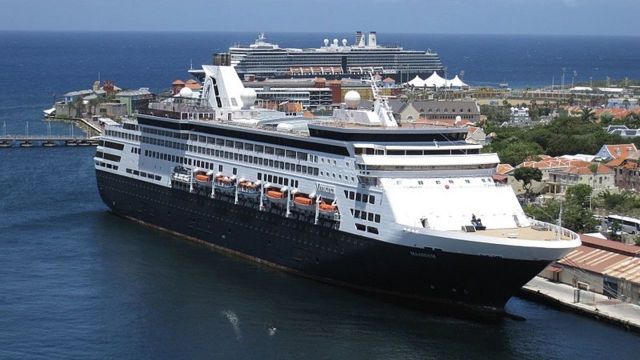
Maasdam S-Class Cruise Ship Holland America Line (Wikimedia Commons)
The six ships are owned by Global Cruise Lines Limited, and are operated by British-based Cruise and Maritime Voyages (CMV). Five ships, the Astoria, the Astor, the Columbus, the Vasco de Gama, and the Magellan, have been docked in CMV’s home port of Tilbury, Essex, since the onset of the pandemic. The sixth ship, the Marco Polo, is in Avonmouth docks in Bristol.
Significant breaches of regulations were found on all ships apart from the Magellan. The MCA have announced that the five ships will be detained until the breaches are resolved.
The matter came to public attention because of protests by CMV crews, who are among the many cruise ship employees who have been left stranded at sea with no clear indication of when they will be able to return home.
Indian seafarers have been particularly affected because of the hasty and ill-planned lockdown imposed by the Hindu supremacist Bharatiya Janata Party (BJP) government of Prime Minister Narendra Modi. There have been repeated complaints that attempts to organise return flights receive no response from the Indian authorities.
Following recent action by crew members of the Marella Explorer, who have now been repatriated, the Astoria’s 164 Indian crew members recently protested and issued a video demanding assistance with their return. They expressed their feelings with banners reading, “Enough is enough,” and “Frustrated—What next? Suicide??”
There are believed to be crew from Indonesia and Myanmar on board, some of whom were to be flown back on Sunday. European crew members have already been able to return home. There were unconfirmed reports that some crew members had gone on hunger strike. The owners denied this but did admit that 50 crew members had gone on strike and were “no longer performing routine maintenance work on board.”
The Astoria sailed from Mexico in mid-February, arriving in British waters on March 10. With passengers disembarked it sailed from Poole and arrived in Tilbury March 15. The Marco Polo arrived in Bristol the following week. They have been there ever since.
Under these conditions there are increasing concerns for the mental and physical health of cruise ship crews. One member of the Astoria’s crew has already died from “natural causes,” believed to be a heart attack. Globally there have been numerous suicides reported among crew members stranded at sea.
Governmental and corporate responses have focused on what the International Maritime Organization has called an impending humanitarian crisis. So atrocious are the conditions facing the moored crews that Conservative Transport Secretary Grant Shapps—who authorised the MCA investigations and who is no friend of the working class—felt obliged to describe seafarers’ welfare as “of the utmost importance.”
CMV, having been forced to issue an apology for the situation, sought to shift the blame elsewhere. Chief executive Christian Verhounig said he hoped the public attention had “raised awareness of the plight of our crew with the various embassies” and that they would now assist with repatriation flights. He has described the crews as “understandably anxious and distressed.”
Verhounig blamed the problems on governmental responses, saying, “We fully sympathise with and understand our crew’s frustration and upset at being held under quarantine conditions onboard our ships due to the local restrictions imposed.”
Given the negligence and disregard of the Indian authorities, there is some truth in this. Several repatriation flights organised by Marella for their Indian crew members, for example, were cancelled at short notice, apparently because the government paperwork was incomplete. It is not the whole story, however.
CMV confirmed that wages had been paid late the week before the investigation, but this had “already been corrected.” The company’s position is that “the issues relating to expired crew contracts and crew being onboard in excess of 12 months … occurred as a result of the enforced lockdown period and the COVID-19 travel restrictions for some countries.”
That the same conditions existed on the Magellan, which was not detained but given 14 days to correct them, indicates something more systemic. The Astoria had in fact been due to sail to Portugal for a refit, but the voyage was prevented by the detention.
CMV, like many other tourist companies, has been hit hard by the pandemic. In the week before the MCA inspection the company had gone into emergency talks with lenders and potential investors after the collapse of discussions around a potential rescue deal.
Private equity firm Novalpina Capital had been trying to structure a new deal with CMV’s existing creditors, but this fell through when Barclays decided not to offer CMV a £25 million loan backed by the government’s Coronavirus Large Business Interruption Loan Scheme.
CMV had already borrowed €60 million from the Australian bank Macquarie in February. It is not known who else is in discussion with the company. Sky News reports that it is unclear what contingency planning exists if funding is not secured.
The trade unions have been doing their utmost to support the companies, with International Transport Workers Federation (ITF) President Paddy Crumlin saying, “We have worked with industry and the international community to offer solutions.”
Now, when seafarers are increasingly at breaking point, the ITF and its local affiliates are moving to regulate the explosive tensions. Last week, the ITF announced that it would sanction strike action by its members. This is being used as leverage to get national governments to arrange repatriation efforts, with Crumlin and ITF General Secretary Steve Cotton both declaring “enough is enough.”
Accordingly, the All India Seafarers and General Workers Union has been active in writing to the Indian foreign office demanding efforts to repatriate the Astoria crew.
While everything must be done to ensure that the intolerable situation facing the crews is ended, cruise ship workers cannot place any faith in the governments of their home countries, nor in the corporations employing them.
International seafarers must form independent rank-and-file committees across all ships and fleets to coordinate the widest possible action in defence of workers’ rights to repatriation, safe and healthy quarantine measures at no cost to the employees, and financial compensation for lost wages due to the pandemic. These committees must act in conjunction with similar organs of struggle in all countries and industries in the fight for a global socialist economy.

Germany’s Verdi trade union supports jobs massacre at department store chain

Dietmar Gaisenkersting

Germany’s service-sector trade union Verdi has agreed behind the backs of the workforce to a jobs massacre at the Galeria Karstadt Kaufhof department store chain. At least one in three outlets will be closed. This is contained within a so-called social plan agreed to by the trade union and central works council.
This time around, Verdi even abandoned its ritualistic whistle-led protests, which in the past were used to make the workers believe that the union was ready to fight. Instead, the trade union and works councillors signed an agreement with company management that includes a jobs massacre and the devastation of workers’ livelihoods, without so much as consulting the workforce.
The agreement reached by management and the union proposes the initial closing of 62 Karstadt and Kaufhof outlets. Six out of 11 outlets in Berlin will close, four in Hamburg, three in Munich, and two in Dortmund, Düsseldorf, Essen, and Nuremberg. Many smaller cities will also be impacted. Only 110 stores will remain open for the time being. The bargain centres in Gießen and Frankfurt will also close, while the planned store in Berlin Tegel will not open its doors.
The jobs massacre at Karstadt Kaufhof will affect 6,000 full-time positions, not including the impact on the supply chain. Since many sales personnel work part-time, around 7,500 workers will lose their jobs. Verdi agreed that they will be moved to a transfer company for six months.
Last weekend, news agencies reported that in addition to the department store outlets, 20 out of 30 Karstadt Sports stores will close, including in Cologne, Düsseldorf, Dortmund, Essen, Hamburg, and Munich. The administrative centre for Karstadt Sports in Essen will close, while the travel subsidiary located there will be outsourced. The financial accounts department in Cologne Porz will be dismantled. This means further job losses of at least 700. A large number of the 130 travel agencies will also shut down.
The department store chain stated that following the jobs massacre, some 25,000 workers will remain. They will be subject to the collective agreement finalised just before Christmas 2019. In that deal, Verdi bullied workers into accepting the gutting of their Christmas bonus and holiday pay in exchange for a jobs guarantee.
The job-cutting agreement prepared by a court-appointed administrator, Frank Kebikus, the company’s general counsel Arndt Geiwitz, Verdi, and the works council remains conditional on the remaining landlords agreeing to reduce rent payments. In other words, the vast jobs massacre already announced could be expanded substantially. If the property companies involved refuse to reduce rents, the agreement proposes a further round of closures.
Company management, the general council, and the trade union prepared this attack by first announcing an even higher number of job cuts. In May, the insolvency specialists Kebikus and Geiwitz announced the closure of 80 department stores, the shuttering of the sports and travel outlets, and the elimination of 10 percent of the workforce. Now it has been reduced to 62 outlets. And Verdi is boasting that the threat of further job cuts has been removed.
In May, Verdi was still talking about a “hard fight.” Nothing of the sort happened. The trade union, company management, and insolvency specialists cooperated on working out the job cuts, which the company wanted from the outset.
If Stefanie Nutzenberger, a member of the Verdi executive responsible for retail, now says that she hopes to reduce the number of closures further, this is nothing but a slap in the face for the workers. “We will fight with all of our energy for the retention of the outlets and the future of the employees. The last word has yet to be spoken,” she said.
This is a flat-out lie. Verdi and the works council long ago signed off on the current round of attacks. This has been the practice for years.
Trade union representatives and works councillors sit on Karstadt Kaufhof’s supervisory board, and have drafted social plans and agreements to restructure the business, including massive wage cuts, time after time. Central council chair Jürgen Ettl is also currently deputy chairman of the supervisory board of the merged company. Several of his works council colleagues, including Siegfried Fichna, Theo Lajer, Gerhard Löpke and others, are cashing in handsomely as employee representatives on the supervisory board.
Stefanie Nutzenberger herself was a Verdi representative on Karstadt’s supervisory board for many years. Verdi is now represented by Orhan Akman, federal head of retail, and Heike Lattekamp, state head for retail in Hamburg, on the Galeria Karstadt Kaufhof supervisory board. Each of them has been working with company management for years to impose concessions-laden programmes.
When the financial firm ARcandor took the former chain KarstadtQuelle into bankruptcy almost 12 years ago with 28,000 workers, Verdi representative Margret Mönig-Raane was on the ARcandor supervisory board and worked closely with Arcandor chief executive and Bertelsmann manager Thomas Middelhoff. Thousands of salespeople lost their jobs as a result of the KarstadtQuelle bankruptcy. Five years after the insolvency, Middelhoff was sentenced to a three-year prison term for embezzlement and tax evasion.
Following Middelhoff, Verdi welcomed Nicolas Berggruen as the new saviour of Karstadt in 2010. As a welcome gift, the union negotiated a three-year suspension of part of the workers’ wages, saving management €150 million. The billionaire Berggruen earned €7.5 million per year alone for the rights to the Karstadt name, which he purchased for a one-time payment of €5 million. Meanwhile, the company continued to make losses.
In 2014, Berggruen then sold Karstadt for the symbolic price of €1 to Rene Benko of Signa. The trade union and works councillors once again hailed the billionaire as the “white knight” who would finally rescue the old department store from its plight and lead it into an allegedly glorious future.
A similar process took place at Kaufhof. The union supported the 2015 sale by Metro to the Canadian billionaire Richard Baker, the owner of the Hudson’s Bay Company, and negotiated a deal to restructure the company. For her part, Nutzenberger was already advocating the sale of Kaufhof to Karstadt owner Benko in 2015. Verdi was eventually able to celebrate the merging of the two large department store chains in 2018.
At the time, a restructuring plan like the one now being implemented was being discussed among financial and business experts.
Verdi’s role underscores once again that the trade unions stand on the side of corporate management and the shareholders, or in the case of Galeria Karstadt Kaufhof, on the side of the property-owning billionaire Rene Benko and his Signa Holding.
Verdi’s position is not simply the product of the undoubted corruption of trade union leaders. The current situation makes clear that the defence of jobs requires a struggle against capitalist property relations and the capitalist system itself. This is possible only on the basis of a socialist perspective and an international strategy.
Companies in many sectors of industry, sales, and administration are exploiting the coronavirus pandemic to carry out long-planned and -prepared attacks on their workforces. The defence of jobs at Karstadt Kaufhof must be seen in this context.
The billions in state aid currently flowing to the major corporations and banks must be repaid and deployed to combat the pandemic and overcome its social consequences. The major corporations and banks must be expropriated and placed under workers’ control. The same applies to the wealth of the super-rich. Only in this way can all of the available resources be used to meet urgent social needs.
To this end, workers must organise themselves independently of the trade unions. The Sozialistische Gleichheitspartei (SGP) and WSWS propose the formation of independent workplace committees to link up with workers in other sectors and organise joint action. The right to a job and wages for workers must be prioritised over the profits of the corporations and speculators.

Wirecard: The German economy sinks into criminality

Peter Schwarz

The German-based financial services company Wirecard is the latest of the country’s leading DAX companies to sink in a whirlpool of scandals, fraud and criminal practices.
Wirecard’s founder and long-time head, Markus Braun, was arrested in Munich on Monday. He was released on Tuesday under stringent registration conditions and a bail sum of five million euros. The public prosecutor’s office is investigating him on charges of fraudulent accounting and the manipulation of share prices.
A Wirecard logo at the 2019 Web Summit. (Credit: Flickr.com/Web Summit)
Last week it emerged that 1.9 billion euros allegedly deposited by Wirecard in Philippine banks had disappeared without a trace. It has not yet been clarified whether the sum was stolen or never existed. It is believed, however, that the transaction was invented to artificially inflate Wirecard’s turnover and increase its share price. According to Wirecard, the money was deposited by a dubious trustee named Mark Tolentino, whom President Rodrigo Duterte had previously sacked from his government for “dubious business practices.”
Wirecard was founded in 1999 and offered customers electronic payments, credit cards and the like. It was a rising star on the German stock market although it was never really clear what Wirecard’s opaque business model was based upon. The company’s share price rose from 35 to 190 euros within a few years. Braun, who holds seven percent of shares, became a billionaire.
In September 2018, Wirecard replaced Commerzbank in the DAX index of the country’s 30 most valuable companies. Large financial institutions, such as the DWS fund subsidiary of Deutsche Bank and Union Investment, invested on a large scale and drove up the company’s share price, although doubts had already arisen about Wirecard’s business practices.
The responsible authorities and auditors covered up for the company. Wirecard has been suspected of falsifying its balance sheets for at least five years, but Germany’s financial supervisory agency, BaFin, and Ernst & Young, its auditor, continued to give guarantees for the company.
In April 2019, BaFin even filed criminal charges against two journalists from the Financial Times who had reported repeatedly on the tricks, opaque cash flows and possible balance sheet falsifications at Wirecard since 2015. The German financial regulator accused the journalists of seeking to trigger a slide in the share price of Wirecard with their revelations and then enriching themselves by betting on falling prices. The prosecutor’s office launched an investigation into the journalists for market manipulation.
In the meantime, Moody’s has downgraded the company’s creditworthiness to junk level and on Thursday the company applied for bankruptcy. The share price has plummeted to 3 euros and its market value of more than 20 billion euros has been wiped out. Media outlets speak of an “unprecedented financial disaster” and have made comparisons to the case of Enron.
The American energy company Enron rose to become the seventh-largest American company in the 1990s based on financial speculation, criminal methods and a network of political connections. In 2001, Enron collapsed, rocking the entire American economy. With total assets and debt valued at $80 billion, it was the largest bankruptcy in American corporate history.
At that time, the WSWS commented: “Financial market operations of the kind in which Enron was engaged are not peripheral to the world capitalist economy but at its very heart. Every day trillions of dollars course through global equity, currency and financial markets in the search for profit. Since the start of the 1980s as much as 75 percent of the total return on investments has resulted from capital gains arising from an appreciation of market values, rather than from profits and interest.”
That was 19 years ago. Since then, the gap between the financial oligarchy and the bulk of the population has widened massively. Following the 2008 financial crisis, which was itself the result of criminal financial speculation, and in the current coronavirus crisis, central banks pumped trillions into the financial markets to artificially drive up prices. The working class has to pay the price in the form of intensified exploitation.
The parasitism and putrefaction of capitalism, which Lenin analysed in his classic book on imperialism over a hundred years ago, have reached unprecedented proportions. The rise of the ruthless and ignorant real estate speculator and casino operator Donald Trump to head the American government is an expression of this fact.
German capitalism is no exception in this respect. The notion that the German model was in some way more serious, socially oriented or moral than America was always misguided. The assets of most DAX companies—including Volkswagen, Deutsche Bank, Bayer, BMW, etc. —have their roots in the most brutal methods of exploitation mankind has ever experienced with millions of workers sacrificed through forced labor, wars of extermination and so-called Aryanisation.
When leading representatives of the German economy uttered mea culpas after Hitler’s fall and committed themselves to a “social market economy” after WWII, it was always in order to defend their assets. Some of the company heads involved with the fascists spent a brief time in prison but none were expropriated.
German capitalism has long since been returning to its criminal traditions. Wirecard is only the most recent of a whole series of DAX companies that have been thrown into crisis due to their nefarious business practices.
VW, the world’s largest car company based its business model on manipulating exhaust gas values—and ended up paying tens of billions in compensation and fines. Deutsche Bank played a leading role in the criminal practices which culminated in the crash of 2008—and has not recovered to date. Bayer attempted to become world leader in agricultural chemistry and biotechnology with its recent takeover of the notorious US company Monsanto and is now liable to pay compensation for Monsanto’s crimes.
Wirecard boss Markus Braun was considered a star as long as prices rose and investors and investment funds earned a fortune. Now he may have to serve as a scapegoat, but he is merely the subjective expression of an objective process—a deeply sick capitalist system that must be abolished as soon as possible.