30 Jun 2020

It’s Not Just Meat: All Farm and Food Workers Are in Peril

Stan Cox

COVID-19 outbreaks are now reaching far beyond the meatpacking industry. Migrant farmworkers in fruit orchards and vegetable fields, long the targets of intense exploitation, are seeing their health put in even greater jeopardy as they’re pushed to feed an increasingly voracious supply chain in pandemic-time.
With the pandemic rolling on unchecked, the fragility of the entire U.S. food system and the vulnerability of its workforce is coming into stark relief. Eliminating that fragility—a result of the industry’s single-minded pursuit of profit—will require shifting the priority to the lives of the people who produce our food, the landscapes where they live and work, and, ultimately, to resolving the global ecological emergency.
Southern New Jersey, for example, has seen hundreds of migrant farmworkers become infected with the virus. According to WHYY radio in Philadelphia, many of the twenty to twenty-five thousand seasonal workers who arrive in South Jersey each year to harvest fruits and vegetables sleep in cramped dormitories and eat in crowded cafeterias. Yet state guidelines allow farm managers, if they find their operations shorthanded, to keep infected workers on the job; they can forget paid sick leave.
As in meatpacking, confined workplaces of all kinds are being hit hard. A complex of hydroponic greenhouses in upstate New York was an early focus of coronavirus spread. A single Southern California city, Vernon, has seen outbreaks in nine food facilities processing coffee, tea, frozen foods, deli meats, seaweed, baked goods, and other products.
Yakima County, Washington, has the highest per capita coronavirus infection rate on the entire West Coast. Fifty percent of the county’s people are Latinx, many of them working in agriculture and food and getting hit hardest by the virus. Seven hundred fruit-packing workers throughout the county started walking out on strike in May over lack of health safeguards. They reach settlements in June, with employers agreeing to provide personal protective equipment and follow the CDC’s COVID-19 guidelines.
Workers also went out on strike at a large pistachio farm in California’s Central Valley in late June after the farm’s management hid from them the fact that dozens of their coworkers had tested positive for the virus while at the same time failing to provide them with masks and gloves. The workers had learned of the outbreak only through the media
The town of Immokalee in southwest Florida, which is at the center of a large, intensive vegetable growing area, now has the highest COVID-19 case numbers of any zip code in the pandemic-wracked state. State officials say that’s largely because of increased testing. But medical researchers beg to differ. They see fertile ground for the coronavirus to flourish in the densely packed buses and vans that take workers to the fields, as well as in worker housing, which consists mostly of mobile homes, each with numerous occupants.
Gerardo Chavez, speaking for the Coalition of Immokalee Workers, which has long pushed for the rights of the area’s migrant labor force, told a local TV station, “This is not something that happened just because. It happened because people there are poor, they live overcrowded. They travel to work under not very safe conditions many times, and that makes them the perfect place for COVID-19 to spread.”
The “farm worker paradox”
The current public-health crisis in food production and processing has grown directly out of the drive for profit. In recent decades, the overriding goal of the agriculture and food industry—a sector whose pace and production were once strictly dictated by the seasons and the weather—has been to turbocharge profits by maximizing output per hour per worker.
It doesn’t have to be like that. In a system motivated by nutritional goals rather than profit, a much more widely dispersed workforce producing at non-exploitative rates of output could easily produce enough food to meet this country’s needs.
Instead, under the protection awarded to businesses producing essential goods, the industry is loosening the screws of exploitation only slightly, further threatening the health and lives of workers and their families.
This treatment of an essential workforce is in keeping with what the economist Michael Perelman has called the “farm worker paradox” in which he asks, “why those whose work is most necessary typically earn the least” (in pandemic-time, we can add, “…and are most compelled to risk their lives and their families’ lives.”)
The paradox exists, observes Perelman, because of the circular logic of capitalism. Economists argue that farmworkers earn low wages because they are not highly “productive”; that is, collectively, they generate low profit per worker. But that’s because everyday food sells cheap, and it’s cheap largely because many of those who produce it earn near-starvation wages.
Now workers are forced to risk infection by a debilitating, often deadly, virus in order to keep production costs down and profits up.
In contrast, coronavirus infection rates remained low for months among the older, largely white independent farmers who produce staple foods like wheat, oats, rice, and dry beans in sparsely populated areas of the country. That isolation resulted from the decline of small family farms and the consolidation of land into fewer and fewer hands over the past four decades.
Such rural areas—where depopulation of the countryside and small towns has meant a withering of local economies, culture, and health care—have been rendered highly vulnerable to a pandemic that is now coming for them.
Reversing the destruction
The changes needed to reduce the vulnerability of the food system and its workers to infectious disease have already been needed for decades on humanitarian and environmental grounds. Addressing the climate emergency in particular requires such deep changes. The imperatives are clear:
Abolish feedlots and other confined animal feeding operations (CAFOs). Convert the tens of millions of acres now being used to grow dent corn and soybeans (for feeding confined cattle) to pasture and hay production, and eventually, perennial food-grain/pasture crops. Then cattle can eat what they were born to eat: grasses and forage legumes.
Break up the meat-industry behemoths and ban foreign ownership. Decentralize meat production and processing and regulate much more strictly for health and safety.
Such measures would result in better but smaller national supplies of meat and poultry. No problem. Deep reductions in consumption of animal products—especially feedlot- and CAFO-raised meats—have long been needed for nutritional and ecological concerns, most prominently their heavy climatic impact.
For fruits and vegetables, reduce the velocity of production in fields and factories to a humane, ecologically supportable pace that can meet the highest standards for workers’ rights, safety, and economic security. Grow those crops close to the populations who will be eating them—as much as possible in backyard or community gardens and greenhouses.
Done right, localizing vegetable production would not reduce the total output. Vegetables currently occupy only 3 percent of national cropland, so they could easily be dispersed among myriad small plots of land in every state, every community.
What we’ll no longer have, however, is access to every type of fresh vegetable and fruit any day of the year. Eating what’s in season will make a comeback.
Adaptation will be necessary. In northerly regions, vegetables can be grown in simple, inexpensive, unheated greenhouses almost year-round (a practical alternative to the fanciful idea of urban “vertical farming,” which envisions raising crop plants indoors without soil, under artificial light—that is, in botanical intensive care units).
In summer and fall, home and community canning operations could make locally grown produce available all year, as they did in the war years of the 1940s. That would diversify the northerly vegetable diet in winter and spring.
Supplies of staple grain and bean crops, in contrast, come to us from hundreds of millions of acres across vast swaths of rural America. Only a tiny fraction of that production could be localized, but that’s not a problem. Those crops (and products like flour that are made from them) are dry, have long shelf lives, and can be efficiently shipped to every part of the country by rail.
More near-term policies could come through federal legislation. It has been proposed that farm workers’ right to organize should be guaranteed, and a path to citizenship should be available for all essential workers who need one; there should be opportunities for farm workers to becomes independent farmers; and rural transportation and communication systems need improvement.
Now is the time to build a new, more humane, more robust food system on the ruins of the one that has failed us. This nation can have an ample, nutritious food supply without exploiting and endangering the people who produce and process it.

Australian court backs secret trial on East Timor bugging exposure

Mike Head

After weeks of closed-door proceedings, an Australian court ruled on Friday in favour of a federal government application for a virtually secret trial of a lawyer accused of helping to expose Australia’s illegal bugging of East Timor’s cabinet room in 2004, during oil and gas negotiations between the two countries.
The ruling highlights the extraordinary lengths which the Liberal-National Coalition government, assisted by the Labor Party opposition, is going to obscure from public view the operations of the Australian Secret Intelligence Service (ASIS), the overseas spy agency that carried out the bugging, and the rest of the US-linked intelligence apparatus.
Above all, this is because the entire network of mass surveillance, cyber warfare and spying operations is directly involved in the escalating US confrontation with China. The Timor bugging itself, which was ordered by the Howard Coalition government, illustrates how governments, at the highest level, utilise this network for anti-democratic operations, completely behind the backs of the population.
Australian Capital Territory (ACT) Supreme Court Judge David Mossop declared that material identified by federal Attorney-General Christian Porter as “national security information” should be kept in camera during the forthcoming trial of Bernard Collaery.
Mossop rejected an attempt by Collaery, a former Liberal Party attorney-general in the ACT, to challenge Porter’s “national security” claim. Collaery faces a possible lengthy jail term for allegedly disclosing evidence of the bugging, produced by his whistle blower client, an ex-ASIS officer identified only as Witness K.
In 2004, the then foreign minister, Alexander Downer, approved an ASIS operation to bug the room used by East Timor’s negotiators during maritime boundary negotiations with Australia.
At stake was not just control over underwater oil and gas reserves worth billions of dollars. By maintaining the lion’s share of the resources, Australian imperialism also retained a grip over the tiny impoverished statelet. East Timor is strategically located at the eastern end of the Indonesian archipelago, close to key shipping routes on which China and other Asian countries heavily rely.
It remains unclear exactly how little evidence will be heard in open court. But Collaery’s lawyer, Christopher Flynn, said the ruling would cause “essential elements of the trial” to be closed to the public. “Open justice is an essential part of our legal system, the rights of defendants and of our democracy,” he said outside the court. “This case should be heard in public.”
However, the Labor Party signalled its support for the use of the National Security Information (NSI) Act. Shadow attorney-general, Mark Dreyfus, only said Labor would follow the proceedings, supposedly to ensure that Collaery is not denied the right to a fair trial. But the NSI laws are incompatible with fair trials.
The holding of closed-door trials violates the fundamental democratic principle of public jury trials established by centuries of struggle against tyranny, including the English Revolution of the 1640s, which overthrew Charles I and ended the use of the secretive and arbitrary Star Chamber court to suppress political dissent and execute opponents of the regime.
The return to such methods is a warning of the police-state measures to which governments are resorting to block exposure of, and opposition to, the mass spying, diplomatic conspiracies and war preparations being intensified by Washington and its closest allies, such as Australia.
Flynn said “strong evidence” was heard in Collaery’s favour during the pre-trial hearing. These witnesses included Gareth Evans, a former Australian Labor foreign minister, Admiral Chris Barrie, an ex-chief of the defence force, John McCarthy, a former ambassador to the United States, and Anthony Whealy, an ex-judge. The court also heard from former East Timor leaders Xanana Gusmao and Jose Ramos Horta, Flynn said.
Despite these voices from within the political establishment of both countries, the judge ruled against a public trial. This underscores the far-reaching scope of the legislation invoked by the government, the NSI Act.
It was enacted by the Howard government in 2004, backed by the Labor Party, under the guise of pursuing the “war on terror” launched in 2001. Like all the “anti-terrorism” laws imposed since 2001, the NSI Act goes far beyond terrorist-related activity.
The WSWS warned in 2004 that the NSI Act “permits trials on terrorism, espionage, treason and ‘other security-related’ charges to be held in complete or partial secrecy.” We explained that the Act also facilitated frame-ups: “In closed court sessions, judges can allow government witnesses to testify in disguise via video and, in some circumstances, exclude defendants and their lawyers from trial proceedings.”
The NSI Act defines “national security information” to mean information “that relates to national security or the disclosure of which may affect national security.” The legislation further defines “national security” to mean “Australia’s defence, security, international relations or law enforcement interests.”
This language is vague and sweeping enough to cover anything that might damage the corporate interests of major Australian companies, such as Woodside Petroleum, which had a huge stake in the Timor Sea bonanza, as well as anything that could expose intelligence and military arrangements with the US.
The legislation applies to any “federal criminal proceeding,” so it will cover trials on charges under the unprecedented “foreign interference” laws introduced in 2018. The first such charges have been threatened following the raids conducted last Friday by the domestic spy force, the Australian Security Intelligence Organisation (ASIO) and the Australian Federal Police on the home and parliamentary office of the New South Wales state Labor MP, Shaoquett Chaher Moselmane, over his public views opposing the escalating offensive against China.
Apart from outlawing working with a “foreign organisation” to advocate political change, the “foreign interference” laws further criminalise the leaking or publication of any material deemed to damage the country’s military, intelligence or economic interests.
The government is also demanding closed-door proceedings in the trial of an ex-military lawyer, David McBride, who exposed a cover-up of civilian killings and other violations conducted by Australian Special Forces units during the US-led invasion and occupation of Afghanistan.
McBride’s lawyer, ex-independent senator Nick Xenophon, recently revealed on the Australian Broadcasting Corporation’s “Q&A” television program that Attorney-General Porter had declared as “national security information” 80 percent of the documents involved in the case.
Xenophon said this had blocked the defence lawyers from studying the thousands of pages of documents, except during two-hour sessions, after which they had to hand in their notes. Such a regime makes a mockery of any notion of a fair trial.
These are not the only secret trials. Last year it was revealed that an ex-soldier and intelligence officer, known only as “Witness J,” had been convicted and imprisoned in Canberra for 15 months via a criminal trial that was completely hidden from public knowledge, let alone scrutiny. Prime Minister Scott Morrison then specifically defended the holding of such secret trials.
This assault on basic legal and democratic rights matches the brutal methods being used in the persecution of Julian Assange, the WikiLeaks founder. With the backing of the Australian government, he remains incarcerated in a maximum UK prison, facing extradition to the US on “espionage” charges for exposing the war atrocities and anti-democratic conspiracies of the US government and its allies, including those in Canberra.
This offensive goes beyond covering up the past crimes of the military and intelligence apparatus. It is being driven by preparations for even greater crimes. Amid Washington’s increasingly provocative economic and military confrontations against its rivals, particularly China, the Australian ruling elite has taken a front line in the conflict with Beijing.

Royal Mail workers in the UK face jobs massacre

Paul Lee

Royal Mail has announced that 2,000 managers will be made redundant shortly. The restructuring that was promised after the previous CEO Rico Back was sacked has now begun.
The cull in management is in anticipation of broader changes demanded by Royal Mail’s ruthless drive for profits that will lead to upwards of 20,000 postal jobs being lost. This was the estimate of the Communication Workers Union (CWU). However, given that Royal Mail is losing £1 million a day, the jobs carnage will likely be higher still.
In the first phase of restructuring, Royal Mail has said it wants to save £130 million on “people costs” by March 2021. This offensive is being driven by the insatiable demand of shareholders, including many hedge funds, for profit.
It is now a decade since pensions expert John Ralfe commented he believed Royal Mail had become a hedge fund that delivered letters. At the time, only the BBC’s Robert Peston, of all the major media networks, ran with the story. Today, Royal Mail’s investors are rendering this earlier appraisal prophetic.
Over the last few weeks, several press articles have begun to appear revealing the agenda pursued by hedge funds—such as BlackRock, Pictet, Egerton Capital, and Adelphi Capital—which has largely been kept from postal workers.
Management job cuts will mainly fall on “back-office” roles, including finance, commercial and IT, and will be followed by massive redundancies from the rest of the workforce. This is in preparation for the breakup of Royal Mail.
Presently, Royal Mail Group has two arms, the UK Parcels, International and Letters (UKPIL) division, and General Logistics Systems (GLS), which was purchased by Royal Mail in 1999. There have been numerous articles in the press calling for GLS to be hived off and sold. As Daniel Roeska, from Bernstein, said, “We believe it would be in shareholders’ best interests to split the company in two and let shareholders themselves decide on the future of the two businesses.
“If GLS stays within the Group, we see a substantial risk that cash flows from it or sale proceeds will be consumed in part by the UK Parcels and Letters transformation. In its current form, Royal Mail Group is worth less than the sum of its parts.”
Selling off GLS contains great dangers for Royal Mail and could weaken the company in the face of its competitors. However, this restructuring is profit-driven and also parcel driven. As one writer put it, “no one noticed that they did not get their credit card statements on Saturdays during the coronavirus restricted operating times, but they still got their parcels, and that is what consumers generally want.”
If GLS were to be sold off, it would pave the way for the rest of the business to be split up. This would result in the Universal Service Order (USO), guaranteeing six-day delivery anywhere in the country, being partially discarded, the loss-making letters part of UKPIL being separated off, with the government picking up the tab, and the creation of a new parcel division.
The talk of restructuring has attracted several financial vultures, including the Czech billionaire Daniel Křetínský, who recently purchased an 8 percent stake in the company. Křetínský, known as the “Czech sphinx”, took a £150 million stake in Royal Mail. The move has heightened speculation that he will launch a takeover bid.
Like many capitalists from Eastern Europe, Křetínský became rich following the sell-off of state assets in the Czech Republic. As Jérôme Lefilliâtre noted in Libération, “A key deal for him was the acquisition in 2013 of the Eustream gas pipeline in Slovakia, which transports Russian gas to Western Europe. This was a very good financial coup, bringing in several hundred millions of euros a year and giving him the means to further invest and grow. His journey is punctuated by scandals and dubious business deals, which have regularly erupted near him without incriminating him completely or personally. The term ‘second-generation Czech oligarchs’ refers to influential Czech businessmen, who are very active in the economy, the media and politics, and who do not come from the generation that made their fortune at the time of the privatisations of the 1990s, but later, from the 2000s onwards. Daniel Křetínský is one of them.”
A by-product of this restructuring has been that postal workers health has been put at risk. Already, four postal workers have died from COVID-19 because of the lack of safety measures at Royal Mail offices obsessed with maintaining profit margins at all costs.
Concerns over the growing number of COVID-19 cases have led to multiple walkouts by postal workers at sites across the country, amid reports of inadequate safety procedures. Royal Mail finally admitted that six workers at the Barnsley depot tested positive for the coronavirus.
When postal workers heard about these cases, they walked out on strike, closing the office for fear of further outbreaks. Royal Mail has intimated that there could be further cases. A spokeswoman said, “We are aware of a total of six positive confirmed cases of coronavirus at Barnsley’s Royal Mail sorting office with further cases possible as investigations and staff testing continues. Several staff are self-isolating… The building remains closed for deep cleaning before reopening is considered”.
Royal Mail trotted out its usual lie that it “takes the health and safety of its colleagues, its customers and the local communities in which we operate very seriously.” But postal workers at the Barnsley office had been complaining for months that proper safety equipment had not been provided and that the use of face masks has not been made compulsory. Many workers have now booked independent tests for the virus because they no longer trust Royal Mail with their health.
The struggle by postal workers for better protection against COVID-19 is a vital issue, but it is now bound up indissolubly with the fight over job losses and changes to working conditions.
At the beginning of the pandemic, the CWU offered up postal workers as a “fifth emergency service” and to work with management and the Johnson government “in the interests of the nation.” But while postal workers were being fed this fantasy by the CWU, at enormous cost to their health, Royal Mail was looking after the interests of its shareholders—making substantial profits from its parcel business. In the last three months, this has seen the share price skyrocket.
The CWU’s demobilising of opposition to the attacks of Royal Mail management has now emboldened the hedge funds to demand more, to get as much profit out of Royal Mail as possible, bleed it dry, and then move on to the next target.
To take forward the struggle in defence of postal workers’ health and to oppose the onslaught on jobs and pay demands the formation of rank-and-file committees.
These committees must begin to coordinate a company-wide counter-offensive, rejecting the CWU’s call for collaboration with management and take the international class struggle as their starting point. Against plans to carve-up and hive off the company, the demand must be for Royal Mail to be nationalised without compensation and placed under workers’ control.

New report exposes staggering level of social inequality in Canada

Louis Girard

A report released on June 17 by the Parliamentary Budget Officer (PBO) reveals staggering levels of social inequality in Canada. Often portrayed in the corporate media and official politics as a “kinder,” more “progressive” society than the United States, Canadian capitalism is exposed in the study as an oligarchic social order.
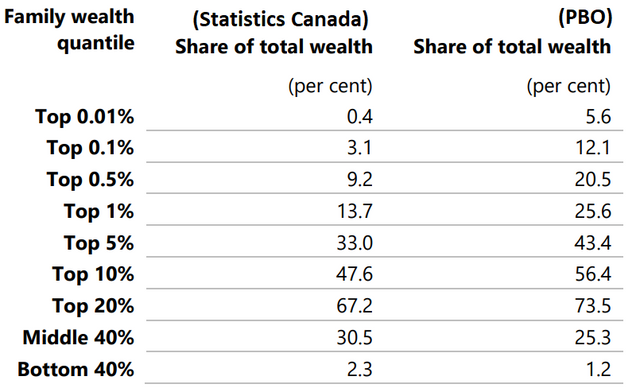
According to the PBO, the share of wealth held by the top one percent of Canadians is 25.6 percent. This is almost double the estimate of 13.7 percent given by Statistics Canada.
The following table from the PBO report shows the distribution of total wealth—the sum of financial, real estate and other assets, minus all liabilities—for 2016.
The first column in the table shows a 20 percent slice of the population (or quantile) in the wealth pyramid; the second column shows the share of total wealth held by that quantile according to Statistics Canada; and the third column the share of the same quantile according to the PBO study.
According to the new PBO estimates, the top one percent in Canada owns about as much as the poorest 80 percent. The upper middle class and petty bourgeoisie, the 9 per cent immediately following the top one per cent, own 30.8 per cent of the wealth.
The millionaires and billionaires in the richest 10 per cent of the population own a staggering $5.829 trillion.
Beyond this top 10 per cent, which requires a net family fortune of $1.4 million to be part of, the share of wealth drops drastically.
The remaining 90 per cent of the population, the vast majority, owns a mere 43.6 per cent of the total wealth, down sharply from Statistics Canada’s estimate of 52.4 percent. The poorest 40 percent have almost nothing (1.2 percent).
These new figures give the lie to the ongoing efforts of Canada’s ruling class to project the image of a “fairer” society than the “rapacious dollar republic.”
While in the United States, the world’s most unequal advanced capitalist country, the three richest people own as much as the poorest half of the population, in Canada, 44 billionaires held in 2019 a combined fortune of $141 billion, slightly more than the poorest 40 percent of Canada's population.
The difference in wealth inequality between the two countries is purely relative. On both sides of the border, the fundamental trend is towards an ever-widening wealth gap between the working class, on the one hand, and the capitalist oligarchy and the most privileged sections of the middle class, on the other. This is a global process. According to international charity Oxfam, the richest one percent of the globe’s population possesses twice as much wealth as the poorest 6.9 billion.
The closer one gets to the extremes, the wider the wealth gap becomes. The richest 0.01 per cent, just 1,500 Canadian families, hold a combined $574 billion, compared to $128 billion for the poorest 40 per cent—more than 6 million families.
The vast wealth gap has immediate and devastating consequences for people’s lives. The poorest sections of society are more likely to suffer from health problems, receive a substandard education, and die many years earlier than their ultra-wealthy counterparts.
The more accurate, and damning, picture of the profound social inequalities generated by Canadian capitalism emerges from a closer analysis of the available data on wealth distribution.
The PBO explained its methodology by comparing it to that used by Statistics Canada in its 2016 Survey of Wealth Distribution, where the wealth of Canada's richest family was estimated at “only” 27 million—this in a country known for its many billionaires.
Statistics Canada’s gross “error,” according to the PBO, stemmed from the fact that its survey was based on a questionnaire. Knowing that the wealthy generally shun such questionnaires, Statistics Canada sought to compensate by overrepresenting the regions where rich families are known to reside, but this manifestly proved to be insufficient.
The PBO adopted a more objective approach for its own study, based on the work of economists Gabriel Zucman and Emmanuel Saez, who deservedly have an international reputation as researchers on social inequality. The model developed by the PBO cross-references figures from Statistics Canada’s latest survey with the National Balance Sheet Accounts (household financial statements) and Canadian Business magazine’s list of the 100 “Richest People” (where the lowest entry had wealth of $875 million). This data is all publicly available.
According to the PBO, its study was motivated by the need to determine the financial impact of various proposals made during the 2019 federal election. One of these was an election promise of the social-democratic NDP to impose a one percent tax on the fortunes of families worth more than $20 million. In fact, it is the derisory nature of such a measure—which the pro-business, pro-austerity NDP had no real intention of implementing anyway—that emerges from the study.
The accumulation of wealth in very few hands at the top of society and widespread poverty and misery among the general population are products of the capitalist profit system. But it would be wrong merely to see objective and impersonal economic processes at work. The dramatic acceleration of social inequality over the past four decades, which is not captured by the snapshot provided by the PBO report, is the result of the brutal austerity agenda imposed by the ruling class and all of its political parties. The immense social wealth generated by the labor of working people is channeled to the top of the social pyramid through a combination of tax cuts for big business and the rich, privatization and deregulation, the gutting of public services, and constant attacks on wages, benefits and pensions.
This process has accelerated with the coronavirus crisis, which was used as a pretext for a massive bailout of big business and the financial aristocracy by the Trudeau Liberal government at a cost of over $650 billion. Between March 16 and May 16, the first two official months of the COVID-19 pandemic that claimed thousands of lives and plunged millions into unemployment, Canada’s top 5 billionaires saw their fortunes increase by nine percent, according to Forbes magazine.
Underscoring the unanimity within the ruling elite on this policy, the Trudeau government received the crucial support of the trade unions and NDP as it carried out this unprecedented transfer of wealth, which will sooner rather than later lead to a new round of savage attacks on the working class. This renewed onslaught on working people will be justified by repeating the false refrain, fully contradicted by the PBO figures, that “there is no money” for critical social services and wage increases.
The widening wealth gap in Canada as well as in the US and elsewhere points to an increasingly oligarchic society. The relentless attacks on the living standards of workers are accompanied by an assault on democratic rights at home, and a turn to militarism and imperialist aggression abroad.
To oppose this, the working class must mobilize as an independent political force in the struggle for social equality and for a workers’ government that will reorganize the economy along socialist lines to meet the social needs of all.

US Supreme Court upholds abortion access, eliminates executive watchdog and opens federal death chambers

John Burton

Traditionally, the US Supreme Court issues significant rulings the week before the summer recess begins with the Fourth of July holiday. This week will be no exception.
On Monday, the court narrowly upheld the right to abortion access in a decision widely feared to be headed in the other direction. In other rulings, however, the court strengthened the unitary executive by curtailing congressional power to create a watchdog, and opened the death chamber door for dozens of federal executions, the first three scheduled for next month.
In Monday’s most publicized ruling, June Medical Services v. Russo, the Supreme Court voted 5–4 to strike down a reactionary Louisiana law that would have regulated all of the state’s abortion clinics out of existence by requiring their doctors to have admitting privileges at local hospitals.
Joined by the three other Supreme Court “liberals,” Justice Stephen Breyer ruled that the Louisiana law was “almost word-for-word identical” to a Texas law the Supreme Court addressed in 2016. That majority decision was also written by Breyer.
Breyer demonstrated that the state’s hospital privileges requirement was a transparent pretext to close clinics for ideological reasons. The evidence presented in the trial court established that “abortion in Louisiana has been extremely safe, with particularly low rates of serious complications.”
Clinic staff and physicians testified that it proved “necessary to transfer patients to a hospital far less than once a year, or less than one per several thousand patients.” Physicians on the hospital staff admit those rare patients that experience a complication. In sum, whether the clinic “physician has admitting privileges is not relevant to the patient’s care.”
The Louisiana law, like the Texas law struck down four years earlier, had “the purpose or effect of presenting a substantial obstacle to a woman seeking an abortion.” Breyer wrote. This “undue burden” violated the constitutional right to abortion access established in 1973’s Rowe v. Wade ruling.
Despite Monday’s victory, which apparently will allow Louisiana’s three remaining clinics to remain open for the time being, efforts to choke off abortion access have succeeded in large areas of the South and the Midwest. The states of Mississippi, Missouri, North Dakota, South Dakota and West Virginia have only one clinic each. More challenges, including legislation to define a fetus with a viable heartbeat as a living human being, are currently working their way through the courts.
The 2016 decision was rendered after the death of Antonin Scalia left a vacancy. Trump replaced him with Neil Gorsuch, and then Anthony Kennedy, the justice who provided the decisive vote for striking down the Texas law in 2016, was replaced by Brett Kavanaugh. Both Trump judges were expected to vote against abortion access, and they did not disappoint.
The changes on the court were expected by many to create the five-vote bloc that could open the floodgates for state laws to deny access to abortion. However, this was, for the present, frustrated by Chief Justice John Roberts, who provided the deciding margin in Monday’s ruling, not because he agreed with Breyer’s reasoning, but out of an adherence to “stare decisis,” the doctrine that precedents should be followed in all but the most exceptional cases.
Roberts’ position suggests that the overruling of Rowe v. Wade, a passion of the Republican right, may require more changes of personnel on the high court. Some have hoped publicly for the death of Ruth Bader Ginsburg so that Trump can replace her with a third anti-abortion judge.
Regardless, the Supreme Court has become a focal point of the 2020 presidential campaign. Chief Justice Roberts, whose own ideological leanings are extremely conservative, is maneuvering between the two factions on the court with the goal of protecting the institution’s credibility, which has been in tatters since it stole the election for George W. Bush 20 years ago.
Chief Justice Robert’s conduct is reminiscent of Justice Owen Roberts—no relation—an appointee of Herbert Hoover who regularly sided with the reactionary “four horsemen” to block New Deal legislation. In response, Franklin D. Roosevelt proposed legislation to expand the Supreme Court to 15 justices so as to create a new pro-New Deal majority. But Roberts unexpectedly voted in 1937 to uphold the constitutionality of a minimum wage law, which became known as “the switch in time that saved nine.”
Today, however, US capitalism lacks the resilience it had in the 1930s, and petty maneuvers will not save it from its own internal contradictions.
In a second ruling, the Supreme Court, again by a 5–4 vote, invalidated congressional legislation aimed at protecting the director of the federal agency created in response to the 2008 financial crisis to regulate subprime mortgages and other forms of consumer debt that crashed the world economy. The legislation said the head of the Consumer Financial Protection Bureau could not be removed by the president absent good cause.
Chief Justice Roberts’ opinion in Seila Law v. Consumer Financial Protection Bureau, joined by the four right-wing justices, found that the legislative effort to shield the director from political pressure violated the separation of powers. The decision provides a sweeping rationale to defang congressional watchdogs and represents a further slide toward the unconstrained “unitary executive” coveted by the extreme right.
Finally, the Supreme Court denied by a 7–2 vote a petition for certiorari by four condemned inmates to review a 2–1 lower court decision that rejected their challenge to the legality of federal execution protocols. Justices Ginsburg and Sonia Sotomayor voted in favor of the Supreme Court hearing the case, which requires four votes. All the others, including Breyer and Elena Kagan, voted against. There are no opinions explaining the reasoning.
“Even as people across the country are demanding that leaders rethink crime, punishment and justice, the government is barreling ahead with its plans to carry out the first federal executions in 17 years,” Ruth Friedman, an attorney for Daniel Lee, the first inmate scheduled to be executed next month, said in a statement.
The whole affair is ghoulish and morbid from top to bottom. Life sentences without the possibility of parole insulate society from truly dangerous persons. Capital punishment continues to exist to terrify workers, who are the exclusive victims of the barbaric, antiquated and arbitrary practice.
Carrying out a Trump agenda to reinstate and accelerate executions, dating back to the notorious frame-ups of the “Central Park Five,” Attorney General William P. Barr announced last summer that the United States Department of Justice will kill inmates by injecting a single drug, pentobarbital. After considering evidence, the lower court ruled that the new protocol violated the 1994 Federal Death Penalty Act, which requires that executions be carried out “in the manner prescribed by the law of the state in which the sentence is imposed.” State law requires a three-drug cocktail.
Two appellate judges newly appointed by Trump reversed, reinstating the executions. One ruled that the statute referred only to the general method of execution: in this case lethal injection as opposed to hanging or electrocution, for example. The other Trump justice ruled on a separate ground, asserting that the statute referred only to broad state laws and not to the specific execution protocols. Such is the small change of sophistry on which lives can turn!
The federal government has carried out three executions since restoring the death penalty in 1988, the last in 2003. There are now 62 prisoners on federal death row, and the door to the execution chamber is wide open for them.

Reopening in the Philippines causes coronavirus surge

Owen Howell

The Filipino government is rapidly lifting lockdown measures, even as the spread of the coronavirus across the country has entered a dangerous new stage. Last week, the Philippines registered the fastest increase in new infections in the Western Pacific region over the previous fortnight, according to data from the World Health Organisation (WHO).
Between June 16 and June 27, the number of confirmed COVID-19 cases rose by 8,143, placing it ahead of Singapore, China and twenty other countries in the region.
Over a two-week period, the country has seen more than 500 cases nearly every day. Last Tuesday tallied a record-high of 1,143 new cases. The total number of confirmed infections stands at 35,455, with 1,244 fatalities.
The spike in cases has mostly occurred in the two most populous metropolitan areas in the country: the capital Metro Manila and Cebu City. The Department of Foreign Affairs also reported a total of 8,433 cases and 538 deaths among the extensive population of migrant Filipino workers living outside of the country.
In a statement this week, the Department of Health defended the government’s pandemic response, citing the Philippines’ mortality rate of 3.5 percent as a positive outcome, compared with the global rate of 5.1 percent.
It claimed that “all agencies are tasked to closely monitor the rise in cases and strengthen our response through localized actions, especially in emerging hotspots.” Such a statement serves merely as a cover for what has been an incompetent and indifferent response to the health crisis on every front.
In fact, the government department initially made an error in claiming the Philippines had a lower death rate than neighbouring countries. In an updated statement, it corrected itself by noting that Singapore recorded 4.4 deaths per million people, while the Philippines has 11.34. The high death toll compared with confirmed infections demonstrates that the spread of the virus is far greater than official figures indicate.
The Philippines’ testing rate is ranked 136th in the world. With a population of 109.5 million people, it has conducted only 690,799 tests.
The recent uptick in Philippine cases coincides with the government’s easing of lockdown measures and a limited increase in testing capacity, still limited to targeted swabbing. The government is far from reaching its target of 30,000 daily tests, with only an average of 12,000 to 14,000 conducted per day.
According to a study by University of Philippines health experts, the number of confirmed cases may reach 60,000 by July 31.
In an effort to begin reopening the economy early this month, the Duterte administration was scheduled to end all partial lockdown measures, known as the general community quarantine (GCQ) phase, on June 15. But confronted with pressure due to a precipitous rise in infection rates, the government was compelled to extend GCQ until June 30, after which a full-scale reopening will commence.
Metro Manila, as well as other major cities and populous rural areas throughout Luzon, Visayas and Mindanao, has been under GCQ, a phase that allows public transportation, since June 1. The rest of the country has been downgraded to modified general community quarantine (MGCQ), under which public transportation may resume all operations, non-essential businesses can reopen at half capacity and large public gatherings are permitted.
On June 16, President Rodrigo Duterte returned Cebu City to the strictest level of lockdown procedure, or enhanced community quarantine (ECQ). Epidemiologists had correctly predicted that Cebu province, on the central Visayas Island, would become the new virus epicentre, due to the early relaxing of social restrictions. But the decision came too late, as the virus in Cebu City has emerged again with renewed force.
Economic concerns have been the key motivating factor behind the government’s reckless and premature reopening. Presidential Spokesman Harry Roque earlier said there was a need to “balance” financial considerations with ensuring public safety. The government’s actions, however, have made apparent its prioritisation of the profits of big business over the health of workers, who are being forced back on the job in the millions.
The Philippine central bank Bangko Sentral ng Pilipinas (BSP) has this week projected the country’s GDP to contract between 5.7 and 6.7 percent, as a result of the pandemic’s economic impact.
BSP Governor Benjamin Diokno expressed the thoughts of the entire Philippine corporate oligarchy when he announced worriedly: “The negative impact of the COVID-19 crisis is harsher than what was originally thought.” Two more quarters of GDP contraction would potentially put the Philippine economy into recession.
Metro Manila and the whole island of Luzon, the virus epicentre, account for more than half of the country’s population and generate over two-thirds of national GDP. Consequently, it has produced the overwhelming majority of COVID-19 cases and deaths. The latest surge, however, is most heavily concentrated in Cebu City.
Eduardo Año, vice-chairman of the coronavirus task force, remarked yesterday that Cebu’s infection rate has now surpassed that of Metro Manila, a megacity spread out across 17 separate administrative units.
In keeping with the government’s line of blaming new spikes on the population itself, Año addressed Cebu residents: “We’d also like to enjoin and ask the people to observe the health standards protocols. There are so many people violating the quarantine protocols, not wearing masks, not observing physical distancing. In fact, there was even a fiesta celebration the other day in Barangay Basak, San Nicolas.”
This ignores the fact that government officials have consistently provided mixed messages through public announcements and mainstream media outlets, while also pushing to abandon any public health measures in line with corporate demands.
Cebu City hospitals, meanwhile, are severely understaffed and have even run out of beds for COVID-19 patients. Filipino Nurses United issued an appeal to the government on Sunday, calling for the mass hiring of medical workers in Cebu, with adequate salaries and benefits.
Filipino health workers have had to labour under gruelling conditions, facing the dangers of contracting the virus and fatigue from overwork. With no substantial economic aid from the government, and a continual lack of appropriate medical supplies and personal protection, they are unprepared to care for an ever-increasing influx of patients.
The health department on Sunday sent a miniscule contingent of just 32 medical workers to augment Cebu’s healthcare capacity. But while its investment in healthcare has been virtually non-existent, the government is dramatically increasing its military presence wherever the virus is present.
Año explained that Cebu would experience a massive deployment of national military and police forces to “implement the strict observance of lockdown.” Drones are also being deployed to survey the city.
As the past few months have illustrated, Duterte is utilising the pandemic crisis to enforce increasingly authoritarian police state measures, overseeing thousands of warrantless searches and arrests.
In a fascistic television address on April 16, Duterte threatened martial law, stated: “My orders to the police and military… ‘If there is trouble and there’s an occasion that they fight back and your lives are in danger, shoot them dead…’ Is that understood? Dead. Instead of causing trouble, I will bury you.”
His comments came hours after the arrests of around a dozen residents in a poor district of Manila for protesting about inadequate government food aid. The incident provoked mass outrage on social media, with the hashtag #OustDuterte trending on Twitter. On hearing about the popular anti-government sentiment, Duterte responded that only the military and the police could remove him from power.
The government finds itself confronted with opposition from a working-class population that is increasingly unemployed and starving, in the cities and countryside alike. Cabinet Secretary Karlo Nograles made the shocking announcement on Sunday that the hunger rate had nearly doubled in the previous six months.
According to a national survey in December 2019, around 8.8 percent of households, or roughly 2.1 million families, experienced involuntary hunger once in three months. The latest figures show this is now 16.7 percent.

Dutch government exposed by disastrous handling of COVID-19 pandemic

Harm Zonderland & Parwini Zora

When the pandemic hit the Netherlands in late February, the Dutch government adopted a reckless wait-and-see posture, even when it was clear that COVID-19 was potentially fatal. After allowing the virus to spread freely for several weeks, it imposed a partial lock-down with school closures and told workers to work from home if possible as bars, restaurants and sports clubs closed. This was promoted as an “intelligent lock-down,” but it amounted to pursuing a “herd-immunity” strategy.
This callous, politically criminal policy involved deliberately allowing the virus to run unchecked throughout the population, with no vaccine available and no proof that surviving the disease grants immunity. Still, only a tiny minority of the Dutch population has become infected with COVID-19. “Herd-immunity,” if it were attainable, requires at least 60 percent of the population to be infected. With a mortality rate above 1 percent, that would entail sacrificing over 100,000 lives.
The Dutch ruling elite’s central concern is to ensure the continued accumulation of profit for the capitalists at the expense of the working class, the vast majority of the population. While office workers could work from home, factory and logistics workers could not. They were largely kept on the job, with the complicity of the trade unions, even in jobs where social distancing was not feasible and personal protective equipment (PPE) unavailable. If factories and logistics hubs partially closed, it is only because raw materials and parts imports dried up due to international lockdowns.
Whatever meagre measures were half-heartedly taken to prevent an explosive spread of this highly contagious and fatal virus were implemented on behalf of the financial aristocracy to force workers back to work to produce profits for the banks. A “back-to-work” campaign, as in Germany or the United States, did not occur in the Netherlands, as the majority of the workforce never stopped working in the first place—even during the worst of the pandemic.
Despite the “social distancing” measures, the Dutch government’s response to COVID-19 is not so different from the Swedish government. Stockholm refused to impose social and travel restrictions, a decision which, according to Swedish state epidemiologist Anders Tegnell, led to preventable deaths. Sweden counts over 65,000 confirmed cases and more than 5,200 deaths, in a population of only 10 million.
Yesterday, the Netherlands counted 50,223 confirmed cases of COVID-19, 11,871 hospitalizations and 6,107 deceased. What do these numbers say of a small, wealthy European country of 17 million inhabitants whose health care system is lauded as “among the best in the world”?
First of all, these numbers are major underestimates due to the very limited testing policy in recent months. Tests were at first only available to people with severe symptoms and health care workers who came into direct contact with the virus. However, even health care workers faced bureaucratic difficulties in applying for tests and appointments. More than half of the testing capacity was not utilised in the first two months, resulting in a dangerous spread and a near-collapse of the health care system.
According to a survey held by the trade unions among 6,600 health care workers, 85 percent said they had been overloaded and over half felt physically and mentally exhausted. Many of them saw the nightly “round of applause” for health care workers as a cynical gesture. The Rutte government proposes a one-time €1,000 one-time “bonus” for health care workers, but many considered this to be too little, too late.
Through decades of austerity and the resulting privatisation of health care to massively enrich the financial oligarchy, health care workers are robbed of decent wages, secure jobs, adequate staffing levels and even PPE.
As a result, health care workers were insufficiently protected during the first wave of the pandemic due to PPE shortages. Nearly 17,000 health care workers have tested positive for COVID-19 over the past months, or almost one-third of the total of confirmed cases; 11 have died. More than 10 percent of those who tested positive, and over half of those hospitalised, have died. The Dutch death toll is shockingly high compared to Turkey which, with nearly five times the Netherlands’ population, has fewer dead: 5,097.
This is a direct result of privatisation and austerity policies that have been pursued across Europe for decades. To maximise profits, PPE stockpiles built up to confront pandemics such as this one were used up and only purchased, and produced, on demand. Layoffs and wage cuts resulted in severe under-staffing and insufficient capacity. Only 1,050 intensive care (IC) beds are available, with IC nurses and doctors caring for two, sometimes three patients each.
Despite warnings of a coming second wave of COVID-19 infections, the Dutch government shows no signs of even considering making necessary preparations.
The coalition parties headed by the neo-liberal Peoples Party of Freedom and Democracy (VVD) led by Prime Minister Mark Rutte, have refused to increase health care budgets. Economic “support” measures meant for workers, including wage subsidies, failed to reach large swathes of workers, mostly those under the age of 25 on precarious flex-contracts. It seems likely those subsidies will not be prolonged after October.
In contrast, Rutte’s promise to do whatever his government could do applied fully and immediately to “national icons” such as KLM and the Schiphol Airport. The Dutch government has pledged state guarantees for loans up to €3,5 billion for KLM alone, the Dutch wing of the Dutch-French airline group Air France-KLM, while the French government pledged €7 billion for Air France. In an empty show of goodwill, the CEOs of KLM and Schiphol publicly refused their bonuses, though they still raked in 30 times the salary of the lowest paid worker in the company.
Military expenditures also continue unabated. This year’s €11 billion military budget will be largely spent on upgrading and modernising the Dutch army, and to expand the F-35 Joint Strike Fighter fleet from 37 to 46 planes. Almost €200 million is spent on deployment, and nearly €10 million allocated to “secret” projects.
Dutch mainstream media, both the state-funded NOS and commercial newspapers such as De Volkskrant, Telegraaf and Algemeen Dagblad, function as government mouthpieces. Their very sparse criticisms of the official handling of the pandemic lean to the right, focusing on inciting nationalism and xenophobia. Without holding the ruling elite in any way accountable for its mismanagement of a historic public health crisis, media pundits have consistently called to “get the economy going again” and to lift limited lockdown measures.

The poor in Germany have a higher risk of falling sick from COVID-19

Elisabeth Zimmermann

The poorest people in Germany, including the long-term unemployed and recipients of Hartz IV social welfare, have an 84 percent higher risk of becoming seriously ill with COVID-19 and requiring hospitalization. Among recipients of unemployment assistance—that is, those in the first year of unemployment—the risk is 17.5 percent higher than among workers with regular employment.
This is the conclusion drawn in a study conducted by the Institute of Medical Sociology of the University Hospital of Düsseldorf and the health insurance fund (Krankenkasse) AOK Rheinland/Hamburg, which was reported in the ARD-Mittagsmagazin on June 15.
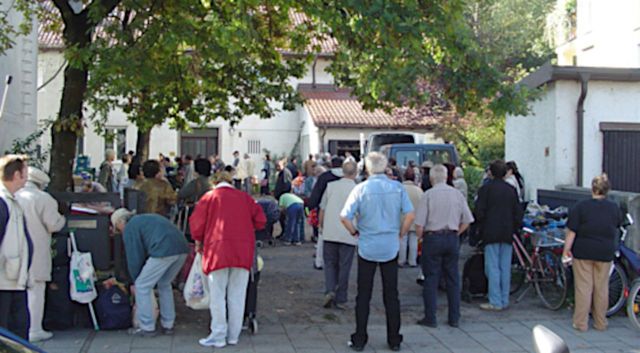
Food bank (Tafel) in Munich
The study analyses data from nearly 1.3 million insured individuals and examines whether the short-term and long-term unemployed require hospital treatment more often than those with employment. The study covers the time period from January 1 to June 4, 2020.
The exploratory analysis is intended to serve as a starting point for further research into the social dimensions of the COVID-19 pandemic, explains the principal author of the study, Professor Nico Dragano of the University Hospital of Düsseldorf. “Should these results be confirmed, this would be further evidence for distinct social differences in disease affliction in Germany,” Dragano says.
Studies from recent years demonstrate that the poor die younger than the rich. The life expectancy for men living in poverty is on average 10 years lower than among the rich. For women living in poverty, the reduction in life expectancy is eight years. Poorer people commonly suffer more seriously from diabetes and illnesses of the heart, among other medical afflictions. Often they cannot afford sufficient or optimal treatment and are under extreme pressure from their circumstances.
The German federal government and the federal health authorities have not commented on the initial findings of the University of Düsseldorf investigation.
As in every country in the world, the COVID-19 pandemic in Germany presents an especially life-threatening danger to the working class, particularly its poorest and most vulnerable layers. The latest and so far largest outbreak of COVID-19 in Germany, at the Tönnies meatpacking plant, where 1,500 workers have thus far been infected, is a particularly egregious example.
The data worldwide demonstrate that the coronavirus pandemic especially affects the working class and the poor. According to the Office of National Statistics (ONS) in Great Britain, the death rate from the virus is more than twice as high in socially disadvantaged parts of the country than in the least socially disadvantaged parts.
The director of the World Health Organization (WHO), Tedros Adhanom Ghebreyesus, has addressed this, stating: “A crisis can exacerbate existing inequalities, which is seen in the higher rates of hospitalization and deaths among specific social groups.”
Likewise, the Institute for Employment Research (IAB) of the German Federal Employment Agency published a report on June 10 on individuals in the basic welfare program that makes clear why the crisis hits these people particularly hard. The report points out the cramped living conditions of poorer people, the lack of internet access and the danger of social isolation, since many live alone. The study is based on numbers provided by the Panel Study on the Labour Market and Social Security (PASS) from the years 2017 and 2018.
Living in close quarters, it is difficult or impossible to maintain social distancing protocols, especially when children cannot go to a school, kindergarten or playground. Working from home, children’s participation in school instruction is made difficult by a lack of space or separate rooms. Families with children represent roughly a third of those drawing social welfare. Forty percent of them live in crowded living conditions.
Roughly a fifth of those drawing social welfare are over 60. For them, the danger of a severe case of COVID-19 is greater and the maintenance of social distancing more important. The danger of social isolation is for them especially great.
Almost half of those drawing social welfare live in households without another adult. In households without social welfare, by comparison, only one in four adults lives alone. Whether or not one is socially isolated depends on one’s social network, and thus on one’s access to computers and the internet.
In times of stay-at-home orders and contact bans, computers with internet access and smart phones are more important than ever for information and social interaction. With schools closed, children’s digital participation in classes and programs is dependent on access to the internet.
While 87 percent of people without welfare have access to an internet-capable computer, this is true for only 70 percent of those drawing welfare. In households with school-aged children, the rate is 78 percent. That means that 22 percent of these households have no computer with which to participate in home schooling. Ninety-seven percent of households with children without welfare have access to internet connections.
The Federation of Food Banks (Bundesverband der Tafeln) is registering increased demand from those needing help. Of the 947 food banks in Germany, 120 are still closed and the demand is enormous. Many of the volunteers assisting in food distribution, because of their age or their state of health, are themselves among the highest-risk groups for COVID-19.
The chairman of the Federation of Food Banks, Jochen Brühl, stated: “In recent weeks we have experienced a new form of need.” In particular, younger people have sought help because of existential need, among them many students, including those who normally work while at school in the gastronomy and service sectors. Due to the closing of restaurants and cafes, most have lost their jobs.
At the end of 2019, food banks nationwide had 1.6 million regular users, roughly a third of whom were children and another third older people whose retirement benefits were not sufficient to support them.
Those in low-wage sectors and those who, without sufficient protection, come into contact with many people are at particularly high risk of being infected with COVID-19. This includes nursing staff, cashiers, bus drivers and workers in logistics firms such as the parcel service DPD and at logistics centers such as Amazon. In these areas, there have been repeated breakouts of the disease. The companies are trying to suppress information on the number of infections occurring in their workforces. In this they receive the full support of the unions.
IG Metall and other unions are often the strongest advocates of ramping up production in auto and other industries where closures were implemented during the lockdown. Workers who are concerned for their health and that of their loved ones cannot expect any support from these organizations. They must take the fight for their security and their basic interests and needs into their own hands.
The coronavirus pandemic throws a spotlight on social inequality and exacerbates it. While the federal government throws hundreds of billions of euros into the maw of the banks and corporations, there is no support for those already living in difficult conditions, whose ranks are swelling due to mass redundancies and the destruction of social programs.
With the irresponsible back-to-work campaign, millions of workers are forced to risk their health to generate billions for the rich, the corporations and the banks.

Italy hands Fiat Chrysler a multi-billion-euro bailout

Allison Smith

This week the Italian government issued a decree under its Rilancia Italia (Relaunch Italy) COVID-19 bailout scheme guaranteeing €6 billion in loans to the Fiat Chrysler Group Italy (FCA).
Although FCA restarted operations in Italy at the end of April, the pandemic virtually erased all demand for new vehicles, prompting FCA to halt most production. The company said it requested the loan—which will be funded by a consortium of banks and issued by Intesa San Paolo—to support all of the Italian entities within the FCA Group to provide funding for manufacturing plant labour costs, pay suppliers and fund investment in research and development.
As millions of Italians remain out of work, struggling to make ends meet with only a one-time €600 COVID-19 emergency payment and limited unemployment benefits, the Italian government is making billions of euros available to big business through the Rilancia funds. At the same time, there are little or no guarantees for the Fiat Chrysler workforce in Italy or elsewhere around the planet. The bailout will be financed by an intensification of the existing levels of European Union (EU) austerity on workers in Italy and attacks on jobs at FCA internationally.
The pandemic—which has not been eradicated in Italy—has claimed 34,716 lives and infected more than 240,000 people. The World Health Organisation expects at least another 10,000 deaths in Italy by October of this year. Health care services remain dedicated primarily to confronting the pandemic, with routine and non-COVID health care services still very limited.
While the government has still not posted complete unemployment statistics, it is estimated that by the end of this year official unemployment will be over 12 percent. This does not include the millions of workers in the casual economy who are being left with no work and no government aid.
According to the most recent ISTAT report, as of 2016, the automotive industry accounts for 4.4 percent of Italy’s GDP, generating more than €70 billion in revenue, and employing 1.2 million workers across 3,000 companies operating in the sector.
Expecting a 35 percent drop in sales this year, FCA—which is headquartered in the Netherlands but runs several plants in Italy—qualifies for the Italian government scheme, which provides more than €400 billion in liquidity and bank loans to companies deemed essential to the economy. In addition to the loan guarantee, the government is also expected to boost sales by offering thousands of euros in incentives to consumers for the purchase of low-emissions Euro 6 vehicles.
Italian Economy Minister Roberto Gualtieri claimed that, in exchange for the loan guarantee, FCA would have to meet “commitments on investments and jobs,” but he declined to define exactly what these commitments are.
The only temporary constraint is that the company has to wait until 2021 for its planned distribution of €1.1 billion in ordinary dividends to its investors. Last year, FCA reported €2.12 billion in earnings before interest and tax (EBIT) and an adjusted operating profit for the year of €6.67 billion, from which the company distributed $2 billion in dividends to investors.
In addition to the ordinary dividend, FCA will also pay its shareholders a special dividend of €5.5 billion just before the closing of the ongoing merger with French automaker Peugeot (PSA), which is expected to conclude in March of next year. The $50 billion merger will make FCA-PSA the world’s fourth largest carmaker.
A source in Italy’s ruling 5 Star Movement (M5S) hypocritically told the Reuters news agency, “Most of us oppose the payment of the maxi-dividend by FCA.” However, the government is not preventing the distribution. On the contrary, it is facilitating it.
For their part, the Italian trade unions merely lamented that the bailout comes in the form of loans rather than government grants. Roberto Di Maulo, head of the Fismic union, said the lack of direct financial support by Italy’s government forced Fiat Chrysler to seek a bank loan. Marco Bentivogli, leader of the FIM-CISL union, said that the entire automotive sector should receive full government support.
Prior to the COVID-19 crisis, executives from FCA and PSA claimed that there would be no plant closures or production job losses as a result of the merger. However, industry analysts estimate that significant job cuts will hit the combined workforce of 400,000 employees once the companies consolidate vehicle platforms, reduce factory capacity and eliminate redundancies in marketing, IT, logistics and administrative operations, particularly in Europe. The COVID-19 crisis will likely lead to even more job losses.
Auto companies in Germany, France and the United States are using the current crisis to implement restructuring measures planned long ago. Even before the pandemic, experts anticipated the loss of hundreds of thousands of auto industry jobs. In the autumn of 2018, a study by the German Social Democratic Party’s Friedrich Ebert Foundation concluded that a rapid switch to producing electric cars would endanger 600,000 jobs and bankrupt most suppliers in the German auto industry. At the same time, any “postponement of system innovations” would have equally catastrophic consequences.
In the US, Canada and Italy, Fiat Chrysler and their respective trade unions face stiff resistance from workers who are being forced back to work during the pandemic with virtually no meaningful protections against infection on the job.
This past March, the wildcat strike wave across Italy that forced the government to implement a lock-down began with a walkout at Fiat Chrysler’s Pomigliano plant in Naples, Italy, which employs 6,000 workers. Autoworkers, kept on the line to produce luxury Alfa Romeo cars for the super-rich, walked out spontaneously at the beginning of the afternoon shift at 2 p.m. on Tuesday, March 10, protesting unsafe conditions.
The next day, FCA announced the closure of the Pomigliano plant, along with facilities in Melfi, Atessa and Cassino through March 14. FCA management claimed it would sanitize the plants, so it could then try to force workers back to work—demonstrating their contempt for the lives of workers and staff at the plants. However, a partial lock-down strategy was ultimately implemented. That same evening, Prime Minister Conte was compelled to announce heightened emergency measures to address the contagion, such as the closure of restaurants and stores
As strikes erupt against the return-to-work policy imposed by FCA and the United Auto Workers (UAW) union bureaucracy in America, it is critical to unify the struggles of the working class internationally against the diktat of the banks and the corporate elite.
As in America and around the world, the Italian government has yet to define how its COVID-19 recovery scheme will provide support for individuals and families. However, it is clear that big business will benefit from a virtually unlimited supply of cheap cash and tax breaks, while workers are being told to risk their lives to provide profits for the ruling class.