1 Oct 2020

Protest strikes in German public sector and local transport

Marianne Arens & Andy Niklaus


Protest strikes are currently taking place in day-care centres and hospitals, town halls, government offices, savings banks, garbage disposal companies and elsewhere as part of the collective bargaining round for 2.3 million public sector workers. On Tuesday, public transport workers also struck several federal states at the same time.

The strikers are all “essential” workers who were praised and applauded as “coronavirus heroes” in the spring. They rightly expect not only better health and safety at work in face of the pandemic, but also better salaries and working conditions. “I cannot pay my rent from applause alone,” as one nurse remarked. The vast majority of the population agrees. A recent Forsa flash survey shows that almost two-thirds of those interviewed (63 percent) sympathise with the protest strikes.

On the other hand, the public sector employers are brutally abusing the strikers. Niklas Benrath, the new chief executive of the Federation of Municipal Employers’ Associations (VKA), essentially placed protesting workers in the same category as terrorists. He described Friday’s strikes as an “attack on the general public” and said it was “irresponsible, especially at this time of crisis ... to cover the whole country with a wave of strikes.”

The conflict, however, is marked by a profound contradiction. The token strikes are being led by the same trade unions that support the back-to-work policies of the government and have played a key role in imposing social cutbacks for years. The trade union officials, who also sit on all the major company supervisory bodies, have long been holding backroom talks with politicians to agree on supposedly necessary sacrifices.

Trade union and Social Democratic Party (SPD) members sit on both sides of the negotiating table. Ulrich Mädge, mayor of Lüneburg, who, in his capacity as VKA president, rejects the demand for a 4.8 percent wage increase as “completely excessive,” has been a member of the service union Verdi for many years. Like Verdi Chairman Frank Werneke, he is a member of the same SPD, which under Chancellor Gerhard Schröder, implemented the most comprehensive social cuts in post-war German history with the “Agenda 2010” attacks on welfare and labour rights.

After billions of euros were handed over to the banks and corporations through coronavirus aid packages, the public coffers are empty. What the municipal, state and private employers are planning with the help of Verdi is to plug the holes in their budgets at workers’ expense, as was made clear last week in a Facebook post under the hashtag #TVN2020.

According to the post, local transport companies in Mittelbaden-Nordschwarzwald presented a two-page “horror list” of demands which would result in a dramatic deterioration of working conditions. Among other things, they are demanding an increase in weekly working time to 40 hours, the abolition of Christmas Eve and New Year’s Eve as days off, a reduction in Christmas bonuses to 70 percent, the abolition of holiday pay and the future permissibility of compulsory redundancies.

The employers’ brazen actions are no coincidence. They feel encouraged by Verdi’s latest oath of loyalty. In the last few days, the service sector union completely sold out the wage dispute at Deutsche Post; the EVG union did the same on the railways. In both cases, they have imposed wage sacrifices and long-duration contracts on workers to prevent strikes in the coming years.

In the public transport sector (ÖPNV), Verdi has reacted to the growing discontent that has recently been expressed in major strike movements in Berlin, Saarland, Hesse and elsewhere. Under the slogan TVN2020 (collective agreement for local public transport 2020), it has taken the simultaneous expiry of the separate collective agreements at the end of June 2020 as an opportunity to call for a nationally uniform collective agreement. This is to apply to 87,000 drivers in 130 transport companies nationwide. According to Verdi, this should put an end to “unequal treatment in the federal states.”

The union links the demand for a national collective agreement with other demands: 30 days holidays, harmonisation of working hours to 36.5 hours with full wage compensation, a membership bonus of €500 for Verdi members. According to the union, such incentives should make both the profession of driver more attractive again in the interest of a climate-friendly “transport transformation” and Verdi membership.

Verdi is supported by various pseudo-left groups, such as Socialist Alternative (SAV), affiliated to the Socialist Party in the UK. They cheered joint appearances by Verdi functionaries with Fridays for Future activists last week as a step towards a “well-financed, developed public transport system with good wages and working conditions.”

The union, however, does not have the slightest intention of fighting for decent wages and working conditions. It is responsible for the miserable conditions which currently prevail in public transport. The situation is the direct result of an orgy of deregulation and privatisation since the 1990s, which was actively supported by Verdi and its predecessor organisations.

They have pitted federal and local authority employees against those of the Länder (federal states) public sector workers against those in private companies and signed hundreds of company collective agreements. Workforces were divided, existing wages were cut and entry-level wages were massively reduced. Since then, more than 15,000 jobs have been lost in local public transport, and hundreds of bus and train companies have been privatised.

Verdi will not consider engaging in any united industrial action worthy of the name. Although the public transport negotiations coincide with those of the rest of the public service, and the protest strikes even coincide with those in the day-care centres and clinics, Verdi conducts the negotiations for both separately.

Last week, the public sector employers flatly rejected the demand for a nationwide uniform collective agreement for public transport. Verdi will accept this and is looking for a formula to gloss over a planned sellout. The third round of negotiations will take place on October 22. Meanwhile, negotiations on urban transport continue at the state level.

The union is miles away from conducting joint nationwide industrial action. Rather, its manoeuvres are aimed precisely at preventing real industrial action and a social rebellion. As the Sozialistische Gleichheitspartei (Socialist Equality Party, SGP) has long emphasised, workers can only protect and effectively defend their interests if they take up a fight against the unions. They must form independent action committees and link up with fellow workers throughout Europe to prepare for a European-wide general strike.

Just how little Verdi regards workers’ lives and health can be seen by its handling of the coronavirus pandemic. Although the COVID-19 case numbers have been rising rapidly for weeks, it has not tabled any demands for better protection against the virus. Like nursing staff in hospitals and old people’s homes, educators in day-care centres and teachers and social workers in schools, the drivers in crowded buses and trams are being exposed to the virus daily.

Verdi agrees with the government that there should be no further shutdown to halt the spread of the coronavirus. It has embraced the deadly “contagion” and “herd immunity” strategies. On numerous Verdi and German Union Confederation (DGB) websites, under the heading “Coronavirus—What employees need to know,” members are told, “Injuring oneself or contracting an illness are part of general life risks, whether at work or during leisure time. This also applies to employees with a previous illness that does not make them incapable of working, but with which they are exposed to a higher risk of developing a more serious course of illness due to a coronavirus infection.”

One worker told the WSWS that in Munich, union representatives unofficially spread the word that those striking should stay home during the strike—to give the public a coronavirus-correct image. An internal memo instructed them to stay home during the protest strike “because they will be looking at us. The press will be there and the WG [employers] will also see if we comply with the coronavirus rules.”

This instruction was all the more cynical as the union had not yet shown any interest in the coronavirus rules. “Not because of coronavirus—only because of the press and the employers should we stay at home. They don’t care about our lives,” was the worker’s comment.

In another comment, a bus driver wrote how Verdi personnel representatives in Berlin urban transport (BVG) deal with coronavirus: “They are not bothered about representing our interests, only their own. ... This [protest strike] is just a show to attract members. And our personnel representatives have long since given up. They only fight for themselves, so that they don’t have to go out on the road.”

A wave of teacher protests spark staffing shortages and school closures across the US

Emma Arceneaux


School districts across the US are confronting a wave of opposition from teachers and other education staff as they continue to herd students back to campus amid the raging COVID-19 pandemic. According to an independent K-12 aggregate, the COVID Monitor, which tracks cases from school and district reports and verified public reports, there have been 31,584 confirmed cases among staff and students as of September 27. In addition to protests and work actions, states across the US are facing severe teacher and substitute vacancies. Teacher resignations, absences, and walkouts in addition to increasing outbreaks among students and staff are forcing schools to switch back to remote learning, at least temporarily.

Arkansas | Cases: 82,755; Deaths: 1,350

In a brave act of protest, at least 166 teachers in Little Rock, Arkansas refused to go to school for in-person learning on Monday. The teachers, under the representation of the Little Rock Education Association (LREA), are demanding that the school district switch to remote-only instruction, citing safety concerns, inadequate cleaning, inconsistent case reporting, and increasing COVID-19 cases in the district and statewide.

The union has since backed off the demand, after blowback from the school district. Sixty-nine of the teachers who had supported the action received notice they would be disciplined.

In the district, there have been thirty-three positive cases among students and six among staff since September 21. Another 190 have been quarantined. Two schools have had to move to online-only instruction temporarily due to cases. Statewide, there are 717 active cases in K-12 schools and 36 schools are under ‘modified instruction’ due to the pandemic, of which 26 only began instruction last week.

California | Cases: 818,000; Deaths: 15,971

Educators in at least four Orange County unified school districts—Newport-Mesa, Irvine, Saddleback Valley, and Los Alamitos—are standing firm in opposition to returning to work under unsafe conditions, defying their own unions’ recommendations with Los Alamitos teachers who were set to strike September 29. Very little information has been published as to the status of the strike.

In advance of the prospect of teachers not showing up on Tuesday, the board passed an emergency resolution authorizing the hiring of substitute teachers. The board already had 20-30 substitutes ‘in-house’ including counselors, administrators and assistant principals from the district’s schools.

Ten out of 29 school districts in the county have either recently reopened or are reopening this week following Democratic California Governor Gavin Newsom’s “Blueprint for a Safer Economy” order as well as clearance from local authorities.

Colorado | Cases: 70,458; Deaths: 2,058

School districts in Colorado are facing a massive substitute teacher shortage. In Alamosa School District, the substitute pool has decreased by half, down to only 25 teachers. Denver Public Schools, the largest district in the stage, has also lost about half of its substitute pool due to health and safety concerns.

The Colorado Sun reports that one district has resorted to asking parents to volunteer as substitutes. Other districts are turning to their own teachers, staff and administrators. Alamosa is offering teachers a paltry $25 dollars to forego their planning periods to cover other classrooms. Many schools worry that a single coronavirus case could lead to a temporary closure.

Georgia | Cases: 300,000; Deaths: 6,836

On September 17, teachers in Fulton County used their lunch break to protest the district’s plan to return to in-person instruction. Around thirty teachers at Riverwood High School walked out during lunch. Disparate reports have down that dozens or more teachers at multiple other schools in the district also walked out in solidarity. French teacher Brett Edeker, referring to the illegality of collective bargaining and strikes by public employees in Georgia, said, “We’re trying to play within the rules of our job, we’re fearful of retaliation, so we’re trying to do it at a time that doesn’t impact students.”

A survey conducted by the district found that 83 percent of teachers “agreed” or “strongly agreed” that schools should remain online for the foreseeable future; 72 percent of staff felt the same. In a letter to employees of the district, Superintendent David Dude acknowledged the overwhelming lack of support by teachers and staff for a return to in-person instruction but suggested this was due to an erroneous lack of trust in the district’s consideration of the current data about the virus.

Addressing the concern among teachers, consistently voiced by educators across the country, that concurrent teaching (of botch in-person and online instruction) would be extremely taxing, Dude callously said, “Of course we can find examples where it is not going well, but since when do we focus on the poor exemplars?”

Hawaii | Cases: 12,436; Deaths: 133

Already facing a teaching shortage before the pandemic, the situation in Hawaii as accelerated dramatically. Dozens of teachers are taking medical leave this year. In a Facebook group dedicated to safe school re-openings, teachers have commented on an advertisement for teaching positions in Hawaii. One comment reports that the Board of Education and the Department of Education have begun hiring high school graduates to be substitute teachers. Another reads that the ad should include “Warning: full disclosure of coronavirus occurrences may or may not be given in your district. And you must bring your own gloves.”

Dayna Inouye, 49, a school clerk at Dole Middle School in Hawaii, died last Wednesday of the virus. Inouye is from a family of school teachers. She leaves behind three daughters and her partner of 27 years.

Nearly 200 of Inouye’s fellow teachers and educators spoke out on the conditions they face at schools at a local school board meeting held online and partially made public in the aftermath of Inouye’s tragic death. More than 100 gave written testimony, which has been compiled by the HSTA and is publicly available.

Kansas | Cases: 59,921; Deaths: 650

Baldwin City United School District (USD 348) is facing a teacher and substitute shortage so severe that it may have to shut down as a result. Many staff members are quarantined but the district only has four substitutes remaining. Superintendent Paul Dorathy sent a message to parents and staff explaining that substitutes are not taking jobs right now because they are, “concerned for their own health.” He added that in addition to substitutes, they are shortages with cooks, secretaries, and bus drivers.

Louisiana | Cases: 167,000; Deaths: 5,490

East Baton Rouge Parish Association of Educators is calling for school employees to take next Monday off, in order to prompt better cleaning and sanitizing of school buildings. In a survey they conducted, 82 percent of teachers supported the call for “a day of action.” Announcing the planned action on Facebook, local union president Anita Augustus declared, “We do not like to take a day of action, because it inconveniences our parents… but we do not want a single child or adult to get COVID because things were not sanitized.”

This action will coincide with the district moving elementary students from two to five days per week in-person instruction. No matter what cleaning protocols the district ends up committing to, students and staff will be at risk for contracting the disease if they are in classrooms.

Last week, hundreds of teachers in Livingston Parish participated in a similar day of action to protest unsafe conditions. Neither the statewide Louisiana Federation of Teachers nor the Louisiana Association of Educators worked to combine these two struggles.

Maryland | Cases: 125,000; Deaths 3,946

Carroll County Public Schools officials have stated that nearly 300 teachers have put in leave requests ahead of the district’s plans to resume in-person instruction on October 19. The district is scrambling to hire substitute teachers and are also assigning other employees to classrooms as well as hiring temporary workers.

Mississippi | Cases: 97,638; Deaths: 2,957

Long Beach Middle School in Long Beach, Mississippi is in quarantine after more than a dozen students contracted the virus. The entire student body will be quarantined for two weeks after “35 percent either tested positive or were exposed” according to a statement by health officials. This follows the closure of Biloxi High School in late August due to similar circumstances.

As of September 25, there have been 2,776 confirmed cases of the virus in K-12 schools, 1,836 among students, and 940 among staff. There have been over 20,000 quarantined as a result. These numbers are incomplete because the Mississippi Department of Health is only collecting infection data from between 720 and 861 of the 1,063 schools in the state.

New York | Cases: 248,000; Deaths: 23,814

Students in New York City returned to campus in the largest school district in the country this week. Rank-and-file teachers at Hunter College Campus Schools, an elite K-12 school administered by the City University of New York, voted to authorize a strike to protest unsafe conditions on Tuesday. The school has very few windows and a history of ventilation problems.

The Professional Staff Congress (PSC), the local union, quickly stepped in to prevent this independent action by the teachers. After the strike was voted on, CUNY agreed to allow an independent inspection of the building, which included, according to a spokesperson, “representatives from the PSC Chapter, CUNY Central Office, Hunter College and a health and safety specialist from the American Federation of Teachers. They corroborated what we have been saying all along: That the school is ready and safe for occupancy.”

PSC sent teachers back to the classroom on Tuesday, declaring a “win” for the minor concessions made by CUNY including “regular” COVID testing and the installation of HEPA air filters in the windowless classrooms.

North Carolina | Cases: 209,000; Deaths: 3,511

Two schools in Cumberland County, NC will be closed for “deep-cleaning” after multiple staff tested positive for the virus. Despite all students learning remotely, staff and faculty have had to work on campus. District officials are seeking to place blame on the staff themselves, saying that they don’t believe the virus was spread on campus. “We know that employees, they often times over the weekend and throughout the week, they go other places. So, when they come back to the building, if they are positive, in many cases, depending on who they are around at the school building, they may have to be quarantined as well,” a spokesperson for the school district said.

Texas | Cases: 781,000; Deaths: 15,994

Teachers at Austin Independent School District (AISD) in Austin, Texas made a pledge not to return to school on October 5, when students are scheduled to return to campus. Dozens of cars drove to the district’s headquarters on September 26th to protest the reopening. An anonymous teaching assistant told local news KXAN, “I am curious to see how they will continue working without a lot of the staff and teachers. I am seeing a lot of resignations. I am seeing good teachers leaving because they are not giving these choices.”

With less than a week before students return, the district is also behind on processing medical accommodation requests from teachers and staff who want to continue working from home. As of Monday, there were 472 pending requests.

At the same time, the AISD’s Chief Business Officer Larry Thorn stated at Monday’s school board meeting that enrollment was down by 5,000, which could lead to the district laying off around 230 teachers and staff.

Texas has confirmed 3,720 cases among K-12 students and 3,053 among staff since schools reopened in August.

Wisconsin | Cases: 127,000; Deaths: 1,312

Staffing shortages caused by the pandemic have led Adams Elementary School in Janesville to move to fully virtual instruction until October 9. The school does not have enough staff for in-person instruction after multiple teachers were quarantined.

This follows an independent sickout by teachers in Kenosha earlier this month that forced seven schools in the district to switch to remote-only instruction for a week. Over 270 teachers called in sick, and the local union, Kenosha Education Association, refused to voice support for the action despite its president advocating in-person only instruction.

While the number of cases in K-12 schools is unclear, the Wisconsin Department of Health has reported that 206 schools, universities or daycares have had two or more confirmed cases. USA Today reported that “since Wisconsin students returned to K-12 and college classrooms in late August and early September, the state has repeatedly set new single-day and seven-day records for confirmed cases and the percent of new tests that have come back positive for COVID-19.”

Explosive outbreak of COVID-19 at British universities

Simon Whelan


The return of two million students to Britain’s universities has produced a massive rise in Covid-19 cases. As of Tuesday outbreaks had taken place in at least 45 universities around the UK from a total of approximately 130, according to research by Sky News. This represents a more than doubling of the 20 universities reporting outbreaks at the weekend. With around 2 million students in higher education (HE), cases will only grow.

Almost a third of universities have had Covid cases already with the new term just getting underway, and with more students still returning. By September 29, at least 865 Covid-19 cases have been identified among students and staff since HE reopened, according to Sky News. Thousands of students are self-isolating as the new term begins. At Manchester Metropolitan University (MMU) approximately 1,700 students were told to isolate for 14 days after 127 tested positive for the virus; at Glasgow University 600 are students isolating after 172 tested positive and at Queen's University Belfast another 100 are isolating after 30 tested positive for the virus.

A statement from Labour Party-run Manchester City Council last Friday said a decision had been taken with the university and Public Health England to "implement a local lockdown for student accommodation at [MMU’s] Birley campus and Cambridge Halls" to "stop the transmission of the virus among students and prevent it getting into the wider community."

Students living in two main dorms were told via email to self-isolate in their residences for 14 days, regardless of whether they have symptoms. Further testing revealed that 140 students have tested positive for the virus.

Students are being kept under conditions that will facilitate the uncontrolled spread of the virus. They are stuck in a confined space, having to share communal areas including kitchens. Other students now find themselves living under curfews and banned from the local pubs.

Lawyers are challenging the legal basis of a two-week lockdown. Levins Solicitors said it had seen recordings showing security and accommodation staff stopping students from leaving blocks. Jon Heath, a partner at Levins, accused MMU of operating “a shadow enforcement regime”. He is acting pro bono for nine students who want “urgent clarification” of how they were wrongly told on Friday that if they left their halls they “would be breaking the law”.

Students around the UK have protested their conditions on social media and by putting up statements of protest in the blocks. At the Murano Street Student Village in Glasgow, one sign read, “Students Not Criminals.”

MMU apologised after reports of students being told via email to remove protest signs from their windows. It said the email "didn't reflect the University's view" and it respected "the rights of students to express themselves," before threatening, "the posters must not break the law or they'll have to be removed."

Many students did not have time to do shopping for basic necessities before being told they were not allowed out. University authorities have done next to nothing to help. MMU Vice-Chancellor Malcolm Press offered locked down students two weeks’ rent, plus a £50 voucher to spend at a supermarket. The University of Glasgow has made a similar financial offer.

A living support assistant told the Glasgow Guardian, “I was on duty the other night and I had a girl phone me saying she hadn't eaten anything for 24 hours because she's high risk and can't leave her room, and no one's left her a food bag or anything…

“The student was given a food parcel made up of pasta, pot noodles, tinned foods, oats and juice. There's really nothing you can make a meal with in there, it might do you for an hour or two, but you certainly wouldn't be able to survive off that.”

The mother of a fresher at the University of Edinburgh took to social media to denounce university authorities who gave her daughter a “Mars bar and a croissant for dinner”. Her daughter was unable to eat the food as she is a vegan.

Many are refusing to accept being locked down in student halls and are heading home. The Guardian reported how Dan Johnson, studying drama and contemporary performance, said seven of his nine flatmates left the MMU Cambridge halls Sunday evening. They had been isolating for 11 days when the measure was announced, after one person tested positive on September 14.

The government knew the start of the academic year would bring about a resurgence of the virus but continued nevertheless as part of its herd immunity policy. There is no mass testing and tracing arrangements for schools and universities, except at the elite Eton school and Cambridge University. Higher education was reopened when all medical bodies argued against it and urged a switch to online teaching. Had the necessary resources been mobilized, students could have begun their studies at the family home. Instead, students and staff were told that learning must be delivered in a ‘blended’ manner with online sessions “complemented” by face to face classes. As with every calculation made by the Conservative government since the beginning of the pandemic, business takes precedence over science, logic, and reason. The HE business model, based on the intensified marketisation of education, revolves around students paying exorbitant fees for their courses and being milked for high rental accommodation costs.

Under conditions of an explosion of the pandemic, the University and College Union's (UCU) general secretary Jo Grady said only, "Students must be allowed to safely return home if they wish to and without fear of financial penalty for leaving their student accommodation.” After the union collaborated with the Johnson government and universities to facilitate reopening, Grady cynically complains, "Health and safety should have been the number one concern.”

The National Union of Students has done nothing to prevent a return to campus and on its website only asks whether students' shopping habits had been negatively affected by the pandemic. The only advice given to students are a list of safety measures to take in their accommodation, and on campus.

The UCU is calling on their members to continue teaching and take responsibility for their own safety. A letter sent to branch members at MMU by the UCU headed, “Urgent advice to all members teaching face to face on campus” states, “In the attached room plan analyses, you will see that colleagues sitting at desks meant for the lecturer, are NOT 2 metres away from students.” It continues, “You cannot rely on your desk and chair being set at a 2 metre distance from students, even when the risk assessment documentation says that it is. You must check for yourself.”

It advises members to “bring in a tape measure and check the distance from where your head will be to where the heads of the students sitting in the front row of seats will be.”

If “you have taught in a class where you were less than 2 metres from your students for longer than 15 minutes,” then “this is a close contact” and “You should self-isolate”. If “you have been told that there have been cases in your class, but you do not need to self-isolate because you were at a safe 2m distance from your students,” lecturers should do nothing other than “check the floorplan of the room where you were teaching.”

The message ends in larger point size wording, “UCU does not recommend that any member refuses to teach. We are not currently in dispute with our employer.”

Bridgestone, Total shut plants as COVID-19 layoffs sweep Europe

Anthony Torres


After receiving trillions of euros of public money from the European Union (EU) supposedly to alleviate the economic impact of the COVID-19 pandemic, French and European employers are restructuring the economy with mass layoffs and austerity plans.

Last week, the Total oil group announced the conversion of its Grandpuits refinery near Paris into a “zero oil platform.” That involves 150 job losses at Total itself, and the firing of 50 temp workers and 500 employees of Total subcontractors.

In mid September, the Bridgestone tire company said closing its factory in Béthune was the only option to “safeguard the competitiveness of its operations in Europe.” After having received millions of euros from the French state, supposedly to improve the Béthune factory’s competitiveness, Bridgestone declared that the plant could not face competition from Chinese tires. The corporation refused any further investment that would allow the factory to make more high-quality tires.

According to well-known Paris labour lawyer Fiodor Rilov, “there is simply a determination on the company’s part to boost profitability. Bridgestone Group’s operating profits were €4 billion in 2018 and €3 billion in 2019, more than Michelin and Goodyear. … Politicians’ last-minute intervention is hypocritical and cynical. Most of the laws that ordinarily would have avoided the dismantling of a factory like Bridgestone have been dismantled. This is the product of reforms introduced by Emmanuel Macron when he was the Economics minister.”

After announcing the destruction of 15,000 jobs worldwide, global giant Airbus unveiled an “adaptation plan” for COVID-19 last week to the European works committee at Blagnac, near Toulouse. Airbus France presented a collective performance plan involving wage freezes and the destruction of fringe benefits (bonuses and accumulated time for holiday periods).

Using European bailout funds, the French state is leading a restructuring of the economy to massively destroy jobs and companies deemed uncompetitive. It pursues a violent class policy. Bailed out with trillions taken from the public purse, the financial aristocracy and top corporate executives aim to reduce millions of workers and small businesses to poverty.

Economy Minister Bruno Le Maire virtually boasted that companies “will be obliged to reduce their staff. Consequently, we expect in the coming weeks and months a high number of layoffs and bankruptcies.”

“When you anticipate a 50 percent drop in your turnover, your options are limited,” one economist told Europe1 radio. A government inter-ministerial delegation on industrial restructuring has recently received a large increase in its budget.

The offensive against social and democratic rights of workers launched in Europe after the Stalinist dissolution of the Soviet Union in 1991 is accelerating and deepening. Ten years after governments intervened to bail out the banks following the 2008 crash, mass layoffs and austerity are boosting profits by intensifying the exploitation of the working class.

After having virtually been halted by COVID-19, the world economy is undergoing a drastic restructuring process that had begun before the pandemic. Hunting for profits, companies respond to the shrinking of the world markets by working to destroy jobs. The worst-hit sectors are those connected to mobility (transport, especially airlines or maritime, and hotel businesses) and underlying sectors (heavy manufacturing and catering).

Already a few days after the end of lock-down, major European companies had announced tens of thousands of layoffs. Now, governments across Europe are preparing a wave of layoffs at the end of the year and beginning of 2021.

On September 11, Volkswagen’s truck construction subsidiary announced its intention to cut 9,500 jobs, a quarter of its global workforce, to save €1.8 billion. A decision is pending on the future of the factories at Steyr in Austria, at Plauen and Wittlich in Germany.

In Germany, plans to cut jobs in automobile construction are already launched. On September 9 the parts supplier Schaeffer announced the destruction of 4,400 jobs, while Continental is considering cutting 30,000 jobs worldwide, half of which are in Germany.

In Spain, hotel owners demonstrated in Madrid on September 9 calling for government aid. It is reported that 400,000 jobs have been sacrificed in this sector.

In France, many layoffs are planned, but the biggest have yet to be announced. According to a lawyer for the firm De Gaulle-Florence, Déborah David, “Many companies are contacting us to know the procedures and what they could do to absorb the effects of the crisis. But mainly they seek information for later use.”

The policy of mass layoffs and EU bank bailouts is the economic component of the criminal herd immunity policy of reopening of schools and return to work in non-essential industries employed by the European and international bourgeoisie amid the pandemic. These policies, which place millions of workers’ lives at risk, are supported by the trade unions.

The fight to defend jobs and social rights must have as its watchword the expropriation of the European bourgeoisie, made possible by the creation of action committees in the working class independent of the trade union bureaucracies, for the taking of power by workers and for building the United Socialist States of Europe.

French Medical Association denounces official inaction on pandemic

Alex Lantier


In an interview Sunday with the Journal du dimanche (JDD), Patrick Brouet, the president of the Ordre des Médecins (Medical Association) attacked official inaction on the resurgence of COVID-19 in France. This politically criminal inaction, decided by President Macron, is preparing a new spike in deaths, worse than in spring, that would overflow the health care system.

According to Brouet, “if nothing changes, in three to four months, France will have to confront several long autumn and winter months of a generalised epidemic over the whole country, without rear bases of support capable of providing human reinforcements, leaving only a health system incapable of responding to pressing demands.”

Over the past week, admissions to intensive care have risen by 40 percent, hospital admissions by 34 percent and deaths by 25 percent, with a total of 332 hospital and care home deaths. The JDD quotes the calculations of seven scientists, all of which coincide: “Without strong measures to fight the pandemic, the number of patients going into intensive care each day in a month’s time will be about 650, equivalent to what we experienced at the height of the first wave, and will go over 1,200 in mid-November.”

These calculations reinforce those announced by sources in London, indicating an alarming acceleration of the pandemic. According to the UK Office of National Statistics, the number of cases is doubling every week, which will mean 50,000 cases per day by mid-October and therefore hundreds of deaths each day two weeks later. At the time of the spike in cases during the spring, it only took a week for the number of daily deaths in Britain to go from 200 to 1,000.

The resurgence in France would be harder to handle than the first, which was concentrated in the Grand-Est, Île-de-France and Hauts de France regions, because the virus is now evenly spread across France. Moreover, Brouet explained, in the autumn “it will be necessary to confront Covid while looking after all the elderly sick suffering from flu, and children affected by gastroenteritis.”

Only a policy of allowing the entire population to shelter at home except for essential workers can prevent a devastating generalised resurgence of COVID-19. To prevent an economic collapse and mass impoverishment, such a policy would necessarily include financial support for workers and small businesses during the lock-down.

According to an Ifop poll this weekend, 61 percent of French people would support a generalised policy of everyone working from home except for essential workers. Also, 72 percent support a 15-day lockdown, and 83 percent accept curtailing their movements. In fact it is not opposition by French people, as is so often claimed by the press and TV media, which prevents the adoption of a scientific strategy to fight the virus.

It is the demands of the financial markets and the capitalist aristocracy that workers must at all costs return to work, and therefore children to school, in order to generate the necessary profits for the banks. This policy is defended by the state apparatus in the person of the banker-president, Emmanuel Macron.

“Everything must be done to avoid total lockdown,” Macron reportedly declared during the defence council meeting last Wednesday, according to JDD. He demanded details on “the hospitals’ capacity to absorb the coming wave,” according to one participant at the meeting.

Scientific models show the return to work and reopening of schools is leading to a spike in deaths worse than that in April. In the spring, an official German report dated March 18 warned of the danger that “more than a million people would die in 2020, just in Germany.” According to JDD, at the defence council meeting of March 12, “a forecast of hundreds of thousands of deaths was raised.” A lockdown was then imposed. “However, a big difference is now evident: this scenario today has been completely ruled out,” writes the JDD .

In short, hundreds of thousands of French people could die along with millions of Europeans as a result of Macron’s determination to maintain the irrational, anti-scientific and unpopular policy dictated by the banks in defence of the privileges of the financial aristocracy.

The political parties and trade unions which negotiate the implementation of the European relaunch plan with Macron are accomplices to this murderous policy. It demonstrates their contempt for human lives, especially those of more impoverished layers of the working class that have been the most affected by the virus, and of the medical staff.

Brouet criticized the illusions promoted by Macron, such as the health system being able to withstand any new rise in COVID-19 cases: “health professionals, who accomplished a miracle last spring, will not be able once again to compensate for structural deficiencies. Many are exhausted, traumatized. No one confronted with death on a daily basis emerges unscathed. Like myself, many regret that an accounting of the first period has not been undertaken…”

Brouet demanded that the state give more control to doctors and ensure the coordination between general practitioners, hospitals and regional health authorities: “The hospital is in the front line, but the majority of people sick from Covid will not go to hospital! It is not the hospital that needs protection but the patients!” He warned that without this reorganization, there will be “the same bottleneck as in the spring for calls to 15 [emergency telephone line], an unequal distribution of the pressure on doctors’ waiting rooms, and doctors being deprived of access to their patients in certain care homes.”

Brouet stressed that Macron’s policy will cut off a large majority of patients from access to treatment. “We sense an adoption in the population and among certain intellectuals of the idea that the lives of the majority of society do not merit being wasted in order to protect the elderly and the more vulnerable. … I wish to solemnly warn against an unacceptable philosophical breakdown.”

He continued, “If nothing is done to control the epidemic, intensive care units will be saturated and it will be necessary to pick and choose patients arriving at their doors. Emergency doctors will have the task of choosing who gets access to treatment. However, a doctor must never accept an injunction from society that forces a doctor to refuse treating a patient.”

This comment exposes the essential fascistic character of the policy pursued by Macron in France and by the international financial aristocracy. In order to preserve their profits, they attempt to again impose the barbaric situation where emergency doctors are called upon to decide whether patients live or die, and where elderly patients suffering from COVID-19 would be automatically denied life-saving treatment. To prevent such a situation, it is urgent to remove the control of the economy from the reactionary capitalist elites.

This underscores the significance of the call by the Parti de l’égalité socialiste (Socialist Equality Party) addressed to workers to organize independently of the trade unions and prepare a general strike movement against the return to work in France and internationally, with the aim of bringing down the capitalist governments and transferring political power to the working class.

JPMorgan pays $920 million settlement over illegal trades

Nick Beams


Following hard on the heels of revelations that major global banks have been involved in a network of criminal money laundering, JPMorgan Chase has been fined $920 million for manipulating markets on two of its trading desks.

The charges involved the practice of spoofing—quickly placing and then withdrawing buy and sell orders to give other traders and their algorithms the false impression that there is a surge of activity.

The spoofing activity covered trades in gold, silver and other metals futures markets as well as markets for Treasury bonds and cash. It covered thousands of trades and involved numerous traders and staff at JPMorgan in New York, London and Singapore.

The Commodity Futures Trading Commission (CFTC), which conducted the investigation, said traders knowingly placed orders on trading platforms they did not intend to fulfil in the hope this would trick others and enable the JPMorgan traders to obtain a better price.

According to the prosecutors, the traders openly bragged about their successes. One trader wrote in 2012: “A little razzle-dazzle to juke the algos.”

Announcing the decision in a statement, Heath Tarbert, chairman of the CFTC, said: “Attempts to manipulate our markets won’t be tolerated. Spoofing is illegal—pure and simple. This record-setting enforcement action demonstrates the CTFC’s commitment to being tough on those who intentionally break our rules, no matter who they are.”

But who they are clearly matters and the strong words are not matched by the action that has been taken. While $920 million penalty was the largest so far imposed, it was, as in so many other cases, a settlement that suspends prosecution of the bank and its executives.

As part of the deal, JPMorgan will avoid a criminal indictment by entering into a three-year deferred prosecution agreement. A statement from the bank said it did not expect any disruption of service to its clients as a result of the settlement payout. In other words, despite having engaged in criminal conduct, it’s business as usual.

It is not the first time JPMorgan has been charged with market manipulation. In 2015, the bank pleaded guilty to charges that, together with several other global banks, it conspired to rig the price of US dollars and the euro, and agreed to pay a $550 million fine. But this was obviously considered simply a cost of doing business. No doubt the latest larger fine will be similarly regarded.

The agreement not to proceed with a prosecution came despite the fact that JPMorgan attempted to impede the investigation. The Justice Department said the bank had failed to “fully and voluntarily” disclose its conducts and noted its previous guilty plea to currency manipulation.

The CTFC said JPMorgan co-operation in the early stages of the investigation was “not satisfactory” and the agency had been misled. Such non-cooperation could only have been the result of decisions taken at the highest levels of the bank, indicating the spoofing was not the action of so-called rogue traders, and nor was it some kind of aberration.

A statement by William Sweeney, assistant director in charge of the FBI’s New York field office indicated this to be the case.

“For nearly a decade, a significant number of JPMorgan traders and sales personnel openly disregarded US laws that serve to protect against illegal activity in the marketplace,” he said.

But no one in the upper echelons of the bank is being prosecuted and the penalty will be paid out of the bank’s revenue.

Instead, a deal has been reached where those involved are made scapegoats for a practice that was clearly known about and which the bank sought to cover up when an investigation was launched.

The chief executive of JPMorgan’s corporate and investment bank, Daniel Pinto, said: “The conduct of the individuals referenced in today’s resolution is unacceptable and they are no longer with the firm.”

Pinto then pointed to the nature of the deal reached with the Department of Justice (DOJ).

“We appreciate that the considerable resources we’ve dedicated to internal controls was recognized by the DOJ, including enhancement to compliance policies, surveillance systems and training programs.”

In other words, in return for a pro forma commitment to do better in the future, the DOJ was prepared to accept the fiction that JP Morgan’s illegal activities, extending for more than a decade, had somehow escaped the attention of the highest levels of the bank and were unknown to those in charge of its operations and dropped the prosecution.

The fact that the practice of spoofing was sanctioned from above emerged in the case brought against former JPMorgan trader Christian Trunz in August.

Trunz, who worked at the bank’s London, Singapore and New York offices, pleaded guilty to charges of placing orders for gold and other metals futures that he did not intend to execute.

The Justice Department said: “Trunz learned to spoof from more senior traders, and spoofed with the knowledge and consent of his superiors.”

In the final analysis, the criminal activity in this and other cases—two former Deutsche Bank traders were recently convicted of multiple counts of spoofing gold and silver markets between 2008 and 2013—flows from the nature of the financial system itself in which vast profits are to be made from speculation and manipulation. There is a seamless passage from so-called “legitimate” trading to criminal activity.

In 2019 during an investigation into another spoofing case, the then Assistant Attorney General Brian Benczkowski was reported by the Financial Times as saying his department would “follow the facts wherever they lead. …Whether it’s across desks or upwards into the financial system.”

But as the JPMorgan settlement once again reveals that is clearly not the case because penetration into the financial system would reveal the rot and criminality that lies at its heart.

Bailed-out US airlines escalate attack on jobs

Jacob Crosse


After receiving billions in government aid through the bipartisan $2.2 trillion CARES Act, major US airlines and defense contractor Boeing are moving forward with mass layoffs, adding tens of thousands to the unemployment rolls as the coronavirus pandemic continues to spread unchecked throughout the country.

Leading the charge in excising workers from their payrolls are American and Delta, which are set to eliminate upwards of 40,000 jobs beginning today, after Democratic House Speaker Nancy Pelosi and Treasury Secretary Steven Mnuchin failed once again to reach an agreement on a fifth coronavirus stimulus bill, which would include more government grants to the airlines.

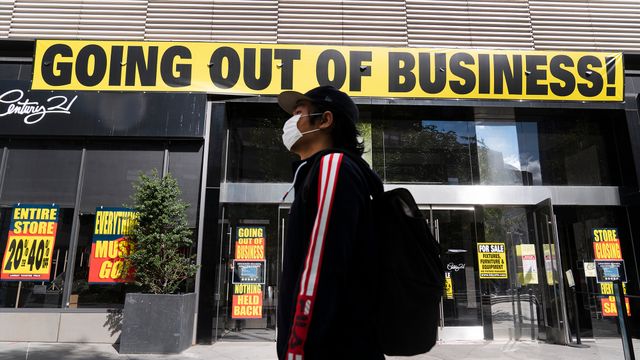
A man wearing a mask walks by a New York department store, Wednesday, Sept. 30, 2020. The discount department store chain has filed for Chapter 11 bankruptcy protection and is closing its 13 stores. (AP Photo/Mark Lennihan)

In addition to the airlines, Boeing, the world’s second largest defense contractor, which received $17 billion through the CARES Act, is also expected to announce more layoffs. The Wall Street Journal reported Wednesday that the company plans to move all 787 Dreamliner production from its Everett, Washington factory to its North Charleston facility in South Carolina.

This past April, Boeing announced it would be cutting 10 percent of its 160,000 employee workforce, of which 6,800 have already been laid off, while roughly 5,500 accepted early buyout packages.

Just two weeks ago, the House Transportation and Infrastructure Committee released the results of its 18-month investigation into the two crashes of Boeing 737 Max airplanes that killed a combined total of 346 passengers and crew. The report laid out damning evidence that Boeing knowingly risked the lives of countless thousands of people by rushing into service an aircraft it knew to have potentially fatal design flaws. It systematically concealed the dangers from government regulators, airline customers, pilots and the general public.

Yet this criminal corporation and the commercial airlines, which received billions in taxpayer money, justified by Congress as an effort to “save jobs,” have been allowed to use the handouts to slash payrolls, restructure operations at the expense of workers’ wages and working conditions and boost their stock prices and executive bonuses. Meanwhile, the Democrats and Republicans allowed the $600-per-week federal unemployment supplement to expire two months ago, workers are facing the expiration of state jobless benefits and nothing is done to prevent millions from being evicted, going hungry and falling into destitution.

Neither of the big business parties, which pull out all stops to rescue Wall Street, are in any hurry to provide aid to workers. Democrats and Republicans are united in the drive to force workers back on the job in the midst of the pandemic, using unemployment and the specter of poverty as a club, in order to fully resume the extraction of profit from the workers’ labor. In this, they demonstrate their total subservience to the corporate-financial aristocracy that runs the country.

The Washington Post published an article Wednesday based on Labor Department data showing that since mid-March, the lowest 25 percent of income earners have seen their wages decrease by as much as 30 percent, while the top 25 percent have seen their earnings remain the same or slightly increase. Meanwhile, ultra-wealthy “pandemic profiteers” such as Amazon CEO Jeff Bezos and Tesla CEO Elon Musk have seen their wealth increase by 65 and 50 percent respectively.

The CARES Act, passed at the end of March by a near-unanimous vote of both parties, singled out American, Delta, United and Southwest airlines for multi-billion-dollar bailouts. Smaller regional carriers such as Alaska Air Group and Hawaiian Holdings received multi-million-dollar bailouts.

Doug Parker, the CEO of American Airlines, was joined by Sara Nelson, international president of the Association of Flight Attendants-CWA, on CNBC’s “Squawk Box” Wednesday morning. Both pleaded with Congress for a six-month extension of the so-called “Payroll Support Program,” the official name of the airline bailout scheme.

“Absent action, sometime today, we unfortunately are choosing to have a hundred thousand or more not employed,” Parker warned, essentially threatening the livelihood of every single American Airlines worker. Parker took in $12 million in compensation in 2018.

American Airlines, which has already detailed its plans to lay off upwards of 20,000 workers, received $5.81 billion through the CARES Act. As of January 2020, American employed over 140,000 workers. However, after months of buyout packages and early retirements, fewer than 100,000 workers are currently employed by the company.

Delta, which started the year with over 90,000 workers, now employs less than 75,000, roughly 15,000 having taken buyouts and early retirement. Despite Delta receiving $5.4 billion in grants and low-interest loans earlier this year, and more than 40,000 workers opting for temporary leaves of absence or reduced schedules since the pandemic began, the airline plans to furlough roughly 1,900 pilots starting today.

Delta has utilized the tax code to claim huge paper losses and receive large refunds from the Internal Revenue Service (IRS). In 2018, the carrier paid nothing in federal income taxes on over $5 billion in income, while claiming a $187 million refund. That same year, Delta CEO Ed Bastian received a total compensation package of nearly $15 million.

While no layoffs have been announced yet by Southwest Airlines, which received $3.2 billion in CARES Act money, this is only because large numbers of workers have volunteered to accept early retirement and buyouts. United Airlines, which received $2.75 billion, is planning to cut upwards of 13,000 workers, mostly flight attendants and maintenance crew, after negotiating separately with the Air Line Pilots Association (ALPA) to avoid furloughing some 2,850 pilots.

Alaska Air Group, which received nearly $1 billion in CARES Act grants, plans to go forward with the firing of 331 workers, today. However, the airline has warned that as many as 4,200 workers could be furloughed in the next month. Like Delta, Alaska paid nothing in federal income taxes in 2018 and received a $5 million refund from the IRS, despite a reported income of over $576 million.

Finally, Hawaiian Holdings, which received $664 million through the CARES Act, indicated in August that about 2,000 workers, including 600 flight attendants, will be laid off beginning today. The airline, which employed 7,447 workers at the beginning of the year, plans to have reduced the workforce to 4,946. Of the layoffs, 1,850 are supposedly “voluntary cuts,” while 466 are “involuntary.”

The WSWS spoke with an airline mechanic at the Dallas-Fort Worth airport in Texas, who

commented on the pending layoffs. “I have been in aviation for nearly 10 years,” he said. “I’m not a political person, nor do I get into the hype of it. But I gotta say, this is one time that the government has let us down.”

He continued: “I have family that worked for a major airline and gave all they had to them for over 20 years, but they got booted on the first round. But people who have been there less are still there.

“We have been still working every day and have been fortunate to be able to do so. We are on the front lines, putting ourselves as well as our families at risk. The one thing that has been asked is for someone to stand up for us and allow us to continue what we do so people can still feel safe in the air.”

Russia, France denounce Turkey as Armenian-Azeri war escalates

Alex Lantier


Four days after fighting broke out between Armenia and Azerbaijan over the disputed Nagorno-Karabakh region, tensions between the major powers are escalating. Amid reports that Turkey and Syrian Islamist militias are sending mercenaries to Azerbaijan to fight a war on Russia’s borders, the risk is growing of a clash between Russia and Turkey, launching a regional or global war.

While Azeri forces do not appear to have advanced far into Nagorno-Karabakh, casualties are mounting as precision weapons rain down on towns across the region. Armenian officials said yesterday they had lost 104 troops and that at least seven civilians had been killed since the fighting began. Azeri officials gave no statistics on military losses but confirmed that 15 Azeri civilians were killed.

An Armenian soldier fires an artillery piece during fighting with Azerbaijan’s forces in the breakaway region of Nagorno-Karabakh

Online videos show air and drone strikes inflicting substantial losses to military units and equipment. Armenian officials claim to have destroyed 83 drones, seven helicopters, 166 armored vehicles, one warplane and one missile battery, and to have caused 920 casualties. Azerbaijan claims to have destroyed 130 armored vehicles, 200 artillery and missile launch systems, 25 air defense missile batteries and one S-300 air defense system, while inflicting 2,300 casualties.

Arayik Harutyunyan, the president of the unofficial Armenian authority in Nagorno-Karabakh, warned: “We must be prepared for a long war. … The war will end with the defeat of Azerbaijan, or at least not with a victory.”

Significantly, Harutyunyan added that Iran is one of the main targets of Turkish-backed Azeri operations. He said, “I want to say that one of the targets of this war (fighting on the contact line) is Iran because this war is directed, among other things, against Iran. We are aware of regional problems related, in particular, to the north of Iran,” where there is a substantial Azeri population. Iranian officials fear separatist sentiment could emerge among Iranian Azeris in favor of possibly seceding from Iran and joining Azerbaijan.

This is the bloodiest Armenian-Azeri fighting since the 1988–1994 war between the two ex-Soviet republics, which erupted shortly before the Stalinist regime dissolved the Soviet Union in 1991. It is now however deeply enmeshed in the innumerable geopolitical rivalries, imperialist wars and local ethnic conflicts that have spread across the Middle East and Central Asia in the three decades since the dissolution of the Soviet Union. In particular, the war is unfolding amid a growing campaign by US imperialism to isolate and threaten both Iran and Russia.

Turkish officials are aggressively supporting the ethnically-Turkic Azeris against Armenia. President Recep Tayyip Erdoğan has called on Azeris to expel Armenia from Nagorno-Karabakh and pledged that the “Turkish people stand with their Azeri brothers with all our means.” This intensifies tensions with Armenia’s main regional backer, Russia, under conditions where Russia and Turkey are already waging bloody proxy wars against each other in the civil wars triggered by NATO regime-change operations in Libya and Syria over the last decade.

Armenian officials said that they are discussing military aid with Russia and the Collective Security Treaty Organization (CSTO), which includes the post-Soviet republics of Russia, Armenia, Belarus, Kazakhstan, Kyrgyzstan and Tajikistan. Armenian Prime Minister Nikol Pashinyan called Russian President Vladimir Putin and French President Emmanuel Macron to discuss the war. On Russia’s Rossiya1 channel, he called the war “a threat to the Armenian people’s very existence.”

Last week, Russian-Turkish talks over Syria’s northwestern Idlib province broke down. There are expectations of a Russian-backed offensive by Syrian government troops against Islamist rebels supported by Turkey and the NATO powers. Turkish drone and air defense systems have, however, proven an obstacle to deploying Russian and Syrian aircraft and heavy artillery to support Syrian and Iranian infantry against the Al Qaeda-linked, CIA-backed Islamist militias.

There had already been reports that Islamist militias and Turkish private security firms are hiring fighters to deploy to Azerbaijan. On Tuesday, the Guardian interviewed Syrians from Idlib hired by Islamist militias for 7,000–10,000 Turkish liras (US$900–1,300) monthly, for “security” work in Azerbaijan. “There are no jobs available. I used to work as a tailor in Aleppo but since we were displaced to Azaz [after Aleppo fell to Assad in 2016], I’ve tried many times to practice my craft but my family and I can’t earn enough,” one explained to the Guardian.

The Center for Global Policy think-tank in Washington D.C. cold-bloodedly confirmed the story to the Guardian: “The international community regards the lives of Syrians as expendable, with Syria serving as an arena to settle geo-strategic scores and advance the interests of countries intervening in the country at Syrians’ expense. … [T]he economic ruin stemming from the war and the recent depreciation of the Syrian currency mean that most Syrians are now struggling to feed themselves. Faced with few choices, many are now willing to sell themselves to the highest bidder.”

The Turkish government responded with an ambiguous statement that “The Turkish ministry of defense does not deal with recruiting or transferring militiamen anywhere in the world,” without addressing the role of private firms or militias.

These reports drastically increase diplomatic and military tensions between the major powers. In the 1990s, as ethnic tensions mounted in Russia after the dissolution of the Soviet Union, civil wars broke out in nearby, Muslim-majority areas of Russia, like Chechnya and Daghestan. Moscow no doubt views the arrival of Syrian Islamist militias on its doorstep in Azerbaijan with alarm.

The Russian Foreign Ministry published yesterday a statement declaring: “Militants of illegal armed groups, in particular from Syria and Libya [have traveled to Azerbaijan] to directly participate in the hostilities.” It stressed that it was “deeply concerned” about deployments of Islamist militias, which create “long-term threats to the security of all countries in the region.” Without naming Turkey or Azerbaijan, it demanded the “leaderships of the states concerned” stop such transfers and “immediately” withdraw Islamist troops from Azerbaijan.

President Emmanuel Macron of France, which backs opposing sides to Turkey in the Libyan civil war and supports Greek maritime claims against Turkey in the Mediterranean, also attacked Turkish policy in the Caucasus yesterday. “France is very worried about Turkey’s warlike statements in recent hours, that basically give a green light to Azerbaijan to reconquer Nagorno-Karabakh. That we do not accept,” Macron said at a press conference in Riga, Latvia, where he was traveling to discuss the election crisis in Belarus.

A striking aspect of this Armenian-Azeri war has been the silence of Washington, which together with Moscow and Paris nominally chairs the Minsk Group tasked since 1992 with overseeing talks to manage the Armenian-Azeri conflict. However, Washington made no significant call for restraint. US President Donald Trump made only a brief statement, saying, “We’ll see if we can stop it.”

Thomas de Waal of the Carnegie Foundation-Europe called Washington “unusually disengaged,” and “the risk of further escalation and mass destruction alarmingly high.” He added, “Washington was the last major international actor to issue a statement, indicating a retreat from interest in this region. It is arguably also a sign that President Donald Trump—sponsor of the never-completed Trump Tower in Baku—views Armenia and Azerbaijan solely through a business perspective.”

In fact, Washington has for decades sought to dominate the Middle East and Central Asia as the key to its geopolitical strategy towards Europe, Russia and East Asia. As US forces threaten Russia with military exercises in neighboring Ukraine and bomb Iranian-aligned militias in Iraq, it appears that Washington is content to let this conflict escalate while it focuses on threatening Moscow and Tehran.

The war in the Caucasus is a stark warning of the bankruptcy of the nation-state system and the rising danger of large-scale war posed by national and ethnic conflicts across Eurasia. It is urgent to mobilize and unify the working class in an international movement against imperialism, nationalism and war.