8 Feb 2021

Russia: A New Start?

John Feffer


It’s winter in Russia, which is not a season for the faint-hearted. The pandemic is still hitting the country hard, with the number of new COVID cases hovering around 20,000 a day, which has cumulatively put the country in the global top five in terms of infections.

Under these inauspicious conditions, if you are brave enough to face down the cold and COVID to protest openly against the government of Vladimir Putin, your reward may well be a trip to jail. If you’re very good at your job of protesting, you might win the grand prize of an attempt on your life.

Yet, for the last two weeks, Russians have poured into the streets in the tens of thousands. Even in the Russian Far East, protesters turned out in Yakutsk (45 below zero) and Krasnoyarsk (22 below).

Putin has predictably responded with force, throwing more than 5,000 people into jail.

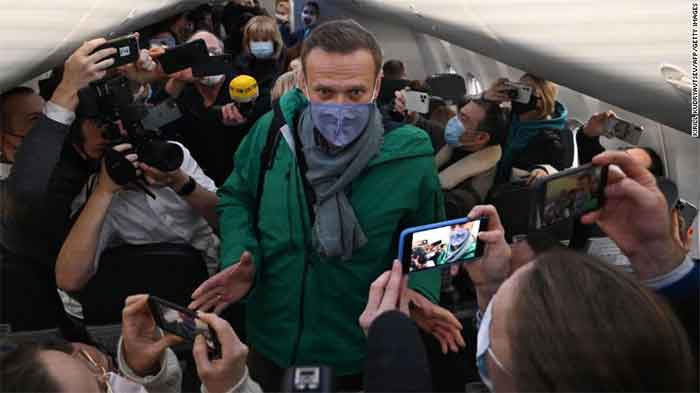
Media coverage of the Russian protests focus, not surprisingly, on Alexei Navalny. After recovering in Germany from an assassination attempt, the Russian opposition leader returned to Moscow on January 17. He was promptly arrested at the airport where his plane was rerouted. His close associates, who’d shown up at the original destination of his flight to welcome him home, were also detained. These arrests, and the government’s desire to lock Navalny away in prison for as long as possible, triggered the latest round of demonstrations throughout the country.

Vladimir Putin has ruled over Russia for more than two decades. Because of the constitutional changes he rammed through last year, he has effectively made himself leader for life. Will these latest protests make a dent in his carapace of power?

Meanwhile, the U.S. and Russian governments this week exhibited a modest form of engagement by extending the New START treaty on nuclear weapons for another five years. Despite this hopeful sign, no one expects anything close to a full reset of U.S.-Russian relations during a Biden administration.

But as Putin faces protests in the street and Biden deals with recalcitrant Republicans in Congress, the two countries might at least avoid direct conflict with one another. More optimistically – and can you blame a boy for dreaming? – the two countries could perhaps find common cause against the global scourges of nuclear weapons, climate change, and pandemic.

Putin vs. Navalny

Although they face each other across the Russian chessboard, Vladimir Putin and Alexei Navalny share some basic attributes. They are both adept politicians who know the power of visuals, symbols, and stories. They rely on the media to sustain their popularity, Putin using state-controlled media and Navalny exploiting social media.

And they have both been willing to adjust their messages to grow their appeal among everyday Russians by turning to nationalism. Putin started out as a rather conventional Soviet bureaucrat, with a commitment to all of the ethnic groups within the Soviet Union. Even when he became the leader of Russia in 1999, he thought of himself as the head of a multiethnic country. Particularly after 2014 and the conflict with Ukraine, however, Putin began to make appeals to russky (ethnic) Russians rather than rossisky (civic) Russians. He has made the defense of ethnic Russians in surrounding regions – Ukraine, Moldova, the Baltics – a priority for his administration.

Navalny, meanwhile, started out as a rather conventional Russian liberal who joined the reformist party Yabloko. Liberalism, however, has never really appealed to a majority of Russians, and parties like Yabloko attracted few voters. Navalny began to promote some rather ugly xenophobic and chauvinistic messages. As Alexey Sakhnin writes in Jacobin:

He participated in the far-right Russian Marches, waged war on “illegal immigration,” and even launched campaign “Stop Feeding the Caucasus” directed against government subsidies to poor, ethnic minority-populated autonomous regions in the south of the country. It was a time when right-wing sentiments were widespread, and urban youth sympathized with ultra-right groups almost en masse. It seemed to Navalny that this wind would fill his sails — and partly, it worked.

Navalny used nationalism to wipe away any memories of his unpopular liberalism, but it was difficult to compete with Putin on that score. So, increasingly, the oppositionist focused on the corruption of the Putin regime, publishing exposes of Prime Minister Dmitry Medvedev’s wealth and most recently a video tour of a huge palace on the Black Sea said to be the Russian president’s (which Putin denies).

With these critiques of the ruling elite’s corruption, Navalny can bring tens of thousands of angry protesters, particularly young people, onto the streets. Unlike present-day Belarus or Ukraine 2014, the Russian protestors don’t represent the overwhelming majority of their fellow citizens. Vladimir Putin remains a relatively popular figure in Russia. Although his approval ratings have dropped from the 80 percent range that were common five years ago, they still hover around 70 percent. U.S. presidents would be thrilled with those numbers. Approval of the Russian government is considerably less – around 50 percent – which suggests that Putin has successfully portrayed himself as somehow above everyday politics.

Still, the Russian leader is worried. In his latest speech at the World Economic Forum, Putin spoke in apocalyptic terms of a deteriorating international situation. “The pandemic has exacerbated the problems and disbalances that have been accumulating,” he said. “International institutions are weakening, regional conflicts are multiplying, and the global security is degrading.”

His comments on the global situation reflect more parochial concerns. Because of COVID, the Russian economy contracted by 4 percent in 2020. Although the government implemented various measures to cushion the impact, many Russians are suffering as a result of rising unemployment and falling production. The Russian economy depends a great deal on sales of oil and natural gas. Any further reduction in global trade – either because of the pandemic or tariff wars – would complicate Russia’s economic recovery and consequently undermine Putin’s political position.

The immediate challenge comes from the parliamentary elections later this year. Putin’s United Russia party currently holds a comfortable majority in the Duma. The other two top parties are led by nationalists who are equally if not more fanatical – Gennady Zyuganov of the Communist Party and Vladimir Zhirinovsky of the Liberal Democratic Party. But a political force coalescing around a figure like Navalny could disrupt Putin’s balance of power.

That’s why Navalny returned to Moscow. And that’s why the Russian court decided this week to lock Navalny away for more than two years – for violations of a parole that required him to report to the authorities that tried to kill him. Navalny has taken an enormous risk, while Putin is taking no chances. The Russian leader has long deployed a preemptive strategy against any potential rival. Those who dare to oppose him have been killed (Boris Nemtsov), poisoned (Vladimir Kara-Murza), jailed (Mikhail Khodorkovsky), or forced into exile (Garry Kasparov).

Civil society is also under siege in Russia, with activists vulnerable to charges of being, basically, spies and saboteurs under a “foreign agent law.” Yet the environmental movement, the women’s movement, the LGBT community, and others continue to protest against the country’s authoritarian system. And these protests are not just taking place in relatively liberal enclaves in the western part of the country like Moscow and St. Petersburg. Large-scale demonstrations took place at the end of 2020 in Khabarovsk, in the Russian Far East, over the arrest of the region’s independent-minded governor. While Navalny gets the press, civil society activists have quietly built up networks around the country that can turn people out onto the streets when necessary.

Like all authoritarians, Putin uses “law and order” arguments to his advantage. Russians have a horror of anarchy and civil strife. They have long favored an “iron fist” approach to domestic politics, which helps explain the persistent, posthumous fondness for Stalin, who had a 70 percent approval rating in 2019. According to polling conducted last year, three in four Russians believe that the Soviet era was the best period of time for Russia, and it certainly wasn’t the dissident movement of that period that made them nostalgic.

The protesters thus have to tread carefully to avoid losing popular support among a population fond of an iron fist but also deeply disgusted by the corruption, economic mismanagement, and social inequality of the Putin era. The Russian opposition also has to grapple with the distinct possibility that getting rid of Putin will usher in someone even worse.

U.S.-Russian Relations

The extension of New START, the last nuclear arms control treaty in effect between Russia and the United States, is a spot of good news in an otherwise dismal outlook for relations between the two countries. Biden has prided himself on his knowledge of and commitment to arms control. So, if the two countries can agree on terms of selective engagement, the next four years could be profitably taken up by a series of negotiations on military weaponry.

New START merely establishes ceilings on nuclear warheads for both sides and addresses only strategic, not tactical, nukes. So, as Stephen Pifer argues, a follow-on treaty could establish a ceiling on all nuclear warheads, for instance at 2,500, which would cover battlefield nuclear weapons and result in at least a 50 percent cut in the arsenals of the two sides. Another option for bilateral negotiations would be to focus on limitations to missile defense or, at the very least, cooperation to protect against third-party missile attacks. A third option would be to focus on conventional weaponry and constraints on weapons sales.

The Biden administration could even move more quickly with an announcement of a no-first-use policy of nuclear weapons – something Biden has supported in the past – and agreeing with Moscow to de-alert ICBMs much as Reagan and Gorbachev de-alerted another leg of the nuclear triad, strategic bombers, back in 1991.

This arms control agenda is only part of a larger potential program of selective engagement. The United States and Russia could return to their coordination around the Iran nuclear deal. They could explore ways to cooperate on global challenges like climate change and pandemics. They could even start addressing together the harmful effects of economic globalization, a topic Putin brought up in his recent Davos speech.

To do so, however, the two countries will have to manage the numerous points of friction in their relationship. For one thing, they’ve gone head-to-head in various proxy battles – in Afghanistan, Syria, and Libya. Russia is legitimately furious that NATO expanded to its very doorstep, and the United States is legitimately concerned about Russian interventions in its “near abroad,” most recently in Ukraine. The United States has lots of evidence of Russian interference in the 2016 election – not to mention Russian involvement in a coup attempt in Montenegro that same year and its meddling in the presidential election in Madagascar two years later – and Russia is pissed off at U.S. “democracy promotion” in the Color Revolutions and within Russia itself. Russia is eager to finish the Nord Stream 2 pipeline that would bring natural gas to Germany, while the United States is eager to sell its own gas to its European ally. Then there’s Russia’s penchant for assassinating Russians in other countries and repressing protestors at home.

Any of these issues could scuttle cooperation between Moscow and Washington. One way of negotiating around this minefield is to delink the agendas of cooperation and conflict. Arms control advocates have a long history of doing just that by resisting calls to link other issues to arms control negotiations. Thus, the Iran nuclear deal focuses exclusively on the country’s nuclear program, not its missiles, not its relations with other countries in the region, not its human rights situation. The same lack of linkage has historically applied to all the arms control agreements between Washington and Moscow.

This strategy of delinking doesn’t mean that these other issues are completely off the table. They are simply addressed at different tables.

Those who desperately want a new cold war with Russia will not be happy with such a practical solution. They don’t want to talk with Putin about anything. As repugnant as I find the Russian leader, I have to acknowledge that he heads up an important global player and he has the support (for the time being at least) of much of his population. So, even as we challenge the Russian leadership’s conduct at home and abroad, we must also work with Moscow in the interests of global peace, prosperity, and sustainability.

Of course, there’s another word for all this.

Diplomacy.

The Foreign Roots of Haiti’s “Constitutional Crisis”

Mark Schuller


As per usual, news on Haiti in the U.S. remains limited, except for periods of ‘crisis.’ As if on cue, U.S. media began reporting on Haiti’s “constitutional crisis” this week.

Sunday, February 7, is the end of Haitian president Jovenel Moïse’s term according to the constitution. He refuses to step down. Last week, the opposition called for a two-day general strikeuniting around a transition with the head of Haiti’s Supreme Court stepping in.

Most reporting failed to note the international role, and particularly the U.S., in creating this “crisis.” And nearly all focused only on one segment of the opposition: leaders of Haiti’s political parties.

Predictably, foreign media led their stories with violence. True, the security situation is deteriorating: Nou Pap Dòmi denounced 944 assassinations in the first eight months of 2020. But leaving the discussion at “gang violence” whitewashes its political dimensions: on January 22, leaders of the so-called “G9” (the group of 9), a federation of gangs led by former police officer Jimmy Chérisier (a.k.a. “Barbecue”) held a march in defense of the Haitian president. Human rights organization RNDDH reported in August 2020 that the government federated them in the first place.

This “gangsterization” occurred without Parliamentary sanction, since January 13, 2020 – a day after the tenth anniversary of Haiti’s devastating earthquake – Parliament’s terms ended, leaving President Moïse to rule by decree. One such decree in November, as the wave of kidnapping increased, outlawed forms of protest, calling it “terrorism.”

Readers in the U.S. should not need to be reminded of white supremacists’ violent attack on Congress and the U.S. Constitution on January 6 that killed at least 6, on the heels of other coup attempts in Michigan and other vigilante attacks. In the U.S., police killed 226 Black people last year. The irony of U.S. officials opining on violence, democracy, or rule of law, is apparently invisible to some readers.

In addition to parallels of state violence against Black people in the U.S. and Haiti, missing from most stories are specific roles played by previous U.S. administrations – from both parties – in fomenting and increasing it.

Haiti’s ruling Tèt Kale party got their start in 2011, when bawdy carnival singer Michel Martelly was muscled into the election’s second round by Secretary of State Hillary Clinton and the United Nations Special Envoy and co-chair of the Interim Haiti Reconstruction Commission (IHRC) Bill Clinton.

This support from the Clintons, the U.S., and the so-called “Core Group” (including France, Canada, Brazil, the European Union and the Organization of American States [OAS]), never wavered, despite the increasingly clear slide toward authoritarianism. In 2012, Martelly installed mayors in all but a handful of towns with allies. Then Parliament’s terms expired in 2015, the five-year anniversary of the earthquake, with promises to hold elections never materializing. The election that did finally lead to Martelly’s hand-picked successor, Jovenel Moïse, was fraudulent, yet the U.S. and Core Group continued to play along – and offer financial support – until finally the electoral commission formally called for its annullment. Because of international pressure, the final round was held weeks after Hurricane Matthew ravaged large segments of the country, with the lowest voter turnout in the country’s history.

Why would so-called ‘democratic’ countries continue to support the Tèt Kale state? What was in it for empire?

Having to thank his friends in high places, Martelly’s reconstruction effort focused on providing opportunities for foreign capitalist interests in tourismagribusinesssweatshops, and mining. Not surprisingly, donors to the Clinton Global Initiative made off like (legal) bandits. Ironically $4 billion for this disaster capitalism was Venezuela’s PetroCaribe program, offering low-cost oil and low-interest loans. With the Haitian State safely under the Clintons’ watch, the transformative potential of this alternative to neoliberal globalization and example of South-South solidarity was squandered. Cue foreign mainstream media’s focus solely on “corruption” of this complex movement demanding #KotKobPetwoKaribeWhere did the funds from PetroCaribe go?

This popular movement was an extension of the uprising against International Monetary Fund imposed austerity. On July 6, 2018, during the World Cup, the Haitian government announced a price hike for petroleum products. Right after Brazil lost the match, the people took to the streets – all across the country – and shut it down. In Kreyòl, this was the first peyi lòk – lockdown or general strike.

Faced with this popular swell of dissent that for the first time in my twenty years working in Haiti brought together people from every socioeconomic status, at one point reaching 2 million people across the country (out of a population of 11 million), the government increasingly turned to violence, including a massacre in Lasalin, a low-income neighborhood near the port and a stronghold for the party of former president Jean-Bertrand Aristide.

I was in Haiti during the 2003-4 coup. Comparing the people on the streets then and now, Jovenel Moïse would have been forced out by November, 2018, and certainly would have been gone by February 7, 2019, two years ago.

So why is he still in office?

Like his predecessor “Sweet Micky,” Martelly’s stage name, the “Banana Man” as Moïse was known during the campaign, had friends in high places. President Trump met with Moïse and other right-of-center hemispheric heads of state at his Mar-a-Lago resort. Haiti was crucial in the U.S. ouster of Venezuela from the OAS. Despite the billions in aid from Venezuela, and bilateral cooperation that began in 1815 when Haitian president Alexandre Pétion provided crucial arms and support for Simón Bolívar, President Moïse sided with Trump. In 1960, Haitian president “Papa Doc” Duvalier – whom history and solidarity movements judged as a dictator – did the same thing to Cuba, and the U.S. generously rewarded him.

Given the new White House occupant, and campaign promises to the key battleground state of Florida, one might think that President Biden would reverse course vis-à-vis Haiti. Why, then, would Immigrations and Customs Enforcement continue to deport 1800 people, some not even born in Haiti, sending not one, but two, deportation flights this Thursday?

Making the connections, The Family Advocacy Network Movement (FANM) sent an open letter denouncing both forms of state violence and violations of human rights.

Voices within Haiti amplified in foreign corporate media are political parties. The Kolektif Anakawona outlined three other – much larger – segments. On November 29, popular organization coalition Konbit issued a five-language call for solidarityBatay Ouvriye outlined popular demands for whomever takes office. A group of professionals, FPSPA, denounced the United Nations’ rushing elections and their support for what they qualify as a dictatorship. David Oxygène, with popular organization MOLEGHAF, critiqued the political party consensus as olye yon lit de klas, se yon lit de plas. Rather than a class struggle, it’s a struggle for position (power). Both he and Nixon Boumba underscore that the opposition plan is a short-term solution, when Haitian movements are asking for long-term solutions, changing the system. Activist journalist Jean Claudy Aristil and others point out the fundamental hypocrisy and limits of “Western democracy.” Moneyed interests – including imperial powers – who dominate the political process in Haiti are by no accident the same transnational capitalist class who have rigged the system in the U.S., the model for other political systems in the Americas.

These Haitian activists and scholars are not asking for U.S. intervention in support of what Oxygène called 2 zèl yon menm malfini – two wings of the same vulture.

They are asking for us to dismantle imperial interference and join them in transforming our institutions so that people-to-people solidarity and a democratic global economy can then be possible.

Cuba’s COVID-19 Vaccines Serve the People, Not Profits

W.T. Whitney Jr.


Cuba’s socialist approach to developing vaccines against COVID-19 differs strikingly from that of capitalist nations of the world. Cuba’s production of four vaccines is grounded in science and dedicated to saving the lives of all Cubans, and to international solidarity.

The New York Times’s running report on the world’s vaccine programs shows 67 vaccines having advanced to human trials; 20 of them are in the final phase of trials or have completed them. The United States, China, Canada, the United Kingdom, Germany, South Korea, and India have each produced many vaccines; most vaccine-manufacturing countries are offering one or two vaccines.

Cuba is the only vaccine manufacturer in Latin America; there are none in Africa. The only state-owned entities producing the leading vaccines are those of Cuba and Russia.

Cuba’s Finlay Vaccine Institute has produced two COVID-19 vaccines. Trials for one of them, called Sovereign I, focus on protecting people previously infected with COVID-19. The antibody levels of some of them turned out to be low, and the vaccine might provide a boost.

The other vaccine, Sovereign II, is about to enter final human trials. For verifying protection, these trials require tens of thousands of subjects, one half receiving the vaccine and the other half, a placebo vaccine. Cuba’s population is relatively small, 11 million people, too small to yield enough infected people in the short time required to test the vaccine’s protective effect. That’s why Sovereign II will be tested in Iran.

100 million doses of Sovereign II are being prepared, enough to immunize all 11 million Cubans, beginning in March or April. The 70 million remaining doses will go to Vietnam, Iran, Pakistan, India, Venezuela, Bolivia, and Nicaragua. Sovereign II “will be the vaccine of ALBA,” explained Venezuelan Vice President Delcy Rodríguez, referring to the solidarity alliance established in 2004 by Venezuelan President Hugo Chavez and Cuba’s Fidel Castro.

Cuba’s strategy in commercializing the vaccine represents a combination of what’s good for humankind and the impact on world health. We are not a multinational where a financial objective comes first,” says Vicente Vérez Bencomo, director of Cuba’s Finlay Vaccine Institute. Income generated by vaccine sales abroad will pay for health care, education, and pensions in Cuba just as happens with exports of medical services and medicines.

Cuba’s Center for Genetic and Biotechnological Engineering is developing two other COVID-19 vaccines; One, named “Mambisa” (signifying a female combatant in wars of liberation from Spain), is administered via the nasal route, just as is Cuba’s hepatitis B vaccine. The other vaccine, named “Abdala” (a character in a Jose Marti poem) is administered intramuscularly. The two vaccines are involved in early trials.

Cuba was ready

Cuban education emphasizes science and technology. In the 1990s, Cuba accounted for 11% of doctorate-level Latin American scientists. Cuban scientists work in the 50 or so biomedical research and production facilities which together make up Cuba’s state-owned BioCubaFarma Corporation, and which produces vaccines, drugs, medical tests, and medical equipment. It makes 60% of medicines used in Cuba, and 8 of 12 vaccines.

Cuba previously produced a pioneering vaccine that prevents life-threatening infection caused by type B meningococcus. Cuba developed a genetically-engineered hepatitis B vaccine and a vaccine offering palliative treatment for lung cancer. A Cuba-developed vaccine offers protection against infection, particularly childhood meningitis, caused by the Hemophilus Influenza type B bacterium.

In fashioning vaccines, Cuban scientists relied on familiar technology.

To provide an immunological extra, the antigen of Cuba’s Sovereign II vaccine is mixed with tetanus toxoid, as was done with Cuba’s Hemophilus influenza vaccine. As with other vaccines, scientists used a segment of the virus’s protein – here the COVID-19 virus – to form an antigen to stimulate protective antibodies. By contrast, the U. S. Pfizer and Moderna vaccines contain the whole viral protein, not a segment. That protein contains “genetic instructions” which enter human cells, causing them “to make spike proteins, which then get released into the body” where they trigger antibodies.

Observers suggest that this innovative U.S. technology may be less safe than the one used in Cuban vaccines. Not requiring extremely cold storage, as do the U.S. vaccines, the Cuban vaccines are suited for areas without adequate refrigeration capabilities.

Cuba’s bio-medical production sector has also created drugs for treating Covid-19 infection. Interferon, an antiviral agent developed in Cuba, produced in China, and used throughout the world, prevents many Covid – infected patients from becoming critically ill. The Cuban anti-inflammatory drug Jusvinza, used for treating auto-immune diseases, and Cuba’s monoclonal antibody Itolizumab, which moderates exaggerated immune responses, are both effective in reducing Covid-19 deaths.

The other way

The U. S. approach to producing and distributing COVID-19 vaccines is based on private enterprise, although the U. S. government did deliver billions of dollars to pharmaceutical companies to produce vaccines free of charge to recipients. The companies have contracted with purchasers abroad.

According to forbes.com in November, 2020, ‘If Moderna’s [vaccine] can get FDA approval and can make enough doses, its top line could be nearly $35 billion higher … than … in the last 12 months.” Another report suggests that, “The companies (Pfizer and Moderna) stand to earn billions of dollars in profits from their COVID vaccines this year [and] there will be more profits in later years.” The companies “claim the rights to vast amounts of intellectual property.”

With corporations in charge, distribution of COVID-19 vaccines is skewed. As of Jan. 27, “some 66.83 million doses have been sent out, of which 93 percent were supplied to only 15 countries.” In Latin America, only Brazil, Argentina, Mexico, and Chile have secured purchase contracts adequate for immunizing entire populations. The companies’ contracts with African nations allow for immunization of only 30 percent of Africans in 2021. Meaningful immunization has yet to begin there.

The wealth divide determines distribution. Epidemiologists at Duke University report that, “While high-income countries represent only 16% of the world’s population, they currently hold 60% of the vaccines for COVID-19 that have been purchased so far.” Cuban journalist Randy Alonso reports that only “27 percent of the total population of low and middle income countries can be vaccinated this year.”

The world is on the brink of a catastrophic moral failure – and the price of this failure will be paid with lives and livelihoods in the world’s poorest countries,” declared Dr. Tedros Adhanom Ghebreyesus, director of the World Health Organization, on January 18. He warned that, “some countries and companies continue to prioritize bilateral deals, going around COVAX, driving up prices and attempting to jump to the front of the queue.”

The WHO initiated the global vaccine collaboration COVAX to assure access by poor nations to COVID-19 vaccines. The 190 nations that are enrolled agreed to obtain vaccines through COVAX. Rich nations would supply COVAX with funds to enable 90 poor nations to receive no-charge vaccines. COVAX anticipates distributing two billion doses, enough to immunize only 25 % of the populations of poor nations during 2021.

Problems include: wealthy nations order vaccines independent of COVAX; they buy more vaccine than they need; manufacturers set prices; and prices are secret, variable, and very high.

Most other countries producing COVID-19 vaccines are at variance with Cuba through their profiteering and because they are complicit with the U.S. economic blockade of Cuba. Pursuing routine overseas commercial affairs, they all too easily adjust to U.S. regulations by means of which that cruel policy is enforced. More to the point, the U.S. blockade hinders Cuba’s vaccine efforts, and they are silent.

“We don’t have in Cuba all the raw materials and supplies we’ll need for the unprecedented scale of production that vaccinating our whole population requires,” Dagmar García-Rivera, Director of Research at Cuba’s Finlay Vaccine Institute, explained. “They have to be purchased and for this, we need financing. This is made infinitely more difficult by the US embargo … Procuring the necessary reagents for research and the raw materials for production is a challenge we face daily.”

In confronting the pandemic, Cuba exhibits attention to detail suggestive of a level of caring and concern not readily matched elsewhere. For example, Cuba’s government-friendly cubadebate.cu website provides a daily, detailed update of the infection’s impact. Its report on Jan. 27 presents data relating to cities, provinces, the nation, and the world – and the nation’s intensive care units. Readers learn that of 43 patients in intensive care that day, 16 were in critical condition, stable or unstable, and 27 were in “grave” condition.

All 43 cases are reviewed, beginning with: “Cuban citizen, 75 years old, from Alquízar, in Artemisa, already suffering from arterial hypertension and ischemic cardiopathy who is afebrile, on mechanical ventilation, is hemodynamically stable… with acceptable blood gases (oxygen and CO2), is improving radiologically with inflammatory lesions in the right [lung] base – reported as critical but stable.” The cases of four Cubans who died that day are also presented.

Fighting a pandemic in Cuba, it’s understood, is no casual matter. Nor is the health of Cuba’s people.

Alexei Navalny And The Politics Of Vladimir Putin

Zeenat Khan & Ferdous Khan


Last Tuesday (February 2) Russian activist Alexei A. Navalny, the loudest critic of Vladimir Putin was sentenced to 2 plus years in prison for violating the terms of his 2014 conviction. The prison service claimed Navalny had violated the terms of his parole by not checking in with his case workers. Some of the violations are from the time when he was undergoing treatment for being poisoned with Novichok, a highly lethal nerve agent that was placed on the inside of his under pants before a flight. The directive supposedly came from the Kremlin, if not from Putin himself. Navalny’s wife approached Putin for permission to go abroad with a comatose Alexei for treatment which Putin says he had granted without hesitation. After Navalny came back to Moscow he was arrested. In the recent weeks, Navalny had irked Putin by posting a video where he accused the president of building a luxurious mansion worth over a $billon on the Black Sea. The palace is replete with all the modern amenities that money can buy including an Ice Hockey rink. That video has been watched by millions of people on YouTube. Russians are simply outraged by the reports of corruption by Putin and his associates. For two consecutive weekends prior to Navalny’s sentencing, millions across Russia took to the streets to protest ignoring the frigid temperature. All of those people are not necessarily Navalny’s supporters – they include people with liberal, conservative ideas to people without strong political views. Women who generally view Navlany as sexist after Navlany once called his wife, Yulia Navalnaya “my little chic” also joined in solidarity. The world saw in disbelief how protesters in Russia were restrained by excessive force by riot police. In Moscow more than 1,950 people were arrested for protesting. More than 5,600 people were detained in 90 cities during protests on past Sunday, according to the monitoring group OVD-Info, which tracks political persecution in Russia. Until the sentencing, Navalny’s supporters were growing in numbers and that had frightened the Kremlin. They most certainly do not want Navalny to be marked as a “political martyr” in history books. That explains the jail term. For two plus years whether Navalny will be sent to a penal colony is anyone’s guess. Will he stay alive in the prison to guide his followers against the anti-Putin movement? Putin’s spokesman, Dimitry Peskov, said, “That Navalny’s case is exclusively a domestic matter and that Russia will not take instructions from foreign governments. The Kremlin has suggested that Navalny works for U.S. intelligence and has branded the Anti-Corruption Foundation a “foreign agent.” Meanwhile, Vladimir Putin can continue on with his agenda of staying in power by crushing his rivals and political dissidents for the foreseeable future. His current term ends in 2024. Putin is trying to kill two birds with one stone – 1) He took a calculating risk that being in jail might diminish Navalny’s popularity as he will be out of the limelight, 2) He is sending out a clear message that he is not going to be swayed by public pressure and will remain steadfast at the face of angry protests after the Navalny sentencing. However, the opposition leader’s incantation of “Do not be afraid!” does not mean there is nothing to fear. With Navalny stashed away in prison, Putin will continue to have a tight grip on all of Russia to carry out his master plan of rebranding Russia. In reality it turns out to be nothing but a classic case of autocratic rule.

Ever since coming to power in 2000, Putin has defined himself as the creator of modern Russia. Russia is a huge and diverse country, and the people have become hostage to Putin’s embryonic ideology, ego, and misguided persona. What may be useful in understanding the crisis in Russia today is to go back in Russian history to the origin of Slavophiles in the nineteenth century as a reaction to modernizations introduced by Peter the Great (1682 – 1725), and Catherine the Great (1762 – 1796). The Slavophiles of the 1830s, such as Aleksey S. Khomyakov, the Aksakov brothers, others were reacting to what they saw as the onslaught of Western ideas of Enlightenment, nationalism and rationalist thought that was eroding the heart of what they had characterized as Slavophilism. To them, it was the soul sustaining idea that salvation of the Russian empire, and that of all Slavs lay in Christian Orthodoxy (though many, including the Poles were Roman Catholics), autocracy i.e., worshipping the Tsar, and adherence to the soil (through peasants’ communes). The Westernizers, such as Herzen, Belinksy and Bakunin opposed these ideas vehemently, and declared that salvation of Russia lay in the adoption of Western ideas of Enlightenment, very much in the tradition introduced by Peter (the Great), then Catherine (the Great.)

Putin, in spite of his KGB roots, and Marxist-Leninist indoctrination while growing up was following many of the anti-western policies that a Slavophile would advocate and cherish. The harsh treatment meted out to political opponent Alexei Navalny is a case in point. In fact, one can show that the sum total of Putin’s actions since he came to power reveal the desire of an earlier day Slavophile to stand up to the (Latin) West and nurture the Eastern (Orthodox) polity.

The Berlin wall came crashing down in 1989. As a KGB officer stationed in East Germany, Putin was shocked; this was too much for a Cold War warrior trained with the very elite cadres of the Soviet state apparatus. He drew several lessons. First, the West was out to crush the Soviet Socialist Republic (USSR) of their dreams. Second, party bureaucrats such as Gorbachev were too soft, and accommodating in their acceptance of the West. Third, the correct response should have been one of strength, and not the one demonstrated by party top brass, including Gorbachev. The disintegration of the USSR and its satellite (east European) states that took place, accompanied by social turmoil, coups and counter coups in Moscow and other centers of powers must have been disorienting to an ordinary Russian.

To Putin, and his comrades, these events helped solidify their resolve to stand up to the encroachment of the West on their borders, as well as within Russia itself. In many ways then, this is reminiscent of the Slavophiles of 1830s and 1840s, Khomyakov and others, in their determination to preserve, and enhance the unique characteristics of the Russian society /soul – Eastern Orthodox Christianity, the autocratic Tsar, and the Russian peasants against the Latin West. Thus, since his KGB days in East Germany, Putin has been someone who plays with danger. He remembers the confusion for those fighting on the wrong side of history and learnt its lessons. It is only logical to expect that he will use these lessons to his own advantage, by holding onto power for as long as he can.

Since Putin came into power in 2000, much has happened in Russia, beginning with the Gorbachev, followed by the Yeltsin years. For the past twenty years (2000 – 2020), the former KGB officer has managed to solidify his hold on power through various manipulations, chicanery, and often brute force. The persecution of Alexei Navalny is a strong reminder of how far Putin and his erstwhile comrades will stoop to in order to maintain their grip. And certainly, this is not the first instance of such attitude towards dissidents.

In recent years, there has been a worrisome trend in Russia – that of the glorification of the cruel dictator, Josef Stalin. Putin has welcomed this trend with open arms. The collective memory in the Soviet Union is replete with instances of brutal persecution by Stalin and his secret police; hardly any family exists that have not been impacted. Yet there is a whitewashing going on of Stalin’s image, at least a forgetfulness of his sins has been underway for quite some time.

This is in line with Putin’s vision of a strong Russia that can stand up to its western foes, much as Stalin had vanquished Hitler in the Second World War. The Slavophiles of the 1870s had predicted the oncoming conflict between the Slavs, and the Teutons (Germans). Stalin’s victory over Hitler was a confirmation of this, and to Putin, it showed that his vision of a strong Russia victorious was possible when a Stalin-like figure took over power in Russia. This of course necessitated the fading from memory of Stalin’s atrocities, the repression that is now known all too well in the west.

Russia has emerged as the largest and the single most powerful state after the former Soviet Union dissolved in 1991. Even before that, they were mighty powerful with the Russian Tsars, and later the Bolsheviks who came to power after the 1917 Russian Revolution. It is well known that “Ukraine and Russia share much of their history… From the mid-17th century Ukraine was gradually absorbed into the Russian Empire, which was completed in the late 18th century with the Partitions of Poland… After the end of World War I, Ukraine became a battleground in the Russian Civil War and both Russians and Ukrainians fought in nearly all armies based on their political belief… In 1922, Ukraine and Russia were two of the founding members of the Union of Soviet Socialist Republics and were the signatories of the treaty that terminated the union in December 1991.”

Since then, “several acute disputes have formed between the two countries… Ukraine’s attempts to join the EU and NATO in 2015 were seen as a change of course to only a pro-Western, anti-Russian orientation of Ukraine and thus as a sign of hostility… In February 2008 Russia unilaterally withdrew from the Ukrainian-Russian intergovernmental agreement signed in 1997 while the US supported Ukraine’s bid to join NATO; the latter launched in January 2008 as an effort to obtain the NATO Membership.” Russia strongly opposed any prospect of Ukraine and Georgia becoming NATO members. The current crisis began when Ukraine decided not to sign a political and trade agreement with the European Union in the fall of 2013. The demonstrations began soon thereafter, led by students and workers fighting corruption aimed at toppling the regime of pro-Russian Viktor Yanukovych, which succeeded three months later. The so-called Euromaidan revolution was strongly backed and financed by western NGOs, and US Assistant Secretary of State Victoria Nuland (married to influential neoconservative historian Robert Kagan, Yale ’80) encouraged the leaders of the protest movement in no uncertain terms. On 17 December 2013 Putin agreed to lend Ukraine 15 billion dollars in financial aid, and a treaty was signed amid massive, ongoing protests by Ukrainians for closer ties between Ukraine and the European Union.

With Putin holding the reins, Russia continues to have a history of imperialist policies in the surrounding countries of Eastern Europe. It is said that if Russia sneezes, any of these nations can catch a major cold. Such was the case in Ukraine in 2013 – 2014 that includes a much-condemned military annexation of Crimea in 2014, and not so subtle interference in southeastern Ukraine for a while.

According to Harvard historian Lubmyr Hajda, there are three basic regions in Ukraine. The center, including Kiev, is what most considers the heart of Ukraine. Influenced by Byzantine Christianity, and proud of the development of Slavic alphabet, this region was ruled by Cossacks, only to be conquered by Russia by the late 18th century. The Byzantine Christianity later became Orthodox Christianity after the Roman and Byzantine churches split over various doctrinal polemics.

The western Ukraine, although like the center, was ruled by Poland with Roman Catholic influence, and was later part of the Austrian empire. This is the ‘European’ Ukraine if you will. Finally, the Southeast was settled by the nomads from central Asian steppes, then the Slavs and the Russians. It was heavily industrialized. Call this the ‘Russian’ Ukraine. There are two regions, Donetsk, and Luhansk (Lugansk in Russian), that are de facto Russian enclaves, and the focus of Putin’s efforts at destabilizing Ukraine should Kiev (alternately spelled as Kyiv) lean heavily towards Europe and the USA. About an equal number of residents in each city identify as Russian or Ukrainian, although the majority speak Russian.

Russia was profoundly upset by these developments in Ukraine. As a response, Russia occupied Crimea, and encouraged an active rebellion in eastern Ukraine to split from Kiev. The United States imposed heavy economic sanctions on Russia as a punishment. The Cold War policy of containment promulgated by George Kennan has come back to rule the US-Russia relations again after many years. The ceasefires that were signed, only to be broken did not stop the violence in the conflicted zone. According to an U.N. estimate, “More than 6,500 people have been killed since fighting between Ukrainian troops and pro-Russian rebels,” the latter in search of independence from Kiev.

Currently in its seventh year, “this complex international campaign of destabilization features everything from traditional military components to economic, informational, religious, and cyber dimensions. It has already brought the world to the brink of a new Cold War, and there is currently no end in sight to the conflict.” “Ever since 2014, international efforts have concentrated on ending the shooting war in eastern Ukraine. This has proven only partially successful. The latest in a long line of ceasefires came into effect in late July, offering cause for renewed optimism. However, even if this ceasefire proves more durable than the many previous failed attempts, large swathes of eastern Ukraine will remain under Russian occupation. Furthermore, over the past year, the Kremlin has moved to cement its hold over these occupied regions via the mass distribution of Russian passports.”

The question that is on everyone’s mind is this: What did Putin want in Ukraine, and more broadly in Eastern Europe? The answer varies from the simple to complex. In the simplest scenario, Putin’s intervention in Ukraine through the Russian separatists was an attempt by the former KGB spymaster (Putin) at tweaking the regional power balance between NATO, bent on bringing Ukraine into its orbit of influence, and Russia. If Kiev leans pro-western, the Russian sympathizers in eastern Ukraine start agitating heavily, destroy Ukrainian property, and cause major mayhem. This kept Kiev governments of Poroshenko and Zelensky on its toes. This is the so called ‘managed instability’ theory. There was speculation that Putin wanted to encourage the agitations, with the eventual goal of taking over the port city of Mariupol, still in Ukrainian hands, on the Sea of Azov.

There are various speculations about what Putin wants. He knows the entire world is watching him and much depends on him, and what he wants not only in Ukraine, but in its orbit of influence in Eastern Europe. Given the serious strains on the economy, ultimately, he may have no choice but to decide in favor of peace. He will then have to rein in the separatists in eastern Ukraine, and give up on the idea of recapturing Mariupol, opening a land corridor to the Crimean Peninsula.

On the domestic front Russia itself has been reeling under heavy western economic sanctions, and the falling oil prices are not helping either. The Covid-19 situation is affecting Russian economy as it is facing deep recession. In 2020 Russia’s GDP growth was an eleven year low because of the pandemic, oil crisis and rise in unemployment, according to the World Bank’s latest Russia Economic Report. It is in no position to undertake another war/annexation, some argue. The most complex scenario, however, is that of a few who argue that Putin is bent on exporting instability to all of eastern Europe, beginning with Estonia, a NATO member with 25 percent ethnic Russian population. Should Estonia succumb to unrest by the Russian sympathizers/agitators, NATO will have to defend it by invoking article V of the NATO charter. This is a major escalation of the conflict between Putin and the West and will surely lead to unintended consequences.

Alternately, should the Russian economy improve, Putin may decide to escalate, and pursue the dream of a bigger conflagration, beginning with Estonia. There are many options in between. It is noteworthy to mention that he is playing a very dangerous game to expand Russian power by using covert actions to destabilize the region. It is only logical to expect that he will use these lessons to his own advantage, by holding onto power for as long as he can. The only fear for Europe, NATO, and the USA is that Vladimir Putin may drag down many nations in his orbit of influence through the process.

Three European diplomats have been expelled by the Russian Foreign Ministry for joining the anti- Putin protests in recent weeks. What stands out from this case is that Russia does not care what the Europeans think. It is considered an ‘internal matter’, as Dmitry Peskov had said.

Sending Navalny to prison is a striking blow to the anti-Putin movement. Does the Navalny camp have a plan B? Will Yulia be persuaded to take up the cause while her husband serves his term in prison? Yulia has been described as highly intelligent, with a good stage presence. She had dealt with Navalny’s multiple detentions and fits the definition of a political prisoner’s wife the way Winnie Mandela of South Africa or Svetlana Tikhanovskaya of Belarus did while their husbands had been jailed. Or will Russia’s anti-Putin demonstrations simply end with the jailing of Alexei Navalny?

HIV science has advanced but policies-programmes have been slow to #endAIDS

Shobha Shukla


HIV science has advanced but policies and programmes have been slow to respond towards ending AIDS, said Mitchell Warren, co-chair of the global conference on HIV Research for Prevention (HIVR4P) and Executive Director of AVAC (Global Advocacy for HIV Prevention).

Scientific advances have seen huge gains on HIV prevention and treatment fronts. Sadly, what has not changed is the lack of equity in the response. Those who are the most marginalized, most stigmatised and most criminalized continue to remain so. No wonder, the number of new HIV infections has almost plateaued at 1.7 million per year, he said.

With only 118 months left to keep the promise of ending AIDS, it is vital to accelerate stronger action towards keeping these goals and targets. Mitchell Warren was in conversation with CNS (Citizen News Service) around the HIVR4P.

2021 marks the 40th year since the first case of AIDS was reported. While a lot has been achieved in this period, the fight against HIV is far from over. Despite having more tools than ever before to control the HIV epidemic, we still saw 690,000 persons dying of AIDS related causes in 2019. Speaking in a plenary at the virtual 4th HIVR4P conference, Winnie Byanyima, Executive Director of UNAIDS said that this is not progress enough as each one of those AIDS related deaths was preventable.

“Today, science has provided us with more potent prevention technologies. But prevention technology means little if people cannot access it. The gaps in HIV prevention continue to be driven by profound inequalities that leave the most vulnerable behind. While new HIV infections fell globally by 23% between 2010 and 2019, they barely changed among people who inject drugs, female sex workers and transgender women. This alarming epidemic is fuelled by gender inequalities, and social norms and structures that magnify risk to HIV”, she said.

Although there is yet no cure or vaccine for HIV, science is making great strides in the field of HIV treatment and prevention- more user-friendly antiretroviral therapy, pre-exposure prophylaxis (oral PrEP), dapivirine vaginal ring, long acting injectables- and many others (like multipurpose prevention technologies (MPTs) to prevent HIV, STIs and unintended pregnancies) are in the offing. But translating scientific research into public health impact has been an Achilles heel.

Mitchell Warren rightly points out that, “Safe and and efficacious products, developed through years of research and clinical studies, are neither safe nor efficacious if they simply sit on the shelves and are not in the hands of people who need them. Sadly, very often in research and development, there is a disproportionate focus on the product and we tend to forget about the people.”

The long journey of product development and delivery

The first step is, of course, development of new safe and effective products through years of clinical research. Then comes the delivery phase – getting WHO pre-qualification, regulatory approvals, marketing and demand creation for potential users of these products and training of healthcare workers to provide these options as viable choices without stigma and prejudice. If we only do research and development and forget about the second ‘d’ of delivery, these products will be of no good. Also, the people who are going to use the HIV prevention products, must be part of this journey from the very beginning and not just be the recipients of someone else’s journey, says Mitchell.

He firmly believes that it is not just about developing the product, but also about the programmes and policies that need to put them in the hands of those who want them.

“Oral PrEP does not magically appear in people’s mouths nor does the vaginal ring magically appear in women’s vagina just because they were found to be safe and effective in clinical studies. It is the programmes that need to deliver them and create demand and awareness about them. There are still communities who do not know that oral PrEP even exists- in the same way that decades later after its inception, women still did not know about the existence of the female condom. It really speaks of the need to focus more on the recipients, and not just on the product.”

UNAIDS and WHO have recently updated their clinical studies’ ethics guidelines that were first launched in 2007. The updated guidelines re-assert the importance of good participatory practice in the clinical studies’ design and conduct. They also re-assert good participatory practice in the sharing of not only data from the study but also the products (if found to be safe and effective), with the study participants.

Only a treatment and prevention combo will work

While an increasing number of people living with HIV are now accessing antiretroviral treatment and getting virologic suppression, we seem to be failing on the front of primary prevention. Mitchell rightly emphasises that it is only through a combination of treatment and prevention that the HIV/AIDS pandemic can be controlled. HIV requires an integrated and comprehensive response- treatment for those who are infected, and prevention options for people who are uninfected. We need to help people access an array of options at their disposal. Until we move from options to choices, we are not likely to reduce the number of new infections, he said.

Agreed Winnie that we must respond with science and with rights to secure for the rest what has been possible for the few, because we cannot succeed unless the most vulnerable communities are at the centre of the HIV/AIDS response.

She informed that to make HIV prevention an urgent priority, the new more ambitious overarching UNAIDS target – defined with detailed thresholds for each vulnerable population group to identify and close the inequalities- is that 95% of the people at risk of HIV infection use combination prevention by 2025. Also, for the first time, UNAIDS has proposed targets for establishing supportive legal and policy environments with access to justice, gender equality and freedom from stigma and discrimination. If targets promoting favourable societal environments are met 440,000 AIDS related deaths would be averted and 2.6 million additional new infections would be prevented, said Winnie who leads UNAIDS.

In the words of Mitchell Warren: “We stand at one of the most precarious moments in public health. We have not succeeded but we have made progress. Science moves quickly and we have the responsibility as advocates and as a global community, to take the fruits of science to the people. The task is huge, the opportunity though, to do the right thing and to meet people where they are and to improve global public health, has never been more opportune. We have more tools to end AIDS and we have to learn to use them faster, better and more equitably.”

Nigerian farmers win hollow legal victory against Shell for oil spillages

Jean Shaoul


In a case that has taken 13 years to reach a conclusion, the Dutch Court of Appeal has ruled that the Nigerian subsidiary of Royal Dutch Shell—the Anglo-Dutch oil giant is headquartered in the Netherlands—is liable for oil spills in the Niger Delta in Nigeria between 2004 and 2007.

While Shell had argued that saboteurs were responsible for leaks in underground oil pipes that have polluted the delta, the court ruled that while sabotage was the most likely cause in two of the villages, this had not been established beyond reasonable doubt. By allowing the leaks to occur and failing to clean up the contaminated area, Shell’s Nigerian subsidiary had acted unlawfully and was liable for the damage.

The court ordered Shell Nigeria to pay compensation for the massive oil spills that have caused widespread pollution and ruined Nigerian farms, with the amount of compensation to be decided later. It ordered the company to start purifying the contaminated water within weeks and to install a leak detection system to a pipeline that caused one of the spills. Shell may yet appeal to the Dutch Supreme Court.

Protest outside a US court where Shell was on trial (AP Photo/Bebeto Matthews)

Environmental and human rights activists have hailed the decision as ground-breaking, enabling cases to be brought against transnational corporations in the country where they are headquartered and making it harder for the parent company to “walk away from trouble” caused by overseas subsidiaries.

Such optimism is belied both by Shell and other oil corporations’ record in Nigeria and the outcome of previous court rulings that, without any mechanisms to enforce their decisions, have achieved little in practice.

Shell, with its deep pockets, have long sought to evade responsibility via lengthy legal proceedings, many of them in UK courts, for their part in regular oil spills on the Niger Delta that have ruined the livelihoods of local people. Even when courts find against Shell, the oil giant manages to manoeuvre its way out of its obligations.

In 2015, Shell accepted responsibility for the oil spills of Bodo, Ogoniland, in 2008 and 2009 and agreed to pay the people of Bodo $83.4 million, far less than their original demand of $454.9 million, but the oil spills have yet to be cleaned.

Just last month, the Nigerian authorities moved to seize $479 million worth of assets belonging to the country’s third largest bank that had acted as Shell’s guarantor after a judge in 2010 ordered the company to pay damages to the Ejama-Ebubu community for polluting its land, as Shell had failed to pay up.

This latest case was initiated in 2008 by four farmers from the villages of Oruma, Goi and Ikot Ada Udo and the environmental campaign group Friends of the Earth to obtain reparations for their loss of income due the contamination of the land and waterways by oil spillages.

Now, 13 years later, any compensation, when or if it comes, will be too late for some of the plaintiffs. Two had died while a third, Fidelis Oguru, an 80-year-old farmer from Oruma, is now blind. Oguru told Al Jazeera that oil leaks from pipelines had devastated farmland and waterways in the region, poisoning their crops of cassava and plantain and eroding their livelihoods. All their appeals to the Shell Petroleum Development Company (SPDC), Royal Dutch Shell’s Nigerian subsidiary, for compensation and environmental clean-up had fallen on deaf ears.

Shell first discovered oil in the delta in 1956, some 20 years after being granted a licence while Nigeria was still a British colony, and started exporting in 1958, two years before independence. The largest oil company in Nigeria, it accounts for more than 21 percent of the country’s oil production with dozens of oilfields, over 6,000 km of pipelines, 87 flow stations, eight gas plants and more than 1,000 wells in the region. More recent entrants, such as Chevron, ExxonMobil, Total and Italy’s ENI, have many of their installations located offshore in the Gulf of Guinea.

Nigeria is Africa’s largest oil producer, producing 101.4 million metric tons in 2019—generating the overwhelming majority of the government’s revenue and almost all its foreign exchange—making the country’s politicians dependent on the oil companies and their imperialist backers in Washington and London, as the release of a cache of secret diplomatic cables by WikiLeaks in 2010 revealed.

The impact of the oil corporations, their imperialist sponsors and successive generations of Nigeria’s venal elite that rule over the country on their behalf has been devastating, producing civil wars and conflicts, brutal military dictatorships and grinding poverty.

Most of the oil reserves lay in the eastern region that secessionists claimed for themselves when they declared the Republic of Biafra in 1967 as rival ethnic groups vied for power. Some 100,000 people died in the two and a half years of war that ensued, while between 500,000 and 2 million Biafran civilians died of starvation, due to the blockade imposed by Nigeria’s federal government.

As oil prices rose tenfold following two oil shocks in the 1970s and early 1980s, the naira, Nigeria’s currency rose in value, making imports cheaper relative to locally produced goods, undercutting domestic industries and businesses. Nigeria once had a thriving textile industry in the northern part of the country, with around 175 mills. Now there are just 25, operating at 40 percent capacity, and half a million farmers who used to grow cotton for the mills no longer do so.

According to the International Monetary Fund, between the late 1960s and the late 1990s, oil generated about $350 billion for Nigeria, making the oil companies and Nigeria’s kleptocrats phenomenally rich, while the number living in poverty—on less than a dollar a day—rose from 36 percent to 70 percent and GDP per capita fell from $1,113 to $1,084. According to a recent Oxfam report, lifting all those living below the extreme poverty line for one year would cost about $24 billion, an amount just lower than the $29.9 billion owned by the five richest Nigerians in 2016.

From the earliest days, Shell’s impact on the local environment caused deep concern and resentment. There have been numerous oil spills and gas flares which emit a deadly poison burning 24 hours a day, some of them for the last 30 years.

In the 1990s, as the protests grew against pollution, Shell called on Nigeria’s venal military government to provide “security protection” for its operations. It supplied the security forces with the cash, transportation and even weapons to carry out a brutal crackdown that raided about 27 Ogoni villages, causing the deaths of 2,000 people, the forced displacement of 80,000 and the use of rape and torture to intimidate the population.

This reign of terror culminated in the execution of writer and activist Ken Saro-Wiwa and eight other men, known as the Ogoni Nine. A report by Amnesty International in 2017 that reviewed internal Shell documents, government reports, witness statements, archival material and other evidence accused the company of complicity in murder, rape and torture committed by the Nigerian government.

Gas flares pollute the atmosphere resulting in acid rain and respiratory problems in the surrounding community, which in 2005, in Bayelsa state alone, caused 5,000 cases of respiratory diseases and 120,000 asthma attacks and forced thousands to escape the pollution by heading for the ghettoes of Port Harcourt and Lagos. The villagers live with the constant noise of the flare, and the area is covered in thick soot, which contaminates water supplies when it rains.

Shell’s pipelines pass above ground through villages and over what was once agricultural land. According to a US diplomatic cable released by WikiLeaks, three-quarters of pipelines in 2008 were more than a decade overdue for replacement, with some that had a 15-year life expectancy still operating after 30 years. There have been numerous pipeline explosions that have killed thousands of people, none of which have led to any sanctions against the company.

Nigeria’s entire history since independence from Britain in 1960, no less than other countries in Asia and Africa, makes clear that the Nigerian ruling elite serve as little more than security agents for the transnational corporations that loot and plunder the country’s rich resources. Only the working class, based on a socialist and internationalist perspective, can lead the fight to ensure that society is reorganised to serve social need not private profit.