21 Apr 2021

Britain looks to establish digital currency

Nick Beams


The announcement by China earlier this month that it is currently testing the use of a digital yuan in various pilot programs has brought a reaction from the Bank of England. The Treasury and the BoE announced on Monday that they had established a joint task force to evaluate the creation of a central bank digital currency (CBDC).

Reporting on the decision, the Financial Times said it was a move to “future proof sterling against crypto currencies and improve the payments system.”

A statement issued by the BoE said a CBDC would be a new form of digital currency issued by the bank for use by household and businesses and would exist alongside cash and bank deposits rather than replace them. The taskforce would monitor international CBDC developments “to ensure the UK remains at the forefront of global innovation.”

Britain's Chancellor of the Exchequer Rishi Sunak speaks during a press conference n 10 Downing Street, London on March 3, 2021(Tolga Akmen/Pool Photo via AP)

It said the government and the BoE had not yet decided on whether to introduce a CBDC in the UK and would “engage widely with stakeholders on the benefits, risks and practicalities of doing so” and would “support a rigorous, coherent and comprehensive assessment of the overall case for a UK CBDC.”

As yet authorities have no clear idea as to the form any digital currency would take. But they are clearly concerned that if Britain falls behind in the development of new methods of international monetary transactions, then the position of the City of London as a major global financial centre could be weakened.

When crypto currencies first emerged, central banks were somewhat dismissive of them. But with the rise of bitcoin and a host of other cryptocurrencies and their growing use in financial circles the use of central-bank-backed digital currencies, and whether or not they use the blockchain ledger system that forms the basis of bitcoin, is under active discussion.

Last month the chairman of the US Federal Reserve, Jerome Powell, told an “innovation” conference conducted by the Bank for International Settlements that Fed officials were working with the Massachusetts Institute of Technology to explore the feasibility of a dollar-based digital currency.

As with virtually every other economic issue – from COVID-19 vaccines, to trade, investment, technology and even green energy and climate change – the introduction of CBDCs is being analysed and discussed within the framework of a conflict with China.

The FT reported that the British CBDC move was “likely to magnify perceptions that the West can only meet the challenge from China’s currency advances, and the greater efficiencies it is likely to offer users, by following a similar path.”

Announcing the digital currency move last week, Chinese financial authorities said its goal for internationalising the yuan (also known as the renminbi) was not to replace the dollar and that the digital yuan was aimed at domestic use.

The deputy governor of the People’s Bank of China, Li Bo, said internationalisation of the renminbi was a “natural process, and our goal is not to replace the US dollar or other international currencies. I think our goal in to allow the market to choose, to facilitate international trade and investment.”

But as Bloomberg reported, the Biden administration “is increasing its scrutiny of China’s progress toward the digital yuan amid concerns it could kick off a long-term bid to displace the dollar.”

Immediately the Chinese move was announced, the former first managing director at the International Monetary Fund, John Lipsky, told the Wall Street Journal anything that threatened the dollar was a “national security” issue and “and this threatens the dollar over the longer term.”

There are also more immediate considerations in the US centering on its ability to use the pre-eminent position of the dollar in global financial markets to impose sanctions in pursuit of its geo-strategic agendas.

In a comment on the China move, the FT cited remarks by Martin Chorzempa, senior fellow at the Peterson Institute for International Economics who recently testified to the US-China Economic Security Review Commission on the China “threat.”

He said hype had outpaced reality in digital currencies and while cryptocurrencies such as bitcoin were “booming” they were mostly used for speculation. China’s efforts to create a digital yuan had yet to prove that they would be more efficient or convenient than the existing international and domestic payments system. They were unlikely to “represent any more a threat to the dollar’s international dominance than the current forms of RMB (renminbi) at least over the short and medium term.”

While discounting any short-term threat to the dollar’s global position, Chorzempa said a benefit for China of a well-funded financial network would be the creation of “an alternative sanctions-proof set of financial infrastructure and currency arrangements.”

This is an issue of immediate concern. Starting under the Trump administration and intensifying under Biden, the US has weaponised the dollar by threatening to cut off banks which have dealings with individuals or countries it has sanctioned from the international financial system. Even Chinese banks will not deal with Chinese citizens who have been sanctioned, such as Hong Kong chief executive Carrie Lam, because of fears they will be unable to operate internationally.

Last month China began discussions with the Belgium-based SWIFT messaging service for international financial transactions to explore the means by which it could operate a digital yuan and has begun collaboration with Thailand and the United Arab Emirates on digital currency usage.

If the US views the development of a digitalised yuan as a significant means of evading the effect of its sanctions, then a significant response will follow.

The way in which the “China question” has become front and centre in all economic and financial decision-making in Washington was underscored on Monday when US Secretary of State Antony Blinken framed the question of climate change in terms of the conflict with Beijing.

He said the US was “falling behind” in the development of green technology and China held nearly a third of the world’s energy patents and was the world’s largest producer and exporter of solar panels, wind turbines, batteries and electric vehicles.

“It’s difficult to imagine the United States winning the long-term strategic competition with China if we cannot lead the renewable energy revolution,” he said.

At corporate India’s behest, Modi government lets pandemic run rampant

Keith Jones


The COVID-19 pandemic is now spreading across India like wildfire, threatening a human catastrophe of biblical or, to be more precise, 21st century capitalist proportions.

Yesterday, Indian health authorities reported 259,170 new infections, only marginally lower than Saturday’s record tally of 273,802. India’s daily count of new COVID-19 cases has exceeded 200,000 every day since April 15. That is for six straight days.

Daily COVID-19 fatalities have been increasing by more than 1,000 a day since April 14—although numerous reports suggest that this is a gross undercount. Yesterday’s daily COVID-19 death toll set a new record: 1,761 deaths were officially attributed to the virus, bringing the total to more than 182,000.

People line up to get tested for COVID-19 at a government hospital in Jammu, India on April 19, 2021 (AP Photo/Channi Anand)

Despite the wave of infections and death, India’s Narendra Modi–led Bharatiya Janata Party (BJP) government is adamant that it will not impose a nationwide lockdown to halt the spread of COVID-19, which is being fueled, as around the world, by new, more contagious and lethal variants.

On Monday, Indian Finance Minister Nirmala Sitharaman spoke with the heads of major business lobby groups and the CEOs of some of the country’s biggest corporations, including Maruti Suzuki and Tata Steel, to reassure them that the Union government will continue to prioritise corporate profits over human lives.

Sitharaman said that “there is no plan [for a] national lockdown.” Animesh Saxena, the president of the Federation of Indian Micro and Small & Medium Enterprises (FISME), told the Economic Times of India that the “Focus would be on creating small containment zones to stop the [virus’s] spread. She wanted our inputs for addressing any of our concerns.”

R.C. Bhargava, the head of Maruti Suzuki, India’s largest automaker, voiced his satisfaction with the government’s decision to let the virus run rampant. He told the Kolkata-based Telegraph, “Do not think lockdown is the appropriate response this time. [It] will do more harm than good.”

In a national televised address last night, Prime Minister Modi delivered much the same message as his finance minister. Only far from wanting to “address” the concerns of the Indian people, he effectively told them to live with the threat of mass death and continue to fend for themselves in the face of an unprecedented socio-economic crisis.

Rewording the capitalist mantra that “the cure must not be worse than the disease,” Modi declared that India must be “saved” not from the pandemic, but from a lockdown aimed at halting the virus’s advance and saving lives! “In today’s situation, we have to save the country from lockdown,” Modi declared.

“I would also request the states,” he continued, “to use lockdown as the last option. We have to try hard to avoid lockdown and the focus should be on the micro containment zones only.”

Harrowing as the current situation is in India, everything suggests that the exponential growth in COVID-19 infections and deaths has only begun:

* There are currently more than 2 million active COVID-19 cases, almost a four-fold increase from the 580,327 on April 1.

* The virus is surging in multiple regions, from Maharashtra in the west, Delhi and Uttar Pradesh in the north, to Chhattisgarh in the centre-east, and Karnataka and Tamil Nadu in the south.

* India’s ramshackle public health system is collapsing under the weight of the surge in cases.

Hospitals are already overwhelmed by shortages of staff, intensive care beds, and anti–COVID-19 drugs, such as Remdesivir and Tocilizumab. Several states and the Delhi National Capital Territory, which has the country’s highest per capita number of COVID-19 cases, are facing acute oxygen shortages.

“We have collapsed, Maharashtra is sinking and other states will follow,” Dr. Jalil Parkar, a top pulmonologist at Mumbai’s Lilavati Hospital, told NDTV journalist Barkha Dutt. “This is worse than World War II.”

So serious are the drug and oxygen shortages some hospitals are now telling patients and their families to procure them directly from dealers.

The surge in COVID-19 cases is far outpacing the government’s vaccination campaign. As infections began to spike in February and early March, Modi and his government cavalierly dismissed calls for action to stop the virus’s spread, claiming that the answer to the contagion would be found in India’s world-beating vaccination campaign. Health Minister Harsh Vardhan even fatuously boasted India was in “the endgame” of the pandemic.

The much-vaunted vaccination drive is now in a shambles. As of Monday, April 19, just 8 percent of India’s 1.4 billion people had received a vaccination shot, and little more than 17 million people or 1.3 percent of India’s population were fully vaccinated.

Moreover, whilst India is the world’s largest vaccine producer, the supply of vaccines is running dry. This despite the Modi government imposing a reactionary export ban, which will have a devastating impact on the many low- and middle-income countries that were counting on Indian production for all or much of their vaccines.

Because they have lost or fear that they will lose their jobs and be left penniless by local lockdown measures, migrant workers are starting to flee major cities like Delhi and Mumbai. This raises the prospect of a further spread of the virus to rural India, where public health facilities are largely non-existent.

Last March and April, more than 10 million migrant workers returned to their villages in a chaotic mass migration prompted by the BJP government’s calamitous lockdown, which without any warning or provision of social support had suddenly deprived hundreds of millions or their livelihoods.

By Monday afternoon, 50,000 people had reportedly descended on Delhi’s bus depots in search of a means to get home. “We know very well after last year that no one will take care of us and hence I am going back,” one worker told NDTV. “When we are at home,” said a woman waiting for a bus to Bundelkhand, “we at least know we can ask someone for help and our children will not starve. Last year, we had to stand in queues and beg for food.”

While Indian authorities are criminally trying to downplay the significance of the emergence of new COVID-19 variants, they have rendered the pandemic more virulent and changed the profile of those becoming seriously ill and dying.

As elsewhere, the current wave of infections is striking down many more people in the prime of life. According to data from the Union government’s Integrated Disease Surveillance Programme, 31.5 percent of COVID-19 hospitalisations, or almost a third, are of people 39 years old and younger, with children and adolescents accounting for 5.8 percent of the hospitalised.

In addition to the three major global variants—the so-called British, South African and Brazilian strains of COVID-19—all of which are now circulating in the world’s second most populous country, India has seen the emergence of a so-called “double mutant” virus that combines two mutations identified elsewhere.

In Maharashtra, which has been averaging almost 55,000 infections per day for the past week, testing indicates that the double mutant was responsible for 20 percent of all new infections last week, and in some districts more than 60 percent.

Although the Indian double-mutant variant was first identified late last year, and was quickly linked by some epidemiologists to the February spike in infections, the government, in keeping with its callous indifference to the health of the population, had less than 1 percent of positive COVID-19 samples genetically sequenced last month, thereby making it impossible to properly track the variants’ impact.

Determined to defend the profits and wealth of India’s elite, the Hindu-supremacist BJP government won’t take even the most minimal measures to safeguard the population in the face of this unfolding catastrophe. Yesterday, the Delhi High Court pointed to the government’s failure to immediately order the suspension of oxygen deliveries to all but essential industries, so hospitals could be resupplied. Noting that the government order banning the industrial use of oxygen will only take effect on Thursday, the court felt compelled to chastise the government, declaring, “Industry can wait. Patients cannot. … Lives are at stake. Are you going to tell patient to wait till April 22 for oxygen?”

However, it is not only the Modi government that is responsible for the catastrophe now engulfing India. The entire ruling class and political establishment have blood on their hands. Maharashtra and Delhi, the two most severely impacted states, are led by the BJP’s ostensible political opponents, but they have pursued the same homicidal policy of prioritising corporate profit over workers’ lives. The corporate media, like the rest of big business, has railed against lockdowns. It cynically invokes the plight of the hundreds of millions of Indians whose meagre incomes were further reduced as a result of the pandemic, only in the next breath to celebrate the swelling fortunes of India’s billionaires as proof of Indian capitalism’s rise.

Indeed, while India’s workers and toilers were ravaged by the pandemic and its economic fallout, the ruling class gorged itself. According to Forbess 2021 billionaires list, the number of India’s dollar billionaires swelled from 102 to 144 last year and their wealth “nearly doubled to $596 billion.”

20 Apr 2021

Merck Research Grants Program 2021

Application Deadline: 31st August 2021. 

About the Award: The Merck research grants program is open to scientists in all career stages who are affiliated with any research-based institution, university or company. Applicants submit their application for the focus topics containing non-confidential information only. You may apply for more than one grant or submit your application for more than one focus topic. If your application is successful, you are invited to submit a full proposal under confidentiality and join a deep-dive workshop with the other finalists. All applicants will be informed about the decision of the selection committee at the beginning of October. 

Type: Grants

Eligibility: Merck KGaA, Darmstadt, Germany intends to offer research grants in the following research areas:
1) Drug Discovery
2) Sustainability
3) Media recycling for cultured meat
4) Organoids
5) Digital Innovation with three subtopics
6) Bioelectronics
7) Real time testing and sensors
8) Nanoparticle for nucleic acid delivery

Eligible Countries: International

Number, Value & Duration of Awards: Grants of 40,000 € – 450,000 € per year for up to 3 years are available in the areas as further specified below. 

  • Drug Discovery – 3 grants comprising 350,000 €/year for 3 years with the option of extension.
  • Real time testing and sensors – grant comprising between 100,000 – 500,000 $/year for 2 years with the option of extension
  • Nanoparticle for nucleic acid delivery  – grant comprising between 100,000 – 300,000 $/year for 2 years with the option of extension
  • Digital Innovation – 3 grants comprising 40,000 – 100,000 € for 1 year with the option of extension
  • Bioelectronics – grant comprising 150,000 €/year for 3 years 
  • Sustainability – grant/s to be negotiated on a case by case basis
  • Media recycling for cultured meat – grant/s to be negotiated on a case by case basis
  • Organoids – grant/s to be negotiated on a case by case basis

How to Apply: In order to apply, fill out the application form with your research proposal, using non-confidential information only.

  • It is important to go through all application requirements in the Award Webpage (see Link below) before applying.

Visit Award Webpage for Details

Prince Claus Seed Awards 2021

Application Deadline: 11th May 2021 at 23:59h Amsterdam Time

About the Award: The Prince Claus Fund will annually recognize 100 emerging artists and cultural practitioners within the first five years of their careers. With the Prince Claus Seed Awards we aim to contribute to flourishing arts scenes globally, where emerging artists can develop their practice on their own terms.   

For the Prince Claus Seed Awards, we are looking for emerging artists and cultural practitioners whose innovative work addresses pressing social and/or political issues within their own context.  Recipients are free to invest the Award of €5.000 in the development of their artistic practice. Through the Prince Claus Seed Awards we will be supporting the career development, creativity and experimentation of emerging artists and cultural practitioners around the globe.

Type: Grants

Eligibility: The Prince Claus Seed Awards are aimed at emerging artists and cultural practitioners who:

  • Are on average in the initial 1 – 5 years of their professional career;
  • Have an innovative and interesting artistic practice that addresses pressing social/political issues important within their local context;
  • Have received little to no recognition/support for their artistic/cultural practices, and are not yet recognised internationally.

Eligible Countries: Eligible countries in Africa, Asia, Latin America, the Caribbean and Eastern Europe. See the full list of countries below

Number of Awards: 100

Value of Award: The Prince Claus Fund will give 100 Awards to emerging artists and cultural practitioners, who will receive €5.000 to develop their cultural practice.

How to Apply: Detailed guidelines on how to apply & eligibility criteria

  • It is important to go through all application requirements in the Award Webpage (see Link below) before applying.

Visit Award Webpage for Details

DAAD Postgraduate Scholarships for Development-Related Courses 2022/2023

Application Deadline: Each chosen course has its deadline (Sept-Dec).  Please consult scholarship brochure for more information (See link below).

Eligible Countries: Developing countries

To be taken at (country): Germany

Fields of Study: Individual scholarships exclusively for Postgraduate courses in Germany that are listed on the “List of all Postgraduate courses with application deadlines (link below)”.

About the Award: With its development-oriented postgraduate study programmes, the DAAD promotes the training of specialists from development and newly industrialised countries. Well-trained local experts, who are networked with international partners, play an important part in the sustainable development of their countries. They are the best guarantee for a better future with less poverty, more education and health for all.

Type: Master’s, PhD

Eligibility: 

  • Candidates fulfil the necessary academic requirements and can be expected to successfully complete a study programme in Germany (above-average result for first academic exam – top performance third, language skills)
  • Candidates have a Bachelor degree (usually a four-year course) in an appropriate subject
  • Candidates have at least two years’ professional experience
  • Candidates can prove their motivation is development-related and be expected to take on social responsibility and initiate and support processes of change in their personal and professional environment after their training/scholarship

Selection Criteria: 

  • The last academic degree (usually a Bachelor’s degree) should have been completed no longer than six years previously
  • At least two years’ relevant professional experience
  • Language skills: Depending on chosen study programme; please check scholarship brochure or the website of your chosen study programme.

Number of Awards: Not specified

Value of Program: 

  • Depending on academic level, monthly payments of 750 euros for graduates or 1,000 euros for doctoral candidates
  • Payments towards health, accident and personal liability insurance cover
  • Travel allowance, unless these expenses are covered by the home country or another source of funding

Duration of Program: 12 to 36 months (dependent on study programme)

How to Apply: It is important to check for your desired course HERE and go through the Program Webpage before applying.

Visit Program Webpage for details

Britain on the Road to Kleptocracy

Patrick Cockburn


I used to meet businessmen in the Middle East who were in a state of high anxiety about their chances of winning a government contract. They were naturally reluctant to spell out the details, but they hinted that their chief worry was whether or not the official they had bribed to get them a contract would, in the event, be willing or able to do so. They took it for granted that I knew that nobody successfully did business with the governments in question without paying off somebody inside it.

I was in Iraq and Afghanistan when the government system in both countries was saturated with corruption. Britain may not yet be at the same place, but it is much further down the road to kleptocracy than most people imagine. For all the finger wagging about the current scandals, the words and phrases used to describe them – chumocracy, revolving doors, cronyism, conflicts of interest, sleaze – all understate the seriousness and corrosiveness of what has been going on.

In reality, individuals and companies only employ politicians and civil servants, paying them a lot of money, because they expect to make very much larger sums themselves. There is “hard” corruption, aimed at winning a particular contract, and “soft”, generally legal, corruption aimed at winning the support of those at the top to further the general ends of those paying them.

The mechanics of corruption have much in common the world over, though the sophistication of the means used to conceal it or explain it away differs widely. In this, as in so many other things, British exceptionalism is less than is often taken for granted – indeed a presumption of honesty makes life easier for the seriously dishonest.

My knowledge of corruption is mostly drawn from the Middle East, but a list of what I see as the six main staging posts on the road to kleptocracy has increasingly strong parallels in Britain.

1. Corruption is turbocharged when companies become convinced that they cannot successfully do business with the government without having facilitators at the decision-making level inside it. If they do not not find their own insiders, they cannot hope to compete. The quickest way of acquiring such influence is to pay for it. This is likely to be cash down in Baghdad or Kabul. In Britain, the reward may be in the shape of a future high-paying job, share options or some such benefit.

An ominous example of how things are increasingly done in Britain – though there is no suggestion of illegality – was outlined by the National Audit Office report last year into the government’s PPE procurement. It revealed that there had been a semi-secret VIP fast lane for those in touch with “government officials, ministers’ offices, MPs and members of the House of Lords, senior NHS staff and other health professionals”. The report said that companies in the VIP lane stood a one-in-ten chance of winning a contract as compared to less than one in 100 for those outside it.

The reality of this “insider” fast lane had little to do with professional expertise and was much closer to the way of doing business in the Middle East. The New York Times analysed a large segment of roughly 1,200 UK central government contracts relating to the Covid-19 epidemic worth $22bn (£16bn) that had been made public. It found that about half, worth $11bn (£8bn), “went to companies either run by friends and associates of politicians in the Conservative Party, or with no prior experience or a history of controversy. Meanwhile, smaller firms without political clout got nowhere.”

2. The amount of money involved is a very important factor in the spread of corruption. Reportage on the present scandal in Britain fails to make this point sufficiently clear. This is not small-time sleaze like parliamentary expenses. People inside and outside of government may be playing for tens or hundreds of millions of pounds, which leads them to take risks that they would otherwise avoid. It is when such “life-changing” money is on offer that corruption seeps upwards. I remember a minister in Baghdad who had been happy in London if he could borrow £50 from his friends, but after a few years in office owned a mansion with three swimming pools in Amman.

3. Crises produce great opportunities for corruption whether they come in the shape of a war or a pandemic. Special fast lanes, that would otherwise look deeply dodgy, can be justified as a sort of patriotic measure to meet a national emergency. Normal checks and safeguards can be put to one side as “bureaucratic red tape” strangling the national effort – and when vast sums of money are spent and nothing is delivered this is explained away as regrettable but inevitable in the circumstances. Unfortunately, precedents set in times of crisis tend to stick around and determine future behaviour.

4. Those promoting corruption will, if they are sensible, want to spread the money around within the political elite. This means that lots of people feel vulnerable and unenthusiastic about far-reaching investigations with strong legal powers that might focus on them. Pay-offs to political parties are also a good method of evading pursuit and blocking reform.

5. The limited chance of being caught and punished is another significant driver of corruption. The best way of doing this is to ensure that what you do is technically legal, rather than dodgy or criminal, though it might appear so to the public. If such corruption is unpunished, others will soon be saying to themselves: “everybody is doing it, so why not me?”

6. Contracts handed to companies and individuals who have themselves no means of providing the goods and services paid for by the government have a special role in the decline of standards. Those receiving them become brokers and hand on the contract for a fee; this may happen multiple times. Shady sub-contracting is a trouble-free way of turning strong political connections into unearned profits.

There is one factor that makes life in Britain easier for the corrupt than in Kabul or Baghdad. Here people are still shocked when senior politicians and civil servants line their pockets. In much of the Middle East, ordinary citizens would be surprised if they did not and act on that assumption.

Naive trust in the probity of British institutions opens the door to corruption particularly wide. In the 1960s and early 1970s, the Metropolitan Police in London was not only corrupt, but parts of it operated like a criminal enterprise. For a long time its victims were disbelieved and the perpetrators given a free pass until brought down by repeated scandals. The reforming Metropolitan Police commissioner, Sir Robert Mark, famously said that “a good police force is one that catches more crooks than it employs”.

With some adaption, this would be a good motto for anybody seeking to reform the top reaches of public life in Britain.

Earth Abuse and the Next Pandemic

Stan Cox


Humanity’s transgression of ecological limits has caused widespread damage, including a climate emergency, catastrophic loss of biodiversity, and extensive degradation of soils around the world. Earth abuse is also at the root of the Covid-19 pandemic and the grim likelihood that new pathogens will continue to emerge from other animal species to infect humans.

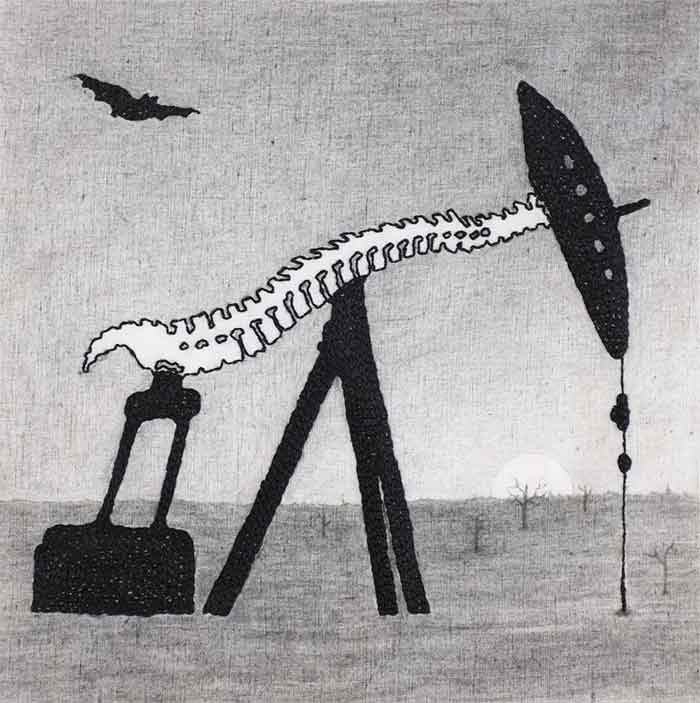
[image: “Human Miasma” by Priti Gulati Cox: embroidery and graphite on khadi fabric]

Cultivation, deforestation, mining, livestock raising, and other activities degrade and destroy wildlife habitat, leaving animals no choice but to move closer to humans, potentially bringing pathogens along with them. Suburban sprawl and tourism (especially “eco-tourism”) also bring humans and wildlife closer together. Hunting involves the most intimate contact with wild animals; indeed, the prevailing hypothesis is that the hunting of horseshoe bats probably kicked off the chain of events that led to the current coronavirus pandemic.

Humans have lived with domestic animals for millennia, and our bodies may have learned how to deal with the pathogens passed back and forth. But when ecosystems are disturbed or encroached upon, novel zoonotic viruses can move from wildlife into domestic animals and from there into humans. There is strong circumstantial evidence that the 1918-19 influenza pandemic, which killed more than 675,000 Americans and as many as 50 million worldwide, began with the flu virus jumping from swine into humans in Haskell County, Kansas, moving on to what is now Fort Riley with new army recruits, and from there reaching the battlefields of World War 1.

The horrific wildfires that were ignited across Southeast Asia for land-clearing in 1997-98, combined with a regional drought, killed off many fruit-bearing trees in the forests of Malaysia. Fleeing the dead forests, fruit bats found sustenance in domestic orchards, bringing with them the Nipah virus. Swine being raised within the orchards became infected through the bats’ virus-laden droppings and passed the virus on to the people who handled them. Nipah brings high mortality among both hogs and human population, killing approximately 50 percent of the people it infects.

We saw during the past year that once the new coronavirus gained a foothold in our species, the modern human propensity for long-distance travel quickly turned local outbreaks into a pandemic. Air conditioning, another technology with severe climate effects, was also implicated in Covid-19 outbreaks. Summertime, a season in which respiratory viruses typically wane, instead saw dramatic infection peaks throughout the Sun Belt as people escaped the heat and gathered in tightly enclosed, air-conditioned spaces.

Vacation cruises, which should have been banned decades ago given their exploitation of workers and heavy effect on the oceans and atmosphere, hosted some of the worst early outbreaks. The industrial meat industry, despoiler of soils and water, prolific emitter of greenhouse gases, also turned out to be an efficient viral incubator.

In some cases, greenhouse warming itself creates conditions for spread of zoonotic infection. In East and North Africa, for example, droughts have become more frequent and intense thanks to climate change. Many pastoralists have responded by replacing their cattle herds with camels, which, famously, can survive for long stretches of time without access to water. As a result, much larger numbers of camels are now in close contact with humans in the region. Worryingly, the coronavirus that causes Middle East respiratory syndrome is circulating in dromedary camel populations in several countries in the region.

MERS originated in bats, has become endemic in camels, and then over the past decade has repeatedly made the jump from camels into humans. It does not spread as readily from person to person as the Covid-19 virus, but it is orders of magnitude more deadly. Of approximately 2,500 people who have been infected by the MERS virus since 2012, one-third have died. As droughts worsen, farmers and herders take their camels on increasingly long journeys in search of forage. Trips often extend for days, and, without fuel for fire building, the herders often must sleep close to the camels for warmth. For want of fire and water, they also may sustain themselves by drinking the camels’ milk raw. All of this increases the risk of virus transmission.

We may wriggle out from under the Covid-19 pandemic by year’s end, but we won’t be in the clear. It is likely that we will continue to encounter novel coronaviruses. Never before the year 2000 were coronaviruses known to emerge from bats into human populations and cause highly lethal disease in humans. In the two decades since, however, there have been three such events, involving SARS-CoV-1, which caused the 2002-2004 “severe acute respiratory syndrome” (SARS) pandemic; MERS-CoV, which causes MERS; and SARS-CoV-2, the cause of Covid-19.

In a 2020 article in the journal Cell, David Morens and Anthony Fauci – yes, that Dr. Fauci – wrote that as we continue disrupting the ecosphere, pathogens are finding their way into human populations with increasing frequency: “The COVID-19 pandemic is yet another reminder, added to the rapidly growing archive of historical reminders, that in a human-dominated world, in which our human activities represent aggressive, damaging, and unbalanced interactions with nature, we will increasingly provoke new disease emergences. We remain at risk for the foreseeable future. COVID-19 is among the most vivid wake-up calls in over a century. It should force us to begin to think in earnest and collectively about living in more thoughtful and creative harmony with nature, even as we plan for nature’s inevitable, and always unexpected, surprises.”

Our encroachment on the ecosphere has opened a Pandora’s box. In addition to the viruses causing SARS, MERS, and Covid-19, some of the other bat coronaviruses studied so far have all the necessary pathogenic tools for attacking humans, and they have been shown to infect and sicken laboratory mice. According to a paper authored by a national group of ten researchers in the field, there are “enormous groups of bat coronaviruses distributed globally,” and many, like SARS-CoV-2, are “functionally preadapted” to infecting humans. That preadaptation may be related to similarities among bats, minks, cats, humans, and some other mammalian species in our lung-cell membranes’ susceptibility to entry by this group of viruses.

There’s more. Since 2017, another coronavirus – emerging, like the Covid-19 and SARS viruses, from horseshoe bats – has been triggering deadly outbreaks among piglets in China. In the laboratory, the new bug appears to have the genetic potential to infect human airway and intestinal cells. Three different coronaviruses that cause severe disease in cattle, horses, and swine are closely related to another virus that has long been causing the common cold in humans. These livestock viruses may acquire, through genetic exchange, the ability to infect us.

Scientists are becoming increasingly concerned about the propensity of different coronavirus strains to engage in recombination, that is, to swap blocks of genetic code with one another. Reportedly, the code for shaping the “spike” protein that allows the virus to enter host cells is especially prone to recombination, raising concerns that code for versions of the spike that can serve as “keys” for opening human cells to infection could pass from human pathogens like the Covid-19 or common-cold viruses into livestock viruses. The latter might thereby acquire the ability to infect the people who work around them. In researchers’ words, “[C]oronaviruses can change rapidly, drastically, and unpredictably via recombination with both known and unknown lineages.”

The ten scientists who warned that coronaviruses are functionally preadapted to the human body further stressed that their data “reaffirm what has long been obvious: that future coronavirus transmissions into humans are not only possible, but likely. Scientists knew this years ago and raised appropriate alarm. Our prolonged deafness now exacts a tragic price.”

What’s good for the ecosphere is good for human health, and we are not helpless victims. Escaping ecological catastrophe and reducing the frequency of pandemics that might be lurking in the decades ahead is well within our capability, but it will require assiduous respect for ecological limits and great restraint in our interactions with nature.

Greed and the European Super League

Binoy Kampmark


Suffocating the grassroots.  Mocking the working class origins of the game.  World football, and primarily European club football, has long done away with loyalties in favour of cash and contract.  The professionalization of the game has seen a difficult relationship between fan, spectator and sporting management, none better exemplified than the price of tickets, the role of branding and sponsorship.

The apotheosis of this has arrived in the form of a proposed breakaway European Super League.  Like a mafia-styled cartel, twelve of Europe’s elite football clubs have banded together to create their own, sealed competition.  The English contribution will be Liverpool, Manchester City, Manchester United, Tottenham, Chelsea and Arsenal.  Juventus, AC Milan and Inter provide the Italian contingent; Barcelona, Real Madrid and Athletico Bilbao supply the Spanish element.  To these will be added three as yet unconfirmed founding members and five annual qualification spots. The competition itself will feature two small leagues of ten clubs each, with the highest finishers facing each other in an elimination phase to eventually reach a deciding final in May.

The decision reeks of smoky, backroom secrecy, and promises to supplant the UEFA Champions League.  Initial infrastructure payments between the clubs will be 3.5 billion euros, followed by 10 billion euros for an initial period of commitment.  As with any such decisions made in the stratosphere of corrupt, gold crazed management, the foot soldiers, front line workers and fans are merely incidental.  In some cases, not even coaches were consulted.  Liverpool’s Jürgen Klopp was left dumbfounded. “I heard for the first time about it yesterday,” he told Sky Sports.  “We are not involved in any process, not me or the players.”

For Klopp, accepting the proposal was tantamount to rigging the competition, creating a closed shop where the relegation and admission of clubs would be impossible.  “I like the fact that West Ham might play Champions League next year.  I don’t want them to, because I want us to be there, but I like that they have the chance.”  For Klopp, “the Champions League is the Super League, in which you do not always end up playing against the same teams.”  His nightmare: a perennial bout of competition between the same football clubs, a franchise model, in other words, commonly accepted in US sports.  (Consider Major League Soccer, NBA basketball and NFL gridiron football.)  “Why should we create a system where Liverpool faces Real Madrid for 10 straight years?”  Klopp’s observations impressed former Manchester United footballer turned commentator Gary Neville.  “He’s destroyed his owners on national television.”

Traditional football officialdom is also furious at the move.  UEFA president Aleksander Čeferin cast a withering eye over the idea, focusing his ire on Juventus chairman Andrea Agnelli and Manchester United executive vice-chairman Ed Woodward.  Woodward, the furious president claimed, had expressed his satisfaction with the existing stable of UEFA reforms in a phone call.  But it was obvious that “he had already signed something else.”  Agnelli, however, took the crown, being “the biggest disappointment of all.  I have never seen a person that would lie so many times, so persistently as he did – it is unbelievable.”

On April 18, UEFA, the English Football Association and the Premier League, the Royal Spanish Football Federation (RFEF) and LaLiga, and the Italian Football Federation (FIGC) and Lega Serie A issued a joint statement of condemnation.  Were the Super League to be established, the various bodies, including FIFA, would “remain united in our efforts to stop this cynical project,” one “founded on the self-interest of a few clubs at a time when society needs solidarity more than ever.”  Judicial and sporting measures were promised.  Bans on the clubs will be implemented, affecting playing at all levels: domestic, European or global.  Participating players will not be able to represent their country.

With some of these governing bodies, virtue has been a difficult thing.  FIFA has a lengthy record of diddling finances, resorting to bribery and greasing backdoor deals.  Over the years, multinational investigations have been conducted into various executive members of the organisation and associated bodies, including former chief Sepp Blatter.  But on the matter of the Super League, the righteous were proving noisy, with the organisation keen to “clarify that it stands firm in favour of solidarity in football and an equitable redistribution model which can help football as a sport, particularly at the global level”.

Attempts to punish the renegades may not be as fruitful as detractors of the Super League think.  Memories seem to have been rinsed on that score, but the English Premier League itself broke away from the English Football League in 1992.  Officialdom, as it was bound to be, was enraged, as were the fans.

The Super League proposal is drawing attention to an already decaying structure, one that sees little by way of revenue returning to the lower leagues and clubs that were already struggling prior to the COVID-19 pandemic.  With that in mind, it is hard to take the views of Prince William, who is president of England’s Football Association, too seriously.  Well it is that “we must protect the entire football community – from the top level to the grassroots – and the values of competition and fairness,” but that project is hardly flourishing as things stand.

Astronomical transfer fees already keep the top clubs in the clouds, meaning that the Champions League already resembles, on some level, Klopp’s nightmare of repetitive competition.  What the franchise Super League model proposes to do is take it that one step further, creating a closed shop.

Commentary abounds on whether this play is part of a negotiating tactic to better improve the financial standing of the twelve clubs.  With so much football already being played, a mid-week Super League fixture seems like exhausting surfeit.  But for those keeping an eye on football politics, the idea of a reformed European league has been on the table for some years.  In October 2020, the notion of a European Premier League, sponsored by JP Morgan and comprising 18 clubs, was already being mooted.  Alarm was sounded by the words of Barcelona president Josep Maria Bartomeu, who claimed in his resignation statement that the club had “accepted a proposal to participate in a future European Super League”.

Were this league’s establishment culminate in savage retributions – bans, relegations, prohibitions – as promised by the authorities, a standalone creation, hoovering up sponsorships and broadcasting revenues, may well be the default outcome.  Little wonder that the finance wonks suggest keeping the selfish twelve within the tent rather than letting them scamper off.

Macron’s Global Security bill passed into law in France

Will Morrow


Last Thursday, April 15, the French National Assembly voted to approve the Macron government’s “global security” bill, which significantly expands police powers. The law had already been approved by the Senate in February; with Thursday’s vote, it now comes into law.

The law has triggered mass protests since it was first placed before the National Assembly in November last year. Its centerpiece, Article 24, restricts the right of the population to film the police. While presented in the name of defending police officers from targeted attacks, its clear aim is to provide police, who are regularly filmed engaged in violent attacks on protesters and workers, with impunity to violently assault the population, by preventing the population from filming them.

In the face of protests of tens of thousands, the Macron government had pledged to “rewrite” Article 24. The new version no longer explicitly mentions the “sharing of images” of police agents. Instead, it criminalizes any act which “provoke[s], with the obvious aim that their physical and mental safety will be subject to attack, the identification of an agent of the national police, military or gendarmerie while they are acting as part of a police operation.” It carries a maximum sentence of five years’ jail and a €75,000 fine.

Protesters hold placards reading "Police Blurred, Blind Justice" against the newly voted Global Security law as French President Emmanuel Macron visits the police headquarters in Montpellier, Southern France, Monday April, 19, 2021. (Guillaume Horcajuelo/pool photo via AP)

In practice, anyone who publishes a video identifying a police agent faces the danger of being criminally prosecuted, and the onus will be placed on them to demonstrate that they did not have an “obvious aim” of bringing about an attack on an officer.

Workers and young people in France and internationally have been outraged at the videos of the violence and brutality of the French state toward peaceful protests. In 2018, millions witnessed the videos of riot police dragging protesters across the road, shooting rubber bullets and tear gas canisters, and using attack dogs and truncheons against “yellow vest” protesters opposing social inequality.

Last November, hundreds of thousands joined protests across the country in response to incidents of police brutality that were caught on video. On November 26, Loopsider published a video of a vicious police assault on music producer Michel Zecler in his Paris recording studio. Zecler was beaten for over 20 minutes. He was then thrown in prison for 48 hours and falsely charged with assault, and only released after police were presented with the CCTV footage proving what had actually happened.

The following week, police had been filmed on a rampage at the Republic Square in the center of the city, beating refugees who were camped there in protest at the lack of housing and government support.

The Macron government is seeking to oppose the spread of videos of police because it is aware of the explosive opposition to the repression by his government against the working population.

The “global security” law also includes other measures further strengthening the police. For the first time, it authorizes in legislation the use of drones for police surveillance, which had already been in place in practice. Drones are permitted to be used to monitor all protests. Police are to be equipped with body cameras which are to stream live video directly to headquarters.

The bill includes no restrictions on the use of bodycam footage by automated facial recognition technology. Last December, the Macron government enacted a series of executive decrees which expanded the conditions in which police could collect detailed files on the population, including the views and political activities of citizens. It removed a clause in the existing police rules which explicitly precluded the use of police files by large-scale automated facial recognition technology.

The legal liberties association Quadrature du Net noted at the time: “If, via the global security law, all protesters can be filmed at a protest, and … a large portion of them can be identified via facial recognition technology, the [police filing systems] have already prepared for them a complete system for centralizing all the information concerning them, without this surveillance ever being authorized nor weighed by a judge.”

Under the “global security” law, police are also permitted to carry a weapon with them at all times in public places, such as restaurants and cinemas, including when they are off duty.

In an interview with the right-wing daily Le Figaro on Sunday, Emmanuel Macron said he would meet his election pledge to create 10,000 new positions in the police before the end of his five-year term next year. “Every French person will see more blue on the ground in 2022 than in 2017,” he said.

The National Assembly’s vote approving Macron’s police-state law came as the official, under-counted death tally of the coronavirus in France surpassed 100,000. The mass death is the result of the policies pursued by Macron, who has refused any scientific lockdown policy that would require the closure of non-essential production. Schools and non-essential workplaces have been kept open so that workers could remain on the job, and profits continue to grow for French corporations.

Alongside this death on a mass scale, the year has witnessed the further enrichment of a tiny corporate elite. Its 42 billionaires now have a combined wealth of $512.2 billion, after an increase of more than 66 percent in a single year. The French ruling class views with fear the eruption of social anger against its policies of profiteering on mass death and is building up the forces of state repression against that.

The Socialist Party, the Greens and Jean-Luc Mélenchon’s Unsubmissive France have all postured fraudulently as opponents of Macron’s police law. The Socialist Party has announced that it will be launching a legal challenge against the entire bill.

When it was in power under François Hollande, the Socialist Party significantly expanded police powers, including the enactment of a two-year state of emergency under Hollande, and the suspension of civil liberties, voted for at the time by Mélenchon’s La France Insoumise. Macron’s “global security” law expands police powers in the same direction as pursued under Hollande with La France Insoumise’s support.

UK sends warships to the Black Sea, targeting Russia

Thomas Scripps


The UK is deploying warships to the Black Sea next month, further ratcheting up provocations by the United States and its stooge regime in Ukraine against Russia.

Russia has amassed substantial forces near the Ukrainian border, after the Ukraine regime endorsed a strategy to “recover” Crimea. The strategically vital peninsular was annexed by Russia following the US and European Union (EU) backed far-right 2014 coup in Kiev.

A spokesperson for the Ministry of Defence told the Times, “The UK and our international allies are unwavering in our support for Ukraine's sovereignty and territorial integrity.”

The Royal Navy Type 45 Destroyer, HMS Defender. HMS Defender is the fifth of the Navy’s six £1 billion Type 45 destroyer (credit: Open Government Licence)

They added, “We are working closely with Ukraine to monitor the current situation and continue to call on Russia to de-escalate.

“Our armed forces continue to support Ukraine through our training mission Operation Orbital, which has trained over 20,000 members of the armed forces of Ukraine, and the UK-led Maritime Training Initiative.”

Britain is sending a Type 45 destroyer, equipped with anti-aircraft missiles, and an anti-submarine Type 23 frigate. F-35B Lightning stealth jets and Merlin helicopters based on the HMS Queen Elizabeth aircraft carrier will be on standby to provide support—an international treaty currently prohibits aircraft carriers themselves from entering the Black Sea, although this arrangement is under threat .

The UK already has special forces and Royal Air Force (RAF) aircraft deployed to the region. An SAS special forces team and Royal Signals electronic unit were officially sent to Ukraine last week, alongside a US special operations team, to “monitor Russian activity”. Six RAF Typhoon jets, armed with Paveway bombs and Brimstone missiles, have been despatched to Romania as part of a NATO “air policing mission” to patrol the Black Sea region.

These developments make clear that US President Joe Biden’s decision to cancel the deployment of two American warships to the region last week was a tactical pause in a still escalating conflict.

Russia responded to the news that US warships were on their way with a statement warning of a high likelihood of serious “incidents”. Deputy Foreign Minister Ryabkov said, “There is absolutely nothing for American ships to be doing near our shores, this is purely a provocative action. Provocative in the direct sense of the word: they are testing our strength... They will not succeed.

“We warn the United States that it will be better for them to stay far away from Crimea and our Black Sea coast. It will be for their own good.”

There are currently more than a dozen Russian naval vessels on deployment in the Black Sea. Fifty Russian fighter jets, bombers and attack aircraft are engaged in “exercises over the Black Sea”, according to Russian news organisation Interfax, including “missile launches and bombardment of naval targets.” The Russian air force and Black Sea fleet are also scheduled to carry out joint exercises designed to “ensure security in the Black Sea”.

Military planners in the US and allied militaries clearly drew from this warning the necessity of getting their pieces in place before making such an incendiary move. The US has neither confirmed nor denied the dispatch of its warships or the cancellation of the operation. Meanwhile, the UK will establish a significant presence.

British forces have been leading participants in anti-Russian provocations in Ukraine and Eastern Europe. Last September, 250 soldiers in the 16th Air Assault Brigade, including from its elite Pathfinder platoon, parachuted into Ukraine just 100 miles from Crimea in the largest British army parachute drop in decades. They took part in an 8,000 strong exercise with Ukrainian, US and Canadian forces.

Ukrainian General Yevhan Moysiuk commented, “The main message for Russia is that the UK is our true and reliable partner who will help us in our hardship. The UK is ready to stand up to Russian aggression with us.”

Later this year, British soldiers will take part in NATO’s Operation Cossack Mace, involving 1,000 troops from at least five NATO member states and which will simulate offensive strikes on positions held by pro-Russian and Russian forces.

The UK’s taking a lead in additional deployments to the Black Sea is proof that the ruling class intends to follow through on the warmongering plans outlined in the recent Integrated Review of foreign and defence policy.

The document positioned the UK at the head of the US war drive against Russia, describing the country as the “most acute threat to our security.” It argued that the UK should place itself “at the forefront of implementing NATO’s new Deterrence and Defence Concept” across the Euro-Atlantic region and supporting “others in the Eastern European neighbourhood and beyond to build their resilience to state threats. This includes Ukraine, where we will continue to build the capacity of its armed forces.”

The review also called for an increase in the UK’s stockpile of nuclear weapons to meet “the full range of state nuclear threats.”

Military deployments are being matched with an escalation of anti-Russian agitation and propaganda. On Sunday, the Czech Republic claimed that two Russian agents—the same two alleged by Britain to have been responsible for the Salisbury poisonings—were behind an explosion at a Czech munitions factory in 2014.

UK Foreign Secretary Dominic Raab quickly declared the UK’s “full support” for “our Czech allies, who have exposed the lengths that the GRU [the Russian secret service] will go to in their attempts to conduct dangerous and malign operations.”

He continued, “This shows a pattern of behaviour by Moscow, following the novichok attack in Salisbury. We are as determined and committed as ever to bring those responsible for the attack in Salisbury to justice and commend the actions of the Czech authorities to do the same.”

Tom Tugendhat, Conservative MP and chair of the Commons Foreign Affairs Committee, tweeted, “Czech Republic is standing up to Putin’s Russia committing warlike acts in Prague. They’re right and all NATO must stand with them. We are all threatened by such violence. We defend ourselves best when we defend each other.”

The UK’s stepped-up aggression against Russia is bound up with the crisis of British imperialism—attempting to maintain its position on the world stage after Brexit and to create an outlet for explosive domestic tensions—and of world capitalism, racked by escalating class and nationalist antagonisms. The ruling class in every country is seeking a way out through an increasingly reckless deployment of military force, turning the world into a tinderbox. Provocations in the Black Sea have already come close to sparking a major confrontation.

In November 2018, Ukrainian naval vessels entered Russian-claimed waters near Crimea and were fired upon and seized by the Russian Coast Guard. The Ukrainian regime declared martial law and put the army on full alert, receiving assurances from Washington that it would provide “full support, full assistance, including military assistance.”

In June 2015, Russian jets intercepted the US destroyer USS Ross after the ship set a course which would have taken it into Russian territorial waters in the Black Sea—the ship changed course. Russian military sources latter commented, “Scrambled Su-24 attack jets demonstrated a readiness to forcibly suppress border violations and defend the country’s interest.”

The deployment of more forces to Ukraine and the Black Sea makes military confrontation ever more likely. Any incident could escalate into a full-scale engagement and war between nuclear-armed states. The urgency of the situation demands an urgent struggle by the international working class to form an anti-war movement to bring an end to the insane warmongering of the ruling elite.