11 Aug 2021

Biden Must Call Off the B-52s Bombing Afghan Cities

Medea Benjamin & Nicolas J. S. Davies


Afghanistan2
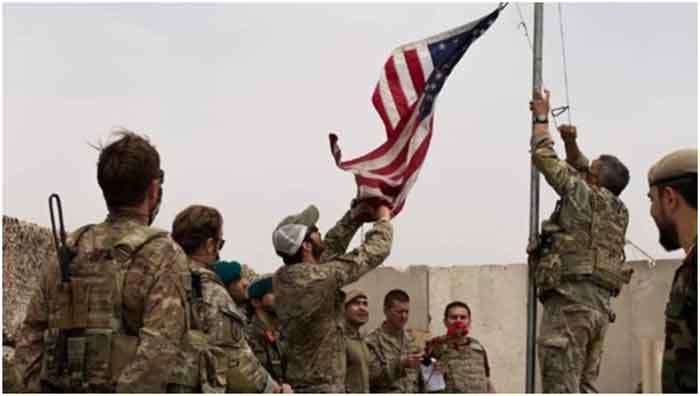
Handover ceremony at Camp Anthonic, from US Army to Afghan Special Forces, Helmand province, Afghanistan, May 2, 2021.

Nine provincial capitals in Afghanistan have fallen to the Taliban in six days – Zaranj, Sheberghan, Sar-e-Pul, Kunduz, Taloqan, Aybak, Farah, Pul-e-Khumri and Faizabad – while fighting continues in four more – Lashkargah, Kandahar, Herat & Mazar-i-Sharif. U.S. military officials now believe Kabul, Afghanistan’s capital, could fall in one to three months.

It is horrific to watch the death, destruction and mass displacement of thousands of terrified Afghans and the triumph of the misogynist Taliban that ruled the nation 20 years ago. But the fall of the centralized, corrupt government propped up by the Western powers was inevitable, whether this year, next year or ten years from now.

President Biden has reacted to America’s snowballing humiliation in the graveyard of empires by once again dispatching U.S. envoy Zalmay Khalilzad to Doha to urge the government and the Taliban to seek a political solution, while at the same time dispatching B-52 bombers to attack at least two provincial capitals.

In Lashkargah, the capital of Helmand province, the U.S. bombing has already reportedly destroyed a high school and a health clinic. Another B-52 bombed Sheberghan, the capital of Jowzjan province and the home of the infamous warlord and accused war criminal Abdul Rashid Dostum, who is now the military commander of the U.S.-backed government’s armed forces.

Meanwhile, the New York Times reports that U.S. Reaper drones and AC-130 gunships are also still operating in Afghanistan.

The rapid disintegration of the Afghan forces that the U.S. and its Western allies have recruited, armed and trained for 20 years at a cost of about $90 billion should come as no surprise. On paper, the Afghan National Army has 180,000 troops, but in reality most are unemployed Afghans desperate to earn some money to support their families but not eager to fight their fellow Afghans. The Afghan Army is also notorious for its corruption and mismanagement.

The army and the even more beleaguered and vulnerable police forces that man isolated outposts and checkpoints around the country are plagued by high casualties, rapid turnover and desertion. Most troops feel no loyalty to the corrupt U.S.-backed government and routinely abandon their posts, either to join the Taliban or just to go home.

When the BBC asked General Khoshal Sadat, the national police chief, about the impact of high casualties on police recruitment in February 2020, he cynically replied, “When you look at recruitment, I always think about the Afghan families and how many children they have. The good thing is there is never a shortage of fighting-age males who will be able to join the force.”

But a police recruit at a checkpoint questioned the very purpose of the war, telling the BBC’s Nanna Muus Steffensen, “We Muslims are all brothers. We don’t have a problem with each other.” In that case, she asked him, why were they fighting? He hesitated, laughed nervously and shook his head in resignation. “You know why. I know why,” he said. “It’s not really our fight.”

Since 2007, the jewel of U.S. and Western military training missions in Afghanistan has been the Afghan Commando Corps or special operations forces, who comprise only 7% of Afghan National Army troops but reportedly do 70 to 80% of the fighting. But the Commandos have struggled to reach their target of recruiting, arming and training 30,000 troops, and poor recruitment from Pashtuns, the largest and traditionally dominant ethnic group, has been a critical weakness, especially from the Pashtun heartland in the South.

The Commandos and the professional officer corps of the Afghan National Army are dominated by ethnic Tajiks, effectively the successors to the Northern Alliance that the U.S. supported against the Taliban 20 years ago. As of 2017, the Commandos numbered only 16,000 to 21,000, and it is not clear how many of these Western-trained troops now serve as the last line of defense between the U.S.-backed puppet government and total defeat.

The Taliban’s speedy and simultaneous occupation of large amounts of territory all over the country appears to be a deliberate strategy to overwhelm and outflank the government’s small number of well-trained, well-armed troops. The Taliban have had more success winning the loyalty of minorities in the North and West than government forces have had recruiting Pashtuns from the South, and the government’s small number of well-trained troops cannot be everywhere at once.

But what of the United States? Its deployment of B-52 bombers, Reaper drones and AC-130 gunships are a brutal response by a failing, flailing imperial power to a historic, humiliating defeat.

The United States does not flinch from committing mass murder against its enemies. Just look at the U.S.-led destruction of Fallujah and Mosul in Iraq, and Raqqa in Syria. How many Americans even know about the officially-sanctioned massacre of civilians that Iraqi forces committed when the U.S.-led coalition finally took control of Mosul in 2017, after President Trump said it should take out the families of Islamic State fighters?

Twenty years after Bush, Cheney and Rumsfeld committed a full range of war crimes, from torture and the deliberate killing of civilians to the “supreme international crime” of aggression, Biden is clearly no more concerned than they were with criminal accountability or the judgment of history. But even from the most pragmatic and callous point of view, what can continued aerial bombardment of Afghan cities accomplish, besides a final but futile climax to the 20-year-long U.S. slaughter of Afghans by over 80,000 American bombs and missiles?

The intellectually and strategically bankrupt U.S. military and CIA bureaucracy has a history of congratulating itself for fleeting, superficial victories. It quickly declared victory in Afghanistan in 2001 and set out to duplicate its imagined conquest in Iraq. Then the short-lived success of their 2011 regime change operation in Libya encouraged the United States and its allies to turn Al Qaeda loose in Syria, spawning a decade of intractable violence and chaos and the rise of the Islamic State.

In the same manner, Biden’s unaccountable and corrupt national security advisors seem to be urging him to use the same weapons that obliterated the Islamic State’s urban bases in Iraq and Syria to attack Taliban-held cities in Afghanistan.

But Afghanistan is not Iraq or Syria. Only 26% of Afghans live in cities, compared with 71% in Iraq and 54% in Syria, and the Taliban’s base is not in the cities but in the rural areas where the other three quarters of Afghans live. Despite support from Pakistan over the years, the Taliban are not an invading force like Islamic State in Iraq but an Afghan nationalist movement that has fought for 20 years to expel foreign invasion and occupation forces from their country.

In many areas, Afghan government forces have not fled from the Taliban, as the Iraqi Army did from the Islamic State, but joined them. On August 9th, the Taliban occupied Aybak, the sixth provincial capital to fall, after a local warlord and his 250 fighters agreed to join forces with the Taliban and the governor of Samangan province handed the city over to them.

That very same day, the Afghan government’s chief negotiator, Abdullah Abdullah, returned to Doha for further peace talks with the Taliban. His American allies must make it clear to him and his government, and to the Taliban, that the United States will fully support every effort to achieve a more peaceful political transition.

But the United States must not keep bombing and killing Afghans to provide cover for the U.S.-backed puppet government to avoid difficult but necessary compromises at the negotiating table to bring peace to the incredibly long-suffering, war-weary people of Afghanistan. Bombing Taliban-occupied cities and the people who live in them is a savage and criminal policy that President Biden must renounce.

The defeat of the United States and its allies in Afghanistan now seems to be unfolding even faster than the collapse of South Vietnam between 1973 and 1975. The public takeaway from the U.S. defeat in Southeast Asia was the “Vietnam syndrome,” an aversion to overseas military interventions that lasted for decades.

As we approach the 20-year anniversary of the 9/11 attacks, we should reflect on how the Bush administration exploited the U.S. public’s thirst for revenge to unleash this bloody, tragic and utterly futile 20-year war.

The lesson of America’s experience in Afghanistan should be a new “Afghanistan syndrome,” a public aversion to war that prevents future U.S. military attacks and invasions, rejects attempts to socially engineer the governments of other nations and leads to a new and active American commitment to peace, diplomacy and disarmament.

Propaganda offensive proclaiming end of UK pandemic wave unravels as COVID case decline ends

Tania Kent


The UK recorded 23,510 new COVID-19 cases yesterday, meaning the total number of cases in the last seven days is 7.3 percent higher than the week before.

This significant development will not halt the ongoing efforts to proclaim the predicted extent of the third wave of the pandemic greatly exaggerated, or the insistence that the vaccination programme means that we can all “learn to live with the virus.”

A drop in COVID infections from the end of July became the occasion for demands that no mitigating measures be considered going forward, and above all that there be no talk of re-implementing a lockdown.

Daily recorded infections had more than halved from mid-July over a two-week period from a high of 54,674 on July 17 to 22,287 on August 2. The drop continued into a third week, prompting some scientists to claim that we have “turned a corner” and others to suggest that “herd immunity” had been reached. There were even demands to stop recording infections as this was misleading given that only the declining rate of hospitalisations mattered.

The “dip” has, however, been short-lived. The virus spread is speeding up once again as the impact of “Freedom Day” on July 19, when Prime Minister Boris Johnson ended all compulsory measures to reduce the spread of the virus and opened up night clubs and mass social events, begins to be felt.

On what has been dubbed "Freedom Day", marking the end of coronavirus restrictions in England, people walk over London Bridge a popular walking route for commuters from London Bridge train and tube stations in London, towards the City of London, during the morning rush hour, Monday, July 19, 2021. (AP Photo/Matt Dunham)

But even as this became apparent, Neil Ferguson, epidemiologist from Imperial College London and a former member of the government’s Scientific Advisory Group for Emergencies (SAGE), who first called for the national lockdown in March of 2020 and predicted that “Freedom Day” could lead to 200,000 daily infections, was wheeled out to assert his belief that “further lockdowns are unlikely” to be required.

Despite acknowledging that COVID cases are expected to rise again in September, when school and university terms begin and more workers return to the office, he insisted, “The UK, like elsewhere, would probably have to accept the continuing presence of COVID-19 as a potentially lethal threat.”

“I suspect for several years, we will see additional mortality,” he continued. “There’s a risk in the winter coming of thousands to tens of thousands more deaths”.

Others also insisted that “living with the virus” means accepting large numbers of fatalities. Professor Paul Hunter, an infectious disease expert at the University of East Anglia, warned that numbers of positive COVID cases will “remain high for our lifetimes” and the coronavirus will never be eradicated. It will, he said, become endemic and circulate throughout the country for generations.

The Mail Online commented that “Scientists believe the virus—called SARS-CoV-2—will eventually morph into one that causes a common cold as immunity builds up over time.”

In contrast, more serious scientists warned against a “premature” interpretation and systematically unraveled the complex circumstances that produced the short-term decline in cases.

Epidemiologist John Edmunds at the London School of Hygiene & Tropical Medicine (LSHTM), referring to the initial dip, said, “One thing it doesn’t mean, is that the United Kingdom has built up enough population immunity through vaccination and natural infection to stop the virus spreading.”

According to Edmunds, the drop might appear more pronounced because of an additional spike in infections in England in mid-July, caused by large crowds watching the delayed Euro 2020 football tournament in pubs, private homes, stadiums and town centres.

There were also many people alerted by NHS contact-tracing apps that they had recently been in close proximity to someone who tested positive. This spate of alerts, derisively dubbed the ‘pingdemic’, where many people were forced to self-isolate, “might have done its job in slowing the spread of the virus”, according to Edmunds.

Another major reason for the temporary decline is the end of the school term. Although officially schools in England closed around July 23, a school-related decline in cases could already be apparent in today’s data because some finished a week or so earlier, older students were off school after their exams, and around 20 percent of pupils were self-isolating by that point. Schools were a key vector in the spread of the virus once reopened with the support of the Labour Party and trade unions.

There has also been a dramatic drop in testing. On July 15, 1,177,716 lateral flow tests were conducted. On July 25, as schools fully closed, the numbers dropped to 791,044.

Deepti Gurdasani, leading data scientist and staunch opponent of “herd immunity”, wrote of the increase in infections in the latest data, “I was hoping that declines would hold at least until schools re-opened, but much depends on the impact of 19th July on behaviour, and it looks like rises may resume earlier. These will no doubt accelerate with school openings. It’s still beyond me why govt [government] removed mask and distancing mandates, and caps on gatherings, allowing large events to go ahead prematurely, creating surges and continuing high transmission (which we’ve had for over a month now) - while >40% remain not fully vaccinated.

“This will further fuel the fire. Let’s remember we got to 50-60 hospitalisations/day for children - the impact of high infection in children just before term ended. What level of illness in children does our gov’t consider acceptable?”

The proportion of those in hospital aged 18-34 years now stands at 20.4 percent, a fourfold increase from the height of the pandemic in January. Despite around 75 percent of the UK adult population now being fully vaccinated, there is still a large pool of susceptible and mainly young people. The highest rate of infection is currently in people aged 16-24, most of whom are either unvaccinated or have not yet received both jabs.

An estimated 34,000 children in the UK are already suffering from Long COVID. This includes 11,000 children aged 2-11 and 23,000 aged 12-16, according to a survey conducted by the Office for National Statistics (ONS). The ONS estimates also suggest that 380,000 people in the UK have experienced Long COVID for at least a year. Overall, just under one million people are thought to be suffering from the syndrome.

Many researchers and scientists are predicting that that the return of school pupils, university students and office workers in September, as well as the possibility that protection from the first round of vaccines will wane, is likely to fuel a larger rise. “I think the summer will be a bit of a firebreak, but that the pandemic will slowly grow again and things will escalate in the autumn,” says Immunology Professor, Alex Richter. “It is by no means all over yet.”

Evidence has also been published showing that vaccinated people infected with the Delta coronavirus variant may be able to spread it just as easily as those who have yet to be immunised. Although the COVID jabs appear to reduce an individual’s overall risk of catching Delta, if infected there is “limited difference” in the viral load between the vaccinated and unvaccinated, according to Public Health England (PHE).

PHE commented, “The vaccine is less effective against Delta than against some other variants, but there are even more evasive variants around in the world.”

Dr Simon Clarke, a microbiology professor at Reading University, told Sky News that if vaccination “only blocks transmission by, say, 50 percent you’ll never get herd immunity even with a 100 per cent vaccine uptake.”

Experts have stressed the need for global surveillance, particularly of new variants, and for vaccination to bring COVID infections under control, warning of the implications of foreign travel over the summer and the return of international students to universities in the autumn.

The pandemic is global and its eradication must be global. The situation confronting the world’s population is at a crisis point. In the United States there is a massive surge of COVID-19 infections due to the spread of the Delta variant, with the seven-day moving average of daily new cases rocketing by over 500 percent.

Israel, one of the world’s front-runners in COVID-19 vaccinations, is reinstating restrictions and warning of a fresh lockdown as serious cases surge. Hospitals could be close to capacity within 20 days based on the current trajectory of the virus. Cases in Australia, touted as a success story in blocking the spread of COVID, are surging.

Ten years after the London riots: More cuts and state repression

Thomas Scripps


Ten years ago, on August 6, riots erupted in London and other major English cities following the police murder of the unarmed father of four Mark Duggan.

The riots blew the lid off a society wracked by poverty and inequality and the collapse of any concern for democracy in the ruling class. A decade later, both of Britain’s main parties are led by politicians who cut their teeth in the mass repression of working-class youth which followed.

The 2011 riots took place less than a year after Conservative chancellor George Osborne announced billions in spending cuts to help repay the debt taken on by the government bailing out the banks after the 2008-9 financial crash. This crash followed an orgy of profit-making and the looting of public resources through privatisations. In the 30 years before, the richest one percent had more than doubled their share of national income.

Shop fire in the Party Superstore, Lavender Hill, Clapham Junction, England, 8 August, 2011 (Andy Armstrong, Wikimedia Commons)

Research carried out soon after the events showed that economic deprivation, anger at police brutality and discrimination, and hostility to social inequality were the main drivers of the riots. Investigations since have confirmed these findings.

A January 2019 report, “Re-reading the 2011 English riots”, explains, “Deprivation was the strongest predictor of whether a riot occurred in a London borough”, “The boroughs with more ‘stop and search’ in the two-and-a-half years beforehand were those more likely to see rioting in August 2011” and “Many people saw themselves in opposition to a societal system they perceived as unjust and illegitimate”.

The authors write, “Participants referred to cuts to youth funding, or increasing poverty, or to other economic disadvantages affecting young people, their community or reference group. Many linked particular disadvantages to their long-standing opposition to the government or the social system more generally.”

Faced with this outpouring of anger, the ruling class bared its teeth. In a statement published August 11, 2011, “ Oppose state repression of British youth ”, the Socialist Equality Party explained:

“There is more than a whiff of fascism in the repeated appeals to ‘property owners’ and ‘respectable citizens’ to ‘take back the streets’ from those described as ‘feral rats’…

“The re-called parliament is set to discuss stripping all unemployed people involved in the riots of their welfare entitlements, while the riots are being used to test out domestic counterinsurgency measures in preparation for the far broader struggles of the working class that are foreshadowed by these events.”

Prime Minister Boris Johnson, then Mayor of London, lamented afterwards “you have got to ask yourself: could we have gone in harder?” He demanded, “we need to think about ways of imposing discipline,” suggesting a national citizen service. He purchased three water cannons for the Metropolitan Police.

Around 4,000 people were arrested during and after the riots and more than 2,000 convicted, rushed through kangaroo courts which sat through the night to rubber stamp punishing sentences.

A 2015 article in the British Journal of Criminology, “The 2011 English ‘Riots’: Prosecutorial Zeal and Judicial Abandon,” explains how the Crown Prosecution Service lowered the threshold for pressing charges and encouraged convictions for burglary, which carries a higher maximum sentence, rather than theft. It pushed for cases to be heard in the Crown Court rather than magistrates’ courts, also making longer sentences available.

The percentage of those given an immediate custodial sentence for a riot-related offence by a magistrate’s court was three times higher than the rate for similar offences in 2010. It was more than two times higher in Crown Court. The overall average length of sentence was 17.1 months, four-and-a-half times higher than the average for similar offences in the year before.

Writing on “ One year since the UK riots ”, the World Socialist Web Site commented, “Following the riots, not a single proposal was made for the amelioration of the social conditions that gave rise to the unrest. Instead, social conditions have steadily worsened due to the imposition of billions in austerity cuts”.

The WSWS compared this response to the Thatcher government’s organisation of the Scarman Inquiry after the 1981 riots:

“[I]n the 1980s the ruling elite felt it had to factor in the real possibility of organised opposition to its policies from the working class.” But in the years that followed, this opposition was systematically demobilised by the Labour and trade union bureaucracy who “abased themselves before the Tories, betrayed every struggle of the working class leading up to the historic defeat suffered by the miners in 1984-85, and finally adopted the Tories’ reactionary free market nostrums as their own.

“A quarter of a century later, there was not a single instance during or after the 2011 riots in which the Labour Party or trade unions expressed the slightest degree of sympathy for the socially oppressed. Instead, they faithfully lined up behind the law-and-order bandwagon”.

Another decade on, the social counterrevolution has deepened, and Labour and the Tories stand even further to the right.

The assault on the working class, especially working-class youth, has been unrelenting. Roughly 700,000 more children were living in poverty in March 2020 than in 2011. In that year, there were an estimated 500,000 “forgotten families” in serious financial need but who did not meet the threshold for government support due to spending cuts. The latest data available estimates 829,000 “invisible” children in the same situation and notes another 761,000 receiving an “unclear” level of support. The pandemic will have drastically worsened these figures. Since 2011, the national budget for youth services has been cut by 73 percent.

The slashing of social spending has been matched by a turn to authoritarian forms of rule, epitomised by the government’s snarling response to the George Floyd protestors, denounced as “thugs”, and plans for the Police, Crime, Sentencing and Courts Bill. This draconian legislation gives the state the power to ban  disruptive  protests, fine their participants up to £2,500 and send organisers to prison for up to a year. “Causing a public nuisance” or damaging a memorial is made punishable by up to ten years in prison.

Two weeks ago, Johnson announced his government’s crime plan, including putting anti-social behaviour offenders in “fluorescent-jacketed chain gangs” and easing restrictions on police stop-and-search powers.

The Labour Party is just as filthy. After five years in which Jeremy Corbyn blocked any fightback against the Tory government’s austerity, the party is in the hands of Sir Keir Starmer, the former head of the Crown Prosecution Service who oversaw the crackdown on the riots.

As Director of Public Prosecutions, Starmer went as far as visiting Highbury Magistrates Court in North London at four in the morning to boost prosecutors’ morale. He later praised the railroading of young people into prison, saying “For me it was the speed that I think may have played some small part in bringing the situation back under control”.

Labour’s ongoing lurch to the right has highlighted the reactionary, anti-working-class character of identity politics, which insists that the fundamental division in society is race as a means of advancing a tiny, affluent layer of ethnic minorities and disguising class oppression. Its advocates’ claimed concern for racial inequality was quickly replaced during the riots with law-and-order denunciations of poor workers and youth, black and white alike.

The WSWS commented: “the black and Asian Labour MPs and assorted ‘community leaders’ who have utilized racial politics to bolster their careers and bank balances are the most vociferous in insisting that poverty is ‘no excuse’ for rioting and that the police must respond with force.”

The same response was given this March to confrontations in Bristol between protestors against the Police Bill and police armed with riot gear, dogs and horses. The Labour Mayor of the city, Marvin Rees, denounced the protest as “lawlessness” and the result of “a group of people running around the country looking for any opportunity to enter into physical conflict with the police”.

Rees followed his right-wing rant with a racialist appeal: “I am from a communities who are disproportionately likely to be on the receiving end of the criminal justice system and receive unfair treatment. What they [protesters of the Police Bill] have done has done nothing to make me, and people like me, safer.”

Among the most prominent proponents of racial politics in 2011 was Labour MP and now Shadow Secretary of State for Justice, David Lammy. He wrote in the Guardian last week that in 2011 “peaceful protests were hijacked by violent criminals” and described the “shops, homes and businesses… senselessly turned into ashes by the flames of the mob.”

Like the handful of media and Labour “lefts” who have commented on this anniversary, Lammy adds a few concerned observations—that the “nation’s divides” are widening, social alienation is rising and recommendations for improvement are ignored. All of which is framed around the standard appeal that “lessons must be learned”.

But the ruling class has already learned its lesson. Incapable of carrying out any policy other than the glutting of the rich, and confronted with mass social opposition, they are set on imposing brutal class war against the working class through the most right-wing government and “opposition” in British history.

Canada’s Liberal government clears decks for pandemic election

Keith Jones


According to numerous media reports, Canada’s Justin Trudeau-led minority Liberal government is only days away from dissolving parliament and calling a federal election.

With the country on the cusp of what Canada’s Public Health Officer Theresa Tam and numerous other officials are warning is a “Delta-driven fourth wave” of the COVID-19 pandemic, such an election would be unprecedented. Liberal legislation (Bill C-18) designed to facilitate a pandemic election by expanding voting from one to three days and making it easier to obtain and cast mail-in ballots failed to pass before parliament rose in June for its summer break.

Canada's Prime Minister Justin Trudeau, visits the Pfizer pharmaceutical company in Puurs, Belgium, Tuesday, June 15, 2021. (AP Photo/Frederic Sierakowski)

Yet none of this appears to be giving the government pause. Trudeau and his ministers have been demonstrably clearing the decks for an election call with a series of appointments and spending announcements. Liberal candidates have reportedly been instructed to cancel vacations and procure offices for the next two months.

Particularly cynical was Finance Minister Chrystia Freeland’s July 30 announcement that emergency “pandemic recovery” benefits will be extended one month to Oct. 23. This means the benefits—which have served as a vital lifeline for the millions who have been adversely impacted by the pandemic and its economic fallout—will not expire, potentially damaging Liberal election prospects, in the midst of a campaign for a late September or early October vote. Under Canadian law, election campaigns must be between 36 and 50 days in length.

The opposition parties are criticizing the government for prioritizing its efforts to secure a parliamentary majority over containing the pandemic. Most opinion polls currently show the Liberals, who barely won 33 percent of the vote in the Oct. 2019 election, with a lead of 6 percentage points or more over the Conservatives, the Canadian ruling class’s other traditional party of government.

“My biggest concern right now is the potential fourth wave of COVID-19,” Conservative leader Erin O’Toole told reporters Monday at an election campaign-style event in Belleville, Ontario. “We shouldn't be rushing to an election. Mr. Trudeau always seems to put his own self-interest ahead of the interest of Canadians.”

The fourth wave is a real and present danger. But such comments from O’Toole are utterly hypocritical and self-serving. The Conservative leader has not breathed a word of criticism of Alberta’s United Conservative Party (UCP) government, which has gone further than perhaps any government in a wealthy capitalist country in dismantling all measures to combat COVID-19. As of next Monday, all contact-tracing will be abandoned by Alberta. COVID tests will only be administered to the gravely ill, and even those stricken with the virus will not be required to self-isolate.

Much the same could be said of the other opposition parties and leaders. At a party rally Sunday, Bloc Québécois (BQ) leader Yves-François Blanchet accused Trudeau of putting his “personal ambitions” ahead of the fight against the Delta variant. The BQ, it need be noted, has never once deigned to criticize Quebec’s right-wing “Quebec First” CAQ government, whose calamitous mishandling of the pandemic has resulted in Quebec recording more than 40 percent of Canada’s 26,600 COVID fatalities. The CAQ is now insisting that all the province’s public schools, colleges (CEGEPs), and universities fully reopen at the end of this month with few, if any, protective measures.

The truth is, throughout the pandemic, Canada’s entire political establishment and all levels of government have systematically placed safeguarding the fortunes and profits of the capitalist elite before protecting the health, lives and livelihoods of working people. This class-war alliance extends from the federal Liberal government and the hard-right premiers of Ontario, Quebec and Alberta, through the ostensibly “left-wing” New Democratic Party (NDP) and the trade unions. In the spring of 2020, they all assented to Ottawa funneling hundreds of billions to prop up big business and the financial markets; then quickly pivoted to a homicidal campaign to force non-essential workers back on the job amid the pandemic. It was the back-to-work/back-to-school campaign—explicitly endorsed and promoted by the Trudeau Liberals in their September 2020 throne speech—that plunged the country into devastating second and third waves of COVID-19 infections and deaths in fall/winter 2020-21 and last spring.

The NDP and its leader Jagmeet Singh have been especially vocal in urging Trudeau and his Liberals not to call a snap election. Singh, reported the Toronto Star on Monday, has sent a letter to Prime Minister Trudeau in which he urged him to recall parliament and promised the NDP would work “constructively” with the government. Through this letter, Singh has in effect reiterated the public pledge he made last February that the NDP would ensure the minority Liberal government’s parliamentary survival until the pandemic is over.

Singh has been true to his word. With the full-throated support of the trade unions, the NDP has kept in office a right-wing government that, in addition to fronting the ruling class’ criminal response to the pandemic, is integrating Canada ever more fully into Washington’s military-strategic offensives against China and Russia; spending hundreds of billions on re-arming the Canadian Armed Forces; further expanding the reach and powers of the intelligence agencies; and continuing to criminalize, as most recently with the Port of Montreal dockers, working class struggles.

For fear the New Democrats will lose the modicum of parliamentary leverage they exert in the current parliament, Singh has also publicly appealed to the Governor General to refuse Trudeau’s request for an early election. On July 27, the day after Mary Simon was sworn in as the Queen’s representative, the federal NDP leader penned an open letter to her in which he appealed to the unelected Governor General to make use of her extraordinary powers to flout the wishes of the sitting government.

In his letter to Simon, Singh made brief reference to the pandemic. His main argument, however, was that an election is unnecessary, because the current parliament is working. Thanks to the NDP’s support, the Liberals have “won every confidence vote they have put to the House,” wrote Singh, “including on the speech from the throne and on the budget.”

The right-wing character of the NDP’s appeal to the Governor General is underscored by Singh’s plea that an election isn’t needed because the social-democrats have helped ensured the ruling class has a stable big-business government. But even if the Governor General were to refuse to heed a request for the dissolution of the current nearly two-year-old parliament in the name of the pandemic emergency, it would be manifestly reactionary. It would further bolster the arbitrary powers of the Governor General, an anti-democratic institution that serves as a safety mechanism for the ruling class.

In a July 29 editorial, the Globe and Mail, the traditional voice of Canada’s financial elite, opposed Singh’s call for the Governor General to refuse Trudeau an election request, no doubt out of concern such action would trigger a political-constitutional crisis. However, it effectively agreed with the NDP leader that an election is “unnecessary.” “There is no pressing reason of national interest or public policy that demands an election,” declared the Globe. “Elections,” it goes on to lament, “are when politicians make easy promises to voters, not hard demands of them.”

The Globe editorial is an admission that, notwithstanding the rhetoric, all the parties are pursuing the same right-wing agenda. This is especially true of their response to the pandemic, where the union-backed Liberal and NDP “progressives” and O’Toole’s Conservatives and their hard-right allies in Ontario and Alberta have joined forces to funnel endless amounts of cash into the coffers of big business, and relentlessly press forward with the “reopening” of the economy.

That said, there are mounting concerns within the ruling class—over the precarious state of the world economy, intensifying global trade and geo-political conflict, the unravelling of the US-led world order, and increasing demands from Washington that Ottawa must do more to sustain the military-security partnership through which Canadian imperialism has asserted its predatory interests on the global arena for the past three-quarters of a century.

As the Globe’s reference to making “hard demands” of the population indicates, as far as the ruling class is concerned, the homicidal pandemic “back to work” campaign is meant to be the opening salvo in a drive to bolster the “competitive” and strategic position of Canadian imperialism through an intensified assault on the working class at home and aggression and war overseas.

This agenda is and will encounter mounting opposition from a working class whose alienation from, and anger with, the establishment has been aggravated by the mass death and huge increase in social inequality caused by its criminal mishandling of the pandemic. As in the US, Latin America and around the world, recent months have seen a wave of militant worker struggles, including strikes by Vale, Cominco, and ArcelorMittal mine and smelter workers, Quebec food processing workers and Quebec public sector workers.

Biden speaks to Pacific Islands Forum to counter China

John Braddock


Leaders of the Pacific Islands Forum (PIF) celebrated the organisation’s 50th anniversary in an online summit on August 6. The meeting of the Pacific’s main leadership body took place under conditions of extraordinary global and regional crises, including worsening climate change, the COVID-19 pandemic and escalating geo-strategic tensions.

Leaders of 14 Pacific nations, including Australia’s Prime Minister Scott Morrison and New Zealand’s Jacinda Ardern, met under the chairmanship of Fijian Prime Minister Frank Bainimarama. He began by declaring he had earlier hoped to host the gathering in person with “the worst of the COVID pandemic… behind us.”

US President Joe Biden, March 31, 2021 (AP Photo/Evan Vucci)

Fiji, however, is in the grip of a deadly COVID-19 outbreak with 24,138 active cases, 299 deaths and the highest official per capita infection rate in the world. Papua New Guinea (PNG) and Australia are also dealing with uncontrolled surges of the Delta variant which is devastating large parts of the globe.

Joe Biden delivered a pre-recorded video speech, the first time a sitting US president has ever attended or addressed the PIF. He emphasised that the US is a “proud Pacific power,” and announced that Washington would donate half a billion COVID-19 vaccine doses to the global COVAX facility. He claimed the move would be “without any strings or conditions” and is “about saving lives.”

In fact, the Biden administration has no interest in “saving lives,” as the uncontrolled spread of the pandemic within the US shows. Washington is escalating diplomatic and economic efforts, begun under the Obama administration and expanded under Trump, to isolate and confront China. So-called “vaccine diplomacy” has not been organised as a global public health strategy, but to advance the economic and strategic interests of competing ruling elites. US imperialism is prepared to use all means, including war, to prevent China from challenging its hegemony.

An August 7 article on the NZ website Stuff titled “The new militarisation of the Pacific” highlighted the “growing number of defence assets operating regularly in the region as Western partners counter China’s growing power there.” The US Coast Guard recently “commissioned three 47-metre fast response cutters in Guam.” Meanwhile, “French President Emmanuel Macron announced France would launch a South Pacific coast guard network.”

The article also noted “reports that Australia’s Special Air Service Regiment will potentially be redirected to focus on operations in the Pacific,” and that Australia is upgrading a naval base in PNG’s Manus Island.

The entire Indo-Pacific is increasingly crowded with warships as US allies join in provocative military exercises targeting China. Last month, a UK-led NATO Carrier Strike Group headed for the South China Sea as part of a 28-week mission that includes joint exercises with the US, Australia, France, Japan, New Zealand. Germany is also sending a frigate to the South China Sea.

Washington is undoubtedly concerned about the fracturing of the PIF, highlighted by the absence of four leaders of the Micronesian sub-group over the organisation’s refusal to assign the post of Secretary-General to their preferred nominee. Palau, Marshall Islands, Federated States of Micronesia (FSM), Kiribati and Nauru have all commenced the process for withdrawal from the PIF by February 2022.

Geo-strategic rivalries fueled by the US-led preparations for war with China are behind the diplomatic stand-off. Three of the defecting states—Palau, FSM, and the Marshall Islands—are closely allied to Washington in compacts of so-called “free association.” Palau’s president Surangel Whipps Jr boasted that he will oppose Chinese “bullying” in the north Pacific and is looking to the US military for new ports, airstrips and bases on islands strategically positioned in the Philippine Sea.

The appointment of former Cook Islands Prime Minister Henry Puna, known to be friendly towards Beijing, to the PIF’s top post was a rebuff to plans to steer the organisation closer to Washington. The impoverished Pacific island states have been forced into a delicate balancing act, reducing their dependence on the local imperialist powers, Australia and New Zealand, while increasing economic and aid relations with Beijing.

Many countries have turned to Chinese-led funding agencies to prop up their budgets after exhausting traditional financing options. At a Pacific leaders’ conference convened in Hawaii in June, US Secretary of State Antony Blinken angrily declared that China was breaching “international standards” and using “economic coercion.”

Samoa’s new prime minister last month signaled a realignment towards Washington by abandoning a Chinese-backed port development. Fiame Naomi Mata’afa said the $US100 million project would have significantly added to the country’s exposure to China, which accounts for 40 percent of external debt. The project played a part in April’s election which ended Tuilaepa Sailele Malielegaoi’s 23-year term as prime minister.

The climate crisis remains the most contentious issue between the Pacific island nations and Australia. Posturing over the existential threat posed to Pacific nations by climate change, Biden declared that the US is committed to reducing emissions by 2030 and “building resilience into vulnerable communities globally.”

None of his empty rhetoric committed Washington to anything. Nonetheless on Twitter, Bainimarama lauded Biden “for bringing America forcefully back to the right side of climate history.” In a barely disguised swipe at Australia, which has resisted calls to commit to net zero emissions by 2050, Bainimarama added: “Fiji and the USA’s net zero commitments by 2050 must become the entire world’s—zero excuses. The Pacific and the planet depend on it.”

The last in-person PIF meeting—in Tuvalu in 2019—almost broke up in bitter recrimination as Australia refused to budge on “red lines” over the defence of its coal industry. Bainimarama slammed Morrison at the time for “alienating” Pacific leaders and warned that it would push them closer to China, adding “the Chinese don’t insult us.”

The outgoing PIF Secretary General, Papua New Guinea’s Meg Taylor, last week told a media conference the Australian government’s stance on climate change and its support for fossil fuels is “affecting the country’s standing in the region.”

Kausea Natano, the prime minister of Tuvalu and outgoing chair, also criticised Japan’s plan to release more than one million tonnes of contaminated water from the Fukushima nuclear power plant into the Pacific Ocean, which he said “places our region at risk of potential nuclear harm.”

The leaders’ declaration said the member countries should retain their existing maritime territories as rising sea levels drown their islands. Ardern said that the group would take the declaration to the United Nations, as “our interpretation” of the existing laws governing the seas, is “a first” in terms of protecting territories as sea levels inevitably rise.

Entirely missing, however, were any concrete demands placed on Australia or other major powers to act urgently. There was no repeat of calls that the PIF made at the 2015 Paris ecological summit to reduce emissions and keep the global temperature increase below 1.5 degrees.

Also off the agenda was any reference to the rapidly deepening economic and political crisis exacerbated by the COVID-19 pandemic. Bainimarama’s regime in Fiji is presiding over a social catastrophe, caused by its refusal to control the pandemic. Growing popular discontent over austerity and authoritarian measures has also seen political turmoil in Papua New Guinea, Samoa and Vanuatu this past year.

US admiral warns China “we have the world’s greatest military”

Peter Symonds


Admiral John Aquilino, head of the US Indo-Pacific Command, renewed his warnings of conflict with China over Taiwan at last week’s annual Aspen Security Conference. He expressed concern about China’s actions toward Taiwan, then reassured the audience that the US was in a position to take military action against China.

Asked about the US ability to defend Taiwan, Aquilino dismissed any suggestion that the US was in decline. “I want to be very clear—we have the world’s greatest military on the planet. We are here to continue to operate to ensure peace and prosperity through the region, and we have to be in a position to ensure that status quo remains as it applies to Taiwan,” he said.

US Navy admiral John C. Aquilino, April 2021 (United States Department of Defense)

General Charles Flynn, commander of US Army Pacific, made similar remarks during a press conference last week. Asked about the US ability to counter a Chinese invasion of Taiwan, he declared: “The Army is always able to rapidly deploy. And we have a range of forces out here in the Pacific—from forcible entry forces to motorized forces to sustainment, communications, cyber, electronic warfare, intelligence, security-force assistance… that can move at speed and at scale.”

While Washington constantly accuses Beijing of potential aggression toward Taiwan, it is the US that is upsetting the status quo that has underpinned relations with China for the past 50 years. The establishment of US-China diplomatic relations following President Nixon’s visit to China in 1972 was based on Washington’s recognition of the “One China” policy—that Beijing was the legitimate government of all China, including Taiwan.

Trump and now Biden have been ending the diplomatic protocols that limited contact between Washington and Taipei, in order to allow top-level contact between US and Taiwanese officials. Beijing has repeatedly warned it would use military force to unify the island with China if Taipei made any attempt to declare formal independence. Yet by strengthening ties with Taiwan, Washington is encouraging the Democratic Progressive Party government in Taipei to do just that.

Last week, the Biden administration gave the green light for another sale of US arms to Taiwan, a $750 million package that includes new artillery systems—40 M109A6 Medium Self-Propelled Howitzers—and related equipment. That latest sale comes on top of a $1.8 billion arms deal for Taiwan involving sensors, rocket launchers and artillery proposed last October by the Trump administration.

In its statement, the Chinese foreign ministry “firmly opposed” the Biden administration’s proposed armed sales, warning that it sent the wrong message to advocates of independence in Taiwan, and “seriously damages Sino-US relations and peace and stability across the Taiwan Strait.” It warned that China would take “proper and necessary countermeasures.”

The Biden administration has continued and intensified the US confrontation with China that began with Obama’s “pivot to Asia” and was stepped up under Trump, who mounted what can only be described as economic warfare. Despite its propaganda, Washington is not concerned about “peace” or “human rights” but rather is seeking to prevent China from threatening US global hegemony through all available means, including military.

The danger of war was highlighted in March, by both Aquilino and Admiral Philip Davidson, the outgoing head of Indo-Pacific Command. In arguing in congressional testimony for a doubling of the INDOPACOM budget, Davidson warned that the US could be at war with China over Taiwan in the next six years.” Referring to Davidson’s remarks, Aquilino in his testimony declared that “this problem is much closer to us than most think.”

Unlike Trump, Biden has actively sought to marshal the support of US allies. The first overseas trip by Secretary of State Antony Blinken was to Japan and South Korea—Washington’s two key military allies in North East Asia that house major US military bases and more than 80,000 military personnel.

Japan also has been increasingly vocal over the “defence” of Taiwan, which was a Japanese colony between 1910 and 1945. Earlier this month, Japanese Defence Minister Nobuo Kishi, the younger brother of former Prime Minister Shinzo Abe, called on the “international community” to pay greater attention to the “survival of Taiwan.” Kishi, a right-wing militarist, is known for his close ties with Taiwanese politicians.

Last week Aquilino also lashed out at China over its “unlawful claim to the entire South China Sea” and its negative impact on “all of the countries in the region..... whether it be with fishing or access to natural resources.” He continued: “Those are the things that lead me to believe that our execution of integrated deterrence has to occur now, and with a sense of urgency.”

Washington has no concern about the fishing and economic rights of China’s neighbours. For decades, it ignored the festering territorial disputes in the South China Sea. However, as Obama announced his “pivot to Asia,” Secretary of State Hilary Clinton intervened to declare that the US had a “national interest” in the South China Sea.

Over the past decade, the Pentagon has mounted an increasing number of supposed “freedom of navigation” operations, provocatively sending warships and warplanes to directly challenge Chinese territorial claims. US strategists regard control of the South China Sea, which is adjacent to key Chinese military bases on Hainan Island, as critical to mounting military attacks and imposing an economic blockade of China in time of war.

Aquilino’s call for a “sense of urgency” to mount “integrated deterrence” in these contested, strategic waters is a call to arms not only to Washington, but to US allies. The danger of war is highlighted by the fact that last week, as Chinese and Russian warships engaged in joint exercises in the South China Sea, the Pentagon announced that it had started its Large-Scale Exercise (LSE) 2021 in the area, along with British, Australian and Japanese naval forces.

Aquilino’s remarks last week were echoed again on Monday by Secretary of State Blinken, who told the UN Security Council that a conflict “would have serious global consequences for security and for commerce… When a state faces no consequences for ignoring these rules, it fuels greater impunity and instability everywhere.”

In reality, by provocatively mounting large-scale naval exercises close to the Chinese mainland, the US is creating the conditions for a military incident, whether deliberate or accidental, that could lead to a dangerously escalating conflict between the two nuclear-armed powers.

10 Aug 2021

IBRO Return Home Fellowships 2022

Application Deadline: 10th September, 2021 (11:59 p.m. C.E.T.)

About the Award: Three profiles of scientists will be the main target of the IBRO Return Home Program:

  • Postdoctoral fellows who have finished research training in neurosciences (including clinical research) in a center of excellence of a developed country.
  • Research students who have been trained in a Center of Excellence in Brain Research (CEBR).
  • Scientists who are developing a successful basic/clinical research career in a developed country and wish to return to their country of origin or to a less developed country for personal or cultural reasons.

Type: Grants

Eligibility: At least one letter of reference (two are expected) and a Return Home Acceptance Letter are required in order to be considered for this grant.

Eligible Countries: Less Developed Countries

To be Taken at (Country): Candidate’s Home country

Number of Awards: Not specified

Value of Award: Up to 20,000 euros

How to Apply: Apply here

  • It is important to go through all application requirements in the Award Webpage (see Link below) before applying.

Visit Award Webpage for Details

Important Notes: Please note: Qualified candidates will not yet have returned to the laboratory where he/she is applying for the fellowship at the time the application is submitted.

Goldman Sachs Women’s Trader Academy 2022

Application Deadline:

15th August 2021

About the Women’s Trader Academy:

Gain real-life perspective on the industry while making invaluable connections

The Goldman Sachs Trader Academy, the first of its kind in the region and industry, provides women students in their penultimate year of studies the opportunity to learn more about trading over three onsite training days. The aim is to upskill and prepare women into future trading roles.

The Trader Academy is an interactive three month programme, open to all degree backgrounds and is designed to introduce students to the financial world through hands on experience.

As a participant, you will:

  • Discover the extensive range of career opportunities in the financial services industry
  • Gain tangible resume-enhancing skills and tips through interactive workshops
  • Work closely with a group of peers to grow your technical and soft skills
  • Network with Goldman Sachs professionals and hear more about their experiences and diverse backgrounds

Interested to Learn More?

We recently connected with past Trader Academy participants, who shared their key takeaways and advice for students considering a career in Trading.

Additionally, read here to hear from Kunal Shah, head of Global Currencies and Emerging Markets Trading in EMEA, speaking about the importance of diversity and his personal investment in the Trader Academy.

Type of Award:

Training

Eligibility:

The Goldman Sachs Trader Academy is open for women graduating in 2023.

Eligible Countries:

Countries in EMEA (Europe, Middle East & Africa)

To be Taken at:

London, UK

Number of Awards:

Not specified

Value of the Women’s Trader Academy:

The Trader Academy is a three-month training programme in London that aims to prepare women students for a career in trading, giving them real-life perspective on the industry and helping them to form invaluable connections.

Duration of the Academy:

3 months

How to Apply for the Women’s Trader Academy:

  • Apply online via gs.com/careers to 2022 EMEA Global Markets Summer Analyst Programme
  • Under the ‘Affiliation / Upload Resume’ section, specify ‘TraderAcademy’ in the Job Code field

Visit Goldman Sachs Trader Academy Webpage for Details