1 Sept 2021

WHO warns of 236,000 COVID-19 deaths in Europe in next three months

Johannes Stern & Alex Lantier


On Monday, the World Health Organization (WHO) issued a stark projection that the reopening of schools and the abandonment of social distancing measures in Europe will lead to catastrophe. Already, 1.3 million people have died in Europe of COVID-19. As the Delta variant spreads, this autumn could be the deadliest season of the pandemic so far.

“Last week, there was an 11 percent increase in the number of deaths in the region; one reliable projection is expecting 236,000 deaths in Europe by December 1,” WHO Regional Director for Europe Hans Kluge said. Only 44.2 percent of the European population is fully vaccinated, and Kluge added that the number of people getting vaccinated has fallen by 14 percent over the last six weeks. He said that vaccine skepticism “serves no purpose and is good for no one.”

A paramedic walks out of a tent that was set up in front of the emergency ward of the Cremona hospital, northern Italy [Credit: Claudio Furlan/Lapresse via AP, file]

As hundreds of children fall seriously ill and die of COVID-19 in America, Indonesia and India, Kluge also appealed for vaccinations of children aged over 12, implicitly acknowledging the risk of massive infections in schools of children and youth, who are largely unvaccinated. One indication of the staggering scope of youth infections is the estimate by the Pasteur Institute that just in France alone, there could be 50,000 infections of children each day by late September.

This would mean millions of children falling sick every week in Europe. German Teachers’ Association President Heinz-Peter Meidinger extrapolates figures from the USA on the hospitalisation of children and youth: “If you transfer that to the number of pupils in Germany, i.e., about 11 million, then [hospitalisation] could affect up to 200,000 pupils in the worst case.”

With 5 to 10 percent of children who fall ill with COVID-19 suffering from Long COVID, or other lasting damage, this would mean hundreds of thousands of children suffering debilitating long-term health impacts, in addition to thousands of children dying of the virus.

There is nothing inevitable about such a horrific scenario. If proven scientific policies are adopted to stop the transmission of COVID-19 and eradicate the virus, these hundreds of thousands of deaths and millions of infections do not need to occur. However, such policies face determined opposition across the entire European political establishment, who place corporate profits and the wealth of the super-rich above workers’ lives.

Workers fighting to save lives must clearly understand the policies of the ruling elite and the necessity to fight for an independent, scientifically grounded policy to eradicate the virus.

One faction of the ruling elite openly advocates “herd immunity,” by which it means taking no action to halt the spread of the virus, whatever the cost in lives. UK Prime Minister Boris Johnson, the bag man for the world financial aristocracy and the banks in the City of London, is the most open advocate of such a criminal policy.

Johnson has adopted a “cost-benefit” analysis advocating 1,000 COVID-19 deaths a week, or 52,000 per year, in Britain—based on the fascistic conception that it is unacceptable to spend more than £30,000 to save a COVID-19 patient. Last year, before being compelled to adopt an ineffective, partial lockdown amid mass deaths, Johnson bluntly spelled out this perspective, telling his ministers: “No more f*cking lockdowns! Let the bodies pile high in their thousands.”

Another faction proposes “mitigation,” aiming to slow, but not stop, the spread of the virus. Its proponents—the governments in Italy, Spain, Germany and France—also reject lockdowns and demand the reopening of schools and businesses but combined with vaccinations and other measures. The consequences are similarly catastrophic. If children are herded back into unsafe schools, in overcrowded classrooms with poor ventilation, the result will be a rapid spread of this airborne virus, even if children are masked.

Incidence rates have tripled in the German states of North Rhine-Westphalia and Berlin since schools reopened last month, and Chancellor Angela Merkel’s government has responded by announcing yesterday that it will no longer base social distancing policies on incidence rates. The French government is ending free COVID-19 testing. Such policies of malign neglect set the stage for the horrific death toll predicted by the WHO.

Underlying the unity of the ruling establishment on murderous pandemic policies are the material interests of the financial aristocracy. Having granted themselves trillions of euros and pounds in bank and corporate bailouts last year, they are demanding that youth keep going to school, so their parents can stay on the job, pumping out profits for the banks. Europe’s billionaires thus added a staggering $1 trillion to their collective net worth during the pandemic.

If hundreds of thousands of lives are to be saved, the working class must intervene independently, against the capitalist system and its political accomplices—including the union bureaucracies and pseudo-left parties. The Podemos party in the Spanish national government, like the Left Party in regional German governments, directly implemented the diktat of the banks on the pandemic. Jean-Luc Mélenchon’s Unsubmissive France party is joining neo-fascist parties in backing protests against vaccines and vaccine mandates.

To wage this fight, workers must be armed with scientific and political understanding. Ending the pandemic requires the implementation of strict lockdowns together with vaccination, contact tracing and the isolation of infected individuals—until COVID-19 is eradicated, just as smallpox or polio were eradicated in the 20th century. In its recent statement “The eradication of COVID-19 is the only way to stop the pandemic,” the WSWS explained:

The implementation of the eradication strategy requires the development of a powerful international and unified mass movement of the working class. Only a mass movement that is not driven by the profit motive and fettered to the obsessive pursuit of personal wealth can generate the social force required to compel a change in policy.

The basic principles guiding the eradication strategy are based on science and the insistence that there can be no limit on the amount spent to eradicate COVID-19 worldwide. The social interests of masses of people worldwide interact powerfully with scientific truth.

The virus can be eradicated across the globe. In her remarks to the World Socialist Web Site’s online discussion, “For a Global Strategy to Stop the Pandemic and Save Lives!,” Dr. Malgorzata Gasperowicz of the University of Calgary presented modeling data showing that aggressive implementation of lockdown and contact tracing policies could bring new cases down to zero in 37 days.

Eradication policies in China have kept the COVID-19 death toll to below 5,000, or a staggering 250 times less than in Europe. To end the pandemic, however, such measures must be implemented worldwide by a conscious, international political movement of the working class.

The European working class has already mounted international struggles for a humane health policy. It was a wave of spontaneous strikes at key plants in Italy and across Europe—in auto, machining and food-processing—that imposed the initial lockdowns in the spring of 2020, saving millions of lives. The union bureaucracy and the political establishment worked together to get workers back on the job, however, and denounced lockdowns as expensive and impractical.

Now the working class and youth across Europe are entering into struggle, with strikes organized or called by train drivers, health care and delivery workers in Germany, lorry drivers in Britain and school canteen workers in France.

Rising hospitalisations in New Zealand’s Delta outbreak

Tom Peters


Today the New Zealand government reported another 75 cases of the Delta variant of COVID-19, bringing the total infections from the current outbreak to 687. Almost all are in the biggest city, Auckland, with 16 in Wellington.

The numbers have increased dramatically since a nationwide lockdown began on August 18. The first case was an infected person who returned from Australia on August 7, but the outbreak was only detected 10 days later when a different person tested positive. Before today, new cases appeared to be falling. Tuesday’s result was 49 cases, down from 83 on Sunday and 53 on Monday.

A COVID-19 testing centre in Newtown, Wellington. (Image Credit: Ian Town, Twitter, July 28 2021)

The government’s director-general of health Dr. Ashley Bloomfield told the media the lockdown had reduced the effective transmission rate (the R value) of the virus to less than 1, meaning the average infected person is not passing it on to someone else, and cases should decline.

Thirty-two people are currently in hospital, eight in intensive care. The hospitalisation rate for Delta is about 6 percent, twice that of previous versions of the coronavirus. Young people are more prone to infection and severe symptoms. The youngest hospitalised case is 18 years old. Ministry of Health data yesterday showed that 62.7 percent of those infected are under the age of 30, and 12.3 percent under 10 years of age. Six infant children have the virus.

Prime Minister Jacinda Ardern confirmed on Monday that Auckland will remain in a “level 4” lockdown, the strictest level, until September 14. The rest of the country moved to a less stringent “level 3” lockdown today, except for the Northland region which will move down tomorrow.

The lowering of alert levels south of Auckland increases the risk of the virus spreading. Under “level 3,” all businesses except those that require close physical contact are allowed to reopen provided they adhere to physical distancing, masking and hygiene requirements. Schools and early childhood centres can partially reopen, with teachers and children not required to wear masks. Internationally, schools are a major source of infections.

Although only a handful of cases have been found so far in Wellington, and these people are currently isolated, the government has listed more than 12 “locations of interest” in the capital, where people may have been exposed to positive cases. More than 3,300 companies with 33,500 employees are authorised to travel between Auckland and the rest of the country.

New Zealand is one of a handful of countries officially pursuing an elimination strategy, using lockdowns to reduce cases to zero when outbreaks occur. As a result, New Zealand has recorded just 26 deaths from COVID-19 since the pandemic began.

Ardern noted that in the United States “the daily average hospitalisations for COVID-19 are more than 100,000 people, similar to where they were in their last winter peak.”

This reflects the criminal policies of the Democratic and Republican administrations, which have allowed the coronavirus to spread out of control and forced the reopening of schools and workplaces. The policy of “living with the virus,” which is determined by the profit interests of big business, has been embraced by governments around the world and enforced by the trade unions, resulting in soaring deaths. The UK government recently decided 50,000 deaths per year is acceptable.

New Zealand’s population remains highly vulnerable. Only about 27 percent of the eligible population (over 12-years of age) are fully vaccinated. Ardern said on Monday, “we are not running out of vaccine.” At present, however, just over 300,000 doses of Pfizer are being delivered to NZ each week, and a major delivery of 4 million is only expected to arrive in October.

About 70 percent of cases are among Auckland’s Pacific Island community, which is predominantly working class, and disproportionately affected by poor health and bad housing, exacerbating the dangers posed by the virus.

Dr. Bloomfield said on Monday that 101 of the total active cases were “essential workers,” those still working under level 4, but that most had contracted the virus before the lockdown. They include healthcare workers, supermarket workers and food processing workers. A prison guard has also tested positive.

Some experts have called for tougher restrictions to protect frontline workers, many of whom are unvaccinated. Auckland University microbiologist Dr Siouxsie Wiles told the Herald on Sunday that physical distancing, perspex barriers and low-grade face masks were not enough to stop the spread in enclosed workplaces. COVID-19 modeler professor Shaun Hendy has suggested reducing the number of supermarkets that can open under level 4.

Over the weekend the Sistema plastics factory in South Auckland was forced to close after a worker tested positive. The factory was operating with about 10 percent of its 600 workers. During last year’s lockdown, Sistema workers walked out to protest the lack of PPE and inadequate social distancing.

In a statement, the E tū union, which has some members at the site, said Sistema was refusing to pay workers who are not working during the lockdown. Instead they are being forced to take leave. No industrial action has been called, however, and the union did not object to the factory being allowed to operate during the lockdown.

New Zealand’s under-staffed and rundown public hospitals are under tremendous strain. Radio NZ (RNZ) reported yesterday that Middlemore Hospital in South Auckland sent home 24 emergency department workers due to possible exposure to COVID-19. More than 90 St John ambulance workers have also gone into self-isolation. RNZ reported today that Auckland City and Middlemore hospitals are approaching or at capacity for negative pressure rooms, which help prevent the spread of the virus.

Scientists continue to urge the government to stick to the elimination strategy. Epidemiologist Rod Jackson told RNZ on Monday: “It’s a complete no-brainer the best situation is eliminating COVID from the community… No society can cope with an outbreak of Delta, particularly one that’s unvaccinated.” He called for all essential workers to be vaccinated and wear N95 masks if community transmission continued.

Epidemiologist Michael Baker and doctor Ian Powell, former head of the Association of Salaried Medical Specialists, wrote in Stuff that “through its elimination strategy, New Zealand has one of the lowest Covid-19 mortality rates in the world—5 deaths per million,” compared with 1,961 per million in the UK.

The corporate media, however, is increasingly frustrated with the strategy. The Sunday Star Times complained that “New Zealand has never appeared to have a back-up plan in case elimination doesn’t work out,” and suggested that if the outbreak is not suppressed the country could follow Australia’s example. The Australian government’s policies of “living with” the virus have produced a disastrous outbreak in New South Wales.

Stuff columnist Andrea Vance recently wrote that it was “unhealthy” to only hear from scientists about how to combat the pandemic. “No political decisions are based solely on pure science,” she said. “Political decisions always involve trade-offs, moral values and priorities.” Vance said Australian PM Scott Morrison, who has called elimination “absurd,” was “more than qualified to comment.”

Stuff ’s Luke Malpass wrote on August 28: “Elimination via lockdowns was arguably the best strategy. But in a world of Delta, the economic juice won’t be worth the squeeze.” Chillingly, he urged the government to “remind Kiwis that it can’t save every life, and also realign its messaging around the fact that health outcomes are never the only consideration in policy-making.”

The working class must oppose these demands to place “the economy”—in reality, profits—ahead of science-based policies to eliminate COVID-19 and save lives. As the explosion of deaths internationally demonstrates, the population cannot “live with” the coronavirus, any more than polio, smallpox and measles. Those advocating such a policy are serving as the mouthpieces for big business, which views lockdowns as an intolerable hindrance to the extraction of profits from the working class.

31 Aug 2021

The Taliban will Escape Pariah Status by Posing as the Enemy of ISIS

Patrick Cockburn


The slaughter of at least 79 Afghan civilians and 13 American servicemen at Kabul airport has propelled the Afghan offshoot of Isis to the top of the news agenda, as it was intended to do. The movement showed with one ferocious assault, at a time and place guaranteeing maximum publicity, that it intends to be a player in Afghanistan under the new Taliban rulers.

President Joe Biden, echoing President George W Bush after 9/11, said: “We will not forgive. We will not forget. We will hunt you down and make you pay.”

But the self-destructive US response to 9/11 should serve as a warning about the perils of ill-directed over-reaction. Reducing complex developments in Afghanistan to another episode in “the war on terror” is misleading, counter-productive and one of the root causes of the present mess.

By viewing everything in Afghanistan through the prism of “counter-terrorism” 20 years ago, the US plugged itself into a civil war that it exacerbated and from which it has just emerged on the losing side.

Biden is now the target of a storm of criticism from all quarters for an over-hasty US exit, but Donald Trump had planned an even swifter pull-out. Moreover, he was the architect of the one-sided withdrawal agreement with the Taliban signed in February 2020, which persuaded Afghans that the Americans had switched sides and they had better do the same if they were going to survive.

Biden has been wounded politically by the present debacle, but the damage may not be lasting, as television pictures of the carnage at Kabul airport fade in the public mind – and he stresses that he has extracted the US from an unwinnable war. Who now remembers that, as recently as 2019, Trump betrayed America’s Kurdish allies who had defeated Isis in Syria by green-lighting a Turkish invasion of their territory that turned many of them into refugees?

There may even be advantages for America that world attention is wholly focused on events at Kabul airport, involving as they do some tens of thousands of people, and diverting attention away from the grim prospects facing 18 million Afghan women and the likely persecution of 4 million Shia Muslims. Another benefit for the US is the rebranding of the Taliban as the enemies of Isis, which replaces them as chief bogeymen for the US and makes defeat by the Taliban more palatable

The same thought has clearly occurred to the Taliban, which has been fighting Islamic State Khorasan, the regional franchise of Isis, since 2015. “Our guards are also risking their lives at Kabul airport, they face a threat too from the Islamic State group,” said an anonymous Taliban official before the bombing. By one account, 28 Taliban fighters were killed by the blast. Rebranded as an anti-Isis force, the Taliban will find it much easier to win legitimacy, international recognition and acquire desperately needed economic aid.

Isis itself has denounced the Taliban as collaborators with the US, saying that only an understanding between the two can explain the speed of the Taliban advance and of the Kabul government’s collapse. Here they are at one with some of the defeated leaders on the government side. The fall of Kabul was the “result of a large, organised and cowardly conspiracy,” claimed Atta Mohammad Noor, a former warlord, following his precipitous escape by helicopter.

Isis leaders do not like the fact the Taliban has succeeded in gaining control of an entire state, in contrast to the so-called caliphate they attempted to establish in western Iraq and eastern Syria in 2014, which was eradicated along with its self-declared caliph, Abu Bakr al-Baghdadi, who was killed in 2019.

Islamic State Khorasan is not a large organisation and has between 1,500 and 2,200 fighters, according to a recent UN report. The airport bombings are not even its most horrific acts of butchery in Kabul this year – that goes to the murder of 85 Shia Hazara schoolgirls by a car bomb in May.

Isis feeds off the denunciations that follow such mass murders, be they in Kabul, Paris or Manchester, which serve to raise its profile, attracting new recruits and money. But how far does Isis really pose a physical threat inside and outside Afghanistan? Will the country once again become a haven for al-Qaeda-type groups, as it was when Osama bin Laden was based there before 2001?

The situation today differs from 20 years ago. Then, the Taliban needed an alliance with al-Qaeda, which provided it with money and fanatical fighters, such as the two suicide bombers who assassinated Ahmad Shah Massoud, the very able leader of the anti-Taliban forces in 2001. Today, the Taliban needs no such assistance and, on the contrary, will present itself as an enthusiastic new recruit to “the war on terror” whose other failings should be ignored. This is a well-worn path for authoritarian states like Egypt and Saudi Arabia whose abuses are routinely ignored or downplayed in the west.

In the wake of the airport bombing, the Taliban is well on the way to escaping isolation as a pariah state, which it experienced between 1996 and 2001.

Self-interest could propel the Taliban to fight against Isis in order to establish links with the west, but the relationship between the Taliban, al-Qaeda and Isis is more complicated than that dictated by such realpolitik. Taliban leaders previously living in comfort abroad in Pakistan and Qatar may see the advantage of showing a moderate face to the world.

But Taliban military commanders and their fighters, having won a spectacular victory against those whom they regard as heretics and traitors, will not be eager to dilute their beliefs, and instead will pursue those whom the US and its allies identify as terrorists. Many in Islamic State Khorasan are former Taliban fighters and all the fundamentalist jihadi groups share, broadly speaking, a common ideology and view of the world.

Clearly these movements fight, envy and collaborate with each other, with most welcoming the Taliban victory and a few denouncing it as the outcome a US-Taliban deal – as indeed it is. But looked at in more global terms, the overthrow of the US-backed Afghan government with at least 100,000 well-armed soldiers by the smaller less well-equipped Taliban will be taken as a sign of the strength of fundamentalist Islamist jihadi religious movements. As with the capture of Mosul in Iraq in 2014 by 800 Isis fighters pitted against three Iraqi divisions, such victories will appear to sympathisers to be divinely inspired.

The swift collapse of the Kabul government demonstrates that western-backed or installed regimes seldom achieve legitimacy or the ability to stand alone. In the case of Afghanistan, the disintegration was part psychological – the government simply could not believe that their superpower ally was going to desert them.

The debacle was also military, the Pentagon having created an Afghan army which was a mirror image of America’s and therefore could not fight without being able to call in airstrikes at will. These deep-seated failures are more important than the Isis suicide bombing at Kabul airport.

Afghanistan Crisis Must End America’s Empire of War, Corruption and Poverty

Medea Benjamin & Nicolas J. S. Davies


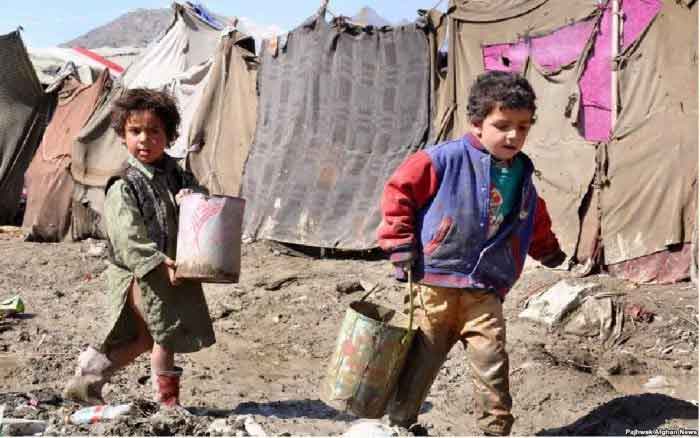
Afghanistan Children
Millions of Afghans have been displaced by the war. Photo: MikrofonNews

Americans have been shocked by videos of thousands of Afghans risking their lives to flee the Taliban’s return to power in their country – and then by an Islamic State suicide bombing and ensuing massacre by U.S. forces that together killed at least 170 people, including 13 U.S. troops.

Even as UN agencies warn of an impending humanitarian crisis in Afghanistan, the U.S. Treasury has frozen nearly all of the Afghan Central Bank’s $9.4 billion in foreign currency reserves, depriving the new government of funds that it will desperately need in the coming months to feed its people and provide basic services.

Under pressure from the Biden administration, the International Monetary Fund decided not to release $450 million in funds that were scheduled to be sent to Afghanistan to help the country cope with the coronavirus pandemic.

The U.S. and other Western countries have also halted humanitarian aid to Afghanistan. After chairing a G7 summit on Afghanistan on August 24, U.K. Prime Minister Boris Johnson said that withholding aid and recognition gave them “very considerable leverage – economic, diplomatic and political” over the Taliban.

Western politicians couch this leverage in terms of human rights, but they are clearly trying to ensure that their Afghan allies retain some power in the new government, and that Western influence and interests in Afghanistan do not end with the Taliban’s return. This leverage is being exercised in dollars, pounds and euros, but it will be paid for in Afghan lives.

To read or listen to Western analysts, one would think that the United States and its allies’ 20-year war was a benign and beneficial effort to modernize the country, liberate Afghan women and provide healthcare, education and good jobs, and that this has all now been swept away by capitulation to the Taliban.

The reality is quite different, and not so hard to understand. The United States spent $2.26 trillion on its war in Afghanistan. Spending that kind of money in any country should have lifted most people out of poverty. But the vast bulk of those funds, about $1.5 trillion, went to absurd, stratospheric military spending to maintain the U.S. military occupation, drop over 80,000 bombs and missiles on Afghans, pay private contractors, and transport troops, weapons and military equipment back and forth around the world for 20 years.

Since the United States fought this war with borrowed money, it has also cost half a trillion dollars in interest payments alone, which will continue far into the future. Medical and disability costs for U.S. soldiers wounded in Afghanistan already amount to over $175 billion, and they will likewise keep mounting as the soldiers age. Medical and disability costs for the U.S. wars in Iraq and Afghanistan could eventually top a trillion dollars.

So what about “rebuilding Afghanistan”? Congress appropriated $144 billion for reconstruction in Afghanistan since 2001, but $88 billion of that was spent to recruit, arm, train and pay the Afghan “security forces” that have now disintegrated, with soldiers returning to their villages or joining the Taliban. Another $15.5 billion spent between 2008 and 2017 was documented as “waste, fraud and abuse” by the U.S. Special Inspector General for Afghanistan Reconstruction.

The crumbs left over, less than 2% of total U.S. spending on Afghanistan, amount to about $40 billion, which should have provided some benefit to the Afghan people in economic development, healthcare, education, infrastructure and humanitarian aid.

But, as in Iraq, the government the U.S. installed in Afghanistan was notoriously corrupt, and its corruption only became more entrenched and systemic over time. Transparency International (TI) has consistently ranked U.S.-occupied Afghanistan as among the most corrupt countries in the world.

Western readers may think that this corruption is a long-standing problem in Afghanistan, as opposed to a particular feature of the U.S. occupation, but this is not the case. TI notes that ”it is widely recognized that the scale of corruption in the post-2001 period has increased over previous levels.” A 2009 report by the Organization for Economic Cooperation and Development warned that “corruption has soared to levels not seen in previous administrations.”

Those administrations would include the Taliban government that U.S. invasion forces removed from power in 2001, and the Soviet-allied socialist governments that were overthrown by the U.S.-deployed precursors of Al Qaeda and the Taliban in the 1980s, destroying the substantial progress they had made in education, healthcare and women’s rights.

A 2010 report by former Reagan Pentagon official Anthony H. Cordesman, entitled “How America Corrupted Afghanistan”, chastised the U.S. government for throwing gobs of money into that country with virtually no accountability.

The New York Times reported in 2013 that every month for a decade, the CIA had been dropping off suitcases, backpacks and even plastic shopping bags stuffed with U.S. dollars for the Afghan president to bribe warlords and politicians.

Corruption also undermined the very areas that Western politicians now hold up as the successes of the occupation, like education and healthcare. The education system has been riddled with schools, teachers, and students that exist only on paper. Afghan pharmacies are stocked with fake, expired or low quality medicines, many smuggled in from neighboring Pakistan. At the personal level, corruption was fueled by civil servants like teachers earning only one-tenth the salaries of better-connected Afghans working for foreign NGOs and contractors.

Rooting out corruption and improving Afghan lives has always been secondary to the primary U.S. goal of fighting the Taliban and maintaining or extending its puppet government’s control. As TI reported, “The U.S. has intentionally paid different armed groups and Afghan civil servants to ensure cooperation and/or information, and cooperated with governors regardless of how corrupt they were… Corruption has undermined the U.S. mission in Afghanistan by fueling grievances against the Afghan government and channeling material support to the insurgency.”

The endless violence of the U.S. occupation and the corruption of the U.S.-backed government boosted popular support for the Taliban, especially in rural areas where three quarters of Afghans live. The intractable poverty of occupied Afghanistan also contributed to the Taliban victory, as people naturally questioned how their occupation by wealthy countries like the United States and its Western allies could leave them in such abject poverty.

Well before the current crisis, the number of Afghans reporting that they were struggling to live on their current income increased from 60% in 2008 to 90% by 2018. A 2018  Gallup poll found the lowest levels of self-reported “well-being” that Gallup has ever recorded anywhere in the world. Afghans not only reported record levels of misery but also unprecedented hopelessness about their future.

Despite some gains in education for girls, only a third of Afghan girls attended primary school in 2019 and only 37% of adolescent Afghan girls were literate. One reason that so few children go to school in Afghanistan is that more than two million children between the ages of 6 and 14 have to work to support their poverty-stricken families.

Yet instead of atoning for our role in keeping most Afghans mired in poverty, Western leaders are now cutting off desperately needed economic and humanitarian aid that was funding three quarters of Afghanistan’s public sector and made up 40% of its total GDP.

In effect, the United States and its allies are responding to losing the war by threatening the Taliban and the people of Afghanistan with a second, economic war. If the new Afghan government does not give in to their “leverage” and meet their demands, our leaders will starve their people and then blame the Taliban for the ensuing famine and humanitarian crisis, just as they demonize and blame other victims of U.S. economic warfare, from Cuba to Iran.

After pouring trillions of dollars into endless war in Afghanistan, America’s main duty now is to help the 40 million Afghans who have not fled their country, as they try to recover from the terrible wounds and trauma of the war America inflicted on them, as well as a massive drought that devastated 40% of their crops this year and a crippling third wave of covid-19.

The U.S. should release the $9.4 billion in Afghan funds held in U.S. banks. It should shift the $6 billion allocated for the now defunct Afghan armed forces to humanitarian aid, instead of diverting it to other forms of wasteful military spending. It should encourage European allies and the IMF not to withhold funds. Instead, they should fully fund the UN 2021 appeal for $1.3 billion in emergency aid, which as of late August was less than 40% funded.

Once upon a time, the United States helped its British and Soviet allies to defeat Germany and Japan, and then helped to rebuild them as healthy, peaceful and prosperous countries. For all America’s serious faults – its racism, its crimes against humanity in Hiroshima and Nagasaki and its neocolonial relations with poorer countries – America held up a promise of prosperity that people in many countries around the world were ready to follow.

If all the United States has to offer other countries today is the war, corruption and poverty it brought to Afghanistan, then the world is wise to be moving on and looking at new models to follow: new experiments in popular and social democracy; renewed emphasis on national sovereignty and international law; alternatives to the use of military force to resolve international problems; and more equitable ways of organizing internationally to tackle global crises like the Covid pandemic and the climate disaster.

The United States can either stumble on in its fruitless attempt to control the world through militarism and coercion, or it can use this opportunity to rethink its place in the world. Americans should be ready to turn the page on our fading role as global hegemon and see how we can make a meaningful, cooperative contribution to a future that we will never again be able to dominate, but which we must help to build.

COVID-19 cases soar in Scotland as schools reopen

Margot Miller


Since the Scottish parliament lifted all Covid restrictions on August 9 and schools reopened on August 16 after the summer break, coronavirus cases are soaring.

On Friday, cases hit a record high of 6,835, a rise from 1,567 or over 300 percent since the beginning of the autumn term. In comparison, daily cases reached a high of 4,234 during the summer wave. This was the third record set for daily cases in a matter of days. On Sunday the record was surpassed again—for the fourth time in six days—as Scotland reported another 7,113 cases.

Half of all new cases are in the under 25 age group, and on Tuesday 34 percent of cases were under 19 years old. Public Health Scotland (PHS) reported a threefold rise in case rates for 16-17-year-olds since August 8, and a fivefold rise for 18-19-year-olds—compared to the national average which doubled. Test positivity rates for children aged 2-17 are at 19.9 percent.

On August 24, 15,000 pupils (14,914) were absent from school due to Covid, with nearly 18 percent (2,496) sick with the virus and 11,976 in self-isolation. Over 1,500 Scottish education staff were also absent due to Covid-19 related reasons. Of these, 266 teachers and 215 school-based staff either had a positive Covid test or symptoms. Two out of every 100 pupils were reported absent from school for Covid-related reasons on August 27 by PHS.

Even before further and higher education campuses reopen in September, educational settings account for one out of six cases overall.

On Monday, 551 people were in hospital and 52 in intensive care, up from 312 people in hospital on August 20 and just 58 on May 4. To August 21, there have been 943 child Covid hospital admissions in Scotland during the pandemic. The total Covid death toll in the country stands at 8,103.

The situation had worsened so much that by last Thursday that the World Health Organisation named five health boards in Scotland—Dumfries and Galloway, Greater Glasgow and Clyde, Lanarkshire, Lothian, and Tayside—in its list of the 20 most severely affected areas in Europe.

In response to this growing catastrophe, Deputy First Minister John Swinney admitted, “Undoubtedly the gathering of people together in schools will have fueled that [the case rise] to some extent, and you can see that in the proportion of younger people who are testing positive.”

Scotland’s First Minister Nicola Sturgeon said, “That is one of the sharpest rises we have experienced at any point during the pandemic,” describing the numbers as “cause for concern” but making clear the government was not considering even a circuit breaker lockdown. On Sunday, Sturgeon herself was forced into self-isolation after coming into contact with someone with Covid.

Scotland's First Minister Nicola Sturgeon. (AP Photo/Virginia Mayo, Pool)

Many young people remain unvaccinated. A total of 74 percent of 18-24-year-olds have had at least one dose, of whom only 46 percent are double vaccinated. This compares with 95 percent of over 40s who are fully vaccinated. The figure is 70 percent for those in the 30-39 age range. Only now will 16-17-year-olds be offered a first dose of the Pfizer vaccine.

School children are currently not eligible for vaccination and therefore among the most vulnerable, yet they have been sent unprotected back into the classroom! Schools are a major vector for the spread of the virus and children can suffer devastating health consequences from Covid—including cognitive, respiratory and cardiac damage, Long Covid and, in the most tragic cases, death.

The UK’s Office for National Statistics April report estimated that of children who tested positive, 12.9 percent aged two to 11, and 14.5 percent aged 12 to 16 had symptoms five weeks after they were first infected. In the UK in July, 33,000 children ages 2–16 and 71,000 young people ages 17–24 were suffering Covid symptoms after 12 weeks.

Many schools in Scotland have already been forced to send pupils or classes home.

· Around 60 out of the 203 schools in the Highlands were affected by delta outbreaks. Grantown, Kingussie, Culloden and Fort William's Lochaber high schools all have a number of year groups self-isolating. Aviemore Primary and Thurso's Pennyland were partially closed.

· Between schools reopening on August 16 and August 22, NHS Highland reported more than 1,000 new cases.

· Classes were suspended at Crossmichael Primary in the south of Scotland due to eight members of staff self-isolating for four days.

· In Glasgow, a class from St Albert’s Primary school was sent home for 14 days following an outbreak. NHS Greater Glasgow and Clyde announced it was carrying out contact tracing at seven schools.

· At least two high schools in Aberdeen reported Covid cases among senior pupils.

The example of Scotland is an urgent warning of how quickly the virus spreads when restrictions on social distancing are lifted and schools reopen.

The response of the education unions in Scotland to this next deadly stage of the pandemic mirrors that of the unions in the rest of the UK—cowardly capitulation to the Johnson government’s policy of “social murder”.

The unions play a particularly pernicious role in maintaining the fiction that schools can be made safe with minimal mitigation methods and vaccines alone. In fact, the explosion of cases as soon as restrictions are relaxed shows the claimed mitigation strategy is little more than window dressing for a policy of mass infection.

While vaccines currently significantly reduce the chances of hospitalization, they offer only limited protection against catching and spreading the virus, and this protection declines over time, allowing the virus to continue circulating. While the virus is allowed to continue infecting large numbers of people, it is given the opportunity to develop new, more virulent, vaccine evading strains and variants.

Larry Flanagan, the general secretary of the Educational Institute of Scotland teaching union, commented, “These figures will be a cause for concern for school communities… They underline the need to remain on guard to ensure schools remain COVID conscious and that mitigations are maintained.”

Supporting the relaxation of government guidelines on the required response when an outbreak occurs, his only complaint was that “the change in contact tracing arrangements for schools is creating confusion for parents, pupils and staff. We wish to see all pupils identified as close contacts being required to get a clear PCR test before returning to class.

“This removes the 10-day self-isolation requirement but offers a quick reassurance to school communities and will reduce the risk of in-school transmission.”

Schools in Scotland will follow revised-down “safety” measures for another six weeks at most, before scrapping them entirely: one-metre social distancing; only children determined high-risk to isolate for 10 days after close contact with a positive case; mask wearing for secondary pupils in lessons; secondary school staff and pupils to take twice weekly lateral flow tests. SNP Education Secretary Shirley-Anne Somerville said the measures will be dropped earlier if possible.

Scottish Secondary Teachers’ Association general secretary Seamus Searson said, “To keep everybody safe we need to make sure that everybody is vaccinated. Ireland are already vaccinating the 12 to 15-year-olds… we need to move on that quickly to keep everybody safe.” He called on for the mitigation measures to last beyond six weeks.

No union is advocating action to bring the disastrous spread of infection among children, school workers and the wider community to an end. They are refusing to wage a fight under conditions in which growing numbers of parents are deregistering their children rather than send them into unsafe schools. Last Friday, PHS figures revealed that 399 pupils were not in school last week because their parents “chose to keep them away… contrary to public health guidance”.

Teachers denounce homicidal school reopenings across Brazil

Tomas Castanheira


August, which kicked off the second school semester of 2021, has witnessed the largest reopening of schools in Brazil since the beginning of the COVID-19 pandemic. Nine states, where until this month schools had remained closed, decreed the return of in-person teaching. And in states where classrooms had already been opened, protocols have been reformulated to allow an even greater influx of students to the classrooms.

The full reopening of schools is the centerpiece of the Brazilian ruling class’s campaign to “promote a return to economic activities” and a new status quo based on the mantra that it is necessary to “live with the pandemic,” as stated by Health Minister Marcelo Queiroga.

The adoption of this reckless policy by rulers all over the country has caused the “resumption of the circulation of people in the streets in a pattern close to the one prior to the pandemic,” declared the August 26 bulletin of the Fiocruz’s COVID-19 Observatory. The Fiocruz researchers emphasized, however, that “the positivity rate of the tests remains high, which shows the intense circulation of the virus, with the expansion of the Delta variant” and warned that the “relaxation of preventive measures by people and managers contributes to the high spread of the virus.”

Keeping schools open under such circumstances represents a barbaric experiment with human lives, particularly those of children. While capitalist managers spread the lie that young people don’t get infected or sick from COVID-19, the explosion of the Delta variant is leading to an unprecedented crowding of children’s ICUs in countries such as the United States.

Return to school in Itapevi, a municipality on the western edge of Greater São Paulo.(Credit: Felipe Barros | ExLibris | PMI)

Even before being hit by this virulent strain, Brazil already recorded catastrophic levels of COVID-19 deaths among children and teenagers. Official data, acknowledged as a significant underestimate, has recorded more than 1,200 deaths of people under 18 in 2020, 45 percent of whom were under the age of 2. A Uol survey revealed that 1,581 young people between the ages of 10 and 19 died from COVID-19 in the first six months of this year alone—an average of 263 deaths in this age group per month.

Rio de Janeiro

Rio de Janeiro is now the epicenter of the spread of the Delta variant in Brazil. Delta has already become the dominant variant in the state, accounting for more than 60 percent of the samples collected. Simultaneously with the spread of the new variant, Rio has registered an increase in infections and deaths among the elderly and an explosion in hospitalizations, which has led to 96 percent occupation of ICU beds in the capital.

The terrifying evolution of the virus in Rio de Janeiro contrasts with the policies adopted by state and local governments. The mayor of the capital, Eduardo Paes of the Social Democratic Party (PSD), had set September 2 as the date for initiating a series of measures to fully resume economic activities in the city, which included mega events and the end of mask mandates. Although Paes announced the postponement of these measures in view of the rise of Delta cases, Rio’s City Hall kept municipal schools fully operating.

Educators from dozens of schools in the Rio de Janeiro municipal network have revealed that their units are being kept open even in cases of coronavirus outbreaks. The Sepe teachers union reported having received, as of August 26, reports of 94 schools functioning with suspected or confirmed COVID-19 infections. These numbers have grown exponentially over the last two weeks: on August 23 there were 76 schools operating under these conditions; on August 19, 49; and on August 17, 31. In addition, there are 53 municipal schools completely closed, and 47 with classes suspended due to infections.

São Paulo

The current conditions in Rio de Janeiro underscore the catastrophic prospects for the pandemic’s development in the coming weeks and months in Brazil. This is especially true for São Paulo, which has already seen the prevalence of the Delta variant rise to 43 percent of analyzed samples.

A projection of the evolution of the Delta variant produced by the Info Track, a platform developed by researchers from the University of São Paulo (USP) and the São Paulo State University (UNESP), concluded that São Paulo will have an “explosion [of cases] from the second week of September.”

The São Paulo state government is, however, promoting the largest “flexibilization” of social distancing measures since the beginning of the pandemic. Opposing this criminal policy, UNESP professor Wallace Casaca told G1: “Delta is a very aggressive strain. We see the outbreaks with great concern. We have to accelerate now as much as possible the vaccination with the second shots, but the vaccine alone is not a solution for everything.”

Governor João Doria of the Brazilian Social Democracy Party (PSDB) responded to these warnings by reaffirming his complete indifference to science and the preservation of human lives. On August 18, he dissolved his COVID-19 Contingency Center and responded to criticism from the São Paulo Infectious Diseases Society by declaring that his sociopathic measures were being taken “in due time.”

Despite reported outbreaks in more than 1,200 schools and the deaths of more than 100 educators and students in the state public school network alone, the government of São Paulo is keeping the schools open and has expanded their capacity, reducing the distance between students within the classrooms.

The capital of São Paulo has the largest school system in Brazil, with more than 2 million students enrolled, and its in-person operation has potentially devastating consequences. A teacher in the city’s municipal public network told the World Socialist Web Site that educators have been reporting an increasing number of outbreaks in schools. He declared:

“Last week, cases started appearing among staff at my school, so far there are three confirmed. Although the protocol for school reopening says that two cases already constitute an outbreak, so far my school has not been closed.

“We have news of other schools that had outbreaks and remain open. A teacher wrote on Facebook that in a single week 14 staff members and one student were sent home due to COVID infections. Not only does the school remain operating, but students from different classes were brought together due to the lack of teachers.

“A few months ago, a case like that would have made newspaper headlines. But today the situation is being covered up, both by the government and by the union. Me and my colleagues have even called the SINPEEM [teachers union] to ask about their orientation regarding the outbreak in the school, and they didn’t have any. They only repeated the government’s official position.

“This is very revolting because the union broke our strike and sent us back to in-person work with a bunch of promises that protocols would be reviewed to increase safety and celebrating the vaccination of teachers as the big solution to our problems. Now we are working endless overtime hours to ‘pay’ for the strike days, being even more exposed to the virus, and people are getting infected regardless of whether they are vaccinated.”

Bahia

The universal character of the homicidal policies promoted by the Brazilian ruling class is highlighted by the fact that it is being equally adopted in the states governed by the so-called “left-wing” opposition to the extreme-right government of President Jair Bolsonaro.

The government of Rui Costa, of the Workers Party (PT), in Bahia recently clashed with a movement of educators opposing the reopening of state schools. Costa has publicly threatened striking workers with dismissal and has effectively cut their pay to force them into classrooms.

Last Friday, the APLB teachers’ union—which is also presided over by the PT—announced a deal reached with the government behind the workers’ backs that agreed to the return of in-person classes on September 1. The rotten agreement, which was celebrated by the union officials as a “victory,” imposes face-to-face classes even on Saturdays to compensate for the days on strike.

The APLB union’s maneuver against teachers of Bahia followed exactly the same script as the union’s betrayal of teachers in São Paulo and was received with the same outrage by the workers. On social networks, rank-and-file teachers posted hundreds of comments denouncing the union’s coup and demanding truly safe conditions for the reopening of schools.

One teacher wrote: “Union leadership and government united as always. Students without immunization, some schools with suspended classes due to COVID-19, the Delta variant still feared, scientists recommending a third dose of the vaccine, and the union leadership accepted in-person classes for September 1.”

Another teacher stated: “I didn’t see any victory there. They didn’t listen to or even consult the workers regarding the return, the possibility of a return was not even mentioned. And if it was going to return on September 1, why were there salary cuts? For me this was a defeat. The victory was to Rui Costa and Luiz Caetano [the government’s Institutional Relations secretary], they were victorious.”

A third teacher declared: “What was the ‘victory’? Unless they are referring to the government’s victory, because the students will return without vaccines and without even testing. The COVID-19 infections in the state schools are there. That’s helping to normalize an abnormal situation.”

***

All over Brazil, similar situations are being faced by educators, parents and students, and are provoking a sharp growth of social opposition.

In Amazonas, in northern Brazil, where the most catastrophic experiments with the herd immunity policy have been conducted, teachers are denouncing the extraordinarily unsafe conditions in their classrooms, while parents are protesting the government’s forcing their children back to in-person classes.

At the opposite end of the country, in Rio Grande do Sul, educators are reporting growing outbreaks in schools, which has been acknowledged by the health secretariat in the capital, Porto Alegre, where the number of individuals exposed to outbreaks in schools jumped from 3,125 on July 1 to 3,999 on August 25.

These movements across the country express the rise of a renewed wave of class struggle among Brazilian educators. The development of this struggle requires that fundamental conclusions be drawn from the crucial political experiences of the last year and a half marked by the crisis of the COVID-19 pandemic.

On every occasion that teachers attempted to mount an opposition to the ruthless policies of the bourgeois governments, they have faced the efforts of the unions to sabotage their struggles. At this extremely critical moment of the pandemic, no resistance is being organized by the National Confederation of Education Workers (CNTE) and its affiliated unions. On the contrary, teachers can be sure that union officials are discussing, among themselves and with state representatives, the best strategies for suppressing workers’ struggles against the pandemic.