7 Sept 2021

US football stadiums packed to the brim while COVID continues to surge

Benjamin Mateus


Labor Day weekend 2021 inaugurated the American college football season with stadiums from coast to coast packed to the brim with exhilarated fans, hardly any wearing a mask, in complete defiance of the COVID pandemic.

The number in attendance at some of the country’s biggest stadiums was staggering. The University of Michigan hosted Western Michigan with close to 110,000 spectators standing shoulder to shoulder. The University of Texas defeated Louisiana on Saturday, cheered by more than 91,000 screaming and cheering fans. And the list could go on and on as more than 80 games were played during the long weekend that included Thursday.

There is no question that tens of thousands of people who began this college football season cheering on their favorite team will be dead before it is over. That is the brutal arithmetic of the pandemic, which capitalist politicians, both Democratic and Republican, and their corporate masters are seeking to conceal.

Oregon fans watch a NCAA football game against Fresno State through a haze of wildfire smoke on Saturday, Sept. 4, 2021, in Eugene, Ore. (AP Photo/Amanda Loman)

A week before these sporting celebrations, Dr. Anthony Fauci, head of the National Institute of Allergy and Infectious Diseases and chief medical adviser to President Joe Biden, acknowledged that the country could expect more than 100,000 new COVID-19 deaths by December. “What is going on now is both entirely predictable and entirely preventable,” he said. “We could turn this thing around, and we can do it efficiently and quickly if we could just get those [80 million] people vaccinated. It’s so important that people in this crisis put aside any ideological and political differences and just get vaccinated.”

There are no “ideological or political differences” in college football and sports in general. As USA Today noted last year, “At stake is at least $4.1 billion in fiscal-year revenue for the athletics departments at just the 50-plus public schools in the Power Five conferences—an average of more than $78 million per school.” Ticket sales, merchandising of athletic apparel and television contracts can gross a top university over $100 million per season. According to Citadel Today, “The average game payouts [on TV contracts] run between $150,000 and $1.65 million depending on the teams playing and how ‘big’ the TV ratings are expected to be for that specific game.”

In what is perhaps a grotesque irony, the local media celebrated the return of the Iowa Wave in the game between the Hawkeyes and Wyoming Cowboys on Thursday. The tradition started on September 2, 2017, when at the end of the first quarter of every Iowa home game, teams and fans turn towards the University of Iowa Stead Family Children’s Hospital and wave to all the patients.

Considering the rising number of pediatric hospitalizations across the country from COVID infections, the Iowa Wave lacked any traditional value. It seemed more of an insult to those families who have lost children to the coronavirus—and those who are going to lose them. Already, more than 204,000 pediatric infections have been reported by the American Academy of Pediatrics for the week ending August 26, 2021, nearing the winter highs in January 2021. Hospitalization rates for those under 18 have risen nearly fivefold since the beginning of summer.

In a show of complete hypocrisy and callousness, the University of Iowa’s president, Barbara Wilson, offered the fans and players her many thanks for supporting the football program, assuring the public that the COVID metrics in Johnson County have remained “relatively stable” and offering COVID-19 and flu vaccines to fans before the game.

Television ratings for these events have gone through the roof. As Newsweek noted, “The Saturday night game between top-5 teams Clemson and Georgia was the second-most seen season kickoff game—over any network—in the last 15 years, and it’s up 16 percent from a similar game in the 2019 season.” More than six million viewers tuned in to the game between number one-ranked Alabama and number 14-ranked Miami.

Many sports announcers predict even more enormous crowds for home openers on the September 11 weekend which universities like Alabama, Clemson, Georgia, Louisiana State, Michigan State, Notre Dame, Ohio State and Penn State will be hosting.

That these events will become superspreading events is not a question. One has to take in the chilling scene of jam-packed spectators to recognize the catastrophe in store. Public health officials, such as Dr. Michael Osterholm, director of the Center for Infectious Disease Research and Policy at the University of Minnesota, have warned of the dangers posed by the highly virulent Delta strain, even for people outdoors.

As one senior contributor, Professor Bruce Y. Lee, poignantly asked in Forbes, “In fact, could the ‘return of college football’ be like pouring kerosene on a fire and adding fuel to the current COVID-19 coronavirus surge in the US?” To ask the question is to answer it.

The United States has registered more than 40.8 million cases of COVID-19, of which 4.4 million were amassed in just one month or more than one million cases a week. Many of these are linked to the recent return-to-school events that have ignited large clusters of outbreaks in multiple states. It has been demonstrated, again and again, that superspreading events are crucial to sustaining the pandemic.

The average number of daily new cases has risen to more than 161,000. With recurring weekly massive sporting events attended by millions who assemble beforehand for tailgate parties, watch the sporting events and, afterward, celebrate at pubs and dining facilities, the concerns raised within the medical communities are more than warranted.

Deaths continue to climb, with 1,560 people dying each day, a rise of 55 percent in the daily rate. In just one month, more than 33,000 people have been killed. However, the number of excess deaths in this period is twice this figure, highlighting the current surge’s extreme impact on the health sector and communities’ ability to respond to the crisis.

Present modeling estimates place the number of COVID-19 deaths at more than three-quarters of a million by December 1, 2021. This estimate is an upward modification by 13,000 deaths to the assessment preceding it a month prior. However, one doesn’t need to look up statistics when morgues are overflowing with corpses to understand the disaster compounded on the weight of previous disasters.

The White House and political establishment, working on behalf of the financial markets, have been responsible for conveying the possibility that life could return to normal with the COVID vaccines, creating the illusion that the coronavirus had been “defanged,” as a commentator for Bloomberg put it. As a consequence, mask usage is down by more than 66 percent from its peak, while the number of patrons going to restaurants and stores has neared pre-pandemic levels.

New Zealand government axes emergency benefit payments to migrants

John Braddock & Tom Peters


In another attack on the basic rights of migrants, the New Zealand Labour government of Jacinda Ardern has axed “emergency” benefits, paid to unemployed migrants. The move took place with the country in the middle of a nationwide lockdown over a surge of COVID-19 cases.

New Zealand Prime Minister Jacinda Arden speaking at a press conference in September 2020. (Image Credit: Jacinda Ardern, Facebook)

Like governments internationally, the Labour Party-led coalition, which includes the Green Party and is backed by the trade unions, is actively discriminating against migrants, in order to divert popular anger over worsening poverty and the spiraling cost of living.

When the economic crisis, triggered by the pandemic, erupted last year and borders were closed, thousands of migrant workers lost their jobs. Ineligible for unemployment benefits, they were forced to rely on food parcels and emergency support provided through the Red Cross.

The Ministry of Social Development (MSD) finally began paying welfare benefits to migrants last December, at the same rate as the standard poverty-level unemployment benefit: $251 a week for a single person and $375 a week for a sole parent.

However, temporary visa holders were denied any extra payments available to residents, including the accommodation supplement, which hundreds of thousands of residents rely upon to pay for out-of-control rental costs.

According to the MSD’s Work and Income website, the emergency benefit payment ended on August 31. The Ministry told Radio NZ that final payments were being made in the week beginning September 6.

The website says people still needing support should contact their embassy. It also directs migrants to the Immigration New Zealand Repatriation Fund, for “help with paying for travel to return to your home country.”

Among the affected temporary visa holders are an estimated 25,000 international students, who are limited to working 20 hours a week. In addition to axing emergency benefits, the government has also refused to renew a $1 million International Student Hardship Fund, which was established last year.

The fund provided grants to education providers and other organisations, to enable them to “direct financial relief or other support, including food parcels and support towards living costs.” International students were eligible for a maximum of $1000 in cash or kind, from the fund.

The International Students Association (NZISA) president Afiqah Ramizi told Radio NZ on August 31: “We pay extensive international student fees, support local economies, and contribute to the New Zealand job market. At the same time we are cut off from our families who are also struggling abroad.”

On August 25, Social Development Minister Carmel Sepuloni, bluntly told a parliamentary select committee that the government was “not considering extending” the emergency payments for migrant workers.

Sepuloni claimed that there were “between 60 and 80 people” receiving the payment. She told Stuff on September 1: “Ending welfare support for temporary visa holders reflects overall improvements in international travel and economic conditions that have enabled most [of them] to return home or support themselves in New Zealand by finding work.”

In fact, this relatively low number of recipients reflects the fact that migrants have been discouraged from applying, rather than a lack of need. Stuff reported: “When the scheme was set up, it was estimated it would support 5,800 people,” based on the level of need among jobless migrants. But from December 2020 to February 2021, only 306 migrants received the benefit.

Stuff journalist Dileepa Fonseka wrote on July 10 that early in the pandemic “several migrants I spoke to were struggling to survive, but also not particularly keen to talk, for fear of being found out. Going hungry or living on the street for a few weeks is not too high a price to pay if it means Immigration New Zealand won’t find out you no longer have that job your visa is attached to.”

The Green Party has postured as a supporter of migrant workers, with MP Ricardo Menéndez March writing on Facebook: “It’s callous for the Government to be cutting income support” in the middle of the lockdown. He pointed out that the low uptake was due to “strict criteria requiring migrants to prove they were leaving.”

The Green Party, however, has been part of the Ardern government since 2017, when it joined a coalition with Labour and the right-wing nationalist NZ First Party. The Greens’ role is to promote the illusion that the government can be pressured to move to the left—even as it ramps up the attack on immigrants and imposes austerity across the public sector, while handing out billions of dollars in subsidies and tax breaks to big business.

The ending of benefits for temporary visa holders is the latest in a series of anti-immigrant measures, carried out since the 2017 election, when Labour and NZ First adopted a policy to slash migration—then around 70,000 a year—by up to 30,000.

New rules introduced in 2019 blocked thousands of less wealthy parents from joining their adult children. A resident or citizen must now earn over $106,000 a year to bring one parent, or $159,000—more than three times the median salary—to bring two.

The pandemic has been used to bring immigration to a virtual halt, with a net migration gain of just 6,600 people last year. Labour suspended the processing of residency visas under the Skilled Migrant Category (SMC) in March 2020, blaming the impacts of COVID-19, leaving more than 30,000 applicants in limbo.

The Indian Weekender reported on July 30 that around 60,000 Indian migrants with temporary work or student visas faced “uncertainty and despair,” as the government “continues to throttle the pathway to residency.” A decision to lapse 50,000 temporary visa applications, filed offshore after August 2020, and bar visa holders from re-entering the country, prompted protests in India and fueled fear among current residents. Some partners and children, trapped overseas, have not seen their family members for more than 500 days, due to NZ’s border restrictions.

In May, Economic Development Minister Stuart Nash said that the pandemic was a “once-in-a-generation” chance to “reset” immigration policy. He bluntly declared that the government aimed to make it harder for employers to take on workers from overseas. Meanwhile, new border exceptions allow more than 200 wealthy international investors to enter the country over the next 12 months. Larry Page, co-founder of Google and the world’s sixth richest person, reputedly worth $166 billion, was recently granted residency, on the basis that he invests $NZ10 million over three years.

New Zealand’s brutal, class-based immigration policies demolish the media propaganda that Ardern’s government is based on “kindness” and “compassion.” It is a right-wing government, intent on whipping up nationalism and xenophobia in order to prevent a unified struggle by workers from all backgrounds against austerity and social inequality.

Military coup topples President Alpha Condé in Guinea

Alex Lantier


On Sunday morning, Guinean special forces with links to US and French imperialism led by Colonel Mamady Doumbouya launched a coup in the capital, Conakry, ousting President Alpha Condé and imposing martial law in the former French West African colony.

In this image from video, an unidentified soldier takes up position under a truck near the office of the president in the capital Conakry, Guinea Sunday, Sept. 5, 2021. Guinea's new military leaders sought to tighten their grip on power after overthrowing President Alpha Conde (AP Photo)

The coup came amid mounting popular anger at fuel and food price hikes, bread shortages and tax increases as Guinea’s economy reels under the impact of the COVID-19 pandemic. Condé’s attempt in 2019 to rewrite Guinea’s constitution to allow himself to hold on to power until 2032 had provoked mass protests.

At around 8 a.m. Sunday, troops of the Groupement des forces spéciales (GFS) sealed off the Kaloum neighborhood of Conakry, where the Sekhoutoureah Presidential Palace is located. They reportedly seized Condé after a brief firefight with the presidential guard.

Doumbouya then appeared on public Radio-Télévision guinéenne (RTG), armed and in uniform, to announce the formation of the Comité national du rassemblement et du développment (CNRD, National Committee for Unity and Development) junta. He said, “We decided, after having captured the president, who is currently in our custody … to dissolve the constitution that is currently in place, and to dissolve the institutions.” He added, “We have control of all of Conakry and together with all military and security forces, we will act to finally put an end to the evils in Guinea.”

Doumbouya decreed the closing of Guinea’s borders for a week and an 8 p.m. to 5 a.m. curfew, demanding that public sector workers report to work as normal. He ordered government ministers to report to the junta or face prosecution on charges of rebellion. Yesterday, CNRD forces also released a video showing Condé in their custody, surrounded by soldiers and in rumpled clothing but apparently unharmed.

In his speech, Doumbouya pledged to set up a “government of national unity” and avoid a “witch hunt” against figures of the Condé regime. “Consultations will begin to sketch out the broad outline of the transition, afterwards a government of national unity will be established to carry out this transition,” he said.

Doumbouya also pledged to respect capitalist property, including the owners of Guinea’s bauxite mines, which play a significant role in global aluminum production. The CNRD, he said, will guarantee “our economic and financial partners of the normal conduct of economic activity in this country. The Committee assures its partners that it will respect all its obligations.”

During Doumbouya’s speech, it remained unclear whether his GFS unit had in fact seized control of the capital. The Guinean Defense Ministry issued a statement that the presidential guard had stopped the coup. However, the Wall Street Journal cited anonymous “Western security officials” who acknowledged that while the situation was “fluid,” the CNRD “held the cards.”

Yesterday, it appeared that the CNRD had control of Conakry. Press reports indicated that traffic in the city was slow, with many workers remaining at home and avoiding soldiers on the streets.

Significantly, the Union syndicale des travailleurs de Guinée (Trade Union of Guinean Workers, USTG) backed the putsch. Linked to both the US-based United Auto Workers (UAW) union and France’s Confédération générale du travail (CGT, General Confederation of Labor) union through the IndustriALL Global Union umbrella group, the USTG bureaucracy issued a statement endorsing the new CNRD junta.

USTG General Secretary Abdoulaye Sow declared: “History is repeating itself, on September 5, 2021 the people of Guinea awoke to a new reality that conforms to its destiny. Taking this new deal into account, the National Union of Guinean Workers (USTG) observes with great interest the situation in our country, GUINEA. … It appeals to the new military authorities for restraint and to save the economic and social structure of our country.”

In reality, nothing in the history of military rule in West Africa or in Guinea’s 63-year history since independence from France in 1958 suggests that the Guinean bourgeoisie can usher in a new era of prosperity and democracy, or establish genuine independence from imperialism. Condé became Guinea’s first elected president in 2010, having long been identified as a “democratic” opponent to the military regime. Once in power, however, despite international investment in Guinean bauxite mines, Condé faced international problems for which he had no democratic solutions.

Shaken by the French war of neighboring Mali launched in 2013 and the 2014-2015 West African Ebola outbreak, Condé’s regime foundered on the devastating impact of the COVID-19 pandemic, and the murderous health and financial policies pursued above all by the imperialist powers.

Guinea has reported 30,000 confirmed cases and 355 confirmed deaths of COVID-19, which are likely massive underestimates. It has administered only 9.2 doses of COVID-19 vaccines per 100 inhabitants of the country. Beyond the horrific toll of the disease, however, the surge in world grain and fuel prices and the fall in export revenues due to the global economic slowdown and financial speculation unleashed by the pandemic undermined Condé’s government.

As prices for imported wheat rose, there was mass anger in January as Condé increased the price of a 250-gram loaf of bread from 1,500 to 4,000 Guinean francs. Last month, the government raised the price of a liter of gasoline from 9,000 to 11,000 Guinean francs. These drastic increases are impoverishing broad layers of the Guinean population, whose median yearly income is 459,000 Guinean francs (just US$830).

Doumbouya represents a layer of the security forces in Guinea closely linked to imperialism and its wars for domination of West Africa. Having begun his military career in the French Foreign Legion, he received further military training at France’s War School, in Israel and at military academies in Senegal and Gabon, two West African countries with longstanding ties to French imperialism. He participated in the NATO war in Afghanistan and in US-led Flintlock military exercises in Ouagadougou, the capital of nearby Burkina Faso, in 2019.

One of Doumbouya’s fellow participants in the 2019 Flintlock exercise was Malian Colonel Assimi Goïta, who amid mounting anti-war protests in Mali led the August 2020 military coup. Like Doumbouya, Goïta issued a statement immediately upon taking power pledging to work with French and other forces stationed in his country.

In 2019, Doumbouya hailed the Flintlock exercise and Guinea’s providing of troops to serve as auxiliaries helping Paris wage war in Mali—notably in the north, near Kidal. He told Guinée News: “Guinea is fighting alongside its Malian brothers in Kidal, in the context of the war on terror. From our standpoint, we think it is an affair that concerns us.”

The putsch in Conakry—after the August 2020 coup in Mali and the April 2021 coup in another key African military ally of France, Chad—points to the incompatibility of imperialist war with even the formal trappings of democracy. This is not, moreover, only an issue in former French colonies in Africa. Social inequality and the official handling of the COVID-19 pandemic are undermining democratic forms of rule even in wealthy imperialist countries like France and the United States.

After then-US President Donald Trump’s January 6 coup attempt on the US Capitol in Washington, French officers—including many stationed in Africa—signed a statement endorsing a military coup and the use of deadly force in France.

US ruling class cuts off pandemic jobless aid, pushing millions over financial cliff

Marcus Day


On Monday, federal unemployment assistance programs related to the pandemic were allowed to expire in a deliberate move by both the Democrats and Republicans to cut off the sole source of income for millions of unemployed, and the millions more family members they support.

A person looks inside the closed doors of the Pasadena Community Job Center during the coronavirus outbreak in Pasadena, Calif. (AP Photo/Damian Dovarganes)

The result will be that many will be forced to accept whatever job they can find, no matter how low-paying, degrading or dangerous, or face being plunged into the social and financial abyss.

Coming in the midst of a re-explosion of the coronavirus pandemic driven by the Delta variant, with an average of over 160,000 new cases and 1,500 deaths a day, the termination of unemployment aid is nothing less than homicidal. The cutoff will inevitably fuel the spread of the virus, as millions are forced back into crowded workplaces where transmission is rampant, while forcing other sections of the population into utter destitution and homelessness.

Three programs ceased on Monday: one which provided benefits to gig workers, the self-employed and caretakers, who were previously ineligible for unemployment aid; another which increased the length of time benefits could be received; and a third which provided an additional $300 weekly payment supplementing jobless assistance delivered by the states.

Nearly 7.5 million people will be deprived of all unemployment income due to the expiration of the first two programs, while an additional 3 million will lose the $300 weekly supplement, leaving them with just the grossly inadequate state aid. In states which have been hardest hit by the pandemic recently, such as Mississippi and Louisiana, the maximum weekly jobless aid payment is less than even the paltry federal minimum wage of $7.25.

The reality is that many of those currently unemployed will simply not be able to find work of any kind for the foreseeable future. Economists estimate a shortfall of 6.6 to 9.1 million jobs in comparison to February 2020. Meanwhile, 8.4 million people were unemployed in August, and another 5.7 million were out of the labor force but wanted a job, according to the latest Bureau of Labor Statistics unemployment report.

The cutoff also comes as a new wave of temporary shutdowns, driven by the microchip shortage, grips the auto industry. The Big Three automakers have worked with the United Auto Workers union to employ increasing numbers of temporary workers, who receive only meager state aid while they are on layoff.

Millions are losing their only economic lifeline less than two weeks after the Supreme Court overturned the moratorium on rental evictions, threatening an estimated 11 million who were already behind on their rent. Another moratorium on foreclosure evictions is set to expire on September 30.

The end of federal jobless aid has been carried out with the support of the White House and both parties in Congress. President Biden had previously made clear his endorsement of the September 6 cutoff, stating in June that “it makes sense.” On Friday, he made only a perfunctory reference to the benefits expiration in the course of remarks on the weak August jobs report, while misleadingly claiming that state governments have the “federal resources” to extend benefits if they wish. No states, whether Democrat or Republican-led, have indicated they plan to do so. On the contrary, this summer over half of US states withdrew from federal unemployment programs early, citing “labor shortages.”

The cutoff has also received de facto support from so-called leading “progressives” in the Democratic Party, including Senator Bernie Sanders, who has kept his mouth shut on the expiration, and House Representative Alexandria Ocasio-Cortez, who said merely that her caucus was “looking into it” in a recent interview with Business Insider.

The termination of unemployment benefits is driven by the basic imperative which has determined the overall response of the US capitalist ruling class to the crisis triggered by the pandemic: profits must be safeguarded and increased to the maximum degree, no matter the cost in human lives and suffering.

There is now growing anxiety in ruling circles over signs that the working class is seeking to break out of the low-wage regime which has dominated for decades, enforced with the willing assistance of the pro-corporate trade unions. Media commentaries have appeared worrying over “wage inflation” (BloombergForbes) or even “wage rage” (Time magazine). At the same time, the media has blacked out those struggles which have most explicitly challenged the authority of the unions and threatened to spread to other sections of workers, including the five-week strike of Volvo Trucks workers earlier this year and the ongoing rebellion by Dana auto parts workers against a concessions contract pushed by the UAW and the United Steelworkers union.

Corporate America, always acutely sensitive to the growth of resistance or opposition in the working class, fears that any significant rise in wages would lead to the collapse of its debt-fueled speculative orgy on Wall Street. Thus, the ruling class is executing an all-out assault on what remains of the social safety net, with the aim of breaking the resistance of workers and drastically intensifying their exploitation.

As usual, the Wall Street Journal, the most unabashed mouthpiece of the financial aristocracy, has expressed more openly the thinking in ruling circles, stating in an August 10 editorial that extended jobless aid “is bad for employers that need workers, bad for the economy that needs more production.” Unsatisfied with the cutoff of unemployment benefits—sadistically telling its readers to “hold the confetti”—a more recent editorial took aim at other supposed “disincentives to work,” including the now-lapsed eviction moratorium, as well as state-funded health care and child tax credits.

A further indication of the calculations of corporate executives can be found in a recent New York Times article, “Wage gains remained strong in August as hiring slowed.” The article cites comments by Jeff Owen, chief operating officer of the discount Dollar General store chain, who told investors on a recent earnings call, “As those states rolled off the enhanced unemployment benefits [earlier this summer], what we did see was an initial nice pickup in applicant flow and staffing.” Owen, boasting over workers being forced by desperation to take Dollar General’s $8 an hour or less jobs, received a compensation package of $5.6 million in 2020, an increase of 59 percent over the previous year.

The end of federal jobless aid goes hand-in-hand with the bipartisan effort to herd children and young people back into schools, an utterly reckless and criminal policy which threatens countless lives. The aim in both cases is to compel more people to return to the workforce, increasing the available labor pool and exercising downward pressure on wages.

The chief obstacle to addressing all the most burning social problems—whether the catastrophic impact of COVID-19, the dire poverty of the unemployed, or the degrading working conditions and low wages facing millions of workers—is the profit interests of the capitalist ruling class. At every step, the response to the pandemic and the associated economic crisis has been driven by the effort to protect the wealth and privileges of the super-rich.

Former US Marine sharpshooter murders four in Florida, including mother, baby and grandmother

Jacob Crosse


Early Sunday morning in Lakeland, Florida, a veteran US Marine sharpshooter with multiple deployments to Iraq and Afghanistan massacred a family, killing four people, including a 3-month-old baby while in his mother’s arms. The former Marine turned private mercenary used multiple firearms and engaged in a ferocious firefight with police and SWAT units from inside the home where the killings occurred that only ended when the shooter, identified as 33-year-old Bryan Riley, surrendered to police.

A photo of Bryan Riley's Facebook account. (Facebook via Heavy.com)

While in police custody, Riley, a resident of nearby Brandon, Florida, apparently showed no remorse and gave no motive for his actions, reportedly telling detectives, “You know why I did this.” Police also claimed that Riley said he was high on methamphetamine and a “survivalist” following the horrific and apparently unprovoked mass murder.

The Marine veteran, who according to his girlfriend suffers from post-traumatic stress disorder and depression, is facing over a dozen charges, including four counts of first-degree murder and is being held without bond after appearing in court Monday morning.

The ghastly slaying is at least the 481st mass shooting in the United States in 2021 per the Gun Violence Archive (GVA), which defines a mass shooting as an incident in which four or more people are shot and/or killed in a single event at the same general time and location, not including the shooter. According to the GVA, at least 30,398 people in the US have succumbed to gun violence in the US this year, with slightly more than half of those deaths, 16,434, attributed to suicide via gun.

The victims in Sunday’s massacre were 40-year-old father Justice Gleason, along with his 33-year-old wife, a mother of three, their three-month-old baby and the 64-year-old grandmother. The family’s 11-year-old daughter is in critical condition at Tampa General Hospital after being shot at least seven times. The family dog was also shot and killed, according to Polk County Sheriff Grady Judd.

What few details that have been revealed are deeply distressing. Police claim the incident began on Saturday night, when Riley, for reasons not yet known, drove approximately 30 miles east from Brandon, a suburb of Tampa, to Lakeland and parked his vehicle on N Socrum Loop Road, near the family’s residence.

According to Riley’s girlfriend, Riley made contact with Gleason as he was mowing his lawn and told him that God had sent him there to find a child named Amber in order to prevent her from committing suicide. Gleason and his unidentified 33-year-old wife told Riley no one lived in their house by that name and to leave before they called the police. Riley’s girlfriend recounted to detectives that Riley told them “Look, you don’t need to call the cops because I’m the cops for God.”

The couple still called police; however, by the time they arrived Riley was gone, returning to his home in Brandon. Roughly nine hours later Riley returned to the residence.

At around 4:30 a.m., Pasco County Lieutenant Duane Thompkins, apparently in a stroke of luck, happened to hear gunfire coming from the area. As Thompkins made his way towards the sound of the bullets, multiple 911 calls were received shortly thereafter describing an active shooter situation in Lakeland.

According to police accounts, once officers arrived at the home, they discovered Riley’s truck on fire along with “glow sticks” that had been placed on the street and the front lawn, apparently directing the officers towards the front of the house. Police claim they saw a figure dressed in camouflage, without a weapon, run into the house as they attempted to make contact.

Once Riley was inside the house, County Sheriff Judd told reporters that police heard a volley of gunfire followed by “a woman scream and baby whimper.” Police were unable to enter the front door which was apparently barricaded. Three police officers attempted to gain entry through the back when they were confronted by Riley, who was wearing a bulletproof vest, helmet and kneepads and was heavily armed.

A brief shootout ensued as police attempted to retreat out the back door they had just entered. The shootout prompted a hail of gunfire from police outside the home. Judd surmised that “at least dozens if not hundreds of rounds [were] fired.” Photos released by the Polk County Sheriff’s office show the home riddled with bullets and broken glass.

After a pause in the shooting, a police helicopter deployed overhead reported seeing Riley exit the house with his hands up. He had apparently suffered a single gunshot wound and was transported to Lakeland Regional Hospital. Judd reported at least two weapons were recovered; however, there may have been a third weapon. While at the hospital, police claim that Riley attempted to reach for an officer’s gun and had to be restrained and sedated.

According to Riley’s LinkedIn profile, he was stationed at Camp Lejuene in North Carolina with the 1st battalion 6th Marines and the 1st Battalion 9th Marines from January 2007 through March 2011. While stationed at Camp Lejeune, Riley was deployed to Ramadi, Iraq in 2008 and to Marjah, Afghanistan from 2009-2010.

Riley indicated on his profile that he worked in 2013 as a “Guard Team Supervisor” for Academi, formerly known as Blackwater, the private security and military contractor founded by former Navy Seal and billionaire war criminal Erik Prince. Since August 2017, Riley claims to have worked as a “Protection Specialist” for Griffin Defense providing “close protection” in Mexico, Nigeria, Paris and Peru and as an “Executive Protection Agent” for ESS Global Corporation, where he performed similar functions.

Multiple social media photos posted by Riley feature him brandishing military grade weapons and gear. No doubt, Sunday morning was not the first time Riley had witnessed, or perhaps participated in, the wanton slaughter of men, women and children.

In a press conference on Sunday, Judd alternately characterized Riley as a “war hero” who “fought for his country” as well as “evil in the flesh” and a “rabid animal.”

Judd lamented the fact that his deputies were not presented with the proper circumstances to commit an extrajudicial execution Sunday morning, telling reporters: “It would have been nice if he would have come out with a gun and then we’d have been able to read a newspaper through him. But when someone chooses to give up, we take them into custody peacefully. If he’d have given us the opportunity, we’d have shot him up alive. But he didn’t because he’s a coward.”

The response by Judd is indicative of the deeply sick society that produces a figure such as Riley. While the exact reason Riley decided to drive some 30 miles away to massacre a family he apparently did not know, may never be known, the social causes that lead to such frequent and, at this point, routine, acts of homicidal sociopathic violence in the US are well known.

Capitalism has produced a severely unequal society in the United States in which the vast majority of the population is a missed paycheck or an unexpected hospital visit away from homelessness. Meanwhile, the ruling class, through their two bourgeois parties, maintain a stranglehold over all of society’s wealth and resources, usurping the majority for themselves.

Divorced from concerns of the working class, Democrats and Republicans, speaking for hedge fund managers, the CIA, Department of Defense and multinational corporations, focus their efforts on reversing America’s declining global economic position through unending war abroad, ruthless class exploitation at home, and unlimited cash infusions and bailouts for Wall Street.

Sunday’s terrible shooting, like the many others that preceded it and will follow, is apparently domestic blowback from the crimes of American imperialism abroad. Over 20 years of neocolonial wars overseas combined with mass deindustrialization has created an entire layer of society that is severely damaged.

While all the details of Riley’s life are unknown as of this writing, for many young workers and students, the only chance of escaping crushing poverty and to afford a college education is to join the US military. In this brutal institution, young people are trained, and paid, to kill people they do not know without hesitation or mercy, in the interest of maintaining US global hegemony. Highly trained assassins, such as Riley, are coveted by private military and security contractors, eager to gobble up US government funding and cash from predatory corporations seeking to “muscle” out their competition and suppress working-class opposition.

The American government’s official policy, from local police departments to the highest levels of the Pentagon, is to resolve every dispute with overwhelming and lethal violence. The corporate media, as seen in hand-wringing op-eds in the Washington Post and Wall Street Journal lamenting US withdrawal and defeat in Afghanistan, play a leading role in encouraging the antisocial atmosphere that pervades all aspects of US society, facilitating the unending carnage.

Mounting anti-regime protests in Thailand as COVID-19 surges

Peter Symonds


The military-backed regime in Thailand faces mounting opposition to its handling of the COVID-19 pandemic, which is surging out of control as the Delta variant spreads. More than 1.2 million people have been infected, and the number of deaths now is over 12,000, with most since April. Less than 100 fatalities occurred last year when the pandemic first hit the country.

Anti-government protesters participate in a rally Bangkok, Thailand, Thursday, Sept. 2, 2021. Protesters demanded the resignation of Prime Minister Prayuth Chan-ocha for his failure in handling the COVID-19 pandemic. (AP Photo/Sakchai Lalit)

The latest demonstration took place in Bangkok on Saturday, as the national assembly debated a no-confidence motion in the administration headed by former military head, now prime minister, Prayuth Chan-ocha, who led the 2014 military coup that ousted the previous elected government.

Several hundred protesters marched through central Bangkok’s main shopping mall district, despite heavy rain and a heavy police mobilisation that included riot police and water cannon. The police used shipping containers to block major routes to the advertised venue, where the march was due to conclude.

Prayuth survived a third no-confidence vote, as did five of his ministers who were heavily criticised for their pandemic policies. The motion to remove the prime minister was defeated by 264 to 208 votes in the lower house, with three abstentions.

At the start of the debate on Tuesday, Sompong Amornvivat, leader of the opposition Pheu Thai Party, demagogically denounced Prayuth as “a power-crazed, arrogant person unsuited to leading the country,” and warned of more deaths and infections if he remained in office.

Other Pheu Thai leaders condemned the government’s delayed purchase and distribution of vaccines, as well as its decision to keep the country out of the World Health Organisation’s COVAX program. Only 11.1 percent of the Thai population was fully vaccinated as of August 30.

In March, banned opposition politician Thanathorn Juangroongruangkit was charged under the country’s draconian lese majesté laws, which carry penalties of up to 15 years jail for criticising the monarchy. His “crime” was to question why Siam Bioscience, owned by King Maha Vajiralongkorn, was given the contract to locally produce the AstraZenaca vaccine when it had no experience in vaccine manufacture.

When the domestic AstraZenaca production failed to meet demands, Thailand had to import Chinese-made Sinovac and Sinopharm vaccines, and received a donation of 1.5 million Pfizer doses from the US.

The number of COVID-19 cases recorded on Saturday was nearly 16,000, down from over 20,000 a day in August. However, the decline in infections is likely to be the result of decreased testing. Moreover, the dangers posed by the highly infectious Delta variant will increase, as the government has lifted most of its limited lockdown measures in a bid to boost the stagnating economy. Tourism has collapsed and manufacturing has declined.

Opposition fueled by the COVID-19 surge rekindled last year’s mass protests, largely of young people demanding an end to the military-backed regime, including the removal of Prayuth as prime minister, changes to the military-devised constitution, reform of the monarchy and abolition of the lese majesté law.

Tens of thousands of people took to the streets in Bangkok and other major Thai cities in the second half of 2020, before police violence and arrests stifled the movement for a time. A number of protest leaders were arrested and charged under the lese majesté law for criticising the monarchy. Some have contracted COVID-19, while in prison awaiting trial.

The latest wave of protests began at the end of June, and has escalated over the past two months, despite police crackdowns. More than 10 demonstrations were broken up with force last month. During one protest, a 15-year-old boy was shot and remains in intensive care. Police deny firing live ammunition.

Tosaporn Sererak, a doctor who was part of the government ousted in the 2014 coup, commented in the New York Times: “Earlier, people said they were not coming out to protest because of Covid, but now the thinking has changed to, ‘You stay at home and you will die anyway because of the government’s inability to take care of people’.”

Thousands took part in an anti-government protest last Thursday, in central Bangkok, despite threats from police who warned that demonstrations were banned under coronavirus restrictions. A smaller protest, at which tyres were burnt and firecrackers set off, took place near the prime minister’s residence elsewhere in the city

Protest organiser Nattawut Saikua declared that parliamentarians had to choose between the people and Prayuth, who had caused more than 10,000 deaths. He warned that even if Prayuth survived the no-confidence vote, the protests to drive him out would continue.

The protests are an expression of far broader opposition to the government. Like its counterparts around the world, it places big business profits before the health and lives of working people.

The eruption, once again, of determined protests is clearly raising concerns in ruling circles. Opposition parliamentarians have sought to keep the movement within safe channels, with their toothless no-confidence motions and equally toothless denunciations of Prayuth.

Tanat Thanakitamnuay, the son of a wealthy real estate family, who supported the 2014 military coup, has joined the protests for similar purposes. He was hit by a hard object, possibly a tear gas cannister, during a protest on August 13 and lost the vision of his right eye. He has said some of his rich friends have begun attending rallies.

If the protests are dominated by bourgeois figures like Tanat, they will inevitably be sold out, as opposition politicians seek some sordid compromise with the regime and the military. The death and destruction from the pandemic are rooted in the capitalist system itself, which prioritises private wealth accumulation over people’s lives and livelihoods. The measures needed to eradicate the virus are known, but they conflict with the requirements of the corporate elite.

6 Sept 2021

Gates Cambridge Scholarships (Fully-funded Masters & PhD) in UK 2022/2023

Application Timeline: 13th October 2021 midday (UK time) 

Eligible Countries: international

To be taken at (country): Cambridge University UK

Accepted Subject Areas: Masters and PhD Courses offered by the university

About the Award: Gates Cambridge Scholarships are highly competitive full-cost scholarships. They are awarded to outstanding applicants from countries outside the UK to pursue a full-time postgraduate degree in any subject available at the University of Cambridge. The Gates Cambridge Scholarships programme aims to build a global network of future leaders committed to improving the lives of others.

Type: Masters, PhD

Selection Criteria

  • outstanding intellectual ability
  • leadership potential
  • a commitment to improving the lives of others
  • a good fit between the applicant’s qualifications and aspirations and the postgraduate programme at Cambridge for which they are applying

Eligibility

  • a citizen of any country outside the United Kingdom.
  • applying to pursue one of the following full-time residential courses of study: PhD (three year research-only degree); MSc or MLitt (two year research-only degree); or a one year postgraduate course (e.g. MPhil, LLM, MASt, Diploma, MBA etc.)
  • already a student at Cambridge and want to apply for a new postgraduate course. For example, if you are studying for an MPhil you can apply for a Gates Cambridge Scholarship to do a PhD. However, if you have already started a course, you cannot apply for a Gates Cambridge Scholarship to fund the rest of it.
  • already a Gates Cambridge Scholar and want to apply for a second Scholarship. You must apply by the second, international deadline and go through the same process of departmental ranking, shortlisting and interviewing as all other candidates.

Number of Scholarship: Several

Value of Scholarship

  • Scholarship will cover the full cost of study
  • the University Composition Fee and College fees at the appropriate rate
  • a maintenance allowance for a single student
  • one economy single airfare at both the beginning and end of the course

Duration of Scholarship: For the duration of the programme

How to Apply: Apply Here

Visit the Scholarship Webpage for Details

Important Notes: Gates Cambridge Scholarships are extremely competitive: over 4,000 applicants apply for 90 Scholarships each year.

Given the intense competition, the Trust has a four stage selection process:

  • Departmental ranking – the very best applicants to each department are ranked on academic merit only
  • Shortlisting – Gates Cambridge committees review the applications of ranked candidates using all four Gates Cambridge criteria and put forward a list for interview
  • Interview – all shortlisted candidates have a short interview to assess how they meet all four Gates Cambridge criteria
  • Selection – chairs of interview panels meet to decide the final list of Scholars
  • A good fit between the applicant’s qualifications and aspirations and the postgraduate programme at Cambridge for which they are applying

The contribution of Ancient Greek culture to the Modern Age

Anil Pundlik Gokhale


With the discovery of fossils, artifacts, and ‘destroyed’ cities, archaeologists and historians have uncovered the hidden mysteries of events and cultures that preceded society. Ancient Greece (Greek: Romanized Hellas)  was a similar ancient culture dating back to the 12th century BC (9th century BC) to the 9th century BC (600 BCE).

The Greeks made significant contributions to the four fields of philosophy, mathematics, astronomy, and medicine. Literature and theater were important aspects of Greek culture. It seems to have had an effect on modern plays as well. The Greeks were also known for their sophisticated sculpture and architecture. Greek culture influenced the Roman Empire and many other civilizations, and it is still seen today.

The ancient Greeks developed a sophisticated ‘philosophical and scientific’ culture, based on the philosophical, scientific discoveries of cultures in Egypt and Mesopotamia. The core of ancient Greek philosophy is causation and the role of inquiry. It emphasized logic-based reasoning.

philosophers

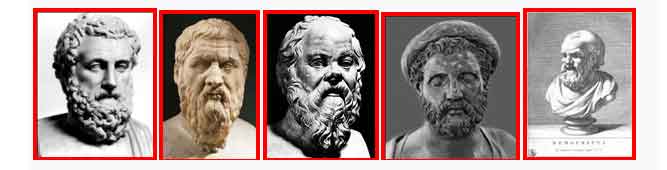
Greece passed on to the world a tradition of great philosophers, physicians, and mathematicians, such as Aristotle, Plato, Socrates, Pythagoras, and Democrats.

Ancient Greek philosophy Emerged in the sixth century and flourished in the Hellenistic period and in the territory of the Greek-inhabited Roman Empire. Philosophy was used to find answers to profound questions, without resorting to religious means in any way. Discussions were held on various topics such as astronomy, mathematics, political philosophy, ethics, philosophy, ontology, logic, biology, rhetoric and aesthetics.

Greek scientists made significant contributions to mathematics and science. All mankind is indebted to the basic theories, ideas and discoveries about geometry, the proofs and concepts presented by Pythagoras, Euclid and Archimedes (the theory of gravitation). Greek astronomers first developed “astronomical models” of the movements of the planets, the “orbit of the earth” and the Sun in the center of the solar system. Another Greek physician, Hippocrates, was the most famous physician of antiquity. He founded a medical school, wrote several medical texts. Discovered systematic and experimental diagnostic methods of diseases and their treatment. Hence he is referred to as the founder of modern medicine. The ‘Hippocratic Oath’ is known as the ‘Medical Penalty of the Doctor’.

g1

 Greek architecture 

Raphael’s School of Athens (1-5-111) depicts the best and ideals of ancient Greek architecture and brings together all philosophers. Aristotle wrote about biology and drama. Art, literature, and theater were intertwined in ancient Greek society. The Greek theater began in BC. Religious festivals in Athens in the sixth century took place through tragedy-drama. This also inspired the comedy drama genre.

These two types of plays became extremely popular and popular in the Hellenistic and Roman theaters. . Playwrights such as Sophocles (497 BC) (Tragedy) and Aristophanes (born 446 BC) (Humorous Sukhantika) laid the foundations of theatrical culture – on which all modern theater is based. In fact, although dialogue has always seemed to be a part of literature, the playwright Aeschylus (524-455 BC) introduced the characters to each other through dialogue and came up with the idea of ​​moving the play forward through dialogue. , ‘Oedipus the King- (‘ Oedipus Rex ‘)’ and other plays took refuge in the script.

r

Oedipus Rex, the basis of Modern Psychology 

Oedipus was a legendary Greek king of Thebes. That is, Oedipus, a tragic hero in Greek mythology, accidentally fulfilled a prophecy, that is, he murdered his father and married his mother, and this led to a plague in his city and family. The psychological concept of the Oedipus complex, by Sigmund Freud, describes the stages of psychological development of children and the human race. The psychological concept of the Oedipus complex is theoretically proposed by Sigmund Freud in describing the stages of psychological development of the child and the human race. As a writer and actor, Karnad has compiled the most important plays in Greek history, King Oedipus and Homer’s The Iliad and Odyssey.

p

A panoramic view of Mount Tomaros, Dodona in Greece 

Greek art, especially sculpture and architecture, has had a tremendous and incredible impact on other civilizations. BC Between 800 and 300, Greek sculpture had a far-reaching effect on Egyptian and Eastern (including our Indian) art. . Inspired by Greek sculpture, centuries of specific styles have been created on the same theme. Greek artists reached the pinnacle of masterpieces. That is why this art took on a more human form than ever before. Greek sculptors were particularly aware of the need to create perfect symbols of proportion, diversity, and the human body.

Greek architects designed some of the finest buildings in the ancient world. Many of their buildings, including temples, movie theaters, and stadiums, are unique in that they have been a major feature of cities and towns since ancient times. The architecture of the Roman world is greatly influenced by the beauty, simplicity, proportionality, artistic approach and harmony of their buildings. Such innovations laid the foundation for the architecture of today’s Western world!

The heritage of Greek culture and the Modern world 

The legacy of Greek culture, the civilization of ancient Greece, was very influential in many areas. The Roman Empire, which ruled over ‘Greece’, was heavily influenced by Greek culture. As the world-famous Roman poet and lyricist Horace sarcastically put it in the days of King Augustus in ancient Rome, “captive Greece” held its victorious “Roman Empire” captive. The culture of medieval Greece (Byzantine Greece) had a profound effect on the Slavic, Islamic Golden Age, and Western European renaissance. The neoclassicism movement in Europe and America in the eighteenth and nineteenth centuries revived the classical Greek teaching method in its modern form. In today’s modern world, the influence of ‘Greek culture’ is felt in our lives!