11 Feb 2022

Should Bangladesh Lease Land from South Sudan?

Nandita Roy


bangladeshbangladesh

For a long period of time, Bangladesh has been striving to ensure food security at home by planning to shop farmland abroad. Recently, South Sudan, an African country, has expressed interest in leasing a vast area of its fallow land to Bangladesh in order to collaborate in agricultural production, processing, and marketing in the central African countries. This is not the first time Bangladesh is going to lease foreign land and earlier, two Bangladeshi companies leased 40,000 hectares of farmland in Tanzania and Uganda. This move of Dhaka in leasing foreign land is one of the various initiatives undertaken to increase food production in the wake of the growing population and decreasing arable land. But this time, citing the feasibility of this proposal, critics raise the question, “Should Bangladesh accept this offer?” “What benefits Bangladesh will get if it accepts this offer?”

South Sudan, a landlocked country of Central Africa, has a total 644,329 sq KM land area with a total population of 11.06 million. Most of the land of this country is fallow and not being used for cultivation or for any other productive purposes. Undoubtedly, there is a huge untapped possibility that can be accrued by utilizing these lands for agricultural production. The government of South Sudan has been discussing the issue of cultivating crops in their land with the Bangladesh government for a long time. Luckily, the issues have started seeing light as many Bangladeshi entrepreneurs have agreed in considering the proposal seriously to invest there.

In recent years, Bangladesh is focusing largely on industrialization but the agricultural sector remains the lifeblood and irreplaceable driving force for Bangladesh’s economy. In FY 2020-21, the contribution of agriculture to Bangladesh’s GDP was 13.47 percent. Though the contribution of agriculture to the GDP is gradually declining, it is still the major employment source with 40 percent of total employment. Bangladesh is now self-sufficient in food production with net food produced in 2021 being over 4.53 crore metric tons. The agriculture-friendly policies of the country have contributed greatly to this success. Besides, the skills and expertise of our farmers cannot be ignored while preparing the ledger of success of our agricultural productions. The agricultural scientists, researchers, faculty members of agricultural universities in Bangladesh have been working relentlessly to bring innovative ideas and latest technologies in this sector to ensure maximum output utilizing the limited arable land available and with minimal effect on the environment.

There are several factors that attract a pointed direction towards why Bangladesh should accept the proposal of leasing land in South Sudan. First, we know that Bangladesh is one of those countries in the world that has one of the lowest rates of arable land per citizen. Leasing land from abroad will help the country to meet the growing food demand of 1.65 million people at home. Second, if Bangladesh can successfully start cultivating agricultural crops in South Sudan, it will bring economic gain for Bangladesh not only by selling the agricultural goods to the local market but also by exporting to 27 other Central African countries. Third, Bangladesh has sufficient expertise in agricultural sectors which can be optimally utilized, and possibly further be expanded, if Bangladesh can successfully start producing in the land leased from South Sudan. Fourth, there are many renowned agricultural scientists in Bangladesh who are doing excellent research work on the country’s agricultural sector. If Bangladesh leases land in South Sudan, these researchers can also contribute to boosting agricultural production in African countries. This is how Bangladesh can contribute, to some extent, to finding a sustainable solution to the prolonged food crisis in Africa.

Fifth, Bangladesh has huge labor, mostly notably farmers, who have expertise and experience in agricultural sectors. If Bangladeshi investors invest in the agricultural sector in South Sudan, it will create huge employment opportunities for Bangladeshi migrant labor, and ultimately contribute to increasing Bangladesh’s foreign exchange reserve. Sixth, once Bangladesh leases land from South Sudan, it will increase Bangladesh’s brand image as it is a sign of the country’s capability and financial strength. Seventh, once successfully implemented, this project will open a new window of opportunities for Bangladesh in other African countries which can be further utilized for increasing financial return for Bangladesh. Eighth, both countries can jointly produce lentils, oil, cotton, and other crops on the leased land and share the products which will bring fortune for both of them by helping them to avoid future food shortages.

The above discussion shows the projected benefits that Bangladesh may avail if it cooperates with South Sudan in the agricultural sector. As it will require hefty investment, Bangladesh should conduct a feasibility study and seek the opinion of the experts of the relevant field before making the final decision. Also, Bangladesh should send a team of multi-sector specialists including agro researchers, agricultural scientists, agricultural extension officials, and marketing and financial experts to examine the potential and financial viability of investing in the agricultural sector of South Sudan. But there is no doubt that it is a great achievement for Bangladesh as it has brightened the country’s image and testified to the country’s increased financial strengths and growing agricultural capacities. Not to mention, if Bangladesh can build agricultural infrastructure in a correct and responsible way, it will create a win-win situation for both countries.

German government deploys more combat troops to Lithuania against Russia

Johannes Stern


Amid the US-led war drive against Russia, which poses the threat of World War III, Germany is increasing its contingent of combat troops in Eastern Europe. During a visit to the military in Munster on Monday, Defense Minister Christine Lambrecht (Social Democrats, SPD) announced that Parliament had been informed “that we will strengthen the battlegroup in Lithuania.”

The reinforcements include “350 soldiers who can be deployed within a few days, 270 of them from the German army.” She agreed on this in recent days with Lithuanian Defense Minister Arvydas Anušauskas and Chancellor Olaf Scholz (SPD). “We are thus strengthening our contribution to NATO’s eastern flank and sending a very clear signal of unity to our alliance partners. You can rely on us,” she added.

At a joint public appearance with the heads of state of the three Baltic states, Scholz confirmed on Thursday evening that the number of German troops in Lithuania would be increased by 350. “We take the concerns of our allies very seriously. We stand with you. That's very important to me,” he said.

German Chancellor Olaf Scholz, center left, during a news conference Feb. 10 with Lithuanian President Gitanas Nauseda, left, Estonian Prime Minister Kaja Kallas and Latvian Prime Minister Karins, right (Christophe Gateau/Pool via AP)

The three Baltic heads of state and government praised Berlin's decision. “It is crucial that we strengthen NATO's eastern flank,” said Lithuanian President Gitanas Nauseda. “Our alliance must be able to respond quickly and respond decisively in the region.” The soldiers are “an additional reinforcement.”

The troops are currently on their way. “The eFP [enhanced Forward Presence] reinforcement forces have just been deployed,” the Defense Ministry announced in a tweet.

According to an official report by the ministry, the troops consist “mainly of reconnaissance, artillery and nuclear, biological and chemical defense capabilities that are available in Germany.” It was “a moderate reinforcement with a sense of proportion to reassure the allies and should enable de-escalation.”

This claim is preposterous. In fact, the massive build-up of NATO troops in Eastern Europe is taking the form of preparations for war against Russia more and more directly. Numerous other NATO members have announced an increase in their troops in Eastern Europe in the past few days, some of which have already been completed.

Several thousand US paratroopers from the 82nd Airborne Division are currently being deployed to south-eastern Poland, near the borders with Belarus and Ukraine. According to the Pentagon, they will be conducting parachute jumps there in the coming days. Hundreds more US soldiers arrived in Romania on Wednesday after being transferred from a base in Germany.

Britain, which leads the NATO battle group in Estonia, announced it would double its troops in Eastern Europe. Among other moves, 350 Royal Marines are to be relocated to Poland as an “immediate measure.” According to a report in the Times, British Prime Minister Boris Johnson was “Ready to go further,” and consider “deploying Typhoons [fighter jets] and warships to south-eastern Europe.” There are “plans for sending fighter jets to Romania and Bulgaria and for sending warships to the Black Sea,” the paper said.

NATO had already announced in January that France, Spain, Denmark and the Netherlands would also send more combat aircraft and warships to the Baltic Sea and Eastern Europe. Paris is also investigating the establishment of another NATO battle group in Romania.

The massive deployment of troops is accompanied by constant military exercises near the Russian border. On February 20, the anti-submarine exercise “Dynamic Manta 22” will start in the Mediterranean Sea. On February 22, the exercise “Dynamic Guard” will commence in Norway. Both will merge into Cold Response 2022, the largest military maneuver in Norway since the 1980s. 35,000 soldiers from 28 countries, including Germany, will take part in the exercise, which will officially take place from March 14 to April 1. British aircraft carrier HMS Prince of Wales and US aircraft carrier Harry S. Truman are reportedly already en route.

The offensive refutes the official propaganda claim that Russia is the aggressor. In fact, the NATO powers have been systematically encircling Russia since the dissolution of the Soviet Union 30 years ago. In Ukraine, the US and Germany, in close cooperation with fascist forces, orchestrated a coup in early 2014 to install a right-wing, pro-Western regime in Kiev. Since then, the imperialist powers have continued to escalate the conflict.

The already existing “Battlegroups” in the Baltic States and Poland were set up in 2017 and are armed to the teeth.

German tanks arriving at Sestokai station, Lithuania, Feb. 24, 2017, for the deployment of the German-led NATO battlegroup (AP Photo/Mindaugas Kulbis)

“The core of the Battlegroup itself consists of mechanized and infantry forces” that “can be reinforced by additional units such as special engineers or artillery,” according to one brochure published by the German Army Operations Command. “The Battlegroup is equipped with a significant number of large vehicles, including several dozen tanks (battle tanks, armoured recovery vehicles, tankdozers, bridge-laying tanks, and armoured personnel carriers),” although the army “mainly uses battle tanks, armored personnel carriers and transporters.”

On Wednesday, the new commander of the German troops in Rukla, Lithuania, Lieutenant Colonel Daniel Andrä, officially took over the leadership of the Battlegroup. Bundeswehr Inspector General Eberhard Zorn and Army Inspector Alfons Mais were also present at the handover. Together with other German generals, including Jörg Vollmer, commander of the NATO Joint Force Command Brunssum, and the Lithuanian Defense Minister, they celebrated the fifth anniversary of the Battlegroup.

The aggressive behavior of the German military command in Eastern Europe and the formation of German combat troops against Russia have a dark and unpleasant history: 81 years ago, the Wehrmacht invaded the Soviet Union and swept across Eastern Europe in a war of annihilation that claimed at least 27 million lives.

Even today, the imperialist powers are pursuing the goal of subjugating the resource-rich country and reducing it to a semi-colonial status. In their military deployment in the east, the NATO powers not only rely on fascist forces in Ukraine, but also within their own ranks.

Significantly, the public prosecutor's office in Lüneburg, Lower Saxony, opened investigations on Wednesday of German soldiers who were previously stationed in Lithuania. According to the public prosecutor's office, two soldiers are charged with incitement to hatred. They are said to have made racist and anti-Semitic comments and denied the Holocaust.

This is not an isolated issue. Extensive right-wing extremist networks exist in the German army, which are systematically protected and used by the ruling class to enforce the return of German militarism at home and abroad. In the summer of 2021, an entire platoon of tank grenadiers was ordered back to Germany from Lithuania after several soldiers carried out right-wing extremist and anti-Semitic activities.

In Rukla, the German-led Battlegroup commands the Lithuanian “Iron Wolf” Brigade, which has a right-wing extremist history. Originally, the Iron Wolf (Geležinis vilkas) was a fascist combat league founded in 1927 under the dictator Antanas Smetona. During World War II, members of the Iron Wolf collaborated with the Nazis and participated in massacres of the Jewish population in Lithuania.

Nevertheless, the NATO war drive is being pushed in particular by the nominally “left” parties in the German parliament. While the Social Democratic Minister of Defense is sending additional troops to the east, Green Foreign Minister Annalena Baerbock is fronting the propaganda offensive on the ground. As part of her inaugural visit to Ukraine earlier this week, she was photographed in a steel helmet and bulletproof vest surrounded by armed Ukrainian soldiers on the eastern Ukrainian front line to attract media attention.

The Left Party, which backed government propaganda during the 2014 coup in Ukraine, is also fully on board with the drive to war. Left Party parliamentary group leader Dietmar Bartsch said on the Anne Will talk show that he was “fully with the federal government,” which “tries everything in dialogue formats” and “de-escalates.” And of course it is “right to put a lot of things on the table.” Like the federal government, he considers arms deliveries to Kiev to be wrong, because we can “really help Ukraine in a different way.”

In fact, the “dialogue formats” praised by Bartsch serve de-escalation just as little as the deployment of troops. They serve to convey to Russia NATO’s capitulation demands, which are also supported by the Left Party. The United States responded “very solidly” to the Russian demands, Bartsch claimed. He could hardly make clearer where he stands. The “solid” US-NATO response is obviously to prepare for war.

The danger of war is enormous and the Putin regime is increasing it with its own military maneuvers. It does not represent the interests of working people in Russia, but those of a corrupt oligarchy, which has enriched itself enormously since the Stalinist bureaucracy reinstated capitalism. The only way to avert the threat of World War III is to build an international anti-war movement, based on the working class and fighting for the overthrow of capitalism, and a socialist perspective.

As inflation surges, unions impose cuts in real wages

Shannon Jones


The surge in prices continued in January, with US inflation rising to its highest level in four decades. Annual inflation is now at 7.5 percent, devastating the budgets of working households who are facing steep increases in food, gasoline, fuel for home heating and other basic necessities.

Gas price is seen at a Mobil gas station in Vernon Hills, Ill., Friday, June 11, 2021. Energy stocks powered through the broader market’s January 2022 slump and are poised to keep rising as long as oil prices stay high and worries about looming interest rate hikes remain. (AP Photo/Nam Y. Huh, File)

A similar trend is taking place globally. In the Eurozone, inflation reached 5.1 percent, the highest level since records began in 1997.

The level of inflation means that wages for most workers are falling sharply in real terms. Annual wage growth in the US was just 4.5 percent in 2021 according to the US Census Bureau. Real wages for unionized workers rose on average just 3.3 percent, significantly below the rate for nonunionized workers, as unions signed a series of multi-year agreements locking in wage rises far below the current rate of inflation.

The rise in particular commodities is staggering. The energy price index rose 27 percent on an annualized basis, while food prices rose 7 percent. Meat, poultry and egg prices rose 12.2 percent, piped natural gas rose 23.9 percent and electricity 10.7 percent. Gasoline was up 40 percent. The US Midwest, in the midst of a typical bitter winter, saw even steeper price increases, with natural gas up 31.1 percent. Supply chain disruptions led to a 12.2 increase in new car prices and a huge 40.5 percent increase in the price of used cars.

The surge in prices takes place as all remaining pandemic supports have been withdrawn, including eviction moratoriums and the $300 monthly child tax credit, a lifeline for struggling working-class families. The withdrawal of the benefit threatens to return millions of children to poverty.

Surging inflation is a by-product of the policies adopted by the ruling class in the US and Europe in response to the pandemic, which has included pumping trillions of dollars into the financial markets to prop up share values. Further adding to inflationary pressures are disruptions in supply chains due to the refusal of capitalist governments to implement effective public health measures to end the pandemic.

As a result of the run-up on the stock market, the 10 richest people in the world, including Elon Musk, Jeff Bezos, and Bill Gates, doubled their combined wealth during the pandemic to $1.5 trillion. They have made $1.3 billion a day as teachers and children are sent into COVID-infected schools and workers are sent into equally dangerous factories to make profits for the rich.

Corporate profits are also surging. Both Ford and GM scored massive profits, with Ford reporting $17.9 billion in net income for 2021 and GM reported a record $10 billion. These increases took place as COVID-19 sickened thousands and killed scores of workers in auto plants.

With crude oil at $90 a barrel and oil and gas prices at a seven-year high, ExxonMobil, Shell, BP and Marathon made combined profits of $73 billion in 2021 and are spending tens of billions on stock buybacks to further enrich their top shareholders. At the same time, the oil companies are demanding that 30,000 oil refinery workers accept a “final” wage proposal of 2-3 percent a year over the next three years.

The massive handout of wealth to the rich requires the ever more brutal exploitation of workers to pay it back. In this, the unions are playing a central role.

The unions have imposed a series of multi-year contracts with pay increases far below the rate of inflation, ensuring that workers pay the cost of rising prices through cuts to real wages. This has involved the unions intervening to prevent strikes, or where that has not been possible, to keep workers isolated to wear down their resistance.

In the case of Volvo Trucks workers in Virginia, the United Auto Workers agreed to a sellout six-year contract, locking in pay raises of below 2 percent annually for the top paid workers. At the current rate of inflation of 7.5 percent, this means a cut in real wages of nearly 30 percent over the life of the contract.

Kellogg’s workers were saddled with a five-year contract providing 3 percent annual wage increases, equivalent to a cut in real wages of more than 20 percent over the life of the contract. Nabisco workers were stuck with a four-year deal including pay raises of between just 2 to 2.5 percent. This means that in just four years, at the current rate of inflation, workers will see almost a fifth of their paycheck eaten up by rising costs.

Dana auto parts workers got a four-and-a half-year deal with front ended wage increases that will quickly be eroded by price rises.

The unions are engaged in a conspiracy with the Biden administration and employers to impose extended contracts guaranteeing huge cuts in real wages as inflation surges. In exchange for this skullduggery, the unions are being strengthened by the Biden administration in an attempt to hold back the rising tide of working class opposition to the agenda of the ruling class for war overseas and austerity at home.

Increasingly, sellout contracts are being voted down by margins of 90 percent as at Volvo, Dana and John Deere. At Deere, management felt compelled to reinstate a cost-of-living agreement, evoking an angry and frightened response from business publications such as the Wall Street Journal, which warned of a “wage price spiral.” There has been recent discussion of action to curtail wage demands, such as sharp rises in interest rates to drive up unemployment.

The fact that average pay increases for unionized workers in the US have been held below the nationwide average pay rises is of enormous significance and confirms the assessment made by the World Socialist Web Site and International Committee of the Fourth International (ICFI) of the transformed role of the unions.

Writing in 1937, the Russian Revolutionary and founder of the Fourth International, Leon Trotsky, wrote that should the leaders of the unions “defend the income of the bourgeoisie from attacks on the part of workers; should they conduct a struggle against strikes, against the raising of wages, against help to the unemployed, then we would have an organization of scabs, and not a trade union.”

This is precisely the role that the “unions” now play. These agents of corporate management and labor policemen have abandoned even the limited function of defense organizations of workers and now act directly at the behest of management and the state.

10 Feb 2022

German Development Institute Managing Global Governance (MGG) Academy 2022

Application Deadline: 15th March 2022.

Eligible Countries: Brazil, China, Europe, India, Indonesia, Mexico, South Africa

To be taken at (country): Bonn, Germany

About the Award: The Managing Global Governance (MGG) Academy is a dialogue and advanced training course that brings together young professionals from rising powers and from Europe. Its overarching purpose is to support the development of future change makers who are addressing global challenges and are dedicated to transformative change.

Type: Training, Internship

Eligibility: Prospective participants should

  • work in a governmental organisation, policy-oriented think tank, research institution, civil society or private sector oranisation in an MGG partner country (Brazil, China, Europe, India, Indonesia, Mexico, South Africa),
  • work on issues relevant to global governance such as international trade, international economics and finance, environmental challenges, international security or development cooperation,
  • speak English fluently,
  • have at least three years of working experience,
  • be open to a broad variety of working methods,
  • be willing to reflect on collective and individual experiences and competencies,
  • be sensitive to other cultures.

Candidates for the MGG Academy have to be nominated by their organisation and can then participate in a selection process.

Number of Awards: Not specified

Value of Award:

  • The participants in the MGG Academy are granted a scholarship from the German Federal Government. The scholarship covers the current costs of living, all MGG related costs and travel expenses in Germany and Europe as well as health, personal liability and accident insurances during the training in Germany.
  • The German government’s financial provision for the scholarship ensures an adequate standard of living in Germany. However, the scholarship is not sufficient to provide financial support for families or relatives, neither for a visit to Germany nor at home.
  • The partner institution is requested to cover the travel expenses for a round trip to and from Germany and to grant the participant a special leave of absence for the training.

Duration of Programme: The MGG Academy is for 3-4 months

How to Apply: 

  • Please find more information about the set-up and content of the MGG Academy 2022 here.
  • Applications for the MGG Academy 2022 are possible until 15 March 2022.
  • To apply for the MGG Academy 2022, kindly fill-in and sign this application form. You will need to upload it again when you submit your application.

Please submit the application form, your CV and certificates here.

Visit Programme Webpage for Details

Middle East and North Africa MENA Scholarship Programme (MSP) 2022

Application Deadline: 22nd March 2022 at 4pm CET

Eligible Countries: Algeria, Egypt, Jordan, Iraq, Libya, Lebanon, Morocco, Oman and Tunisia. 

To be taken at (country): The Netherlands

Accepted Subject Areas: You can use an MSP scholarship for a number of selected short courses in one of the following fields of study:

  • Economics
  • Commerce
  • Management and Accounting
  • Agriculture and Environment
  • Mathematics
  • Natural sciences and Computer sciences
  • Engineering
  • Law Public Administration
  • Public order and Safety
  • Humanities
  • Social sciences
  • Communication and Arts

About Scholarship: The MENA Scholarship Programme (MSP) enables professionals from ten selected countries to participate in a short course in the Netherlands. The overall aim of the MSP is to contribute to the democratic transition in the participating countries. It also aims at building capacity within organisations, by enabling employees to take part in short courses in various fields of study.
There are scholarships available for short courses with a duration of two to twelve weeks.

Target group:  The MSP target group consists of professionals, aged up to 45, who are nationals of and work in one of the selected countries.
Scholarships are awarded to individuals, but the need for training must be demonstrated within the context of the organisation for which the applicant works. The training must help the organisation develop its capacity. Therefore, applicants must be nominated by their employers who have to motivate their nomination in a supporting letter.

Selection Criteria: The candidates must be nationals of and working in one of the selected countries.

Who is qualified to apply for MENA Scholarship Programme:

  • must be a national of, and working and living in one of the countries on the MSP country list valid at the time of application;
  • must have an employer’s statement that complies with the format EP-Nuffic has provided. All information must be provided and all commitments that are included in the format must be endorsed in the statement;
  • must not be employed by an organisation that has its own means of staff-development. Organisations that are considered to have their own means for staff development are for example:
    • multinational corporations (e.g. Shell, Unilever, Microsoft),
    • large national and/or a large commercial organisations,
    • bilateral donor organisations (e.g. USAID, DFID, Danida, Sida, Dutch ministry of Foreign affairs, FinAid, AusAid, ADC, SwissAid),
    • multilateral donor organisations, (e.g. a UN organization, the World Bank, the IMF, Asian Development Bank, African Development Bank, IADB),
    • international NGO’s (e.g. Oxfam, Plan, Care);
  • must have an official and valid passport (valid at least three months after the candidate’s submission date);
  • must have a government statement that meets the requirements of the country in which the employer is established (if applicable);
  • must not be over 45 years of age at the time of the grant submission.

Number of Scholarship:  Several

Value of MENA Scholarship Programme: A MENA scholarship is a contribution to the costs of the selected short course and is intended to supplement the salary that the scholarship holder must continue to receive during the study period.

The following items are covered:

  • subsistence allowance
  • international travel costs
  • visa costs
  • course fee
  • medical insurance
  • allowance for study materials.

The allowances are considered to be sufficient to cover one person’s living expenses during the study period. The scholarship holders must cover any other costs from their own resources.

How to Apply for MENA Scholarship Programme: You need to apply directly at the Dutch higher education institution of your choice.

  1. Check whether you are in the above mentioned target groups.
  2. Check whether your employer will nominate you.
  3. Contact the Dutch higher education institution that offers the course of your choice to find out whether this course is eligible for an MSP scholarship and how to apply.

It is important to go through the application information details on the Scholarship Webpage (see Link below) before applying.

Visit Scholarship Webpage for details

The Legacy of Britain’s Dirty Decades of Nuclear Reprocessing: 120 Tonnes of Plutonium

Paul Brown


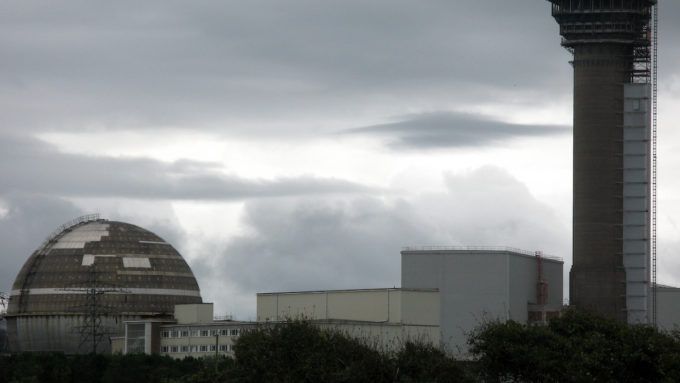
Sellafield nuclear plant. Photo by Dafydd Waters/Creative Commons.

Seventy years after the United Kingdom first began extracting plutonium from spent uranium fuel to make nuclear weapons, the industry is finally calling a halt to reprocessing, leaving the country with 120 tons of the metal, the biggest stockpile in the world. However, the government has no idea what to do with it.

Having spent hundreds of billions of pounds producing plutonium in a series of plants at Sellafield in the Lake District, the UK policy is to store it indefinitely—or until it can come up with a better idea. There is also 90,000 tons of less dangerous depleted uranium in warehouses in the UK, also without an end use.

Plans to use plutonium in fast breeder reactors and then mixed with uranium as a fuel for existing fission reactors have long ago been abandoned as too expensive, unworkable, or sometimes both. Even burning plutonium as a fuel, while technically possible, is very costly.

The closing of the last reprocessing plant, as with all nuclear endeavours, does not mean the end of the industry, in fact it will take at least another century to dismantle the many buildings and clean up the waste. In the meantime, it is costing £3 billion a year to keep the site safe.

Perhaps one of the strangest aspects of this story to outside observers is that, apart from a minority of anti-nuclear campaigners, this plutonium factory in one of prettiest parts of England hardly ever gets discussed or mentioned by the UK’s two main political parties. Neither has ever objected to what seems on paper to be a colossal waste of money.

The secret of this silence is that the parliamentary seats in the Lake District are all politically on a knife-edge. No candidate for either Conservative or Labour can afford to be anti-nuclear, otherwise the seat would certainly go to the opposition party.

The story of Sellafield matters, however, particularly to countries like Japan, which is poised to open its own reprocessing works at Rokkasho, Aomori in September. Strangely, too, this is one of Japan’s most scenic areas.

This plan is particularly controversial in a country that is the only one so far to have had nuclear bombs used against it. Like Britain, Japan has no obvious outlet for the plutonium it will produce, except nuclear weapons and fast breeder reactors, this last a technology Japan has already tried and has ended in failure. It also seems unnecessary because Japan already owns a plutonium stockpile of several tonnes from sending spent fuel to the UK to be reprocessed.

While there is much more opposition in Japan, including from the influential New Diplomacy Initiative, there is local support for the works because politicians see employment opportunities. But there is also international concern about the potential spread of nuclear weapon capability to Japan and beyond.

In Britain, reprocessing began in 1952 entirely as a military endeavour. The idea was to make hydrogen bombs so Britain could keep up with the United States and Russia in the nuclear arms race.

A much larger plant opened in 1964, and it is this one that is finally due to close this year. It had a nominal capacity to reprocess 1,500 tonnes of spent fuel a year for both military and civilian purposes. It reprocessed fuel from the UK’s 26 Magnox, Italy’s Latina, and Japan’s Tokai Magnox nuclear reactors. It has reprocessed 45,000 tonnes so far and has 318 more to go.

From its inception, the reprocessing works was a highly polluting plant, discharging contaminated water into the Irish Sea. Plutonium, cesium, and other radionuclides were sent out to sea in a mile-long pipeline. Radioactivity was picked up in shellfish in Ireland, Norway, and Denmark, and in local seafood that had to be tested regularly to see if the radioactive load they carried made them too dangerous to eat. Local people were advised to keep their consumption of shellfish low. These discharges have now been considerably cleaned up.

A third “recycling” project, the Thermal Oxide Reprocessing Plant (THORP), was planned in 1977, expected to capitalize on the then projected expansion of nuclear power and to provide plutonium and uranium for newer reactors, and for the still-hoped-for fast breeder reactor programme. Government approval was given nine years later, by which time contracts for reprocessing had been made with a number of foreign companies. The new plant’s biggest customer was Japan.

So in the end, reprocessing became a commercial venture rather than producing anything useful. Nine countries sent spent fuel to Sellafield to have plutonium and uranium extracted for reuse and paid a great deal of money to do so. In reality, very little of either metal has ever been used because mixed oxide fuels were too expensive, and fast breeder reactors could never be scaled up sufficiently to be economic.

The Nuclear Decommissioning Authority (NDA), the UK government body now charged with keeping Sellafield safe and ultimately dismantling it, still makes £820 million (US$1.16 billion) a year storing spent fuel, plutonium, uranium, and nuclear waste for foreign governments and the UK’s Ministry of Defence. This latter waste includes the radioactive material from powering nuclear submarines and manufacturing bombs and warheads. The rest of the £3.345 billion (US$4.570) budget comes from the UK taxpayer.

In its current plan, the NDA hopes to have disposed of all spent fuel by 2125—103 years hence. All buildings will be demolished or reused by 2133.

Although these targets seem a long way off, some of the interim ones are already unlikely. The documents say the NDA hopes to establish a deep depository for high-level waste by 2040—but the UK government has been looking for a site since 1980, and every one “found” has so far been rejected. It has just started the search all over again, offering lots of financial incentives to local communities to consider the idea.

Whatever happens, one thing is certain—most of the 11,000 people currently employed at Sellafield will still have jobs for decades to come.

UK: Prime Minister Johnson announces requirement to self-isolate with COVID will end in days

Robert Stevens


Prime Minister Boris Johnson has opened a second front, after anti-Russian warmongering, in the campaign to save his premiership by announcing that all COVID rules, including the requirement to self-isolate after testing positive, will be withdrawn in England from the end of February.

Britain's Prime Minister Boris Johnson during a media briefing on COVID-19, in Downing Street, London, Wednesday Dec. 15, 2021. (Tolga Akmen/Pool via AP)

Originally scheduled to take place on March 23, the move will be given the go ahead on February 23 when Parliament returns in 11 days’ time following its half-term recess. This comes as tens of thousands continue to be infected daily and hundreds die. Another 68,000 infections were announced Wednesday, bringing numbers in the last week to 485,074 cases and 1,526 deaths.

The criminality of Johnson’s actions was underscored by the comments made Wednesday to BBC Radio’s Today by Dr Bruce Aylward, a senior advisor to the World Health Organisation director-general. He warned, “If we look at the situation today—there’s still two million reported cases alone, over 5,000 deaths every single day right now.

“The numbers are absolutely staggering, and what we’re learning to live with is not just this virus, but what should be an unacceptable burden of disease, an unacceptable number of deaths every single day, especially when there are the tools to stop or at least slow this thing, manage it, control it.”

Johnson made his announcement during Prime Minister’s Questions. The previous week’s PMQs were dominated by his attack on Labour Party leader Sir Keir Starmer, while Director of Public Prosecutions, for allowing the serial rapist and paedophile, Jimmy Savile, to escape prosecution prior to his death in 2011.

The prime minister’s calculated Trumpian dog-whistle led to a right-wing, anti-vax mob surrounding and barracking Starmer Monday evening. A media furore and flurry of denunciations by Labour demanded Johnson’s apology, which never came.

Yesterday Labour determined that the attack on Starmer did not feature in PMQs. Of far greater significance, as Johnson announced that the government was effectively ending all recognition of the pandemic in a matter of days, Starmer said nothing about the more than 180,000 people killed by COVID as a result of putting profits ahead of lives. Labour’s pose as the party of the “moral high ground” means above all doing nothing that would impact the “national interest.”

Johnson spent the last few days organising a cabinet reshuffle, engineering a further shift to the right. According to the Sunday Express, he finalised his new cabinet after agreeing a deal with Tory backbenchers which a government source said is based on policies “to warm the cockles of Tory hearts”. Johnson would now be “listening ‘to the right people’ who will be brought in as replacements.”

Among them are Jacob Rees-Mogg, who becomes the new minister for “Brexit opportunities” and “government efficiency”. Rees-Mogg is the Eton-educated son of former Times editor Baron William Rees-Mogg and is known as the “Honourable Member for the 18th century” for his reactionary views. Johnson has spent weeks assuring the party’s extreme right layers that he will govern henceforth as a “true Thatcherite” with no more “retreats” on lockdowns, jobs furloughs and the like, with the Times commenting that Rees-Mogg’s being “given free rein over post-Brexit turf is… surely a piece of red meat for the right wing of the Conservative Party.”

Steve Barclay, former Brexit Secretary under Johnson’s predecessor Theresa May was appointed the prime minister’s chief of staff. Barclay’s voting record, as the pro-Tory Express pointed out, includes “consistently” voting “against raising welfare benefits ‘at least in line with prices’,” and voting “for a reduction in spending on benefits as well as for reducing housing benefit.” He has also voted “against increasing the tax rate applied to income over £150,000.”

Chris Heaton-Harris, a long-standing Brexiteer becomes chief whip.

The reshuffle came following the resignation of several of Johnson’s key advisers, in response to the “partygate crisis” and his attack on Starmer over Savile. These included his longstanding policy chief Munira Mirza who denounced Johnson for his “scurrilous” attack on Starmer. This elicited an outpouring of support from Britain’s nominally liberal media, who attempted to transform this right-wing libertarian and former member of the misnamed Revolutionary Communist Party into a paragon of principle and virtue.

Other resignation included chief of staff Dan Rosenfield, Johnson’s principal private secretary Martin Reynolds and his director of communications Jack Doyle.

At this stage, it is not possible to calculate how effective Johnson’s counter-offensive in defence of his premiership will be. He has said it will take a “panzer division” to remove him from Downing Street.

Johnson opponents are still some distance from being able to remove him, requiring letters of no confidence from 54 MPs, triggering a no confidence vote in his position as party leader. If over half of Tory MPs (180) then voted to remove Johnson, he would resign as prime minister. So far just 13 letters have been submitted according to the tally of the pro-Tory Spectator. Around another 30 MPs have openly criticised him over partygate but have not gone as far as submitting letters. It is unlikely Tory MPs will send letters during Parliament’s recess, or that the no confidence vote would be held before MPs return on February 21.

Everything that has happened since the partygate scandal erupted in November confirms that this a fight between the most right-wing political representatives of the bourgeoisie. There are no differences over the policies of herd immunity and endemic COVID-19, attacks on the working class to claw back £400 billion spent during the pandemic—most which ended as bailouts for the corporations—or ramping up military conflict with Russia.

In alliance with the US, Britain is doing everything it can to inflame tensions with Russia, with Johnson laying out immediate plans to send 350 marines to Poland, with Typhoon fighter jets and warships ready for mobilisation to south eastern Europe.

The government’s reckless policy is the product of its desperate kowtowing to Washington, which has also insisted that Britain ready massive sanctions against Moscow. So rapidly have events escalated that the government was not, despite its sabre rattling, able to get the necessary legislation through parliament.

Foreign Secretary Liz Truss had promised that by February 10, the “toughest sanctions regime against Russia” in UK history would be on the statute book. According to Politico, Truss will tell her counterpart Sergei Lavrov today, without any sanctions legislation in place, that Russia “risks creating a drawn-out quagmire should it invade Ukraine, incurring a high human and economic cost.”

Workers must study the statement of the Socialist Equality Party (UK), “The working class must mobilise to bring down the Johnson government!” It explains, “What is unfolding in parliament over ‘partygate’ is the modern-day equivalent of a palace coup—a change at the top to preserve the existing order. Left at this level, whether Johnson survives or not, the Tory government—as it did under David Cameron and Theresa May, each one more right-wing than the last—will continue as the most ruthless representative of the major corporations and the super-rich.”

The statement warns, “The crisis is being seized on by powerful sections of the Tory Party to engineer the most right-wing policy lurch ever carried out by a British government, with the Labour opposition marching in lockstep.”

Death of boy trapped in well highlights Morocco’s social catastrophe

Jean Shaoul


A massive four-day long rescue operation failed to save the life of Rayan Oram, the five-year-old Moroccan child who fell down a 32-metre deep well shaft.

5 year old Rayan Awram (Twitter)

Rayan had fallen down the narrow well owned by his father, who had reportedly been working on fixing the well, while he was playing outside in the village of Ighrane, 60 miles from the northern city of Chefchaouen. The poverty-stricken region of the Rif mountains is dotted with deep wells.

After initial attempts to rescue him using a rope failed, the family called in the emergency services which believed it was too risky to widen the shaft and decided to use large diggers in the hope of reaching the child from the side. So dangerous was the unstable sandy and rocky terrain that mechanical digging was halted from time to time amid fears that the ground would collapse, threatening the safety of both the crew and Rayan, and the rescue team had to resort to manual digging.

Food, water, a telephone and oxygen were lowered into the shaft, but it is unknown whether the injured boy was able to eat and drink.

As news about the rescue went viral on social media, with the Arabic hashtag #SaveRayan dominating Twitter, the international print media took up the story, turning it into a media circus. The Moroccan government sought to use the world’s attention on the rescue operation to rally support and unify the population, under conditions where poverty and social unrest are increasing in the wake of the pandemic that has hit the country hard. But by the time the rescuers reached the child, it was too late.

The government, whose cynicism knows no bounds, deployed bulldozers to pave the road and facilitate access to the funeral site, as well as to prepare a parking area, while Royal gendarmes, auxiliary forces and local officials were sent to manage the funeral attended by hundreds of people.

Amid the media frenzy, not a single journalist, including in the world’s so-called liberal journalists who may have spent a holiday in Morocco and visited Chefchaouen’s fabled blue-painted buildings in the medina, even alluded to the economic and social conditions that gave rise to the tragedy. Yet on Tuesday, a seven-year-old boy died after falling into a 50-metre deep well in the village of Al-Sabt, Khemisset governorate, east of the capital Rabat, just hours after Rayan’s funeral.

Some 40 percent of Moroccans labour with primitive tools and animal-drawn ploughs on farms that account for only 15-17 percent of GDP, barely scratching a living. Tourism which accounts for around 20 percent of the economy has been decimated by the pandemic. Around 13 percent are registered as unemployed, undoubtedly a vast underestimate, while most households have reported a fall in their incomes as wages have stagnated for years. According to the World Bank, nearly a quarter of Moroccans are poor or at risk of poverty, particularly in rural areas.

Water shortages are one of the country’s most critical issues. While the government has focused on mega infrastructure projects, including the Casablanca-Tangier bullet train, new tourist resorts and facilities, and mining projects that consume vast quantities of water, linked to the country’s ruling elite and royal family, little is spent on basic infrastructure for workers, peasants and their families.

In 2022, more than 65 years after independence from France, around 45 percent of Morocco’s 36 million population do not have access to clean, piped water. A water desalination plant, reportedly the world’s largest, opened a few days ago near the coastal city of Agadir, a major tourist destination, to provide drinking water and irrigation for high-value fruit and vegetables for export. As much as 35 percent of Morocco’s water is lost through leaking pipes, while industrial and urban waste pollute the water supply.

Even more telling, this tragedy took place not in the desert but in the Rif that receives more rainfall than anywhere else in Morocco, with some areas receiving upwards of 2,000 mm of precipitation a year. The western area, where this tragedy took place was once well forested but decades of overgrazing, forest fires and forest clearing for agriculture, particularly for the cultivation of cannabis—Morocco, particularly the Rif, is one of the world’s major producers—have eroded the soil.

Many of the hundreds of villages like Ighrane in the provinces of Tangier and Chefchaouen are not connected to a drinking water supply. In some cases, villagers get their water from tankers at hugely inflated prices, while others fetch their water from unsecured sources and must carry it over long distances in canisters and buckets. Hundreds of local reports have highlighted the dangers of people resorting to drilling their own wells or holes, often without the proper legal authority, to access water, running the risk of large fines and even imprisonment.

The Rif is one of the poorest regions of the country, long neglected by the government, with little in the way of infrastructure, schools or hospitals. The only means of survival is cannabis production, which while illegal is tolerated as a means of containing the seething tensions that have led to repeated protests in recent years. Last summer, the government introduced legislation that would legalise the cultivation, use and export of cannabis for medical and industrial purposes, but not for recreational purposes, sanctioning production in certain areas including the Rif. It follows the United Nation’s removal of cannabis from its list of the most dangerous drugs.

While the government claims that this will improve the Rif’s economy, freeing cannabis growers from the international drug-smuggling networks, Riffian farmers fear this is simply a cover for the takeover of cannabis production by corporations and well-connected businesses. These are more able to conform to the legal standards required for medicinal cannabis, which in any event is only a small market, or the lower-value industrial market. Moreover, there are no plans to provide an amnesty for the nearly 50,000 farmers with cannabis-related arrest warrants hanging over their heads.

Five years ago, protests erupted in Al Hoceima after the fish salesman Mouhcine Fikri was crushed to death in an altercation with the city’s police. The protests spread far beyond the Rif region over social conditions in Morocco and political opposition to the Makhzen, the barely disguised monarchical regime that controls the country and serves as a loyal ally of the imperialist powers. Hundreds were arrested, and the leaders of the Hirak movement that led the months-long protests were sentenced to 20 years in prison. Since then, the government has done nothing to ameliorate the desperate economic plight of the long-neglected region.

In short, the child’s terrible death is a product of the economic and social conditions prevailing in Morocco today, the source of widespread and legitimate outrage among workers throughout the country and within the Rif. It underscores the bankrupt and criminal character of Morocco’s monarchy and the fraud of independence. The situation is not fundamentally different in any of the country’s neighbours: Algeria, Tunisia and Mauretania.