14 Feb 2022

Puerto Rico: Teachers strikes and protests continue against debt payment deal

Rafael Azul


A powerful movement of Puerto Rican teachers and public employees is defying the Financial Oversight and Management Board (FOMB) which controls the island’s finances. Teachers are demanding the right to keep their existing pensions, as well as wage increases, the cancellation of school closures, increases in the Education Budget, and an end to the privatization of education and other public agencies.

Two weeks ago, Puerto Rican teachers launched demonstrations across the island, a colonial territory of the US. Teachers rallied at their schools in San Juan, Bayamon, San Germán, Guayanilla, Camuy, Lares and Juana Díaz. Hundreds of teachers also marched and rallied at the Fortaleza government house in San Juan, the capital.

Striking teachers in Puerto Rico (Twitter/@irizarry_aimee)

The protests were held in opposition of the debt agreement reached between Puerto Rico and the Wall Street debt supervisory board, approved by federal judge Laura Taylor Swain.

The agreement freezes pensions for public school teachers and modifies the defined benefits plan that grants teachers 75 percent of their final wages. The new plan is solely based on deductions from teachers’ wages into a retirement account tied to financial markets.

Prior to this agreement, teachers were eligible for full retirement after completing 30 years on the job no matter how old they were. Under the new agreement, the age of retirement has been set at 63, meaning educators who begin their careers in their twenties would have to teach far longer than 30 years to retire with a full pension.

The fiscal agreement contemplates a $470 increase in monthly wages only if teachers and students meet recently imposed attendance requirements for students and teachers. Currently, there is an exodus of teachers fleeing the widespread poverty on the island, many being actively recruited by school districts in Florida, Texas, and other US states.

On February 2, the Financial Oversight Board rejected a plan to raise monthly base salaries from $1,750 to $2,700, under conditions of sky-rocketing housing, food, and fuel prices. Many educators spend their days teaching and work nights and weekends at other jobs. In addition, teachers report that they often buy classroom supplies out of their own pockets as a consequence of previous cuts in the public education budget.

In addition to the attacks on pensions and wages, anger is being fueled by a new round of school closings. Education authorities had promised in May 2021 that no schools would close, but have now issued a “master plan” that proposes the closure of 83 schools, affecting 18,644 students in the cities of Humacao, Ponce and San Juan. For Ponce and Humacao this is the second round of school closures.

Renewed protests have been triggered in recent weeks after it was revealed on February 2 that Pablo Mas Oquendo, a teacher, had died the previous day from a traffic accident on his way from a night gig as a security guard. Mas Oquendo fell asleep while driving home. He had two part-time jobs, in addition to teaching.

A mass march was held on February 4 in honor of Mas Oquendo, demanding the resignation of Puerto Rico’s Governor Pedro Pierluisi.

In an attempt to stop further protests, Governor Pierluisi met with the teacher union bureaucracies and promised a $1,000 temporary wage increase for teachers and a $500 raise for firefighters, beginning in July 2022 until 2024. He also promised to revive a program of incentives for teachers who received masters and doctorate degrees.

Undeterred, teachers declared a “Red Flu,” leaving their classrooms and taking to the streets, supported by their students. Other public workers, including firefighters, joined their strike action.

Provocatively, Pierluisi denounced the teachers’ job action, saying: “Those who don’t go to their jobs, unless they are really ill, are ignoring their duties. That is not right; it is unjustified. One can protest and march outside of work hours.”

Last Wednesday was the largest day of teachers’ protests, with over 80 percent of teachers going on strike. Thousands surrounded the Fortaleza in San Juan in a so-called “Great March of Indignation.” Many fire stations also closed.

Protests continued the next day, February 10. Pierluisi is now promising that the wage increases will be permanent and that pensions will improve, without indicating how these measures will be paid for without breaking with the Wall Street vulture funds and the Financial Oversight Board.

The aim of the protest organizers, the Broad Front in Defense of Public Education (FADEO), is to channel opposition behind fruitless appeals to pressure the Puerto Rican senate and federal courts to repudiate the agreement. FADEO is a coalition of several trade unions, including Federación de Maestros de Puerto Rico (FMPR), Educadores por la Democracia, Unidad, Cambio, Militancia y Organización Sindical (Educamos) and Unión Nacional de Educadores y Trabajadores de la Educación (Unete).

FADEO does not include the Puerto Rican Teachers Association (AMPR), affiliated with the American Federation of Teachers (AFT). The AMPR, for its part, participated in negotiations with the Financial Oversight Board and accepted the changes to the pension plans, arguing cynically that this betrayal was the only way to “save” pensions for teachers.

The Puerto Rican Teachers Federation announced that strikes and demonstrations will continue this week, beginning on Tuesday, to protest against plans in the legislature to make an expedited $10 billion payment to the hedge fund holders of Puerto Rican debt, reversing its previous approval of the debt agreement. At a press conference announcing the protests, an FMPR spokesperson reminded legislators of the mass demonstrations in 2019, which involved up to a third of the island’s population and forced the resignation of then-Governor Ricardo Rosello.

However, by directing teachers’ opposition into the dead-end of appeals to the Wall Street-dominated political establishment, while isolating them from the struggles of teachers in the United States and across the world, the teachers’ unions are leaving workers at the mercy of the very same big banks and their political representatives.

12 Feb 2022

The Terrible Fate Facing the Afghan People

Vijay Prashad


Afghanistan Children
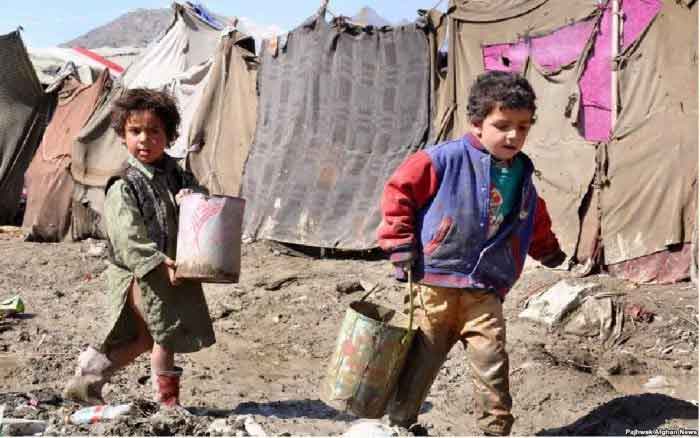
Millions of Afghans have been displaced by the war. Photo: MikrofonNews

On February 8, 2022, UNICEF (the United Nations Children’s Fund) Afghanistan sent out a bleak set of tweets. One of the tweets, which included a photograph of a child lying in a hospital bed with her mother seated beside her, said: “Having recently recovered from acute watery diarrhea, two years old Soria is back in hospital, this time suffering from edema and wasting. Her mother has been by her bedside for the past two weeks anxiously waiting for Soria to recover.” The series of tweets by UNICEF Afghanistan show that Soria is not alone in her suffering. “One in three adolescent girls suffers from anemia” in Afghanistan, with the country struggling with “one of the world’s highest rates of stunting in children under five: 41 percent,” according to UNICEF.

The story of Soria is one among millions; in Uruzgan Province, in southern Afghanistan, measles cases are rising due to lack of vaccines. The thread to the tweet about Soria from UNICEF Afghanistan was a further bleak reminder about the severity of the situation in the country and its impact on the lives of the children: “without urgent action, 1 million children could die from severe acute malnutrition.” UNICEF is now distributing “high energy peanut paste” to stave off catastrophe.

The United Nations has, meanwhile, warned that approximately 23 million Afghans—about half the total population of the country—are “facing a record level of acute hunger.” In early September, not even a month after the Taliban came to power in Kabul, the UN Development Program noted that “A 10-13 percent reduction in GDP could, in the worst-case scenario, bring Afghanistan to the precipice of near universal poverty—a 97 percent poverty rate by mid-2022.”

The World Bank has not provided a firm calculation of how much of Afghanistan’s GDP has declined, but other indicators show that the threshold of the “worst-case scenario” has likely already passed.

When the West fled the country at the end of August 2021, a large part of the foreign funding, which Afghanistan’s GDP is dependent on, also vanished with the troops: 43 percent of Afghanistan’s GDP and 75 percent of its public funding, which came from aid agencies, dried up overnight.

Ahmad Raza Khan, the chief collector (customs) in Khyber Pakhtunkhwa in Pakistan, says that exports from his country to Afghanistan have dropped by 25 percent; the State Bank of Pakistan, he says, “introduced a new policy of exports to Afghanistan on December 13” that requires Afghan traders to show that they have U.S. dollars on them to buy goods from Pakistan before entering the country, which is near impossible to show for many of the traders since the Taliban has banned the “use of foreign currency” in the country. It is likely that Afghanistan is not very far away from near universal poverty with the way things stand there presently.

On January 26, 2022, UN Secretary-General António Guterres said that “Afghanistan is hanging by a thread,” while pointing to the 30 percent “contraction” of its GDP.

Sanctions and Dollars

On February 7, 2022, Taliban spokesperson Suhail Shaheen told Sky News that this perilous situation, which is leading to starvation and illness among children in Afghanistan, “is not the result of our [Taliban] activities. It is the result of the sanctions imposed on Afghanistan.”

On this point, Shaheen is correct. In August 2021, the U.S. government froze the $9.5 billion that Afghanistan’s central bank (Da Afghanistan Bank) held in the New York Federal Reserve. Meanwhile, family members of the victims who died in the 9/11 attacks had sued “a list of targets,” including the Taliban, for their losses and a U.S. court later ruled that the plaintiffs be paid “damages” that now amount to $7 billion. Now that the Taliban is in power in Afghanistan, the Biden administration seems to be moving forward “to clear a legal path” to stake a claim on $3.5 billion out of the money deposited in the Federal Reserve for the families of the September 11 victims.

The European Union followed suit, cutting off $1.4 billion in government assistance and development aid to Afghanistan, which was supposed to have been paid between 2021 and 2025. Because of the loss of this funding from Europe, Afghanistan had to shut down “at least 2,000 health facilities serving around 30 million Afghans.” It should be noted here that the total population of Afghanistan is approximately 40 million, which means that most Afghans have lost access to health care due to that decision.

During the entire 20-year period of the U.S. occupation of Afghanistan, the Ministry of Public Health had come to rely on a combination of donor funds and assistance from nongovernmental organizations (NGOs). It was as a result of these funds that Afghanistan saw a decline in infant mortality and maternal mortality rates during the Afghanistan Mortality Survey 2010. Nonetheless, the entire public health care system, particularly outside Kabul, struggled during the U.S. occupation. “Many primary healthcare facilities were non-functional due to insecurity, lack of infrastructure, shortages of staff, severe weather, migrations and poor patient flow,” wrote health care professionals from Afghanistan and Pakistan, based on their analysis of how the conflict in Afghanistan affected the “maternal and child health service delivery.”

Walk Along Shaheed Mazari Road

On February 8, 2022, an Afghan friend who works along Shaheed Mazari Road in Kabul took me for a virtual walk—using the video option on his phone—to this busy part of the city. He wanted to show me that in the capital at least the shops had goods in them, but that the people simply did not have money to make purchases. We had been discussing how the International Labor Organization now estimates that nearly a million people will be pushed out of their jobs by the middle of the year, many of them women who are suffering from the Taliban’s restrictions on women working. Afghanistan, he tells me, is being destroyed by a combination of the lack of employment and the lack of cash in the country due to the sanctions imposed by the West.

We discuss the Taliban personnel in charge of finances, people such as Finance Minister Mullah Hidayatullah Badri and the governor of the Afghanistan central bank Shakir Jalali. Badri (or Gul Agha) is the money man for the Taliban, while Jalali is an expert in Islamic banking. There is no doubt that Badri is a resourceful person, who developed the Taliban’s financial infrastructure and learned about international finance in the illicit markets. “Even the smartest and most knowledgeable person would not be able to do anything if the sanctions remain,” my friend said. He would know. He used to work in Da Afghanistan Bank.

“Why can’t the World Bank’s Afghanistan Reconstruction Trust Fund (ARTF) be used to rush money to the banks?” he asked. This fund, a partnership between the World Bank and other donors, which was created in 2002, has $1.5 billion in funds. If you visit the ARTF website, you will receive a bleak update: “The World Bank has paused disbursements in our operations in Afghanistan.” I tell my friend that I don’t think the World Bank will unfreeze these assets soon. “Well, then we will starve,” he says, as he walks past children sitting on the side of the street.

Omicron sweeping through workplaces in Germany

Marianne Arens


A wave of the Omicron variant of the coronavirus is sweeping through workplaces and factories in Germany. Workers are paying a heavy price. The death toll from the virus in Germany is nearing 120,000. One hundred twenty thousand people have died unnecessarily and too soon, leaving behind sons and daughters, grandchildren, partners, friends, colleagues. Hundreds of thousands more who survive the epidemic risk the chronic effects of Long COVID.

Since the pandemic began, the “system-relevant” industries—health care, social services, schools, transportation and logistics—have been particularly hard hit by coronavirus infections. Since the outbreak of the Omicron variant in November, health insurers have been registering increasingly severe outbreaks in private-sector companies, in automotive manufacturing, automotive engineering, metal processing, plastics and rubber production, and in mechanical and industrial engineering.

From the beginning of the pandemic onward, few figures on COVID-19 infections made their way into public view. The economy is to be kept running so that profits continue to flow. That is why schools are kept open while the pandemic is allowed to rage unchecked. From the factories filter only single stories, however typical and telling, that enable a glimpse of the virus’ spread.

Workers in a hog slaughter and processing plant (Wikipedia Commons)

On January 20, when new daily infections in Germany exceeded 100,000 for the first time, the business newspaper Handelsblatt published a survey of several DAX-listed corporations and smaller companies, concluding that “companies are feeling the increase in infection figures pretty much everywhere—albeit with varying degrees of intensity.”

At MN Maschinenbau in Saxony, for example, the sickness rate was rising steadily, and at the end of January, nine out of every 100 employees were absent. Engine manufacturer MTU noted a “significant increase in infection figures” since the beginning of the year, and the situation was similar at chipmaker Infineon. According to the report, several companies are keeping reserve staff on standby and hiring additional temporary workers to make up for coronavirus absences. This is the case at BMW, for example, as well as at laser specialist Trumpf in Austria and Switzerland.

Carmaker Opel in Rüsselsheim is also hiring “a mid-three-digit number” of temporary workers through Adecco, WirtschaftsWoche reported. The automaker, now owned by Stellantis, cut several thousand jobs since it was acquired by PSA; 2,100 employees have been terminated just since the beginning of 2020. Now, however, workers are being hired to compensate for “shortfalls due to the Omicron wave,” as explained by Opel management. In Rüsselsheim, more people have contracted the coronavirus since the Omicron wave (i.e., since November) than in the whole of last year.

At Volkswagen in Wolfsburg, news reached the public on February 8 that the paint shop was ordering “renewed shift cancellations” as a result of clusters of workers calling in sick due to coronavirus. At VW, it is particularly difficult to obtain information about colleagues who have fallen ill.

All reports indicate that an unusually high number of workers have contracted SARS-CoV-2 since the beginning of 2022. According to a study by the insurer AOK, more than 130,000, or 5.5 percent, of the 2.4 million workers insured by AOK Baden-Württemberg had sick leave due to a COVID-19 diagnosis between March 2020 and November 2021. Of these, nearly 20 percent fell ill just in the month of November 2021. Without doubt many more workers have contracted the disease since then, in December 2021 and January 2022.

In the energy industry, enough workers are falling ill that management is training additional staff, bringing back workers and those recently retired, a spokesman for the German Association of Energy and Water Industries (BDEW) told the news portal ntv.de.

The situation in the slaughterhouses is dire. New coronavirus infections have been on the rise for weeks, especially in the cutting area, where workers toil shoulder-to-shoulder. These are ideal conditions for the virus to spread and workers can do virtually nothing to protect themselves.

Here, too, the outbreaks are not made public by alarmed health authorities or the representative NGG trade union, but through the complaints of entrepreneurs afraid for their profits. For example, on January 24, the Federation of Livestock and Meat Producers’ Associations (VEZG) complained of difficulty meeting the quota for slaughtered pigs because “due to a sharp rise in coronavirus infections, there was a shortage of staff in the slaughterhouses, especially in cutting.”

The Aalen slaughterhouse in the state of Baden-Württemberg has been closed since early February due to an undisclosed number of coronavirus infections. There are also new coronavirus outbreaks at the Bamberg slaughterhouse and the Danish Crown cattle slaughterhouse in Husum. As announced on February 1, 120 employees had been infected with the coronavirus at the Husum plant.

In the first summer of the pandemic in 2020, Tönnies slaughterhouses in the district of Gütersloh became notorious as coronavirus hotspots. Over 1,500 employees were infected with the coronavirus onsite. At the time, the Social Democrats (SPD) passed a new “Occupational Health and Safety Control Act,” prompting both the owner, Clemens Tönnies, and the district and state governments to promise to remedy the miserable working and living conditions that led to the outbreak.

These were but empty words. Today there are once again reports of coronavirus outbreaks at Tönnies. This was reported on February 2 by the ZDF magazine Frontal, which likewise documented life-threatening violations of occupational health and safety and illegal dismissals in the event of illness.

Omicron is raging particularly rampant in the public transport sector. Cities such as Berlin, Leipzig, Hamburg, Augsburg, Chemnitz, Frankfurt am Main are trimming schedules and shutting down routes because of the persistently high level of sick leave.

In the state of North Rhine-Westphalia, the cities of Hamm, Remscheid, Mönchengladbach, Herne and Castrop-Rauxel, among others, have done likewise in recent days, and the city of Bielefeld has suspended night bus service. In the Rhine-Main region, public transportation in Wiesbaden and Frankfurt has been reduced for days. In Wiesbaden, school bus routes are also affected, resulting in crowding—and increased risk of infection—on the buses still running.

On February 7, Redaktions Netzwerk Deutschland (RND) reported on a “cross-industry flash poll” conducted by the German Chamber of Industry and Commerce. Of 370 entrepreneurs, one in four described their current staff shortages as “considerable.” Another 4 percent rated their understaffing as “critical.” Thirty-one businesses in the health care sector said the impact was “significant,” while among transportation and logistics companies, the figure was as high as 36 percent. Virtually all businesses expect the situation to worsen.

The RND introduced this information with the sentence: “The German economy is suffering from the consequences of the current coronavirus wave.” This entrepreneurs’ lament was combined with a demand to the government to shorten quarantine periods. This shows with complete clarity that profit maximization, not public health protection, is at the heart of such considerations.

In all of this, no one asks how the workers are faring. According to official figures, more than 11 million people have been infected with SARS-CoV-2 so far, 4 million of them just since the beginning of 2022. In Germany last month, around 5,000 people, 175 per day, paid for the virus with their lives.

Yet everything could have been different. If scientific advice had been heeded from the start of the pandemic and a global strategy had been adopted to eliminate the virus, as was done, for example, in the eradication of measles and smallpox, then several million people worldwide could still be alive today.

China has shown the way: Unlike most governments, China is pursuing a strategy that repeatedly eliminates the virus through a combination of vaccination, systematic testing, contact tracing and temporary shutdowns. The world’s most populous country, with 1.4 billion people, has recorded fewer than 5,000 deaths and just under 100,000 cases of the disease.

Even today, it is still possible to bring the pandemic under control and defeat the deadly disease internationally. However, this is only possible by taking up a fight against the new coalition government in Berlin and their counterparts in all other countries, who are in the process of deliberately mass infecting schools and all of society in the interest of capital. The focus is not on the lives of the people, but on the profit of the capitalist corporations.

Unions are also an integral part of this conspiracy to force workers to labour under life-threatening pandemic conditions. They, too, systematically conceal coronavirus outbreaks in the factories and downplay their consequences.

The chairman of IG Metall union, Jörg Hofmann, stated that the facts “do not support shutting down industry to reduce the number of coronavirus infections. ... Shutting down industry would have the most severe economic consequences.”

From the start, the service sector union Verdi stated on its website that becoming infected with disease at work is part of the “general risk of life.” And the teachers’ union GEW has continuously pushed to keep schools open at all costs.

UK’s most senior police officer Cressida Dick resigns

Thomas Scripps


Dame Cressida Dick, Britain’s most senior police officer, resigned Thursday, hours after telling journalists she had “absolutely no intention” of quitting. Dick became Metropolitan Police Commissioner in 2017.

Her decision was prompted by Labour Party Mayor of London Sadiq Khan telling her he was “not satisfied” with her plans to address “racism, sexism, homophobia, bullying, discrimination and misogyny in the police force”, after a recent scandal involving London officers joking about beating their wives, rape and killing black children.

Dick issued a statement saying “it is clear that the Mayor no longer has sufficient confidence in my leadership to continue. He has left me no choice but to step aside”.

Cressida Dick (credit: Wikimedia Commons)

Khan has pulled the trigger following a build-up of discontent in the ruling class with the Commissioner’s performance. Dick was an utterly loyal and merciless servant of the British state, who in 2005 led the operation which assassinated an innocent man Jean Charles de Menezes in the aftermath of the July 21 London bombings. She instituted armed foot patrols, was a staunch defender of stop and search and the use of facial recognition systems and led mass arrests of Extinction Rebellion climate protestors.

She was also incompetent and a walking public relations disaster. There were very few crises confronted by the Met which she failed to inflame.

Her time in charge was epitomised following the murder of Sarah Everard last March by serving Met police officer Wayne Couzens, nicknamed “the rapist” by his colleagues. The Met responded by suggesting women stopped by plainclothes police officers should challenge them and consider “waving down a bus” if they didn’t feel safe.

A vigil held for Everard on Clapham Common was brutally broken up by a police mob, just an hour after Prince William’s wife Kate Middleton had laid flowers at the site in an attempt to ease tensions.

Three months later, Dick was personally censured for obstruction in a report into the 1987 murder of Daniel Morgan, which uncovered a cesspit of police corruption. The case was possibly connected with that of Stephen Lawrence, killed in a racist murder in 1993 effectively covered up by the Met. Dick closed the case in August 2020, with three of the killers still at large. In 2012, she had shut down the work of Clive Driscoll who had brought two of the murderers to justice.

Each incident has further eroded the tarnished reputation of the Metropolitan Police, a key pillar of the British state, earning Dick the enmity of most of the political establishment.

Nazir Afzal, a former chief prosecutor at the Crown Prosecution Service, is quoted in the i newspaper as saying Dick’s career was marked by a “catalogue of blunders.” The paper explains Afzal “has spent three decades trying to restore confidence in law and order after allegations of corruption involving several high-profile miscarriages of justice and in the aftermath of Stephen Lawrence’s murder. He argued last month that Dame Cressida was ‘undoing all that painstaking work’.”

The Daily Mail wrote, “By any reasonable measure, her tenure has been a catastrophic failure. She has overseen cover-ups, displayed incompetence and has entrenched public despair and distrust.”

Even the BBC reported, “The career of Cressida Dick has seen her weather a number of storms that would have sunk many others. Allegations relating to an unholy trinity of dishonesty, prejudice and incompetence dogged the Met for almost all of her tenure.”

Much of the commentary has pointed to Dick’s failure to tackle racism and misogyny in the police as the reason for her departure and asks whether her replacement can address “deep-seated cultural issues.” This is all so much blather. While they would doubtless prefer a less frequently embarrassing operation, few of these commentators are under any illusions about the type of people entrusted with the task of cracking down on protest and the consequences of poverty and social inequality.

The real concerns animating the clamour against the former commissioner were summed up by the Guardian ’s Marina Hyde. Also referring to the “partygate” scandal gripping Prime Minister Boris Johnson’s premiership, she wrote that there is something “increasingly dangerous about ordinary people thinking: ‘If I behaved like the prime minister or those police officers, I’d be sacked.’ Trust is the very hardest thing to get back, and trust in the police and in politicians is demonstrably nosediving.”

Hyde’s comment echoes Labour leader Sir Keir Starmer’s invocation of Margaret Thatcher against Johnson last week: “The first duty of Government is to uphold the law. If it tries to bob and weave and duck around that duty when its inconvenient, if government does that, then so will the governed.”

As the Socialist Equality Party explained, “Preventing opposition from developing among ‘the governed’ is the overriding political imperative of” both Labour and the Tories. The same applies to the Met.

Under conditions in which the UK is helping to spearhead the US war-drive against Russia in Europe and heading into the worst collapse in living standards in recent memory amid an uncontrolled pandemic, the growing feeling in media and political circles was that Dick was not up to the job. The brief for her successor was most bluntly set out in the Daily Mail, whose editorial yesterday demanded, “Needed—a no-nonsense cop to arrest decline”.

Those tipped to replace her show what can be expected. The frontrunner, although considered out of favour in Downing Street, is Neil Basu, until recently the head of counter-terror policing. He came to public prominence in 2019 by threatening journalists who publish leaked information with criminal charges.

After UK ambassador to the US Sir Kim Darroch’s frank assessments of the Trump administration were published in the Mail on Sunday, Basu warned that Counter Terrorism Command would investigate alleged breaches of the Official Secrets Act, telling the leaker, “Turn yourself in at the earliest opportunity, explain yourself and face the consequences.”

He also threatened journalists, “The publication of leaked communications, knowing the damage they have caused or are likely to cause may also be a criminal matter.

“I would advise all owners, editors and publishers of social and mainstream media not to publish leaked government documents that may already be in their possession, or which may be offered to them, and to turn them over to the police or give them back to their rightful owner, Her Majesty’s Government.”

The Mail describes Basu as “well-liked within the force and by intelligence officials at MI5.”

Two other possible replacements, Matt Jukes and Mark Rowley, have also served as head of the counter-terrorism unit. Rowley is a frequent contributor to the Tory think-tank, the Policy Exchange. Another candidate, Martin Hewitt, is a former army lieutenant.

Simon Byrne, Chief Constable of the Police Service of Northern Ireland, is described by the Guardian as the “shock and awe candidate”. He caused controversy in 2019 for posting “a Christmas Day message” on Twitter with a photo of him standing next to machine-gun-wielding officers outside a heavily fortified police station in County Armagh, Northern Ireland.

The final decision on the appointment will be made by Home Secretary Priti Patel, who will be looking for someone to enforce her Police, Crime, Sentencing and Courts Bill criminalising protest and regime of savage deportations. The Mail reports sources saying she could “go abroad for candidates with the senior Tory known to have been scouring Australia for a no-nonsense police chief.”

As exemplified in the crisis facing the government and now the Met, facing a social explosion the capitalist state is making use of a series of scandals in its upper echelons to prepare for major confrontations with the working class.

Australian PM’s defeat on religious discrimination bill deepens political crisis

Mike Head


A humiliating loss in parliament this week on its centrepiece Religious Discrimination Bill has intensified the unravelling of the Liberal-National Coalition government, amid mounting popular hostility towards it over the COVID-19 disaster.

Scott Morrison speaking at the National Press Club in February [Source: Facebook/Scott Morrison]

Prime Minister Scott Morrison’s government was forced to stall the bill after five Liberal MPs voted for a contrary amendment to the Sex Discrimination Act in the early hours of Thursday morning, just before 5 a.m.

With only a handful of parliamentary sitting days left before a looming federal election, the Coalition was desperate to push the bill through quickly in order to meet a pledge to religious fundamentalist organisations.

After a national plebiscite vote for same-sex marriage rights in 2017, the government promised to enshrine in law rights for religious groups to continue to discriminate against and vilify people, including because of their sexual identity, on the basis of religious “statements of belief.”

This was to extend to key areas of civil society, including those that depend upon public funding, such as religious schools, in violation of core democratic rights, including the separation of church and state.

Having conducted a marathon all-night session to push the reactionary bill through the lower house—with the support of the opposition Labor Party—the government abruptly withdrew the legislation from the Senate within hours of its early morning defeat.

One of the main religious groups, the Australian Christian Lobby, demanded that the government halt the bill immediately after the Sex Discrimination Act amendment was passed with the support of the five Liberals, plus Labor, the Greens and some independents.

That amendment repealed section 38(3) of the Sex Discrimination Act, a provision inserted by the last Labor government in 2013 to allow church schools to discriminate against students on the grounds of their sexual orientation, gender identity, marital or relationship status or pregnancy, “in accordance with the doctrines, tenets, beliefs or teachings of a particular religion or creed.”

After the government’s defeat on the amendment, the Christian Lobby declared: “The bills were intended to help faith-based schools but they now do more harm than good.”

The government’s swift adherence to the Lobby’s instruction to drop the legislative package underscores the extent to which the Coalition rests on a religious fundamentalist base, which demands the right to discriminate on that basis, even in heavily government-subsidised church schools, in violation of basic democratic rights.

Equally, Labor’s support for the Religious Discrimination Bill, like its 2013 provision in the Sex Discrimination Act and its backing for government funding of church schools, demonstrates its own reliance on a clerical base. While professing the need to protect people from discrimination on the basis of sexuality or gender, Labor, like the Coalition, defends the right of religious bodies to discriminate, citing “statements of belief.”

As soon as the government dropped the bill, opposition leader Anthony Albanese committed any Labor government to enacting a similar one, which would maintain “the right of religious schools to preference people of their faith in the selection of staff.”

The chaos and extraordinary turmoil in parliament this week is part of a deeper political crisis, not just of the widely loathed Morrison government but the entire parliamentary establishment.

Thursday morning’s mutiny by five supposed “moderate” inner-city MPs defied Morrison’s Liberal Party room call on Tuesday for unity in the fractured party to avoid defeat at the federal election, which is due by May.

It also came on top of reports that Morrison was rebuffed inside his own cabinet on Monday when he proposed to pursue a horse-trading deal with the “moderates” and independents for them to drop their Sex Discrimination Act amendment in return for a government promise to put to parliament legislation establishing a cosmetic anti-corruption commission.

News that Morrison was “rolled” in cabinet, despite telling his ministers he was putting his leadership on the line in a bid to secure passage of the religious discrimination bill, was leaked to Australian contributing editor Peter van Onselen and splashed across that Murdoch newspaper’s front page on Thursday.

Van Onselen included a direct quote from inside the meeting, writing: ‘“This is going to cause more problems than it solves,’ one minister said in cabinet.” Another “cabinet minister” told van Onselen that Morrison looked “rattled” at being unable to carry the day in cabinet.

Clearly the leaks came from senior sources, indicating moves are being considered to replace Morrison. Over the past two weeks, similar top-level leaks have reported senior figures, including National Party leader Deputy Prime Minister Barnaby Joyce and an unnamed cabinet minister, denouncing Morrison as a “liar,” “psycho” and “fraud.”

Corporate media commentators are reporting, on the basis of discussions with anonymous Liberal MPs, that they are considering dumping Morrison, amid fears of electoral defeat. “I would say that, after this week, that is not an option that can be discounted,” one Liberal told David Crowe, the chief political correspondent for the Sydney Morning Herald and the Age.

The main contenders to replace Morrison are two equally right-wing figures—Defence Minister Peter Dutton and Treasurer Josh Frydenberg. Both have leapt to the fore in recent days, with Dutton in particular stoking an anti-China witch hunt, accusing China of backing the Labor Party, in line with the escalating US confrontation with China. Dutton narrowly lost to Morrison in Liberal party room balloting to replace Malcolm Turnbull as prime minister in 2018.

Such leaks and reports indicate questioning in ruling circles that the fracturing Coalition government is capable of suppressing mounting working-class unrest over the pandemic and soaring inflation, and delivering the further economic restructuring and attacks on workers’ real wages and conditions demanded by the financial markets.

Recent media polls have shown a collapse in public support for the government, largely because of the continuing COVID-19 catastrophe. There are thousands of infections in schools and rising deaths, especially in aged care facilities, as a direct result of the “live with the virus” policy to dismantle safety measures for the sake of corporate profit-making.

However, this “let it rip” offensive has been possible only with the bipartisan backing of Labor, which holds a majority in the “National Cabinet” of federal, state and territory government leaders that has presided over it. Federal Labor has provided Morrison’s government with “constructive” support throughout the pandemic, including on its massive handouts to big business, and the ratcheting up of the US-led conflict with Beijing.

The depth of the underlying political crisis is reflected in the fact that Labor’s poll ratings remain near the record lows of the 2019 federal election, when the already loathed Morrison government was able to cling to office despite losing votes. Labor’s support in the working class has collapsed after decades of enforcing, in partnership with the trade unions, the dictates of the corporate elite.

Since being installed as Labor leader after the 2019 debacle, Albanese has repeatedly pledged to work closely with the unions and business to impose a new wave of pro-market restructuring, deepening that imposed by the Hawke and Keating Labor governments and the unions from 1983 to 1996.

As the government’s disintegration has worsened, Labor and the unions have done everything they can to prevent the anger of ordinary people, including teachers and nurses, from erupting into strikes and a political movement of the working class.

This week’s events in parliament show that the interests of working people find no voice in the political establishment as a whole. All are committed to the global profits-before-lives agenda, and US-led war preparations, while resorting to appeals to religious bigotry or identity politics to divert the rising class tensions.

What is required is a break from the Labor and the union straitjacket, and a turn to a socialist perspective, aimed at reorganising society to meet social need and guarantee basic democratic rights, not satisfy the profit requirements of a super-rich corporate elite.

Modi blames losses from COVID-19 lockdown on Indian opposition parties

Wasantha Rupasinghe


In a futile attempt to wash responsibility for millions of COVID-19 deaths from his hands, Indian Prime Minister Narendra Modi on Monday in parliament blamed opposition parties for spreading COVID-19 to rural areas.

Indian Prime Minister Modi of the BJP (Source: Wikipedia)

Modi attacked the Congress party in particular for committing a “Paap” (sin) by “instigat[ing] migrants to defy Covid lockdown.” He blamed Congress for giving “free train tickets to migrant workers to leave Mumbai,” after the national coronavirus lockdown announced by Modi on March 24, 2020. Mumbai, India’s financial capital, is located in the state of Maharashtra, ruled by fascistic Shiv Sena-led alliance in which the Congress is a partner.

Modi also attacked the Aam Aadmi Party (AAP), which rules the National Capital Territory of Delhi, for having “provided them [migrants] with buses” to leave Delhi. “As a result,” Modi said, “Covid spread rapidly in Punjab, Uttar Pradesh, and Uttarakhand.”

While COVID-19 clearly spread to rural India when migrant workers from the cities returned to their villages, Modi’s statements are drenched in hypocrisy. In response to mass public concern and anger at the pandemic in March 2020, Modi suddenly announced a month-long, countrywide lockdown. He announced it, however, with only four hours notice, with the same complete contempt for the well-being of India’s workers and rural toilers that led him to keep workers at work during the Delta variant wave last year that claimed millions of lives.

In March 2020, however, the entire Indian ruling elite led by Modi abandoned workers to their fate as they made dangerous trips home. Neither Modi’s Bharatiya Janatha Party (BJP), nor Congress nor the AAP provided social support—wage support during the lockdown, or distributing food and medical supplies—that would have allowed workers to remain safely in the cities.

The BJP, Congress, the AAP and India’s other bourgeois parties bear political responsibility for the criminal policies that were implemented and the mass death that followed.

Maharashtra and then Delhi became epicentres of India’s COVID-19 pandemic. Delhi saw horrible scenes of makeshift funeral pyres on road sides as cemeteries ran out of space; panic searches for hospital beds, ventilators and patients struggling with running out of medical oxygen last year. With 143,155 or 28 percent of India’s highly undercounted official COVID-19 deaths, Maharashtra has suffered the most recorded COVID-19 deaths of any Indian state.

Modi is not attacking Congress and the AAP, which has links to India’s Stalinist parties, because they criminally abandoned hundreds of millions migrants to their own fate. Indeed, Modi’s central government itself bears the principal responsibility for washing its hands of the fate of India’s workers and rural masses.

Modi's ill-prepared lockdown triggered a massive humanitarian crisis, plunging hundreds of millions of migrant workers into misery. Facing joblessness and with no proper food, medicine and shelters coming from the government, hundreds of thousands of migrant workers had no other option but to flee back to their villages, thousands of kilometres away. Thousands had to walk on foot and hundreds died of hunger or were run over by passing trains as they slept.

Ultimately, authorities stopped migrant workers from leaving urban areas and dragged them into makeshift shelters without proper medical attention, food or water. They largely had to depend on Non-Governmental Organizations (NGOs), other voluntary groups and individuals for food and medical support.

This indifference of Modi and the Indian ruling class for the poor was further exposed when the government admitted that it did not have any data on how many migrant workers lost their jobs or their lives during the lockdown, or how many died in the pandemic. The Ministry of Labour and Employment in September 2020 informed the Lok Sabha, the lower house of India’s parliament, that “no such data is maintained.” So much for their posturing about concern for working people!

By cynically denouncing the lockdown’s effects, and blaming them exclusively on his political rivals, Modi is trying to justify the policy of mass infection that his government and other capitalist governments internationally are now pursuing. Modi acts with utter contempt for the death toll, which, according to independent research, is at least eight times higher than the official death toll of 507,208 in India.

Questioned on February 7 in the Rajya Sabha, the upper house of parliament, government officials said they had no information on the number of dead bodies floating in the Ganges river during the peak of the COVID-19 wave in May last year. Masses of corpses of COVID-19 victims were dumped in the river, by the relatives of the deceased who could not afford funerals. Likewise, last July, the Health Ministry informed the parliament that it had no data on COVID-19 deaths due to medical oxygen shortages, which claimed countless lives last year.

Today, hundreds die of COVID-19 every single day in India. On February 9, India reported 1,217 COVID-19 deaths in 24 hours, and the seven-day average of deaths stood at 1,044.

Nevertheless, the Indian government and media once again are parroting the lie that the situation is returning to “normal.” On February 9, India registered 71,365 new cases putting the overall infection count at 42.41 million. Superficially, this shows a significant reduction of daily infections compared to a week ago, when India registered 161,386 daily cases.

The fall in cases corresponds, however, to a fall in testing over the same period, to 1.57 million tests from 1.74 million on February 2. The government hides this to hide the true state of affairs.

Based on these manipulated numbers, the government is pressing ahead with abandoning even limited COVID-19 restrictions and reopening schools. The BJP state government of Assam will withdraw all COVID-19 restrictions from February 15, BJP Chief Minister Himanta Biswa Sarma said Monday, citing a “sharp decline” in new cases over the past two weeks. There will be no night curfew, and shopping malls and cinema halls can function at full capacity, he said, adding that weddings could be held so long as guests are double vaccinated.

The same is occurring in Haryana on February 10; on February 7, Odisha, Uttar Pradesh, Kerala and Delhi reopened schools for higher class and Bihar for all students.

Abandoning all restrictions as the highly infectious Omicron variant spreads continues Modi’s criminal herd immunity policy of letting the virus rip through the population unchecked. This will result in a massive spike of infections and deaths in coming days.

In recent days, Modi has also repeatedly boasted of “higher” vaccination rates in India to imply that his government has resolved the pandemic. In reality, India has fully vaccinated only 52.43 percent of its population, leaving hundreds of millions totally unprotected from the virus.

Only 2 percent of the fully vaccinated population has received a recommended booster shot. Nevertheless, Modi drastically cut the budget for pan-India vaccinations from 350 billion rupees (US$4.6 billion) in 2021–22 to 50 billion rupees ($669 million) in 2022–23. The Health Ministry’s budget fell 7 percent in real terms. Moreover, the share of health spending in the total Indian budget fell from 2.35 percent last year to 2.26 percent.

This makes clear that the ruling elite protects not the well-being of the Indian people, but the profit interests of a handful of the super-rich.

CIA has been secretly collecting information on US citizens for decades

Kevin Reed


The US Central Intelligence Agency (CIA) has been running a secret program collecting information on US citizens for decades. The program was not known about by the US courts or Congress, the two branches of government responsible for oversight of the surveillance activity of the agency.

This April 13, 2016, file photo shows the seal of the Central Intelligence Agency at CIA headquarters in Langley, Va. [Credit: AP Photo/Carolyn Kaster, File]

On Wednesday, a partially declassified letter from Democratic Party Senators Ron Wyden of Oregon and Martin Heinrich of New Mexico to CIA Director William Burns dated April 13, 2021, was released, showing that the secret surveillance program has been operated by the CIA under the authority of an executive order originally issued in 1981 during the Reagan Administration.

The letter from the two members of the Senate Intelligence Committee states that the CIA program has been conducted in defiance of Congressional efforts that have been “expressed over many years and through multiple pieces of legislation, to limit and, in some cases, prohibit the warrantless collection of Americans’ records, as well as the public’s intense interest in and support for these legislative efforts.”

Furthermore, the Senators say, the CIA’s secret bulk collection program has been operated “entirely outside the statutory framework that Congress, and the public believe govern this collection, and without any of the judicial, congressional or even executive branch oversight that comes with FISA collection,” and the nature of this operation “has been kept from the public and from Congress.”

FISA is the Foreign Intelligence Surveillance Act of 1978. FISA was passed following revelations of the CIA’s abuse of power and the targeting of US citizens for spying by the agency during the Watergate investigation of the Nixon administration. The law established the Foreign Intelligence Surveillance Court and a secretive procedure by which law enforcement and intelligence agencies obtain approval for warrantless surveillance of alleged foreign spies within the US. Warrantless surveillance of US citizens is unconstitutional.

While the specific nature of the data being gathered and what the CIA has been doing with this information were redacted from their letter, the senators state that what the American public “deserves to know are the nature of the CIA’s relationship with its sources and the legal framework for the collection; the kind of records collected [passage redacted] the amount of Americans’ records maintained; and the rules governing the use, storage, dissemination and queries (including U.S. person queries) of the records.”

The senator’s letter explains that “the nature and full extent of the CIA’s collection was withheld even from the Senate Select Committee on Intelligence” until the Privacy and Civil Liberties Oversight Board’s (PCLOB) “Executive Order 12333 Central Intelligence Agency Deep Dive II” was issued in March 2021. Wyden and Heinrich then call on CIA Director Burns to declassify the “Deep Dive II” report as well as “the PCLOB’s two other EO 12333 reports.” The senators do not indicate what these two other reports are about.

According to a report in the New York Times, an anonymous intelligence official said the Senate Intelligence Committee did in fact know about the bulk data collection program of the CIA. However, the Times reported that the official said, “The Deep Dive II report instead focused on repository and analysis tools for storing and querying that data after its collection—systems the committee may not previously have been told about.”

The PCLOB was created by Congress in 2004 at the recommendation of the 9/11 Commission for the stated purpose of establishing “an enhanced system of checks and balances to protect the precious liberties that are vital to our way of life.” However, the oversight board did nothing for ten years. The PCLOB issued its first report in January 2014, only after the previous year’s revelations by former intelligence analyst and whistleblower Edward Snowden about the global warrantless electronic surveillance activities of the NSA.

In response to the Snowden revelations, the US government claimed it was “scaling back” the NSA surveillance program with the modifications to the USA Freedom Act, signed into law by Barack Obama on June 2, 2015. While the corporate media and political establishment claimed that the NSA spying operations had been ended, the truth is that revisions were made to the FISA requirements while the bulk collection of electronic communications was left intact.

Meanwhile, as the latest revelations make clear, the querying, sifting through and analyzing of the 2015 authorized mass dragnet of data—including that of US citizens—has been carried out by the CIA under the authority of Executive Order 12333 without interruption all along.

Executive Order 12333 was signed by Ronald Reagan on December 4, 1981. It dramatically expanded the authority of the government to gather information “essential to the national security of the United States.” The 16-page executive order, which was modified and updated in 2004 and 2008 by the administration of George W. Bush, contains specific details about CIA information “collection techniques.”

The timeframe of four decades is significant in that it corresponds to the turn by the ruling elite to open class war policies driven by the decline of the US as an economic and industrial power. Beginning with the Reagan administration, the attacks on the living standards of the working class were accompanied by a resumption of militarism abroad and a growing assault on democratic rights at home. It is no accident that Executive Order 12333 was passed just four months after Reagan fired the PATCO air traffic controllers who went on strike on August 5, 1981.

The attack on democratic right was significantly deepened during the second Bush administration with the passage of the USA Patriot Act following the terrorist attacks of September 11, 2001, which were used as a pretext to launch the wars against Afghanistan and Iraq.

Of course, electronic information of individuals—including smartphone voice calls, email messages, text messages, social media activity and locations data among them—have grown exponentially over the past twenty years. And so have the tools and methods of surveillance used by the US government to spy on everyone.