17 May 2022

Sri Lankan prime minister demands more sacrifice from working people

Peter Symonds


In a special address to the nation, Sri Lankan Prime Minister Ranil Wickremesinghe bluntly outlined the dire economic situation confronting the country. He warned that “the next couple of months will be the most difficult ones in the lives of all citizens,” and insisted that the population “must prepare to make some sacrifices.”

Ranil Wickremesinghe [Source: United National Party Facebook]

Wickremesinghe made the statement late yesterday on the eve of today’s parliamentary session, where a vote of support for the new prime minister is due to take place. He was only appointed by President Gotabhaya Rajapakse last Thursday amid an unprecedented economic, social and political crisis engulfing the country.

The president’s brother, Mahinda Rajapakse, resigned as prime minister on May 9, after weeks of mass protests and strikes demanding the resignation of both Rajapakses and an end to the social disaster facing working people. Prices for essentials, including food, fuel and medicines, have skyrocketed. Chronic shortages have produced long queues, and lengthy power outages occur every day.

The turmoil in Sri Lanka is a particularly acute expression of the global crisis of capitalism that has been produced by the criminal “let it rip” pandemic policy of governments around the world, now compounded by the US-NATO proxy war against Russia in Ukraine.

Sri Lanka’s tourist industry has collapsed, remittances from Sri Lankans working overseas have slumped by 61 percent year-on-year and tea exports to the major markets of Ukraine and Russia have dried up. The country’s central bank has declared a temporary default on the huge foreign loans of more than more than $51 billion. The lack of foreign exchange has meant that imports of fuel, medicines and basic food items cannot be paid for.

Wickremesinghe’s appointment was a desperate bid to buy time for the ruling class as negotiations are underway with the IMF and creditors. His speech yesterday was aimed at convincing them that his government will take the harsh austerity measures they require, and bludgeoning working people into “sacrificing” for the nation.

Wickremesinghe offered no relief for workers or the poor, millions of whom are struggling to put food on the table, obtain medicines or pay for transport to go to work. Instead, he emphasised the depth of the economic crisis to justify the harsh measures that he intends to take.

In November 2019, he said, Sri Lanka’s foreign exchange reserves were $US7.5 billion, but “today, it is a challenge for the treasury to find $1 million… To ease the queues, we must obtain approximately $75 million within the next couple of days.

“At the moment, we only have petrol stocks for a single day,” he threatened. While a diesel shipment arrived on Sunday, more will be needed in the coming days. “A quarter of electricity is generated through oil. Therefore, there is a possibility that the daily power outages will increase to 15 hours a day,” he continued.

“Another grave concern is the lack of medicine,” Wickermesinghe said. “There is a severe shortage of a number of medicines including medicine required for heart disease as well as surgical equipment. Payments have not been made for four months to suppliers of medicine, medical equipment, and food for patients.”

In a revealing comment, Wickremesinghe declared his intention to sell off the Sri Lankan Airlines and then noted that even with the sale there would be huge losses to be paid. “You must be aware that this is a loss that must be borne even by the poor people of this country who have never stepped on an airplane,” he said.

The remark is an open confirmation that the working people are going to be compelled to bear the brunt of the capitalist crisis—to pay off the huge loans incurred for the benefit of the wealthy corporate elite. The prime minister also foreshadowed further large price hikes for fuel and electricity, saying that government subsidies were no longer affordable.

Wickremesinghe concluded his address by declaring that “these facts are unpleasant and terrifying” but promising that the “tough times” would be short, and that a rosy future was ahead if everyone pulled together. He painted himself as a martyr to the nation, ready to tread a dangerous and difficult path.

What a fraud! Wickremesinghe has been installed to do the bidding of Sri Lankan big business and the IMF and foreign creditors. As prime minister on five previous occasions, he is notorious for his imposition of pro-market restructuring and for his pro-US orientation. His appointment was welcomed by the US ambassador to Colombo.

Wickremesinghe has spent his first few days in office huddled in discussions with diplomats from the US, Japan and China, while holding closed door talks with government and opposition figures in a desperate effort to pull together a majority for the parliamentary vote today.

His lack of any popular support is underscored by the fact that he is the only representative of his United National Party (UNP) in 225-seat parliament. The UNP split in 2020, with the majority of its members forming what is now the main opposition party, the Samagi Jana Balawegaya. The SJB has indicated qualified support for a Wickremesinghe government but has refused to enter its cabinet. As of yesterday, only four ministers had been appointed to the Wickremesinghe cabinet—all members of President Rajapakse’s Sri Lanka Podujana Peramuna (SLPP).   

Even if Wickremesinghe gains a parliamentary majority today, his government will inevitably lurch from crisis to crisis as it seeks to impose intolerable new burdens on working people. Anti-government protests are continuing at Galle Face Green in central Colombo. Protest leaders have opposed Wickremesinghe’s appointment, reflecting far broader distrust in the manoeuvres being carried out in the political establishment.

Rejecting the main demand of the protests, President Rajapakse has flatly refused to resign and retains sweeping powers, including to dismiss the government and impose police-state measures. In the wake of a general strike of millions of workers throughout the island on May 5, he imposed a nationwide state of emergency, connived with his brother to orchestrate a violent attack on protesters at Galle Face Green, then exploited the eruption of anger to institute a curfew and mobilise the military onto the streets.

In comments to the WSWS, Wije Dias, chairman of the Socialist Equality Party (SEP) in Sri Lanka, condemned Prime Minister Wickremesinghe’s call for working people to make an unending series of sacrifices in the name of the country.

SEP General Secretary Wije Dias [WSWS Media]

“The Socialist Equality Party strongly urges the working class, rural poor and youth of all communities, Sinhala, Tamil and Muslim, to reject Wickremesinghe’s appeal, which he makes on behalf of the international bankers and the local capitalist leaches who have bled white the Sri Lankan people, under different bourgeois governments for the last 74 years, since the bogus independence.

“It is a totally different outcome from what protesting workers, small farmers and youth expected when they occupied the streets with their mass protests and one-day general strikes. They wanted an end to the shortages and high prices of fuel, gas, milk powder and the outages of electricity which have become intolerable under the capitalist profit system.

“It is the trade unions and their pseudo-left allies, all of which have a long history of treachery, that are consciously blocking the victory of the mass struggle by spreading false illusions in bourgeois parliamentary democracy and thus continue to sustain capitalist rule.

16 May 2022

Morbid Matters: Estimating COVID-19 Mortality

Binoy Kampmark


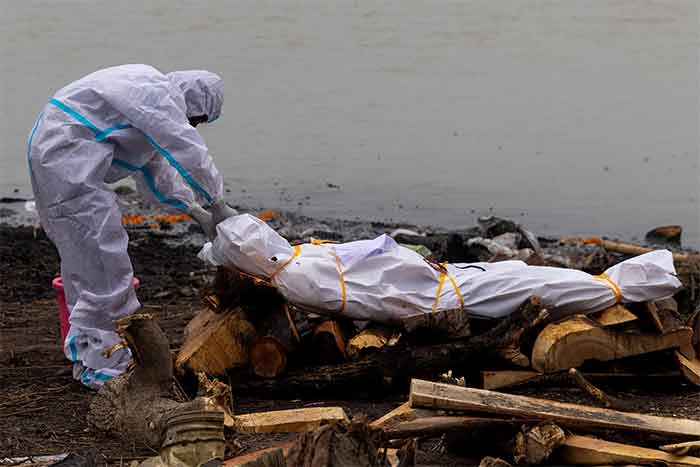
COVID Dead BodyCOVID Dead Body

It has dominated news cycles, debates and policies since 2020, but COVID-19 continues to exercise the interest of number crunchers and talliers.  While the ghoulish daily press announcements about infections and deaths across many a country have diminished and, in some cases, disappeared altogether, publications abound about how many were taken in the pandemic.

The World Health Organization, ever that herald of dark news, has offered a revised assessment across of the SARS-CoV-2 death toll associated either directly or indirectly with the pandemic.  Between January 1, 2020 and December 31, 2021, the global health body suggests that the mortality figure is closer to 14.9 million, with a range of 13.3 million to 16.6 million.

The number considers excess mortality, the figure reached after accounting for the difference between the number of deaths that have occurred, and the number expected in the absence of the pandemic.  It also accounts for deaths occasioned directly by COVID-19, or indirectly (for instance, the pandemic’s disruption of society and health systems).

The impact, as expected, has been disproportionate in terms of which countries have suffered more.  Of the excess deaths, 68% were concentrated in 10 countries – Brazil, Egypt, India, Indonesia, Peru, Russia, South Africa, Turkey, and the United States.  Middle-income countries accounted for 81% of excess deaths; high-income countries, for 15%, and low-income countries, 4%.

The United States, if only for being ascendant in terms of power, wealth, and incompetence in dealing with the virus, finds itself in the undistinguished position of having lost a million people.  “Today,” remarked President Joe Biden, “we mark a tragic milestone here in the United States, one million COVID deaths, one million empty chairs around the family dinner table, each irreplaceable, irreplaceable losses, each leaving behind a family, a community forever changed because of this pandemic.”

Chief Medical Adviser to the President, Anthony Fauci, rued the fact that “at least a quarter of those deaths, namely about 250,000” might have been saved by vaccinations.  He also warned about the ugly prospect of a resurgence in numbers, and not bringing “down our guard”.

In light of such figures, WHO Director-General, Tedros Adhanom Ghebreyesus, reiterates the line he and his colleagues have done so for months.  Pandemics demand more “resilient health systems that can sustain essential health services during crises, including stronger health information systems”.  His organisation “was committed to working with all countries to strengthen their health information systems to generate better data for better decisions and better outcomes.”  Much of this will be wishful thinking.

Figures, certainly when they concern matters of mortality, can become the subject of bitter dispute.  COVID-19 has proved no exception.  In Africa, 41 of 54 countries reported insufficient data.  Some countries have released incomplete data sets; others, none to speak of.  This meant, inevitably, that the WHO’s Technical Advisory Group for COVID-19 Mortality Assessment could only model the missing figures to fill gaps.

As a result scrapping and arguments over methodology duly emerged.  India, for one, has very publicly objected to the way the WHO has approached the compilation, communicating its concerns in no less than six letters between November 2021 and March 2022 and in a number of virtual meetings.  Concerns have also been registered by WHO Member States, including China, Iran, Bangladesh, Syria, Ethiopia and Egypt.

The case with India is particularly telling, given WHO modelling showing 4,740,894 excess deaths, almost triple that of New Delhi’s own figures.  Such figures imply, as epidemiologist Prabhat Jha of the University of Toronto claimed back in January, that the authorities were “trying to suppress the numbers in the way that they coded the COVID deaths.”

In an indignant statement from the Union Health Ministry released early this month, much is made of “how the statistical model projects estimates for a country of geographical size & population of India and also fits in with other countries which have smaller population.”  This constituted an unacceptable “one-size-fits-all approach and models which are true for smaller countries like Tunisia may not be applicable to India with a population of 1.3 billion.”

The WHO model also returned two highly varied sets of excess mortality estimates when using data from Tier 1 countries and when using data from 18 Indian states that had not been verified.  “India has asserted that if the model [is] accurate and reliable, it should be authenticated by running it for all Tier 1 countries” and the “result of such exercise may be shared with all Member States.”

WHO assistant director general for emergency response, Ibrahima Soće Fall, concedes that any accurate picture is only as complete as the data provided.  “We know where the data gaps are, and we must collectively intensify our support to countries, so that every country has the capability to track outbreaks in real time, ensure delivery of essential health services, and safeguard population health.”

The degree of fractiousness that persists in public health shows that sharp fault lines remain in each country’s approach to the pandemic problem.  Disunity and factionalism, petty nationalism and self-interest, remain imperishable, even at the direst of times.  And all governments, given the chance, will err on the side of inaccuracy rather than risk acute embarrassment.

UK’s role confirms Sweden/Finland NATO membership planned for years

Robert Stevens


British imperialism has played a critical role over the last decade in deepening co-operation with Finland and Sweden as NATO “partners”, culminating in their decisions this week to formally join the military alliance.

In September 2014, David Cameron’s Conservative/Liberal Democrat coalition hosted a summit of NATO in Wales that founded the Joint Expeditionary Force (JEF). Originally facilitated by Britain as the “framework nation”, it consisted of seven NATO allies which would assemble military forces among the northern and high regions of Europe. The “rapidly deployable force capable of conducting the full spectrum of operations, including high intensity operations” would “facilitate the efficient deployment of existing and emerging military capabilities and units.” In 2021, the UK’s Ministry of Defence (MoD) said of its remit, “The JEF is able to operate wherever in the world any two of its members choose to deploy together.”

There was no attempt to conceal the target of the JEF. Outlining a “NATO Readiness Action Plan” the summit declared, “It provides a coherent and comprehensive package of necessary measures to respond to the changes in the security environment on NATO’s borders and further afield that are of concern to Allies [emphasis added].” By that time, after well over a decade of NATO encroaching ever closer to Russia’s western border, “NATO’s borders” were a few hundred miles from St Petersburg and Moscow.

UK Challenger 2 tank in action during Exercise Arrow, a Joint Expeditionary Force exercise held in Finland earlier this month. (Credit: Defence Equipment & Support/Twitter)

The Wales summit was held following the 2014 Maidan Square pro-Western coup in Ukraine, involving fascist forces, that led to the overthrow of the pro-Russian President Viktor Yanukovych and installed Petro Poroshenko.

In response, Russia annexed the Crimea and sent military forces into the eastern regions of Ukraine. The NATO summit declared, “This violation of Ukraine’s sovereignty and territorial integrity is a serious breach of international law and a major challenge to Euro-Atlantic security,” adding, “Russia’s aggressive actions against Ukraine have fundamentally challenged our vision of a Europe whole, free, and at peace.”

The JEF was envisaged initially as a 10,000-strong force, with the Financial Times reporting at the time that it was created “to bolster NATO’s power in response to Russian aggression in Ukraine.”

The original seven countries were Britain, Denmark, Estonia, Latvia, Lithuania, the Netherlands and Norway. It was made clear that the JEF was a NATO force in all but name. As an article in the Belfast Telegraph noted in relation to this year’s JEF operations, “The force uses NATO standards and doctrine so it can operate in conjunction with the alliance, the United Nations or other multinational coalitions.”

It was critical for the ratcheting up of provocations against Russia that Sweden and Finland join the JEF. Both signed up in 2017. With their inclusion, the JEF became fully operational in 2018 when it began holding a series of military exercises and wargaming operations both independently and together with NATO.

The importance of the JEF for US and British imperialism as a Europe-based military force formally operating outside the orbit of the European Union (EU) was summed up by the Washington think tank, the Centre for Strategic and International Studies (CSIS). It noted last October, “The integration of the JEF Baltic Protector maritime task force into the U.S.-led BALTOPS 2019 exercise—an annual NATO-led exercise running since 1972—shows the potential utility of JEF in a nutshell: independent and flexible, but NATO-capable and scalable. As one Royal Navy commodore puts it, the JEF is a ‘force of friends, filling a hole in the security architecture of northern Europe between a national force and a NATO force.’”

In March 2021, the UK Ministry of Defence published its “Defence in a Competitive Age” review following its Integrated Review of foreign and defence policy. Central to British imperialism’s post-Brexit agenda, during a period of “Great Power conflict”, was “further developing the JEF (with Denmark, Estonia, Finland, Latvia, Lithuania, the Netherlands, Norway, Sweden and from spring 2021, Iceland) so that it offers these countries flexible options for managing sub-threshold competition as well as responding to crises, and improving its interoperability with NATO.”

On July 1 last year, Finland’s role as a leading force within the JEF was made clear by its hosting, for the first time, a meeting of JEF Defence Ministers.

Joint Expeditionary Force defence ministers meet in Finland (Credit: UK in Estonia/Twitter)

At this year’s JEF Summit, held on February 22 at Belvoir Castle in England, tensions with Russia were stoked further. The 10 defence ministers of the participating countries declared that the JEF is “a group of like-minded and proactive nations, with shared purpose and values, and a common focus on security and stability in the High North, North Atlantic and Baltic Sea region.” They were united against “the build-up of Russian forces on the border with Ukraine, and further incursion in the Donbas region.” Two days later Russia invaded Ukraine.

The summit confirmed the participation of the JEF alongside NATO in a series of anti-Russian exercises, which involved Finland and Sweden. These would take place in April, May and throughout 2023. UK Defence Minister Ben Wallace declared in an April 29 Ministry of Defence statement that they would see “our troops join forces with allies and partners across NATO and the Joint Expeditionary Force in a show of solidarity and strength in one of the largest shared deployments since the Cold War.”

British Prime Minister Boris Johnson performs a posed handshake for the media as he greets the President of Finland Sauli Niinisto before their meeting inside 10 Downing Street, in London, Tuesday, March 15, 2022. Johnson on Tuesday hosted a meeting of the leaders of the the Joint Expeditionary Force (JEF), a coalition of 10 states focused on security in northern Europe. (AP Photo/Matt Dunham)

The Ministry of Defence (MoD) noted, “The exercises will see 72 Challenger 2 tanks, 12 AS90 tracked artillery guns and 120 Warrior armoured fighting vehicles deploy to countries from Finland to North Macedonia….

“Troops from B Squadron of the Queen’s Royal Hussars have deployed to Finland this week to take part in Exercise Arrow. They will be embedded into a Finnish Armoured Brigade, with participation from other partners including the US, Latvia and Estonia. The exercise will improve the ability of UK and Finnish troops to work alongside each other as part of the JEF, deterring Russian aggression in Scandinavia and the Baltic states.”

The statement announced details of Exercise Hedgehog, now underway, which involves Finnish and Swedish forces joining US and UK forces in NATO war games over the next weeks, including in Estonia, whose border with Russia is just 150 kilometres from Saint Petersburg.

The Belvoir Castle Summit was followed by another high-level JEF summit, held on March 14-15 in London and at the UK prime minister’s residence, Chequers. It was attended, the Economist reported, by “six leaders and other representatives of the Joint Expeditionary Force (JEF)”. The magazine described the JEF as Boris Johnson’s “anti-Russia coalition,” noting, “The British-led Joint Expeditionary Force is moving quickly against Russia.”

Johnson described the following day what took place at the Chequers meeting, the magazine reported. “We agreed that Putin must not succeed in this venture,” he said. The Economist continued, “They agreed to ‘co-ordinate, supply and fund’ more arms and other equipment requested by Ukraine. And they declared that JEF, through exercises and ‘forward defence’, would seek to deter further Russian aggression—including provocations outside Ukraine that might stymie NATO or fall under its threshold.”

UK Prime Minister Boris Johnson (sixth from left) hosts other Joint Expeditionary Force nation leader in London on March 15. Another meeting of the leaders was held at the UK prime minister’s country residence, Chequers, the previous evening (Credit: screenshot of video clip—Boris Johnson/Facebook)

The importance of the JEF operating as a nominally non-NATO military force was again stressed. It was a “high-readiness force focused on the High North, North Atlantic and Baltic Sea regions… Unlike NATO, it does not need internal consensus to deploy troops in a crisis: Britain, the ‘framework’ nation, could launch operations with one or more partners. As one British officer puts it: ‘The JEF can act while NATO is thinking.’”

Under conditions of incessant provocations against Russia, including the funneling of vast tranches of armaments to Ukraine, the JEF was to play a pivotal role.

The Economist noted that its nominal non-NATO status “makes it especially useful in murky circumstances. ‘It’s there to respond flexibly to all sorts of contingencies, maybe [those] that fall short of an Article Five threshold,’ says Mr Johnson, referring to NATO’s collective-defence clause. JEF matters because, although Article Five covers ‘armed attack’, it is unclear whether lower-level or ambiguous provocations, such as the unmarked Russian soldiers who seized Crimea from Ukraine in 2014, would meet the threshold.”

The Economist cited Martin Hurt of the ICDS defence think-tank in Estonia explaining that the JEF is a “valuable complement” to NATO. “In the case of an attack in northern Europe, he says, JEF, alongside American forces, has the potential to become a first responder.”

Therefore, commented the Economist, “JEF has also become an important diplomatic and military instrument in responding to Russia’s war in Ukraine. British officials say that only a few weeks ago a London summit built around the force would have been unthinkable.”

Johnson said that the JEF “consists of the countries that were fastest off the blocks, with us, in sending direct military assistance to Ukraine.” The Economist noted that as the meeting took place, “Nine out of ten members are now supplying weapons (Iceland, which lacks a standing army, is the exception).”

Britain has provided Ukraine with more than 5,000 Next Generation light anti-tank (NLAW) weapons. These are developed and built in Belfast by Thales UK—a subsidiary of the French global conglomerate—from an original design by the Swedish defence giant Saab-Bofors.

Last month the MoD launched the UK’s Defence Contribution in the High North, which declared, “The Army has increased its cold weather training, including as part of its enhanced Forward Presence deployment in Estonia, where Army cold weather doctrine has been tested and refined alongside the Estonian Defence Forces. Army exercising with JEF partners, including Finland, Norway, and Sweden, enhances its cold weather capabilities, building on Royal Marine and Joint Helicopter Command expertise in the High North.”

Following the Belvoir Castle summit, the World Socialist Web Site wrote: “The defence ministers’ statement emphasised, ‘The JEF is designed from first principles to be complementary to NATO’s Deterrence and Defence posture.’ That the JEF also includes two non-NATO members, Finland and Sweden, blows out of the water the lies of the US and its allies that the incorporation of Ukraine into NATO is a distant prospect, which Moscow is exaggerating in order to excuse its own aggression. The JEF’s military architecture already exists for Ukraine to be fully integrated into anti-Russia operations well before it is granted NATO membership.”

Within just three months, Finland and Sweden’s de facto membership of NATO will rapidly become de jure, with the JEF playing a crucial role on behalf of US and British imperialism in propelling their agenda aimed at regime change in Russia and the dismemberment of that vast country.

Andy Warhol 1964 painting sells for $195 million, breaking auction record

Erik Schreiber


A painting by Andy Warhol sold for a final price of $195 million last week, breaking the auction record for an American artist and for any 20th century art work. At a sale for charity at Christie’s in New York, four bidders competed for Shot Sage Blue Marilyn (1964). After less than four minutes of bidding, the painting was sold to art dealer and gallerist Larry Gagosian. It is unclear whether he bought the painting for himself or on behalf of a client. According to Forbes, Gagosian’s super-rich clientele includes “billionaire mega collectors such as David Geffen, Leon Black, Steve Cohen and Leonard Lauder.”

The previous auction record for an American artist was set only five years ago. In 2017, a painting of a skull by Jean-Michel Basquiat, a friend and collaborator of Warhol, sold for $110.5 million at an auction at Sotheby’s. The price of Shot Sage Blue Marilyn was almost double the previous auction high price for a Warhol work. Double Disaster (1963), one of his car crash paintings, was sold for $105.4 million in 2013.

In fact, Shot Sage Blue Marilyn has become one of the most expensive artworks ever sold at auction. Its price surpassed that of Pablo Picasso’s Les Femmes d’Alger (“Version O”), which Sheikh Hamad bin Jassim bin Jaber Al Thani of Qatar bought for $179 million in 2015. 

Andy Warhol, Shot Sage Blue Marilyn, 1964, silkscreen and acrylic on linen, 40 x 40'. Photo- Christe’s Images, Ltd.

This series of rising prices and broken auction records reminds us that the world of fine art, which is part of the cultural heritage of mankind, is dominated by a tiny, extraordinarily wealthy elite. For this layer, works of art are not aesthetic objects but investments and tokens of prestige.

The Warhol sale took place at the beginning of a spring auction season once again being held in person. The ongoing pandemic is of no importance. The focus of the participants is the potential profit to be made. “There’s been a huge amount held back for two years, and there’s a huge amount of pent-up demand from new clients,” art adviser Philip Hoffman told the New York Times. “Everyone was waiting for the right moment, and the right moment has come.”

The way that auctioneers, gallerists and collectors talk about the artwork is revealing. “We did sell the most expensive painting of the 20th century,” Alex Rotter of Christie’s told the Times. “This is a big achievement.” One imagines him licking his lips. 

“The top of the market is still strong, and there is a lot of demand for quality,” art dealer Bill Acquavella told the Times. “Look what real estate is selling for. There are other assets that are bringing prices that you haven’t seen before [emphasis added].”

“Within the greater market for trophy art, the figure of $200 million is very much in keeping with prices realized in the private dealer market for quite a few years [emphasis added],” art appraiser David Shapiro told ARTnews.

In fact, some had speculated that Shot Sage Blue Marilyn would bring in as much as $400 million and were disappointed in its final price. “It was an incredibly healthy price, but at the same time, I believe the buyer got a deal,” art adviser Abigail Asher told the Times.

In The Death of the Artist: How Creators Are Struggling to Survive in the Age of Billionaires and Big Tech (2020), author William Deresiewicz noted that a 2009 study “revealed a direct correlation between the run-up in [art] prices and the growing concentration of wealth, consistent with the behavior of markets in other luxury goods like high-end real estate. ‘A one percentage point increase in the share of total income earned by the top 0.1 percent,’ the researchers discovered, ‘triggers an increase in art prices of about 14 percent.’ The new money is hedge-fund money, oligarch money, Asian-billionaire money. More than half of the global art market, by aggregate value, consists of sales of $1 million or more. Art collecting at that level is an affair of ‘ultra-high-net-worth individuals,’ people with liquid assets of $30 million or more—though one insider told me that the bar is more like $250 million.”

That the largest sum ever paid for a piece of 20th century art was spent on a trivial, empty work is not unimportant or coincidental. Shot Sage Blue Marilyn is a 40-inch-by-40-inch silk-screened painting of iconic actress Marilyn Monroe. The well-known image is based on a promotional photo for the movie Niagara (1953), in which Monroe starred alongside Joseph Cotten. The work is one of five “Marilyn” paintings that Warhol executed in 1964, almost two years after Monroe herself had died by probable suicide. It is likely that Warhol chose his subject not only for her glamor, but also for the scandal surrounding her death. 

The painting’s title reflects what happened to the work after Warhol had completed it. In 1964, a woman named Dorothy Podber walked into Warhol’s studio (which he dubbed the Factory) and shot at a stack of Marilyn paintings. Sources differ on the questions of whether Warhol had invited her to do so and whether he believed Podber intended to “shoot” photographs of the paintings. This legend reflects the anarchy that prevailed at the Factory, as well as Warhol’s own penchant for sensation.

Four Shot Marilyns by Andy Warhol (1964)

The silk-screening technique, which Warhol borrowed from commercial art, removes any trace of the artist’s hand from the painting. Nor does the work convey any critical or in-depth analysis of its subject. In his most prominent work, Warhol borrows from advertising and tabloid celebrity journalism, passing on reality as it immediately appears in those debased realms. With this passivity, Warhol implicitly denies any significant role for the artist. 

As we argued in 2019, Warhol “did not encourage us to develop ourselves or build a better world. His is the art of the voyeur or, at worst, the self-promoter. He reinforced and actively participated in the cult of celebrity. In uncritically bringing the banality of popular culture into the world of fine art, he relinquished all that is most vital and nourishing in art, for the artist as well as for his audience: the imaginative reinterpretation of reality.”

That element apparently appeals to art collectors with hundreds of millions of dollars to spend. In the 1980s, Gagosian began amassing the enormous wealth with which he bought Shot Sage Blue Marilyn by reselling works by well-established and highly regarded modern artists. Like the stock traders who were rising to economic dominance during the same period, Gagosian appropriated profits for himself without creating anything of value. 

Little wonder that Gagosian (or whichever moneyed client on whose behalf he acted) would “invest” in a “blue-chip” celebrity artist like Warhol. The artist’s reputation is international and largely unquestioned. For the social layer that Gagosian represents, the name Warhol has a significance like that of Cartier or Hermès. 

The orgy of wealth in the art market must encourage demoralization and cynicism among artists, on the one hand, and intense outrage, on the other. The way forward in art can only take in direct opposition to the concentration of fabulous riches that leads to the cultural impoverishment of society.

Profits over lives: The New York Times demands China end its Zero-COVID policy

Benjamin Mateus


Since the beginning of March, China has confronted the highly contagious Omicron variant of the SARS-CoV-2 virus, brought into the country from outside, with a high degree of social mobilization and considerable difficulty, but so far with considerable success. That has not stopped the American corporate press from repeatedly and severely denouncing China’s Zero-COVID policy, condemnations that rise in vitriol in proportion to China’s progress in beating back the tide of infections. 

Residents line up for the first round of mass COVID testing in the Jingan district of western Shanghai, China, Friday, April 1, 2022. (AP Photo/Chen Si, File)

In this regard, the recent New York Times report by the newspaper’s Shanghai bureau chief, Alexandra Stevenson, who reports on the news of the financial world, is particularly foul. Headlined, “The World Tried to Move Beyond COVID. China May Stand in the Way,” it caters to the prejudices of a deranged reactionary upper-middle-class layer who have staked their fortunes on ever-rising financial markets.

Stevenson opens with a provocative statement: “As the rest of the world learns to live with COVID-19, China’s top leader, Xi Jinping, wants his country to keep striving to live without it—no matter the cost.

Before addressing the various assertions the Times article makes, it bears reviewing the present state of the pandemic in China.

The current wave of infections across mainland China began in early March. Since then, China has documented close to three-quarter million cases, of which a significant majority were asymptomatic. Because of broad public health measures that included lockdowns and business closures, dynamic mass testing, and redirection of resources to build isolation centers and bolster medical treatment facilities, deaths were kept to less than 600, essentially all occurring in Shanghai except two in the northeast province of Jilin. By comparison, over the same period, the US reported 90,000 deaths from COVID.

The Chinese health authorities reported that there were 1,789 COVID cases on Sunday, of which 71 were newly imported. After reaching a peak of almost 27,000 in mid-April, the number of cases in Shanghai, China’s financial hub and the epicenter of the Omicron wave, had dropped to 1,369, of which 166 were symptomatic. The seven-day average has fallen below 3,000 daily cases, down more than 90 percent from its peak four weeks ago. Outside of Shanghai, only 349 new cases were registered across mainland China.

Already, many Shanghai-based companies are resuming operations. City officials are targeting mid-May for opening after achieving zero-COVID community transmission. More than 99 percent of all new cases are currently among those under lockdown or quarantine, accounting for 2 million of the city’s 26 million inhabitants. Nearly 18 million residents (70 percent) are in designated precautionary areas, including communities, villages, companies and other sites without a positive case for more than two weeks.

The elimination strategy appears promising despite repeated claims in the corporate media that Omicron can’t be eliminated. Deaths have been kept to the lowest possible level, life has been preserved, and the country is transitioning to reopening its production and distribution centers. Given this premise, Stevenson should be asked what she means by China’s intent to live without COVID “no matter the cost?” The cost for who? Obviously she cares only about the financial cost for Western investors, not the cost in human lives for the Chinese people.

The day before Stevenson’s report appeared in the Times, President Joe Biden acknowledged in a perfunctory prerecorded statement, using only 213 words, that over 1 million Americans have died from COVID. This is the same president who said, as a candidate in October 2020, that a president like Trump, who had allowed more than 200,000 deaths from COVID, should be considered disqualified from office. Under Biden’s tenure in the White House, more than 600,000 have lost their lives to the pandemic.

Stevenson made no mention of this as part of the “cost” of living with COVID. 

Nor does she acknowledge that the Times has played a central role in promoting the “herd immunity” policy that has morphed over the last two years into “living with the virus,” as the ruling classes in the imperialist countries have repeatedly prioritized profits over lives, allowing the pandemic to run wild, rather than impose temporary lockdowns on business operations that have been proven effective in halting the spread of the virus. This “let it rip” policy has led to the deaths of more than 20 million people globally, pushed hundreds of millions into poverty, and forced billions to face the manifold health consequences of chronic infections with a virus that will re-infect populations again and again.

Thomas Friedman pioneered the phrase “the cure can’t be worse than the disease” in a Times column published March 23, 2020, which asserted that measures such as lockdowns and school closures to block the spread of the SARS-CoV-2 virus were off limits because they would destroy the economy. This slogan was picked up by the Trump administration and the media because it served the interests of finance capital. Now it serves as the basis of the policy of the Biden administration.

Stevenson is duplicitous when she writes, “For more than two years, China kept its COVID numbers enviably low by doggedly reacting to signs of an outbreak with testing and snap lockdowns. The success allowed the Communist Party to boast that it had prioritized life over death in the pandemic, unlike Western democracies where deaths from the virus soared.”

First, the issue of prioritization isn’t life vs. death. Stevenson conceals the real issue: it’s life vs. profits. And if “Western democracies” were envious of China’s low COVID numbers, then why didn’t they emulate the lessons of Chinese public health experiences and save the lives of their populations? Finally, it is a basic tenet of well-established public health policies, going back to the 19th century, to insist on “doggedly” chasing every infection to prevent mass outbreaks. This is not a specifically Chinese doctrine and has nothing to do with the Stalinist politics of the Chinese Communist Party.

Instead of dealing with these facts, however, Stevenson first depicts the lockdowns as harrowing and anti-democratic and then cites the observation of an “unnamed economist” that the policy is “zero movement, zero GDP.” 

The realities are otherwise, however. China’s economy remains intact. Its per capita death rate of four per million from COVID versus the US with 3,068 deaths per million has shown the superiority of the Zero-COVID strategy. Stevenson’s “no matter the cost” is only a more obscene version of the formula proposed by Friedman, openly declaring that when human life clashes with corporate profit, profit must win out.

It is telling that the one prominent health official whom she cites as part of her anti-China diatribe against Zero-COVID is the World Health Organization’s (WHO) Director-General Tedros Adhanom Ghebreyesus. He said last Tuesday, “We have discussed this issue with Chinese experts, and we indicated that the approach would not be sustainable. And considering the behavior of the virus, I think a shift would be very important.”

The WHO director’s comment is a reactionary statement refuting his previous statements that the world should fight to save every life possible. This is the same organization that for two years resisted accepting the scientific evidence that the virus was airborne rather than carried in large droplets. The comment only betrays, objectively, the subordination of all public health measures to the interests of international corporations. Like the US Centers for Disease Control and Prevention, the UN health agency has been transformed into an appendage of global finance capital.

Stevenson does cite an important study published in Nature from Fudan University in Shanghai, which found that if Omicron were allowed free rein in China, in six months, the country could expect 112 million symptomatic cases, 5.1 million hospital admissions, 2.7 million ICU admissions and 1.6 million deaths, as well as the catastrophic collapse of its health system.

The clear import of this study is that unleashing COVID in China would be a colossal catastrophe, not only for China, but for the world, since 100 million more cases means 100 million more opportunities for the virus to mutate into even deadlier and more infectious variants.

But Stevenson ignores this in favor of her obsession with financial rather than human cost. She proceeds to write, “Investors and business leaders worry that China’s rigid adherence to its Zero-COVID policy could send the economy into free fall. ‘It is high time for the government to change its strategy,’ said Fred Hu, a prominent Chinese investor. The benefits of Zero-COVID no longer outweigh the economic costs, he added. ‘Sticking to the Zero-COVID strategy would decimate its economy and undermine public confidence.’”  

In support of this concern, Stevenson writes, “By one estimate, nearly 400 million people in 45 cities have been under some form of lockdown in China in the past month, accounting for $7.2 trillion in annual gross domestic product.”

This is a number created in the spirit of Mark Twain’s aphorism against “lies, damn lies, and statistics.” China’s lockdown procedures are highly segmented, with cities broken up into small districts, each with rules enforced by local committees. If one district in a city of 10 million is under lockdown, generally because of a single positive test, then the entire 10 million is counted in the estimate prepared by Nomura Bank. Hence the slippery phrase employed by Stevenson: “some form of lockdown.”

The Times writer also ignores a salient fact that entirely refutes her portrayal of the Zero-COVID policy as repressive and undemocratic: it is widely popular among the Chinese people, something that is generally acknowledged even in hostile media reports.

Americans living in China have praised this policy, including one who commented on Stevenson’s article. Sean, who is now working from home in Shanghai, writes:

As an American living in China, I click on every article regarding China, and many, many are like this: taking perverse delight in putative failure of China’s zero Covid policy. This is unseemly but also factually delusional.

The USA has nearly 3,000 deaths per million from Covid.

China has 3...

China’s economy has not gone into recession:

China’s gross domestic product (GDP) exceeded 114 trillion yuan (about $18.1 trillion) in 2021, registering an increase of 8.1 percent over the previous year and an average growth of 5.1 percent over the preceding two years.

He concludes: “there is so much ideologically motivated disinformation in Western media it’s infuriating to someone who lives here.”

Sean’s post attracted more than 100 favorable responses in the comment section following Stevenson’s article, becoming the second highest rated by readers.

Rather than deal with this dose of reality, the Times evidently prefers to suppress it, engaging in its own form of political censorship, no less noxious than the Stalinist variety. Sean’s comment praising the Zero-COVID policy has now been deleted.

ICE has created a “surveillance dragnet” for accessing the personal information of all US citizens

Kevin Reed


Immigration and Customs Enforcement (ICE), a federal police body under the direction of the US Department of Homeland Security (DHS), has built a digital surveillance infrastructure and is accessing the personal information of Americans. This operation has nothing to do with immigration enforcement and has no outside oversight.

This is a primary conclusion of a two-year investigation by Georgetown Law’s Center on Privacy and Technology into the contracting and procurement practices of ICE. An extensive report on the investigation was published on May 10 under the title “American Dragnet: Data Driven Deportation in the 21st Century.”

In its Executive Summary, the report states, “Since its founding in 2003, ICE has not only been building its own capacity to use surveillance to carry out deportations but has also played a key role in the federal government’s larger push to amass as much information as possible about all of our lives.”

The report summary continues, “By reaching into the digital records of state and local governments and buying databases with billions of data points from private companies, ICE has created a surveillance infrastructure that enables it to pull detailed dossiers on nearly anyone, seemingly at any time.”

The report states that ICE conducts its work, “without any judicial, legislative or public oversight,” and that the “personal information about the vast majority of people living in the US” is ending up in the hands of immigration officials, “simply because they apply for driver’s licenses; drive on the roads; or sign up with their local utilities to get access to heat, water and electricity.”

The Georgetown Law investigation is based on hundreds of Freedom of Information Act (FOIA) requests and a review of more than 100,000 ICE spending transactions. Nina Wang, a policy associate with the Georgetown center, told the Guardian, “I was alarmed to discover just how easily federal immigration agents can pull detailed records from the most intimate corners of all our lives. In its attempts to target an ever-growing number of people for detention and deportation, ICE has reached into the private homes and lives of almost every person in America.”

Wang went on to tell the Guardian that ICE has an unfettered ability to trace the movement of anyone’s vehicle on the road, look up an address from utility bills and conduct facial recognition searches of photos on government-issued ID cards such as driver’s licenses, all without needing a search warrant.

Since 2008, the Georgetown report says ICE increased spending on new surveillance infrastructure fivefold from $71 million to $388 million. During that timeframe, the agency spent $1.3 billion on geolocation technology, which included contracts with private companies that own license plate scanning databases.

The report also details that the federal police agency spent $96 million on biometrics, especially facial recognition databases, $97 million on data lists provided by private brokers that gather information on US citizens from a host of sources, including more than 80 utility companies. The report said that ICE spent more than $500 million dollars on data analytics that enable it to sift through the enormous amount of information that it maintains.

Special Response Team (SRT) within Homeland Security Investigations (HSI) of the U.S. Immigration and Customs Enforcement (ICE) participates in a training exercise utilizing an armored vehicle at Fort Benning in Georgia [Credit: U.S. Immigration and Customs Enforcement]

Another critical aspect of the Georgetown investigation exposes the way in which ICE has used surveillance tools to intensify its attacks on immigrant rights. The report says, “The federal government built its immigration enforcement system on top of already unjust systems of policing and punishment.”

ICE was created with overwhelming bipartisan support in Congress and the signing into law of the Homeland Security Act of 2002 by George W. Bush on November 25, 2002. The act established DHS and the cabinet-level position of the Secretary of Homeland Security, which both began operations in 2003 just before the launching of the US invasion of Iraq. The creation of DHS was the largest federal government reorganization next to the establishment of the Department of Defense (DoD) in 1947.

DHS incorporated 23 previous federal agencies and consolidated them into 16 sub-departments including ICE, Customs and Border Protection (CBP), the Federal Emergency Management Agency (FEMA), the US Coast Guard and the US Secret Service.

The adoption of the Homeland Security Act of 2002 amounted to the domestic side of the implementation of the USA PATRIOT Act, the law passed six weeks after the terrorist attacks of 9/11 which authorized the various US federal law enforcement organizations—including the FBI, NSA and CIA, and later the DHS—to violate the democratic rights of Americans and foreigners with impunity under the aegis of the “national security” needs of the US government.

According to the official verbiage of DHS, the purpose of ICE is to “protect America from cross-border crime and illegal immigration that threaten national security and public safety.” However, the Georgetown investigation says, “ICE began broadening the scope of its data collection in response to the events of Sept. 11, 2001, as part of an overarching federal initiative to radically increase domestic surveillance under the auspices of the ‘war on terror.’”

As the Georgetown report explains, US Senator Robert Byrd (Democrat of West Virginia) was one of just nine senators to vote against the Homeland Security Act. At the time, Byrd called it an “enormous grant of power to the executive branch,” and he warned that DHS would function as “a massive chamber of secrets,” and “without any real mechanism to ensure those powers are not abused.”

Byrd added that the Homeland Security Act gave the Secretary of DHS, “almost unlimited access to intelligence ... without adequate protections against misuse.” On November 19, 2002, six days before President Bush signed it into law, Byrd said the White House “told us it is not planning to create a new domestic spy agency in the United States.”

The White House, as usual, was lying. The authorizations for domestic emergency “national security” measures led to the most extensive electronic surveillance program anywhere in the world. As detailed in 2013 by NSA and CIA intelligence analyst and whistle-blower Edward Snowden, the US government used the “war on terror” to move forward with a program to gather the electronic communications of everyone in the world. Meanwhile, with the use of specially designed software tools, as Snowden explained, security and law enforcement agencies are observing the online activity of targeted individuals in real time.

It is a fact that the imperialist wars launched by the Bush White House in the aftermath of 9/11, the continuation and extension of those wars by the Obama and Trump administrations and the present US-NATO proxy war against Russia in Ukraine, have required an ever-deepening series of attacks on democratic rights within the US.

The revelations about the electronic dragnet operated by ICE are the latest in a series of reports that demonstrate—despite reassurances from Congress and the US judiciary that such programs either do not exist or function in accordance with constitutional protections—the US government is spying on the public continuously and preparing advanced electronic tools such as biometrics and facial recognition for repressive purposes.

Well aware of the popular opposition to war and expanding resistance to the criminal government response to the pandemic and the deepening economic crisis of the capitalist system, the law enforcement and intelligence apparatus of the state is preparing the surveillance infrastructure for mass repression. The working class can place no confidence in any section of the political establishment or the US government to defend its democratic rights. It must take up the fight with its own strength against the 24-hour electronic surveillance of the public by the government.

Madrid doctors and nurses on indefinite strike against temp work, poor conditions

Alejandro López


For a week now, 11,000 doctors and health workers in Madrid, Spain’s capital and most densely populated region, have been striking in defence of staffing levels and services, as well as for better pay and conditions in the sector.

Around the world, strikes are erupting against conditions created by over two years of the COVID-19 pandemic, as well as decades of privatisations and subordination of health care to profit. In Los Angeles, thousands of health care workers have been on strike at Cedars-Sinai Medical Center for safe working conditions, improved staffing and better wages. Throughout the United States, tens of thousands nurses have mobilised to defend nurse RaDonda Vaught from being jailed for a medical error in 2017.

In Germany, the strike by nursing staff at university hospitals in North Rhine-Westphalia has spread to university hospitals in Aachen, Bonn, Düsseldorf, Essen, Cologne and Münster. In Turkey, 20,000 doctors went on a nationwide strike last week, demanding better wages and benefits.

During the COVID-19 pandemic, nurses and other staff internationally have worked without proper personal protective equipment and under horrific conditions. The ruling class’s “profit before lives” policy jointly implemented by governments and trade unions led to constant overwork taking care of an endless stream of deathly ill patients, with no end to the pandemic in sight.

This criminal COVID-19 policy has led to close to 20 million deaths worldwide. Many health workers have contracted COVID-19 and died. Many more have endured the psychological and emotional trauma of witnessing death on a mass scale.

The Madrid strike was sparked by the decision of right-wing Popular Party (PP) Madrid regional government of Isabel Díaz Ayuso to unexpectedly call new civil service exams, allowing her to sack several thousand health workers. Many have worked for years or decades in health care, amply demonstrating their qualifications for the jobs they currently hold as temporary contract workers. Ayuso’s move would be unprecedented, leaving thousands of experienced medical staff jobless.

Last month, Ayuso refused to renew the contracts of over 6,000 health workers who had been contracted as reinforcement health personnel during the pandemic.

The PP Madrid regional government has for decades abused the temporary employment contracts for its public hospitals, using national labour reforms passed by successive Socialist Party (PSOE), PP and now PSOE-Podemos governments with the support of Spain’s main trade unions, the social-democratic General Union of Labor (UGT) and the Stalinist Workers Commissions (CCOO).

Among the 12,000 doctors in public hospitals under the control of the regional government, 55 percent have been on temporary contracts for years, including 82 percent of the doctors in ICUs. More than 6,000 doctors in the Madrid region do not have a long-term contract and have been going on temp contracts for years. In some specialties, civil service examinations required to obtain greater job security have not been called for twenty years.

Last year, after years of protests and strikes, the PSOE-Podemos government passed the National Law 20/2021 on the Reduction of Temporary Employment in Public Employment. The aim was to reduce the temporary contracts of 800,000 civil servants who were at risk of losing their jobs after 10, 20 or 30 years of going on temporary contracts. The new law, however, allowed each region to choose how it wanted to proceed. Jobs, minimum working conditions and staffing levels, and professional development were never guaranteed.

Days before the law passed, the PP regional government called for civil service examinations for 4,726 positions. This is a reactionary measure. Applicants will have to fill in multiple choice questions, based on memorisation of general medical knowledge. Doctors are demanding that the PP-run regional government suspend the traditional civil service examinations and replace them with a merit contest.

The indefinite strike has been called by the platforms of Doctors United for their Rights, Non-fixed Doctors and Physicians of Madrid, Somos Urgencias (We are Intensive Care Units) and the Amyts medical union. The unions CCOO, UGT, CSIT and Satse called off the strike after the region’s Ministry of Health reached an agreement with them to make 1,600 health professionals permanent through a merit-based examination. Amyts considers this 'insufficient,' as' it does not cover the thousands of temporary doctors.'

The PP regional government has reacted by attempting to crush the strike with draconian minimal service requirements. In outpatient consultations, 50 percent of workers are required to go to work; in urgent care units, this rises to 100 percent. Such units include dialysis, emergency, resuscitation, critical care, hospitalization, operating rooms, pathological anatomy, oncology day hospital and AIDS, pharmacy, diagnostic imaging, laboratories, organ extraction and transplantation, radiotherapy, hemodynamics, and admission and filing.

Effectively, doctors’ right to strike has been de facto outlawed. The trade unions, including the smaller Amyts that has continued the call to strike, have refused to mount a struggle against the minimum services and to expand the struggle to other civil servants facing similar struggles, such as in education.

Nonetheless, strikers have organised large demonstrations and rallies in front of several hospitals in the city of Madrid. Last Tuesday, hundreds of doctors gathered in front of the Madrid Assembly shouting 'We take care of you, we are mistreated' and 'Professional dignity, permanent contracts now.'

At the Doce de Octubre Hospital in Madrid, large group of about 200 doctors, with green suits and white coats, occupied the entire wide entrance staircase and the doors of the hospital. There, they shouted against job instability, megaphone in hand, behind a large banner that reads “Professional Dignity”. These protests have been repeated in front of each major hospital in the region in recent weeks.

Another indefinite strike in Ciudad Real of “home help” workers who assist those with disabilities or complex health care needs living at home resumed again last week, after it was suspended by the CCOO and UGT last week “as a sign of good faith.” Workers are fighting low pay and widespread abuse by employers of part-time, precarious contracts. As in Madrid, minimum service requirements of 50 to 100 percent of staff during strikes were imposed.

Such attempted union sabotage must be taken as a warning by health care staff and broader layers of workers in Spain and internationally. A powerful, international movement of health care workers is emerging. Fighting for its demands requires, however, breaking with the trade union bureaucracies and opposing reactionary pseudo-left parties such as Podemos, which in government has pursued a policy of accepting mass infection with COVID-19.

Spanish unions have isolated and allowed police forces to violently attack mass strikes by steelworkers in Cadiz and by truckers across all of Spain. Politically affiliated to the two ruling parties, they are implicated in all the policies that have needlessly made health workers’ lives intolerable during the COVID-19 pandemic.