3 Sept 2022

African Research Network for Neglected Tropical Diseases (ARNTD) African Researchers’ Small Grants Program 2022

Application Deadline: 30th September, 2022, 17:00 GMT

Eligible Countries: African countries

About the Award:

The African Research Network for Neglected Tropical Diseases (ARNTD) with support from the U.S. Agency for International Development (USAID) and the Bill & Melinda Gates Foundation (Gates Foundation), through the Coalition for Operational Research on Neglected Tropical Diseases (COR-NTD), is seeking proposals for both operational and implementation research on ‘’Emerging Challenges facing Neglected Tropical Disease (NTD) program implementation in Africa.’’ This sixth edition of the Small Grants Program (SGP VI) is to support African researchers in both early and mid/late career to undertake operational or implementation research aligned with the goals established in the London Declaration on Neglected Tropical Diseases.  SGP VI is comprised of two small grant funding tracks:

a. Small grants for junior researchers
b. Small grants for mid-career and/or senior researchers.

Objectives of the call

  1. To increase African leadership, involvement and visibility in neglected tropical disease (NTD) operational and social science research, including through direct engagement with national NTD programs;
  2. To contribute to improving the research capacity of an existing cadre of African NTD researchers and strengthening African research institutions in the process by supporting operational and social science research on NTDs that is locally originated and African-led, either by junior researchers or experienced researchers ready to take on larger research programs;
  3. To improve South-South communication and collaboration among researchers, policymakers and implementers, and for community participation in research and agenda-setting;
  4. To provide an opportunity for young upcoming researchers not only to gain experience in research, but also in preparation of grant applications and management;
  5. To supplement a clearly defined aspect of ongoing research or to answer a new question linked to ongoing research being carried out by mid-career/senior researchers;
  6. To encourage a model of North-South collaboration which promotes engagement between researchers in the South and their control programs, and improves local leadership and ownership of initiatives and activities.

Type: Grants

Eligibility:

General criteria:

  1. Must be currently employed by or enrolled as a student in an academic, health, or research institution in Africa for the duration of the grant
  2. Must demonstrate having a commitment to NTD-related research as well as the skills and experience required to carry out the proposed work
  3. Must be able to provide evidence of research output, including publications and/or presentations at scientific conferences
  4. Applications are accepted from all African countries. We particularly encourage applications from the following countries that have not yet had an applicant: Algeria, Cabo Verde, Comoros, Djibouti, Equatorial Guinea, Eswatini, Guinea, Lesotho, Mauritania, Mauritius, Morocco, Niger, Sao Tome and Principe, Seychelles, and Tunisia.
  5. We especially encourage female researchers to apply.

Specific to applicants for the junior researchers’ grants:

  1. Must be an early career researcher, defined as a basic biomedical scientist, clinically qualified investigator, or public health researcher, who has not previously competed successfully as principal investigator for a major research grant (i.e., ≥USD 200,000)
  2. Must hold at least a Master’s degree or should be actively enrolled in doctoral studies. Applicants holding a doctoral degree (e.g. PhD, DrPH, DSc) must have graduated no more than five years ago. Clinicians (e.g. MBChB, MBBS, MD, DVM holders), who have not completed a Master’s degree must have some specialist training (e.g., Membership, Fellowship) or be able to demonstrate relevant research training/experience
  3. Must not currently hold positions above lecturer/assistant professor level or equivalent
  4. Must be able to provide written evidence of commitment to providing mentorship and supervision from a senior researcher with a track record and ongoing commitment to NTD research.

Specific to applicants for the mid-career/senior researchers grants:

  1. Must be a mid-career/senior researcher, defined as a basic biomedical scientist, clinically qualified investigator, or public health researcher, who has previously competed successfully as principal investigator for a major research grant, but is no more than fifteen years from their highest degree of study
  2. Must hold a doctoral degree (e.g. PhD, DrPH, DSc). Clinicians (e.g. MBChB, MBBS, MD, DVM holders), who have not completed a PhD must have completed specialist training (e.g., Fellowship) or be able to demonstrate relevant training tied to research (e.g., MSc, MPhil), or experience
  3. Must hold a position no lower than Senior lecturer/Senior Scientific Officer level or equivalent
  4. Must demonstrate that they have a track record and ongoing commitment to NTD research
  5. Must demonstrate that the intended project is a clearly defined aspect of ongoing research or aimed at answering a new question linked to ongoing research.

Selection Criteria: This call for proposals is targeted at outstanding researchers – especially beginning researchers – and academics based in research institutions or universities in Africa. Applicants will have to demonstrate that the proposed research or activity is aligned with country/program interests and has potential institutional/individual capacity-building impact. The small grants targeted at junior and senior researchers at the Masters or PhD level will provide grants ranging from USD 10,000 – 30,000. Applications are accepted in English, French, and Portuguese. However, shortlisted applicants will be required to submit full proposals and additional documentation in English in order to be eligible for the award.

Number of Awards: Not specified

Value of Award: Maximum funding per award: USD 30,000

How to Apply:

  1. Access the online application form and instructions here, complete all required sections and submit ahead of the deadline
  2. The application form provides a link here to download a budget template. Complete all required sections by following the funding rules as outlined in the Review Guide and Instructions page of Budget template. Upon completion, please click here to upload a copy of your budget. Please note that an application without an accompanying budget using the prescribed template will not be reviewed. 

Review of the application will take the following into consideration:

  1. The eligibility of the applicant
  2. The scientific merit of the proposed project
  3. The significance of the research
  4. The potential for scaling up the research
  5. The overall quality of the application

Visit Award Webpage for Details

Where Does Russia Receive Its Aid From?

John P. Ruehl


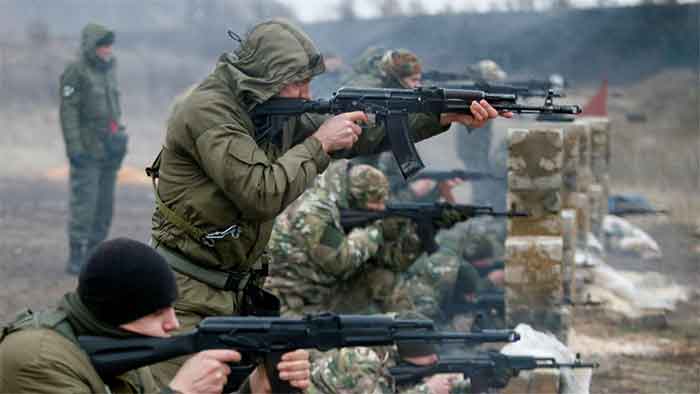
ukraine russian troopsukraine russian troops

On August 24, Ukraine’s independence day, the U.S. provided a $3 billion military aid package to the country. The additional assistance adds to more than $80 billion worth of support that Kyiv has already received between January 24 and August 3, the majority of which was provided by the U.S., the UK, and the EU. In addition to gaining access to Western weapons systems, military data, and training, the Ukrainian armed forces have further been augmented by foreign volunteers serving in the International Legion.

With third parties caught aiding Russia risking the imposition of financial penalties by the U.S., open support for the Kremlin has been largely limited to rogue states already isolated from Washington and Brussels. Russia’s seclusion was documented in a UN Resolution on March 2, where 141 countries voted to deplore Russia’s invasion of Ukraine, 35 abstained, and just four—Belarus, North Korea, Syria, and Eritrea—supported the Kremlin.

Even most of Russia’s key post-Soviet allies belonging to its international organizations, the Eurasian Economic Union (EAEU) and the Collective Security Treaty Organization (CSTO), have avoided supporting Moscow. Kazakhstan, for example, a member of both institutions, took steps in July to begin exporting its oil across the Caspian Sea, bypassing Russian-controlled oil pipelines. This directly undermines the Kremlin’s strategy of restricting oil to Europe to compromise the region’s energy security.

The key exception among post-Soviet states has been Belarus. Over the last decade, President Alexander Lukashenko has steered Belarus further into Russia’s orbit. Enticed by cheap Russian oil and gas and lucrative transit fees as both these commodities continue on to Europe, Lukashenko has also increasingly relied on Russian security forces to enforce his rule—notably evident during the 2020 Belarusian protests.

Lukashenko’s response to the popular protests in 2020 essentially cut off all avenues for cooperation with the West. But growing Belarusian support for Russia against Ukraine has been evident for years. In 2017, Belarusian authorities detained a 19-year-old Ukrainian man who had traveled to Belarus and deported him to Russia to face terrorism charges. It was therefore no surprise when Lukashenko allowed Russian troops to invade Ukraine from Belarusian territory in February 2022.

Belarus continues to aid the Russian military campaign, including permitting Russia “to fire ballistic missiles from the Belarusian territory, enabling transportation of Russian military personnel and heavy weapons, tanks, and military transporters, allowing Russian military aircraft to fly over Belarusian airspace into Ukraine, providing refueling points, and storing Russian weapons and military equipment in Belarus,” stated the European Council.

Belarus has also repeatedly conducted its own troop movements near the Ukrainian border since the beginning of Russia’s invasion to distract Ukrainian forces. And though Belarus has not committed its armed forces to the Ukraine conflict, Russia has had access to a stream of foreign volunteers, largely from Europe, since Russia’s initial military action in 2014 in Crimea.

Russia’s volunteer strategy has evolved since the launch of Russia’s invasion. Though a far cry from Western think tank estimates of as high as 40,000 Syrian fighters making their way to Russia in March, hundreds of mercenaries from Syria and Libya, where the Russian military is also engaged, were active in Ukraine by April. Rotating allied forces alleviates the Kremlin’s need for more soldiers without resorting to conscription.

Additionally, the Syrian government recognized the independence of Russian-supported eastern Ukraine breakaway republics, Luhansk and Donetsk, in June.

The Iranian government, meanwhile, declared in July that it supported Russia’s war in the face of NATO aggression. Heavily sanctioned by the West, Iran’s armed forces have been fighting alongside the Russian military in Syria since 2015. The two countries have also expanded bilateral relations through energy and weapons deals since the Ukraine invasion, building on years of growing ties in both these areas.

While Russia has typically supplied weapons to Iran, Russian forces have faced a drone deficit in Ukraine. Russian officials have allegedly repeatedly visited Iranian airfields in recent months to review Iranian-made drones, with the first shipments of these drones from Iran to Russia arriving in August.

According to U.S. officials, Russia asked China for financial and material assistance in March, but these accusations were denied by Moscow and Beijing. Both Russia and Ukraine have been using Chinese drones to target one another, prompting China’s Da-Jiang Innovations (DJI), the world’s premier civilian drone maker, to halt sales to both countries in April. However, Russians have continued to access AeroScope, a surveillance software used in DJI drones, to target Ukrainian DJI aircraft along with the position of the drone’s operator.

China has also provided the Russian military with significant aid along with electronic components and raw materials vital to sustaining its campaign in Ukraine. In June, five Chinese companies were accused of aiding the Russian military and were blacklisted by U.S. officials. Chinese military aid may accelerate following U.S. Speaker of the House Nancy Pelosi’s visit to Taiwan on August 2, which caused a significant downturn in U.S.-China relations.

Additionally, Chinese loans and access to its consumer markets, particularly in energy, have helped Russia cushion the blow of Western sanctions and falling exports. Despite China’s wariness over the threat of Western sanctions and comparisons between the Russia-Ukraine conflict and its dispute with Taiwan, Beijing’s cautious support for Moscow has been crucial since the 2014 annexation of Crimea and continues to help Russia sustain its confrontation with the West.

North Korea has also provided strong support to Russia, with Pyongyang recognizing Ukraine’s two breakaway republics in JulyOn August 15, Putin wrote a letter to North Korean leader Kim Jong Un proposing the forging of closer ties. This could include additional North Korean workers being sent to occupied Ukraine to help in reconstruction and other sectors. For decades now, North Koreans have traveled to Russia largely to work in highly competitive construction jobs in Siberia, with roughly 20,000 North Korean workers living there today.

Recent saber-rattling between the U.S. and North Korea in the region has also raised the prospect of North Korean soldiers being sent to Ukraine to fight for Russia. Like Syrian and Libyan mercenaries, they could be funneled into Russia through private military companies. North Korean military advisers have been present in Syria since the 1970s, while North Korean soldiers have been suspected of serving in Syria since the start of the country’s civil war in 2011.

VenezuelaSudanCubaNicaragua, and other states harboring anti-U.S. sentiment have all reaffirmed their commitment to Russia since the invasion. But more subtle displays of support have come from around the world—even if countries remain cautious of inviting Western financial penalties and perceptions that they are harming Ukraine by supporting Russia.

The 35 abstentions at the UN vote in March represent more than half of the global population, and during a second resolution to suspend Russia from the Human Rights Council in April, 93 countries voted in favor, 58 abstained, and 24 voted against.

Distrust toward the West and acknowledgment of Russia’s position as a primary global energy and food supplier have incentivized sustained cooperation with Moscow throughout the world. India, for example, has continued to purchase weapons from Russia, as well as rapidly increasing its energy imports from Russia. Other Western partners and allies, including Turkey, have refused to take part in sanctioning Russia, alongside countries across the Global South.

Inconsistencies and a lack of clarity between Western states have, meanwhile, hampered the effectiveness of Western sanctions, but entities aligned with the West have also wittingly complemented Russia’s war effort. In June, the U.S. Commerce Department added financial actors from several countries, including Lithuania and the UK, to its list of blacklisted companies for helping Russia bypass sanctions and support its war effort.

Russia’s military campaign would also not be possible without the continued purchase of Russian energy by European countries since the beginning of the invasion.

Thus, while countries opposed to the U.S. order have been more open about their support for Russia, the Kremlin continues to receive, openly and subtly, substantial support from other states. This underlines the notion that the war in Ukraine continues to be a conflict between the West and Russia, with most other countries seeking to avoid being drawn in, and reinforces the influential role that Russia continues to play in global affairs.

UK energy price hikes threaten half of small businesses with collapse

Paul Bond


More than half of small companies in Britain fear that rising energy costs coupled with crippling inflation will force them to close. The Federation of Small Businesses (FSB) reports that 53 percent of firms expect to collapse, shrink or, at best, stagnate over the next year. The FSB has warned of “a generation of lost businesses, jobs and potential.”

The FSB estimates that between February 2021 and August 2022, electricity bills have risen by 349 percent, gas bills by 424 percent.

A corner shop in Manchester, UK [Photo: WSWS]

Staggering energy price rises threaten pauperisation and catastrophe for many. Soaring domestic bills will plunge individuals and households into poverty, but the rises will also wipe out many of the small businesses on which those households depend for work and provisions.

Alarm bells are also ringing over the impact on health. NHS bosses have warned that thousands will die this coming winter in a “humanitarian crisis” caused by fuel poverty. A crisis is also developing in the heavily privatised care sector. Between August 2021 and August 2022, annual energy costs per bed rose 683 percent, from £660 to £5,166.

The price rises represent a social and economic disaster. There were already 20,200 fewer businesses between April and June this year than during the same period last year, the largest loss recorded by researchers in five years. The FSB also reports rising applications for credit. Some 11.5 percent of companies made credit applications between April and July this year, up from 9.1 percent in the first quarter. With empty shops accounting for up to one-fifth of some high streets, there have been warnings that this latest development could see the end of many high streets along with family-owned corner shops.

The Association of Convenience Stores (ACS) represents 48,000 local shops employing 405,000 workers. In a letter to Chancellor Nadhim Zahawi it explained that energy bills had surged to an average of £45,000 for smaller members, as “Even a very small store at 1000 sq ft can have annual electricity usage of around 80,000 kWh”. The ASC said, “Energy costs in the convenience sector are set to top £2.5bn by the end of this year, more than doubling from previous levels in 2021.” The letter warned, “Many convenience store retailers, both small and large businesses, are reporting that they are not viable with the increased energy costs they are now facing, and without action to mitigate this we will see villages, housing estates, neighbourhoods and high streets lose their small shops”

Businesses, which may pay 20 percent tax on their energy bills as opposed to the five percent paid by individual households, have faced crippling rises without even the nominal protection of a regulatory price cap.

Domestic bills are nominally capped by the energy regulator Ofgem, which puts an upper price limit on the price per kilowatt hour (kWh) used. This has doubled, from 28 pence to 56 pence per kWh and the cap sets no limit on the actual amount billed. Millions face poverty even under this supposed limitation.

No such regulatory cap exists for businesses and there have been warnings that shop owners and others could face energy bills higher than their mortgage repayments. On current forecasts, some businesses have talked about energy bills four times higher than mortgage repayments on their properties.

Businesses are already reporting astronomical increases in their energy bills. The impact has been staggered, even as businesses work out the remainder of existing contracts with suppliers. While this initially delayed the full extent of the catastrophe from becoming apparent, it has only worsened its impact, allowing the energy companies to hike prices even further during contract renegotiations.

The rises are unsustainable even in the short term. Initial focus on the impact of the rises fell on the hospitality sector, where kitchen and storage costs are an unavoidable outlay. Around 70 percent of pubs surveyed by The Morning Advertiser said they would go bust this winter without support. As one licensee, forced to quit by rising costs, put it, “The cost of everything is rising and we can’t keep passing that on to the customers because people are already suffering. In a cost-of-living crisis, the first thing to go is going to the pub and going out to eat.”

Jonathan Greatorex cut opening hours at the Hand Hotel in Llanarmon, north Wales, when running costs rose from £1,900 to £9,500 per month. Some restaurateurs are now even talking about having to close over Christmas. Greatorex warned that this crisis “will affect the very fabric of society once food shops and petrol stations start to close… And how are households going to manage their bills if people are losing their jobs?”

Andrew Crook closed his fish and chip shop in Coppull, Lancashire after being quoted electricity prices of 80 pence per kWh for daytime usage, nearly eight times the 11.5 p/kWh he pays under contract at another premises. The Coppull shop employed four and a delivery driver.

Energy hikes are an additional burden on top of rising supply and transport costs. Bristol butcher T.& P.A. Murray pointed to rises of 15 percent in the costs of beef and cheese, coupled with an anticipated rise in the shop’s business rates bill, currently £11,000. A tripling of the annual energy bill, from £7,000 to £22,000, was the final straw.

Lily Beaton, who ran a family farm shop in North Yorkshire, told the Daily Mail, “Most small businesses don’t run on big margins.” When the shop’s current energy deal ends this month, their annual bills will rise from £20,000 to £76,000. They realised as soon as they received their first bill that they would be operating at a loss. It was not viable to pass on the cost increases to their customers.

The energy suppliers are raking in immense profits more than £15 billion already this year—and the Conservative government’s sole concern has been that this naked plunder should not trigger a reaction. A Treasury spokesperson told the Guardian that a government round table last month had advised energy bosses that “extraordinarily high bills will ultimately damage energy companies.”

That was simply friendly advice. Boris Johnson, Liz Truss, Rishi Sunak and their government have dressed up the misery of millions as a contribution to NATO’s proxy war in Ukraine. Armed Forces Minister James Heappey said backing the war against Russia meant “a really expensive winter lies ahead,” which had to be endured by working people “whatever the short-term pain and cost might be.”

This is clearly not being accepted. Hotelier Jonathan Greatorex said, “We can’t just blame this on Russia, energy companies are making billions of pounds of extra profits this year. This is not a luxury item and they have a moral responsibility to do more to help.”

Small businesses are looking in vain to the government for support and assistance. Lily Beaton said, “You watch the news and hope that somebody is going to step in and do something about the energy crisis, but nobody has.” Small business owners that historically may have looked to the Tories as supporting their small-scale free enterprise are now finding themselves the victims of capitalism, which in its systemic crisis is pauperising large sections of the middle class.

The raid against Bolsonaro coup backers and the fight against authoritarianism in Brazil

Tomas Castanheira


A group of eight businessmen backers of Brazil’s fascistic President Jair Bolsonaro became the target, on August 23, of a search and seizure warrant issued by the Supreme Court (STF) Justice and current president of the Superior Electoral Court (TSE), Alexandre de Moraes.

The judicial action was motivated by messages exchanged in a private WhatsApp group and leaked by Metrópoles, in which the businessmen openly defended the establishment of an authoritarian dictatorship led by Bolsonaro in Brazil. In addition to the searches, the warrant ordered the breaking of bank secrecy and the blocking of social networks of its targets.

Marines display military hardware in the streets of Brasilia in run-up to Independence Day. (Credit: Fabio Rodrigues-Pozzebom/ Agência Brasil)

One month before the presidential elections in the country, this episode has laid bare the high degree of political crisis within the Brazilian ruling class.

Moraes’ action represents a nervous response by a section of the ruling elite to Bolsonaro’s ongoing plans to overturn the election. Despite endless assurances in the bourgeois media that these open threats and systematic preparations are unrealizable boasting, an electoral coup attempt is undeniably underway.

The response of the bourgeois opposition to the authoritarian attacks of the president does not imply any revival of democracy in Brazil. On the contrary, based on the need to suppress the unstoppable class conflict in the country, the political forces behind the actions taken by Moraes seek to oppose Bolsonaro’s openly fascist attacks by strengthening the bourgeois state apparatus at the expense of democratic freedoms and the right to political opposition.

Moraes’ decision against the businessmen, released to the public earlier this week, was based on a request made by senator Randolfe Rodrigues (Rede) and other requests signed by the Workers Party (PT) president, Gleisi Hoffmann, and congress members from the PT and the Socialism and Freedom Party (PSOL). These documents make explicit the degree of submission of these pseudo-left political forces to the reactionary Brazilian bourgeois state.

It was on the request of Randolfe, also a coordinator of Lula’s presidential campaign, that Moraes decreed the breaking of bank secrecy and blocking of the social media of those being investigated. He based his request solely on the “facts reported... in Guilherme Amado’s column” in Metrópoles, i.e., on leaked messages that express clear support fora coup d’état, but no concrete evidence of involvement in the preparations of such coup.

The Rede senator concluded that to “establish the group’s relationship with antidemocratic acts, especially their financing.... [the] present Inquiry, which investigates the attacks on the democratic regime, is the best instrument.”

A similar opinion was expressed by PSOL congresswomen Fernanda Melchionna, Sâmia Bomfim and Vivi Reis, all belonging to the Morenoite current Socialist Left Movement (MES). They wrote to Moraes as follows: “Considering the content of Inquiry 4.874/DF, of your responsibility ... we request you to consider adding the investigative procedure in order to verify the probable criminal practices of the businessmen cited in its core, taking all the necessary steps not only to establish due criminal responsibility, but to take all the measures you deem appropriate to ensure that the result of the 2022 election is fully respected and fulfilled”[our emphasis].

The confidence placed by these sections of the pseudo-left in Moraes is striking. The inquiry hailed by them on the pretext of confronting “fake news” and “anti-democratic attacks” is being conducted behind the closed doors of the judicial system and behind the backs of the people. Its results include authoritarian attacks, such as the banning of the Workers Cause Party (PCO)on social media for questioning the STF and Moraes’ own attacks on free speech, and advances toward internet censorship.

Moraes’ background is definitely not that of a champion of democracy. He was the head of the Security Secretariat of the São Paulo state government under Geraldo Alckmin, now Lula’s vice-presidential candidate. Moraes has been an open advocate of the brutal use of military-police force, and his tenure as Security secretary was marked by intensified violent repression of political demonstrations along with a sharp rise in police killings. He briefly assumed leadership of Michel Temer’s Justice Ministry in 2016, after the impeachment of the PT’s Dilma Rousseff, before being appointed as an STF Justice.

By trying to get rid of Bolsonaro by means that exclude the political participation of the working masses and relying on backroom maneuvers to confront the fascistic threats, the pseudo-left reveals its aversion not only to socialist but to basic democratic principles.

But there is also an element of self-deception in these measures, an attempt to cover up the inconvenient truths that have come to light. The leaked messages from the pro-coup businessmen’s group revealed the falsity of the illusions promoted by the PT and the PSOL with their “Letters for Democracy” signed together with union bureaucrats and capitalist organizations. These letters preach the complacent idea that Bolsonaro’s coup maneuvers have no real backing from within the Brazilian bourgeoisie and military and are opposed by US and world imperialism.

In the leaked messages, one businessman exclaimed, “I prefer a coup to the return of the PT. A million times. And for sure nobody will stop doing business with Brazil. Like they do with many dictatorships around the world.” Another said: “September 7th is being programmed to unite the people and the Army and at the same time make clear which side the Army is on. Great strategy and the stage will be Rio. The iconic Brazilian city internationally. It will make it very clear.”

The aforementioned September 7 demonstration, commemorating the 200th anniversary of Brazil’s independence, is being prepared as the first act of Bolsonaro’s coup attempt. The president and his supporters have called on their fascist ranks to take to the streets “for the last time,” with a main march organized in Rio de Janeiro to coincide with a massive military parade. Billboards in Brasilia are promoting the protests with the phrases it “is now or never” and for a “second independence of Brazil,” a reference to the overthrow of the current regime.

Notably, the United States accepted an invitation to join the Brazilian Navy parade in Copacabana. Three days later, the US military will participate in the Unitas naval exercise with 20 other countries in Rio de Janeiro and will send in advance two warships for Brazil’s Independence Day.

The presence of the American warships inevitably evokes the memory of the US support for the 1964 military coup in Brazil. It included Operation Brother Sam, through which the United States planned the sending of a Navy fleet to the Rio de Janeiro coast to back the Brazilian military’s insurgency against President-elect João Goulart.

Although Washington does not intend to send representatives to Bolsonaro’s platform, the US participation in the military parade will provide critical legitimacy to the pro-coup demonstrations. As admitted by Brazil’s Eastern Military Commander, Gen. André Luis Novaes de Miranda, the separation of the military event from the Bolsonaro supporters’ protest is “unfeasible.”

According to Folha de São Paulo, “American diplomacy feared the association between their presence and the president’s coup speech against the electoral system,” but they agreed to participate out of “diplomatic embarrassment.” The newspaper continues to assure, however, that “the fact is that the US gave unequivocal signs of disapproval of the president’s campaign against the electoral system.”

But if the United States could be “constrained” to participate in act that it acknowledges will be channeled behind Bolsonaro’s coup threats, the businessman’s claim that “for sure nobody will stop doing business with Brazil, as they do it with several dictatorships around the world” is being significantly substantiated.

The attitude of the pseudo-left towards the threats posed by the Independence Day events is again that of criminal complacency. Dismissing the grave anti-democratic attacks as mere fodder for the PT’s electoral “opportunities,” Randolfe declared, according to Folha, that “September 7 could be a watershed in the electoral campaign, should ‘Bolsonaro’s coup intentions’ be confirmed, because the PT campaign could attract votes from candidates like Ciro Gomes (PDT) and Simone Tebet (MDB).”

Unsealed list shows thousands of government documents seized by FBI from Trump’s Florida compound

Barry Grey


On Friday, US District Judge Aileen Cannon released a previously sealed court document giving a more detailed list of government documents seized by the FBI in the August 8 search of Donald Trump’s Mar-a-Lago private residence and resort.

The seven-page list shows that the ex-president was illegally holding more than 11,000 government documents at his private club, including over a hundred marked “secret,” “top secret,” “confidential” or “classified.” The document also listed scores of empty folders marked either “classified” or “return to staff secretary/military aide.”

Marine One lifts-off after returning President Donald J. Trump to Mar-a-Lago Friday, March 29, 2019, following his visit to the 143-mile Herbert Hoover Dike near Canal Point, Fla., that surrounds Lake Okeechobee (Official White House Photo by Joyce N. Boghosian)

Significantly, many state secret documents, as well as non-classified government records, were recovered from Trump’s office at Mar-a-Lago, in addition to the many more found in the basement storage room of the compound. According to the unsealed list, seven “top secret” documents, 17 “secret” documents and three documents marked “confidential” were taken from the office, as well as 43 empty folders marked “classified” and 28 folders with the marking “return to staff secretary/military aide.”

This confirms the claim by Department of Justice (DOJ) prosecutors included in their August 30 brief to Judge Cannon that Trump and his lawyers lied to the DOJ when they handed over a packet of classified documents in early June and claimed to be in compliance with a subpoena issued the previous month demanding the return of all classified presidential records being held at the Trump compound. A Trump lawyer issued a sworn affirmation that the compound had been diligently searched and all classified documents had been removed, and any remaining government records were securely stored in the basement storage room.

As documented in the unsealed list released Friday, highly classified documents were scattered among boxes of assorted government records, photographs, news articles, magazines, etc. From the standpoint of the capitalist state and its intelligence agencies, such treatment of sensitive material, possibly including “signals intelligence” on foreign leaders and reports from spies, is anathema.

The Presidential Records Act passed in 1978 following the Watergate crisis declared that presidential records were the property of the US government, and not the personal property of the individual occupying the White House, either during or after his or her tenure.

In the affidavit submitted last month to US District Magistrate Judge Bruce Reinhart arguing for the search warrant that was used in the August 8 raid, the DOJ cited Trump’s months-long delay in handing over documents requested by the National Archives and Records Administration (NARA) and other evidence to claim probable cause to prosecute for violations of the Espionage Act and obstruction of justice. In the August 30 brief to Judge Cannon, the DOJ brought forward the obstruction charge, reviewing Trump’s record of non-compliance with subpoenas and false statements to government agents about the documents.

Justice Department lawyers made this argument in opposition to filings by Trump lawyers urging Cannon, a Trump appointee, to appoint a third-party “special master” to review all seized documents over the ex-president’s claims of executive privilege and/or attorney-client privilege and, in the interim, halt the government’s review of the documents.

The DOJ argued that executive privilege did not apply, since both Trump was and the Justice Department is part of the executive branch and executive privilege is traditionally invoked against claims by Congress on the president.

As for attorney-client privilege, Justice Department official Jay Bratt told Judge Cannon at a closed-door hearing Thursday that 64 sets of documents, comprising some 520 pages, had already been separated out as possibly protected by that provision, and in any event the DOJ had already reviewed the documents seized on August 8 during the two weeks before Trump filed his brief for a special master.

In their brief to Judge Cannon, the DOJ lawyers said they would have no objection to having the more detailed list of documents seized from Mar-a-Lago unsealed, evidently believing it would help their case.

Trump’s legal team submitted an 18-page filing to Judge Cannon Wednesday night, flatly asserting that the contested documents were Trump’s “own presidential records” and denouncing the August 8 raid on Mar-a-Lago as “illegitimate.”

In the course of the two-hour hearing on Thursday, one of Trump’s lawyers compared his client’s repeated failure to return government documents to NARA or fully comply with the grand jury subpoena for classified documents with holding onto an “overdue library book.”

Judge Cannon indicated she was inclined to grant some form of third party review to Trump’s legal team and challenged the DOJ’s categorical rejection of executive privilege, but said she would issue a written decision some time in the future and that, in the meantime, the Justice Department’s review of the documents could continue.

The Republican Party leadership continues to seize on the August 8 raid to incite the fascistic layers in the party’s base, citing it as proof that it is the “radical left” Democratic Party, not Trump and Republicans, who are attacking democracy. Speaking in a contested congressional district in Scranton, Pennsylvania Thursday in a prebuttal of Biden’s nationally televised speech later that evening, Republican House Leader Kevin McCarthy said, “Joe Biden and the radical left in Washington are dismantling Americans’ democracy before our very eyes.”

Meanwhile, the Democrats are lurching ever further to the right, seeking to unite with Republicans to impose the full burden of the economic crisis, runaway inflation and the cost of the proxy war against Russia in Ukraine on the working class. Democrat Matt Castelli, running for US Congress in New York state against Trump acolyte and House Republican Chair Elise Stefanik, is touting the campaign slogan “Country before Party” and boasting of his years with the CIA and his military tours in Iraq and Afghanistan. His campaign site features his tenure as counterintelligence head of the National Security Council under first Obama and then Trump.

Democratic Ohio Congressman Tim Ryan, running for Senate against Trump fascist J. D. Vance, is emphasizing his votes for Trump’s trade war measures and anti-China tariffs.

2 Sept 2022

Hong Kong PhD Fellowship Scheme 2023/2024

Application Deadline: 1st December 2022 at Hong Kong Time 12:00:00

Offered Annually? Yes

About Hong Kong PhD Fellowship Scheme: The Hong Kong PhD Fellowship Scheme (HKPFS), established in 2009 by the Research Grants Council (RGC), aims at attracting the best and brightest students in the world to pursue their PhD programmes in Hong Kong’s institutions. About 300 PhD Fellowships will be awarded this academic year. For awardees who need more than three years to complete the PhD degree, additional support may be provided by the chosen institutions. The financial aid is available for any field of study.

Eligibility: Candidates who are seeking admission as new full time PhD students in the following eight institutions, irrespective of their country of origin, prior work experience, and ethnic background, should be eligible to apply.

  • City University of Hong Kong
  • Hong Kong Baptist University
  • Lingnan University
  • The Chinese University of Hong Kong
  • The Education University of Hong Kong
  • The Hong Kong Polytechnic University
  • The Hong Kong University of Science and Technology
  • The University of Hong Kong

Applicants should demonstrate outstanding qualities of academic performance, research ability / potential, communication and interpersonal skills, and leadership abilities.

Selection Criteria: While candidates’ academic excellence is the primary consideration, the Selection Panels will take into account factors as follows:

  • Academic excellence;
  • Research ability and potential;
  • Communication and interpersonal skills; and
  • Leadership abilities.

Number of Awards: 300

Value of Hong Kong PhD Fellowship Scheme:

The Fellowship provides an annual stipend of HK$325,200 (approximately US$41,690) and a conference and research-related travel allowance of HK$13,600 (approximately US$1,740) per year for each awardee for a period up to three years. 300 PhD Fellowships will be awarded in the 2023/24 academic year*. For awardees who need more than three years to complete the PhD degree, additional support may be provided by the chosen universities. For details, please contact the universities concerned directly.

Selection Panel: Shortlisted applications, subject to their areas of studies, will be reviewed by one of the following two Selection Panels comprising experts in the relevant board areas:

  • sciences, medicine, engineering and technology
  • humanities, social sciences and business studies

Application Process for Hong Kong PhD Fellowship Scheme:

  • Eligible candidates should first make an Initial Application online through the Hong Kong PhD Fellowship Scheme Electronic System (HKPFSES) to obtain an HKPFS Reference Number by 1 December 2022 at Hong Kong Time 12:00:00 before submitting applications for PhD admission to their desired universities.
  • Applicants may choose up to two programmes / departments at one or two universities for PhD study under HKPFS 2023/24. They should comply with the admission requirements of their selected universities and programmes.
  • As the deadlines for applications to some of the universities may immediately follow that of the Initial Application, candidates should submit initial applications as early as possible to ensure that they have sufficient time to submit applications to universities.

Visit Scholarship webpage for more details

Mexico’s “Truth Commission” on 43 disappeared Ayotzinapa students—what it does and does not reveal

Don Knowland


On August 18, to considerable fanfare, the Mexican government released the report of its “Truth Commission” concerning the disappearance of 43 Ayotzinapa rural teaching students in the southern state of Guerrero in September 2014.

The report concedes that the persecution and disappearance of the Ayotzinapa 43 was a “state crime,” involving local officials and military units, and that the government of then President Enrique Peña Nieto pursued a deliberate policy of concealment of the crime and obstruction of justice.

But the report fails to address the roles in the cover-up of the Mexican Secretariat of National Defense, the military brass, and the national intelligence agency, then known as CISEN.

On September 26, 2014, the students left Ayotzinapa to take part in a demonstration in Mexico City to commemorate the October 2, 1968 massacre of students by military and federal police and paramilitary units. Their progress was monitored by federal and state police, and an informant infiltrated into their school by the military was along for the journey.

When the students reached the City of Iguala, they borrowed a local bus for the rest of their journey, a common occurrence. It appears the bus had drugs of a local gang on it, the Guerreros Unidos. Municipal police rounded up and arrested the students. This much is agreed upon.

A handful of the students were killed in the city, and the rest were handed by police over to the gang, who burned their bodies at a landfill site near the neighboring town of Cocula. At least this was the version of events promoted by the Peña Nieto government, which it dubbed the “historical truth.”

In fact, the investigation at the time was plagued by irregularities and human rights violations. Instead of seeking the truth, the federal investigation sought to conceal it, and particularly the role of the military and federal police in these events.

An Interdisciplinary Group of Independent Experts (GIEI) was appointed by the Inter-American Commission on Human Rights in 2015, which questioned the official version of events from its inception, and presented exhaustive criticisms of the investigations carried out. Based on forensic analysis, the GIEI flatly rejected the theory that the students had been cremated, on the grounds that it was impossible in the circumstances described by the Mexican authorities.

The GIEI’s efforts in 2015 and 2016 also revealed the Mexican government’s falsification of records, destruction of evidence, and systematic use of torture against detainees and suspects throughout the official investigation.

For years, the parents of the Ayotzinapa 43 pursued the truth, while holding onto slim hopes that some of the students might still be alive. They staged continuous marches and protests, and the Mexican population overall supported their quest for justice.

Shortly after he came into office in December 2018, President Andrés Manuel López Obrador, known as AMLO, announced the formation of the “Commission for Truth and Access to Justice.” A special unit in the federal Attorney General’s Office was set up to manage the investigation.

The Truth Commission proceeded at a tortoise pace over the next three and a half years, reflecting continued resistance in the higher echelons of the state. This pace and lack of results further frustrated the Ayotzinapa parents, extending their grief.

In March 2022, the GIEI presented its third report on the case, exposing in detail the involvement of high-level government officials and institutions in the cover-up. Its revelations included documentation of the Mexican military’s infiltration and surveillance of the Ayotzinapa Rural Teachers College before, during and after the events in Iguala in September of 2014, as well as the manipulation of the alleged Cocula crime scene by members of the Mexican Navy, the branch of the military popularly considered as the least corrupt in Mexico.

The GIEI concluded that the military and police collaborated with gangs to kidnap and massacre the students; that “all information was obtained through torture” by the Ministry of Defense; and that the arrest warrants issued were “falsified.” It also found that 20 key witnesses, including several suspects, had been murdered.

Finally, this month, AMLO’s government belatedly released the report of its Truth Commission. The report conceded that the disappearance of 43 Ayotzinapa teacher training students was in fact a “state crime,” and its investigation was a deliberate cover-up.

Since the report was released, other grisly facts have emerged. For example, Human Rights Undersecretary Alejandro Encinas let slip that six of the 43 college students “disappeared” in 2014 were kept alive in a warehouse for days and then turned over to the local army commander, Col. José Rodriguez Pérez, who ordered them killed.

On August 19, at the request of the federal Attorney General, an arrest warrant was issued against the former federal Public Prosecutor, Jesus Murillo Karam, considered the architect of the initial investigation and its “Historical Truth” falsification.

Warrants were also requested and issued against 20 local military commanders and military personnel from the 27th and 41st Battalions in the city of Iguala, as well as five administrative and judicial officials from the state of Guerrero; 26 police officials from the nearby municipality of Huitzuco; six from Iguala and one from Cocula; plus 11 state police officials from Guerrero and 14 members of the criminal group Guerreros Unidos.

Apart from Murrillo Karam, a sacrificial lamb of sorts, the search warrants extend only to local officials and officers.

Despite subsequently calling for “patience,” AMLO declared that the findings of the commission don’t even “merit an investigation” of Peña Nieto himself. Moreover, no action has been hinted at against the head of security of the Mexico City government controlled by AMLO’s Morena party, Omar Harfuch. Implicated in the prosecution hearing against Karam for participating in the October 7, 2014 meeting with Karam and other top officials where the “historical truth” was born, Harfuch was also head of the Federal Police in Guerrero during the Ayotzinapa events.

Likewise, conspicuously absent from any scrutiny or prosecution are those who sat at the highest levels of the defense ministry, the military chiefs, and in the national intelligence agency. It would beggar belief to conclude that these layers were not fully informed of the true course of events in 2014, and particularly as to the role of the local military units in the murder of the students. At minimum, they covered up, but they retain impunity.

Gen. Salvador Cienfuegos, who was the Secretary of Defense under Peña Nieto, that is, during the time of the Ayotzinapa killings and cover-up, is one of them. In 2005-2007, Cienfuegos commanded the IXth Military Region, headquartered in Acapulco, Guerrero. He allegedly protected the Sinaloa Cartel (headed by “Chapo” Guzman) and the related Beltrán-Leyva Cartel (headed by Guzman’s cousins), which controlled the Guerrero region at the time.

In November 2020, AMLO pressured the US to release Cienfuegos, despite clear evidence that he was being paid to protect and directly facilitate drug shipments by the H-2 cartel, a Beltran-Leyva offshoot. Once the Trump administration dropped the charges and returned Cienfuegos to Mexico, AMLO exonerated him.

More generally, these layers are protected because AMLO’s rule increasingly rests upon the Mexican military. He created a militarized National Guard which he now seeks to move from the Public Security Ministry to the Defense Ministry. And he is seeking to extend the domestic deployment of the Army and Navy beyond the 2024 limit that he decreed in 2020.

These moves reveal an authoritarian course on AMLO’s part, and ultimately his reliance on the military to suppress any threat of working class unrest.

Ayotzinapa is a powerful symbol of state-sponsored criminality in Mexico, and a decades-long history of its government’s suppression of popular resistance to class oppression.

It reveals the injustice and impunity emblematic of the pervasive problem of forced disappearances that occur daily throughout the country, which exceeded 100,000 people under Peña Nieto, and have only increased under López Obrador.