3 Oct 2022

Protests in Italy against stripping of rights to Abortion

Harsh Thakor


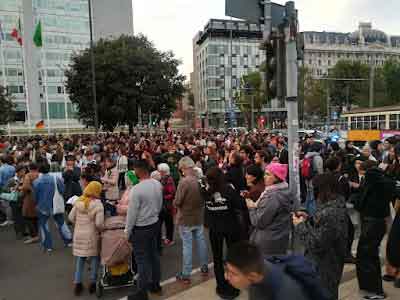
Abortion Protest ItalyAbortion Protest Italy

Italians thronged through Rome, Milan, Palermo and other cities Wednesday to defend right to abortion, which faces impending threat by a far-right party expected to form the next government after leading in parliamentary elections. A most significant development in light of ascendancy or consolidation of neo-fascism .which adheres to abolish right to abortion. striking to the very need of the hour.

The victory of the far right party lay a platform for resurrection of neo fascism. Preventing abortion perpetuates the bondage of women and capitalist oppression.

Waving banners reading “My body — My choice” and “Safe for All,” more than 1,000 people marched from Rome’s Esquilino neighborhood, and at least that many from Milan’s Central Station.

The marches comprised nationwide actions aimed at posing challenge to  Giorgia Meloni and her Brothers of Italy Party towards any amendments  to 1978 legislation, known as Law 194, guaranteeing access to abortion. The protests coincided with International Safe Abortion Day.

Many highlighted curbs on abortion in many U.S. states after the U.S. Supreme Court stripped a landmark legislation that had guaranteed access to abortion for decades as an indication of trends internationally.

Meloni “continues to say that she doesn’t want to touch Law 194, but that she wants to guarantee a woman’s right not to abort,″ said protester Donatella Marcelli. ”I don’t believe what she says about choice.”

Organizers said they feared Meloni’s party will launch “a triad of ‘God, homeland and family’” policies — a reference to her political manifesto.

That could lead to the imposition of  “rigid gender roles and assign women the task of reproduction and growth of a white, patriarchal and heterosexual nation,” organizers said in their declaration of the rallies in confrontation with  the agenda of Meloni, who would become Italy’s first far-right premier of the post-war period and its first woman in that office.

The elections delivered a crippling blow to  veterans of successful battles for civil rights, including divorce and abortion, as well as lawmakers still struggling for freedoms like same-sex marriage.

Perhaps Italy’s most celebrated living civil rights activist, Emma Bonino, lost her Senate seat to a Rome city councilwoman from Brothers of Italy, the party co-founded a decade ago by Meloni, who exalts motherhood and “traditional” families and decries LGBTQ “lobbies.” Lavinia Munnino’s no. 1 campaign priority was boosting Italy’s birthrate.

Bonino told the AP by phone she was too busy on Tuesday preparing an appeal for a recount in the close race to discuss worries about civil rights. While campaigning, Bonino voiced concerns that Meloni would make access to abortion difficult.

Italy allows abortion on request in the first 12 weeks of pregnancy, or later if a woman’s health or life is endangered.

As a young woman, Bonino, now 74, spearheaded successful drives in the 1970s to legalize both abortion and divorce that were both aggressively opposed by the Vatican, which wields political influence in Italy.

Before the Sept. 25 election for Parliament, Meloni said she would respect the 1978 law, but would push for measures, such as economic help, for women who decide to give birth instead of aborting.

The law allows for health personnel to register as conscientious objectors so they won’t have to perform abortions. In some regions, including one where Meloni’s party governs, the percentage of objectors is so high that it is imperative for women to travel to other parts of Italy to obtain an abortion, Bonino has noted.

Among other prominent persons defeated by right-wing candidates was Monica Cirinna, a Democratic Party lawmaker responsible for introduction of a 2016 law legalizing same-sex unions. Italy was the last den in Western Europe awarding that status, but Cirinna was thwarted in efforts to permit adoption by same-sex couples.

Alessia Crocini, who heads the Rainbow Families group advocating rights for LBGTQ families, called Meloni’s victory “terrible news.” Rights activists had expected it, “but when something like this materializes it becomes real, it is pretty shocking,” she said.

“I have been an activist for a very long time and there are people who I do not know who are writing to me on Instagram, ‘I am afraid,’ ‘I don’t know what to do,’ ‘I am very worried, I want to cry.'”

Crocini claimed that Meloni’s objective is “to destroy backbone of the LGBTQ movement.”

Also defeated was Democratic Party Senator Emanuele Fiano. The son of a survivor from the Auschwitz death camp during World War II, Fiano confronted the sprouting of neo-fascist political movements. Besting him in a Senate district race in a Milan suburb was Isabella Rauti, a Brothers of Italy senator whose late father, Pino Rauti, helped found the Italian Social Movement, a party that bred fascism formed just after the end of the war.

Meloni gave no adherence to a demand by Holocaust survivor Liliana Segre, who is a senator-for-life, to eradicate from her party’s symbol the flame in the three colors of the Italian flag that belonged to the Italian Social Movement. While denouncing anti-Jewish laws of Benito Mussolini’s fascist regime, Meloni upheld party’s symbol.

The elections delivered a crippling blow to  veterans who staged victorious l battles for civil rights, including divorce and abortion, as well as lawmakers still resonating  voice of  freedoms like same-sex marriage.

A movement has to crystallise to galvanise women to confronting anti-abortion steps as part of capitalist exploitation as a whole and not in isolation from overall resistance against economic exploitation.

Putin’s annexation speech and the bankruptcy of Russian nationalism

Andrei Ritsky


On Friday, September 30, Russian President Vladimir Putin delivered a lengthy speech that was meant to justify the ruling regime's actions in annexing four new territories to Russia through referendums: the Donetsk, Luhansk (Lugansk), Zaporozhzhia and Kherson regions in eastern and southeastern Ukraine.

The speech underscored the danger of a widening conflict between Russia and NATO, as the Putin regime will now consider the annexed Ukrainian lands as its own and will fight for them much more actively, as confirmed by the recent announcement of a partial mobilization in the wake of Russian defeats in the Kharkiv region.

In his speech, Putin, justifying the annexation of four regions of Ukraine, said, “People have made their choice, an unambiguous choice.” The official figures about the outcome of the referendums are indeed astonishing: in all regions 97 percent or more voted for annexation, and the turnout also showed very high participation of the population.

However, it is necessary to ask: How was it possible to hold a referendum in Zaporozhzhia, when almost half of the territory, including the capital, is controlled by the Ukrainian Armed Forces? The Putin regime has no answer to this. It is likely that the figures were simply taken out of thin air and exaggerated.

The same applies to other regions where referendums were held. Half of the Donetsk region is under Ukrainian control. The only region in which the entire territory is under the control of Russian forces is the Luhansk region. But even there, the question of the truth of the published results requires clarification.

Putin went on to state, “We will defend our land by all means. We will rebuild all the destroyed cities and towns. We will develop enterprises, infrastructure, and health care systems.” The first sentence deserves special attention because it suggests that the Putin regime is once again threatening to unleash a nuclear war.

If a nuclear war were to happen, the “development” of enterprises, infrastructure and the health care system would be out of the question. Suffice it to recall that almost 400,000 people died in Russia as a result of the government’s reactionary response to COVID-19. And that is only according to official figures. What prevented the Putin regime from engaging in the “development” of health care and social infrastructure earlier?

The main reason for the promises of the Putin regime is the ruling oligarchy’s serious fear of the working class, which, amid the worsening crisis of capitalism, is threatening to pursue its independent interests. Fear is the main motive behind all these promises since the Putin regime desperately needs a stable “home front” for its national-chauvinist response to the onslaught of Western imperialism.

“They want to see us as a colony,” Putin notes in his speech. “They do not want equal cooperation, but plunder.”

While Putin’s remarks about the threat of the colonialization and carve-up of Russia are no doubt correct, they also underscore the dual psychology of the Russian ruling class, which both hopes for “equal cooperation” with Western imperialism and at the same time rattles nuclear weapons in the struggle to safeguard its privileged position in a country rich in raw material resources. In the same speech that was filled with condemnations of the imperialist powers, Putin referred to “co-thinkers” of the Kremlin “in the entire world, including in Europe and the United States.”

Putin sought to falsely imbue a progressive tone to his national-chauvinist response to the threat posed by US-NATO imperialism. For example, as part of his speech he said that he was proud that in the 20th century it was Russia that opened the anti-colonial movement. A very hypocritical statement from a man who justified the invasion in a speech on February 21 by condemning the 1917 October Revolution and the supposedly bad Bolsheviks led by Lenin.

In fact, what preempted the carve-up of the former Russian Empire by the imperialist powers was the Bolshevik Revolution and the struggle waged by the Red Army under the leadership of Leon Trotsky on the basis of an internationalist program of socialist revolution. This program is politically incompatible with the reactionary nationalist policies and actions now pursued by the Putin regime.

Seeking to broaden public support for his policies, Putin declared: “The unipolar world built by the West is anti-democratic, false and hypocritical to the core.” This is certainly true, but Putin forgets that these features of Western imperialism are the very features that are also characteristic of the Russian capitalist state.

Putin continued, “The world has entered a period of revolutionary transformations, they are of a fundamental nature, new centers of development are being formed, which are ready not only to declare their interests, but also to defend them.” Coming from Putin, these words have a blatantly demagogic character. Apart from the leaders of the imperialist powers, no one fears revolution more than the Russian oligarchy. However, Putin seeks, in the hope of broadening support for the war, to exploit popular hatred of imperialism by portraying his government as a defender of national independence.

Putin did not mention that his concern is not over the independence of the Russian people, but the independence and right of the Russian oligarchy to exploit Russia’s natural resources and working class without considering the opinion of its “Western partners.”

Putin ended his speech by quoting these words from the far-right Russian nationalist ideologist Ivan Ilyin, who supported the struggle of the White armies against the Bolsheviks’ Red Army during the Civil War:

“If I consider my homeland to be Russia, it means that I love, contemplate and think in Russian, sing and speak in Russian; that I believe in the spiritual forces of the Russian people and accept its historical destiny with my instinct and my will. Its spirit is my spirit; its destiny is my destiny; its suffering is my grief; its flourishing is my joy.”

On Friday, Ukraine submitted an application for accelerated NATO membership, further escalating the conflict. The course of the proxy war between Russia and NATO in Ukraine threatens to escalate into an open conflict in which the use of nuclear weapons is possible. All this underscores once again the insanity of the ruling classes of all capitalist countries.

Ultimately, all of Putin’s statements emphasize that he is basing his response to the onslaught of imperialism on national chauvinism. It cannot be otherwise, since Putin embodies the capitalist restoration regime in Russia. His reactionary policies reflect the socio-economic role of the ruling Russian oligarchy, which emerged after the collapse of the Soviet Union due to the false and blatantly counterrevolutionary policies of Stalinism.

Ebola outbreak threatens to expand into densely populated Ugandan capital Kampala

Benjamin Mateus


On September 20, 2022, Uganda’s health authorities declared an outbreak of Ebola after confirmation of the disease in a young 24-year-old man from Mubende village. He developed symptoms on September 11 consisting of high fevers, convulsions, bloody vomit and diarrhea, loss of appetite, stomach pains, and bloody eyes, according to a situation report published by the World Health Organization (WHO) on September 26.

The incubation period for Ebola ranges from two to 21 days before leading to significant multiorgan failure. The virus spreads through contact with an infected person’s blood or bodily fluids. Case fatality rates are incredibly high, and treatment remains supportive when the disease manifests. The primary zoonotic reservoir or intermediate host is not known. The consumption of bush meat or bite from an animal harboring the virus has been speculated to cause sporadic outbreaks.

After seeking assistance at two different privately run clinics, the man from Mubende village was referred to a regional hospital on September 15, where he was placed in isolation for suspected viral hemorrhagic fever. A blood sample was collected two days later and sent to Uganda’s Virus Research Institute. On September 19, the blood sample confirmed an Ebola infection with the Sudan virus genus of Ebolavirus. The young man passed on the same day.

As of September 30, the number of Ebola infections has risen quickly to 54, with 35 cases confirmed and 19 listed as probable. The death toll has reached 25, with seven confirmed with Ebola infection and 18 probable infections. Additionally, the latest situation update from the WHO African region identified at least 427 contacts and 16 that were being treated for their infection. Two patients have made recoveries.

After behind-the-scenes high-level meetings with the WHO, Uganda’s health minister Dr. Jane Ruth Aceng confirmed during a press briefing Saturday that six medical workers were diagnosed with the Sudan Ebola virus, and two more were in dire condition.

It is not clear if one of these in critical condition was Tanzanian physician Dr. Mohammed Ali, who tested positive on September 26 and died on Saturday, October 1, at a regional referral hospital in Fort Portal, about 190 miles west of the capital, Kampala. His was the second death of a health care worker after a midwife from St. Florence Clinic died of probable Ebola infection.

Thus far, no cases have been detected in the densely populated capital of 1.68 million people in the city proper, with another five million in the neighboring districts situated on the north shore of Lake Victoria, Africa’s largest lake and an economic and food security lifeline for 30 million people. Kampala is one of Africa’s fastest-growing cities, with an annual growth rate of over 4 percent. The country’s poverty rate, the percent of the population living on less than US $5.50 per day, stands at 89 percent.

Uganda’s economy is sustained by agriculture. However, lacking the necessary technology and infrastructure and hampered by corruption, its economic growth has slowed since 2016 while debt continues to grow. It relies heavily on external investments, which lead to higher debt servicing. Poverty has been climbing in Uganda for over a decade.

The present Ebola outbreak is situated in the communities of Mubende (epicenter in Madudu) sub-county, Kyegwegwa, Kassanda, and Kagadi district, spanning a radius of 75 miles along a busy highway that runs between Kampala and the Democratic Republic of Congo (DRC, formerly Zaire) to the west. Health officials fear the virus may have been spreading undetected since early August, threatening to circulate through the capital more broadly to other African countries and the rest of the world.

In their risk assessment last week, the WHO noted, “The outbreak was detected among individuals living around an active gold mine. Mobility among traders of this commodity is likely to be high, and the declaration of the outbreak may cause some miners already incubating the disease to flee. The currently affected Mubende district has no international borders. Nevertheless, the risk of international spread cannot be ruled out due to the active cross-border population movement.”

Figure 1: Map of confirmed and suspected cases of Ebola disease caused by Sudan virus, by district, Uganda (as of September 25, 2022). Source World Health Organization.

Former senior military officer and current president of Uganda since 1986, 78-year-old Yoweri Museveni, made a televised statement on September 29 saying that there would be no restrictions on moving and gatherings. He said, “I want to reassure all Ugandans and all residents that the government will quickly gain control of this outbreak as we have done before. Therefore, there is no need for anxiety, panic, restriction of movement, or unnecessary closure of public places like schools, markets, and places of worship as of now.”

However, these assurances appear entirely unwarranted, as indicated by a commentary published in Fortune by Aceng, titled, “Uganda urgently needs help to stop the Ebola outbreak in its tracks.”

Aceng wrote, “Shockingly, Uganda is still isolated in the struggle to address this new threat despite the world having just endured the challenges of the COVID-19 pandemic as a single global health security problem. There has been an increased focus on the need for pandemic preparedness, resilient health systems, and a well-protected workforce to respond successfully to threats. However, the global response is not to the level of the threat we know Ebola to be to Uganda and the rest of the world.”

She added, “We urgently need more well-trained, well-equipped, and well-protected health workers who can safely help respond to stop this outbreak in its track.” Besides the threat posed by COVID-19 and Ebola, she noted recent upsurges in malaria in the North and East of Uganda, tuberculosis, HIV, non-communicable diseases, and traumas impacting the population's well-being.

The present Ebola outbreak in Uganda is caused by the Sudan virus, one of four species in the Ebolavirus genus known to cause human disease. The clinical illness it causes is indistinguishable from the Zaire Ebola genus, but is genetically distant enough that the current vaccine available for the Zaire genus, Ervebo (manufactured by Merck), is ineffective against the Sudan virus. Nancy Sullivan, head of biodefense research at the National Institute of Allergy and Infectious diseases (NIAID), said of the two Ebola viruses, “[They] are not variants, and they’re not strains—they’re different viruses.”

Both viruses were first discovered in their respective geographic locations in 1976. However, the more familiar Zaire Ebola virus has garnered the lion’s share of attention, especially during the Ebola epidemic in West Africa between 2014 to 2016 that killed 11,325 people (38 percent of cases were fatal) and then in the Democratic Republic of Congo in 2018, in which 2,280 people died from Ebola infections. The name for the virus was given from the Ebola River in DRC, where it was first described.

Figure 2 Outbreaks of Ebola disease in sub-Saharan Africa. Source Lancet Ebola Virus Disease 2019, authors Professor Denis Malvy and colleagues.

Uganda has experienced several outbreaks of Ebola viruses. The first was from October 2000 to January 2001 with the Sudan virus, in which 224 of 425 cases resulted in fatalities, a byproduct of people attending funerals of cases and lack of adequate personal protective equipment by attendants. Eight years later, a smaller outbreak occurred with the Bundibugyo Ebola virus, the first time it was ever identified, killing 37 of 149 cases. In 2012, two outbreaks occurred with the Sudan virus. One in June infected 11 people, while another in November infected six. Most recently, in 2019, five people died from Ebola infections in Uganda.

As the WHO scrambles to build Ebola Treatment Units in the affected regions, it calls for international donors to contribute $18 million to contain the outbreak for the next three months.

Dr. Yonas Tegegn Woldermariam, Uganda’s WHO representative, said even this amount might not cover all the necessary costs. He told reporters, “If we go into the preparedness, we are talking, even for the three months, three times or four times that amount. Plus, there are things that we take for granted, assuming the system will provide them. Those are additional costs like transportation, like fuel, like human resources, which we have to consider also to fund as we go ahead.”

Meanwhile, international health agencies working with pharmaceuticals have potentially identified two candidate vaccines—one from GlaxoSmithKline, which donated the license to the Sabin Vaccine Institute in 2019 (40,000 doses available), and the other being developed by scientists at the University of Oxford’s Jenner Institute (71 doses available, with Serum Institute of India working to produce 20,000 doses)—enough in development to begin emergency clinical trials to address the evolving crisis.

Ana Maria Henao-Restrepo, a WHO vaccine specialist involved in coordinating and organizing discussions between the Ugandan government, pharmaceuticals, and international stakeholders, said, “We are moving really fast this time, and people are really willing to work to get these vaccines on the ground. We are doing everything that you are supposed to do when you want to get a trial started in a week or two, [at] maximum.”

After nearly three years of the COVID-19 pandemic, and under conditions in which nearly every world government is imposing a “forever COVID” policy of unending waves of mass infection, death and debilitation, world capitalism is entirely unprepared for a massive outbreak of Ebola. The danger exists that the current outbreak in Uganda could spread internationally, as was allowed with monkeypox.

To prevent this from happening 

Army launches coup in Burkina Faso amid mass protests against France

Kumaran Ira


On Friday, Burkina Faso’s army ousted junta leader Paul-Henri Sandaogo Damiba of the Patriotic Movement for Safeguard and Restoration (MPSR). The second military coup in this former French colony in 2022 occurred amid mass protests against France and rising opposition to French imperialist wars across the region

Soldiers loyal to Capt. Ibrahim Traore are cheered in the streets of Ouagadougou, Burkina Faso, Sunday, Oct. 2, 2022. Burkina Faso's new junta leadership is calling for calm after the French Embassy and other buildings were attacked. [AP Photo/Kilaye Bationo]

Damiba was overthrown after soldiers carried out heavy gunfire near the main military camp and residential areas of Burkina Faso’s capital, Ouagadougou. A large blast also rang out near the presidential palace where army took up positions. Several main roads were blocked by troops in the capital. Soldiers reportedly took control of administrative buildings and the national television station, which stopped broadcasting.

Friday evening, on national radio and television, the coup leaders said: “Lieutenant-Colonel Damiba has been dismissed as president of the Patriotic Movement for Safeguard and Restoration.” Damiba had himself came to power early this year in a coup toppling former President Roch Marc Christian Kabore. Damiba’s whereabouts are known, but a Facebook page under his control urged people to remain calm.

After the coup, 34-year-old captain Ibrahim Traoré declared himself the new head of the MPSR junta. The army announced the closure of the country’s land and air borders as of midnight, as well as the suspension of the constitution and the dissolution of the government and the transitional legislative assembly. It imposed a 9 p.m. to 5 a.m. curfew.

The coup come after Burkina Faso, like the entire Sahel region, was devastated by deepening bloodshed since Paris launched a war in Mali, supposedly to fight Islamist terrorism, in 2013.

Despite France’s recent withdrawals of troops by ending Operation Barkhane in Mali, French imperialism retains military influence across the region and faces escalating protests.

The ousted junta leader, Damiba, was widely seen as too closely linked to France. Late Saturday, there were protests outside the French embassy in Ouagadougou and the French Institute in the city of Bobo-Dioulasso. Video on social media showed residents with lit torches outside the French embassy, and other images showed part of the compound ablaze. The crowds also vandalised the French Institute.

The attack on both institutions came after the coup leader Traoré accused France of giving refuge to the deposed Damiba and planning to attack Burkina Faso. Damiba “is believed to have taken refuge in the French base at Kamboinsin in order to plan a counteroffensive to stir up trouble in our defence and security forces,” said Traore.

The French embassy issued a statement “firmly denying any involvement of the French army in the events.” It also denied “rumours that Burkinabe authorities have been hosted or are under the protection of French military.”

“We condemn in the strongest terms the violence against our diplomatic presence in Burkina Faso,” the French Foreign Ministry added late Saturday. “Any attack on our diplomatic facilities is unacceptable.”

On Saturday, US State Department spokesman Ned Price said Washington “is deeply concerned by events in Burkina Faso. … We call on those responsible to de-escalate the situation, prevent harm to citizens and soldiers, and return to a constitutional order.”

The regional West African economic bloc, known as ECOWAS, and the African Union both condemned the military coup. “ECOWAS finds this new power grab inappropriate at a time when progress has been made,” it said, citing Damiba’s recent agreement to return to constitutional order by July 2024.

The officer corps and the ruling elites in Burkina Faso are terrified by the rising opposition in the working class and oppressed masses of the Sahel to French imperialism. The coup aims to block social opposition from erupting outside of the army’s control, while also allowing the army to continue maneuvering for the best possible deals with the major powers.

The coup came after several hundred people demonstrated in Ouagadougou to demand the departure of Damiba and the end of the French military presence in the Sahel. A section of the Burkina military who support the new coup leader Traore have called on the government to develop military cooperation with Russia, as a counterweight to France.

“One point of contention that has divided the MPSR (junta), the army and indeed the population for months is the choice of international partners,' said Constantin Gouvy, Burkina Faso researcher at Clingendael, the Netherlands Institute of International Relations. “Damiba was leaning toward France, but we might see the MPSR more actively exploring alternative from now on, with Turkey or Russia for example.”

On Saturday, the new junta leaders presented their policy in terms of their “strong will to go towards other partners who are ready to aid the struggle against terrorism.” They added: “We have decided to act on our responsibilities, driven by a single ideal: the restoration of security and the integrity of our territory.” They added, “our common ideal was betrayed by our leader in whom we had placed all our trust. Far from liberating the occupied territories, the once peaceful areas have come under terrorist control.”

More than 40 per cent of the Burkina Faso remains outside government control, as militia attacks and bombings have escalated during the French war in neighboring Mali. The number of incidents has been sharply increased since 2020, with over 1,100 attacks in Burkina Faso, one of the world’s poorest countries. This is more than the number of violent events reported in Mali and Niger together.

Since 2015, thousands have been killed and injured, and over 2 million people have been forcibly displaced by fighting as it spread to Burkina Faso.

Last week, at least 11 Burkinabè soldiers were killed and 50 civilians went missing after an attack on a 150-vehicle military-escorted convoy taking supplies to a northern town. On September 6, at least 35 civilians were killed in another attack. The June 2021 attack in Solhan in northern Burkina Faso’s Yagha province killed at least 160 civilians, the largest death toll in a single terrorist attack in country’s history.

Across West Africa, climate change and pandemics, such as Ebola and COVID-19, have had disastrous consequences, with millions projected to be pushed into extreme poverty. These countries now face dire consequences following the US-NATO led war against Russia over Ukraine. Before the Ukraine war, the food crisis already exploded in recent years due to war, climate change and pandemics.

In a note titled “Implications of the Crisis in Ukraine on West Africa”, the World Food Programme (WFP) warned that “the region’s problems will be exacerbated, with dire economic and political consequences.”

Since the NATO-Russia war broke out, rising inflation and the hikes in food and oil prices have devastated millions across the region, which relies on grain imports from Russia and Ukraine. In 2008, rising food prices led to hunger riots across the region, including in Senegal, Burkina Faso, Mali, Cameroon, and Nigeria.

“It is important to point out how quickly a rising price for a staple can lead to protests, violence, and political instability. As seen with recent uprisings in the past decade it’s often a price shock that sets off conflict. Hunger can increase tensions producing inequality and simultaneously radicalize mass political movements,” the WFP wrote.

Spain’s PSOE-Podemos government to slash public sector wages, pensions

Alejandro López


Spain’s Socialist Party (PSOE)-Podemos government is imposing massive real wage cuts for millions of civil servants and minimum wage workers, as it also prepares deep European Union (EU) pension cuts. This takes place as Spanish corporations are making record profits, and Madrid has hiked military spending and arms shipments to Ukraine, as part of the US-NATO war on Russia that threatens to escalate into an all-out nuclear war.

Podemos party leader Pablo Iglesias speaks as Spain's caretaker Prime Minister Pedro Sanchez looks on after signing an agreement at the parliament in Madrid, Spain, Tuesday, Nov. 12, 2019. (AP Photo/Paul White)

The government relies on the Podemos-linked Workers Commissions (CCOO), social-democratic General Union of Workers (UGT) and the Independent Trade Union and Civil Servants Central (CSIF) unions to divert and suppress the class struggle. The unions no longer serve as workers’ organisations but function as bureaucracies in the service of the capitalist state.

Last week, the Minister of Finance and Civil Service María Jesús Montero announced the slashing of wages for 3.5 million civil servants. Concretely, Madrid is offering a raise of 3.5 percent this year; 2.5 percent in 2023; and 2 percent in 2024, or 8 percent over three years.

This year’s inflation rate in Spain stands at over 10 percent. Public sector workers have already lost 6 percent of their real wages. If the PSOE-Podemos plans are put into effect, the worst would be yet to come.

If implemented, this plan would mean that civil servants would lose thousands of euros by 2025. This would be on top of the loss of purchasing power over the past decade, as successive right-wing Popular Party (PP) and PSOE-Podemos governments have rammed through EU austerity measures. The CSIF, CCOO and UGT unions estimate the cut in public sector wages at 12 to 20 percent since 2010.

Since private employers use public sector wages as the benchmark, this agreement will have direct repercussions for millions of workers outside the public sector.

On Thursday, in its second meeting with the union leadership, the government revised its initial offer, offering a 9.5 percent raise over three years. However, this would still mean a massive loss of purchasing power in the next three years.

The second announcement follows a now-familiar pattern. First, the government makes an offer, followed by “negotiations” with the unions. In the final act of this staged process, an agreement is reached, with the initial numbers slightly improved. The unions then present it as a victory for the workers, while PSOE-Podemos claims they made huge concessions.

Humberto Muñoz, coordinator of the CCOO Civil Servants Area, said: “We would have liked it to go a little further, but we value that this new proposal represents an advance over the previous one.”

UGT official Julio La Cuerda said that it is “practically certain” they will accept it. “We demanded the government an additional effort to cushion the effects of inflation to the limit of possibilities. There has been a very significant advance, and it seems to us that it is reasonably realistic.”

Francisco Lama, the secretary of the CSIF, reacted by stating, “We continue to consider it insufficient.[Inflation] is above 10 percent, so we are going to ask the government to make an effort to try to reach these figures. We are hopeful that some aspects can still be improved.”

The CSIF bureaucracy, which has close links to the right-wing PP, the neo-fascist Vox party and Spain’s fascistic police unions like Jusapol, is trying to capitalise on rising discontent by criticizing the CCOO and UGT. However, it has not proposed any concrete salary wage increases and has abstained from calling for wages above inflation levels.

On September 24, they organised a protest of 70,000 Madrid public sector workers, demanding better wages. Many health care workers participated, alongside police officers.

The PSOE-Podemos government is also preparing a massive attack on minimum wage earners. The Labour Ministry, led by Podemos leader Yolanda Díaz, is overseeing the negotiations with the unions and the CEOE big business association. The unions are demanding a 3.5 percent increase this year, to around €1,100 monthly, which represents a great loss of purchasing power for 8.8 million minimum wage workers in Spain.

In the private sector, unions are sabotaging workers’ struggles and ramming through wage increases below inflation. In construction, the unions have negotiated a 3 percent wage rise; in the metal industry, it is 2.2 percent for nearly 940,000 workers; in the chemical industry, 2 percent for 300,000 workers. In hospitality, it averages 3 percent across Spain. For 90,000 workers in the banking sector, the unions negotiated with the AEB banking association an increase of 2.5 percent over the next three years.

Pensioners are also in the cross-hairs. To receive the next disbursements of the EU-funded bailout funds to corporations and banks, the PSOE-Podemos government is set to pass a pension bill that will increase the number of years taken into account to calculate the pension, currently at 25 years. This will mean a substantial cut to future pension levels. The reform will also de-index pensions from inflation, meaning that the government could impoverish pensioners by raising prices.

All this takes place as companies make record profits. According to the Bank of Spain, companies have transferred their cost increases to prices, achieving 6.7 percent higher profits than those obtained before the COVID-19 pandemic, which were already historic records at the time.

Amid mounting crises, Chinese Communist Party to reappoint Xi Jinping as leader

Peter Symonds


The Chinese Communist Party (CCP) congress, due to start on October 16, takes place as China confronts mounting crises on all fronts. Internally, the economy has been slowing drastically, leading to rising unemployment, particularly among young people, and sharp social tensions. Externally, the US is intensifying its aggressive confrontation with China on all fronts—diplomatic, economic and military.

Soldiers wearing masks march down the steps of the Great Hall of the People in Beijing, Monday, Sept. 26, 2022. China's long-ruling Communist Party has set October 16 for its 20th party congress, at which leader Xi Jinping is expected to be given a third five-year term. [AP Photo/Ng Han Guan]

The CCP congress, which occurs every five years, will be one of crisis. It is expected to break from past practice and install Xi Jinping for a third term as the party’s general secretary and thus the country’s president. Xi foreshadowed the change when in 2018 the National People’s Congress amended the country’s constitution to remove the previous two-term limit on the presidency and vice-presidency that had been in place for three decades.

The US and Western media is rife with speculation about the CCP’s internal machinations and whether or not Xi will be reinstalled. In an article last week entitled, “China becomes ‘hothouse’ of intrigue ahead of crucial Communist party congress,” the Guardian referred to rumours of a military coup that were trending on social media, before all but dismissing them as unfounded. It appears that the rumour was based on nothing more than large numbers of flight cancellations and unsourced videos of military vehicles.

The Guardian, along with other media, noted the convictions last month of top-level Chinese officials on corruption charges, describing it as “one of the biggest Chinese political purges in years.” Among those jailed were former vice-minister of public security Sun Lijun, ex-justice minister Fu Zhenghua, and former provincial police chiefs of Shanghai, Chongqing and Shanxi. Those convicted were accused of being part of a clique that was disloyal to Xi.

The Indian-based Observer Research Foundation pointed out that Sun and Fu were significant figures in China’s highly-sensitive security establishment. Fu had been closely involved in Xi’s anti-corruption campaign, which Xi had used to bring down key political rivals. Fu was instrumental in the investigation into Zhou Yongkang, formerly the country’s security chief and member of the party’s top Politburo Standing Committee, who was convicted of corruption in 2015.

From top to bottom, the CCP apparatus is riddled with corruption, which has massively expanded as the regime presided over the restoration of capitalism from 1978, the plunder of state-owned enterprises and the dominance of the market over every aspect of the economy. But corruption charges against top officials are invariably the means by which factional disputes are settled behind closed doors. Prior to Xi’s installation as general secretary in 2012, Bo Xilai, Chongqing party secretary and potential rival for the post, was detained and convicted of corruption charges.

The media focus on the CCP’s internal party tensions clearly reflects Washington’s ambitions to exploit any divisions within the Chinese regime to weaken and fracture China, which it regards as the chief threat to US global dominance.

The CCP congress is being held amid the mounting danger of world war. Even as the Biden administration has recklessly ramped up the US-NATO war against Russia, bringing the world to the brink of nuclear war, it also has dramatically escalated tensions with China over Taiwan.

Beijing is acutely aware that China could be embroiled in the expanding US-led war in Ukraine and that Washington’s war aims involve not only the weakening and subordination of Russia, but China as well. Despite intense international pressure, Beijing has not condemned the Russian invasion of Ukraine.

Xi’s only international travel since the outbreak of the COVID-19 pandemic was to attend last month’s two-day summit of the Shanghai Cooperation Organisation (SCO) in Uzbekistan. He met with Russian President Vladimir Putin, whom he called an “old friend,” and declared that China would work with Russia “to inject stability and positive energy into a world rocked by chaos.”

Putin indirectly acknowledged Beijing’s fears of an escalating war. “We highly value the balanced position of our Chinese friends when it comes to the Ukraine crisis,” Putin said. “We understand your questions and concern about this.”

The Biden administration has not only intensified the US military build-up and provocations against China in the Indo-Pacific region, but maintained the extensive trade sanctions and bans imposed on China by the Trump White House. Amid deepening global financial and economic instability, the punitive trade measures have been a contributing factor to the dramatic slowing of the Chinese economy.

The latest World Bank forecast said the Chinese economy would grow by just 2.8 percent in 2022, well below China’s official target of 5.5 percent. Amid mounting debt, the economy is also plagued by financial instability, particularly in the property sector where huge corporations such as Evergrande face bankruptcy.

The CCP’s restoration of capitalism was accompanied by the claim that it would bring prosperity that would ensure the well-being of all. A growth rate of 8 percent was held up as the benchmark for achieving low levels of unemployment and social stability. The official unemployment rate, which only covers urban areas, was down marginally to 5.4 percent in July, but the youth jobless rate hit a record of 19.9 percent.

The domestic and geopolitical crises facing China are undoubtedly fueling tensions within the CCP apparatus. Some have criticised Xi, saying he should have been more conciliatory toward the US and further opened up the Chinese economy to foreign investment. On social media, however, stridently nationalist voices have argued for militarist responses.

The government is also under mounting pressure internationally and from sections of business and the middle classes, on which the CCP has increasingly rested, to ease COVID restrictions that have successfully prevented millions of deaths.

However, amid the escalating tensions, Xi has apparently strengthened his grip on power and taken over the oversight of all areas of government policy. This includes the economy, which was in the past largely the province of the premier. Li Keqiang, who was installed as premier along with Xi and was identified with World Bank plans for further pro-market restructuring, has been largely sidelined. He is expected to be dropped from the top leadership at the upcoming congress.

Xi, however, is now routinely referred to as “the core” of the government and the party. He may well be accorded new accolades and titles at the congress. However, Xi’s seemingly unchallengeable position stems not from any inherent strength of Xi as an individual or of the CCP as a whole. Rather, in conditions of acute class tensions, he has been elevated to preside over the competing factions, mediate disputes and prevent the divisions from blowing the party and government apart.

In a perspective in 2018 entitled “Xi Jinping’s power grab: Bonapartism with Chinese characteristics,” the WSWS explained:

“Xi’s emergence as China’s political strongman is not a function of his personal characteristics, but rather is a reflection above all of the extreme social tensions wracking the country. Confronting a deteriorating economy and the prospect of social upheaval, the Chinese bureaucracy is desperately seeking to consolidate its forces around the figure of Xi—a form of rule that Marxists have classically designated as Bonapartist.”

1 Oct 2022

In cave-in to the banks, Biden changes student loan forgiveness rules to make 800,000 people ineligible

Alex Findijs


The Biden administration’s Department of Education quietly changed its criteria for federal student loan forgiveness on Thursday. Without any previous or public announcement, the department’s website posted a new guidance on whether some four million borrowers whose loans are guaranteed by the federal government but held by private lenders are eligible for the $10,000 in student loan forgiveness announced by President Biden in August.

President Joe Biden speaks about student loan debt forgiveness in the Roosevelt Room of the White House, Wednesday, Aug. 24, 2022, in Washington. [AP Photo/Evan Vucci]

Until Thursday, the guidance said that these borrowers, who received loans under the now defunct Perkins and Federal Family Education Loans programs, would be eligible for the debt write-off if they consolidated their loans into federal Direct Loans.

But the new guidance said the opposite. It stated that as of that day (September 29, 2022), borrowers with federal loans not held by the government “cannot obtain one-time debt relief by consolidating those loans into Direct Loans.” In other words, all those with such loans who had not already consolidated into federal Direct Loans were ineligible for the debt write-off.

The change came the same day that a lawsuit was filed in federal court by six Republican-led states (Missouri, Arkansas, Kansas, Nebraska, Iowa and South Carolina) arguing that Biden’s executive order providing limited debt relief to some of the 41 million student loan borrowers was an abuse of executive power. The suit also argued that provisions encouraging borrowers with loans held by private banks to turn them into federally owned loans, so as to receive a debt write-off, illegally deprived private lenders of income from loan payments.

Additional lawsuits against the student loan forgiveness program have been filed or are being prepared.

Nebraska Attorney General Doug Peterson argued: “In addition to being economically unwise and inherently unfair, the Biden administration’s Mass Debt Cancellation is another example in a long line of unlawful regulatory actions. No statute permits President Biden to unilaterally relieve millions of individuals from their obligation to pay loans they voluntarily assumed.”

Plaintiffs further argued that forgiveness would constitute “depriving them [private loan holders] of the ongoing revenue” earned from “servicing those loans.”

One lawsuit by the Pacific Legal Foundation has already been struck down by a judge, but other lawsuits may progress further.

Biden’s decision to immediately cave to these lawsuits demonstrates the Democratic Party’s unwavering loyalty to Wall Street.

Privately held federal student loans are a relatively small portion of the immense $1.7 trillion dollars in student debt. Private loans stand at roughly $108 billion among four million borrowers. While this is a small portion, the financial impact is significant.

Roughly $159 billion worth of student loans are held in Student Loan Asset Backed Securities (SLABS). SLABS package loans into securities that can be traded on an open market to investors.

These securities are incredibly profitable, due to the reliability of the loans. Students who take out loans are fully responsible for the payments and cannot file for bankruptcy. Additionally, much of the value of these securities are federally insured, meaning that investors bear none of the consequences of non-payment and can even profit from debt default.

As of 2019, a total of $600 billion worth of student loans had been traded through SLABS, and there are untold billions in financial instruments connected to these securities.

SLABS are so foundational to financial markets that the Nebraska state pension fund is invested in these securities. The state’s lawsuit against the Biden administration references potential losses to its pension fund as a result of the student loan write-off.

Student loans held by the federal government are not traded as SLABS, but with interest rates ranging around 5-8 percent, many people may be forced into refinancing to privately held loans, which often promise lower interest rates. Average monthly student loan payments are $234 for those with undergraduate degrees and $570 for those with master’s degrees. As inflation erodes real wages and interest rates rise, the burden on workers to pay off their debts becomes increasingly unbearable.

Even if Biden’s plan were to go through in full effect, it would make only a small dent in the total student debt crisis. With $1.7 trillion in student debt, Biden’s plan to forgive $10,000 for those making under $125,000 a year will erase less than $400 billion over the next 10 years.

This would somewhat ease the financial burden on many people, but still leaves intact the vast bulk of student debt. Additionally, the annual cost in lost government revenue will be offset by additional cuts to social programs, as the capitalist class moves to direct ever greater resources towards war with Russia and China.

Critics claim this paltry aid is too expensive, and they include Democrats as well as the entire Republican Party. Billionaire Jeff Bezos’ Washington Post, generally aligned with the Democratic Party, published an editorial on Thursday citing various bipartisan, right-wing think tanks claiming the debt forgiveness program will cost hundreds of billions more than the $300 billion over 10 years estimated by the Education Department.

Calling the program unconstitutional, the Post wrote, “If there is any abuse the Constitution was designed to prevent, it would be the distribution of vast sums of public money, based on little more than executive say-so.” This, according to Bezos’ newspaper, is the heart of the Constitution, not the ban on hereditary orders, the Bill of Rights’ guarantees of freedom of the press, assembly and expression, and protection from arbitrary search and seizure, or the post-Civil War amendments abolishing slavery and enshrining due process and equal protection of the law, as well as the right of former slaves to citizenship and access to the ballot box.

Even the inflated annual cost estimates of right-wing think tanks, moreover, are less than what the United States government has shipped in weapons to Ukraine so far this year alone.

Prominent Democrats have joined with the Republicans in opposing Biden’s proposal. Both the Republican and Democratic parties are opposed to serious student debt relief. Rep. Tim Ryan of Ohio, who is running for the Senate and previously supported student debt relief, responded to Biden’s announcement in August by saying, “while there’s no doubt that a college education should be about opening opportunities, waiving debt for those already on a trajectory to financial security sends the wrong message to the millions of Ohioans without a degree working just as hard to make ends meet.”

This demagogic language serves only to divide the working class and obscure the underlying problems of exorbitant college expenses and oppressively high interest rates. A student paying off a typical student loan may never actually complete the payments, as the interest on the loan outstrips his or her ability to pay each month. Moreover, millions of college graduates are unable to find a secure and decent-paying job.

Another Democrat, Senator Michael Bennet of Colorado, has also spoken out against student debt forgiveness. His brother, James Bennet, is the senior editor of the Economist and former editorial page editor of the New York Times. He notoriously allowed the publication of an op-ed by Senator Tom Cotton calling for the use of military violence to suppress protests against police violence in 2020. He was forced to resign as a result of backlash against the article.

Opposition to student loan forgiveness runs deep in the ruling class and in both major political parties. Despite Biden’s promise to forgive $10,000 worth of debt, legal challenges may result in a reversal of the plan in its entirety. It is also entirely possible that the Biden administration will acquiesce to demands from opponents of debt aid and further slash the amount of debt that will be forgiven after the midterm elections, having used it as a false promise to garner votes.

Regardless of how the current legal battles over student debt proceed, it is clear that the ruling class has no intention of adequately addressing the crisis of high college costs and crushing debt.