11 Oct 2022

IBM Fellowship Awards Program 2022

Application Deadline: 5th November 2022

Offered annually? Yes

Eligible Countries: International

To be taken at (country): Fellowships vary by country/geographic area

About the Award: The IBM Ph.D. Fellowship Awards Program is an intensely competitive worldwide program, which honors exceptional Ph.D. students who have an interest in solving problems that are important to IBM and fundamental to innovation in many academic disciplines and areas of study. This includes pioneering work in: cognitive computing and augmented intelligence; quantum computing; blockchain; data-centric systems; advanced analytics; security; radical cloud innovation; next-generation silicon (and beyond); and brain-inspired devices and infrastructure.

IBM brings together hundreds of researchers who possess deep industry expertise across domains. Collaborating with clients in the field and in its global THINKLab network, IBM addresses some of the most challenging problems and creates disruptive technologies that hold the potential to transform companies, industries and the world at large. For more than seven decades, IBM has collaborated with clients and universities to work on multi-disciplinary projects that quickly lead to prototypes, as well as long-term projects that last for years. IBM has an environment that nurtures some of the most innovative and creative thinking in the world.

Eligible Fields of Study: The academic disciplines and areas of study include: computer science and engineering, electrical and mechanical engineering, physical sciences (including chemistry, material sciences, and physics), mathematical sciences (including big data analytics, operations research, and optimization), public sector and business sciences (including urban policy and analytics, social technologies, learning systems and cognitive computing), and Service Science, Management, and Engineering (SSME), and industry solutions (healthcare, life sciences, education, energy & environment, retail and financial services).

Focus areas include the following topics of particular interest:

  • Hybrid Cloud
  • Quantum Computing / Quantum Systems
  • Artificial Intelligence
  • Cloud / Open Source Technologies
  • Security / Cyber Security
  • Data Science
  • Systems

Type: Fellowship

Eligibility: 

  • Students must be nominated by a doctoral faculty member and enrolled full-time in a college or university Ph.D. program. The faculty member is encouraged to contact an IBM colleague prior to submitting the nomination to assure mutual interest.
  • Students from Europe and Russia may be nominated in their first year of study in their doctoral program.
  • Outside of Europe and Russia, students must have completed at least one year of study in their doctoral program at the time of their nomination.
  • Students from U.S. embargoed countries are not eligible for the program.
  • Award Recipients will be selected based on their overall potential for research excellence, the degree to which their technical interests align with those of IBM, and their academic progress to-date, as evidenced by publications and endorsements from their faculty advisor and department head.
  • While students may accept other supplemental fellowships, to be eligible for the IBM Ph.D. Fellowship Award they may not accept a major award in addition to the IBM Ph.D. Fellowship.

Selection Criteria: 

  • Preference will be given to students who have had an IBM internship or have closely collaborated with technical or services people from IBM.
  • The IBM Ph.D. Fellowship Awards program also supports our long-standing commitment to workforce diversity. IBM values diversity in the workplace and encourages nominations of women, minorities and all who contribute to that diversity.

Value and Duration of Fellowship: 

  • US country awards: $60,000 in award year one; $35,000 in award year two
  • Other country awards: vary between $6,000-$25,000 each award year depending on country
  • All IBM PhD Fellowship awardees will be mentored by an IBMer in order to collaborate on a research or technology project for the duration of the award period and are strongly encouraged to do an internship during the first or second year of their award.

How to Apply: Visit Fellowship Webpage (See Link below) to access the Nomination form.

Interested candidates are advised to read the eligibility requirements and FAQ before applying

Visit Fellowship Webpage for details

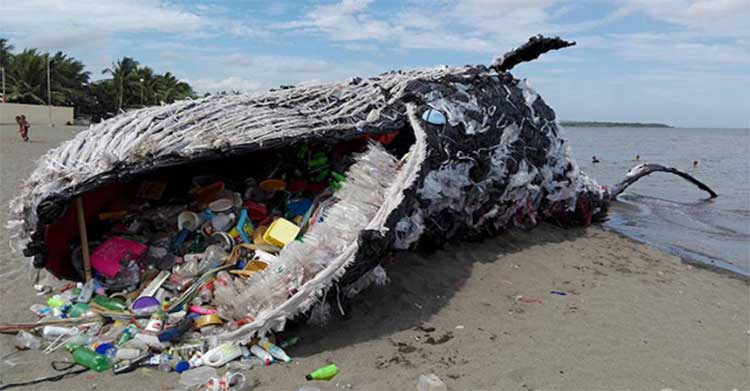
600 Million Metric Tons of Plastic May Fill Oceans by 2036 If We Don’t Act Now

Tina Casey


Fossil fuel stakeholders have been seeking new revenue in the petrochemical industry in general, and plastics in particular.

dead whale plastice

As the private transportation sector shifts focus to batteries, biofuels, and green hydrogen, fossil fuel stakeholders have been seeking new avenues of revenue in the petrochemical industry in general, and in plastics in particular. That’s bad news for a world already swimming—literally—in plastic pollution. Product manufacturers and other upstream forces could reverse the petrochemical trend, but only if they—along with policymakers, voters, and consumers—continue to push for real change beyond the business-as-usual strategy of only advocating for post-consumer recycling.

Plastic, Plastic Everywhere

Some signs of change are beginning to emerge. Public awareness is growing over the plastic pollution crisis, including the area of microplastics. A study commissioned by the World Wildlife Fund in 2020 found 86 percent of consumers in the United States were willing to support measures to cut down on plastic pollution, such as single-use plastic bag bans and increased recycling. Private sector efforts to reduce plastic packaging are also beginning to take effect.

However, these trends won’t necessarily lead to a global slowdown in plastic production or use, let alone a reversal. The United States, for example, is both a leading producer of plastic and the largest source of plastic waste in the world. The OECD estimates that, under a “business-as-usual” scenario, plastic waste will triple globally by 2060. Petrochemical producers are also eyeing growing markets in Asia and Africa.

Even if some nations kick the plastic habit, the global benefit of their efforts could easily be offset by rising demand for plastics elsewhere in the world. In a 2016 report titled, “The New Plastics Economy,” the World Economic Forum (WEF) noted that global plastic production totaled 311 million metric tons in 2014, up from just 15 million metric tons in 1964. The WEF also anticipated that the total plastic production would double to more than 600 million metric tons by 2036.

One key driver that is fueling plastic production is the increased availability of low-cost natural gas in the U.S., which was a result of the George W. Bush administration’s successful efforts to lift Clean Water Act protections on shale gas operations, resulting in “billions of gallons of toxic frack fluid from being regulated as industrial waste,” according to Greenpeace USA. By 2018, the shale gas boom of the early 2000s was credited with stimulating a decade-long petrochemical buildout in the U.S. totaling 333 chemical industry projects since 2010, with a cumulative value of $202.4 billion. Of interest from a global perspective, almost 70 percent of the financing was from direct or indirect foreign sources.

Another driving force on the supply side is the shift from crude oil (petrol) to oil for plastic production, a trend fostered in part by a glut of ethane produced by the fracking boom. The decarbonization of the transportation sector does not necessarily slow down crude oil production to refineries. “As traditional demands for oil—vehicle fuels—are declining as the transport sector is increasingly electrified, the oil industry is seeing plastics as a key output that can make up for losses in other markets,” noted a November 2021 article in the Conversation. Consequently, refiners are becoming more dependent on the petrochemical market.

Steppingstone to Change: Recycling

The impacts of plastic production and waste are already manifold, from the local destruction and greenhouse gas emissions caused by oil and gas drilling and refinery operations to the ever-increasing load of plastic waste in the environment including microparticles in the air, water, soil, food supply, and ultimately in the human body.

Plastic is also a major threat to wildlife, and in particular, marine species, as so much plastic waste ends up in the world’s oceans. Unless we take concrete steps and “change how we produce, use and dispose of plastic, the amount of plastic waste entering aquatic ecosystems could nearly triple from 9-14 million… [metric tons] per year in 2016 to a projected 23-37 million… [metric tons] per year by 2040,” according to the United Nations Environment Program.

Fossil energy stakeholders have long touted a downstream solution to reduce plastic pollution—namely, recycling. The generations-long failure of this strategy is all too obvious: As the United Nations Environment Program points out, “Of the seven billion tonnes of plastic waste generated globally so far [since the 1950s], less than 10 per cent has been recycled.” Despite recent advances in recycling technology, the amount of recycled plastic in the production stream mostly remains pitifully low across the world. Nations with lax environmental regulations—mainly poor countries—have become destinations for mountains of mismanaged plastic waste, in addition to bearing the weight of pollution related to plastic processing.

Recycling is still important, but the resolution of the plastic crisis requires swift and practical action several steps upstream, at the seats of source and demand.

Seeds of Change

Absent the political will to turn off the plastic spigot at the source, the task is left to supply chain stakeholders and individual consumers.

That is a monumental task, but not an insurmountable one. The rapid evolution of the renewable energy industry illustrates how the global economy can pivot into new models when bottom-line benefits are at play, along with policy goals and support from voters, consumers, and industry stakeholders.

In terms of reducing upstream consumption of petrochemicals, consumer sentiment can influence supply chain decisions, as demonstrated by three emerging trends that can drive the market for more sustainable products and packaging.

One trend is the growing level of public awareness of the ocean plastic crisis. Images of plastic-entangled turtles and other sea creatures can spark an emotional charge that gets more attention from consumers than street litter and landfills. The tourism, hospitality, and fishing industries are also among other stakeholders that have a direct interest in driving public awareness of ocean plastic.

In a related development, the public awareness factor has rippled into the activist investor movement, which is beginning to focus attention on the financial chain behind the petrochemical industry. In 2020 the organization Portfolio.earth, for example, launched a campaign on the role of banks in financing petrochemical operations.

The second trend that is gaining momentum is related to new recycling technology that enables manufacturers to replace virgin plastics with waste harvested from the ocean. However, this circular economy model must be implemented from cradle to grave and back again in order to prevent waste from ending up in the ocean, regardless of its content.

In a similar problem-solving vein, new technology for recycling carbon gas can provide manufacturers with new opportunities to build customer loyalty through climate action. The company LanzaTech provides a good example of growth in the area of recycling carbon. The company’s proprietary microbes are engineered to digest industrial waste gases or biogas. The process yields chemical building blocks for plastics as well as fuels. Other firms in this area are also harvesting ambient carbon from the air to produce plastics and synthetic fabrics, among other materials.

A third trend is the emergence of new technology that enables manufacturers to incorporate more recycled plastic into their supply chains overall. In the past, bottles and other products made from recycled plastics failed to meet durability expectations. Now manufacturers are beginning to choose from a new generation of recycled plastics that perform as well as, or better than, their virgin counterparts.

The problem is that all of these trends are only just starting to emerge as significant forces for change. In the meantime, fossil energy stakeholders have no meaningful incentive to pivot toward supporting a transition out of petrochemicals, let alone a rapid one.

In fact, for some legacy stakeholders, the renewable energy field appears to be an exercise in greenwashing. Shell is one example of an energy company that touts its wind and solar interests while expanding its petrochemical activities. An even more egregious example is ExxonMobil, which continues to publicize its long-running pursuit of algae biofuel, an area that is still years away from commercial development.

Until policymakers, voters, and consumers exercise their muscle to reduce plastic pollution at the source, the petrochemical industry will continue feeding the global plastic dependence regardless of the consequences for public health and planetary well-being.

Shipwrecks of refugees boats off Greek islands kill at least 23, many people still missing

John Vassilopoulos


Two separate shipwrecks of boats carrying refugees across the Aegean occurred within hours of each other last Thursday, resulted in at least 23 deaths.

Bodies of migrants are seen next to floating debris after a sailboat carrying migrants smashed into rocks and sank off the island of Kythira, southern Greece, October 6, 2022. Residents of Kythira pulled shipwrecked migrants to safety up steep cliffs in dramatic rescues after two boats sank in Greek waters, leaving at least 23 people dead and many still missing. [AP Photo/Thanassis Stavrakis]

The latest mass fatalities of refugees off Greek islands happened just days after at least 86 people drowned when a boat carrying refugees from Lebanon sank, on September 24, off the coast of Tartus, Syria.

The first shipwreck occurred on the eastern side of the island of Lesbos, off the coast of Turkey, when a dinghy carrying around 40 people capsized due to heavy winds, resulting in 18 deaths—16 young women, one adult male and one 15-year-old boy. Most of those on the boat were reportedly of African descent, likely from Somalia. 15 of the survivors had swum to the surface and were discovered in the surrounding mountains by members of the UN’s High Commission for Refugees, who handed them over to the authorities. Another 10 survivors were discovered trapped on rocks underneath a military outpost on the coast.

The second shipwreck occurred a few hours earlier when winds between 90 and 100 kilometres per hour forced a sailboat carrying 95 refugees to crash onto rocks east of Kythira’s main port of Diakofti. The island is located off the coast of the Peloponnese in southern Greece.

The boat sank five minutes after impact with a coastguard spokesman saying it was “completely destroyed”. The refugees, including 18 children, were mainly from Afghanistan with some from Iran and Iraq. The boat set sail two days prior from Turkey and was on route to southern Italy. The crash occurred 20 minutes after people on the boat had called 112, the Europe-wide emergency number. Only seven bodies were recovered and eight people are still missing.

The terrible plight facing refugees fleeing war-torn and poverty-stricken homelands were visible in the harrowing scenes following the Kythira shipwreck. Video footage published by Kythira News showed desperate survivors at the bottom of the steep cliff, hanging on for their lives in windy conditions with waves crashing against them, waiting to try to climb up a rope to be pulled to safety.

Refugee shipwreck at Diakofti - Coast Guard official at the edge of the cliff is rescuing castaways

That the fatalities were not higher was down to the heroism of locals who descended to the cliff edge to help with rescue efforts.

Speaking to The Press Project, one of the rescuers said, “More than 50 locals promptly descended to the area of the shipwreck to help with blankets, dry clothes and various emergency supplies. There is a rescue team on the island that was mobilised immediately and helped co-ordinate locals to participate in the rescue effort. 10 people in a row used ropes to pull up one by one from the cave [at the bottom of the cliff] the 80 people they managed to save. It was impossible for helicopters and coast guard vessels to approach the rocky shore in the dark and with the waves coming from the north.”

Another clip from the Hellenic Coastguard, taken from a wider angle, showed the great peril the refugees were in, stranded at the bottom of a massive cliff face.

A short clip from the Hellenic Coastguard, taken from a wider angle, showing the refugees stranded at the bottom of the steep cliff face

In a tweet Greek Prime Minister Kyriakos Mitsotakis hypocritically expressed his “sorrow at the tragic loss of human lives” and blamed human traffickers “exploiting innocent desperate people.” Coast guard officials, speaking to conservative daily Kathimerini wrote that while human traffickers in the past would not sail when weather conditions were bad they now “send people to their deaths in order to earn cash fast.”

The reality is that refugees crossing into Europe are taking ever greater risks to avoid detection by the authorities due to Greece’s brutal pushbacks policy—the forcing of refugees back across the border into Turkey.

Shortly after the two tragedies occurred, prominent Greek activist Iasonas Apostolopoulos who leads search and rescue operations of refugees in the Aegean and the Mediterranean tweeted, “In Lesbos they set forth with wind strength at 7 on the Beaufort Scale so that they were not detected by the Greek Coast Guard and pushed back. In Kythira they were trying to get to Italy directly from Turkey (100 times more difficult) for the same reason.”

Illegal under international law, the pushback policy is routinely carried out by the Greek government as part of the EU’s Fortress Europe policy of denying the right of desperate refugees  to seek asylum within the EU. A recent investigation revealed that the Greek authorities even force desperate asylum seekers to participate in the pushbacks in return for being allowed transit through Greece into Europe. As for the traffickers, Greek police routinely work with them when carrying out their pushback operations.

According to figures compiled by Aegean Boat Report, pushbacks have increased substantially in the last two years. In 2021, 632 boats were pushed back into Turkey—nearly double the number of boats the year before. This has already been surpassed in 2022 with 697 boats pushed back so far this year.

This policy has led to a rise in fatalities as refugees take greater risks to cross dangerous seas in ramshackle vessels. According to the International Organisation of Migration (IOM) 2,062 people died or went missing while trying to cross the Mediterranean in 2021, up from 1,449 the year before. By the end of September this year, 1,522 people were reported dead or missing.

Heinous crimes against refugees by the authorities are commonplace. On October 4, The Press Project reported, “For a whole month, 8 refugees were detained illegally and arbitrarily in the detention facilities of Samos Police Station, without accommodation, hygiene and clothing. Among the 8, a young refugee, Madi, who for 26 days remained detained in a cell fenced with bars - similar to a cage - which was located inside the cell where the 7 men were staying. The refugees made the ‘mistake’ of entering from Evros and coming voluntarily in order to register and apply for international protection at the Samos Police Station. The result was their illegal detention in deplorable conditions, despite the fact that 46 million euros have been invested in Samos to create the Closed Controlled Facility, which serves this purpose.”

Apart from a brief press release from the border agency Frontex expressing the agency’s “deepest condolences” regarding the Lesbos shipwreck, there has not been a single statement from within the EU to even acknowledge the tragedy. Recent reports have revealed that Frontex routinely takes part in Greece’s pushback operations.

In addition to shifting the blame onto traffickers the Greek government has used the tragedy to ramp up sabre-rattling against Turkey amid rising geopolitical tensions as result of the ongoing war in Ukraine. In a tweet on October 8 Greek Migration Minister Notis Mitarachi said, “Urgent call to Turkey to take immediate action to prevent all irregular departures due to harsh weather conditions…. EU must act.”

This follows a tweet Mitarachi posted one day before the tragedies occurred of video purportedly showing “footage from Turkish coastguard violently pushing forward migrants to Greece, in violation of international law and the EU joint statement.” Mitarachi’s claim unraveled after Aegean Boat Report replied, “This video is over 3 years old, and you know it, deliberately misleading people. This video do not show a “push forward” as you say, it shows Turkish coast guard trying to violently stop a boat from crossing towards Greece, this is what EU paid them to do under the EU-Turkey deal”.

Whatever their regional rivalries, the Greek and Turkish elites remain united in enforcing the EU’s Fortress Europe policy.

The lies and hypocrisy of Greece’s New Democracy government were more than matched by the pseudo-left Syriza, the main opposition party in parliament. Following the tragedies, a joint statement by Syriza MPs called on Turkey “to stop weaponizing refugees, which it continues to do while the EU leadership tolerates this, and to respect its obligation according to international rules.”

The statement called “on the Greek government to finally abandon the catastrophic role of the jailor of Europe, and well as Europe’s leadership to stop pretending that they don’t see dead people in the Mediterranean and take the initiative for a just asylum and migration policy.”

If anyone knows anything about being the jailor of Europe it is Syriza, which boasts of its anti-immigration record. In power between 2015 and 2019, Syriza set up camps to intern refugees fleeing hardship and persecution, at the behest of the EU. The most notorious was on Moria, on Lesbos, dubbed “the worst refugee camp on Earth” before it burned down in September 2020.

Bulgaria elections offer no way out of the political crisis

Andrei Tudora


The Bulgarian elections took place on October 2, the fourth round of elections held in the Eastern European country this year. The previous government, led by the liberal We Continue the Change party (PP) of Prime minister Kiril Petkov, ruled the country for about 8 months, in a coalition that included the “post-Stalinist” Bulgarian Socialist Party (BSP). The ruling coalition collapsed in a no-confidence vote held in June.

Former Bulgaria Prime Minister Boyko Borissov leaves, after a press conference in Sofia, Tuesday, Oct. 4, 2022. [AP Photo/Valentina Petrova]

On an official voter turnout of just 39 percent, the strongest party was the Citizens for European Development of Bulgaria (GERB), led by former PM Boyko Borissov, with 25 percent of the vote. The PP lost 5 percent compared to the previous November elections, with 20 percent of the vote. The party will lose 24 seats in Parliament and will have 53 seats to GERB’s 67.

The third party was the Movement for Rights and Freedoms (DPS), which generally draws votes from Bulgaria’s Turkish minority, with 13 percent. The fascist VAZ party took 10 percent and will have 27 seats in parliament, the largest far-right presence since Ataka won 6 seats in 2017. At the time, the fascists were invited into the Government by Borissov. The Socialist Party continues to lose votes and became Bulgaria’s fourth-largest party with 9 percent of the vote.

The other parties have announced their reluctance to form a coalition with the widely despised Borissov, who was ousted from power by months-long protests in 2020 and 2021, and the parliamentary set-up is dominated by a deep crisis.

Immense pressures are being brought upon Bulgarian society. Bulgaria is the poorest country in the EU, with over 20 percent of the population living below the official poverty line and a further 32% of the population at risk of poverty and social exclusion according to Eurostat data. The global prices hikes and spiraling inflation as well as the resurgence of workers’ struggles internationally, are radicalizing workers in Bulgaria.

Borissov, the winner of Sunday’s poll, was ousted from power twice in the last decade by mass protests over energy protests.

Bulgaria was also brutally hit by the ongoing Covid pandemic. Having renounced public health measures and seen their health care systems collapse, Eastern European countries had one of the highest per capita death rates in the world. Bulgaria registered an official death toll of 37,718, for a population of around 7 million people.

An article in Nature in April by Antoni Rangachev, Georgi K. Marinov & Mladen Mladenov underlined the excess deaths in the country, particularly in the working age population. In total, they calculate the excess deaths in the 40-64 population group at 11,986.

Above all, Bulgaria is caught up in the geopolitical maelstrom triggered by the NATO war against Russia in Ukraine. Borissov’s government worked with the EU to block the South Stream pipeline linking Russia with the Balkans and Central Europe via the Black Sea, bypassing Ukraine.

The Greece-Bulgarian pipeline was unveiled with much fanfare on October 1 and will bring gas from Azerbaijan to Bulgaria. The pipeline will shore up gas imports in Bulgaria, which was almost entirely dependent on Russian gas. Present at the opening in Sofia was Azeri president Ilham Aliyev, who recently was emboldened to break a cease fire with Armenia and restart a war in the Caucasus.

The dissolution of the Soviet Union in 1991, the restoration of capitalism and mounting NATO-Russian wars in recent decades have driven a resurgence of wars across the region.

The Bulgarian bourgeoisie is increasingly hostile and provocative against neighboring North Macedonia. North Macedonia’s territory has historically been a target of Bulgarian expansionism and regional ambitions. On this, the Bulgarian ruling elites are united, regardless of formal political association. It was Borisov’s government that first blocked EU-North Macedonia negotiations, in order to force concessions from the Macedonians over language and “national identity”.

President Radev, close to the BSP and considered an enemy of Borisov, maintained pressure on Macedonia, with the support of the PP government.

In April, Bulgarian Premier Peskov and Vice President Iliana Iotova unveiled a “Bulgarian cultural club” in the North Macedonian town of Bitola, named after the infamous fascist collaborator Vancho Mihailov.

In the 1920s and 1930s, Mihailov led the Internal Macedonian Revolutionary Organization (IMRO), a terrorist organization in the service of the Bulgarian state. A determined anti-communist, Mihailov became an ally of Mussolini and the fascist Ustase movement. The IMRO participated in the Bulgarian occupation of Macedonia and parts of Greece, as well as the Holocaust in these regions. Mihailov would flee to Italy and become a collaborator of the CIA against Yugoslavia.

After the restoration of capitalism and similar to the fate of fascist leaders in other countries, the Bulgarian bourgeoisie would rehabilitate Mihailov and the IMRO, as it sought to resume its predatory interests in the region.

Bulgaria’s irredentist ambitions are not only tolerated but encouraged by the EU, giving the lie to the imperialist fantasy that the EU is a harmonious association of nations. To sever Bulgaria’s links to Russia, it has allowed the Bulgarian elites to continue blackmailing Macedonia.

Germany is also intent to bring Macedonia firmly into its economic sphere by completing its EU accession, in order to counter Russian and Chinese investment and influence in the country.

The so-called “French proposal” pushed by the EU powers this summer enshrined Bulgarian ambitions on the future course of the Macedonian accession to the EU. The document provoked an intense crisis in both countries. It led directly to the downfall of the PP government in Bulgaria, when the right-wing There is Such a People party left the coalition because the document offered what they viewed as insufficient concessions. The “French proposal” was passed through the Bulgarian parliament with broad support from all political factions.

In North Macedonia, the plan was passed through parliament by the Social Democratic Union of Macedonia government. There were widespread, often violent street protests throughout the summer. These protests were organized and led by the far right and ultranationalist forces, led by the VMRO-DPMNE party. The VMRO was founded in 1990, in explicit opposition to the country’s founding by the mass Yugoslav partisan armies in December 1945. Initially cultivating ties to Bulgaria, the party later distanced itself from Sofia.

These forces represent a faction of the bourgeoisie that opposes Bulgarians ambitions in order to maintain the stranglehold over “their own” working class and carve their own deals with the imperialist powers. The participation of the Levica party in these protests only underscores the bankruptcy of this “left populist” party hailed by pseudo-left groups in the region.

A political confrontation is being prepared between the Bulgarian workers and this corrupt political establishment. The main political responsibility for this lies with the BSP and the pseudo left groups that gravitate around it.

The legacy of Stalinism has been a tragic one in Bulgaria as in the rest of Eastern Europe. The BSP, having participated in capitalist restoration in Bulgaria, has seen its vote collapse since the 2017 elections, when it took 26 percent of votes. It opposed Covid measures, and later it joined forces with the PP to cut ties with Russia and back the NATO war drive.

In August, the “Progress” platform was initiated in order to put some organizational distance between the pseudo-left milieu and the BSP. Calling Bulgaria a “critical, constructive and full partner in European and Euro Atlantic structures”, Progress’ stated aim was to “push the BSP and other political forces to take a course towards a real modern left.', in the words of publicist Stanislav Dodov.

US transforming Taiwan into “giant weapons depot”

Peter Symonds


Even as it intensifies its war against Russia in Ukraine, Washington is more and more openly and provocatively preparing for war with China over Taiwan. A New York Times (NYT) article last week entitled “US aims to turn Taiwan into giant weapons depot” reveals the extent of the military planning and preparations underway to transform Taiwan into a heavily-armed camp as the Biden administration goads Beijing into taking military action.

The Nimitz-class aircraft carrier USS Abraham Lincoln in formation during Rim of the Pacific exercises July 28, 2022. (Canadian Armed Forces photo by Cpl. Djalma Vuong-De Ramos) 220728-O-CA231-2003

For 50 years, following President Nixon’s trip to China in 1972, tensions in the narrow Taiwan Strait between the island and the Chinese mainland have been minimised through the One China policy—the tacit recognition by Washington and virtually every other country that Beijing was the legitimate government of all China, including Taiwan. When formal diplomatic relations between the US and China were established in 1979, Washington ended its military and diplomatic ties with Taipei, and withdrew all military forces from the island.

Now the Biden administration, following Trump, is more and more blatantly calling the One China policy into question, knowing full well that any declaration of formal independence by Taipei would provoke war with China. Biden has emphatically declared on four occasions that the US is committed to joining Taiwan in any war with China, effectively ending the policy of “strategic ambiguity,” designed to keep both Beijing and Taipei guessing as to any American military involvement.

Citing current and former US officials, the New York Times article points to high-level discussions in the White House and the Pentagon aimed at transforming the island into a huge armed camp. “American officials are intensifying efforts to build a giant stockpile of weapons in Taiwan,” it states, “after studying recent naval and air force exercises by the Chinese military around the island.” 

The conclusion being drawn in American strategic circles is that any Chinese military action to reunify Taiwan with the mainland would begin with a military blockade. “Officials say Taiwan needs to become a ‘porcupine’ with enough weapons to hold out if the Chinese military blockades and invades it, even if Washington decides to send troops,” the NYT declares.

Buoyed by the advances against Russian forces in US-orchestrated operations in Ukraine, Washington is seeking to replicate similar tactics in any war in Taiwan to inflict maximum losses on the Chinese military. The NYT explained: “US officials are determining the quantity and types of weapons sold to Taiwan by quietly telling Taiwanese officials and American arms makers that they will reject orders for some large systems in favour of a greater number of smaller, more mobile weapons.”

The NYT noted that “shoot-and-scoot” types of armaments, including shoulder-fired anti-tank and anti-aircraft missiles, along with mobile HIMARS rocket launchers, provided to the Ukrainian military, had inflicted major losses on Russian forces. US officials are telling Taiwan that more of those weapons should be ordered to transform the island into a “porcupine” bristling with armaments. In other words, as in Ukraine, the US is pushing for and arming Taiwan for a war fought on the island with complete indifference to the resulting death and destruction. 

US imperialism aims to weaken and destabilise China, encourage separatist movements in Tibet, Xinjiang and elsewhere, and undermine the Chinese Communist Party regime. Far from being a war to defend democracy or little Taiwan, the US is recklessly confronting another nuclear-armed power in its bid to break up both Russia and China and secure domination over the Eurasian landmass and its vast human and natural resources.

Washington last month announced a sixth arms sale to Taiwan involving more than $1.1 billion worth of weapons—the largest so far under the Biden administration. Drew Thomson, a former Pentagon employee, told the NYT that while some arms sales have been greater, the latest is aimed at ensuring that Taiwan will have “a larger supply of war reserve munitions on hand in advance of a conflict.” The package includes 60 Harpoon coastal anti-ship missiles. 

The Taiwan Policy Act that was approved by the US Senate Committee on Foreign Relations last month would authorise a further expansion of arms sales to Taiwan—to the tune of $6.5 billion over the five years to 2027. Significantly, the legislation would also declare Taiwan—nominally still regarded by Washington as part of China—to be a non-NATO ally of the US, effectively ending the One China policy. The Act still has to pass Congress and receive presidential approval.

Commenting last week, the NYT voiced the concerns in US military circles that supplies to Taiwan could be held up given Washington has prioritised sending weapons to Ukraine. It noted that “arms makers are reluctant to open new production lines without a steady stream of long-term orders.” The very fact that the issue is under discussion signifies that an expansion of arms production is already being considered as the war in Ukraine expands and the US continues to provoke conflict over Taiwan.  

The NYT article indicated that Washington was already considering how to speed up military supplies to Taiwan. Last week, a US State Department official was to address the annual US-Taiwan Defense Industry Conference—a three-day event held behind closed doors. Laura Cressey, director of the bureau overseeing arms sales to Taiwan, was joined by her counterpart in the US Defence Department.

The event underscored the escalation of high-level discussions between US and Taiwanese officials following the provocative visit to the island by US House Speaker Nancy Pelosi in August. A delegation from Taiwan to the defence industry conference was headed by the Deputy Minister of National Defense Wang Shin-lung. Biden, following Trump, has torn up longstanding diplomatic protocols under the One China policy that limited official contact between Taiwan and the US. 

Washington is not only conducting a huge arms build-up on Taiwan, but is also considering how to ferry military supplies to the island in the event of war and a Chinese blockade. Defence consultant Eric Wertheim told the NYT: “The sheer amount of materiel that would likely be needed in case of war is formidable, and getting them through would be difficult, though may be doable.” 

However, any US attempt to breach a blockade threatens a direct clash between the United States and China with the potential to escalate into a war that would quickly involve US bases and allies throughout the region, including Japan, South Korea and Australia. Wertheim continued: “The question is: How much risk is China and the White House willing to take in terms of enforcing or breaking through a blockade, respectively, and can it be sustained?”

The Biden administration has already answered the question in deeds, if not in words. Even as it is recklessly plunging the world towards nuclear war in Europe, the US is deliberating inflaming tensions with China over Taiwan—arguably the most dangerous flashpoint in Asia. The escalating arms sales are just one of the many indications that the US is determined to prevent China challenging American global hegemony by every means, whatever the cost to humanity.

IMF points to growing dangers in key area of financial system

Nick Beams


A chapter in the International Monetary Fund’s (IMF) Global Financial Stability Report prepared for this week’s semi-annual meeting in Washington has identified the source of a potential crisis for the global financial system.

It concerns the operation of open-ended investment funds (OEFs) which allow investors daily redemptions of their investments while the funds invest in long-term illiquid assets that cannot be turned quickly into cash.

Attendees walk inside an atrium at the 2022 Annual Meetings of the International Monetary Fund and the World Bank Group, Monday, Oct. 10, 2022, in Washington. [AP Photo/Patrick Semansky]

The mismatch between the conflicting short-term and long-term nature of investments is a permanent feature of financial markets and has always been a major factor in financial turmoil.

But the growth of OEF funds means they have become much more significant in the past decade and a half.

Summarising their expansion, the report said: “Since the global financial crisis, there has been a remarkable growth in the open-ended investment funds. The total value of their net assets has quadrupled since 2008, reaching $41 trillion in the first quarter of 2022 and accounting for approximately one-fifth of the assets of the nonbank financial sector.”

While such funds play an important role in financial markets, it said, “those that offer daily redemptions while holding illiquid assets can amplify the effects of adverse shocks by raising the likelihood of investor runs and asset fire sales. This contributes to volatility in asset markets and potentially threatens financial stability.”

The rise of these funds exemplifies a now well-established process in which attempts by governments and regulatory authorities to control one area of disruption leads to its re-emergence in another area as finance capital, ever involved in the search for profit, seeks new avenues for speculation.

Major banks were at the centre of the financial crisis of 2008 and measures were put in place to curb some of their more egregious speculative activities. But as the IMF report explained, the growth of OEFs “reflects the increasing shift in financial intermediation from banks to nonbank financial institutions, which can be attributed at least in part to the tighter regulations on banks as well as balance sheet deleveraging following the global financial crisis.”

It noted that OEFs generally invest in equities in the advanced economies but “the share of funds investing in relatively less liquid assets, such as corporate bonds or emerging market bonds and equities, has been rising rapidly.

Financial stability concerns about OEFs arose during the financial market turmoil in March 2020, at the start of the pandemic. The “resilience” of the sector “may be tested again if financial conditions tighten abruptly as central banks normalize the stance of monetary policy.”

Already the interest-rate hikes by the Fed and almost all other central banks, characterised by economic historian Adam Tooze as “the most comprehensive tightening of monetary policy the world has seen,” have resulted in large outflows from high-yield corporate bonds and emerging market equity and bond funds.

The IMF analysis noted that despite financial stability risks, “effective implementation of policy measures or regulatory authorities to mitigate the vulnerabilities associated with OEFs holding illiquid assets has been lacking.”

An existential problem facing any would-be reformers, however, is rooted in the very nature of this sector of the financial markets.

It was laid out by former Bank of England governor Mark Carney to a UK parliamentary hearing in June 2019—well before the pandemic and associated financial turmoil had appeared—into the collapse of a British equity fund.

The structure of such funds was a “big deal” and “you can see something that is systemic.”

“These funds are built on a lie, which is that you can have daily liquidity, and that for assets that fundamentally aren’t liquid.”

The lack of any adequate liquidity management by funds, the IMF report said, meant that “central banks have stepped in during episodes of severe markets stress to provide liquidity backstops to the financial sectors, including to OEFs.”

This phenomenon was again seen in the £65 billion bond buying program initiated by the Bank of England when UK pension funds were threatened with insolvency because of the collapse in bond prices, which they had used as collateral to obtain loans to finance operations in derivative markets.

There was the real prospect of a “doom loop” in which the funds had to sell long-dated government bonds, gilts, to meet margin calls from their lenders, threatening to send down bond prices even further and exacerbating the crisis.

The same scenario could play out in the OEF sector, the IMF report noted. Those holding illiquid assets may experience outflows in times of market stress forcing them to sell assets and putting further downward pressure on prices amid tightening financial conditions.

“Moreover, in the presence of herding by funds, trading activity in the same direction could exacerbate selling pressure” leading to depressed asset values, inducing “further redemptions and asset fire sales, amplifying the impact of the shocks.”

The liquidity of OEFs portfolios had “deteriorated dramatically during the March 2020 market turmoil and has been worsening in recent months.”

“The liquidity of funds’ portfolios worsened again in the first half of 2022, especially for high-yield and emerging markets bond funds. In fact, for the latter, liquidity reached levels similar to that observed in March 2020.”

OEFs are by no means the only source of the mounting crisis in the global financial system. Another is private equity funds which are heavy investors in so-called junk bonds, those which have a less than investment-grade rating but bring a higher rate of return.

As Financial Times (FT) columnist Gillian Tett has commented, junk bond prices “have recently tumbled” and it was not possible to track the true values of the assets held by private funds. “Maybe they are marking these down correctly. But I doubt it, particularly given that they are increasingly selling assets to each other. Expect a future reckoning.”

This phenomenon was highlighted in an article published last month in the FT citing comment by a top executive of the largest Danish pension fund in which he compared the private equity market to a pyramid scheme.

According to the report: “Mikkel Svenstrup, chief investment officer at ATP, said he was concerned because last year more than 80 percent of the sales of portfolio companies by the private equity funds that ATP has invested in were either to another buyout group or were ‘continuation fund’ deals, where a private equity group passes it between two different funds that it controls.”

Svenstrup used measured language. But he said this was “potentially” the start of a “pyramid scheme” before going on to describe what is taking place. “Everybody’s selling to each other… Banks are lending against it. These are the concerns I’ve been sharing,” he said.

The FT report noted that similar comments were made back in June by the chief investment officer at Amundi Asset Management, Vincent Mortier. He told a private equity conference in Cannes, that parts of the sector “look like a pyramid scheme in a way.”

That description can increasingly be applied to the financial system as a whole.

US seeks “turning point” in Ukraine after Russian strikes

Andre Damon


The seven-month-old war between NATO and Russia in Ukraine escalated Monday, after Russia carried out a series of attacks against largely civilian infrastructures throughout Ukraine.

Some 14 people were killed and 97 injured in the strikes, according to Ukrainian officials, and power was disrupted in more than half the country’s regions. The Wall Street Journal reported that most strikes were “hitting electricity substations and other targets outside city centers, away from civilian homes.”

On Friday, the Ukrainian Special Forces orchestrated a terrorist suicide bombing on the Kerch Bridge, which connects Russia to Crimea. The move came after the former commanding general of the US Army in Europe, General Ben Hodges, urged Ukraine to “drop” the bridge, and current US officials publicly gave a green light to attack it.

Days after the attack, the aim of the Kerch Bridge bombing comes into sharper view. Its purpose was to provoke a military response by Russia against civilian infrastructure in Ukraine, which could then be used to justify a massive increase in US-NATO involvement in the conflict.

For months, US officials had been expressing concern that Russia had not been “provoked” into expanding the war into western Ukraine, which had been largely spared in recent months.

Last month, former US Ambassador to Ukraine William Taylor complained to The Hill that, despite the fact that the White House had provided “larger, more capable, longer-distance, heavier weapons to the Ukrainians,” the “Russians have not reacted.” Up to this point, Taylor said, the “Russians have kind of bluffed and blustered, but they haven’t been provoked.”

With Tuesday’s attack, Russian authorities had, in fact, allowed themselves to be “provoked,” setting the stage for an even more massive escalation of US-NATO involvement in the war.

The attack on the Kerch Bridge was timed to take place just days before the NATO defense ministers’ meeting on October 12 and 13, which is expected to expand the level of direct NATO involvement in the conflict.

A senior Biden administration official interviewed by the Washington Post called the escalation of the war a “turning point.”

The attacks, in the words of the Washington Post, raise the question of “whether the United States and its partners may have to move beyond the concept of helping Ukraine defend itself, and instead more forcefully facilitate a Ukrainian victory.”

The Post wrote: “So far, the US supply effort has been deliberative and process-oriented in the kinds of weapons it provides, and the speed at which it provides them, so as not to undercut its highest priority of avoiding a direct clash between Russia and the West. That strategy is likely to be part of the agenda at Tuesday’s emergency meeting of G7 leaders and a gathering of NATO defense ministers later in the week.”

In other words, dominant sections of the US political establishment will use the attacks as a pretext to carry out a long-planned escalation of the war.

In this way, the attacks on civilian infrastructure ordered by Putin play right into the hands of the US and NATO, which had hoped that by provoking Russia, they would be given a pretext to intervene more directly in the war and ensure Russia’s military defeat.

Ahead of the meeting, US officials are demanding an expansion of arms shipments to Ukraine. “I pledge to use all means at my disposal to accelerate support for the people of Ukraine and to starve Russia’s war machine,” said Senate Foreign Relations Committee Chairman Robert Menendez.

CIA Democrat Representative Elissa Slotkin tweeted that the dispatch of more air defense systems for Ukraine was “urgent,” adding, “Providing these systems is a defensive—not escalatory—step, and our European friends need to step up along with us to get the Ukrainians what they need.”

The Wall Street Journal in an editorial demanded that the United States “provide Ukraine with more weapons, including better air defenses,” declaring, “Mr. Putin won’t end his war until it becomes clear the cost of continuing it is too high.”

Speaking to Ukrainian President Volodymyr Zelensky on Monday, Biden “pledged to continue providing Ukraine with the support needed to defend itself, including advanced air defense systems,” according to a summary of the call from the White House.

On Tuesday, Zelensky will address a meeting of the G7, which is likewise expected to pledge more military support to the conflict. Zelensky will, according to the Guardian, “emphasize anti-aircraft systems, and repeat the longstanding demand for longer-range missiles.”

Ukrainian officials claimed that Russia conducted missile attacks against more than 20 cities, including the capital, Kiev. According to the Ukrainian General Staff, Russian forces launched more than 84 cruise missiles and 24 drone attacks.

The Institute for the Study of War reported that “Russian forces launched missiles from 10 strategic bombers operating in the Caspian Sea and from Nizhny Novgorod, Iskander short-range ballistic missile systems, and 6 missile carriers in the Black Sea.”

In a sober assessment of the military consequences of Monday’s strikes, the Institute for the Study of War wrote, “Ukrainian and Western intelligence have previously reported that Russia has spent a significant portion of its high-precision missiles, and Putin likely knows better than Medvedev or the milbloggers that he cannot sustain attacks of this intensity for very long.”

It continued, “The October 10 Russian attacks wasted some of Russia’s dwindling precision weapons against civilian targets, as opposed to militarily significant targets.”

It added that “Ukrainian air defenses also shot down half of the Russian drones and cruise missiles,” and noted that “Russia’s use of its limited supply of precision weapons in this role may deprive Putin of options to disrupt ongoing Ukrainian counter-offensives in Kherson and Luhansk Oblasts.”

“Throughout the war, the Russian military has had problems with target selection and the accuracy of their missiles,” Michael Kofman, director of Russia studies at CNA, told the New York Times. “As the war goes on, their supply of precision-guided weapons has dwindled, and they are using weapons that are not suited to land targets or that are old and unreliable.”

Meanwhile, Belarusian President Alexander Lukashenko said he had ordered troops to deploy together with Russian forces near the Ukrainian border. Lukashenko declared that “Strikes on the territory of Belarus are not just being discussed in Ukraine today, but are also being planned.”

Poland urged its citizens to leave Belarus “with available commercial and private means.”