5 Nov 2022

German Chancellor Scholz visits Athens and seals tank deal with Greece

Katerina Selin


A week ago, German Chancellor Olaf Scholz (Social Democrats, SPD) made his inaugural visit to Athens where he met with Greek Prime Minister Kyriakos Mitsotakis of the right-wing conservative Nea Dimokratia (ND). The talks, held against the backdrop of the proxy war between NATO and Russia in Ukraine, focused on closer cooperation between the two countries in defence and energy policies. “In both areas, Greece could play a leading role in the future,” commented news broadcast Tagesschau.

The previous week, the first six of a total of 40 German Marder tanks had arrived in Greece as part of the so-called “backfill arrangements” to arm Ukraine. This involves Berlin supplying state-of-the-art armaments to European states, which in return send Soviet-style weapons to Ukraine. Athens has handed over 40 old BMP-1 infantry fighting vehicles to Kiev, which came from stocks built up in the former German Democratic Republic (GDR).

Marder tank type 1A3 [Photo by Sonaz / CC BY-SA 2.0]

The “traffic light” coalition of the SPD, Liberal Democrats (FDP) and Greens is using the Ukraine war for a comprehensive armaments’ offensive. Under the slogan “the turn of the times,” it has massively increased military spending and supplied weapons and other materiel to Ukraine. Since the spring, it has also been organizing “backfill arrangements” with other countries, which in addition to arming Ukraine allow it to push German arms deals throughout Europe.

Mitsotakis announced that the new Marder tanks will be stationed along the Evros River on the border with neighbouring Turkey, of all places. “Our forces assume that they will be most useful there,” he said, explaining this provocative decision. Geopolitical tensions between NATO allies Turkey and Greece have further escalated with the Ukraine war. Mutual threats and nationalist war rhetoric serve both sides to distract attention from the serious social crisis at home.

Scholz did not give the Greek government any directives as to where the tanks could be stationed. Even before his visit, he had backed Greece in an interview with the Greek daily Ta Nea and criticized Turkey’s “military threats.” At the press conference in Athens, he kept a lower profile and called for “dialogue based on international law.” For his part, Turkish President Recep Tayyip Erdoğan regards his regime’s interests as being threatened by the arms build-up in Greece and calls for demilitarization of the Aegean islands.

On October 28, the new German Marder tanks were presented at the annual military parade marking the so-called Ochi Day. The Greek national holiday commemorates October 28, 1940, when the pro-Hitler Metaxas dictatorship rejected an ultimatum from fascist Italy under Mussolini and called for national resistance.

The Greek ruling class often uses this holiday as an occasion for nationalist propaganda. Chief of the General Staff Konstantinos Floros addressed an open threat to Turkey in his speech in the run-up to the parade. As in 1940, he said, the “powerful” armed forces stood ready to silence anyone who “threatens, insults, derides or belittles” Greece.

These words from the highest-ranking military brass must also be understood as a warning to opponents of the war at home, who denounce chauvinist patriotism and gigantic military spending at the expense of the education and health systems. It was not long ago that the working class was crushed under the yoke of the Greek military dictatorship (1967-1974).

In terms of energy policy, Greece could become a “more important hub for Europe” after Russian gas supplies have stopped, Professor Kostas Lavdas, a political scientist at Panteion University in Athens, told the Tagesschau. He also referred to the planned Eastmed pipeline, which was currently off the table, but had “moved back within reach due to the war in Ukraine.” The pipeline, which has not yet been realized, is intended to deliver natural gas and hydrogen from the Middle East to Greece and from there on to Italy.

The northern Greek port of Alexandroupoli, which was recently expanded and serves as a transshipment point for NATO arms deliveries to Ukraine, is also becoming more important in the energy sector, according to Tagesschau: “Via the southern gas corridor—an interconnection of several pipelines—gas reaches Greece from Azerbaijan via Georgia and Turkey. From Alexandroupoli, in turn, the Trans-Adriatic Pipeline runs via Albania to Italy.”

In addition, a liquefied natural gas (LNG) terminal is being built at the port, which could supply the Balkan countries. German and other European companies are also investing in wind and solar energy.

Greece is one of the closest allies of the US and Germany in the war against Russia. Even before the outbreak of the war, it was spending 3.59 percent of GDP on its military apparatus—more than any other NATO country—according to NATO figures in 2021. Military spending rose to about $8 billion in 2021 from $5.3 billion the previous year, according to figures from the peace research institute Sipri.

Greek rearmament has the full support of the pseudo-left opposition Syriza party, which wants to distinguish itself as a better defence partner. A few days ago, party leader Alexis Tsipras met with managers of the Greek aerospace industry and expressed his pleasure at the success of “the two arms programs we completed as a government under very difficult circumstances: the upgrade of 84 F-16 Viper fighters and four P-3 maritime reconnaissance aircraft.”

He then complained that of the last arms programs under the ND government, “not a single euro went to the national armaments industry. This is a national crime.” Greece, he said, “must always maintain its armed forces as a deterrent and in constant readiness.” If Syriza came to power, it would renegotiate the contracts and strengthen the Greek defence industry, Tsipras said.

In recent months in particular, Washington has accelerated the expansion of military bases and the modernization of the Greek army. In September, US government plans to station forces in the port of Alexandroupoli became public.

At a meeting on October 11, deputies from both defence ministries spoke about “expanding the US military presence in Souda Bay and elsewhere in Greece” and “providing resilient access to NATO’s Eastern Flank, especially to assist Ukraine,” according to a US Defense Department press release.

The German defence industry does not want to come away empty-handed in this development. According to data from Sipri, tiny Greece already ranked fifth among the biggest buyers of German arms exports between 2011 and March 2022 (after South Korea, the US, Egypt and Israel). Berlin is trying to rapidly expand German imperialism’s position of power—also in competition with the US and France.

Rheinmetall and Greece

The current intensified armaments collaboration with Greece shows once again the criminal traditions in which today’s German great power policy stands. The backfill arrangements are being carried out by the same companies that were industrial leaders in Nazi times.

Marder tanks are produced by Düsseldorf-based arms giant Rheinmetall, which reported record sales in the first half of 2022. As early as the mid-1930s, Rheinmetall-Borsig was heavily involved in secret arms deals between Greece and Nazi Germany.

The Greek war minister at the time, General Kondylis, contacted Rheinmetall-Borsig in 1934 and “presented the company with a long shopping list,” according to historian Morgens Pelt, in an essay available online (in German). Negotiations took place in secret because Greece did not want to alienate Entente allies France and Britain; and Germany was not allowed to export war materiel after World War I due to the Treaty of Versailles.

Because of these restrictions, Rheinmetall-Borsig created a shadow company, Waffenfabrik Solothurn in Switzerland, which undertook arms deals with several countries, including Greece, Italy and Bulgaria. Rheinmetall-Borsig was closely linked to the Nazi government. The president of its arms and sales headquarters, Major Waldemar Pabst, had ordered the assassination of revolutionaries Rosa Luxemburg and Karl Liebknecht in 1919 and enjoyed the trust of Nazi leaders. According to Pelt, Nazi Germany also saw the arms shipments to Greece as a welcome opportunity “to undermine the French security system in Central and South-eastern Europe.”

On August 4, 1936, following the suppression of a major tobacco workers’ strike in northern Greece, fascist general and monarchist Ioannis Metaxas established a dictatorship. As a result, he intensified arms agreements with Rheinmetall-Borsig and increased dependence on German war materiel and armaments technologies. From the perspective of Hitler’s Foreign Ministry, arms deliveries were “an essential element for the protection of German interests in Greece,” according to Pelt.

After the Italian attack on Greece, which was initially repelled, the Nazis occupied the country in the spring of 1941 and waged a campaign of extermination against the civilian population, the Jewish community and the partisan movement. The plunder of economic resources (including chrome and nickel) benefited the German industrial machine.

German Panzer IV tank near the Temple of Hephaestus, Athens, Greece, 1941-1942. [Photo by German Federal Archive/Teschendorf/bild 101I-175-1270-36 / CC BY-SA 2.0]

Rheinmetall also profited from this policy of robbery; Greek forced labourers were made to toil in German armaments factories. The former director of Rheinmetall-Borsig in Athens, Walter Deter, became part of the economic staff of the Wehrmacht, Hitler’s armed forces, in Greece.

More recently, Rheinmetall raked in big profits in Greece via shady corruption deals. Between 2001 and 2011, the group had paid at least €42 million in bribes to Greek intermediaries to set up arms contracts (mainly air defence systems and Leopard tanks). When the scandal came to light in 2014, the company had to pay around €37 million in fines.

Now, under the leadership of the Scholz government, German arms companies are officially making huge deals with Greece and other countries and are firmly integrated into Germany’s politics of self-interest in southeastern Europe.

Netanyahu to form Israeli government of racists and fascists

Jean Shaoul


Seventy-five years after the UN vote to establish a homeland for the Jews on part of the Palestinian land administered under the British Mandate, Benjamin Netanyahu is set to form a government composed of the most reactionary forces in the country, including the fascistic and racist Religious Zionism Party, now the third largest party in the 120-seat Knesset.

Former Israeli Prime Minister and the head of Likud party, Benjamin Netanyahu, and his wife Sara gesture after first exit poll results for the Israeli Parliamentary election at his party's headquarters in Jerusalem, Wednesday, Nov. 2, 2022. [AP Photo/Tsafrir Abayov]

It is a historical milestone in the crisis and rightward trajectory of the Zionist state.

Netanyahu’s government will be made up of racists from the religious and ultra-nationalist parties pledged to Jewish supremacy and the implementation of measures synonymous with apartheid. Their vicious attacks on the Palestinians are aimed at driving them out of both Israel’s internationally recognized borders and the lands it has illegally occupied since the June 1967 Arab-Israeli war, in defiance of international law and countless United Nations resolutions.

One candidate in line for high office is Itamar Ben-Gvir, leader of the Jewish Power faction within Religious Zionism. Ben-Gvir, a virulent anti-Arab who regularly incites violence against the Palestinians, chanting “Death to the Arabs,” has faced dozens of charges of hate speech.

He used to hang a portrait in his living room of the Israeli-American terrorist Baruch Goldstein, who in 1994 massacred 29 Palestinians and wounded 125 others while they were praying in Hebron, in what became known as the Cave of the Patriarchs massacre. He never forgave Prime Minister Yitzhak Rabin for signing the Oslo Accords, which were presented as ushering in a mini-Palestinian state, saying in 1995, two weeks before Rabin was assassinated, “We got to his car, and we’ll get to him too,” after he stole a car ornament from Rabin’s Cadillac.

Ben-Gvir is a self-proclaimed disciple of the American-born fascist Meir Kahane, whose movement was banned in Israel and declared a terrorist organization by the United States.

Religious Zionism’s agenda includes Israeli rule over the West Bank, the expulsion of what it calls “disloyal” Palestinian citizens of Israel, who make up 20 percent of the country’s population, the demolition of the al-Aqsa Mosque to make way for the building of a Jewish Temple, the imposition of religious law and the destruction of the judicial system.

Last month, Yaakov Katz, editor-in-chief of the Jerusalem Post, called Ben-Gvir “the modern Israeli version of an American white supremacist and a European fascist.” A government that includes him, Katz warned, “will take on the contours of a fascist state.”

The Biden administration, despite its differences with Netanyahu, congratulated him on his victory. On Thursday, US Ambassador to Israel Tom Nides called Netanyahu, tweeting soon after: “Good call just now with Benjamin. I congratulated him on his victory and told him I look forward to working together to maintain the unbreakable bond” between Israel and the US.

Europe’s far-right leaders were quick to welcome his return to power.

Ukrainian President Volodymyr Zelensky congratulated Netanyahu, tweeting that he hoped to open “a new page in cooperation” with the incoming government, a reference to the previous government’s refusal to send Israel’s Iron Dome technology and other advanced systems to Ukraine in an effort to maintain relations with Russia.

Those other bastions of right-wing reaction—Hungarian Prime Minister Viktor Orban, Italian Prime Minister Georgia Meloni and Indian Prime Minister Narendra Modi—likewise lost no time in congratulating Netanyahu.

Israel’s open turn to the politics of Jewish supremacy and fascist terrorism thoroughly exposes the attempts to equate opposition to the Israeli state with anti-Semitism. Indeed, by embracing a program of ethnic cleansing, based on exclusivist conceptions of racial, religious and linguistic hegemony, and identifying this program with the Jewish people, the Israeli ruling class provides grist for the anti-Semitic mill internationally.

This week, more than 240 Jewish-American voters in Pittsburgh signed a letter denouncing the American Israel Public Affairs Committee (AIPAC), which is closely aligned with both Netanyahu and Donald Trump, for spending millions of dollars to back more than 100 Republican candidates who voted to overturn the 2020 election, including “lawmakers who have promoted the anti-Semitic ‘Great Replacement’ conspiracy that helped inspire the murder of eleven members of the three synagogues housed at Tree of Life,” which is located in Pittsburgh.

It is a tragic irony of history that the same type of “race and blood” nationalism that was used by German fascism to exterminate 6 million Jews is being employed today by the Israeli ruling class against the Palestinians, while playing into the hands of those who seek once again to stoke up hatred of “outsiders” and “cosmopolitans” to target Jewish people.

Within Israel itself, the stepped-up attacks on Palestinians will be accompanied by a mounting assault on the social and democratic rights of all workers, Jewish and Palestinian alike, as Netanyahu cracks down on political dissent on behalf of Israel’s plutocrats.

How is this to be explained? There is, of course, the bankruptcy of the nominal opposition, which is an international phenomenon. Netanyahu was able to capitalize on the failure of “progressive” forces in the Bennett-Lapid-led “government of change” to put forward any alternative to alleviate the social inequality that is one of the highest in the OECD group of advanced countries. That failure reflects the class position which prioritizes the interests of Israel’s oligarchs over those of the working class, both Jewish and Palestinian.

More fundamentally, the turn to openly racist policies is rooted in two major factors: the acute crisis of the Zionist state and the logic of Zionism itself.

The establishment of a homeland for the Jews on the twin bases of ethnic cleansing of the Palestinians already living there and a capitalist state was always a reactionary utopia, as the Fourth International explained in 1947.

As the gap between rich and poor grew, due in no small part to the very economic policies required to carry out such a program, the state increased its reliance on right-wing settlers and extreme nationalist zealots, who provided the basis for the emergence of fascistic tendencies within Israel. Extreme nationalism was encouraged to divert growing anger over declining living standards and social inequality along reactionary lines.

It is disturbing that a section of the Jewish people, who have long been associated with progressive movements and were the victims of the worst crime in history, are supporting political parties that can only be described as fascist. This is a product of the toxic political environment in Israel, long a beachhead for American imperialism in the Middle East.

Elon Musk begins mass layoffs at Twitter

Kevin Reed


San Francisco-based Twitter began the first round of mass layoffs of its workforce on Friday under orders from billionaire owner Elon Musk, who took over the company one week ago.

Elon Musk in May 2020. [Photo: NASA/Bill Ingalls]

Some Twitter workers received an email from the company late Thursday that they were being terminated and others found out about it when they lost access to online systems or were barred from entering company facilities on Friday.

While the new leadership of Twitter did not disclose details of the job cuts, internal documents reviewed by Reuters earlier in the week said that Musk was planning to cut 3,700 of the 7,500 global workforce.

The New York Times reported on Friday that “four people with knowledge of the matter,” confirmed that half of the Twitter workforce had been eliminated, adding, “Rarely have layoffs this deep been made by a single individual at a tech company.”

Tweets from former employees on Friday showed that the layoffs on Friday hit staff members in engineering, marketing, communications, product development, content curation and machine learning ethics.

Shannon Raj Singh, a lawyer who was running Twitter’s human rights department, tweeted, “Yesterday was my last day at Twitter: the entire Human Rights team has been cut from the company.”

Senior Community Manager, Simon Balmain, tweeted, “Looks like I’m unemployed y’all. Just got remotely logged out of my work laptop and removed from Slack.” In Balmain’s case, he lost access to email and other systems eight hours before being informed that he was officially laid off and he told CNN that the message he received “still didn’t provide any details really” about why he had been fired.

Multiple news outlets reported that the email to Twitter staff was terse and said different things depending on geographic location. Reuters quoted a section of one of the message which read, “In an effort to place Twitter on a healthy path, we will go through the difficult process of reducing our global workforce on Friday.”

Musk’s claims that his motivation to privately own Twitter was, “to try to help humanity” have been rapidly overtaken by a financial crisis resulting from a sudden drop in advertising revenue. Major advertisers, including General Motors, paused spending with Twitter last week because of content moderation concerns.

Interpublic Group (IPG)—which is responsible for $40 billion in marketing internationally for brands such as American Express, Walmart, Pepsi, Coca-Cola, Johnson & Johnson and Mattel—followed up GM’s announcement with a pause in ad spending until they had confidence and clarity on the direction of the platform. Other major brands that have stopped advertising include Ford, Audi, General Mills, Pfizer and Volkswagen.

The reality is that the layoffs at Twitter, accelerated by the Musk takeover, are part of the jobs massacre taking place at tech firms across Silicon Valley. As part of the intensification of the attacks on the jobs and wages of the entire working class—and with financial performance declining and share values falling on Wall Street—companies such as Google, Facebook, Amazon, Lyft, Microsoft and others have announced either a hiring freeze of layoffs of their employees.

Responding to the exodus of advertisers, Musk tweeted on Friday morning, “Twitter has had a massive drop in revenue, due to activist groups pressuring advertisers, even though nothing has changed with content moderation and we did everything we could to appease the activists.”

He continued, “Extremely messed up! They’re trying to destroy free speech in America.” Speaking at an investors conference in New York on Friday, Musk reiterated his claim that activist pressure was “an attack on the First Amendment.”

The reality is that the private takeover of the micro blogging platform—which has become a critical tool used by millions of people for instantaneous global announcements, news and information—by a billionaire oligarch is the greatest threat to democracy.

An example of the social and political outlook of Musk and the billionaire elite was demonstrated in his exchange with Democratic Representative from New York Alexandria Ocasio-Cortez on Twitter on Tuesday and Wednesday.

Commenting on a plan announced by Musk to charge users $8 per month to continue using the “verified” account feature, the congresswoman tweeted, “Lmao at a billionaire earnestly trying to sell people on the idea that ‘free speech’ is actually a $8/mo subscription plan.”

Responding to the comment with a combination of conceit and bullying, Musk tweeted, “Your feedback is appreciated, now pay $8.” This reply speaks volumes about Musk’s commitment to democratic rights and his proclaimed desire to make Twitter into a “common digital town square.” In response to a legitimate question about the future of speech on Twitter, Musk essentially told Ocasio-Cortez—an elected member of the US House of Representatives who has repeatedly faced death threats from far-right and fascist individuals—to “shut up and pay me.”

The first week of Musk’s ownership of the social media platform with nearly 400 million monthly active users has, by any measure, been one of widespread and deepening crisis. He has used his pretense of “free speech absolutism” as a front for welcoming far-right and fascist individuals—such as offering to restore Donald Trump’s account—onto Twitter to spread racism, xenophobia, white-supremacy and antisemitism on the platform.

The mass character of Twitter, as well as social media generally as a technological phenomenon in the 21st century, is incompatible with the ownership of a single billionaire oligarch. The crisis unfolding at Twitter is part of the deepening economic, social and political crisis of the world capitalist system.

The precarious position of the working class and the prospects for a radicalization of the masses in Russia

Andrei Ritsky


A number of economic forecasts for Russia confirm that an attack on the already precarious position of the Russian working class is underway in the remaining months of 2022 and the year 2023. The forecasts emphasize the country’s volatile economic situation, which is increasing the pressure on the Putin regime and setting the stage for a widespread mobilization of the Russian working class.

On Wednesday, November 2, MBFinance, an online market analysis and forecasting platform, published a short, eight-minute forecast for the Russian economy. The very beginning of the article explicitly refers to the “disappointing forecasts of economists and analysts for the remainder of 2022-2023.”

“Many experts argue that unless Russia comes up with a detailed, new draft for economic reforms in the very near future ... the country will face imminent trouble. The greatest pessimists predict a situation similar to that of the wild 90s in the foreseeable future: widespread unemployment and poverty,” writes the author of the article, Igor Kuznetsov.

The article notes the shocking fact that only 3 percent of the population have no financial and material problems. The remaining 97 percent, or 140 million people have them, and most of them experience serious financial difficulties. This shows the whole essence of capitalism.

Only 12 percent of Russians can afford to pay for most commodities, except an apartment or a house. Thirty-five percent are unable to buy appliances. Twenty-three percent of the population can afford to buy groceries to avoid starvation but are unable to afford new clothes and shoes.

Eight percent of Russians are unable to buy even food, which puts them in real danger of dying of hunger or going into debt. For them, the only choice is either a slow and painful life of debt or an equally painful death by starvation. The number of poor Russians has risen by 3 million within just three months this year, and 60 percent of the population, or about 87 million people, are on the brink of poverty.

The article references the economic expert Konstantin Selyanin. In his opinion, the most pessimistic forecast suggests nothing less than the collapse of Russia’s economy in the very near future. According to Selyanin, we are effectively already witnessing the biggest economic collapse in the entire history of Russia since the Stalinist dissolution of the Soviet Union in 1991.

This is indeed true. While the world is sinking into recession due to tight central bank policies, Russia has already entered its own recession, caused by the reaction of the imperialist powers to Putin’s invasion of Ukraine. It would be too optimistic to believe that Russia has already “survived” this recession.

Despite all the sanctions, Russia was, and still is, an important raw material supplier for the world market. Direct economic relations between Western countries and Russia have indeed declined to a record low, but there are many intermediaries on the world stage. There is also a large uncontrolled trade market on a world scale, which plays no less of a role than the controlled one, and in which Russia has a substantial share.

Kuznetsov’s article brings up a report by Dmitry Belousov, head of the Center for Macroeconomic Analysis and Short-Term Forecasting (CMASTF). The report raises three “possible” paths for Russia’s economic development:

The first path is autarky. Kuznetsov writes: “In this option, Russia will have to produce everything necessary for its development on its own, even if this means reducing the quality of manufactured products, including both consumer products and those that are necessary for the operation of industry. This will affect the standard of living of the country’s population, which could be significantly reduced by this path. This path will be the only possible one if Russia transitions to a ‘war economy’ as a result of a further escalation of the conflict with the enemy countries.”

Thus, this option is considered possible in the case of an expansion of the conflict in Ukraine between Russia and NATO. This is indeed quite likely to happen, since capitalist wars have always been accompanied by the dissociation of countries from the world market, a decline in industrial production and a serious collapse in living standards. But this situation seriously threatens the position of the capitalist class as well.

In the case of autarky, the country would be set back decades. Such a radical collapse can only lead to an equally radical explosion of the struggles of the working class against the bourgeoisie. The main question will not be whether this explosion takes place, but what level of consciousness the working class will have and the extent to which the revolutionary party of the proletariat will successfully influence it.

The second path is “institutional inertia.” According to the article, this is the most likely path of economic development.

“This is the situation that has been developing for the last 15 years: [the aim has been] to maintain as much macroeconomic stability as possible, implement investment projects, finance their obligations,” writes the author of the article. “Under this scenario, unemployment will remain high up to 2030, within 6%, wages and labor productivity will not increase. With such a method Russia will face the following: in such indicators as quality of life, national security, and technological development the country will inevitably lag behind the rest of the world, which will give rise to a ‘gray economy’ as it existed in the 1980s.”

The reader should recall that it was this “gray economy” of the 1980s that contributed to a serious political and economic crisis by the mid-1980s, which forced the Stalinist bureaucracy to adopt Gorbachev’s “perestroika” policies, which in fact proposed a counterrevolutionary way to resolve the crisis: the restoration of capitalism in the Soviet Union.

The restoration of capitalism ended with the liquidation of the Soviet Union and the establishment in its place of 15 “independent” capitalist republics, open to “partnership” with Western and Eastern capital through the world capitalist market. The consequences of this disintegration are still being felt to this day. The U.S.-NATO proxy war against Russia in Ukraine is one such consequence.

Therefore, if this economic path is realized, it is safe to say that a serious political crisis awaits capitalist Russia. For Putin’s regime, this crisis could be fatal. Another question is: Who will replace Putin’s bourgeois rule: other defenders of bourgeois society or revolutionary Marxists who stand on the principles of the October Revolution?

The third and final possible path is the “struggle for growth.” The article presents this path as the second most likely to be realized after “institutional inertia.” These two economic strategies are the subject of debate among the Russian ruling elite, which is trying to somehow cope with the storm coming at them from the West and from within, that is, from the Russian working class.

“The authorities and business will act together,” Kuznetsov writes, “the role of the state in the economy will increase, but the profits will be kept by private companies. Technology would have to be borrowed, and active entry into all sorts of markets would have to be ensured. This path would allow to keep the unemployment rate within the natural 4-5%, and the incomes of the population would grow by about 2.5-3.7% every year. Forecasts for this scenario are more positive—in a couple of years the country would reach a pre-crisis state”—a very positive scenario indeed.

Looking at the global environment, there is no guarantee that the third “optimistic” scenario will work. For Russia to be able to gain access to all sorts of markets, the war must end. But the fact is that the war is not going to end, its very existence is testimony to the crisis of the entire global capitalist system.

The Russian working class faces the same threats as the working class in other capitalist countries. Unemployment in Russia is expected to reach 6.5 percent next year, thus putting 1.6 million jobs at risk. Food inflation will still remain at 9 percent, and the interest rate of the Central Bank of Russia will remain at 6 percent.

For the first time in many years, the state budget will go into deficit. State expenditure will be reduced, first of all in the social sphere. National debt will rise from 18 percent to 23 percent of GDP. GDP growth will be negative throughout 2023. The course of the global recession will also determine the domestic economic situation in Russia.

“All for the front, all for victory” will be the justifying slogan of the future financial and economic machinations of Putin’s regime. The first wave of mobilization has come to an end, but there is already talk in the open about the second wave. What guarantee is there that the second wave will be at least as good as the first? Putin’s regime can give no guarantees other than guarantees for a further deterioration of the situation.

In its report for the first half of 2022, published August 30, Labor Protest Monitoring, analyzing the feverish state of labor protest in Russia, noted:

“All of this suggests increasing fluctuations and at the same time an increase in protest. Periods of relative decline do not compensate for the growth [in protest activity]. The peak of periods of growth [in protests] and the minimum point reached in periods of growth are both constantly increasing. This means that there is a general increase in protest. In general, there is a rather alarming dynamic with a tendency to increase despite the high variability of the data.”

This was written only with regard to the first half of 2022, when the Russian working class was paralyzed in February and March by Putin’s invasion of Ukraine, and only began to engage in serious protest activity by the summer. The second half of the year will likely not only continue this trend toward growing protests and strike activity, but intensify it.

Ultimately, the fate of the Russian working class is closely linked to the fate of the international working class, which is now at a turning point in the class struggle. Workers internationally are challenging the reactionary trade union apparatuses in their struggle against the cost-of-living crisis, the war and the ongoing pandemic. Russian workers face the same problems as workers everywhere.

It is “optimistic” stupidity and short-sightedness to hope that the capitalist powers will bring about an early end to the war. The redivision of the world has just begun, with all major leaders acknowledging that the decisive decade in the establishment of a “new world order” is now underway. The perceived need by the capitalists for such a “new world order” and the drive by the imperialist powers toward a new redivision of the world is rooted in the crisis and irrationality of the world capitalist system, which is plagued by unresolved contradictions.

Some leaders seek the final realization of a “unipolar moment” (the US), others try to get out of a “stalemate” (Europe), others think about establishing a utopian project of “multipolarity” (China, Russia and others). Ultimately, all these methods are based on the preconception that capitalism must be preserved. We have nothing in common with these methods and conceptions, nor do we intend to.

4 Nov 2022

Crisis Or Catastrophe: Nothing Changes

Graham Peebles


Nobody, well nobody in their ‘right mind’ can anymore deny, ignore or escape the burning fact that the natural world is being battered and vandalized by humanity; not all of humanity, just a certain subset. Air, water and soil polluted, forests levelled, ecosystems disrupted, animals species killed off, climate patterns altered.

And yet, and yet, nothing, or very little, certainly nowhere near enough, is being done to mitigate the effects and address the underlying causes of the crisis – a word we hear used a great deal these days. And when does a crisis become a catastrophe – how bad does it have to get before everything changes to meet the challenge? The house, our house is literally on fire, and we are standing around sprinkling cups of water on the flames, whilst complaining about the heat.

So, what can be said, written or done to engender substantive change, to shake up complacent corporate-orientated governments, profit obsessed businesses and weary anxious individuals?

As the concerned, the indifferent and the angry pack bags and head to Egypt for COP27, a new United Nations (UN) report, the most recent of many, finds, unsurprisingly, given the level of indifference, that: “There is no credible pathway to 1.5°C (of global warming) in place today.” It’s a stark statement, which, like previous warnings by climate scientists, environmental groups and school children will no doubt be completely ignored.

The 1.5°C figure, is the level of post-industrial warming that, according to climate scientists, is the limit of what is acceptable – i.e., yes, it will be life changing, but manageable, and would not, may not, result in coastal cities and low lying islands being reduced to water parks, millions of people being displaced, and a wholesale increase in the extinction of species. It is the target agreed at COP21, held in Paris in 2015; legally binding promises were made, jubilation expressed, optimism engendered. But as yet, seven years on, the positive words and back patting are yet to be translated into substantive action, or in some cases, any action at all.

As result of this collective failure, another UN report, aptly named The Heat is On finds that current “national climate pledges combined with other mitigation measures put the world on track for a global temperature rise of [not 1.5°C, but a sizzling] 2.7°C by the end of the century”. The text goes on to relate that, shockingly, “the world’s planned fossil fuel production by the year 2030 will be more than twice the amount that would be consistent with keeping to the 1.5°C target.”

One would imagine that, governments and corporate bosses reading such findings, and let’s hope they do actually read them, would be shocked, and take drastic action, but not a bit of it. Apathy and complacency rule within the corridors of power, where short-term gains determine government policy and drive business decisions.

Another depressing fact

In order to reduce global warming, we need, how many times must it be said, to stop pouring poisonous greenhouse gases (GHG), carbon (CO2) and methane (CH4) and nitrous dioxide (N20), into the atmosphere while simultaneously set about capturing the stuff that’s already there. As Greta Thunberg puts it, “For us to have even a small chance of avoiding setting off irreversible chain reactions far beyond human control, we need drastic, immediate, far-reaching emission cuts at the source.”

Sounds simple, and few would disagree, but as the UN projections of global temperature rises indicate, far from reducing, greenhouse gas (GHG) emissions are in fact, yes, another depressing fact, rising, year on year, month on month, week on week. Because the causes are not being addressed.

All three dominant GHGs hit record levels in 2021, with global CO2 emissions “from energy combustion and industrial processes [reaching] their highest ever annual level,” according to the International Energy Association (IAE). And despite the essential need to consign fossil fuel use, exploration and funding to the murky past, countries including the US, UK and some EU member states are increasing fossil fuel production. Justified under the dubious reason that, due to gas supplies being threatened as a result of the Ukraine/Russia war, which was caused in large measure (we can argue of the actual percentage) by the US, and perpetuated by them and the UK, nations need to become energy independent.

Indeed, but energy needs must be met by renewable sources, and not from yet more fossil fuel use. But fossil fuel companies do not want to give up even a smidgen of their mammoth profits; they have huge political influence, governments are weak and wedded to an economic model obsessed with perpetual growth. The Ideology of Money, Greed and Selfishness is the common doctrine of choice; Market Fundamentalism is a perverted form of capitalism in which everything is seen as a commodity, including the natural world – rain forests, oceans, rivers, the soil – to be bought, sold, raped, utilized, profited from and discarded. And as long as this system persists it is hard, if not impossible to imagine how the urgently required steps, and changes in behaviour, will be taken to save the environment and prevent global temperatures soaring to 3°C or 4°C.

Climate change and the broader environmental emergency is the result of human activity; of destructive self-centered behavior, not of all of humanity, but of the relatively small percentage of some within wealthy nations; it is the consequence of a particular way of life; a mode of living rooted in consumption. The largely unnecessary and irresponsible devouring of stuff, and of diets based predominantly around animal food produce, the majority of which is derived from industrial agriculture; and it is this way of life that needs to change.

It is not possible to save our planet and continue living this way; a way incidentally that, in addition to fueling climate change and the extinction of species, destroying ecosystems and poisoning the air, water and soil, has also created societies full of sick people, mentally and physically.

The basic premise that growth should be continuous is anathema to environmental salvation and social well-being. De-growth, sustainability and simplicity of living need to become the aims; development re-imagined and democracy, so-called, expanded, or rather resuscitated. Common-sense suggestions, which probably many would agree with, but, with few exceptions, the current crop of political ‘leaders’ don’t appear to possess this much under-rated quality. Neither do they have a great deal of integrity; duplicity, yes, but honoring their word, being consistent, responsible and showing compassion, well, very little. They sign agreements, make pledges to cut emissions (National Determined Contributions NDCs) and invest in renewables, then fail to enact policies to meet such laudable, but largely empty promises.

Radical change is needed, change in attitudes and behaviour. But who is up for that? It is the lifestyles of millions within developed countries that is responsible for the mess the whole world is in. But, as has been said many times, and ignored just as often, it’s the poorest nations that are being most heavily battered by the consequences. They need support from the wealthy to adapt to extreme weather and help with the devastating impacts of climate change. But, in a powerful signal of indifference, governments of rich nations, don’t even honor commitments to fund mitigation programs; schemes that are only needed because of the collective way of life their socio-economic model encourages and in fact demands.

These governments, and CEOs, shareholders of big business cannot be trusted; they care not for the poor in their own countries, let alone in Sub-Saharan Africa, or it seems for their own grandchildren; they are driven by one thing, and one thing only, profit and power – so two things actually, which are tied at the hip.

So, as delegates prepare for COP27 and fossil fuel companies report record profits, the environmental emergency couldn’t be more pressing; the need for action by governments, corporations and populations more urgent, and the stench of complacency more pungent.

The Challenges of Urbanization

Cesar Chelala


Image by Matteo Catanese.

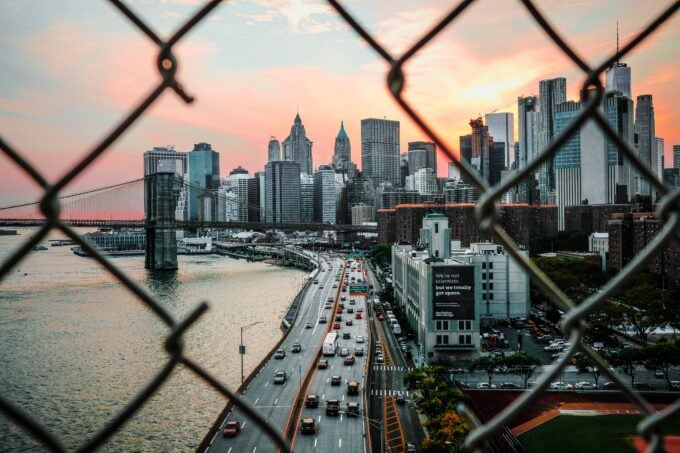
When observing the chaotic, burgeoning growth of the modern city, the more erudite of urban planners will reminisce wistfully on how different it is from its ancient Greek counterpart, the polis, which Italian architect and historian Leonardo Benevolo once described as “dynamic but stable, in balance with nature, and growing manageably even after reaching large dimensions.” The challenge facing modern society is to strike a balance between human needs and those of the physical surroundings.

The rapid and uncontrolled sprawl of today’s cities breeds anxiety not only among urban planners and architects. Experts in the field of public health are alarmed as well, for the apparent randomness of the urban dynamic is robbing the population of its basic health and well-being through unregulated environmental pollution, shrinking green areas, inadequate housing, overburdened public services, a mushrooming of makeshift settlements on the outskirts lacking in both infrastructure and services, mounting anomie and the sheer numbers of neighbors who do not know their neighbors.

The Lesson of Beijing

Beijing, a city of 21,330,000 million inhabitants, exemplifies this social alienation. Until the early 1980s, the Chinese capital was constructed as a multitude of siheyuans, or one-story complexes built around a common courtyard that were inhabited by three or four families who shared a single kitchen and water spigot. These courtyards were connected by narrow streets called hutongs that formed a grid from north to south and east to west.

This open structure greatly facilitated contact between neighbors, encouraged the sharing of resources, fostered relations between contiguous families, and enabled the elderly to care for children and share with them their passion for songbirds. Because of these characteristics, these almost idyllic structures were described as “collections of small rural villages.”

Until the mid-1980s, only a few skyscrapers disrupted the harmony of the landscape. Today that panorama has the look and feel of the ultimate modern city, where, with few exceptions, these “small rural villages” have been supplanted by sterile, towering skyscrapers. This striking change is not limited to external structure; it has dramatically altered the fabric of human relations as well.

Physical isolation has led to an increase in crime, destroyed the local sense of solidarity, and contributed to the fragmentation of what were once cohesive family groups. As the distance between home and the workplace has also increased considerably, workers now find themselves devoting what was once valuable family time to exhausting commutes in overcrowded buses or subways. According to Chen Xitong, former mayor of Beijing, “the capital is growing increasingly ugly and it is steadily losing its Chinese character. Most of the modern high-rise buildings, with their boring concrete facades, look like dominoes set down in the landscape without plan and without imagination.”

Population Growth

Rapid urbanization is related in part to population growth and rural migration to large cities. In mid-1994, the global population was 5,660 million; estimates from the United Nations place it at almost 8 billion by 2022. According to the United Nations Conference on Trade and Development (UNCTAD), world population has increased by 2.5 billion people in the last 30 years. The bulk of this growth has occurred in the parts of the world least able to cope: Asia, Africa, and Latin America. This growth is particularly noticeable in Africa, where the rate of annual growth is 2.5 percent, more than double the rate of the world growth.

By 2050, an additional 2 billion people will live on earth. At the global level, a growing proportion of the population lives in cities. The increase is generally higher in the developed (7.9 percent in 2020) than in the developing world (51.6 per cent). Even the term “urban sprawl” may soon require redefinition. Today, Rio de Janeiro and São Paulo have blended to form a continuous 350-mile-long megalopolis called Brazilian Megalopolis, of over 40 million people.

Migration

The unchecked growth of the cities is also due to migration–both domestic and external–that many countries are experiencing. The common denominators here are rural poverty, the search for better social and employment opportunities, and flight from political persecution and violence.

Colombia has a long history of rural violence dating back to the 1930s. Between 1948 and 1957, more than 250,000 murders were committed during an undeclared civil war between members of the liberal and conservative political parties. Caught in the middle were thousands of landless peasants who took flight for the relative safety of the larger cities.

Colombia’s case is certainly not unique. More recently, the rural poor in many other countries of this Hemisphere have been uprooted by violence and forced to flee en masse toward the large urban centers, where they all too often are forced into marginal areas.

These marginal areas, known as bidonvilles in French-speaking West Africa, ishish in some Arab countries, kampungs in Indonesia, villas miseria in Argentina, favelas in Brazil, pueblos jóvenes in Peru, and ranchitos in Venezuela, may contain from 30% to 60% of the population of many Third World cities, according to Worldwatch Institute.

Since the 1950s, many governments have attempted to discourage migration from rural areas to the cities, but these measures are by and large unsuccessful. Since large cities enjoy preferential treatment in terms of infrastructure and industrial development, they serve as magnets for the poor.

Regardless of the big city’s allure, many observers now feel that living conditions for the ever-growing numbers of urban poor are most likely worse than for their rural counterparts. The true dimensions of this phenomenon remain elusive, says World Health Organization expert Dr. I. Tabibzadeh, because the poor are either omitted from official statistics or are not considered separately.

Migrations between countries also continue unabated, usually stimulated by the same factors responsible for internal migration. Today, millions of people worldwide are living in a country not their own, in search of better economic and professional opportunities or to escape political violence.

The Latin American country that has produced the greatest number of migrants is Mexico. Out of a total of nearly 11.2 million Mexican emigrants around the world in 2020, almost 10.9 million relocated to the United States, where income opportunities are greater. In the Southern Cone, Argentina is the main destination for migrants from Paraguay, Uruguay, and Bolivia. In Central America and the Caribbean, the U.S. is the most frequent destination, although there are also significant migratory flows from the Dominican Republic to Venezuela and Puerto Rico, and from Haiti to the Dominican Republic.

The Impact of Rapid Urbanization on Health

Movements, whether from rural to urban areas or from one country to another, often alter the characteristic epidemiological disease profile at the same time that new diseases appear, and old ones reemerge. For example, large-scale migrations to Costa Rica in the 1980s stemming from conflicts in other Central American countries produced a palpable increase–especially along border areas–in the prevalence of malaria and other infectious and parasitic diseases.

While it is true that the more obvious ill effects of urban life–emotional stress, loss of family structure, congested traffic, noise, environmental pollution–are democratic in their distribution pattern, many city dwellers take for granted access to basic public services, such as drinking water supply, housing, solid waste disposal, transportation, and health care. For the poor, however, these are either deficient or nonexistent. Instead, those in poverty zones usually receive an extra dose of environmental pollution, since industries tend to cluster in outlying areas where regulations are laxer.

Horror stories abound concerning the effects on humans of environmental degradation. For example, studies show that exposing pregnant women to carbon monoxide can damage the health of the fetus. Scientists also agree that the lead particles released as a result of gasoline combustion pose a significant potential threat to children, whose behavior and psychosocial development can be seriously affected. In Mexico City, a city notorious for its air pollution, children are exposed to an average of 4.5 million tons of contaminants.

Yet Mexico City’s pollution problem is hardly unique; virtually every major city in the Hemisphere is fighting the same battle. Residents of Santiago, Chile, are afflicted with a host of chronic respiratory infections caused by large concentrations of particulate pollutants in the atmosphere, whose persistence is, in turn, facilitated by the area’s unique topographical and climatic circumstances. Buenos Aires is not exempt from this problem either, and its toxic gas and noise pollution levels make the Argentine capital one the most polluted cities in the world.

Air pollution is running a neck-and-neck race with other forms of pollution stemming from solid waste, pesticides, and toxic industrial waste. In Santiago, an estimated 300 million cubic meters of untreated waste are discharged annually into the metropolitan area’s two rivers and the principal irrigation canal, while in Nicaragua, DDT levels in breast milk are 45 times higher than the World Health Organization limit. This toxic waste affects wildlife as well. At the Silva Dam near Guanajuato, Mexico, more than 40,000 birds in a seasonal migration from Canada and the U.S. died as a result of pollution by chromium and other substances used in the processing of hides and skins.

In addition, many houses in developing countries’ disaster-prone areas are built with fragile materials and construction, which makes them more vulnerable to natural disasters such as earthquakes, floods and hurricanes, which leads to the loss of many lives. Even people in developed countries are now suffering the effect of these natural disasters which are becoming more frequent and its consequences more serious.

Benefits of Urbanization

Not all are disadvantages in the rapid urbanization process of modern cities, however. What determines if urbanization is beneficial or not are the particular conditions in which it occurs.

While planned urbanization can be very beneficial, unplanned or poorly planned urbanization can lead to unwelcome results. Cities offer governments cost advantages in the delivery of goods and services, such as easier access to health facilities which are a hindrance in many rural areas. In addition, cities play an important role in reducing fertility levels, thus slowing population growth. Urban women more frequently use modern reproductive health methods than their rural counterparts. Social and cultural norms make it more acceptable for couples to have smaller families in urban than in rural areas. Women in urban areas also take advantage of better educational opportunities. When properly planned, immigration to cities of people from different cultural backgrounds increases opportunities for cultural integration and brings exciting new habits, such as new foods and beliefs, that enrich people’s cultural and social perspectives.

Outlook

The chaotic growth of today’s cities can no longer be ignored. The great challenge is how to improve the quality of urban life while ensuring harmonious growth. Cities’ government officials should learn from the experiences of other cities with similar characteristics. This effort requires not only the participation of urban planners but public health and environmental experts, politicians, and fundamentally, the communities themselves. Only when these actions become a reality will it be possible to reach that almost ideal situation heralded by Hippocrates some 2,600 years ago: a balance between the human organism and its environment.