21 Mar 2025

The Chinese Neocolonial Empire

Grant Inskeep


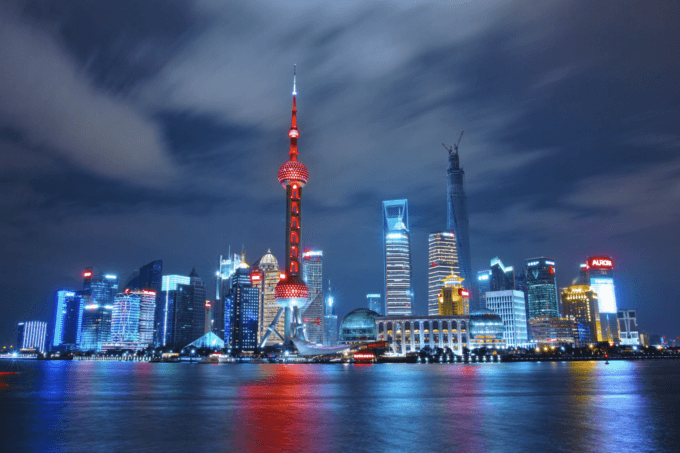
Photo by Li Yang

“China has entered an ‘Age of Sarcasm’. Anywhere outside of state-sponsored parties, entertainment shows, or the comedies and skits on television, China’s rulers and official corruption have become the main material for the sarcastic humor that courses through society. Virtually anyone can tell a political joke laced with pornographic innuendo, and almost every town and village has its own rich stock of satirical political ditties. Private dinner gatherings become informal stage shows for venting grievances and telling political jokes; the better jokes and ditties, told and retold, spread far and wide. This material is the authentic public discourse of mainland China, and it forms a sharp contrast with what appears in the state-controlled media. To listen only to the public media, you could think you are living in paradise; if you listen only to the private exchanges, you will conclude that you are living in hell. One shows only sweetness and light, the other only a sunless darkness.”

— Liu Xiaobo

Since the victory of the Chinese Communist Party (CCP) over the Kuomintang (KMT) in the Chinese Civil War, and the subsequent retreat of the Republic of China (ROC/ Taiwan) to the island of Taiwan, the People’s Republic of China (PRC) has been the recognizable state of mainland China. During this time, China was certainly an independent actor forging their own destiny, but wasn’t really a player in the global arena at large, having been incorrectly viewed by Western intelligence agencies as a Soviet satellite or proxy. Reality was far different and much has changed the last 70+ years as China is now the second most powerful empire, the third largest in area (influence/hegemony), and the second strongest military power in the world.

China, like the US more than a century ago, is the clear rising power globally, whereas the US is much like the British were around the time of WWI—the most powerful empire in existence but in noticeable decline. China is also projected to become the largest economy in the world by 2030 in terms of GDP (gross domestic product). Although, in terms of PPP (purchasing power parity), which accounts for different services and costs in separate countries, China has already overtaken the US economy and became the worlds top manufacturer in the early 2010’s. This was a title the US had held since 1890. Let’s examine how this all unfolded and what the future could hold.

FRONTIER WARS & CONSOLIDATION OF POWER

Immediately after seizing power and creating the modern Chinese state, Mao Zedong immediately moved to invade Tibet and bring it under Sino control permanently. After the collapse of the Qing dynasty, there was a subsequent intermediary period where it had been a de-facto independent state. 40,000 Chinese troops effectively forced Tibet to surrender at gun point, although in China this is what’s called the “Peaceful Liberation of Tibet.” A phrase that Orwell could’ve easily predicted. China wanted Tibet for its natural resources and to militarize a strategic border with their rival India, an increasingly important geopolitical matter today.

During 1950, with the West being named the biggest threat to China’s security, the Chinese intervened in the Korean War to thwart the American advance on the Korean Peninsula. North Korea represented a buffer of sorts between China and US-occupied Japan, with the Chinese fearful of another invasion after dealing with the century of humiliation from Western powers and the Japanese. In essence, North Korea functions as a bulwark for China against American power. More than 180,000 Chinese troops died in the Korean War until a ceasefire was reached and demilitarized zone established. What emerged from the conflict, still technically ongoing, was North Korea as a pariah nation and completely reliant on the Soviets and Chinese to maintain their state, while South Korea was under the umbrella of American empire. Over the next several decades, North Korea would become increasingly close to and reliant on China, and with the fall of the Soviets the Chinese have developed what’s called a “special relationship” with Pyongyang. They’re one of Beijing’s most important allies and are effectively under Sino control. China doesn’t demand compliance unless a vital interest is at stake, but the CCP and Workers’ Party of North Korea have shared interests against the collective and US-dominated West. Absent Chinese aid, the North Korean state and its apparatus of internal repression could not exist.

During the early 1950’s, the CCP also worked domestically to consolidate its power through a massive land reform movement to the peasantry. This resulted in executions of 1-2 million landowners. I can’t say I feel too bad for the landlords but mass murder surely isn’t the best path forward for anyone or anywhere. By the mid 1950’s the land reforms had been completed, though locations in Western and Central China such as Xinjiang, Tibet, Qinghai, and Sichuan didn’t see such reform. Many people in these areas remain acutely poor even today.

From 1953 onwards, the CCP began to implement the collective ownership of expropriated land through the creation of so-called “Agricultural Production Cooperatives”, transferring property rights of the seized land to the Chinese state. Farmers were compelled to join collective farms, which were grouped into what were called “People’s Communes” with centrally controlled property rights. However, it’s not as if the workers on the farms actually controlled anything—the CCP did. In other words, the land was really transferred primarily from bourgeois private ownership to bourgeois state ownership. A key sticking point with Anarchists and Marxists is what occurred in post-revolutionary Russia and China. Anarchists support land and industry collectivization, whereas the Bolsheviks and CCP simply nationalized them with strict autocratic control from the maximal elites of the party.

Following an uprising from Tibetans in 1959, where hundreds of thousands of people resisted, the CCP put the uprising down with force and killed at least a couple thousand rebels. The CCP then dissolved Tibet’s Government and the Dalai Lama was forced to flee into exile. In the late 1950’s/early 1960’s, China developed nuclear weapons and began reforms in the economy (Great Leap Forward) that created famine and killed tens of millions, although literacy rates greatly improved and China was able to create an independent industrial system. In the mid 1960’s, Mao and the CCP launched the “Cultural Revolution,” which was really China’s maximal leaders consolidating power following the failures of the Great Leap Forward. This led to harsh repression of dissent, many massacres, and a totalitarianism that defines the modern Chinese state to this day.

SINO-AMERICAN RAPPROCHEMENT 

In the early 1970’s, a major shift occurred in global politics—the rapprochement between the US and China. After the Sino-Soviet split in the 1960’s, this made natural sense for both countries. For the US it allowed them to (temporarily) prevent a united Chinese and Russian front against the West, created tremendous investment opportunities for Western corporations, and it was hoped this would bring China under Washington’s control in the long term. For the Chinese this allowed them to grow their economy on the back of Western capital and created a peaceful status quo in the Taiwan strait off their coast. This was really about business.

During this time China also became a permanent member of the UN Security Council and replaced the ROC in the United Nations outright. This is what’s responsible for creating the “Taiwan issue.”

After Mao’s death in 1976, the leaders of the cultural revolution were arrested by new leader Hua Guofeng for their roles in the mass killings. Deng Xiaoping then took power and instituted economic reforms. The CCP loosened control over citizens’ personal lives, and communes were gradually disbanded. Mao’s agriculture system was dismantled and farmlands were privatized, while foreign trade—especially with the US—became a major new focus. Inefficient state-owned enterprises were restructured and unprofitable ones were closed outright, resulting in massive job losses. This marked China’s transition from a mostly planned economy to a mixed economy with liberalized markets. This led to many Chinese people gaining in wealth, although also predictably greater inequality as well. Deng Xiaoping’s rule is controversial in China. Some praise him as the “architect of the modern Chinese economy,” while others despise the neoliberal reforms as strengthening capitalism.

Deng no doubt is largely responsible for the transition towards China’s economic growth and its vastly inequitable distribution of wealth, having established concrete diplomatic relations with the US that helped expand US commercial investment in the country, but I’ll keep to how he entered his time as the head of empire and how it ended. Deng invaded Vietnam in 1979 to support the genocidal Khmer Rogue, killing at least tens of thousands of Vietnamese (and Chinese troops) to “teach Vietnam a lesson,” and then a decade later ended his rule with the Tianenmen Square massacre. Protesters and student activists were calling for freedom of speech, freedom of the press, reforms within the undemocratic CCP, freedom of association, social equality and economic democracy. The international working class leader of the Chinese Communists thus responded by killing thousands of civilians in cold blood. This was a very interesting, and disturbing, feature of Chinese “socialism” towards supposed Communism, I must say.

Jiang Zemin controlled China in the 1990’s and continued to pull citizens out of poverty, although continually creating even greater inequality in return, a regular consequence of neoliberal policies. Hong Kong and Macau were returned to China in the late 1990’s, the last remnants of the British and Portuguese empires. This has meant a tremendous amount of democratic backsliding in both, with each suffering harsh repression from the Chinese state.

Hu Jintao came to power in the early 2000’s, which was a time that saw one of the most consequential global decisions of the last century with China being admitted to the World Trade Organization. China has benefitted enormously from Western economies the last couple decades since. The growth has been faster than anything anyone has ever seen, with economists calling China’s rise “meteoric.” However, the growth has been at the expense of China’s poor (who are struggling more every year), the environment, and has caused major social displacement. During the this time, and not unlike the US post-WWII, China also established many institutions in which it plays a leading role such as BRICS, the Shanghai Cooperation Organization, etc.

XI JINPING & CHINA’S GLOBAL AMBITIONS

In the early 2010’s, Xi Jinping came to power and with him has brought a far more assertive China, creating Chinese-led investment banks for international lending, as well as consolidating his own personal power. Political repression has increased greatly under Xi, with routine human rights violations against marginalized parts of Chinese society and regular purges of political opponents. Since 2017, the CCP has been engaged in a harsh crackdown (genocide?) in Xinjiang, with over a million people—mostly Uyghurs but including other ethnic and religious minorities—imprisoned in internment camps. The Chinese congress in 2018 also altered their constitution to remove the two-term limit on holding the Presidency of China, permitting Xi Jinping to remain president of the PRC (and general secretary of the CCP) for an unlimited time. Xi is a dictator, in effect.

In 2020, China passed a national security law in Hong Kong that gave the government wide-ranging tools to crack down on dissent and Chinese citizens had to endure some of the most draconian measures in the entire world during the COVID pandemic. While Xi’s domestic policies have been the topic of much debate, it’s also under his rule that China’s true global ambitions took shape. In 2012-2013, China’s economy began to slow amid domestic credit troubles, weakening international demand for Chinese exports. China then launched an ambitious global infrastructure investment project called the Belt and Road initiative (BRI). China sought to expand its commercial sector across the globe, from Indochina and Africa to Europe and Latin America.

What China is trying to do is expand its ever growing soft power into regions they hope to one day project hard power. This gives them diplomatic leverage over weaker countries in Asia, Africa, and Latin America, thus gaining greater control of their resources gradually, as well as their fidelity in global affairs. It also further entrenches China into the economic future of even many American allies in Europe, Oceania, and the Western hemisphere. Xi’s rule has seen Beijing’s influence explode in Africa and Indochina, with the Chinese empire using the economic conquest route to project power over places like Angola, Tanzania, Laos, Myanmar, etc. These countries and their futures are directly linked with the fate of China’s economy. There’s no reason to think Chinese influence won’t continue expanding in the developing world.

While it’s great that these places will indeed develop, it will be in the interests of the corporate-owned economy (I.E. political and economic elites in these locales) and that of China’s domestic leadership class. Sure, these countries will have newly built infrastructure and will modernize but the benefit is really for empire, not the people. Nothing about the internal subjugation of the working class and poor will change whether it’s American or Chinese empire partaking in the looting. In fact, one could argue that repression of the mass populace will be more acute in areas controlled by China as their leaders don’t pay lip service to optics about democracy, human rights, etc. China’s empire is more inclusive in the sense that they, more or less, let you do as you please with your country so long as their flow of raw materials continues unabated. Beijing will work with anyone, while Washington only works with countries they deem valuable enough to exploit while putting up with negative public opinion of supporting authoritarians and dictators (“You’re either with us or against us,” unless they’re vital to the imperial interest of course). For example, the US seeks to isolate countries like Eritrea or Cuba but works with the Saudi’s and Israeli’s who are just as brutal, if not worse, while China maintains ties with all of the regimes.

China is simply updating the playbook of empire, evolving its own variant of neocolonialism, and there’s no reason to think China won’t eventually use its expanding military power to protect these Chinese investments across Africa, Asia, and Latin America once they come under threat of rebel forces, rival regimes, leaders who won’t adhere to their interests, etc. It’s how imperialism works and China is already expanding its military presence into the Solomon Islands, having signed a security agreement with their government, as well as their existing base in Djibouti. China also has investments across nearly the entire African coastline that will allow for possible future Chinese naval bases and military assets. They’ve also been building many artificial islands that they turn into military installations in the South China Sea. International waters claimed as their own. Prompting fierce condemnation from Vietnam, the Philippines, and other countries with their own claims. China is preparing for the event of a major armed conflict with the US over Taiwan or the South China Sea. The tensions in this region have bever been higher and Chinese planners know they’ll have to take these waterways if they hope to dislodge the US from Asia and the Western Pacific.

Taking control of the Taiwan Strait and the South China Sea would allow them to control globally important semiconductor and microchip industries in Taiwan, as well as to dominate vital commercial shipping lanes, which they could use as leverage to force the US out of the region, and would open doors for further power projection in the Indo-Pacific where China wants to dominate.

Besides the possibility of great power conflict with the US, the Chinese are also dealing with a rising India to their south. Both have a very real territory dispute in the Himalayas which led to skirmishes between Indian and Chinese forces as recently as a few years ago. China’s ruling elite have a vested and existential interest in containing India’s rise, just as the Americans want to contain China. A strategy the Chinese seek to implement is remarkably similar to Island chain containment strategy the US has deployed against them. It’s called the “String of Pearls” theory. The term refers to the expanding network of Chinese military and commercial facilities/relationships that extend from the Chinese mainland to the Horn of Africa. These sea lanes run through major maritime choke points. Many political experts believe this plan, together with China’s special economic corridor in Pakistan and parts of the BRI, will encircle India, threaten its power projection, trade, and territorial integrity.

However, besides these possible future conflicts, there’s a very real present day war where China has vested, though highly understated, interests—the Russo-Ukrainian War. Sure, China has tried to portray itself as an independent party but essentially no one views it as such besides dogmatic China and Russia supporters. China has been crucial in propping up Moscow’s economy in the face of devastating Western sanctions, buying more oil and gas than ever before and with plans only to increase. The Chinese have also been providing non-lethal aid (armor, tech to field drones, etc.) pretty much since the invasion began. Their “peace plan” also functioned more as a line in the sand than a true peace proposal. It said nothing about the roughly 20% of Ukraine occupied by Russia, only called for a ceasefire and end to Western sanctions (a non-starter as Beijing knows), and had absolutely nothing to say about future security guarantees for Ukraine. Sounds more like “Russian peace.”

Elsewhere that China is seeking to expand is in the Middle East. The major goal being to drive a wedge between the already fragile US-Saudi relationship. Part of the goal here is to weaken (and one day supplant) US dollar (USD) hegemony in global markets. This is part of why China is pursuing an alternative currency with other BRICS members. It’s also why China has been talking to Saudi Arabia about the possibility of trading in Renminbi/Chinese yuan instead of USD and increasingly settling trade with many partners in their own respective currencies rather than America’s as has been standard for decades.

The US-Saudi relationship is the cornerstone of American global dominance, giving real leverage to the USD as the leading energy producers all essentially trade in the US currency. If China can weaken USD dominance and get enough countries trading in theirs or an alternative currency, it would spell disaster for US global hegemony. This is the real “threat” of China that we hear so much about in the US. It’s also the reason China is trying to help mend differences between the Saudi’s and Iranian’s. The Saudi’s need American weapons, troops, and defense in the face of the Iranian empire, a rising power and Riyadh’s biggest historic rival in the region.

If China can mend that relationship, then the supposed need for American security would evaporate. Thus, the Americans would lose control of the region known to be key to global hegemony, paving the way for Chinese expansion, as well as their junior partner in Russia. China wants to expand their relations in the Middle East out of domestic need (largest oil importer in the world) and geopolitical imperatives (Neo-Cold War/US vs China). A major aspect of this is control of global shipping lanes, including the Suez Canal and Strait of Hormuz. Which is why the trajectory of American relations with the Iranian’s and Egyptian’s are of real importance to Chinese planners.

If Egypt continues to drift towards a balanced approach, and if Beijing’s friends in Moscow can establish an ongoing military presence in the strategically important country, it will go a long way towards efforts at controlling the Suez-Red Sea region, a major commercial hub. As will Chinese influence growing, strengthening, and holding in places like Sudan, Ethiopia, and Eritrea. Although losing Syria to the West has been a setback for China in the Middle East, especially for their allies in Russia and Iran, it’s not as if the Chinese had dramatic interests in the country. Trade between the two was relatively low and although China was eyeing future naval ports in Syria in the Eastern Mediterranean, there had been no investments from Beijing in the country since 2010. China has far greater interests in the region outside Syria and possible Chinese naval forces at Pakistan’s Gwadar Port, as well as ever deepening cooperation with the Iranian’s, would serve to give them significant military presence near Hormuz where so much of global energy traverses.

What’s evident is the Chinese empire has grown vastly more assertive the last decade. They increasingly possess the economic and military capabilities, as well as the ambitions, to challenge the American empires’ global preeminence. What’s not evident is how all the escalating tensions with the US will ultimately unfold. From the Korean Peninsula and the Taiwan strait to the South China Sea and Eastern Europe on down to the Middle East and Africa, geopolitical tensions are coming to a head in ways we’ve not seen in 80+ years. It’s a rapidly changing geopolitical environment and one the Chinese empire will surely seek to capitalize on.

Hundreds of migrants in ICE custody go “missing” as deportees are jailed in El Salvador’s “terrorism” prison

Andrea Lobo


US deportees being frog-marched into El Salvador's Terrorism Confinement Center (CECOT) [Photo: El Salvador Presidential Press Office]

Following its invocation of the 18th-century Alien Enemies Act on Saturday, claiming an invasion by a Venezuelan gang to justify mass deportations without any due process or legal recourse, the Trump administration is employing tactics reminiscent of the disappearances used by fascist military dictatorships in the last century.

Hundreds of migrants are being dragged out of their homes, arrested while making routine appointments with US immigration authorities or intercepted in the street at all hours, often by plainclothes officials, and taken to unknown locations. Lawyers and relatives struggle to find their whereabouts as records are erased or falsified online. Some, accused on an entirely arbitrary basis of being “terrorists” or belonging to gangs, turn up in what are effectively concentration camps overseen by security forces with long records of torture, extrajudicial killings, and fascist repression.

These actions, which can only be described as transnational fascism, are not taking place in Spain, Italy or Germany in the 1930s or under the CIA’s “Operation Condor” that coordinated cross-border repression between Latin American dictatorships in the 1970s, but in North America in 2025. 

On Wednesday, Univision issued the alarming report that there is an ongoing “frantic search among terrified families after hundreds of immigrants go missing from the ICE online locator.” This includes at least 48 people picked up during a series of Immigration and Customs Enforcement (ICE) raids last week in New Mexico and put on a plane to an unknown destination.

Many are feared among the estimated 300 Venezuelan and Salvadoran migrants who were immediately sent to the Terrorism Confinement Center (CECOT) in El Salvador—the largest prison in the Americas—in defiance of a US federal court order challenging the use of the Alien Enemies Act and pausing the deportations. 

The Trump administration has not only refused the judge’s request to disclose additional information about the two deportation flights to El Salvador. On Monday night, ICE official Robert Cerna recognized in a sworn statement that “many” deported Venezuelans lacked criminal records, making the nonsensical argument that the lack of information on the deportees “actually highlights the risk they pose.”  

The fascistic President of El Salvador, Nayib Bukele, featured a propagandistic video of troops and police overseeing the manhandling and humiliation of the migrants as they arrived in what is a sprawling torture center.

Bukele thanked the Trump administration for the fee of $6 million dollars to house the migrants for a year and for the forced labor that will be extracted, claiming this will make the Salvadoran prison system self-sustainable.

The United States also deported 23 alleged members of the Salvadoran gang Mara Salvatrucha or MS-13, which was also declared a “foreign terrorist organization” by the Trump administration. Ominously, Bukele said that getting his hands on these alleged members, including two “ringleaders,” would “help us finalize intelligence gathering and go after the last remnants of MS-13.” This can only mean interrogations and torture.

Relatives and lawyers of Venezuelan deportees have gone to media outlets and social media to insist that those sent to CECOT have no affiliation with the Tren de Aragua gang, which the Trump administration accuses of an “Invasion of the United States.” 

The Washington Post reported that four men were deported because of unrelated tattoos, including one commemorating the birth of a man’s child. Experts cited by the corporate media have indicated that the Tren de Aragua does not have any tattoos that identify members. 

The Miami Herald cites three more cases, including that of a migrant who worked installing pipes after entering the United States legally by requesting asylum in December 2023. He was arrested in early February while taking the trash out, according to his pregnant wife. 

Lindsay Toczylowski, a lawyer for one of the Venezuelans sent to El Salvador, described the deportations as “psychological warfare” and “the most shocking thing” she has seen in her career. Her client is an LGBTQ+ artist and a “very sweet [and] normal guy” who fled repression in Venezuela and had passed a “credible fear interview” in applying for asylum, she explained. 

On Tuesday, Venezuelan President Nicolas Maduro denounced Bukele for “creating concentration camps and throwing good people in jail without trials,” insisting that the detainees were arrested just for being Venezuelan migrants or having a tattoo. He cited the example of two men from the Venezuelan state of Zulia who turned themselves in to US authorities to be deported and were robbed of their goods and money, and sent to El Salvador. “This is called fascism and Nazism,” he said. 

While Maduro is partly seeking to save face after reaching a deal with the Trump administration to receive deportees and even sending planes to pick them up in Texas, this description of the CECOT prison and the Bukele regime is not hyperbole.

Since launching an ongoing state of exception in 2022, suspending constitutional rights, Bukele has arrested 87,000 people, more than 1 percent of the population. Thousands were summarily detained and sentenced in mass trials. The human rights organization Cristosal has issued reports of hundreds of deaths of detainees from malnutrition, beatings and lack of medical treatment. An analysis of exhumed victims found signs of torture, leading to the conclusion that torture is a “state policy” under Bukele.

The US State Department’s own 2023 country report for El Salvador points to “credible reports of: unlawful or arbitrary killings; enforced disappearance; torture or cruel, inhuman, or degrading treatment or punishment by security forces; harsh and life-threatening prison conditions; arbitrary arrest or detention; serious problems with the independence of the judiciary…” 

Conditions in the mega-prison are equivalent to torture. Inmates in overcrowded cells are allocated 0.6 square meters each. They sleep on cots that lack mattresses, sheets or pillows. Lights remain on 24/7 and guards constantly monitor cells destroying any sense of privacy. There is no contact with the outside world. Utensils for eating are prohibited, and water access is strictly regulated. 

As of mid-March, the Trump administration claims that all migrants detained in another overseas concentration camp in Guantanamo Bay, a US-occupied territory in Cuba, were relocated to Louisiana after it became clear that claims that the detainees were “high-threat” Tren de Aragua members were false. But US officials insist that the facility, which has long been a torture center, will eventually be used again to detain migrants. 

Beyond the CECOT and Guantánamo, the Trump administration has created a broad, extraterritorial detention and deportation network to places that human rights lawyers have called  legal “black holes,” where migrant workers arrive in chains and, until recently, on military planes. 

The Trump administration reached deals with Mexico, Guatemala, Costa Rica and Panama to hold migrants indefinitely until their fates are decided. 

The Costa Rican ombudsman Angie Cruickshank denounced the mistreatment of Venezuelan migrants following the arrival of new deportees from the United States. She indicated that they have been sent to overcrowded “modules” without adequate meals, mattresses or bottled water, and are denied use of the internet or phones. 

Earlier this month, the Panamanian government liberated about 65 migrants from a detention center in the inhospitable Darien Jungle, amid growing outrage caused by reports on their treatment. The migrants, mostly from Central Asia, were deprived of their phones and held in unsanitary conditions without legal counsel or information. These migrants were then thrown into the street and left in limbo without money or being able to speak Spanish. Aid groups identified at least three who needed medical attention because they were not given treatment or medicines.

One migrant told the Associated Press that Panamanian armed guards cracked down violently on a protest, while a Chinese migrant carried out a hunger strike for a week. 

Within the United States, the Trump administration has reopened facilities for the detention of families with children for deportation. Numerous human rights reports have exposed these “baby prisons” which are run for profit, for inflicting trauma resulting from sexual and other forms of abuse and a failure to provide for basic needs. 

The move has raised fears among advocacy groups of a return of family separation and detention to the dog kennels without showers, beds or sufficient food that created a public outrage under the first Trump administration.

Trump seeks to abolish crucial library and museum service

Sandy English


In an attack on access to education and culture in the US, Donald Trump issued an executive order March 14 aimed at doing away with the Institute for Museum and Library Services (IMLS), the only federal agency dedicated to funding library services.

Kanza Library and Learning Center (kawnation.gov)

As the American Libraries magazine explains,

The president cannot fully eliminate IMLS without congressional approval, but his order takes every possible step in that direction. The order calls for the elimination of IMLS, by limiting budget requests from the agency to only the funds needed to shut it down. Otherwise, the administration, through its Office of Management and Budget, will “reject funding requests.”

Trump’s action is intended to cut off a financial lifeline to museums and libraries, already woefully underfunded. Seventy-five staff will also lose their jobs.

IMLS describes itself as an institution that provides “opportunities that address regional challenges … improving library services and access to resources, enhancing museum exhibitions and educational programs, digitizing historical documents and collections, promoting lifelong learning and cultural engagement, and supporting workforce development within libraries and museums.”

The institute gives out grants to large state libraries and smaller local ones, as well as to a large range of museums and historical societies in all 50 states, including those that serve the poorest demographics in the US, such as people living in rural areas and the Native American population. The IMLS administered $266.7 million in grants to museums and libraries across the US and Puerto Rico in 2024.

The role that museums and libraries play in educating millions of people about history, archaeology, art and science cannot be underestimated. Public libraries not only make books, videos and sound recordings freely available to anyone who has a library card, but serve as community centers and places for after-school programs. For millions of people in the US, especially those in the bottom 50 percent of income earners, libraries are among the only safe and intellectually stimulating public spaces available to them.

IMLS provides grants to numerous tribal libraries for basic operating expenses, such as purchasing books and computers; to programs that provide digital literacy training in underserved communities; and to efforts to digitize important historical collections.

This is a small sample of last year’s grants:

  • The IMLS gave a $10,000 grant to the Kaw Nation and the Kanza Library and Learning Center, a Native American library in Kaw City, Oklahoma, to purchase books and computers, and to purchase furniture for the library, including for a childcare center.
  • The Griswold Memorial Library in the town of Colrain, Massachusetts received a National Library Medal from the IMLS that came with an award of $10,000 for its “community-driven Kindness Reading Project to their partnership with public health nurses.”
  • The IMLS provided $240,000 to the Rochester [New York] Museum & Science Center for an exhibit that “will explore themes of Haudenosaunee cultural continuity and change, identity, and sovereignty through featured artists and artworks. A series of educational programs featuring traditional Haudenosaunee artistry through artist demonstrations, workshops, and cultural festivals.”
  • The institute gave $249,000 to the Sciencenter in Ithaca, New York to “use input from prior library collaborations and listening sessions to co-create STEM activity kits and establish a learning community with library educators to support locally relevant STEM learning.”
  • The New Mexico State University Museum received $44,000 from the IMLS to “complete an inventory and assessment of its archaeological holdings to improve intellectual control and public access to the collection.”
  • The Indianapolis Zoo in Indiana received $114,000 for operating expenses.
  • The Lorain Historical Society in Ohio received $24,000 for “an oral history project to collect and share stories of older adults and foster dialogue with area youth.”
  • The Maine State Library received $1,500,000 to ensure that all Maine residents “have equitable access to high quality information resources through libraries” and to improve information services for “Maine’s diverse population, including people who are underserved and underrepresented, living in rural and remote communities, the disabled, those who are homebound, immigrants, or any resident who struggles with financial and other challenges.”
  • The IMLS granted the Foundation for the Advancement of Conservation $692,000 to “partner with researchers to understand the carbon impact of six activities central to museum collections work: treatment; environmental control; emergency preparedness; time-based media and digitization; pest control; and object loans.”
Griswold Memorial Library (colrain-ma.gov)

Library and museum associations have raised a hue and cry about the loss of this funding.

“By eliminating the only federal agency dedicated to funding library services,” said the American Library Association (ALA) in a statement, “the Trump administration’s executive order is cutting off at the knees the most beloved and trusted of American institutions and the staff and services they offer: Early literacy development and grade-level reading programs. And those who will feel that loss most keenly live in rural communities.”

The American Association of Museums (AAM) said in a statement: “This Executive Order threatens the critical roles museums and museum workers play in American society and puts jobs, education, conservation, and vital community programs at risk. There is no efficiency argument when IMLS represents just 0.0046% of the federal budget, while museums generate $50 billion in economic impact.”

The abolition of the IMLS has clearly come as a shock to many in the professional museum and library associations. They exhibit every sign of not knowing what has hit them. The ALA “implores” Trump “to reconsider this short-sighted decision,” and the AAM has made available templates of letters to senators and House members that “ask them to speak up to the Administration stressing the importance of IMLS.”

The decision to eliminate the IMLS is not an error that Trump and his administration will rectify. The defunding of libraries is part of the program of the oligarchy. The stream of executive orders since January 20 this year has had one purpose: to eliminate democratic rights and establish a dictatorship.

The role of libraries, and, by implication, museums, has been an inherent feature of American democracy since early in its development. In 1823, Thomas Jefferson wrote in a letter that “the establishment of such libraries in every town … brings the use of books so much within the means of everyone that … the public have the right and the understanding to judge for themselves.”

The oligarchy behind Trump abhors this concept and is determined to extinguish the right and the means to think critically. The drive to abolish the IMLS is part of this program.

Soaring rice prices in the Philippines drive millions deeper into poverty

Dante Pastrana


Rice prices have soared in the Philippines in recent months. The dietary staple, which accounts for over 20 percent of the food budget of poor families, has become increasingly unaffordable.

Ronnel Gardon tends rice supplies at a shop in Manila [AP Photo/Joeal Calupitan]

According to the recent Agriculture Department price monitoring report, from February 22 to March 4, regular milled rice on average cost 40.83 pesos (71 US cents) per kilogram while the well-milled variety cost 46.74 pesos per kilogram. On March 6, the department reported well-milled rice prices had reached as high as 52 pesos per kilogram in the National Capital Region of Metro Manila.

The deepening rice crisis in the Philippines under the presidency of Ferdinand Marcos Jr., who campaigned to reduce rice prices to 20 pesos per kilogram before becoming president in June 2022, is driving millions of Filipino workers and the rural poor deeper into poverty and hunger, also battered by surging inflation in other food prices, utilities and fuel.

A recent survey by the Social Weather Stations, a leading Philippine polling firm, revealed a staggering increase in self-rated poverty among Filipino families, with 63 percent of respondents declaring themselves poor in December 2024. This marked a 17 percent increase from March 2024 and represents the highest poverty rate recorded in the country in over two decades.

The survey, conducted among 2,160 households, found that the annual average for self-rated poverty in 2024 reached 57 percent, a nine-point increase from the 48 percent recorded in 2023. Based on the 2020 Philippine census, this translates to approximately 15 million households or 60.2 million people living in poverty. The results stand in stark contrast to the government’s official poverty statistics, which claim a poverty incidence of just 10.9 percent in 2023, equivalent to 2.99 million families or 11.9 million people.

The survey also revealed that 25.9 percent of Filipino families experienced involuntary hunger at least once in the three months preceding December 2024. The annual hunger average for 2024 reached 20.2 percent, nearly double the figure for 2023. Severe hunger—defined as those who often or always experienced having nothing to eat—rose from 1.5 percent in 2023 to 5.1 percent in 2024. These figures paint a grim picture of the daily struggles faced by millions of Filipinos, who are forced to tighten their belts and lower their living standards to survive.

Domestic rice production was estimated in 2024 at 385.5 billion pesos, accounting for over 20 percent of the total value of agricultural goods. Nearly 30 percent of the total available crop area is planted with rice.

However, 33 percent of the estimated two million rice farmers are the poorest of the poor in the Philippines. A thin layer of landlords dominates production and extracts most of the profits through land rent and brutal exploitation of rural workers. At the same time, 86,000 wholesalers and retailers and 12,000 millers (who are also often landlords) dominate distribution, imposing farm gate prices at just half the retail price.

In February, farm gate prices plunged even lower, by over 35 percent of last year’s prices. Trapped in a system dominated by landlords and middlemen, the poor rice farmers are forced to sell their harvest at exploitative prices, perpetuating a cycle of poverty and debt.

Anger is rapidly growing in the working class. According to one survey conducted in February by OCTA research, support for the Marcos government notably in working-class areas was down to 39 percent in Metro Manila, 32 percent in the industrial region of Calabarzon, and lower still to just 19 percent in Central Visayas.

In February, in the lead up to the start of the campaign for the 2025 national election for congressional and local government positions, the government declared a Food Security Emergency and began releasing 300,000 metric tons of rice stocks for local government units to sell at a subsidized price of 35 pesos per kilogram.

That same month, the government announced a reduction of the nationwide maximum suggested retail price for imported rice, which comprises over 20 percent of the local market. From 55 pesos per kilogram, it has now decreased to 49 pesos per kilogram.

The Marcos government’s response to the crisis is a cynical attempt to placate growing working-class anger while protecting the interests of landlords and agribusiness. Far from being an attempt to regulate the market price of rice, the sell-off of government stock is simply a drive to clear warehouses for the purchase of rice held by the landlords and wealthier rice farmers.

According to the Philippine News Agency, well before the February announcement of releasing its 300,000 metric tons of rice stocks, there was a surge of government requisitions in January. This reached 284,810 metric tons, significantly higher than the 48,680 metric rice stocks in January 2024, as the government bought local palay (unhusked rice) at 30 pesos per kilogram for dry palay and 23 pesos per kilogram for fresh or wet palay. The government plans to purchase over 870,000 metric tons this year.

Given that these purchases are oriented to the landlords and to better off layers of farmers who have the logistics for drying palay or can afford to ship off their harvest to the nearest government warehouse, this essentially subsidizes their profits.

Equally cynical is the supposed price cap on imported rice. According to the Philippine Star, rice imports plunged by almost 35 percent in the first two months on an annual basis to a little over 500,000 metric tons because of “the high carry-over stocks from last year when private entities imported a record-high 4.8 million metric of rice.” The price cap becomes essentially the minimum price for the selloff of last year’s stocks by private businesses.

New discovery of ancient bone tools from East Africa reveals greater complexity in the evolution of early human technology

Philip Guelpa


New discoveries made in Olduvai Gorge, Tanzania by an international team led by Ignacio de la Torre, CSIC-Spanish National Research Council, push back the archaeological record of bone-tool manufacture and use by more than a million years.

The research is published in the scientific journal Nature (de La Torre et al, “Systematic bone tool production at 1.5 million years ago,” Nature, March 5, 2025). The earliest evidence of any form of human technology, Oldowan stone tools associated with Homo habilis, the first members of our genus, dates back to approximately 2.5 million years ago (mya), also from East Africa. 

The newly discovered bone tools, which consist of 27 deliberately split and chipped large mammal long bones, were recovered from a buried context at the T69 Complex site that dates to about a million years later than the first tools and are thought to have also been manufactured by H. habilis, although no human remains were found in association.

Tools made on long bone diaphysis of very large mammals,.some 1.5 million years ago. [Photo by Ignacio de la Torre et al / CC BY-NC-ND 2.0]

Earlier recoveries of pieces of bone with characteristics indicating that they had been used in some fashion were all found on the surface at various sites, not in a buried, stratigraphic context and therefore could not be assign a date. Based on the dating of the context in which the newly discovered bone tools were found, the researchers suggest that this technology may have played a role in the transition from the Oldowan (2.6-1.7 mya) to the succeeding Acheulian cultural period (1.76-0.13 mya), which is characterized by a more sophisticated stone tool inventory. 

Prior to the new discovery, the earliest known datable bone tools were recovered from sites associated with Homo erectus, hundreds of thousands of years later. This difference in occurrence is not entirely surprising since stone tools are virtually indestructible whereas artifacts made from organic materials (e.g., wood, bone, plant fibers) are subject to relatively rapid decay except in particular environments, such as permanently water-logged or extremely arid settings. Therefore, the older an archaeological site, the less likely it is to have surviving organic artifacts. It has long been suggested that the material culture recovered from ancient archaeological contexts, consisting exclusively of stone artifacts provides an incomplete picture of human behavior in the past. These new finds give a tantalizing glimpse into what we are missing. 

Perhaps the key new knowledge to be derived from these early bone tools is that humans even at this early stage had the intellectual and technological capacity to transfer manufacturing techniques between different raw material media. The bone tools found at the T69 Complex site were made out of elephant, hippopotamus and bovid long bones. These were split and then modified using a similar knapping (i.e., chipping) technique as that employed for stone tool manufacture, presumably using stone hammers. It is assumed that that this technique originated with the working of stone. However, due to the lack of evidence from early sites, the question of which came first must be left somewhat in doubt. 

The researchers noted that the recovered bone tools date to a period before the time when large stone bifaces, known as hand-axes, were being manufactured during the Acheulean period and used in such tasks as heavy butchering. Hand-axes have a refined symmetry and complexity of production stages significantly greater than earlier Oldowan stone tools. Possibly, therefore, the bone tools’ functions were later replaced by the more effective and difficult to manufacture stone hand-axes, which displayed sharper, more robust cutting edges.

Recently reported research examining the differences between human culture and that of other animals identified the former as having what is characterized as “open-endedness.” That is the capacity to mentally abstract components of complex behaviors and rearrange them in novel ways in order to achieve new results. A prime example of this is human language. Individual words can be mixed and rearranged in novel ways in order to express new ideas. 

It would seem that H. habilis had, at least by 1.5 mya, the intellectual capacity to transfer an existing manufacturing technique to a new medium which had its own characteristics and challenges. A further inference is that they had at least a rudimentary basis for language. 

Unfortunately, unlike most lithic materials used to make stone tools (e.g., chert, flint, obsidian), which often preserve characteristic use-wear traces, such as micro-flaking or abrasion along working edges, which can provide data on how a tool was used and against what materials, bone does not often retain such evidence. Therefore, it is difficult to impossible in many cases to identify how these tools were used, especially in older specimens. The researchers in the recent investigation suggest that the newly discovered bone tools were used in some tasks requiring sharp, heavy-duty actions, perhaps such as butchering animal carcasses.  

This new research provides fresh insight into the complex evolution of human technology and also of human cognitive development.

20 Mar 2025

Erdogan’s main rival, İstanbul mayor Ekrem İmamoğlu detained by police

Barış Demir & Ulaş Ateşçi


Ekrem İmamoğlu, the mayor of Istanbul Metropolitan Municipality and possible presidential candidate for the Republican People’s Party (CHP), was detained on two separate charges in a police raid on his home early Wednesday morning.

The police-state crackdown sparked mass protests across the country. After hundreds of municipal workers demonstrated in front of the Şişli Municipality, hundreds of students at Istanbul University organized a protest, defying Istanbul Governorship’s four-day ban on all protests.

Ekrem Imamoglu, Mayor of Istanbul Metropolitan Municipality, giving a speech in front of Istanbul Palace of Justice on 31 January 2025. [Photo: X / @ekrem_imamoglu]

Police reinforcements were deployed by the police chief to the security directorate in Istanbul where İmamoğlu is being detained, while crowds gathered behind the barricades to protest his detention. Thousands took to the streets in many cities, including Izmir and Ankara.

Loading Tweet ...
Tweet not loading? See it directly on Twitter

Police detained İmamoğlu on charges of “leading [a] benefit-oriented criminal organization” along with 106 people, including mayors, municipality officials, journalists and artists. İmamoğlu and seven others, including Şişli and Beylikdüzü mayors and municipal officials, were also detained on charges of “aiding the terrorist organization,” i.e., the Kurdistan Workers’ Party (PKK).

The Sosyalist Eşitlik Grubu (SEG), the Turkish section of the International Committee of the Fourth International, issued a statement on X condemning the Erdoğan regime’s police state repression, which abolishes basic democratic rights, including the right to vote and be elected, and calling for the immediate release of those detained.

Placing Turkey’s escalating repression in an international context, the SEG further noted:

The developments in Turkey are part of a global process by ruling classes, from the U.S. to Europe, to build authoritarian regimes under conditions of genocide in Gaza, a developing world war, and rapidly intensifying class tensions. The deeply crisis-ridden and decaying global capitalist system is incompatible with democracy.

The Istanbul Governorship’s unconstitutional four-day “prohibition of demonstrations” reflects fear of opposition from working-class and youth masses. Democracy can only be defended and secured through the independent, mass mobilization of the working class for a socialist program.

İmamoğlu announced his detention on X, stating, “A coup is being carried out against the will of the nation.” He added: “A handful of minds attempting to usurp our nation’s will have deployed hundreds of police officers to the doors of 16 million Istanbul residents by exploiting our beloved police for evil. We face immense tyranny, but we will not yield. I entrust myself to my people. Let everyone know I will be tall in the saddle. I will continue to fight against his [Erdoğan’s] mentality that instrumentalizes the process through its apparatus.”

On Tuesday, İmamoğlu’s university degree, obtained 31 years ago, was unlawfully revoked by Istanbul University. Having a university degree is one of many anti-democratic requirements imposed on presidential candidates. Polls have shown İmamoğlu ahead of President Recep Tayyip Erdoğan in a potential presidential race.

The CHP became the leading party in last year’s elections, surpassing Erdoğan’s Justice and Development Party (AKP) for the first time in 22 years. Recently, the CHP launched an early election campaign in response to government-led repression and operations. An internal primary election, where İmamoğlu would be the sole candidate, was scheduled for this Sunday.

İstanbul Chief Public Prosecutor’s Office issued a statement defending its trumped-up accusations that İmamoğlu is guilty of “aiding a terrorist organization”. It declared: “İmamoğlu, together with other suspects, determined the lists of municipal council members with their approvals in the local elections, they committed the crime of aiding the PKK/KCK terrorist organization by knowingly participating in the Urban Consensus…”

The police investigation is targeting a legal electoral alliance, known as the “Urban Consensus”, between the CHP and the Peoples’ Equality and Democracy Party (DEM Party) in local elections held on March 31 last year. The two parties collectively secured votes from over 20 million citizens nationwide.

As previously explained on the World Socialist Web Site, “The Istanbul Chief Public Prosecutor’s Office is creating a ‘crime’ that does not exist and is trying to legitimise this operation on the basis that the electoral alliance between two legal parties was praised in the media by officials of the illegal Kurdistan Workers’ Party (PKK).”

While the Erdoğan government seeks to suppress the opposition parties by linking them to the PKK, it is simultaneously negotiating with imprisoned PKK leader Abdullah Öcalan. As part of talks mediated by the DEM Party and largely supported by other parliamentary parties, Öcalan recently called on the PKK to hold a congress, lay down arms, and dissolve itself.

İmamoğlu’s detention is part of a broader state crackdown targeting the DEM Party and CHP-elected mayors, journalists, and labor leaders in recent months. It exposes the hypocrisy of claims that negotiations—closely tied to the deepening war in the Middle East—will bring “peace and democracy.”

CHP leader Özgür Özel called İmamoğlu’s detention a “coup,” stating on X: “Using force to decide on behalf of the people, override their will, or obstruct it is a coup. A power is now at work to prevent the people from choosing the next president. We are facing a coup attempt against our next president.”

In a statement, the DEM Party declared, “As we have repeatedly stated, these actions constitute a coup. Turkey is experiencing an overt ‘joint judicial-executive coup’ process that increasingly targets all political and social opposition.”

Sections of the financial capital quickly showed their discontent with the detentions. Borsa Istanbul’s BIST 100 index opened with a sharp drop of nearly 7 percent, while the Turkish lira fell to historic lows against foreign currencies.

The European allies of the CHP, who are trying to continue the imperialist war against Russia in Ukraine and are carrying out a massive social onslaught at home, also reacted negatively. German Foreign Ministry spokesperson Sebastian Fischer described it as “a serious setback for democracy,” while the Social Democrats (SPD) declared their solidarity with İmamoğlu. The French Foreign Ministry said it was “deeply concerned” about the detentions.

The Erdoğan government’s growing turn to authoritarian rule reflects a deepening crisis of the ruling class, rooted not in Erdoğan’s mind but in the global capitalist system. Erdoğan already vowed to respond to the expanding Middle East war—of which the Gaza genocide is a part—and the growing radicalization of the working class by “strengthening the internal front.”

İmamoğlu’s arrest marks a new stage in the presidential dictatorship built over years.

Events in Turkey cannot be separated from the global shift toward authoritarianism amid escalating imperialist wars and growing social inequality. Four years after his attempted January 6 coup, fascist President Donald Trump, reinstated by the US financial oligarchy, is dismantling the constitution and defying court rulings.

Governments worldwide, including Erdoğan’s, are aware that their allies in Washington will no longer pressure them with “human rights” and “democracy” rhetoric, enabling them to advance dictatorial moves.