20 Nov 2025

Human Gene Editing and the CRISPR Revolution

John P. Ruehl


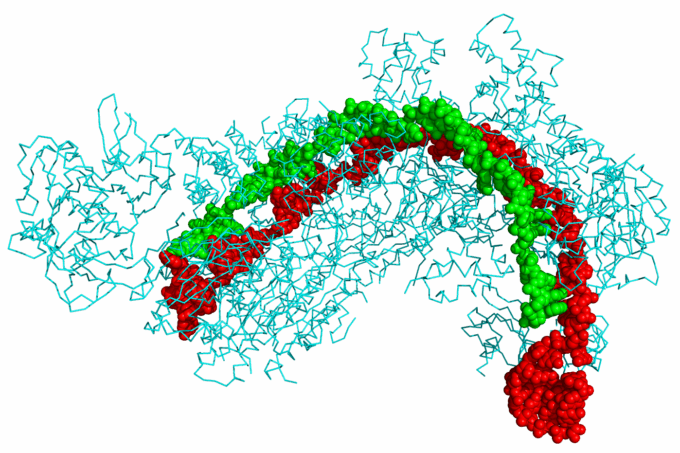
Crystal structure of a CRISPR RNA-guided surveillance complex. Image Source: Boghog – CC BY-SA 4.0

A major medical milestone took place in May 2025, when doctors at the Children’s Hospital of Philadelphia used CRISPR-based gene editing to treat a child with a rare genetic disorder. Unlike earlier CRISPR (Clustered Regularly Interspaced Short Palindromic Repeats) treatments that targeted well-known genetic mutations, this marked a new level of personalized medicine tailored to a patient’s unique DNA. For advocates of biomedical innovation for human enhancement, it was another sign of gene editing’s vast potential, even as ethical, political, and safety concerns remain.

Efforts to alter human genes really began in the 1970s, when scientists first learned to cut a piece of DNA from one organism and attach it to another. The process was slow, imprecise, and expensive. Later tools like meganucleases, transcription activator-like effector nucleases, and zinc-finger nucleases improved accuracy but remained technically complex and time-consuming.

The real revolution came in 2012, when researchers Jennifer Doudna and Emmanuelle Charpentier harnessed CRISPR, a natural bacterial defense system. In bacteria, CRISPR cuts out invading viruses’ DNA and inserts fragments into its own genome, allowing it to recognize and defend against future infections. Doudna and Charpentier showed that this process could be adapted to any DNA, including human, creating a precise and programmable system to target genetic mutations. Together with a protein called CRISPR-associated protein (Cas9), which acts like molecular scissors, it made cutting, modifying, and replacing DNA faster, easier, and cheaper.

Attempts to push the technology forward clashed with regulatory caution and ethical debate, but more than 200 people had undergone experimental CRISPR therapies, according to a 2023 MIT Technology Review article. The first major legal breakthrough came that November, when the UK approved Vertex Pharmaceuticals’ CASGEVY for the treatment of transfusion-dependent beta thalassemia and sickle cell disease. Enabled by advances in CRISPR technology, CASGEVY works by making “an edit (or ‘cut’)… in a particular gene to reactivate the production of fetal hemoglobin, which dilutes the faulty red blood cells caused by sickle cell disease,” explained Yale Medicine. Bahrain and the U.S. granted regulatory approval weeks later, and by mid-2025, the EU and several other countries followed.

CRISPR technology continues to advance, with researchers at the University of Texas at Austin recently unveiling a CRISPR therapy that can replace large defective DNA segments and fix multiple mutations simultaneously, overcoming the limits of traditional one-site editing. “Epigenetic editing,” meanwhile, uses modified Cas9 proteins to turn genes on or off without cutting the DNA, and new CRISPR systems can even insert entirely new DNA directly into cells, bypassing the cell’s natural repair process for larger precision edits.

Alongside academic researchers, major companies are emerging in the gene-editing field. By early 2025, the U.S. had 217 gene-editing companies, compared with a few dozen in Europe (mainly in the UK and Germany) and 30 in China, according to the startup company BiopharmaIQ.

CRISPR Therapeutics, Intellia Therapeutics, and Beam Therapeutics are among the industry’s leaders. A growing network of companies and research teams attended the Third International Summit on Human Genome Editing held in London in 2023, following the first in Washington, D.C., in 2015, and the second in Hong Kong in 2018.

Smaller companies are also innovating. Xenotransplantation—transplanting nonhuman organs to humans—has a long history, but CRISPR technology is giving it new momentum. In 2024, Massachusetts General Hospital transplanted a pig kidney edited with CRISPR-Cas9 technology to remove harmful pig genes and add human ones. The pig kidney was provided by the American pharmaceutical company eGenesis.

The patient survived for two months before dying of unrelated causes, and the company completed another transplant in 2025. Other companies, including United Therapeutics through its subsidiary Revivicor, have begun their own trials in a potential bid to transform the organ donor industry.

CRISPR’s rapid spread has also fueled a DIY biotech movement among transhumanists and biohackers interested in using biotechnology for human enhancement. Nonconventional genetic experimentation, or “garage research,” often outside standard regulation, has become common. CRISPR kits can be ordered online for less than $100, and their small size, relative simplicity, and open-source nature make experimentation and collaboration possible.

“[N]ew technologies such as CRISPR/Cas9 give nonconventional experimenters more extensive gene editing abilities and are raising questions about whether the current largely laissez-faire governance approach is adequate,” pointed out a 2023 article in the Journal of Law and the Biosciences.

One of the best-known figures in this movement is former NASA biochemist Josiah Zayner, who founded The ODIN in 2013 to sell CRISPR kits “to help humans genetically modify themselves.” Early efforts to showcase the scope and potential of this technology proved popular online, and in 2017, Zayner livestreamed injecting CRISPR-edited DNA to knock out his myostatin gene to promote muscle growth.

CRISPR has quickly expanded beyond human experimentation. Mississippi dog breeder David Ishee attempted to get regulatory approval for CRISPR technology to prevent Dalmatians’ tendency to develop bladder stones in 2017, but faced immediate regulatory pushback. The agriculture sector has seen more luck: U.S. startup Pairwise has developed a CRISPR-edited salad mix for American consumers, and in 2024, a multinational biotech consortium began pilot trials of drought-resistant maize in Africa.

China has been a leading force in CRISPR innovation since its inception. In 2014, Chinese researchers were among the first to use CRISPR-Cas9 in monkey embryos, and became the first to edit human embryos in 2015, drawing concern from international observers. In 2018, Chinese researcher He Jiankui altered the DNA of two human embryos to make them immune to HIV. Although the babies were born healthy, the announcement caused international outcry, leading to He’s three-year prison sentence in 2019 and stricter Chinese regulations on human gene editing.

Chinese companies and institutions are actively pursuing international collaboration to solidify their position. In August 2025, ClonOrgan was part of a pig-to-human organ transplant, while other Chinese entities established an early lead in CRISPR-based cancer therapies.

The U.S. and China remain clear leaders in CRISPR research, and certain European countries are also active, but others are also rapidly building capacity. In April 2025, Brazil began the first patient trial of CRISPR gene editing for inherited heart disease, while growth has also been strong in RussiaIndia, and the Gulf States.

Concerns and Inevitability

The rapid adoption of CRISPR technology by private companies, institutions, ideologists, and hobbyists globally has drawn scrutiny. Despite the relatively low cost of developing CRISPR therapies, the actual treatments remain expensive. Social concerns have grown over the idea of “designer babies,” where wealthier families could immunize their children against diseases or select genetic traits, exacerbating inequality.

The He Jiankui case, for example, involved deleting the CCR5 gene in embryos to prevent HIV, but may have also improved their intelligence and memory due to the link between CCR5 and cognition.

Safety concerns also abound. Unintended downstream mutations, or “off-target effects,” can cause genetic defects or chromosomal damage, and in 2024, Swiss scientists documented such issues, highlighting the risks of heritable changes. Even DNA sequences once thought nonessential may have important functions, and edits could have unforeseen consequences for human evolution.

In 2015, a group of leading scientists and researchers proposed a global moratorium on heritable genome edits, yet research has pressed on. Sterilized, genetically modified mosquitoes were released in Africa to test population control in 2019, and in 2020, Imperial College London demonstrated that a “modification that creates more male offspring was able to eliminate populations of malaria mosquitoes in lab experiments.”

As with all emerging technologies, CRISPR-based therapies are resulting in major legal disputes. The Broad Institute, for example, holds patents for using CRISPR in human and animal cells, while UC Berkeley owns the original test-tube version, resulting in a patent battle settled in 2022. “The tribunal of the U.S. Patent and Trademark Office (USPTO) ruled that the rights for CRISPR-Cas9 gene-editing in human and plant cells belong to the Broad Institute of MIT and Harvard, not to Berkeley,” stated an article on the Cal Alumni Association website.

Biosecurity and weaponization concerns also constrain greater CRISPR adoption. Former U.S. Director of National Intelligence James Clapper repeatedly warned that genome editing, including CRISPR, could be used as weapons of mass destruction. Its ease of use has continued to raise fears of manipulating pathogens or making populations resistant to vaccines and treatments, as well as the potential to enhance cognitive or physical abilities in soldiers.

Still, the technology’s promise is too significant to be overlooked, as reflected by the attention it has received from Trump administration officials. Vice President J.D. Vance spoke positively about the CRISPR sickle cell treatment shortly after being elected. Other administration figures have financial ties to the industry, with disclosures showing Robert F. Kennedy Jr.’s plans to divest holdings in CRISPR Therapeutics AG and Dragonfly Therapeutics to avoid conflicts of interest before taking office.

New CRISPR tools, like base editing and prime editing, highlight the technology’s ongoing potential, and in 2025, Stanford researchers and collaborators linked these tools with AI to further augment their capabilities. While consolidation among companies and institutions grows, open-source labs may help drive a new frontier of innovation that heavily regulated business and bureaucratic organizations struggle to achieve.

CRISPR co-inventor Jennifer Doudna wrote in her 2017 book A Crack in Creation, “Someday we may consider it unethical not to use germline editing to alleviate human suffering.” With the potential to cure more diseases, some argue there is a moral obligation to reduce avoidable suffering even amid ethical objections. While companies have enormous financial incentives to bring these therapies to market, government oversight, private competition, and the eventual expiration of CRISPR patents, which allow for wider access and lead to lower costs, will be needed to ensure benefits are widely shared as they unfold.

Marburg virus disease confirmed in Ethiopia amid regional instability

Benjamin Mateus


A view of Addis Ababa, the capital of Ethiopia, Sept. 9, 2025. [AP Photo/Brian Inganga]

The first documented outbreak of Marburg virus disease (MVD) in Ethiopia was confirmed this month in Jinka, a market town in the South Ethiopia Regional State that functions as a commercial hub with active cross-border movement from South Sudan and Kenya. A suspected case of viral hemorrhagic fever was initially reported to Africa Centres for Disease Control and Prevention (CDC) on November 12, 2025. Ethiopia’s Ministry of Health confirmed MVD on November 14 following molecular testing at the Ethiopia Public Health Institute (EPHI). Sequencing indicated that the virus is genetically similar to previously identified East African strains.

As of November 14, 2025, 9 cases had been identified among residents of Jinka. Local reports indicate that the index case died roughly two weeks before the outbreak was formally recognized, facilitating secondary transmission through close contact and traditional burial practices.

Health officials reported 6 deaths—including a police officer, three religious leaders, and a banker—all linked to the initial case through contact tracing. Despite praise from the World Health Organization for the swift confirmation of the outbreak, the full extent remains uncertain. Ethiopian media reported that regional health officials were instructed not to disclose information, and woredas (district-level administrative units) and zones were advised against releasing updates. As a result, the true case count, death toll, and clinical outcomes remain only partially documented.

The Marburg virus is a highly pathogenic RNA virus in the same family as Ebola virus. Its natural reservoir is the Egyptian fruit bat (Rousettus aegyptiacus). Human infection occurs through exposure to infected animals and subsequently through direct contact with bodily fluids, contaminated materials, or unsafe burial practices. Reported case fatality rates range from 24 to 90 percent, with an average of about 50 percent.

This negative stained transmission electron micrograph (TEM) depicts a number of filamentous Marburg virions, which had been cultured on Vero cell cultures, and purified on sucrose, rate-zonal gradients. Note the virus’s morphologic appearance with its characteristic “Shepherd’s Crook” shape; Magnified approximately 100,000x. [Photo: CDC/ Dr. Erskine Palmer, Russell Regnery, Ph.D.]

The disease clinically presents after an incubation period of two to 21 days, most commonly between five and 10 days. Early symptoms are non-specific and resemble influenza: sudden high fever, malaise, severe headache, myalgia, and fatigue. Around the third day, patients often develop severe watery diarrhea, vomiting, abdominal cramping, and nausea. Hemorrhagic manifestations—including bleeding from the gums, nose, and vagina and fresh blood in vomit and stool—typically appear about one week after symptom onset. In severe cases, multi-organ dysfunction, shock, and death follow eight to nine days after symptoms begin, often due to profound blood loss.

MVD is a zoonotic disease. Primary infections typically arise from prolonged exposure to bat-inhabited caves or mines where the virus is present in bat saliva, urine, and feces. Human-to-human transmission then drives outbreaks, especially in healthcare settings where fomite transmission is common. Sexual transmission has been documented, with viral antigens detected in semen. Current evidence does not support airborne spread.

Jinka, the administrative center of the Ari Zone and gateway to the Lower Omo Valley, sits at the crossroads of a region grappling with severe political instability. Recurrent armed conflict and civil unrest in Amhara, Oromia, and Gambella have disrupted humanitarian access, strained basic health services, and eroded the state’s capacity to detect and contain emerging infections. These pressures converge with widespread economic distress, mass displacement, and simultaneous outbreaks of malaria, cholera, and measles. An estimated 21.4 million people require humanitarian assistance. Jinka’s proximity to South Sudan further heightens the risk of cross-border spread, given South Sudan’s profound state fragility and near-total health system collapse.

The wider African region has seen a marked increase in both the frequency and geographic spread of MVD outbreaks. This acceleration has coincided with expanded international trade, intensified commercial activity, and widespread political turmoil. These forces contribute to human encroachment into ecologically sensitive habitats, population displacement, environmental disruption, and weakened surveillance systems—conditions ripe for zoonotic spillover and rapid viral spread.

Historically, the Marburg virus emerged sporadically. The first known outbreak in 1967 in Germany and the former Yugoslavia produced 31 cases and 7 deaths, traced to imported African green monkeys from Uganda. Cases occurred in 1975 in South Africa (linked to exposure in Zimbabwe) and in two outbreaks in Kenya during the 1980s associated with bat-inhabited caves. A major resurgence in the mining town of Durba in the Democratic Republic of the Congo from 1998 to 2000 resulted in 154 cases and 128 deaths, with an average interval of about eight years between outbreaks from 1967 to 2000.

A profound shift began in the twenty-first century. The 2004–2005 Angola outbreak remains the largest on record, with 252 cases and 227 deaths. Uganda experienced three outbreaks between 2012 and 2017. From 2020 to 2025, seven outbreaks occurred—including first-ever events in Guinea (2021), Ghana (2022), Equatorial Guinea (2023), Tanzania (2023 and 2025), Rwanda (2024), and Ethiopia (2025). The interval between outbreaks has collapsed to less than one year, placing the 2020s on track to surpass all previous decades combined. This surge reflects fundamental shifts in ecology, surveillance, and the socioeconomic crises reshaping the African continent.

The Egyptian fruit bat’s range spans the Lake Victoria basin and much of East and Central Africa. Economic deprivation, displacement, and conflict push communities into closer contact with bat habitats. High-risk livelihoods—particularly artisanal mining in bat-inhabited caves such as the Goroumbwa Mine in the Democratic Republic of the Congo and the Kitaka Mine in Uganda—have been repeatedly linked to outbreak origins. Economic marginalization also drives reliance on wildlife hunting and consumption (“bushmeat”), frequently implicated in filovirus emergence.

Armed conflict further amplifies spillover risk by destroying healthcare systems, driving population displacement into marginal environments, disrupting water and sanitation infrastructure, and eroding trust in public authorities. The relationship is reciprocal: conflict fosters disease emergence, while outbreaks destabilize already fragile regions.

Epidemiological studies show conflict settings carry nearly a two-fold increased risk of reported filovirus cases, including Ebola in the Democratic Republic of the Congo and Guinea. The current outbreak in Ethiopia exemplifies this convergence of ecological, economic, and political vulnerabilities. Meanwhile, intranational and cross-border travel along trade corridors linking Uganda, Tanzania’s Kagera region, Burundi, and Rwanda facilitates rapid spread following any spillover event.

Although no licensed Marburg vaccine exists, the Sabin Vaccine Institute, in collaboration with the US National Institutes of Health Vaccine Research Center, has developed a promising candidate that uses a chimpanzee adenovirus vector. Phase two trials are underway in Uganda, Kenya, and multiple US sites, with additional emergency deployment in Rwanda’s 2024 MVD outbreak, where more than 1,700 doses were administered within days, largely to healthcare workers.

While the development of effective countermeasures marks an important advance, vaccines alone cannot overcome the political violence, economic pressures, environmental disruption, and global inequities that continue to drive Marburg’s emergence.

Stellantis and its European Opel car plants—closure by installments

Marianne Arens


Stellantis is responding to declining sales figures with attacks on its production workers. At the Opel plant in Eisenach, where the Grandland SUV is built, the assembly lines came to a standstill again two weeks ago. For the second time in a month, 1,100 employees were forced to take compulsory days off in October.

Until the end of 2022, the Opel Insignia was produced in Rüsselsheim [Photo by GM Company / CC BY-NC 2.0]

They are not the only ones: Eisenach is one of six European plants where management halted production temporarily this autumn. In Poissy near Paris, assembly of models such as the Opel Mokka, DS2 and DS3 was suspended for more than two weeks; assembly lines also stopped in Zaragoza (seven days), Tychy in Poland (nine days), Madrid (14 days) and Pomigliano d’Arco near Naples (two weeks).

Over a year ago, in October 2024, the then Stellantis CEO Carlos Tavares told leading French financial daily Les Echos that Stellantis was explicitly not ruling out plant closures. The CEO—since replaced by Antonio Filosa—stated in the interview that, because of an intensifying tariff and trade war in Europe, up to seven plants could be affected. This could mean the destruction of up to 25,000 jobs, 10 percent of the group’s global workforce.

Since then, Stellantis workers in Italy, France, Spain, Germany and Britain have been acutely threatened by job cuts and plant closures. Meanwhile, the well-paid trade union officials, who falsely claim to represent workers’ interests, are enforcing these attacks while managers and shareholders enrich themselves.

When the Opel plants were transferred from General Motors to PSA in 2017, the WSWS warned:

IG Metall and its works council reps play a central role in enforcing cost-cutting measures. They have been involved in the restructuring process from the beginning. Their aim is to prepare the newly created group for the upheavals in the European car market. In times of trade war, the unions support mergers and acquisitions that allow “their” companies to retain only the profitable parts of production and cut tens of thousands of “excess capacities.”

Two years later in 2019, PSA merged with Fiat Chrysler to form Stellantis, now the world’s fourth-largest and Europe’s second-largest carmaker (after VW), which includes Opel, as well as Abarth, Alfa Romeo, Citroën, DS Automobiles, Dodge, Fiat, Jeep, Lancia, Maserati, Peugeot and Vauxhall. Since then, the WSWS warning has been completely confirmed.

The strategy of IG Metall and the other unions in Europe—to subordinate workers’ interests to “competitiveness” and a protectionist nationalist policy—has in no way slowed the decline. On the contrary. Year after year, employees have given up wage increases, Christmas bonuses, and holiday pay. Nevertheless, thousands of jobs have been destroyed and entire plants closed, such as the Opel plant in Aspern in July 2024 and the Vauxhall plant in Luton in March 2025.

The threat of closure now hangs over Opel’s Rüsselsheim headquarters in Germany as well. The toolmaking and vehicle development departments have already been shut down. The Rodgau-Dudenhofen test track near Rüsselsheim, which operated for almost 60 years and was widely known across Europe, ceased operations at the end of October. Its 70 kilometres of specialised test tracks were operated most recently by the supplier Segula, which had taken over Opel’s ITEC technical development centre that once employed 7,000 researchers and engineers. Segula itself is now insolvent.

In December 2024, production in Rüsselsheim was cut from two shifts to one. Where once 40,000 employees worked around the clock in three shifts, there are now about 1,500 production workers assembling the Astra and DS4—and nearly half of them are temporary employees, who can be dismissed from one day to the next. There are repeated forced shutdowns with short-time work, followed by overtime and Saturday shifts.

In Rüsselsheim, everyone is asking the anxious question: How much longer before the plant closes? In July, the works council and IG Metall agreed to an aggressive programme of “voluntary” severance packages to implement further job cuts. All measures are carried out explicitly “in consultation with IG Metall and the Opel works council.”

The strategy of IG Metall and the works council has proven disastrous: The bureaucrats have neither opposed the creeping decline nor even slowed it—rather, they have actively organised it. At the same time, IG Metall is preventing any effective struggle by dividing workers into permanent and temporary employees, and into those still employed and those already dismissed.

Particularly destructive is the division and pitting of workers of plant against plant and across borders at a time when a Europe-wide, joint fight for every job is urgently necessary. Works council reps and union bureaucrats do not represent workers’ interests but those of management, shareholders, big business and the government. IG Metall in Germany now openly supports the pro-war policy of the governing coalition of the Christian Democrats (CDU/CSU) and Social Democrats (SPD) in Berlin.

While new cars pile up unsold and Stellantis complains of an 8 percent drop in European sales, Opel workers can no longer afford the cars they build. Now, they are also expected to shoulder the costs of the global tariff war and competition from East Asia, while the government pushes through a war budget.

These autoworkers face the reactionary MAGA policies of the Trump administration, which United Auto Workers leader Shawn Fain also supports. On October 14, Stellantis announced it would abandon its plan to produce a Jeep model in Canada due to Trump’s tariff policy and instead revive production at a closed US plant in Belvidere, Illinois. This puts workers in both countries under pressure.

Neither the UAW nor its Canadian counterpart Unifor did anything to stop the layoffs. Like IG Metall, these unions act as industrial police to enforce the economic war on behalf of the financial oligarchy. For example, UAW President Fain praised Trump’s tariffs because they had supposedly “brought thousands of good union jobs back to the USA.”

Striking Jeep workers with Will Lehman (third from right) on the picket line in Toledo, Ohio in 2023.

Mack Trucks worker Will Lehman, a member of the International Workers Alliance of Rank-and-File Committees (IWA-RFC), has clearly rejected this. He has called on Canadian and American workers alike to unite in defence of every job.

Lehman explained: “Our greatest strength is our international unity. The only way to defend our jobs is through cross-border solidarity in struggle.” He urged all workers to build action committees in every workplace, “controlled democratically by workers themselves. This can only succeed if it is independent of the UAW bureaucracy and the two parties of big business, which offer only poverty, war and dictatorship.”

Independent action committees must also be built in Rüsselsheim, Eisenach and at all Stellantis plants. In Germany—once the “export world champion”—the entire automotive and supplier industry is severely affected, which means Stellantis workers will find thousands of allies. The corporations have only one answer to the crisis: job cuts. Of the remaining 716,000 employees in this sector, one in four jobs is threatened. At Volkswagen, Mercedes, Ford, Audi, Bosch, ZF, Schaeffler and elsewhere, managers rely on IG Metall to implement the layoffs.