9 May 2020

Brazil’s Bolsonaro demands return to work as health care system collapses

Tomas Castanheira

The rapidly spreading coronavirus pandemic is reaching catastrophic dimensions in South America, with more than 250,000 cases and some 13,000 deaths recorded. In the countries with highest rates on the continent, Brazil, Peru and Ecuador, the contagion and death curves are growing rapidly.
Brazil accounts for more than 140,000 officially confirmed cases and 10,000 deaths. But for weeks, researchers have been warning that the real numbers are far higher and are being concealed by one of the lowest testing rates on the entire continent.
A recent study, published by the University of São Paulo’s School of Medicine, points out that the country may have more than 2 million people infected, making it potentially the next global epicenter of the pandemic.
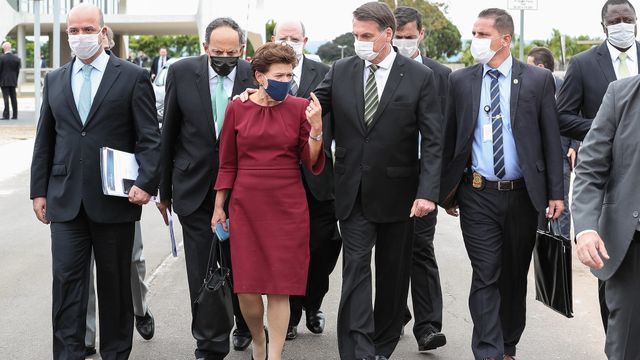
Bolsonaro marches with ministers and businessmen on Supreme Court [Credit: Planalto/Marcos Correa]
And even this frightening number may be an underestimation of the real toll. The projection made by the researchers is based on the total number of deaths attributed to COVID-19, “although there are also reports of underreporting of deaths,” the study states, which would make the real numbers substantially higher.
This situation manifests itself in the collapse of health care systems and morgues in several Brazilian cities, producing a macabre reenactment of scenes recorded in Guayaquil, Ecuador a month ago.
In cities like Manaus, the capital of Amazonas, and Belém, the capital of the northern state of Pará, authorities no longer know what to do with the dead. Images released last weekend show a line of dozens of hearses parked in front of the Legal Medicine Institute (IML) of Belém. With the IML crowded with corpses, families wait for days for the release of bodies of their loved ones, which are in some cases being kept under the sun and rain.
At least four states—Roraima, Pernambuco, Rio de Janeiro and Ceará—and eight capitals—Manaus, Recife, Rio de Janeiro, Fortaleza, Boa Vista, São Luís, Belém and São Paulo—already have more than 90 percent of their ICU beds occupied, Folha de São Paulo reported in its Thursday edition. A number of other states and cities are moving rapidly in the same direction.
This is the result of the malign neglect of all of Brazil’s governments, which failed to prepare for an entirely predictable situation. The deepening crisis has been highlighted by strikes and demonstrations on the part of nurses all over the country, who, besides demanding personal protective equipment, have denounced the extremely precarious conditions in the hospitals.
With the virus beginning to spread in the poor neighborhoods of large cities, the Brazilian working class is faced with even bleaker prospects.
In São Paulo, the country’s largest city with the largest number of infections, the 20 poorest districts had nearly a 50 percent increase in cases between April 17 and 24, while in the 20 richest areas the increase was about 20 percent. Brasilândia, a crowded district of the city with more than 260,000 inhabitants, has the most deaths—more than 100—and no hospital.
The health disaster is merging with growing misery, which has been exacerbated during the pandemic by wage cuts, layoffs and the loss of income by countless thousands of “informal” workers.
Its effects are expressed in numerical terms in the reduction of between 50 percent and 100 percent of the income of most families in the so-called classes D and E, which represent the 58 million poorest Brazilians, with per capita income below R$500 (less than US$100) per month. Scenes of workers spending the night in long lines to get emergency aid from the government, amounting to only R$600, make clear the dimension of the social crisis.
But this catastrophe for the overwhelming majority of the population represents no obstacle to the plans of the ruling class. No consideration of human costs can halt their frenetic drive for profit. In fact, they intend to exploit the economic despair of the working class as a weapon to force a premature return to work.
Brazil’s fascistic President Jair Bolsonaro, who has been painted by the national and international media as a lunatic because of his dismissal of the coronavirus threat, is emerging as a sober and consistent representative of the criminal interests of the entire capitalist class.
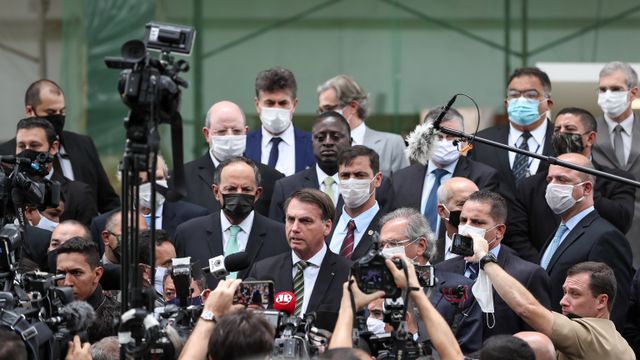
Bolsonaro’s press conference after march on Supreme Court [Credit: Planalto/Marcos Correa]
Accompanied by his ministers and a group of businessmen, he led a march Thursday across the Praça dos Três Poderes (Three Powers Square) in Brasília to the Federal Supreme Court (STF). He personally delivered an appeal, on behalf of the national bourgeoisie, for the court to immediately order an end to all quarantine restrictions on economic activity throughout the country.
This week, four Brazilian states are entering supposed lockdowns, with very lax rules, allowing a series of economic activities to continue. Even this is too much from the point of view of capitalist interests. The direction should be exactly the opposite, making the containment measures even more flexible.
Bolsonaro appealed to Dias Toffoli, president of the STF, for a review of the decision that gives local governments the authority to restrict activities, stating that the states “have already gone too far.” He made it clear that he will not respect any impediment, announcing that he is signing decrees defining a series of industrial activities as essential during the pandemic.
Among the industrialists who accompanied him were representatives of the associations of the chemical, machinery and equipment, construction, electrical and electronic and textile industries, of vehicle manufacturers, foreign trade, and other sectors. They expressed their concern that the worldwide resumption of economic operations, including in Asia, threatened the competitive edge of Brazilian companies. According to them, all the conditions for the general resumption of production in the country would be ready.
Outside, a fascist group supporting Bolsonaro was pressing for the shutdown of both the Congress and the STF. Financed and assisted by cadres within his government as deputies loyal to him in the Congress, they have announced that they are training their members in “Techniques of non-violent revolution and civil disobedience, techniques of strategy, intelligence and investigation, organization and logistics of counter revolutionary movements.”
In delivering his demand to the supreme court, Bolsonaro made an appeal on the part of the entire ruling class, warning of the danger of an uprising of the working class.
“We have a much greater good than life itself, which is freedom,” he said. “If the economic question continues in the same way in which it is going, [we could see] looting, see the popular demonstrations that we’ve seen in the past in situations not even close to the present one ... The economic measures taken by [the Minister of Economics] Paulo Guedes ... the emergency aid of 600 reais, among others, is keeping the population in a situation of balance, of reason above emotion.”
But an open explosion of class struggle in Brazil is inevitable.
The forced return to economic activity will mean the death of thousands upon thousands of people. And the working class knows this. The wildcat strikes that have broken out since March in opposition to the deadly conditions in the workplaces are only an anticipation of the resistance that the working class will mount to the demands of the capitalists.
This resistance will gain an ever-broader character and find support in an international movement of the working class, which in every country is facing the same murderous pressure of capitalist governments for a return to work.
Only the independent political movement of the working class, repudiating any form of nationalism, is capable of defeating the growth of fascism promoted by the ruling class and its state.
The objective situation requires workers to organize themselves to govern society. It is necessary that the immense wealth concentrated in the hands of the capitalists be expropriated and re-directed to finance, in the first place, health care for and the economic survival of the broad masses of working people.
The entire health care system, including the facilities owned by private companies, must be made available to the entire population, and managed by the health care professionals. And the decision as to what production is necessary and under what conditions it will be carried out must be made by the workers themselves.

Greece comes out of lockdown and plans resumption of tourism

John Vassilopoulos

A staged lifting of the lockdown measures imposed by the Greek government early in March in response to the COVID-19 pandemic began May 4.
In a televised address a few days before, New Democracy Prime Minister Kyriakos Mitsotakis announced that, as of May 4, citizens will no longer need to have documentary evidence justifying any outing, although travel outside of the prefecture of residence still remains restricted.
The gradual opening of retail stores will take place over a two-week period, except for shopping malls, which will open again on June 1 along with bars, restaurants and hotels. High schools will gradually start to open on May 11 starting with the senior year, while primary and nursery schools will remain shut.
With 2,691 recorded cases and 150 deaths, Greece’s relatively low death toll is largely due to the prompt imposition of the lockdown measures, which were enforced earlier than other European countries. Before a death had been recorded in the country, carnivals were cancelled at the end of February. Schools were shut March 10, while commercial businesses except for supermarkets, bakeries and grocery stores were shut in the week that followed.
The lifting of the measures will undo this advantage, but is of crucial importance to the Greek ruling elite. According the International Monetary Fund’s (IMF) latest projections, the Greek economy is set to contract by 10 percent as a result of the pandemic—an annual drop bigger than any seen during the austerity imposed during the previous decade at the behest of the European Union (EU) and IMF, which saw the economy contract by nearly 25 percent.
On May 5, Mitsotakis held a teleconference with bank executives to discuss plans to provide €16 billion liquidity at extremely low interest rates to Greek businesses, either directly by the government or by the banks, through a series of interest rate subsidies and state guarantees. “We must absorb the shock waves as well as we can and set the basis for a dynamic re-start of the economy,” he said.
This credit line to Greek business is inextricably linked with the lifting of the lockdown since it must be supported by the extraction of surplus value from the working class.
Greek workers, like their counterparts internationally, are being told to accept a “new normal” of living with and dying from the virus. “Some will undoubtedly get sick,” declared Mitsotakis. “It is down to us to make sure that these are as few as possible and they receive the care they need. All who close their house door to go out opens at the same time the door of responsibility.”
While placing the burden of keeping safe on the working class, the government is doing next to nothing to prop up the Greek health service, which has been decimated by a decade of austerity. The health budget is around 50 percent of what it was in 2009. Just 5 percent of GDP is spent on public health care, 2 percent lower than the EU average. Greece had only 560 intensive care unit (ICU) beds as the pandemic began. In 2012, as the austerity programme began to intensify, Greece had just six ICU beds per 100,000 inhabitants. This compared to 29.2 in Germany. In the intervening eight years, Greece’s ICU bed availability has no doubt worsened.
With a rate of just 8,352 COVID-19 tests per 1 million of its population, Greece has one of the poorest testing regimes in Europe. Any claims by the government that they are well equipped to carry out effective contact tracing are unfounded.
At pains to portray the government as proceeding “cautiously,” Mitsotakis stated that “our plan for the next two months [to lift the lockdown] is extremely detailed and refined.” Despite this, many in Greece’s scientific community have voiced concerns, especially over the opening of schools.
In an interview on Open TV the week before the lockdown was lifted, Athina Linou, a professor of epidemiology at Athens University, stated that “epidemiologically, the opening of schools is a danger whose magnitude we don’t know.” She made clear “there is [no scientific study] that really shows whether or not children transmit the virus,” adding that the decision to open schools is “partly scientific and partly political based on socioeconomic criteria.”
The truth is that the decision to lift the lockdown was based entirely “on socioeconomic criteria,” with any references to science made only to add a veneer of legitimacy. This is evident when one notes the abrupt change in narrative by Sotiris Tsiodras, the infectious disease specialist appointed as the Health Ministry spokesperson to give daily briefings on the COVID-19 spread in Greece.
Only a few weeks ago, Tsiodras was warning against the use of masks within the community outside of a health care setting. As part of the lifting of the lockdown guidelines, the use of masks has now been made compulsory on public transport, in lifts, hospitals, doctors surgeries and diagnostic centres, with Tsiodras now stating: “The use of masks will happen mainly to prevent the transmitting of the virus to others when we have mild or no symptoms.”
In other words, the government is assuming that many, many people infected with COVID-19 will come into daily contact with the noninfected, with paper masks the only guard against transmission of the virus. Moreover, each mask will cost around one euro, that is around €30 per person per month with just one day’s use! If one considers that nearly three quarters of all workers earn less than €1,000 a month, with almost a million workers earning just €200 to €500 a month, most people will either reuse masks day after day or rely on homemade cloth ones, which Tsiodras concedes are not as safe as the disposable kind.
Another area where Tsiodras has begun to deviate from WHO guidelines is with regard to immunity after recovering from a COVID-19 infection. While the WHO insists that “there is currently no evidence that people who have recovered from COVID-19 and have antibodies are protected from a second infection,” Tsiodras has openly disagreed with this assessment. Instead he has stated that there exists “a second position being heard from scientific groups of recognised standing that based on the experience we have with coronaviruses, there will be protection for at least one year.”
It is not hard to see the commercial interests driving this assessment. Nine Southern European EU members, including Greece, held a videoconference on April 27 where they called for the establishment of a “COVID-19 passport” within the EU, based on antibody tests being developed to aid the tourist industry, upon which all southern EU countries heavily rely. While Tsiodras himself has openly expressed caution stating, “It is still too soon to be talking about tourism,” citing the risk that the virus could be introduced from a country where the outbreak is flaring up, the fact that he has questioned the WHO’s warnings on immunity has given the elite the green light to open up the country to tourists this summer.
In this regard, Tourism Minister Charis Theocharis has openly touted Greece’s low incidence of COVID-19, stating, “We expect tourists from Europe and in this context our country has an advantage, as out of all Mediterranean regions we are the safest.”
Equally enthusiastic was Mitsotakis, who in a recent interview on CNN stated that as long as the specific protocols are established at the European level then “best case scenario Greece will be open for tourism July 1 and we are working towards that.”

British government forced to partially backtrack on ending lockdown

Robert Stevens

Boris Johnson’s Conservative government is facing a mounting political crisis over its plans to impose a mass return to work.
Last week, the government finalised plans for an end to the lockdown following months of talks with business leaders and the trade unions. So determined was the government to press forward with its return to work strategy, that it jettisoned proposals from the Trades Union Congress advising it to implement a few token protective measures—to be overseen by the unions—to give the impression it was concerned about public safety.
By the middle of the week, the right-wing media were cock-a-hoop, trumpeting the plans by the government to drop its “stay home” slogan, with the pro-Tory Daily Telegraph celebrating on its front page Thursday, “‘Stay home’ advice to be scrapped.”
Directing the population to this Sunday evening’s statement on the crisis by Johnson, they confidently forecast that he would present a “roadmap,” meaning that the following day would effectively represent the end of the lockdown and “unlock the UK economy.”
The Sun’s Thursday front page declared “Happy Monday” would mean the “easing of lockdown restrictions.” The Daily Star proclaimed “Magic Monday” next to the date May 11. The Daily Mail read, “Hurrah! Lockdown freedom beckons,” and the Daily Express, “First steps to freedom.” The Labour Party supporting Daily Mirror led its front page with, “Five steps to end the lockdown—staggered easing plan revealed ... from Monday to October.”
The ruling elite’s plan to end the lockdown as soon as possible ran up against widespread opposition among workers to such a criminally dangerous policy. Under conditions in which opinion poll after poll has registered overwhelming support for maintaining the lockdown, the government ended up politically overexposed by the triumphalism of the media.
Despite Johnson’s claim that the UK is “past the peak” of the pandemic “and on the downward slope,” millions know these are barefaced lies. Every day, hundreds of new deaths and thousands of new coronavirus cases are announced. Yesterday saw another 626 deaths, to bring the UK’s total to 31,241. The 4,649 new cases brought the total infected to 211,364. Just in the days since May 1, there have been 40,111 new cases of coronavirus announced and 4,470 deaths. In the last three days, as the back to work offensive was stepped up, there were 16,374 cases and 1,814 deaths.
The UK’s death toll, even according to the manipulated figures put out by the government, is now more than 1,000 higher than Italy. The 243 deaths announced by Rome yesterday brought its death toll to 30,201—the third country in the world, after the United States and the UK, to surpass 30,000 deaths.
The opposition among millions of workers and throughout the population was expressed in Thursday’s top trending hashtags #KeepTheLockdown and #extendthelockdown.
One post read, “The British tabloids have massively misjudged the public mood. We are hurt, we are grieving, we are struggling, we are angry, we are tired & we are sick of being told everything is alright by a useless government & a few tax avoiding billionaire media moguls. #KeepTheLockdown.”
The rush to enforce a back-to-work movement has no scientific basis, with a number of prominent scientists establishing an independent committee this week challenging the government’s COVID-19 response. On Thursday, John Drury, professor of social psychology at the University of Sussex, told the Guardian, “The right wing media’s language and premature celebration of the supposed end of lockdown is dangerous and irresponsible framing of what might be about to happen.” He warned that the messaging was at odds with the continued “need to maintain the handwashing and physical distancing that will still be needed.”
Forced to adapt in the face of public anger, Johnson told Thursday morning’s Cabinet meeting that the lockdown would have to remain in place, with only minor alterations to be considered. The damage limitation exercise saw Johnson’s official spokesman tell the media, “The prime minister said that in considering whether there could be any easement to the existing guidelines, we are not going to do anything that risks a second peak. We will advance with maximum caution in order to protect the NHS and to save lives.”
Speaking at the Downing Street press conference later Thursday, Dominic Raab formally extended the lockdown by a further three weeks and said that any changes to the lockdown to be announced by Johnson Sunday would be “modest, small, incremental and carefully monitored.”
By Thursday evening, nothing remained of the headlines celebrating next Monday as a day of liberation. The Mail ’s headline declared, “Sit tight and wait for Boris,” writing, “A poll for MailOnline has highlighted the challenge ‘coronaphobia’ is likely to pose to the government as it tries to get the country up and running again.” The poll found that “62 percent of Britons are more worried about the effects of the draconian curbs ending too early…” It noted with concern, “Around seven in 10 believe bus and train drivers, teachers, and medical staff should have the right to refuse to go back to work, even if the government says it is safe. Some 60 percent say the state should keep covering a proportion of people’s wages even if in theory they should be able to resume their jobs.”
The retreat by Johnson prompted an intervention by Sajid Javid, chancellor until his resignation in February. In his first major interview since resigning, he insisted that the needs of the banks and big business had to win out. With the Financial Times pointing to the Bank of England’s prediction that the UK has entered its deepest recession in 300 years, Javid said he was “worried about the health of our banks.” He advised “some kind of support for banks with some of the worst-performing loans and try to help the banks in that way, so that they can in turn help the economy and lend.”
Doffing his cap to the views of scientists, his main message was to “think carefully about the impact on the rest of society and the economy and jobs and wider social impacts and that does mean, I think, that when it comes to opening up you want to go as far and as quick as you can.”
Indicating the necessity to step up the exploitation of the working class, he added, “Many things will change as a result of this crisis. … one thing that shouldn’t change is our understanding of the economic model that leads to the highest growth rate possible which is still going to be a free-enterprise, low tax, competitive economy.”
This week’s events reveal the extent to which Johnson’s is a government of acute crisis. It was put in office by Jeremy Corbyn’s Labour Party and remains in office only due to being propped up by the trade union bureaucracy and Labour party under Sir Keir Starmer.
For five years Corbyn, in alliance with the trade unions, suppressed every struggle of the working class against the Tories and kept the Blairites firmly ensconced in the party. Starmer, who was assured of Corbyn’s loyalty, is pledged to working constructively with the Tories throughout the pandemic in a de facto government of national unity.

Germany reopens schools, endangering thousands of lives

Marianne Arens

The premature relaxation of measures to combat the coronavirus pandemic will quickly lead to new infections and deaths. Nevertheless, almost all federal states have decided to gradually resume school operations.
The reason is not scientific knowledge, but rather pressure from industry: to force workers back into production, schools must also be reopened.
At present, all the leading state politicians are soothingly promising that the relaxation would be carried out responsibly and that hygiene and distance rules would be observed. For example, Thuringia’s state premier Bodo Ramelow (Left Party) declared on Wednesday, “Our proviso is: get back to everyday life,” but if there were another major outbreak, “Thuringia is well prepared to react.”
Meanwhile, enormous anger and concern is proliferating among those affected because the schools are being misused as experimental laboratories and that children, teachers and parents are being used as test subjects in the interest of profits. A survey conducted by the news programme “Hessenschau” on Thursday showed that despite the non-stop propaganda, almost 41 percent thought the relaxation of the lockdown was too early, and only 18 percent thought it was right.
Thousands of teachers are returning with extreme reluctance to schools, where there are serious shortcomings in the implementation of hygiene and protective regulations. The state education ministries are forcing them back to teaching, even against their will. At the same time, they are returning to schools where neglect, wage dumping and lack of staff had already led to strikes and protests before the pandemic.
In Hesse, schools began teaching again as early as April 27. This takes place under staggering conditions. Even teachers over 60 can teach locally, and those who are younger but belong to a risk group must prove this by producing a medical certificate, even if they are severely disabled. Daily cleaning has to be done in the evenings by (mostly private) cleaning companies, which have to clean whole schools with few personnel under great time pressure and for low wages.
In Frankfurt am Main, a teacher’s urgent lawsuit was rejected. Referencing the fact that there was no adequate hygiene plan and no adequate occupational health and safety plan at her Frankfurt elementary school, she had filed a legal complaint against being compulsorily sent back to work, something she cannot avoid as a civil servant.
Her application was rejected because she could “not expect … to encounter zero risk at the school with a hygiene plan that is polished down to the last detail.” The judges did not even consider it necessary to examine the conditions at the school in question in a local visit.
This was the second such case in just a few days. Shortly before, the Giessen Administrative Court also rejected the urgent legal application of the deputy headmistress of a primary school in the district of Marburg Biedenkopf. She had demanded that an occupational health and safety inspection by a medical or virologic specialist take place before classes could begin, as the coronavirus pandemic posed “incalculable health risks.” The judges hastily dismissed the case.
“Irresponsible” was the response of German and history teacher Frederik, in an interview with the World Socialist Web Site. “These teachers are basically and absolutely right,” said the educator, who teaches at a secondary school in the Gross-Gerau district. “Everyone who works at a state school can confirm that the hygiene plans cannot realistically be implemented.”
Frederik also reported that the oldest students had been back in school since April 27 to prepare for their final exams. This was almost a third out of a total of 600 pupils, so that each class could always be divided into two adjacent rooms. But what will happen when more children return was completely uncertain. “The more children who come, the less likely it is that the rules will be observed,” he said.
Several scientists have confirmed this assessment.
On the “Hessenschau,” Frankfurt virologist Martin Stümer explained that the focused loosening of the rules went too far for him. “We are in danger of losing control: That’s exactly what the virus needs.”
Virologist Christian Drosten also called reopening schools “risky.” Speaking on broadcaster NDR’s “Coronavirus Update” on Tuesday, May 5, he sharply criticized the political pressure that “some politicians” exerted on scientists to provide suitable arguments for the relaxation.
For example, the director of a research institute was told, “You are the boss of the whole thing here. We need numbers now!” Then there was a great danger that half-finished studies are published, which will be prepared for the public by the press office, i.e., by journalists and not scientists. “And there is already misinformation in the world,” he said. If it is now disseminated that “Science has found that schools can be opened,” then this is wrong and misleading and could cost many lives.
Drosten stressed that children of all ages and even infants can accumulate as many infectious viruses in the throat as adults. This was the result of his study at the Charité hospital in Berlin, as well as another study in Geneva carried out by the virologist Isabella Eckerle. He said, “Statistically, we have no reason to believe that [coronavirus] concentration in the throat of children is different from that of adults.”
Among older students, Drosten referred to the investigation of a coronavirus outbreak at a French high school. From it could be seen the “special drama” of a normal break situation of 15- to 19-year-old pupils in the schoolyard, he said. The virologist explicitly compared this situation with the notorious restaurant in the Austrian ski resort of Ischgl, from which the virus had spread throughout Europe, in terms of the danger of infection.
But government politicians do not care.
Teacher Frederik called it a “boosting of the economy at the expense of the people,” he told the WSWS. Teachers were being blackmailed, although it was clear to everyone, “There will be more deaths.”
He went on to say that the pandemic had intensified the trend of social polarisation, which had been foreseeable before. At his school, which is also attended by children of Opel workers in Rüsselsheim, it could be seen that workers’ children were now at an additional disadvantage. Online lessons had shown that some households only had one computer and often no printer. “The gap between rich and poor has widened.”
Frederik added that something important had become clear to him: “Our schools are actually not primarily there for education, but are a kind of barracks where children can be supervised and locked away.”
He could only deal with the most necessary subjects for the exams; students had already handed in their books. “Actually, I wanted to talk with them about May 8 and the liberation from fascism 75 years ago,” but now it was hardly possible.
Frederik did not expect any resistance from the teaching unions: “The GEW is critical, but it doesn’t propose any steps that could be dangerous for the state.”
The GEW already agreed to reopening schools in mid-April. In Hesse, on April 24, the union explicitly welcomed the statement by Education Minister Alexander Lorz (Christian Democratic Union, CDU) that emergency care would be available to all teachers’ children, so that teachers could return to school.

French Senate votes to give officials legal indemnity over coronavirus infections

Jacques Valentin

During its vote this week supporting the government’s policy to end the nationwide lockdown on May 11, the French Senate adopted provisions limiting criminal liability throughout the coronavirus health emergency. The Senate’s vote expands already existing restrictions on liability that the government had passed in 2000 in the wake of previous healthcare crises. The ruling class is seeking to grant itself legal immunity as it launches an end to confinement that will cause thousands of new COVID-19 cases.
The Senate amendment, proposed by the Republicans (LR), provides that “no one may be held liable for having either exposed another person to a risk of contamination or caused or contributed to causing such contamination,” unless the acts were committed “through imprudence or negligence in the exercise of administrative police powers” or “in manifestly deliberate violation” of a particular duty of care or safety of a police measure.
These provisions cover the entire period since the state declared a national health emergency in March, and apply not only to elected representatives and ministers, but also to civil servants and private employers, who have specific guarantees if they put their employees at risk. They abolish the previous requirement of “serious misconduct,” since misconduct could now be sought only in very restrictive circumstances where one of the administrative police measures enacted by the government has not been complied with.
The Senate vote follows a wave of legal suits by caregivers and families of those who have died from COVID-19, with targets including ministers, senior government officials and private employers. It is expected that more lawsuits will follow.
President Macron, who as head of state is not criminally liable for offences committed in the course of his duties, but who is co-responsible with the Prime Minister for the government’s policy, has not openly expressed his opposition to the lawsuits, which damages the facade of national unity that the government seeks to present around its policy.
The Court of Justice of the Republic is the only institution that can try government ministers for acts committed in the course of their official duties. It has already received numerous complaints for offences such as manslaughter, endangerment of the lives of others or wilful failure to take measures to combat a disaster. Prime Minister Édouard Philippe, former Health Minister Agnès Buzyn and her successor Olivier Véran are among the ministers targeted
In the context of the drive to reopen the economy, Prime Minister Philippe declared on April 28 in the Senate: “We feel that the prolonged halt in production of entire sections of our economy … the interruption of public or private investment… would mean not only the problems of a prolonged lockdown, but with a far more terrible risk of collapse.”
“So we have to learn to live with COVID-19,” he added. In other words, the economy must be revived at all costs, with thousands of workers infected and killed, rather than stopping the spread of the virus by taking the necessary public health measures.
In Europe, the German government sees the pandemic as an opportunity to strengthen its economic dominance. The American ruling class is centrally concerned with strengthening itself against China in Asia and internationally.
Workers who continued to work throughout the national lockdown have paid a heavy price to their health, and many have died. This will only intensify with the full reopening of the economy. This lies behind the ruling class’s demands for political and economic decision-makers to be protected from the consequences of their own actions.
Most of the provisions announced by the public authorities that are supposed to guarantee the safety of workers after the end to the lockdown on May 11 have simply not been put in place and evaluated. It will be even more difficult to put them in place after May 11.
In the public transport system, the national and Parisian railways have already announced in the press that they will be unable to transport the expected number of workers while respecting social distancing guidelines. Schools are to be reopened under conditions where it remains unclear what the impact of the virus is on children and how they spread it, and where teachers and mayors are unable to prepare their classrooms in time in line with official recommendations.
The Fauchon law, which was passed in 2000, is being presented as a model for the legislation, under the banner of protecting local mayors from the legal consequences of the government’s policies. As explained by the World Socialist Web Site in 2003, this law, under the pretext of protecting mayors, was aimed at protecting senior public and private officials from their responsibility in major public health scandals.
These included the tainted blood scandal where, in the 1980s, the Socialist Party government allowed health authorities to use blood stocks contaminated with the AIDS virus to be used for hemophiliacs, resulting in mass deaths among hemophiliacs in France; the huge excess mortality linked to the 2003 heat wave; and countless deaths linked to the continued use of asbestos.
As with the Fauchon law passed by the Republicans for the benefit of the Socialist Party, the ruling class is closing ranks as the political system is shaken by a major crisis.
Prime Minister Philippe has said the government opposes the amendment, but in reality the draft legislation was first pushed by an appeal from 138 deputies and 19 senators of the government’s party Republic on the Move. Intense negotiations between the parties are under way to try to get the senatorial draft passed in the National Assembly or to find an arrangement to achieve a similar result by some other means.
Whatever the outcome of the negotiations conducted behind the scenes by the main parties, they confirm that ensuring the health and safety of workers forced to return to work is not on the agenda of the ruling class, which is concerned instead with ensuring its own impunity.

Macron government ending coronavirus lockdown beginning this Monday

Alex Lantier

In a televised address on Thursday afternoon, Prime Minister Édouard Philippe and five other ministers confirmed that President Emmanuel Macron had given the order for an end to confinement and the reopening of the economy on May 11. The government’s reckless decision, taken in the defence council in line with similar measures underway across Europe and the US, puts countless lives at risk.
In the United States, senior Trump administration officials declare that ending confinement means Americans must get used to 3,000 people in the country dying every day.
While the lockdown that began in France on March 17 is still reducing the number of new cases and deaths, the “first wave” of the pandemic is not over, neither in France nor in Europe. On Wednesday, 3,640 new cases of COVID-19 were announced in France. On the day of Philippe’s speech, there were 28,490 new cases throughout Europe, including more than 17,000 outside Russia. Philippe announced the end to lockdown while admitting that he expected many new cases and did not know what the consequences of the deconfinement would be.
French Prime Minister Edouard Philippe (second left) presents his plan to exit from the lockdown at the National Assembly in Paris, April 28, 2020 [Credit: David Niviere, Pool via AP]
“In three weeks, at the end of May, we will know exactly where we stand,” he said. “We will know whether or not we have managed to contain the epidemic. We will know the rate of contamination and hospital and intensive care unit entries… If these numbers and figures remain low, we will be able to congratulate ourselves and move into the next phase, expanding our freedom in many areas that are particularly important for the coming summer. If not, we will draw the consequences and adapt.”
Philippe’s cynical argument that the government would blindly embark on a deconfinement imposed by fate not only displays indifference to human lives; it is also false. It is precisely in such circumstances that epidemic models are used to inform decisions. Yet multiple studies show that deconfinement will lead to a massive rebound of the epidemic in the best of cases.
A study by the Assistance Publique-Hôpitaux de Paris (AP-HP) modelled the spread of the virus in a population with the protection envisaged by Macron: masks, screening of patients, and social distancing. While approximately 25,000 deaths from COVID-19 have been recorded in France, the study predicts between 33,500 and 87,100 new deaths in France from May to December 2020.
The study concluded that even in an optimistic scenario in which social distancing measures are effective, the influx of new cases would be so strong that serious cases would overflow the emergency room as early as July. “In this scenario, further containment would be inevitable,” said Nicolas Hoertel, a psychiatrist at AP-HP and a co-author of the study.
Another study by INSERM and the Sorbonne predicts that a resumption of classes by all students would provoke an epidemic wave that would overwhelm the intensive care units, taking up 138 percent of hospital capacity. If only 25 per cent of students resumed classes, this wave could rise to only 72 percent of capacity. It is unclear how workers could return to work if three-quarters of their children stayed home.
One of the authors of the study, Vittoria Colizza, pointed to the risk that “we may have to face a second wave that would be more intense than the first beginning at the end of June, with hospital reanimation resources overwhelmed until August.”
The indifference and contempt of the government for the lives of the workers is obvious. The ruling class is, moreover, aware of its own criminality. That is why the Senate voted a preventive amnesty for any health crime committed during the pandemic.
This indifference is so blatant that it has provoked criticism even within the state apparatus. “The government announced this Thursday afternoon that it wants to end the lockdown in departments classified as red, where the virus is strongest. This is sheer madness,” said Frédérick Bierry, president of the Bas-Rhin Departmental Council in Alsace, a region hard hit by the disease. He cited an epidemiological study that “shows that the risk is to suffer another health catastrophe with more deaths.”
However, Bierry refused to call for collective opposition to deconfinement, limiting himself to proposing health security measures already proposed by the government: wearing masks, protection of the elderly or people at risk, and personal protective actions such as coughing into one’s elbow.
The only consistent and viable opposition to Macron’s policy comes from the working class. Already widely hated before the pandemic as president of the rich, Macron is imposing a murderous policy on workers who, although subject to a constant barrage of media propaganda supporting the end to the lockdown, are largely suspicious of it.
The government’s assertions that the resumption of classes and the intermixing of students will not propagate the virus, or that social distancing will be possible in crowded public transport, are not credible. According to a YouGov poll, 76 per cent of the French population believe classes should not resume before September. Another 59 per cent say they are “worried” about the May 11 deconfinement deadline.
The endangerment of tens of thousands of lives in France, and millions of lives in America and Europe, is not an economic and social necessity, but a political decision dictated by the selfish concerns of the financial aristocracy. The central banks of the US and eurozone are showering states and large companies with trillions of dollars and euros. However, apart from the small portions of this money being allocated to unemployment payments, almost all this money does not reach workers or small businesses.
Workers and small businesses are being driven to hunger or bankruptcy by the drastic shutdown of the economy, while the banks and the super-rich are lining their pockets and refusing to help workers or provide support to small business.
Speaking before the Senate on Monday, Philippe claimed that deconfinement was dictated by the need to protect France: “This situation cannot continue. The flagships of our industry are under threat: aeronautics, the automobile industry and electronics. Small business, medium-sized businesses and start-ups are on the verge of suffocation. Everything that contributes to France's influence—tourism, art, gastronomy—is at a standstill.”
If the economic situation for broad sections of workers is catastrophic, it is because the Macron government, like its counterparts in Europe, has done virtually nothing to improve the conditions for the working class.
As for the statements by other ministers speaking alongside Philippe, they merely underscored the massive contradictions underlying the government’s policy. They proposed the mass use of masks, even though the government had previously maintained—while it had a complete lack of mask stockpiles—that masks served no purpose for the general population. They proposed to limit virus transmission by reducing public transport use to 15 per cent of its normal level, without explaining how workers would go to work or their shops.
Perhaps the greatest cynicism came from the Minister of Labour, Muriel Pénicaud, who praised the collaboration of the state and employers with the trade union movement. “The health of workers has never been and will never be a negotiable variable,” she said, before adding that “social dialogue [was] essential to implement these measures.”
The conditions for deconfinement and a safe return to work are not in place. Workers have every right to refuse to return to work, to thwart government policy and the ruling class’ blatant disregard for their lives. This requires the organisation of struggles independently of the trade union apparatuses and a perspective for a socialist struggle to transfer political power to the working class in Europe and the world.

Children in US and UK dying from syndrome linked to COVID-19

Jacob Crosse

As governments around the world force workers back on the job and students back into classrooms, new concerns have arisen about the potential effects of COVID-19 on children. Doctors in Europe in the US have identified an emerging condition associated with the disease known as Pediatric Multisystem Inflammatory Syndrome, which primarily affects children. This coincides with an uptick in diagnoses of the ultra-rare Kawasaki's Disease in areas hardest hit by the pandemic.
Kawasaki’s Disease (KD) is a pediatric inflammatory disease that can cause severe heart complications including coronary artery damage and is one of the leading causes of heart disease in children. Multiple children have been identified with symptoms congruent with KD while at least three children, a five-year-old and seven year-old in the US and a fourteen year-old in the UK, have died from the newly named pediatric multisystem inflammatory syndrome.
KD is named after the Japanese pediatrician Tomisaku Kawasaki who first documented the disease in January 1961, and formerly named it in 1967 after observing 50 patients with a persistent fever, accompanied by rash, lymphadenopathy, edema, conjunctival injection, redness and cracking of the lips. Fewer than 20,000 cases of KD are diagnosed yearly in the US.
The most effective approach for combating KD and preventing the development of heart disease later on in life requires immediate treatment. However, with many avoiding hospitals due to overcrowding, government advice to stay home and self-isolate, as well as the fear of becoming infected, parents have been reluctant to bring their children in until they have to go to emergency rooms with severe blood clots in their arteries or coronary aneurysms.
The uptick in emergency room visits by children, previously thought to be “immune” to COVID-19, further shreds the claims of officials from Australia to Brazil to the United States about the coronavirus being only “a bad flu” that only affects the “old and infirm.”
As of this writing over 20 cases of the inflammatory syndrome have been discovered in the UK, while 73 of the 85 cases identified in the US have been from the state of New York. Doctors in the UK described the children’s state prior to infection as “previously fit and well.”
Children have been rushed to emergency rooms in Los Angeles, Philadelphia and Washington D.C. with low blood pressure, high fever and, in some cases, coronary artery aneurysms. Some children however have exhibited symptoms similar to toxic shock syndrome with vomiting, diarrhea and high levels of inflammation in the body, including in the heart.
Additional potential cases of the Kawasaki-like disease among children have also been identified in Spain and Italy. The first death related to the syndrome was confirmed on Friday by New York Governor Andrew Cuomo, while a second, seven-year-old child who died last week from similar symptoms is still “under investigation,” according to state officials. In normal circumstances it can be difficult to identify KD as there is no blood test. Health officials and researchers caution that many potential cases of KD may remain undiagnosed in the US.
From April 17 through May 1, 15 children were hospitalized with symptoms related to KD or pediatric multisystem inflammatory syndrome, according to Deputy Commissioner of Disease Control Demetre Daskalakis, of the New York City Health Department. The first case of KD related to COVID-19 was identified in a 6-month-old California child in early April.
Initial findings published in the medical journal the Lancet on May 6 identified eight cases among children as young as 4 and as old as 14, with an additional 20 currently being treated for similar symptoms.
Epidemiologic and clinical features of KD suggest that it is an RNA (Ribonucleic acid) virus. Speaking to NBC News, Dr. Michael Bell, head of critical care medicine at Children’s National Hospital confirmed that, “All the kids have some sort of severe inflammation.”
Multiple children who have been diagnosed with the syndrome have presented as asymptomatic or tested negative for SARS-CoV-2, prior to developing severe fevers lasting for several days followed by red inflammation all over the body. All who have developed the syndrome have either been in close contact with someone else who has tested positive for the disease, or in the case of the UK child, tested positive for COVID-19 post-mortem.
In many cases the children developed symptoms four to six weeks after being exposed to COVID-19 and after developing antibodies, seemingly “overcoming” the disease. Speaking to National Public Radio (NPR), cardiologist Jane Newburger, a professor of pediatrics at Harvard Medical School and director of the Kawasaki Program at Boston Children's Hospital, said, “one theory is that as one begins to make antibodies to SARS-COV-2, the antibody itself may be provoking an immune response.” Newburger continued, “This is only happening in susceptible individuals whose immune systems are built in a particular way. It doesn’t happen in everybody. It’s still a really uncommon event in children.”
Dr. Purvi Parikh, a pediatric immunologist at NYU Langone Health, also speaking to NPR, confirmed that she’s seen three children all with, “the common theme ... fever and rash. One had very, very swollen lymph nodes and lymph glands. And then, aside from that, they had markers of inflammation elevated in their blood.”
“Up until now, we were mostly seeing these markers of inflammation in adults that were presenting with COVID-19,” the doctor continued. “But now we're also seeing a similar syndrome in children.”

Number of COVID-19 cases hits 4 million worldwide

Benjamin Mateus

On December 31, 2019, Wuhan’s Health Commission notified the World Health Organization (WHO) Country Office of cases of pneumonia-like illness of unknown etiology. At the time, there were forty-one cases, of which 11 were severely ill. The next day the WHO requested additional information from the Chinese authorities to determine the risk of community transmission.
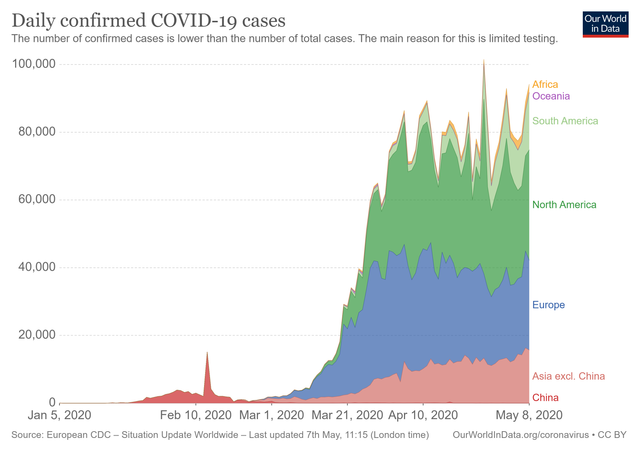
On January 7, Chinese authorities identify the pathogen causing these illnesses as a novel coronavirus, implying that the virus had a pandemic potential because no one on the planet would have immunity to it. A few days later, the genomic sequence for the virus was uploaded into the GenBank sequence database and shared with the world. On January 11, Xinhua News Agency reported the death of an ailing elderly man with health issues who succumbed to complications from the infection. Since then, over the four months that have passed, more than 4 million people across the globe have become infected, and 275,000 have perished.
Though the pandemic has impacted 212 countries and territories, the real brunt of the health crisis hit the European countries and the United States hardest. Adequately forewarned but least prepared, they squandered the weeks after the declaration of an international emergency by the WHO in late January. The initial months of the epidemic in China now seem to pale in comparison when in late February to mid-March, the virus began to take its toll rapidly.
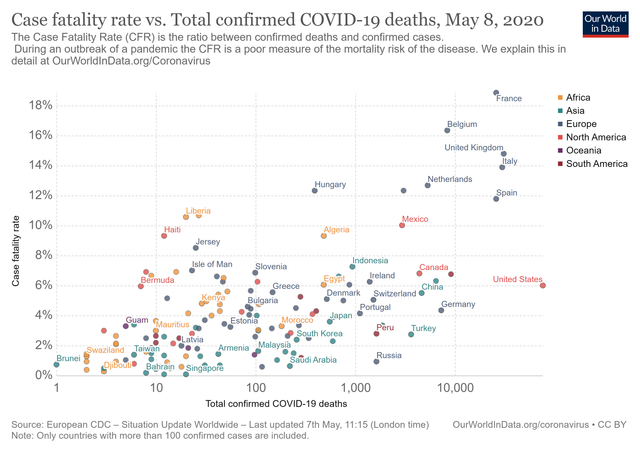
According to the website Our World in Data, Belgium has had 726 deaths per million, Spain with 558, Italy with 495, the United Kingdom with 451, France with 398, Netherlands 309, Sweden 301, and the United States with 229. China, by comparison, has little more than three deaths per million.
Yet, by all accounts, these fatality reports are underestimations. As health care systems in these countries reached near collapse, the necessary accounting of cases lagged or completely missed them. Many were turned away from hospitals only to perish at home, infecting those that had to care for them, fueling the transmission of the pandemic deeper into communities. The Financial Times, based on their analysis of overall fatalities and excess deaths, placed the toll from COVID-19 sixty percent higher than official counts.
Presently, the seven-day rolling average of new deaths stands at 1,723 average deaths for the United States and 568 average deaths for the United Kingdom. These curves show plateauing or downturning. These are true for Italy, Spain, and France as well, though all three nations still have deaths over 100 per day. Countries with worrisome trends include Brazil, with increasing trends approaching 500 deaths per day with a doubling time of almost seven days. Canada is closing on 200 deaths per day as it continues to climb steadily. Russia’s death tolls are demonstrating a rising trajectory. However, their absolute numbers are still quite low in comparison to their daily case rates, which is now only second to the United States. Russia has exceeded the US in per capita testing.
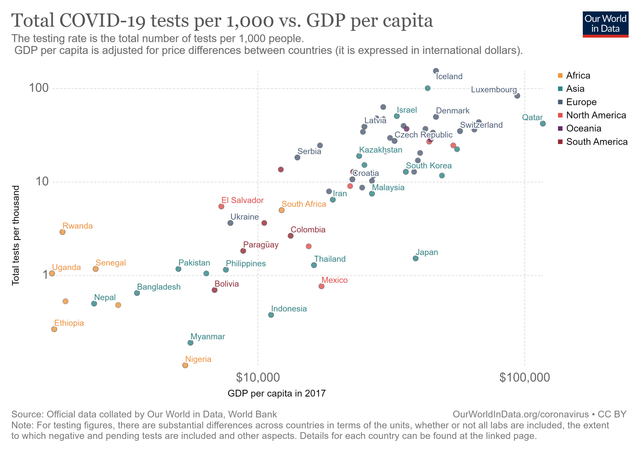
India, Peru, and Ecuador also see daily new cases and fatalities climb. Yet, they have some of the lowest testing per capita. For Ecuador, despite small numbers of reported daily deaths, these appear to be gross underestimations. According to the Financial Times, with only 245 official COVID-19-related deaths in Guayas Province that were published between March 1 and April 15, their analysis showed that there were 10,200 excess deaths during this period compared to previous years—a more than 350 percent increase.
The number of cases and fatalities has disproportionately impacted upper-middle and high-income nations. However, this is a byproduct of how the virus was transmitted across the globe through commercial air traffic directly to these cities. Phylogenetic studies of the virus have intricately traced the spread of the virus to various major cities in Europe and the United States. Yet, within these high-income countries, it is the poorest in these large populated metropolitan areas, dense urban centers, that suffer the highest case fatalities. Presently, New York City, Chicago and Los Angeles remain vectors for the pandemic in the United States.
As the WHO has repeatedly noted, the pandemic is in its early stages. As the major cities of producing nations are bringing the epidemic under some measure of control, the pandemic has begun to move regionally. These include Eastern Europe, the Indian subcontinent, the Americas, and Africa. These regions also boast the lowest income per capita. Without a robust testing capacity, these regions could be in a similar predicament as Europe and the US as the virus silently ravages through communities. The economic toll due to the massive contraction of global markets will be hardest felt in the regions that lack the financial resources to meet basic medical needs and social infrastructure.
In the early part of April, Oxfam published a report warning that the economic fallout from the COVID-19 pandemic could very well push half a billion more people into poverty unless urgent action was taken by producing nations to “bail out” developing countries. More than three billion people are living in poverty, and 25 percent of the globe suffer from food insecurity. “But for poor people in emerging countries who are already struggling to survive, there are almost no safety nets to stop them from falling into poverty.”
These sentiments will fall on deaf ears of the financial oligarchs. Despite the record job losses in the US where data showed 20.5 million jobs lost in April and almost 15 percent of the US unemployed, the Dow Jones climbed 455.43 points to close at 24,331.32. As Kristina Hooper, chief global market strategist at Invesco, said, “Stocks have decoupled from the economy.” The Financial Times highlights the “swift actions from the Federal Reserve, the European Central Bank and the Bank of Japan” has continued to bail out the markets and to commit to buying “an unlimited quantity of government securities.” These measures are working in concert with the states to force workers back to their place of employment regardless of the risk being posed. These will ignite second waves of the pandemic, as has been evidenced by developments in meatpacking industries.
Africa remains, by comparison, less affected by the pandemic. With 58,361 cases across the continent and only 2,140 deaths, they saw only 57 new fatalities yesterday, predominately in Egypt and South Africa. However, in a study by the WHO Regional Office for Africa, they found that if containment measures fail, they project that 83,000 to 190,000 people could perish, and 29 to 44 million could be infected in the first year of the pandemic.
The lower fatality and infection rates on their estimates take account of the unique social and environmental factors in Africa slowing the transmission. The lower rates of transmission also mean there will be a prolonged outbreak that may last years, remaining as a smoldering hotspot for future regional and worldwide outbreaks. The number of people afflicted by the infection would certainly strain and overwhelm the health capacities of these nations.

8 May 2020

Young African Phosphorus Fellowship Award Program 2020 for African Researchers

Application Deadline: 1st June, 2020

About the Award: Awards of USD $5,000 each will be conferred to five early-career scientists working in an African NARES institution (National Agricultural Research and Extension System) or African university. The award is to encourage scientific programs relevant to understanding and
improving phosphorus (P) management in agro-ecosystems.


Type: Fellowship

Eligibility:
  • Scientists working at an African NARES institution or university who are age 40 or younger at the time of application are eligible for the Fellowship.
  • Applicants must submit a creative proposal that addresses current knowledge gaps or synthesizes existing information leading to improved P management. Include a description of how the award will be used (such as to support research activities and/or support travel) to achieve the proposal objectives.
  • Evidence of any scientific partnerships and institutional collaboration will be reviewed favourably.
Female scientists are especially encouraged to apply.

Eligible Countries: African country

Number of Awards: 5

Value of Award: $5,000 (U.S. Dollars)

Duration of Award: one-time award

How to Apply: In order to complete the application process, you will need to submit the following materials in English or French:
1 A description of how the Fellowship will lead to improved understanding of P management in agricultural systems. This should outline any new research, data synthesis, or travel that will be supported with the Fellowship funds. Include sufficient detail that will permit evaluation of its originality, innovative approach, and relevance.

2 Electronic copy of two letters of support, one of which must be from the applicant’s supervisor. Letters must be signed and written on official letterhead and include the phone number and e-mail address of the letter writer.
3 A resume that includes date of birth, academic degrees, and any relevant publications dealing with P behaviour in soil, water or plants.
4 A short report will be required at the end of the award period that describes how the funds were used to support the outcomes of the proposal.
5 You will be required to upload documents during the on-line application process. It is recommended that electronic (pdf) copies of
these documents be prepared in advance.

  • It is important to go through all application requirements in the Award Webpage (see Link below) before applying.
Visit Award Webpage for Details

System Failure: Our Food System is Not Set Up to Handle a Global Crisis

Jim Goodman

As we face empty grocery shelves the fragility of our highly consolidated food system has become clear during the crisis of COVID-19. We see a market that lacks the resiliency to shift supply lines and fill those shelves, but also a food system that does not provide (and in most cases never has provided) fair wages or adequate safety protection to workers. While farmers have worked below their cost of production for decades, they now face the prospect of lost markets and even lower prices for livestock. Milk and produce that cannot move to processing plants must be destroyed.
Farmers who are part of the industrialized system may now face the task of “depopulating” their livestock because the system has failed. The rampant spread of COVID-19 among workers has closed processing plants across the county. Loosing their markets is an economic tragedy for farmers while people go hungry. Having to dispose of their crops or animals is emotionally heart-breaking. Yet forcing meat processing workers to risk their lives is downright criminal. Industrial farming and processing is not a good system for farmers. It clearly doesn’t ensure there will be no food shortages. And it is inhumane to animals and workers.
As Wisconsin Gov. Tony Evers considers making direct payments to farmers, he must consider the small farmers and farm workers rather than targeting the aid to commodity growers and agribusiness corporations as happened with previous COVID 19 aid packages. The governor should keep  in mind that a more diversified food system, one with more small farms and local processing facilities, rather than one in a constant state of consolidation, is much more resilient and less susceptible to the weaknesses that we see occurring due to this pandemic.
More than 40 years ago as a graduate student gathering research data, I spent considerable time in what was then the John Morrell plant in Sioux Falls, S.D. The pace of the work and the speed of production, while intense, were a fraction of what is expected of workers today. Today, working shoulder-to-shoulder at present production speeds, safe physical distancing is impossible. That plant where I spent time as a grad student, now owned by Smithfield, is much larger and now processes only pork. It was one of the first processors to close due to workers being infected with COVID-19.
The workers I knew were union members, they were paid well enough to buy cars, homes and send their kids to college. Over the past decades the workforce is increasingly made up of immigrants and minorities, people who have been a target for President Trump. Meat processing was always dangerous work, but COVID-19 has upped the ante. The recent executive order to force plants to re-open while relying on plant owners to determine what additional safety measures were feasible — as opposed to health and workplace safety experts, has highlighted Trump’s disdain for the people who do so much of the backbreaking labor to produce Americans’ food.
Meat industry experts claim, “It is not a broken system by any means”, and of course they claim plant “shutdowns were a Black Swan event”— meaning they were not predictable. Please. A highly consolidated system with millions of animals running through too few giant processing plants has always been a disaster waiting to happen. The system is not, as Progressive Farmer magazine calls it, “a well oiled machine,” while also noting that “USDA has initiated steps to limit labor shortages for critical tasks”— sure, bring on the forced labor of immigrants and minorities. Or, perhaps, let’s have less meat and more personal protective equipment?
The COVID-19 pandemic itself was not a Black Swan event either, it has always been just a matter of time until there was a worldwide pandemic. When it would happen, where it would begin, how it would start, how fast would it spread, could the spread be stopped — that was unknown. While the eventual occurrence was inevitable, the reaction of people and nations was not totally predictable.
When COVID-19 began its sweep across the world, governments had varying levels of pandemic preparedness. Some were better than others, but no one was truly prepared.
Regardless of preparedness, some countries’ willingness to take the threat seriously, by putting people’s safety above economic growth, as opposed to acting on “gut instinct,” were borne out in infection and mortality rates. Some governments, supposedly well prepared for a pandemic like the U.S. or the U.K., had leaders that either saw COVID-19 as no big deal, valued economic growth more than people’s lives or saw their exceptionalism as being enough to somehow prevent a crisis.
President Trump’s gut feeling and vast ego guided his reaction to the pandemic, as he told the Washington Post, “My gut tells me more sometimes, than anybody else’s brain can ever tell me.” But  the virus didn’t just disappear, nor did the initial few cases go “close to zero” as Trump said in February. Instead infections have eclipsed one million with no end in sight. Trump continues to defend his false predictions by saying cases will go to zero — ultimately true, I guess. And Trump will leave office, ultimately.
The pandemic showed that countries like Australia and New Zealand fared much better because people there took the pandemic threat seriously as did their governments. Rather than following pompous gut feelings, they acted quickly, shut the country down, enacted wage payment plans for workers, secured medical equipment and brought the spread of the virus under control quickly enough that their economies could begin to reopen safely.
Denial, inaction, lack of testing, lack of medical equipment, slow implementation of physical distancing and business shutdowns didn’t work very well for the United States. Rates of infection and deaths make that clear. The pandemic continues to take a terrible toll on the U.S. and it has also showed us  that being the best prepared country in the world doesn’t mean much if you don’t act.
Our healthcare system left millions without insurance when they became unemployed. We lacked hospital beds and medical equipment because our for-profit healthcare system is not a healthcare system, but a sick-care system. There is no profit from having empty beds and equipment in reserve.
The inability of the healthcare system to cope certainly does not reflect on the workers within the system, they are doing their best considering the care they give has always been contingent on corporate bottom lines. The inadequacies of the for-profit healthcare system laid bare by COVID-19 are not a Black Swan.
Will shortages of medical supplies, inadequate healthcare coverage, corporate bailouts or food shortages cause us to demand a better society, or will we just hope, after these entirely predictable failures, to return to normal, even though normal didn’t work for most of us?
It’s almost like we all have  Stockholm Syndrome, defending parts of our society that lack compassion and that put us all at risk.  Unless we resist, the administration and the powers that be will never admit that they were ill-prepared and made mistakes. They will continue to defend their flawed social, economic and ideological principals. And we will all be sitting ducks for the next global crisis.